

解説 / Description
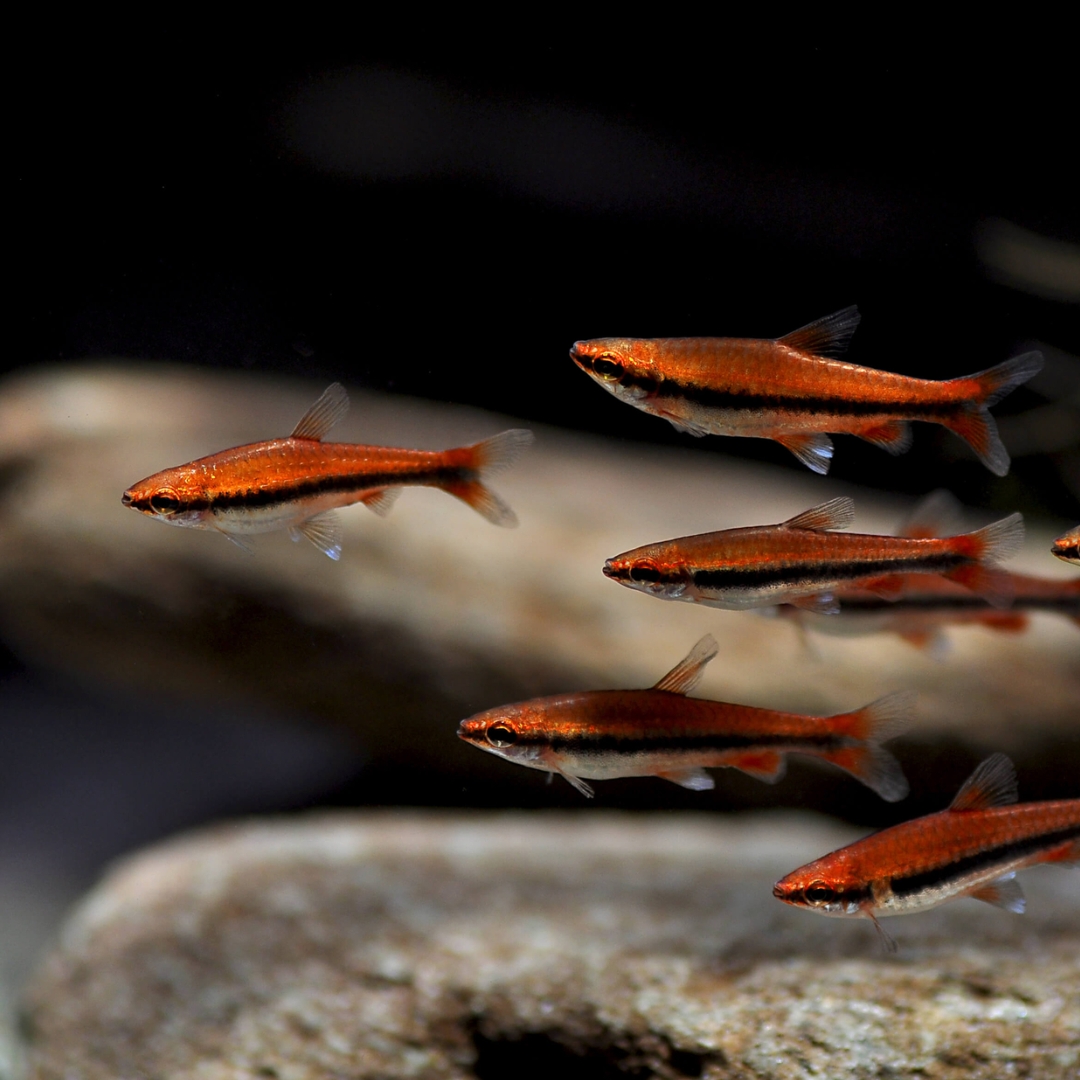
レッドベックホルディ・ペンシルフィッシュは、国内の観賞魚流通で「通常のベックホルディ」とは分けて扱われることが多い、赤みの強いペンシルフィッシュです。分類上は広義の Nannostomus beckfordi に含めて扱われるのが一般的ですが、観賞魚としては体側下部や各ヒレに赤みが出やすいタイプとして親しまれています。細長い体型、黒い水平ライン、成熟したオスが見せる赤と黒のコントラストが魅力で、水草水槽や小型魚中心の混泳水槽に落ち着いた華やかさを加えてくれます。 The Red Beckford’s Pencilfish is a redder pencilfish form that is often treated separately from the ordinary Beckford’s Pencilfish in the aquarium trade. Taxonomically it is generally placed within the broader concept of Nannostomus beckfordi, but in aquariums it is appreciated as a distinct trade form with stronger red coloration on the lower body and fins. Its slender body, dark horizontal stripe, and the red-and-black contrast of mature males make it a graceful choice for planted and peaceful community aquariums.
基本情報 / Basic Information
| 学名 / Scientific Name | Nannostomus beckfordi の赤色系流通タイプ。旧名・関連名として Nannostomus aripirangensis が言及されることがありますが、現在は多くの資料で N. beckfordi のシノニムとして扱われます。red aquarium trade form. The historical name Nannostomus aripirangensis is sometimes mentioned, but it is widely treated as a synonym of N. beckfordi. |
|---|---|
| 通称 / Common Name | レッドベックホルディ・ペンシルフィッシュ、レッドベックフォルディ・ペンシルフィッシュ、レッドペンシルフィッシュRed Beckford’s Pencilfish, Red Beckford Pencilfish, Red Pencilfish |
| 分類 / Family | カラシン目 レビアシナ科 ナノストムス属Order Characiformes, family Lebiasinidae, genus Nannostomus |
| 英名 / English Name | Red Beckford’s Pencilfish, Red Beckford Pencilfish, Red Pencilfish |
| 分布 / Distribution | 分類上の母体となる Nannostomus beckfordi は、南米北部のアマゾン川流域、オリノコ川流域、ギアナ地方の小河川や沼地に広く分布するとされています。レッドベックホルディとして国内に流通する個体は、赤みの強い系統をもとに東南アジアなどで養殖されたブリード個体が中心です。The broader species Nannostomus beckfordi is distributed across northern South America, including the Amazon, Orinoco, and Guiana Shield drainages, where it inhabits slow streams and swampy waters. Fish sold domestically as Red Beckford’s Pencilfish are mainly captive-bred stock derived from redder lines, often produced in Southeast Asia. |
| 最大体長 / Max Size | 流通個体では約4〜5cm前後で扱われることが多いです。資料上は Nannostomus beckfordi として最大約6.5cmまで記録されますが、家庭水槽ではそこまで大きくならないことも多いです。Aquarium specimens are usually around 4 to 5 cm. The broader species Nannostomus beckfordi is recorded up to about 6.5 cm, but aquarium individuals often remain smaller. |
| 寿命 / Lifespan | おおむね3〜5年程度。導入時の水合わせ、安定した水温、細かい餌、飛び出し防止が長期飼育の基本になります。Generally around 3 to 5 years. Careful acclimation, stable temperature, finely sized food, and jump prevention are important for long-term care. |
飼育環境 / Aquarium Environment
| 水槽サイズ / Tank Size | 少数なら30cmキューブ水槽でも飼育は可能ですが、本種の魅力は群れの中で落ち着いた時に出やすいため、45cm規格水槽以上、できれば60cm規格水槽が扱いやすいです。5匹以上、可能であれば8匹前後の群れで飼うと、オス同士の誇示行動も分散され、見応えが出ます。A 30 cm cube aquarium can work for a small group, but this fish shows its best behavior when kept in a settled group. A 45 cm standard tank or preferably a 60 cm standard tank is easier to manage. Keep at least five, and ideally around eight or more, to disperse male display behavior and create a more natural group. |
|---|---|
| 水温 / Temperature | 24〜28℃前後。普段は25〜27℃程度を目安にすると安定しやすいです。30℃近い高水温が長く続くと酸欠や体力消耗につながるため、夏場は冷却ファンなどで管理します。 Around 24 to 28°C, with 25 to 27°C being a practical everyday range. Prolonged temperatures near 30°C can cause stress and lower dissolved oxygen, so cooling may be needed in summer. |
| 水質 / Water Quality | 弱酸性から中性、軟水を好みます。ブリード個体は日本の一般的な水道水にも比較的なじみやすいですが、赤みや落ち着きを引き出すならpH 6.0〜7.0前後の穏やかな軟水環境が向きます。ソイル、流木、マジックリーフなどを使うと、本種らしい色彩を引き出しやすくなります。Slightly acidic to neutral soft water is preferred. Captive-bred fish usually adapt well to ordinary soft tap water, but a gentle soft-water setup around pH 6.0 to 7.0 helps bring out calmer behavior and stronger color. Soil substrate, driftwood, and botanical leaves can be useful. |
| レイアウト / Layout | 水草、流木、暗めの底床を使った落ち着いたレイアウトが向きます。浮き草で照明を少し和らげると警戒心が薄れ、赤と黒のコントラストも見えやすくなります。泳ぐ空間も必要なため、水槽前面や中央にはある程度の遊泳スペースを残すとよいです。A calm layout with aquatic plants, driftwood, and a darker substrate works well. Floating plants can soften the lighting, reduce nervousness, and make the red-and-black contrast easier to see. Leave some open swimming space in the front or center of the aquarium. |
| 注意点 / Precautions | 強い水流、急な水質変化、導入直後の低温に注意します。また驚いた時やオス同士が追い合う時に飛び出すことがあるため、フタは必須です。水槽上部の配管まわりやコードのすき間もふさいでおくと安心です。Avoid strong current, sudden water-quality changes, and chilling during introduction. This species can jump when startled or during male chasing, so a tight-fitting lid is essential. Gaps around pipes and cables should also be covered. |
餌と給餌 / Feeding
| 餌の種類 / Diet | 微粒タイプの人工飼料、細かく砕いたフレークフード、冷凍ブラインシュリンプ、冷凍ミジンコ、ブラインシュリンプ幼生などが向きます。自然下では小さな昆虫、甲殻類、動物プランクトンなどを食べる小型の雑食性魚として考えると扱いやすいです。Fine granules, crushed flakes, frozen brine shrimp, frozen daphnia, and newly hatched brine shrimp are suitable. In nature it feeds on small invertebrates such as tiny insects, crustaceans, and zooplankton, so it is best treated as a small omnivorous micropredator. |
|---|---|
| 給餌のポイント / Feeding Tips | 口が小さいため、餌の粒はかなり細かくします。一度に大量に与えるよりも、1日1〜2回、数分で食べ切れる量を与えるのが安全です。赤みを意識する場合は、人工飼料だけに偏らず、ブラインシュリンプやミジンコなどを適度に組み合わせるとよいです。Because the mouth is very small, foods should be finely sized. Rather than feeding heavily at once, offer small portions once or twice a day that can be finished within a few minutes. To support red coloration, combine quality prepared foods with small live or frozen foods such as brine shrimp or daphnia. |
性格と混泳 / Temperament and Tank Mates
| 性格 / Temperament | 基本的には温和で、他魚を積極的に攻撃するタイプではありません。一方で、オス同士はヒレを広げて見せ合うスパーリングを行うことがあります。これは本種の見どころですが、少数飼育では特定個体への圧力が強くなるため、複数匹での飼育が向いています。It is generally peaceful and does not usually attack other fish. Males may display to one another with fin-spreading sparring behavior. This is part of the species’ appeal, but keeping a group helps prevent pressure from being focused on one individual. |
|---|---|
| 混泳の相性 / Compatibility | 小型カラシン、ラスボラ、コリドラス、オトシンクルス、アピストグラマなど、口に入らない温和な魚と相性がよいです。大型魚や気の荒い魚、極端に餌取りが遅い魚との混泳は避けます。ミナミヌマエビなどの成体とは同居できる場合もありますが、稚エビは食べられる可能性があります。Good tank mates include peaceful fish too large to be swallowed, such as small tetras, rasboras, Corydoras, Otocinclus, and dwarf cichlids. Avoid large, aggressive, or overly slow-feeding fish. Adult dwarf shrimp may sometimes coexist, but shrimplets can be eaten. |
病気と対策 / Diseases and Prevention
| かかりやすい病気 / Common Diseases | 導入直後のストレスや水温変化による白点病、水質悪化や外傷をきっかけとした尾ぐされ・口ぐされ、輸送疲れや痩せによる消耗状態に注意します。小型魚のため、症状が進む前の早期発見が大切です。Watch for white spot disease after stress or temperature swings, fin rot or mouth rot after poor water quality or injury, and wasting caused by transport stress or underfeeding. As a small fish, early detection is important. |
|---|---|
| 対策と予防 / Prevention | 最も重要なのは、導入時の水合わせ、安定した水温、過密を避けた飼育、食べ残しを出さない給餌です。薬浴が必要な場合は隔離水槽で行い、小型カラシン類は薬に敏感なことがあるため、規定量の下限から慎重に様子を見ます。薬浴中はエアレーションを強め、活性炭など薬を吸着するろ材は外します。Careful acclimation, stable temperature, avoiding overcrowding, and controlled feeding are the best prevention. If medication is needed, treat in a separate hospital tank. Small characins can be sensitive to medications, so begin cautiously within the recommended range. Provide strong aeration and remove chemical media such as activated carbon during treatment. |
増やし方(繁殖) / Breeding
| 雌雄の判別 / Sexing | 成熟したオスは赤みが強く、体側の黒いラインもはっきりし、尻ビレがやや大きく発達する傾向があります。メスは体型がふっくらしやすく、赤みは控えめで、尻ビレも丸みを帯びて見えます。ただし若魚では判別が難しいこともあります。Mature males tend to show stronger red coloration, clearer dark lateral markings, and a more developed anal fin. Females are usually fuller-bodied, less intensely colored, and have a rounder anal fin. Young fish can be difficult to sex reliably. |
|---|---|
| 繁殖形態 / Reproduction | 卵生で、細かい水草の茂みなどに卵をばらまく卵散布型です。親は卵や稚魚を保護せず、むしろ食卵することがあるため、繁殖を狙う場合は親魚と卵を分ける工夫が必要です。It is an egg-scattering species that deposits eggs among fine-leaved plants. The parents do not guard the eggs or fry and may eat the eggs, so separation or egg protection is needed for intentional breeding. |
| 繁殖のポイント / Breeding Tips | 繁殖用水槽にはウィローモスなどの細かい水草や産卵モップを多めに入れ、弱酸性の軟水、弱い水流、落ち着いた照明で管理します。産卵後は親を戻すか、卵を別容器に移します。稚魚は非常に小さいため、初期飼料としてインフゾリアや微細な稚魚用フードを準備し、その後ブラインシュリンプ幼生へ移行します。Use a breeding tank with plenty of fine plants such as Java moss or spawning mops, soft slightly acidic water, gentle flow, and subdued lighting. Remove the adults after spawning or move the eggs to a separate container. The fry are tiny and require infusoria or very fine fry food at first, followed by newly hatched brine shrimp. |
雑学と豆知識 / Trivia and Fun Facts
| 1. 通常のベックホルディとは分けて見る理由 / 1. Why it is treated separately from ordinary Beckford’s Pencilfish | レッドベックホルディ・ペンシルフィッシュは、学術上の独立種として確定的に扱うよりも、観賞魚流通上の赤色系タイプとして捉えるのが現実的です。ただし、国内の店頭や図鑑記事では、通常のベックホルディ・ペンシルフィッシュとは見た目の印象や販売名が異なるため、別項目としてまとめる価値があります。分類と流通名を混同せず、「分類上は近いが、アクアリウムでは別の顔を持つ魚」と考えると理解しやすいです。It is most practical to treat the Red Beckford’s Pencilfish as a red aquarium trade form rather than as a firmly separate scientific species. However, in aquarium shops and hobby references it is worth treating separately because its appearance and trade name differ from the ordinary Beckford’s Pencilfish. It is best understood as a fish that is taxonomically close but has a distinct aquarium identity. |
|---|---|
| 2. 旧アリピランガエンシス系の名前 / 2. The old aripirangensis name | 赤みの強いベックホルディ系統を語る時、古い名前として Nannostomus aripirangensis が出てくることがあります。現在は Nannostomus beckfordi のシノニムとして扱われる資料が多いものの、観賞魚の世界では、こうした旧名が「赤みの強いタイプ」を説明する文脈で残ることがあります。図鑑記事ではこの背景を紹介しつつ、現在の有効名は Nannostomus beckfordi として整理するのが安全です。When discussing redder Beckford-type pencilfish, the old name Nannostomus aripirangensis may appear. It is widely treated today as a synonym of Nannostomus beckfordi, but in the aquarium hobby such old names sometimes remain as context for redder forms. A care article can mention the background while listing the currently used name as Nannostomus beckfordi. |
| 3. 小さな口という名前 / 3. A name that means small mouth | 属名のNannostomusは、小さいことを表す語と口を表す語に由来するとされます。実際に本属の魚たちは口がとても小さく、餌を大きく砕かずに与えると、興味は示しても食べきれないことがあります。この名前を知っておくと、給餌の基本がそのまま理解できます。ペンシルフィッシュの飼育では、魚の大きさよりも口の大きさに合わせて餌を選ぶことが大切です。The genus name Nannostomus is generally interpreted as referring to a small mouth. This is very practical knowledge for aquarists: these fish may show interest in food that is simply too large to swallow. Feeding should be based not only on body size, but on mouth size. |
| 4. 夜になると模様が変わる / 4. A fish that changes pattern at night | レッドベックホルディ・ペンシルフィッシュは、明るい時間には体側の水平ラインが目立ちますが、消灯後や早朝には斜めの短い帯が浮き上がるように見えることがあります。これは弱ったサインとは限らず、夜間のカモフラージュとして知られる体色変化です。照明をつけた直後にいつもと違う模様を見て驚くことがありますが、しばらくすると日中のラインに戻っていきます。During the day, the Red Beckford’s Pencilfish shows a clear horizontal stripe, but after lights-out or early in the morning it may display short oblique bars instead. This is not necessarily a sign of illness; it is a known night-time camouflage pattern. After the lights come on, the daytime stripe usually returns. |
| 5. 赤を引き出すのは血統だけではない / 5. Color is not determined by lineage alone | レッドベックホルディという名前から、最初から常に真っ赤な魚を想像しがちですが、実際の発色は成熟度、雌雄差、群れの安定、底床の色、照明、水質、餌によって大きく変わります。入荷直後は色が薄く見えても、落ち着いた水草水槽で飼い込むことで、オスの赤みがじわじわと強くなることがあります。この「飼い込んで仕上げる」感覚こそ、本種の楽しさです。The name Red Beckford’s Pencilfish may suggest a fish that is always bright red, but coloration depends on maturity, sex, social stability, substrate color, lighting, water conditions, and diet. Newly arrived fish may look pale, but males can gradually develop stronger red coloration in a settled planted aquarium. This sense of improving the fish through careful keeping is part of its appeal. |
まとめ / Conclusion
レッドベックホルディ・ペンシルフィッシュは、分類上は広義の Nannostomus beckfordi に含めて扱われる一方、国内の観賞魚流通では通常のベックホルディとは分けて見られることが多い赤色系ペンシルフィッシュです。弱酸性から中性の軟水、穏やかな水流、細かい餌、複数匹での飼育、そして確実なフタを意識すると安定します。 The Red Beckford’s Pencilfish is generally placed within the broader Nannostomus beckfordi complex taxonomically, but in the aquarium trade it is often treated separately from the ordinary Beckford’s Pencilfish as a redder form. Stable soft water from slightly acidic to neutral, gentle current, finely sized food, group keeping, and a secure lid are the keys to success.
安価で入手しやすい魚でありながら、成熟オスの赤い発色、ヒレを広げるスパーリング、夜間の体色変化など、観察する楽しみが多い種です。小型魚中心の水草水槽に、落ち着いた華やかさと自然な動きを加えたい時にとてもおすすめできる魚です。 Although easy to obtain, it offers many points of interest, including the red coloration of mature males, fin-spreading displays, and night-time color changes. It is an excellent choice for adding calm beauty and natural movement to a planted community aquarium.

気になる道具や飼い方を見つけてみませんか?
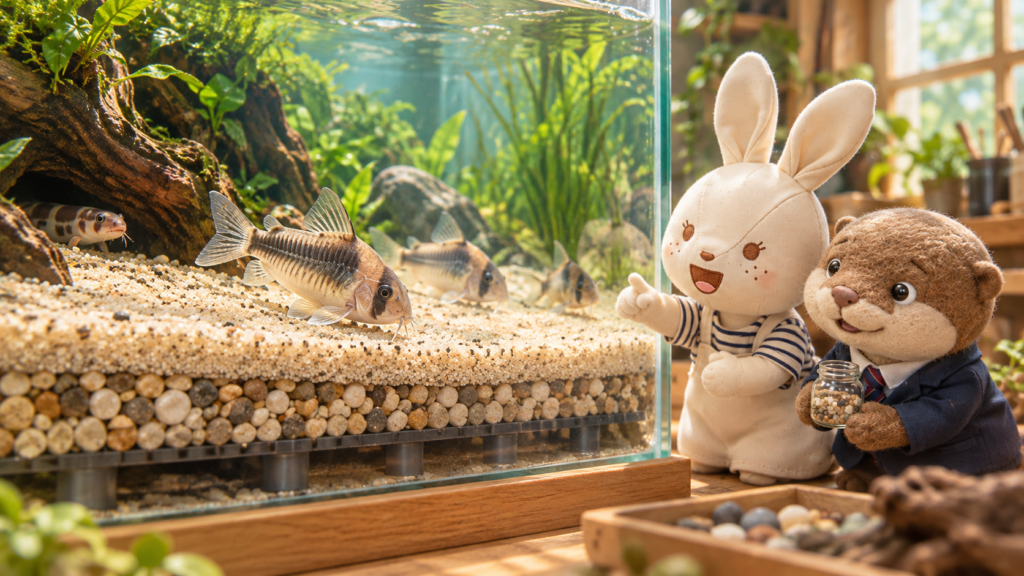 アイのアクアグッズ案内水槽の底砂の選び方|砂・砂利の違いとおすすめ商品道具の特徴や使い方、選ぶときのポイントをアイが紹介します。記事はコチラ →
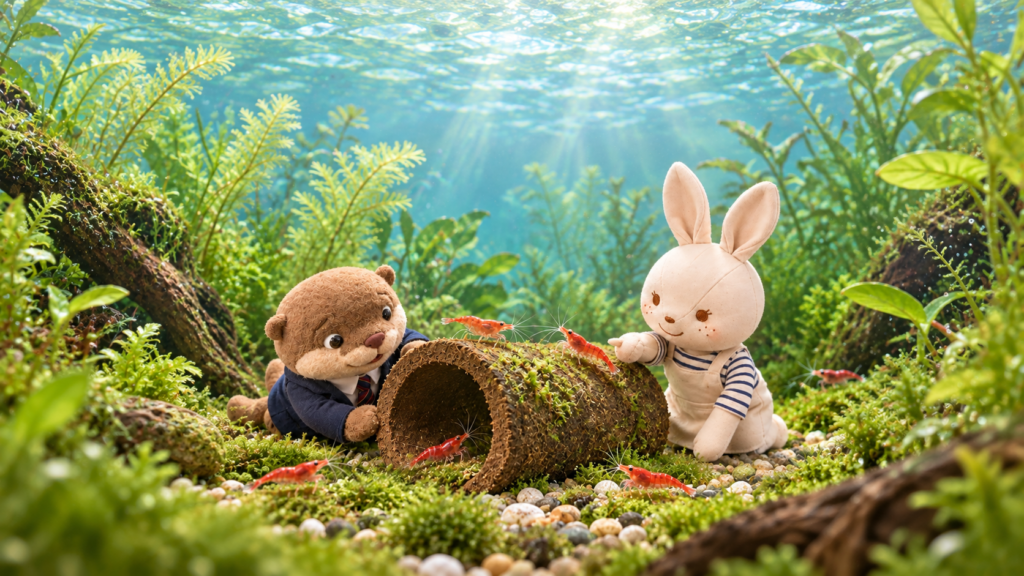 アイのアクアグッズ案内エビのおうち、食べちゃっていいの!? コタロウと探る、不思議なエビのごはん道具の特徴や使い方、選ぶときのポイントをアイが紹介します。記事はコチラ →
さまざまな飼育テーマをご紹介。リンク先の記事には広告・商品紹介が含まれます。
案内・紹介記事一覧へ →参考文献・参照資料
本記事は、レッドベックホルディ・ペンシルフィッシュを国内観賞魚流通上の赤色系タイプとして扱いながら、分類・分布・生態・飼育条件については主に Nannostomus beckfordi に関する信頼性の高い資料を参照して作成しています。
-
Froese, R. and Pauly, D. Editors. FishBase. Nannostomus beckfordi, Golden pencilfish.
分布、生息環境、最大サイズ、群れでの飼育目安、食性などの基本情報を確認するために参照しました。
https://www.fishbase.se/summary/Nannostomus-beckfordi -
FishBase. Family Details for Lebiasinidae – Pencilfishes.
Nannostomus beckfordi のシノニムとして、Nannostomus anomalus、Nannostomus simplex、Nannostomus aripirangensis、Nannostomus beckfordi surinami などが扱われている点を確認するために参照しました。
https://fishbase.se/summary/FamilySummary.php?ID=107 -
Fricke, R., Eschmeyer, W. N. and Van der Laan, R. Eschmeyer’s Catalog of Fishes. California Academy of Sciences.
学名の有効性、旧名・シノニムの扱いを確認するために参照しました。特に Nannostomus aripirangensis が Nannostomus beckfordi のシノニムとして扱われる点の確認に用いています。
https://researcharchive.calacademy.org/research/ichthyology/catalog/fishcatget.asp?spid=30069 -
Seriously Fish. Nannostomus beckfordi – Golden Pencilfish.
飼育水槽の考え方、水質、レイアウト、食性、混泳、繁殖に関する実用的な飼育情報を確認するために参照しました。
https://www.seriouslyfish.com/species/nannostomus-beckfordi/ -
Scharpf, C. The ETYFish Project. Family Lebiasinidae Gill 1889.
属名 Nannostomus の語源、および種小名 beckfordi の献名に関する記述を確認するために参照しました。
https://etyfish.org/lebiasinidae/ -
Masagaki, A. and Fujii, R. 1999. Differential Actions of Melatonin on Melanophores of the Threeline Pencilfish, Nannostomus trifasciatus. Zoological Science, 16(1): 35-42.
ペンシルフィッシュ類における明暗周期と色素細胞の関係、夜間の体色変化を理解するための参考資料として参照しました。本論文は Nannostomus beckfordi そのものではなく、同属種の色素変化に関する研究として補助的に扱っています。
https://doi.org/10.2108/zsj.16.35 -
Weitzman, S. H. 1966. Review of South American characid fishes of subtribe Nannostomina. Proceedings of the United States National Museum.
ナノストムス属を含むペンシルフィッシュ類の分類学的背景を確認するための基礎資料として参照しました。
https://www.biodiversitylibrary.org/
注記:レッドベックホルディ・ペンシルフィッシュは、観賞魚流通上は通常のベックホルディ・ペンシルフィッシュと分けて扱われることがありますが、学術資料では広義の Nannostomus beckfordi として整理されることが多いため、本参考文献では分類上の母体となる Nannostomus beckfordi の資料を中心に採用しています。




コメント