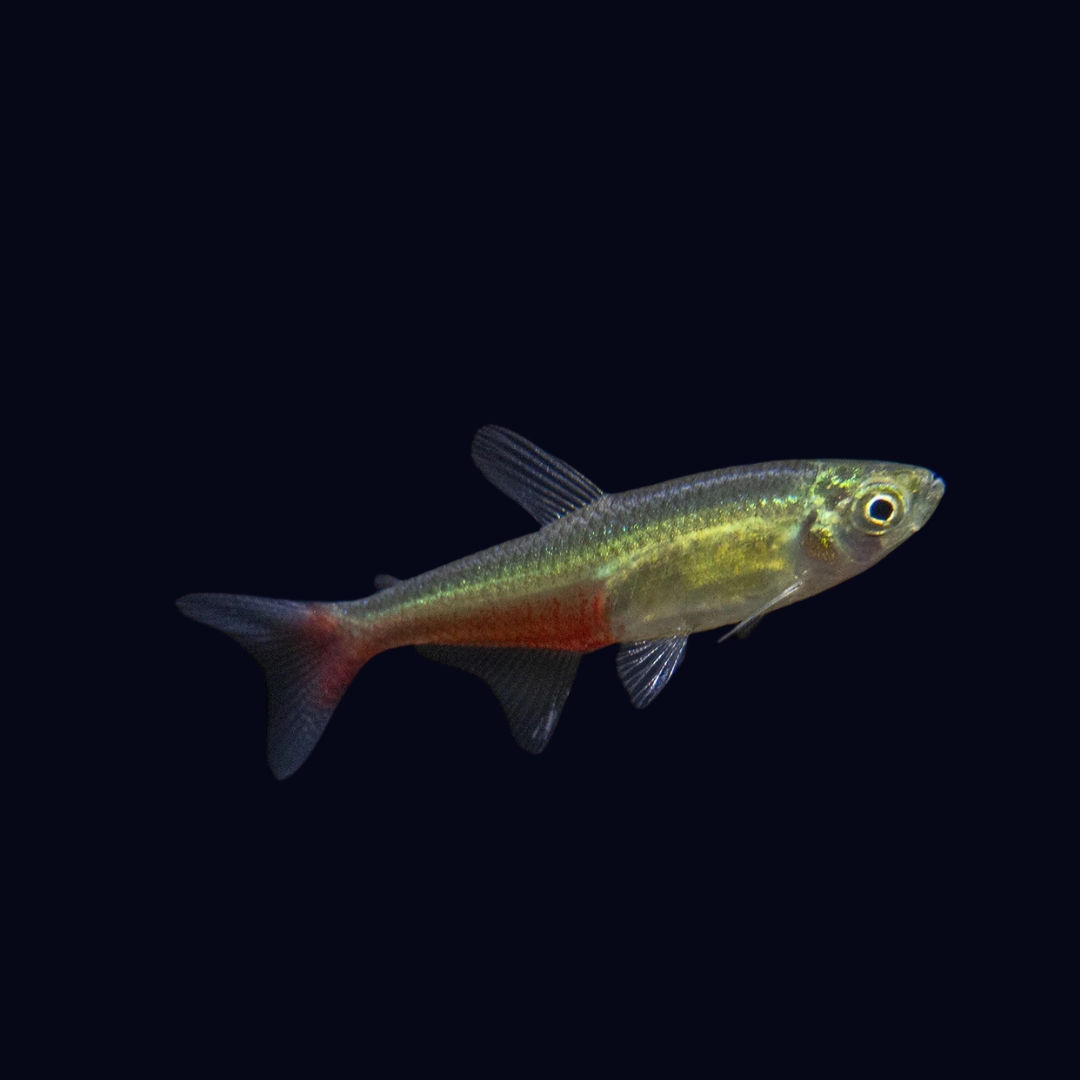
グリーンファイヤーテトラは、南米のパラグアイ川水系に分布するとされる小型カラシンです。半透明の体に淡いグリーンが重なり、腹部から尾びれにかけて赤みが差す姿は、強い金属光沢で目を引くテトラ類とは少し違った、涼しげで奥ゆかしい美しさを持っています。日本の観賞魚店ではブリード個体が多く見られ、丈夫で入手しやすい小型テトラとして親しまれていますが、じっくり飼い込むことで本来の発色が増していくため、経験者にとっても育てがいのある魚です。The Green Fire Tetra is a small characin regarded as native to the Paraguay River basin of South America. Its translucent body, soft green sheen, and red coloration from the belly toward the caudal fin give it a cool, understated beauty that differs from the strong metallic shine of many other tetras. In the Japanese aquarium trade, captive-bred specimens are commonly seen, making the species a hardy and accessible small tetra. At the same time, its colors deepen gradually with stable care, which makes it rewarding even for experienced aquarists.
基本情報 / Basic Information
学名 / Scientific Name
Aphyocharax rathbuni
通称 / Common Name
グリーンファイヤーテトラ、ラスブンズ・ブラッドフィン、レッドフランク・ブラッドフィンGreen Fire Tetra, Rathbun’s Bloodfin, Redflank Bloodfin
分類 / Family
条鰭綱 カラシン目 カラシン科 アフィオカラックス属Class Actinopteri, Order Characiformes, Family Characidae, Genus Aphyocharax
英名 / English Name
Green Fire Tetra
分布 / Distribution
南アメリカのパラグアイ川水系。ブラジル側のパンタナール周辺からの記録も知られます。周辺水系を含めた分布範囲については、資料によって違いがあります。South America, primarily the Paraguay River basin. Records are also known from the Pantanal region on the Brazilian side. Sources differ in how broadly they include the surrounding drainages in its distribution.
最大体長 / Max Size
文献上の最大標準体長は約7.1cmとされます。水槽内で一般に見られる成魚は3.5〜4.5cm前後で、飼育情報では4〜5cm程度として扱われることが多いです。The documented maximum standard length is about 7.1 cm. In aquaria, adults are more commonly seen at around 3.5 to 4.5 cm, and aquarium references often treat the species as a 4 to 5 cm tetra.
寿命 / Lifespan
一般的には3〜4年ほど。安定した水質、十分な群れ、栄養管理が整えば5年以上生きる個体も期待できます。Generally about 3 to 4 years. With stable water quality, a proper group, and good nutrition, some individuals may live for 5 years or more.
飼育環境 / Aquarium Environment
水槽サイズ / Tank Size
小型魚ですが活発に泳ぐため、推奨は60cm規格水槽、約57〜60L前後です。少数の一時飼育なら45cm規格水槽でも管理できますが、6〜10匹以上の群れで落ち着かせ、遊泳スペースを確保するには60cm規格水槽以上が安心です。Although small, it is an active swimmer, so a 60 cm standard tank of about 57 to 60 liters is recommended. A 45 cm standard tank can work for a small temporary group, but a 60 cm tank or larger is safer for keeping 6 to 10 or more individuals with enough swimming space.
水温 / Temperature
20〜26℃前後。通常飼育では24〜26℃付近が扱いやすいです。市販の飼育情報ではやや高めの範囲が示されることもありますが、急激な温度変化は白点病などの引き金になりやすいため、季節の変わり目はヒーターで安定させます。Around 20 to 26°C. For general care, 24 to 26°C is easy to manage. Some aquarium sources give a slightly warmer range, but sudden temperature changes can trigger diseases such as white spot disease, so a heater should be used to maintain stability during seasonal changes.
水質 / Water Quality
弱酸性〜中性、pH6.0〜7.5程度を目安にします。硬度は軟水〜中硬水まで対応し、文献上は20dH程度までの範囲が示されています。飼育自体は日本の一般的な水道水をカルキ抜きした水でも可能ですが、発色を重視するなら急変を避けながら、こなれた弱酸性寄りの水に整えるとよいでしょう。Slightly acidic to neutral water, around pH 6.0 to 7.5, is suitable. It tolerates soft to moderately hard water, and published references indicate a range up to about 20 dH. Dechlorinated Japanese tap water is usually adequate for basic care, but for better coloration, mature water leaning slightly acidic can be beneficial as long as sudden changes are avoided.
レイアウト / Layout
水草、流木、浮草を組み合わせた落ち着いたレイアウトがよく合います。ミクロソリウム、アヌビアス、ウィローモスなどの陰性水草や、濃い緑の有茎草を背景にすると、半透明のグリーンと赤い尾部がよく映えます。水面付近もよく泳ぐため、必ずフタをして飛び出しを防ぎます。A calm layout with aquatic plants, driftwood, and floating plants suits this species well. Shade-tolerant plants such as Microsorum, Anubias, and Java moss, as well as deep green stem plants, make its translucent green body and red tail stand out beautifully. Because it often swims near the surface, a secure lid is essential to prevent jumping.
注意点 / Precautions
活発に泳ぐため、過密飼育や狭い水槽ではストレスが溜まりやすく、他魚のヒレをつつく行動が出ることがあります。少数飼育では落ち着きにくいので、最低6匹以上、できれば8〜10匹以上の群れで導入します。輸送直後や導入直後は体色が抜けて白っぽく見えることがありますが、落ち着いた環境に慣れると色が戻る場合が多いです。This is an active swimmer, and stress from crowding or a small tank may lead to fin-nipping. It is less settled when kept in very small numbers, so keep at least 6 individuals, and preferably 8 to 10 or more. Newly shipped or newly introduced fish may look pale or whitish, but their color often returns once they settle into a stable environment.
餌と給餌 / Feeding
餌の種類 / Diet
雑食性で、カラシン用のフレークフード、小型魚用の細かい顆粒フード、冷凍アカムシ、ブラインシュリンプ、ミジンコなどをよく食べます。自然下では小型昆虫、微細な甲殻類、動物プランクトン、柔らかい植物片などを利用するマイクロプレデター的な食性を持ちます。It is omnivorous and readily accepts characin flakes, fine micro pellets for small fish, frozen bloodworms, brine shrimp, and daphnia. In nature, it behaves as a micro-predator, feeding on small insects, tiny crustaceans, zooplankton, and soft plant fragments.
給餌のポイント / Feeding Tips
1日1〜2回、数分で食べ切れる量を与えます。発色を高めたい場合は、人工飼料を主食にしつつ、週に2〜3回ほど冷凍飼料やブラインシュリンプを加えるとよいでしょう。空腹が続くと柔らかい水草の新芽をかじることがあるため、栄養不足と長時間の無給餌には注意します。Feed once or twice daily, offering only what the fish can finish within a few minutes. To enhance coloration, use quality prepared foods as the staple and supplement with frozen foods or brine shrimp two or three times per week. Prolonged hunger may encourage nibbling on tender new plant growth, so avoid nutritional gaps and extended underfeeding.
性格と混泳 / Temperament and Tank Mates
性格 / Temperament
基本的には温和ですが、よく泳ぎ、同種間では小競り合いやフィンスプレッディングを見せることがあります。十分な匹数で群れを作ると落ち着きやすく、他魚への干渉も減ります。状態が上がった個体では体色が濃く見え、ヒレの縁や先端の白みが目立つことがあります。It is generally peaceful, but very active, and may show minor sparring or fin-spreading among its own kind. A sufficiently large group helps it feel secure and reduces interference with other fish. Well-conditioned individuals may show stronger coloration, and pale edging or whitish tips on the fins can become more noticeable.
混泳の相性 / Compatibility
コリドラス、オトシンクルス、小型ラスボラ、カージナルテトラなど、サイズが近く、素早く泳げる温和な魚と相性がよいです。一方で、グッピー、改良ベタ、エンゼルフィッシュなど、長いヒレを持ち動きがゆっくりな魚はヒレをつつかれる可能性があるため避けます。成体のヤマトヌマエビとは混泳しやすいですが、稚エビは捕食されることがあります。Good tank mates include Corydoras, Otocinclus, small rasboras, cardinal tetras, and other peaceful fish of similar size and speed. Avoid slow-moving fish with long fins, such as fancy guppies, ornamental bettas, and angelfish, as they may be nipped. Adult Amano shrimp are usually suitable, but baby shrimp may be eaten.
病気と対策 / Diseases and Prevention
かかりやすい病気 / Common Diseases
丈夫な魚ですが、水温の急変や水質悪化、輸送直後のストレスが重なると白点病にかかることがあります。体表やヒレに塩粒のような白点が現れ、体をこすりつける動きが見られたら早期対応が必要です。スレ傷やヒレの損傷から尾腐れ病につながることもあります。Although hardy, it may develop white spot disease when sudden temperature changes, poor water quality, or post-shipping stress occur together. Early signs include salt-like white spots on the body or fins and rubbing against objects. Abrasions and fin damage may also lead to fin rot.
対策と予防 / Prevention
予防の基本は、水温を安定させ、定期的な水換えで有機物をためないことです。白点病が疑われる場合は、急激にではなく1日1〜2℃程度を目安に28〜30℃付近まで水温を上げ、換水で感染源を減らし、市販の白点病薬を規定量で使用します。水草水槽では薬剤の影響を受ける場合があるため、使用前に製品の注意書きを確認し、必要に応じて隔離水槽で治療します。Prevention depends on stable temperature and regular water changes that keep organic waste from accumulating. If white spot disease is suspected, gradually raise the temperature toward 28 to 30°C at about 1 to 2°C per day, reduce infectious stages through water changes, and use a commercial white spot treatment at the recommended dose. In planted tanks, medications may affect plants or beneficial bacteria, so read the product instructions carefully and consider treatment in a separate hospital tank when needed.
増やし方(繁殖) / Breeding
雌雄の判別 / Sexing
成熟個体では、オスの方がややスリムで発色が強く見えることがあります。メスはやや丸みを帯び、抱卵すると腹部がふっくらします。ヒレ先の白みは状態のよい個体で目立つことがありますが、雌雄差として常に明瞭とは限らないため、体型と発色を合わせて観察します。In mature fish, males may appear slightly slimmer and more strongly colored. Females are usually rounder, and their abdomen becomes fuller when carrying eggs. Whitish fin tips may be noticeable in well-conditioned fish, but they are not always a consistently clear sexing feature, so body shape and coloration should be assessed together.
繁殖形態 / Reproduction
水草の茂みや産卵モップに卵をばらまく、いわゆるばら撒き型の産卵を行います。親魚は卵や稚魚を食べてしまうため、繁殖を狙う場合は産卵後に親をすぐに隔離します。It is an egg-scattering species that releases eggs among fine-leaved plants or spawning mops. Adults will eat eggs and fry, so the parents should be removed promptly after spawning if breeding is intended.
繁殖のポイント / Breeding Tips
繁殖用水槽は弱酸性寄りの軟水、25〜27℃程度、薄暗い環境に整えます。親魚には事前にブラインシュリンプや冷凍アカムシなどを与え、しっかりコンディションを上げます。卵は水温により数日以内に孵化すると考えられ、仔魚はヨークサックを吸収してから泳ぎ出します。初期の稚魚は非常に小さいため、最初はインフゾリアや微細な初期飼料を用意し、成長に合わせてブラインシュリンプ幼生へ切り替えることが成功の鍵です。Prepare a breeding tank with soft water leaning slightly acidic, a temperature around 25 to 27°C, and subdued lighting. Condition the adults with foods such as brine shrimp and frozen bloodworms before spawning. Depending on temperature, eggs are expected to hatch within a few days, and the larvae become free-swimming after absorbing the yolk sac. Because newly free-swimming fry are extremely small, start with infusoria or very fine first foods, then gradually switch to newly hatched brine shrimp as they grow.
雑学と豆知識 / Trivia and Fun Facts
1. 名前に残された魚類学の歴史 / 1. A Name That Preserves Ichthyological History
本種の学名はAphyocharax rathbuniです。属名Aphyocharaxは、ギリシャ語で小魚を示す語と、杭や柵を思わせる鋭い構造を示す語に由来するとされ、カラシン類らしい小さな体と歯の印象をうかがわせます。種小名rathbuniは、アメリカの動物学者リチャード・ラスバンに献名されたものです。1907年にカール・H・アイゲンマンによって記載されたこの魚は、小さな観賞魚でありながら、20世紀初頭の南米淡水魚研究の息づかいを今に伝えています。The scientific name of this species is Aphyocharax rathbuni. The genus name Aphyocharax is thought to combine a Greek-derived word referring to small fish with a term suggesting sharp stakes or a fence, evoking both its small body and characin-like dentition. The specific name rathbuni honors the American zoologist Richard Rathbun. Described by Carl H. Eigenmann in 1907, this small aquarium fish quietly carries the legacy of early twentieth-century South American freshwater fish research.
2. パンタナールが育てた丈夫さ / 2. Hardiness Shaped by the Pantanal
グリーンファイヤーテトラの丈夫さは、原産地の湿地性環境と関係している可能性があります。パンタナール周辺のような季節変動の大きい水域では、雨季と乾季で水位や水温、溶存酸素などが変わりやすくなります。もちろん、水槽内で急変を起こしてよいという意味ではありませんが、こうした変化のある環境に由来する魚として考えると、本種が比較的幅広い水質に慣れやすい理由を理解しやすくなります。The hardiness of the Green Fire Tetra may be related to wetland habitats in its native range. In seasonally variable waters such as those around the Pantanal, water level, temperature, and dissolved oxygen can shift between wet and dry seasons. This does not mean that sudden changes should be allowed in an aquarium, but viewing the species in this ecological context helps explain why it can adapt to a relatively broad range of aquarium conditions.
3. 体色は水槽からのメッセージ / 3. Body Color as a Message from the Aquarium
本種は、環境や体調の変化に合わせて色が抜けやすい魚です。輸送直後に白っぽく見えることがあるのもその一例で、必ずしも状態が悪いとは限りません。反対に、水質が安定し、餌が合い、群れの中で落ち着いてくると、腹部から尾びれにかけての赤みと、体の淡い緑が少しずつ戻ってきます。グリーンファイヤーテトラの体色は、飼育者に向けた静かなサインのようなものです。派手さだけを楽しむのではなく、毎日の色の変化を観察することで、水槽の調子を読み取る手がかりにもなります。This species is prone to losing color when its environment or condition changes. The pale appearance often seen after shipping is one example, and it does not always mean the fish is in poor health. Conversely, when water quality stabilizes, the diet is suitable, and the fish settle within a group, the red coloration from the belly to the tail and the soft green of the body gradually return. The color of the Green Fire Tetra can be seen as a quiet message to the keeper. By observing its daily changes, one can gain useful clues about the condition of the aquarium.
4. 似た名前の魚との混同に注意 / 4. Beware of Confusion with Similarly Named Fish
グリーンファイヤーテトラという名前は、グリーンネオンテトラやファイヤーテトラを連想させます。しかし、グリーンネオンテトラはParacheirodon simulans、ファイヤーテトラはHyphessobrycon amandaeであり、本種とは別属別種です。実際の誤納や混同の頻度は販売現場によって異なるため断定は避けますが、購入時にはAphyocharax rathbuniという学名を確認すると、図鑑情報や飼育情報を正しく結びつけやすくなります。The name Green Fire Tetra can bring to mind the Green Neon Tetra or the Ember Tetra. However, the Green Neon Tetra is Paracheirodon simulans, and the Ember Tetra is Hyphessobrycon amandae; both are different species in different genera. The frequency of actual trade confusion varies by seller, so it should not be overstated, but checking the scientific name Aphyocharax rathbuni helps link the fish to the correct identification and care information.
5. 飼い込むほど美しくなる大器晩成型 / 5. A Late Bloomer That Rewards Long-Term Care
ショップで見たときのグリーンファイヤーテトラは、地味な小魚に見えることがあります。けれども、この魚の魅力は導入直後に完成しているわけではありません。安定した弱酸性寄りの水、栄養価の高い餌、十分な群れ、落ち着いた水草レイアウトがそろうと、数週間から数ヶ月をかけて色が深まり、透明感のある緑と赤が水草の間に浮かぶようになります。安価で丈夫な入門魚でありながら、飼育者の技術にきちんと応えてくれるところが、本種の大きな魅力です。At a shop, the Green Fire Tetra may look like a rather plain little fish. Its charm, however, is not fully revealed immediately after purchase. With stable, slightly acidic water, nutritious foods, a proper group, and a calm planted layout, its color deepens over weeks to months, and its translucent green and red tones begin to glow among the plants. Although inexpensive and hardy enough for beginners, it responds clearly to the keeper’s skill, which is one of its greatest appeals.
まとめ / Conclusion
グリーンファイヤーテトラは、丈夫で飼いやすく、価格も手頃な小型カラシンですが、その魅力は単なる入門魚にとどまりません。群れで泳ぐ姿、透明感のある緑色、尾部に差す赤み、そして環境に応じて変わる繊細な体色は、水草水槽や南米風レイアウトの中で特に美しく映えます。The Green Fire Tetra is a hardy, easy-to-keep, and affordable small characin, but its appeal goes far beyond that of a simple beginner fish. Its schooling behavior, translucent green body, red caudal coloration, and delicate color changes in response to its environment make it especially beautiful in planted aquaria and South American-style layouts.
飼育のポイントは、十分な匹数で群れを作ること、飛び出しを防ぐこと、長いヒレの魚との混泳を避けること、そして安定した弱酸性〜中性の清潔な水を保つことです。水槽サイズは小さくまとめすぎず、できれば60cm規格水槽以上でゆったり泳がせると安心です。じっくり飼い込むほど本来の美しさを見せてくれるため、初めてのテトラとしても、色揚げを楽しむ一歩進んだ飼育対象としてもおすすめできる魚です。The key points are to keep it in a proper group, prevent jumping, avoid tank mates with long flowing fins, and maintain clean, stable, slightly acidic to neutral water. It is best not to keep the species too cramped; a 60 cm standard tank or larger gives it safer swimming space. Because its true beauty develops with patient long-term care, it is recommended both as a first tetra and as a rewarding species for aquarists who enjoy bringing out natural coloration.



 アイのアクアグッズ案内おとひめ物語|養殖生まれの餌を、わが家の魚に合う一粒へ道具の特徴や使い方、選ぶときのポイントをアイが紹介します。記事はコチラ →
 アイのアクアグッズ案内金魚を長く楽しむ飼育用品|水槽・フィルター・エアレーション・水換え道具の特徴や使い方、選ぶときのポイントをアイが紹介します。記事はコチラ →



コメント