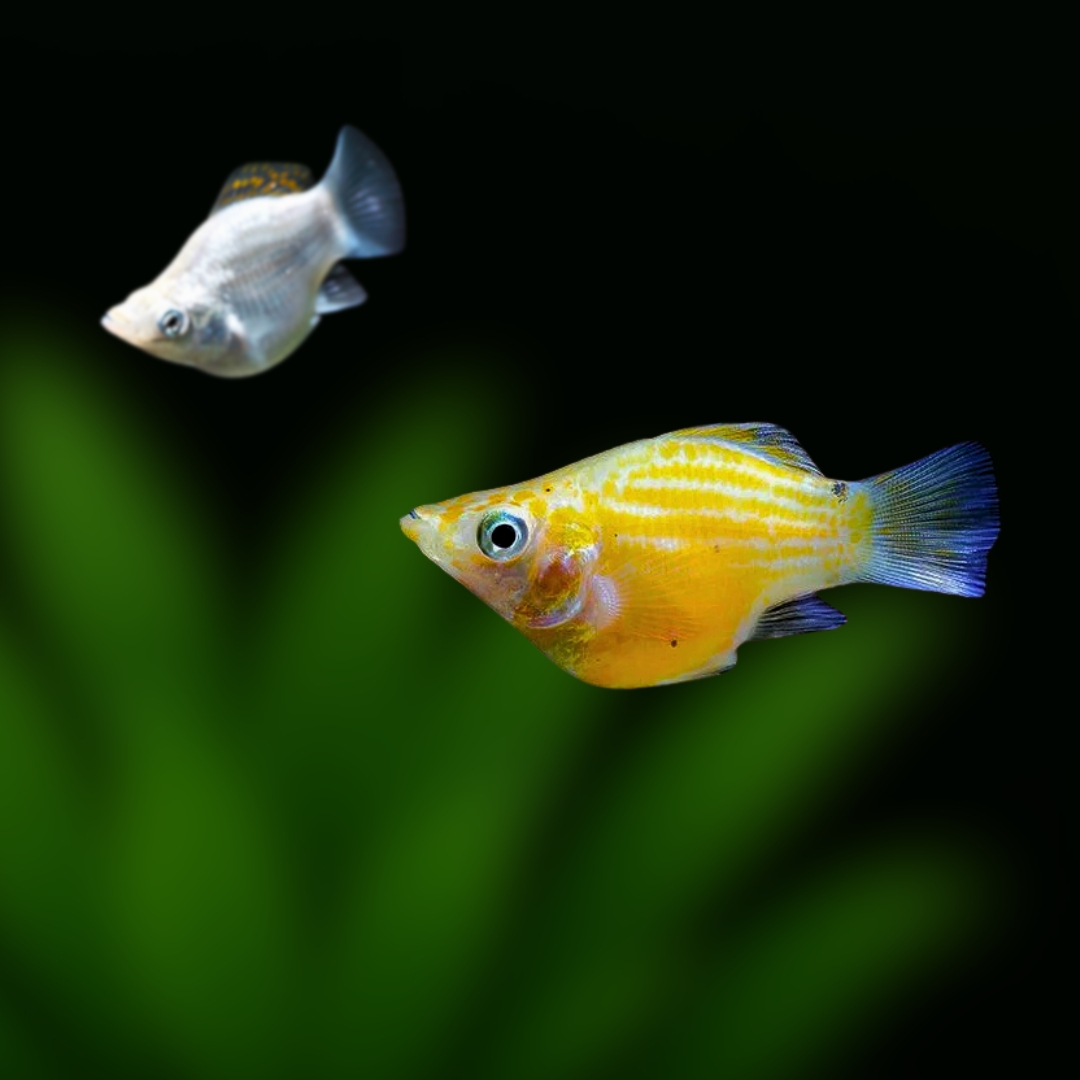
バルーンモーリーは、モーリー類の改良品種の中でも、短く丸い体型がひときわ目を引く人気の熱帯魚です。風船のようにふくらんだ体つきは、ショートボディと呼ばれる短胴形質によって生じたもので、ブラック、シルバー、ゴールデン、ダルメシアン、ライアーテールなど、さまざまな色彩やヒレのバリエーションが流通しています。見た目は愛嬌たっぷりですが、体型の影響で消化器や浮き袋に負担が出やすいとされ、給餌量や水質管理を誤ると転覆症状を起こしやすい一面があります。飼育では、中性から弱アルカリ性でやや硬度のある水、十分な水量、少量ずつの給餌、そして必要に応じた慎重な塩分管理が大切です。The Balloon Molly is one of the most recognizable fancy mollies, loved for its short, rounded, balloon-like body. This shape is commonly described in the aquarium trade as a short-body form. It is available in many color and fin varieties, including black, silver, golden, dalmatian, and lyretail types. Although its appearance is charming, the compact body form is considered more prone to digestive and buoyancy problems, making careful feeding and water management especially important. A stable aquarium, neutral to slightly alkaline moderately hard water, ample water volume, small meals, and cautious salt management when appropriate are key to successful care.
カダヤシ目 カダヤシ科 ポエシリア属Order Cyprinodontiformes, family Poeciliidae, genus Poecilia
英名 / English Name
Balloon Molly
分布 / Distribution
野生種ではなく、モーリー類をもとに作出された改良品種です。原種に関わるモーリー類は北米南部から中米、南米北部にかけて広く分布し、淡水域から汽水域まで幅広い環境に適応しています。現在流通する個体は、東南アジアなどの養殖場で繁殖されたものが中心です。This is a domestic fancy form rather than a wild species. The ancestral molly lineages occur from the southern United States through Central America and into northern South America, inhabiting freshwater to brackish environments. Most individuals in the aquarium trade are captive-bred, especially in Southeast Asian breeding facilities.
最大体長 / Max Size
約4〜6cmが一般的です。基になったモーリー類では7cm前後に達するものもいるため、系統や雌雄、セイルフィン系の影響によってはやや大きく見える個体もいます。Approximately 4 to 6 cm is typical. Some ancestral molly forms can reach around 7 cm or more, so certain strains, sexes, or sailfin-influenced individuals may appear slightly larger.
寿命 / Lifespan
一般的には約1〜3年。体型由来の消化器や浮き袋への負担があるため、通常体型のモーリーより短命になりやすい傾向があります。安定した水質と控えめな給餌で寿命を伸ばせる可能性があります。Usually about 1 to 3 years. Because the short-body form can place stress on the digestive system and swim bladder, it may be shorter-lived than standard-bodied mollies. Stable water quality and controlled feeding can improve longevity.
飼育環境 / Aquarium Environment
水槽サイズ / Tank Size
ペアや少数飼育でも45cm規格水槽以上が望ましく、群れで安定して飼うなら60cm規格水槽、約57L以上がおすすめです。より多めに飼う場合や繁殖まで見込む場合は、60cmワイド水槽、約90〜100L前後、またはそれ以上の水量を確保すると水質が安定しやすくなります。90cm規格水槽はさらに余裕を持たせたい場合の選択肢です。A standard 45 cm tank or larger is recommended even for a pair or small group, while a standard 60 cm tank of about 57 L or more is better for stable group care. For larger groups or breeding, a 60 cm wide tank of about 90 to 100 L or more provides better stability. A standard 90 cm tank is an even roomier option.
水温 / Temperature
24〜28℃が飼育しやすい目安です。モーリー類自体は18〜28℃程度の幅に耐えるとされますが、バルーン体型では低温や急な水温低下が消化不良や転覆症状のきっかけになりやすいため、サーモスタット付きヒーターで安定させます。A practical aquarium range is 24 to 28°C. Mollies as a group are reported to tolerate roughly 18 to 28°C, but in short-bodied Balloon Mollies, low temperatures and sudden drops may trigger digestive and buoyancy problems, so a thermostatically controlled heater is advised.
水質 / Water Quality
中性から弱アルカリ性、目安としてpH7.2〜8.2前後を好みます。軟水よりも中硬水から硬水を好む傾向があるため、極端な酸性・軟水環境は避けます。塩分添加は必須ではありませんが、塩に弱い水草や混泳魚がいない場合に限り、導入直後や体調不良時の補助として0.1〜0.3%程度のごく薄い塩分を短期的に利用することがあります。常用する場合も、混泳相手と水草への影響を必ず確認します。They prefer neutral to slightly alkaline water, roughly around pH 7.2 to 8.2. Moderately hard to hard water is generally better than very soft, acidic water. Salt is not mandatory, but when compatible plants and tank mates are present, a very light salt level of about 0.1 to 0.3% may be used short-term after introduction or during mild health issues. If used long-term, always consider the tolerance of tank mates and plants.
レイアウト / Layout
泳ぎは通常体型のモーリーほど得意ではないため、強い水流を避け、ゆったり泳げるスペースを確保します。アヌビアス・ナナ、ミクロソリウム、アマゾンソードなど丈夫な水草、流木、石を組み合わせると、稚魚や弱い個体の隠れ場所にもなります。水草を多く入れる場合は、塩分添加との相性に注意してください。Because Balloon Mollies are not as agile as standard-bodied mollies, avoid strong current and leave open swimming space. Hardy plants such as Anubias, Java fern, and Amazon sword, along with driftwood and stones, provide shelter for fry and weaker individuals. If the aquarium is heavily planted, consider plant tolerance before adding salt.
注意点 / Precautions
最大の注意点は、体型由来と考えられる消化不良と転覆症状です。餌の与えすぎ、古い餌、急な水温低下、水質悪化は避けます。また、モーリー類は繁殖力が高いため、雌雄を混ぜると稚魚が増えやすい点にも注意が必要です。飼いきれない個体を河川や水路へ放流することは、在来生態系への影響が懸念されるため絶対に避けてください。The main concern is digestive trouble and swim bladder-related buoyancy problems thought to be associated with the compact body form. Avoid overfeeding, stale food, sudden temperature drops, and poor water quality. Mollies also reproduce readily, so mixed-sex groups can quickly produce fry. Never release unwanted fish into rivers, canals, or outdoor waters, as they may affect local ecosystems.
餌と給餌 / Feeding
餌の種類 / Diet
雑食性で、ワーム類、甲殻類、昆虫質、植物質の餌を利用します。飼育下ではスピルリナ配合フード、植物性フレーク、細かな顆粒フードを主食にし、補助的に冷凍または乾燥のブラインシュリンプ、イトミミズ、赤虫などを少量与えます。水槽内のコケもついばみますが、コケだけで栄養を満たすことはできません。They are omnivorous, feeding on foods such as worms, small crustaceans, insects, and plant matter. In the aquarium, spirulina-based foods, vegetable flakes, and fine granules make good staples, supplemented sparingly with frozen or dried brine shrimp, tubifex, or bloodworms. They may graze on algae, but algae alone will not provide complete nutrition.
給餌のポイント / Feeding Tips
一度に多く与えず、少量を1日1〜2回、成長期や繁殖中の個体では様子を見ながら少量ずつ回数を調整します。腹部が張りすぎる、食後に浮き気味になる、泳ぎがぎこちないといった様子が見られたら、すぐに給餌量を見直します。バルーン体型の個体では、消化しやすい植物性の餌を中心にすることが、転覆病予防の基本です。Feed very small portions once or twice daily, adjusting cautiously for growing or breeding individuals. If the abdomen becomes overly swollen, the fish floats after feeding, or swimming becomes awkward, reduce the amount immediately. For short-bodied individuals, easily digestible vegetable-rich foods are central to preventing buoyancy problems.
性格と混泳 / Temperament and Tank Mates
性格 / Temperament
基本的には温和で、人にもよく慣れやすい熱帯魚です。群れでいると落ち着きやすく、水槽前面にもよく出てきます。ただし、オス同士では追いかけ合いが見られることがあり、メスが少ない環境では特定の個体に負担が集中する場合があります。They are generally peaceful and often become accustomed to people. In groups, they tend to feel more secure and may spend time near the front of the aquarium. Males may chase one another, and if there are too few females, individual fish may experience excessive attention or stress.
混泳の相性 / Compatibility
同じく温和で、強すぎる水流を必要としない魚との混泳に向いています。プラティ、穏やかなグッピー、コリドラス、オトシンクルス、一部の小型レインボーフィッシュなどが候補になります。活発すぎる魚、ヒレをかじる魚、大型魚、肉食魚との混泳は避けます。酸性軟水を好む魚や、塩分に弱い水草・生体と同居させる場合は、モーリー向けの塩分管理ができないこともあるため、淡水で安定維持する方向で調整します。They do well with peaceful fish that do not require strong current. Suitable candidates may include platies, gentle guppies, Corydoras, Otocinclus, and some small rainbowfish. Avoid overly active competitors, fin nippers, large fish, and predators. If kept with fish, plants, or invertebrates that prefer soft acidic water or are sensitive to salt, maintain them in stable freshwater rather than using molly-oriented salt management.
病気と対策 / Diseases and Prevention
かかりやすい病気 / Common Diseases
代表的なのは転覆病、消化不良、白点病、カラムナリス病、尾ぐされ病、水カビ病です。特にバルーン体型では内臓や浮き袋が圧迫されやすく、食べすぎや水温低下のあとに姿勢が崩れることがあります。輸入直後や購入直後の個体は、輸送ストレスで免疫力が落ちている場合もあります。Common problems include swim bladder-related buoyancy disorder, indigestion, ich, columnaris disease, fin rot, and fungal infections. The short-body form can compress the organs and swim bladder, so posture problems may appear after overeating or temperature drops. Newly imported or newly purchased fish may also have lowered immunity due to transport stress.
対策と予防 / Prevention
予防の基本は、水温を安定させ、ろ過を十分に効かせ、餌を少なめに管理することです。転覆症状が出た場合は、まず1〜3日を目安に絶食し、水温を急変させず25〜26℃前後で安定させます。必要に応じて隔離し、0.3〜0.5%前後の塩水浴を数時間から1日以上かけて慎重に行う方法がありますが、急な塩分変化は避けます。体表のただれ、白い綿状の付着物、ヒレの溶けが見られる場合は、塩水浴だけでなく観賞魚用の抗菌薬を検討します。薬浴時は説明書に従い、ろ材や水草、エビ類への影響にも注意してください。Prevention relies on stable temperature, adequate filtration, and conservative feeding. If buoyancy symptoms appear, stop feeding for about 1 to 3 days and keep the temperature stable around 25 to 26°C without sudden changes. If needed, isolate the fish and gradually use a salt bath around 0.3 to 0.5%, avoiding abrupt salinity changes. If ulcers, cottony patches, or fin erosion appear, consider an aquarium antibacterial medication in addition to salt care. Always follow product instructions and consider effects on filter media, plants, and shrimp.
増やし方(繁殖) / Breeding
雌雄の判別 / Sexing
オスは尻びれが棒状に変化したゴノポディウムを持ち、メスは尻びれが扇形に近く、腹部がよりふっくらします。成長したメスは妊娠時に腹部がさらに大きくなりますが、バルーン体型ではもともと腹が丸いため、通常体型のモーリーより判断が難しいことがあります。Males have a modified anal fin called a gonopodium, while females have a more fan-shaped anal fin and a fuller abdomen. Mature females become even rounder when pregnant, but because Balloon Mollies are already rounded, pregnancy can be harder to judge than in standard-bodied mollies.
繁殖形態 / Reproduction
卵胎生です。卵を産み落とすのではなく、メスの体内で稚魚が発生し、泳げる状態の稚魚として出産します。条件が良いと数週間ごとに出産することがあり、メスは一度の交尾で精子を体内に保持し、複数回出産する場合があります。They are livebearers. Instead of laying eggs, the young develop inside the female and are born as free-swimming fry. Under good conditions, females may give birth every few weeks, and stored sperm can allow multiple broods from a single mating.
繁殖のポイント / Breeding Tips
繁殖自体は比較的容易ですが、親が稚魚を食べることがあるため、浮草や細かい水草、産卵箱、稚魚用の隠れ場所を用意します。稚魚には細かく砕いた人工飼料、ブラインシュリンプ幼生、稚魚用フードなどを少量ずつ与えます。モーリー類では一度に数十匹以上の稚魚が生まれることもあるため、増えた後の飼育スペースも事前に考えておきます。バルーン体型は改良品種として固定されている形質ですが、極端に泳ぎづらい個体や明らかに健康上の負担が大きい個体を無理に繁殖へ使わないことも、飼育者として大切な配慮です。Breeding is generally easy, but adults may eat fry, so provide floating plants, fine-leaved plants, a breeder box, or other hiding places. Feed fry finely crushed prepared food, newly hatched brine shrimp, or specialized fry food in small amounts. Mollies can produce several dozen or more fry at a time, so plan space for the offspring in advance. The balloon form is a fixed fancy trait, but avoiding the breeding of individuals with severe mobility or health problems is an important welfare consideration.
雑学と豆知識 / Trivia and Fun Facts
1. 学名に残るポエシリア属の物語 / 1. The Story Behind the Genus Poecilia
バルーンモーリーは単一の野生種ではなく、ポエシリア属の複数系統を背景に持つ改良モーリーとして扱われます。代表的なモーリー類の一つであるショートフィン・モーリーは、メキシコからコロンビア方面にかけて分布し、淡水域から汽水域まで利用する魚として知られています。だからこそ、現在のモーリーたちにも中性から弱アルカリ性、やや硬度のある水を好む性質が残っていると考えられます。水槽の中の小さな一匹にも、淡水と汽水をまたぐ祖先たちの環境適応の名残が、飼育条件という形でそっと表れているのです。The Balloon Molly is not a single wild species, but a domestic fancy molly with a background involving multiple Poecilia lineages. One representative molly, the Short-finned Molly, is known from Mexico toward Colombia and uses both freshwater and brackish habitats. This background helps explain why aquarium mollies often prefer neutral to slightly alkaline, moderately hard water. In a small aquarium fish, traces of ancestral adaptation to fresh and brackish environments are still reflected in its care requirements.
2. 丸い体はかわいさと負担をあわせ持つ / 2. A Round Body with Both Charm and Burden
バルーンモーリーの最大の魅力は、正面から見ると水滴のようにも見える、ころんとした丸い体型です。しかし、そのかわいらしさは、脊椎が短くなったショートボディ形質によって生まれたものです。体の長さが短くなっても、内臓が必要とする空間は大きく変わらないため、消化管や浮き袋には負担がかかりやすくなります。つまり、バルーンモーリーを上手に飼うということは、この魚の魅力を楽しむだけでなく、その体型が抱える弱点を理解して、餌を控えめにし、水温を安定させることでもあります。The most appealing feature of the Balloon Molly is its rounded body, which can look almost like a water droplet from the front. Yet this charm comes from a short-body trait caused by a shortened spine. Even when the body is shortened, the internal organs still require space, so the digestive tract and swim bladder can be placed under extra pressure. Keeping Balloon Mollies well therefore means not only enjoying their appearance, but also understanding their physical vulnerability, feeding lightly, and keeping temperature stable.
3. ブラックモーリーから広がった改良モーリーの歴史 / 3. Fancy Mollies and the Legacy of the Black Molly
観賞魚としてのモーリーの歴史では、ブラックモーリーの存在が大きな節目になりました。20世紀初頭以降、アクアリストや養殖業者たちは、黒い変異個体やセイルフィン系のモーリーを選抜・交配し、現在のような多彩な改良モーリーの土台を築いていきました。バルーンモーリーも、その長い品種改良の流れの中で生まれた存在です。ブラック、シルバー、ゴールデン、ダルメシアン、ライアーテールといった多彩な姿は、単なる色違いではなく、人が何世代にもわたって選び続けてきた観賞魚文化の積み重ねでもあります。In the history of mollies as aquarium fish, the Black Molly became an important milestone. Since the early twentieth century, aquarists and breeders have selected and crossed dark variants and sailfin-type mollies, building the foundation for the many fancy forms seen today. The Balloon Molly emerged within this long stream of selective breeding. Black, silver, golden, dalmatian, and lyretail types are not merely color variations; they are also the result of generations of human selection within aquarium culture.
4. ダルメシアン模様と動く遺伝子 / 4. Dalmatian Patterns and Mobile Genes
白や銀色の体に黒い斑点が散るダルメシアンタイプは、成長とともに模様の見え方が変わることがあります。斑模様は色素細胞の分布や発現の違いによって生じるものですが、バルーンモーリーの各品種でどの遺伝子がどのように関わるかは、観賞魚品種レベルではまだ整理しきれていない部分もあります。水槽で毎日眺めていると、同じ魚なのに少しずつ印象が変わって見えることがあります。そこには、品種改良の美しさだけでなく、生き物の成長に伴って模様が立ち上がってくる面白さがあります。Dalmatian types, with black spots scattered over a white or silvery body, may change in appearance as they grow. Spotted patterns arise from the distribution and expression of pigment cells, but the exact genetic mechanisms in each fancy Balloon Molly strain are not fully clarified at the hobby level. When watched daily in the aquarium, the same fish can seem to change subtly over time. This reveals not only the beauty of fancy breeding, but also the fascination of patterns emerging as a living fish grows.
5. アマゾンモーリーが教えてくれるポエシリア属の不思議 / 5. What the Amazon Molly Reveals About Poecilia
バルーンモーリーそのものは通常の有性生殖を行いますが、同じポエシリア属にはアマゾンモーリーという非常に不思議な仲間がいます。アマゾンモーリーはメスだけで構成される単性生殖の魚として知られ、近縁種のオスの精子を発生の合図として利用しますが、通常はそのオスの遺伝子を子へ取り込みません。この存在は、ポエシリア属が遺伝や繁殖の研究対象としても興味深いグループであることを物語っています。バルーンモーリーの多様な品種が成立してきた背景を考える時にも、ポエシリア属全体の繁殖生物学の奥深さを知っておくと、小さな改良品種の背後に広い進化の世界が見えてきます。The Balloon Molly reproduces sexually, but the same genus includes the remarkable Amazon Molly. The Amazon Molly is known as an all-female, unisexual fish that uses sperm from related species as a developmental trigger, while the male genes are usually not incorporated into the offspring. Its existence shows why Poecilia is such an interesting group for studying genetics and reproduction. When considering the diversity of fancy mollies, this broader reproductive biology helps reveal a much larger evolutionary world behind a small domestic aquarium fish.
6. 飼育者に求められるやさしい責任 / 6. The Gentle Responsibility of the Keeper
バルーンモーリーは、愛らしさを目的に固定された改良品種である一方、泳ぎにくさや転覆病のリスクを抱える魚でもあります。そのため、飼育者には通常体型の魚以上に、生活の質を守る意識が求められます。強い水流を避けること、餌を欲しがっても与えすぎないこと、相性の悪い魚と無理に混泳させないこと。そうした小さな配慮の積み重ねが、バルーンモーリーにとっては大きな安心につながります。かわいいからこそ、その体に無理をさせない飼い方を選ぶことが、この魚と長く付き合うためのいちばん大切な姿勢です。The Balloon Molly is a fancy form fixed for its appealing appearance, but it also carries risks such as reduced swimming ability and buoyancy problems. For that reason, keepers must be especially mindful of its quality of life. Avoiding strong current, resisting the urge to overfeed even when the fish begs, and not forcing it to live with unsuitable tank mates are small but meaningful acts of care. Because this fish is charming, choosing care that does not burden its body is the most important attitude for keeping it well.
まとめ / Conclusion
バルーンモーリーは、丸く愛らしい体型と豊富なカラーバリエーションで、水槽を明るくしてくれる魅力的な熱帯魚です。基本的には丈夫で人にも慣れやすく、卵胎生メダカの仲間らしく繁殖も楽しめますが、ショートボディ特有の体のつくりから、餌の与えすぎや水温変化には敏感です。The Balloon Molly is an attractive tropical fish that brightens the aquarium with its rounded body and wide range of colors. It is generally hardy, personable, and capable of breeding readily like other livebearers, but its short-body structure makes it sensitive to overfeeding and temperature fluctuations.
飼育のポイントは、60cm規格水槽以上を目安に安定した水量を確保し、中性から弱アルカリ性の水質を保ち、植物質を含む餌を少量ずつ与えることです。転覆病を予防するためにも、毎日の観察を大切にし、泳ぎ方や食後の様子に変化があれば早めに対応しましょう。体型に由来する弱点を理解して丁寧に飼えば、バルーンモーリーはそのユーモラスな姿と穏やかな性格で、アクアリウムにやさしい彩りを添えてくれます。The key to care is providing stable water volume, ideally in a standard 60 cm tank or larger, maintaining neutral to slightly alkaline water, and feeding small portions of vegetable-rich foods. To prevent buoyancy problems, observe the fish daily and respond early if swimming or post-feeding behavior changes. When its body-related weaknesses are understood and managed gently, the Balloon Molly adds a warm and charming presence to the aquarium.
短胴・矮小形質の遺伝的背景:
Shao, F. et al. Identification of Loci Controlling the Dwarfism Trait in the White Sailfin Molly Poecilia latipinna Using Genome-Wide Association Studies Based on Genotyping-By-Sequencing. 2019. 短く異形成の脊椎、候補遺伝子、矮小形質の説明を慎重に扱うために参照。
https://pmc.ncbi.nlm.nih.gov/articles/PMC6628085/
雌性発生とポエシリア属の繁殖生物学:
Cerepaka, C. et al. Sperm specificity and potential paternal effects in gynogenesis in the Amazon Molly, Poecilia formosa. PeerJ. 2023. アマゾンモーリーの雌性発生、精子による発生開始、通常は父性遺伝子を取り込まない点の確認に参照。
https://pmc.ncbi.nlm.nih.gov/articles/PMC10629382/
アマゾンモーリーの無性生殖ゲノム:
Warren, W. C. et al. Clonal polymorphism and high heterozygosity in the celibate genome of the Amazon molly. Nature Ecology & Evolution. 2018. ポエシリア属の繁殖・遺伝に関する雑学部分の補助資料として参照。
https://www.nature.com/articles/s41559-018-0473-y


 アイのアクアグッズ案内水草トリミングの道具とやり方|ハサミ・ピンセットを水草に合わせて選ぼう伸びすぎた水草は切っていい? 有茎草の差し戻し、前景草の絨毯、流木のモスを整える場面から、水草用ハサミ・ピンセット・ゴミ取りネットの選び方と片付けを紹介します。記事はコチラ →
 アイのアクアグッズ案内おとひめ物語|養殖生まれの餌を、わが家の魚に合う一粒へ道具の特徴や使い方、選ぶときのポイントをアイが紹介します。記事はコチラ →



コメント