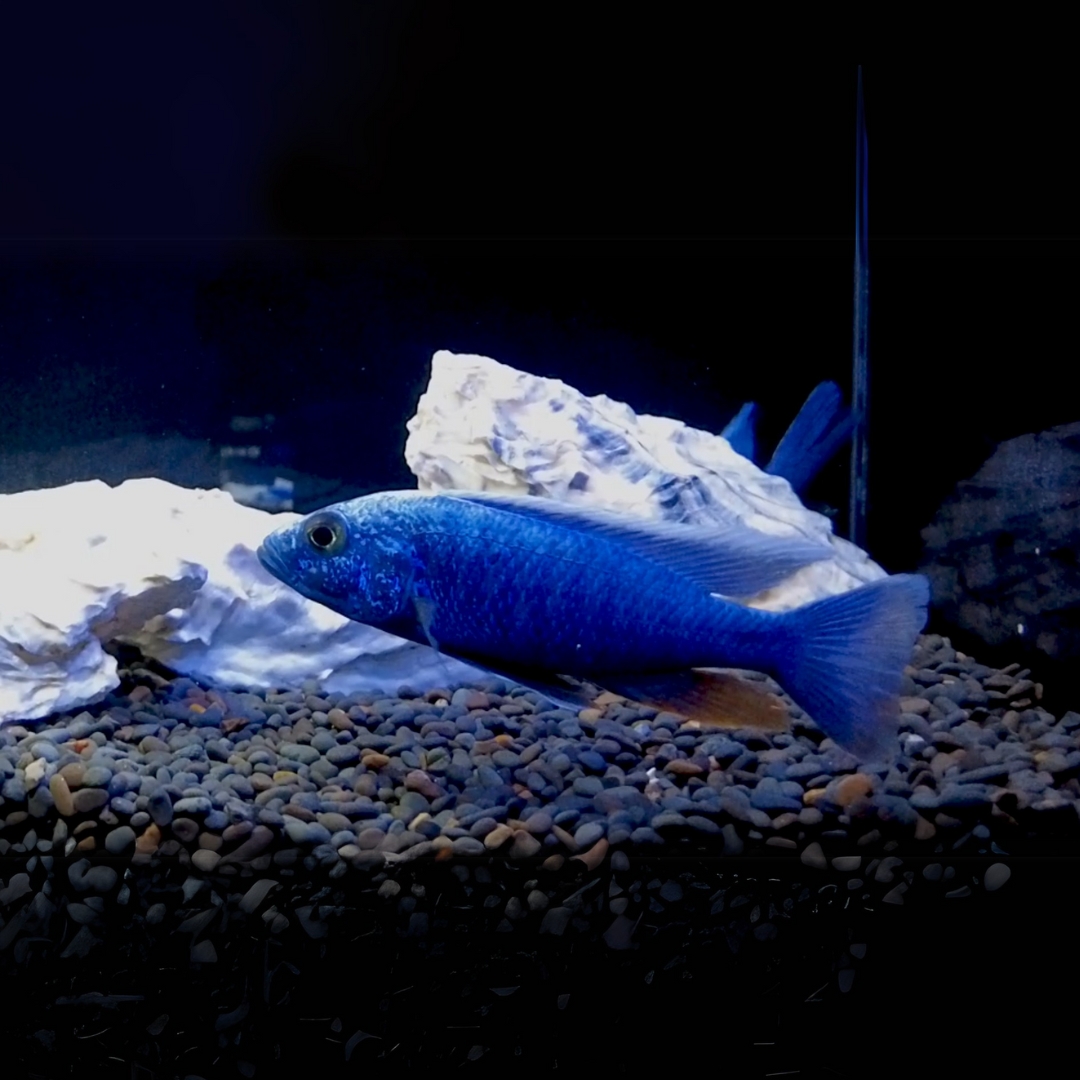
アーリーは、アフリカのマラウイ湖に固有のシクリッドで、鮮烈な青い体色をもつオスが非常に美しいことで知られる人気種です。日本の観賞魚市場では古くから「アーリー」の名で親しまれていますが、現在この名前で流通する個体の多くは、厳密にはSciaenochromis fryeriに該当します。英語圏ではElectric Blue Hapとも呼ばれ、マラウイ湖産ハップス系シクリッドの代表的な存在です。The Electric Blue Hap is a cichlid endemic to Lake Malawi in Africa, well known for the vivid blue coloration of mature males. In the Japanese aquarium trade, it has long been called “Ahli,” but most fish sold under this name today are more accurately identified as Sciaenochromis fryeri. It is one of the best-known Malawi hap-type cichlids in the hobby.
基本情報 / Basic Information
学名 / Scientific Name
Sciaenochromis fryeri
通称 / Common Name
アーリー、スキアエノクロミス・フライエリィ、アイスバーグElectric Blue Hap, Fryer’s Hap, Iceberg variant
分類 / Family
カワスズメ科、スキアエノクロミス属Family Cichlidae, genus Sciaenochromis
英名 / English Name
Electric Blue Hap
分布 / Distribution
アフリカ大陸のマラウイ湖。岩礁地帯と砂地が交わる開けた水域や、洞窟、岩の裂け目の周辺に見られます。Lake Malawi in Africa. It is found around rocky-sandy transition zones, open water near rocks, caves, and crevices.
最大体長 / Max Size
およそ15cm前後。野生個体や飼育条件によって差があります。Around 15 cm, with some variation depending on origin and aquarium conditions.
寿命 / Lifespan
およそ5年から8年程度。安定したアルカリ性水質と十分な濾過環境では、より長く飼育できることがあります。Approximately 5 to 8 years. With stable alkaline water and strong filtration, individuals may live longer.
飼育環境 / Aquarium Environment
水槽サイズ / Tank Size
単独または少数飼育でも最低60cm規格水槽が目安ですが、成長後の遊泳力や混泳時の争いを考えると、90cm規格水槽以上が安心です。複数のハップス系シクリッドと混泳する場合は、90cmから120cm規格水槽以上を推奨します。A standard 60 cm tank is the minimum for a single fish or a small setup, but a 90 cm standard tank or larger is recommended because of its swimming ability and territorial behavior. For a mixed Malawi hap community, a 90 to 120 cm tank or larger is preferable.
水温 / Temperature
24℃から28℃。年間を通して25℃前後で安定させると管理しやすくなります。24 to 28°C. Keeping the aquarium stable at around 25°C year-round is generally suitable.
水質 / Water Quality
弱アルカリ性からアルカリ性を好みます。目安はpH7.5から8.3前後、KHとGHをある程度保った水です。サンゴ砂やサンゴ岩を使うと炭酸塩による緩衝作用が得られ、水質を安定させやすくなります。This species prefers slightly alkaline to alkaline water. A useful target is around pH 7.5 to 8.3, with some carbonate hardness and general hardness maintained. Coral sand and coral rock help buffer the water and keep it stable.
レイアウト / Layout
マラウイ湖の岩礁と砂地の移行帯を意識し、サンゴ岩などで隠れ家を作りつつ、前面や中央には泳ぐためのスペースを確保します。水草はアルカリ性水質や掘り返し行動の影響を受けやすいため、基本的には岩組み中心のレイアウトが向いています。Create a layout inspired by Lake Malawi’s rocky-sandy transition zones. Provide shelters with coral rock or similar stones while leaving open swimming space at the front or center. Live plants are usually difficult because of alkaline water and digging behavior, so a rock-based layout is best.
注意点 / Precautions
高pH環境ではアンモニアの毒性が強く出やすいため、濾過不足は大きなリスクになります。外部式フィルターや上部式フィルターを活用し、過剰気味の生物濾過を用意してください。硝酸塩の蓄積はpH低下にもつながるため、定期的な水質チェックと換水が重要です。In high-pH water, ammonia becomes more toxic, so insufficient filtration is a serious risk. Use strong biological filtration, such as an external canister filter, overhead filter, or a combination of filtration systems. Regular water testing and water changes are important because nitrate accumulation can also lower pH over time.
餌と給餌 / Feeding
餌の種類 / Diet
肉食性が強く、シクリッド用の人工飼料を主食に、冷凍赤虫、冷凍クリル、イトミミズなどを副食として与えられます。大型個体にはメダカなどの活餌を使うこともありますが、栄養の偏りや病原体の持ち込みに注意が必要です。It is primarily carnivorous. Use high-quality cichlid pellets or flakes as the staple, supplemented with frozen bloodworms, frozen krill, and tubifex where appropriate. Larger individuals may accept live feeder fish such as medaka, but nutritional imbalance and disease introduction should be considered.
給餌のポイント / Feeding Tips
一度に大量に与えるよりも、少量を様子を見ながら与える方が安全です。過食や高タンパク餌の与えすぎは消化不良や腹水病の原因になるため、腹部の張りや食欲を観察しながら調整してください。Feed modest portions rather than large meals. Overfeeding and excessive high-protein foods may lead to digestive problems or Malawi bloat, so adjust feeding while observing appetite and abdominal swelling.
性格と混泳 / Temperament and Tank Mates
性格 / Temperament
肉食性シクリッドらしい気の強さはありますが、ムブナのように極端に狭い岩場へ執着するタイプではありません。オス同士や繁殖期の個体は攻撃的になりやすいため、十分な水槽サイズと隠れ家が必要です。It has the assertive nature expected of a predatory cichlid, but it is not as tightly attached to small rocky territories as many mbuna. Males and breeding individuals can become aggressive, so adequate tank size and shelters are necessary.
混泳の相性 / Compatibility
相性がよいのは、同じマラウイ湖産のハップス系シクリッドやピーコックシクリッド、サイズの合うシノドンティスなどです。口に入る小型魚は捕食対象になります。ムブナとの混泳は、気性と食性の違いから避けた方が無難です。ムブナは草食寄りの種類が多く、高タンパク餌で消化不良を起こしやすい点にも注意が必要です。Suitable tank mates include similarly sized Malawi hap cichlids, peacock cichlids, and appropriately sized Synodontis catfish. Small fish that fit into its mouth may be eaten. Mixing with mbuna is generally best avoided because of differences in aggression and diet; many mbuna are more herbivorous and can suffer digestive problems when fed protein-rich foods.
病気と対策 / Diseases and Prevention
かかりやすい病気 / Common Diseases
白点病、外傷由来の細菌感染、消化不良、腹水病に注意が必要です。特にアフリカンシクリッドでは、餌の与えすぎや水質悪化が腹部の膨れ、食欲低下、衰弱につながることがあります。Watch for ich, bacterial infections from injuries, digestive trouble, and Malawi bloat. In African cichlids, overfeeding and poor water quality can lead to abdominal swelling, loss of appetite, and weakness.
対策と予防 / Prevention
安定したアルカリ性水質、強力な濾過、定期的な換水、過密時の観察が基本です。新しい魚はできれば隔離飼育で状態を確認し、導入直後は水温やpHの急変を避けてください。争いによる傷を見つけた場合は、隔離やレイアウト変更で攻撃の集中を防ぎます。Prevention is based on stable alkaline water, strong filtration, regular water changes, and careful observation in crowded tanks. New fish should ideally be quarantined, and sudden temperature or pH changes should be avoided. If injuries from aggression are seen, use isolation or layout changes to reduce focused attacks.
増やし方(繁殖) / Breeding
雌雄の判別 / Sexing
オスは成長とともに鮮やかな青色になり、背ビレや尻ビレが伸びて目立ちます。メスは銀灰色から褐色で地味な体色を保つことが多く、オスより小型にまとまる傾向があります。Males develop a vivid blue coloration as they mature, with more extended dorsal and anal fins. Females usually remain silver-gray to brownish and are often smaller and less colorful than males.
繁殖形態 / Reproduction
マウスブルーダーです。メスは産んだ卵を口にくわえ、口内で受精卵と稚魚を保護します。保育期間はおよそ3週間で、この間メスはほとんど餌を食べません。This species is a maternal mouthbrooder. The female picks up the eggs in her mouth and protects the fertilized eggs and fry orally. The brooding period is around three weeks, during which the female eats little or no food.
繁殖のポイント / Breeding Tips
オス1匹に対してメスを複数匹入れるハーレム構成にすると、1匹のメスへの追い回しを軽減しやすくなります。口に卵を含んだメスは、落ち着ける隔離水槽へ移すと稚魚の回収率が上がります。稚魚にはふ化直後のブラインシュリンプを与えると育てやすいです。A harem setup with one male and several females helps reduce pressure on any single female. A brooding female can be moved to a quiet separate tank to improve fry survival. Newly released fry can be raised well on newly hatched brine shrimp.
雑学と豆知識 / Trivia and Fun Facts
1. 「アーリー」という名前に残る分類の歴史 / 1. The taxonomic history behind the name “Ahli”
日本で定着している「アーリー」という名前は、かつて本種がSciaenochromis ahliとして扱われていた時代の名残です。現在、観賞魚として広く流通する青い個体群の多くはSciaenochromis fryeriとされますが、流通名としての「アーリー」は非常に強く定着しました。つまりこの魚の名前には、アフリカンシクリッドが世界の観賞魚市場へ広まっていく過程で生じた、分類学と商業名のすれ違いが刻まれています。The Japanese trade name “Ahli” is a remnant of the time when this fish was widely treated as Sciaenochromis ahli. Today, most of the bright blue fish commonly sold in the hobby are regarded as Sciaenochromis fryeri, yet the trade name has remained deeply established. In this sense, the name reflects a historical gap between taxonomy and aquarium trade naming.
2. ハプロクロミスだった時代の名残 / 2. A legacy from the Haplochromis era
アーリーは、観賞魚として紹介され始めた初期にはHaplochromis jacksoniとして誤って扱われ、その後Haplochromis ahliの名でも流通しました。現在の分類ではSciaenochromis fryeriとされますが、日本で「アーリー」と呼ばれ続けている背景には、このハプロクロミス属として扱われていた時代の記憶が残っています。アフリカンシクリッドの流通名には、こうした古い分類や輸入当時の呼び名が化石のように残ることがあり、アーリーはその代表的な例といえます。In the early days of the aquarium trade, this fish was first confused with Haplochromis jacksoni and later circulated under the name Haplochromis ahli. Although it is now classified as Sciaenochromis fryeri, the Japanese name “Ahli” preserves a memory of the period when it was treated within Haplochromis. Trade names for African cichlids often retain traces of older classifications and import-era names, and this species is a classic example.
3. 青くなるのは主にオス / 3. The vivid blue is mainly a male trait
アーリーの魅力といえば鮮やかな青ですが、この発色は主に成熟したオスで強く現れます。メスは銀灰色から褐色の落ち着いた色合いで、自然下では保護色として役立つと考えられます。水槽内でも、優位なオスほど青が強く出ることがあり、体色は単なる美しさだけでなく、性成熟や順位を示すサインとしても見ることができます。The intense blue coloration is one of the species’ greatest attractions, but it is mainly displayed by mature males. Females usually retain a subdued silver-gray to brownish color, which likely functions as camouflage in nature. In aquariums, dominant males may show stronger blue coloration, so body color can also act as a signal of maturity and social rank.
4. アイスバーグは自然変異に由来する人気品種 / 4. The Iceberg form originated from a natural mutation
アイスバーグと呼ばれるタイプは、頭部から背ビレにかけて白いラインが入る美しい品種です。この白いブレイズは、人工的な多種交雑ではなく、マラウイ湖の自然環境で見つかった突然変異個体に由来するとされています。その後、ブリーダーが白い発色の強い個体を選別し、現在のような観賞価値の高い系統へと固定していきました。The Iceberg form is a beautiful variant with a white blaze running from the head toward the dorsal fin. This white marking is considered to have originated from a naturally occurring mutant rather than artificial crossbreeding with other species. Breeders then selected individuals with stronger white expression and established the high-value lines seen in the hobby today.
5. 「エレクトリック・ブルー」の名前には注意 / 5. Be careful with the name “Electric Blue”
観賞魚市場では、青く美しい魚に「エレクトリック・ブルー」という名前が付くことが少なくありません。たとえばエレクトリック・ブルー・ヨハニーは、アーリーとは属も性質も異なるムブナの仲間です。見た目の青さだけで選ぶと、性格や食性、水槽内での振る舞いが大きく異なる魚を混同してしまうため、購入時は流通名だけでなく学名や属名も確認すると安心です。In the aquarium trade, the phrase “Electric Blue” is often applied to attractive blue fish. For example, the Electric Blue Johanni is a mbuna and differs from the Electric Blue Hap in genus, behavior, and diet. Choosing fish by blue coloration alone can lead to serious compatibility mistakes, so checking the scientific name or genus is strongly recommended.
まとめ / Conclusion
アーリーは、マラウイ湖産シクリッドの中でも特に美しい青を楽しめる代表種です。飼育そのものは不可能ではありませんが、一般的な弱酸性を好む熱帯魚とは求める環境が大きく異なります。サンゴ砂やサンゴ岩を使ったアルカリ性水質の維持、強力な濾過、定期的な換水が長期飼育の大きな鍵になります。The Electric Blue Hap is one of the most attractive Lake Malawi cichlids for aquarists who enjoy vivid blue coloration. It is not impossible to keep, but its requirements differ greatly from those of many soft, acidic-water tropical fish. Maintaining alkaline water with coral sand or coral rock, providing strong filtration, and performing regular water changes are key to long-term success.
混泳では、口に入る小型魚を避け、食性とサイズの近いハップス系シクリッドやピーコックシクリッドを中心に考えると失敗しにくくなります。分類の歴史やアイスバーグ品種の背景まで知ると、この魚の青さは単なる色彩ではなく、マラウイ湖の進化と観賞魚文化が重なった魅力として、より深く楽しめます。For community setups, avoid small fish that can be swallowed and focus on similarly sized hap-type cichlids or peacock cichlids with compatible dietary needs. Understanding its taxonomic history and the story behind the Iceberg form makes its blue coloration more than just a visual feature; it becomes a window into Lake Malawi evolution and aquarium culture.
Konings, A. 1993. A revision of the genus Sciaenochromis Eccles & Trewavas, 1989 (Pisces, Cichlidae). The Cichlids Yearbook 3:28–36. 学名Sciaenochromis fryeriの記載、S. ahliとの区別、分類史、形態的特徴を確認するための中核文献です。



 アイのアクアグッズ案内水槽のエアーポンプの選び方|水深・音・泡で選ぶおすすめ用品道具の特徴や使い方、選ぶときのポイントをアイが紹介します。記事はコチラ →
 アイのアクアグッズ案内水換え・底砂掃除の道具の選び方|砂利・砂・ソイルに合うクリーナーとポンプ道具の特徴や使い方、選ぶときのポイントをアイが紹介します。記事はコチラ →



コメント