| 水槽サイズ / Tank Size |
ペアでの飼育や繁殖なら30cm規格水槽(約12L)以上が目安で、余裕を持たせるなら30cmキューブ水槽(約25L)程度が安心です。複数ペアを群泳させて観賞するなら、60cm規格水槽(約57L)以上が適しています。水面近くを活発に泳ぎ、水槽から飛び出してしまうこともあるため、必ずフタを設置しましょう。For a pair or for breeding, a standard 30 cm tank (about 12 L) or larger is the guideline, and a 30 cm cube tank (about 25 L) gives more comfortable room. For displaying a group of several pairs, a standard 60 cm tank (about 57 L) or larger is suitable. Guppies swim actively near the surface and can jump out, so always use a lid. |
| 水温 / Temperature |
22〜28℃が適温で、最適なのは25〜26℃前後です。28℃以上の高水温が続くと成長や繁殖のペースは早まりますが、代謝が上がって寿命が縮みやすくなるうえ、尾ぐされ病やエロモナス症の原因菌も活発になります。ヒーターで25〜26℃前後に安定させるのが理想です。
The suitable range is 22-28°C, with the optimum around 25-26°C. Prolonged temperatures above 28°C speed up growth and breeding, but raise metabolism and tend to shorten lifespan, while also activating the bacteria behind fin rot and Aeromonas infections. Ideally, use a heater to keep the water stable at around 25-26°C.
|
| 水質 / Water Quality |
pH6.8〜7.5の中性付近(下限はpH6.0程度)、GH8〜12程度の中硬水が適しています。日本の水道水は軟水で中性付近ですが、飼育を続けるうちに水は酸性に傾きやすく、pHが下がると体調を崩したりヒレが傷んだりする原因になります。週1回、20〜30%程度の換水を続け、少量のサンゴ砂などで中性〜弱アルカリ性を保つと、タキシードの黒色も引き締まって見えやすくなります。Near-neutral water at pH 6.8-7.5 (lower limit around pH 6.0) with moderate hardness of about GH 8-12 is suitable. Japanese tap water is soft and close to neutral, but aquarium water tends to turn acidic over time, and a falling pH can cause poor health and damaged fins. Changing about 20-30% of the water once a week and using a small amount of coral sand to keep it neutral to slightly alkaline also helps the black of the tuxedo look crisp. |
| レイアウト / Layout |
底砂には、pHを中性〜弱アルカリ性に保ちやすい大磯砂が向いています。水草用のソイルは水を弱酸性に傾けるため、使う場合は定期的にpHを測り、貝殻やサンゴ砂を併用して調整するとよいでしょう。また、真っ白な底砂や照明の反射が強い環境では魚が落ち着かず、色が薄く見える「色飛び」が起こりやすいとされています。プラチナの金銀の光沢と白い尾ビレを引き立てるには、アヌビアス・ナナ、ウィローモス、マツモなど濃い緑の水草や暗い色のバックスクリーンを背景にし、LED照明を1日8〜10時間程度当てるのがおすすめです。大きなデルタテールは強い水流にあおられると体力を消耗するため、スポンジフィルターなどで水流を弱〜中程度に抑えましょう。Oiso gravel, which helps keep the pH neutral to slightly alkaline, is well suited as substrate. Plant soil tends to make the water slightly acidic, so if you use it, measure the pH regularly and adjust it with shells or coral sand. In tanks with pure white substrate or strong light reflection, the fish may not settle down and are said to be prone to color fading. To bring out the gold and silver platinum sheen and the white tail, use deep green plants such as Anubias nana, willow moss, and hornwort, or a dark background, with LED lighting for about 8-10 hours a day. A large delta tail tires the fish in strong currents, so keep the flow gentle to moderate, for example with a sponge filter. |
| 注意点 / Precautions |
最も大切なのは、国産グッピーと外国産グッピーを同じ水槽に入れないことです。同じ品種名で売られていても、輸入された外国産のグッピーやプラティの中には、通称「グッピーエイズ」と呼ばれる致死性の高い感染症(原因には諸説あります)の病原体を持っている個体がいる可能性があります。この病気に抵抗力を持たない国産グッピーと一緒にすると、短期間で水槽全体が全滅するおそれがあると、愛好家や専門店の間で注意が呼びかけられています。網やホースなどの器具も、水槽ごとに分けて使いましょう。また、本品種のゴールデンは目が黒いのが特徴です。目が赤い個体は「RREAプラチナドイツイエロー」など別の品種にあたるため、購入時には目の色も確かめておくと安心です。The most important rule is never to put domestic Japanese guppies and imported guppies in the same tank. Even when sold under the same variety name, some imported guppies and platies may carry the pathogen of a highly lethal disease commonly called “guppy AIDS” (its cause is debated). Hobbyists and specialist shops warn that mixing them with domestic guppies, which lack resistance to this disease, can wipe out an entire tank in a short time. Use separate nets, hoses, and other equipment for each tank. Also, the Golden trait in this variety is characterized by black eyes. Red-eyed fish belong to a different variety such as the “RREA Platinum German Yellow,” so checking eye color when purchasing is reassuring. |
| 雌雄の判別 / Sexing |
稚魚は生後2週間頃から雌雄の見分けがつき始めます。メスは肛門の近くに「妊娠点」と呼ばれる黒い点が現れ、尻ビレが丸みのある扇形に開きます。一方オスは、尻ビレが次第に細くたたまれ、交接器(ゴノポディウム)へと変化していきます。成魚になると、オスは小柄で大きなデルタテールとプラチナの光沢が目立ち、メスは5〜6cmほどの大きめの体に整った尾ビレを持ちます。Fry begin to show their sex from about two weeks of age. Females develop a dark spot near the vent called the “gravid spot,” and their anal fin opens into a rounded fan shape. In males, the anal fin gradually narrows and folds, developing into the copulatory organ (gonopodium). As adults, males are small with a prominent large delta tail and platinum sheen, while females have a larger body of about 5-6 cm with a well-formed tail. |
| 繁殖形態 / Reproduction |
メスのお腹の中で卵をかえし、稚魚を直接産む卵胎生です。妊娠期間はおよそ3〜4週間で、1回に産む稚魚の数は通常10〜50匹程度ですが、タキシード系はやや少なめの15〜25匹前後になる傾向があるとも報告されています。メスは一度の交尾で受け取った精子を数ヶ月間体内に蓄えられるため、オスと離したあとも何度か出産することがあります。Livebearer: the eggs hatch inside the female, which gives birth directly to fry. Gestation is about 3-4 weeks, and a brood usually numbers about 10-50, although tuxedo lines have been reported to tend toward slightly smaller broods of around 15-25. A female can store sperm from a single mating for several months, so she may give birth several times even after being separated from the male. |
| 繁殖のポイント / Breeding Tips |
繁殖そのものは簡単ですが、美しい系統を保つには計画が大切です。メスは精子を蓄えられるため、意図しない交配を防ぐには、生後1ヶ月以内(理想は生後2〜3週間)にまだ交尾していないメスを選び分けて隔離します。性成熟は生後2〜3ヶ月ですが、ドイツイエロー系のオスは生後4〜5ヶ月頃に尾ビレへシミや色ムラが出やすいため、親魚は生後5ヶ月以降まで育ててから決めるのが確実です。尾ビレは、透けない肉厚な白〜クリームイエローが理想とされ、青白く透けて見える尾ビレは膜が薄くなっているサインと考えられています。尾の付け根にわずかに黄色が乗る程度は問題ありませんが、尾ビレの中央から先端にかけての黄色い斑点や、メスに出やすい黒い点状のシミは次の世代に受け継がれやすいため、親魚の候補から外します。体の銀色の鱗や口先の白さは主にメスから受け継がれるといわれているので、太い尾筒とまっすぐ開いた尾ビレを持つメスを選ぶことが重要です。同じ系統だけで何世代も繁殖を続けると、体が小さくなったり産む稚魚の数が減ったりしてきます。その場合は、体格の良いノーマル体色のドイツイエロータキシードと交配して活力を取り入れ、生まれた子(見た目はノーマル体色でも、ゴールデンの遺伝子を1つ隠し持っています)を元のゴールデンプラチナ系と掛け合わせると、次の世代の約半数でゴールデンの体色が戻ります。生まれた稚魚は親に食べられることがあるため、産卵箱や茂った水草で守ってあげましょう。Breeding itself is easy, but planning is important for maintaining a beautiful line. Because females store sperm, select and isolate unmated females within one month of birth (ideally at 2-3 weeks) to prevent unintended matings. Sexual maturity comes at 2-3 months, but German Yellow males tend to develop blemishes or uneven color on the tail around 4-5 months of age, so it is safest to raise them past five months before choosing breeders. The ideal tail is considered to be opaque, thick, and white to cream-yellow, and a tail that looks bluish and translucent is thought to be a sign that the membrane has become thin. A slight yellow tint at the base of the tail is fine, but yellow spots from the middle to the tip of the tail and the black dot-like blemishes that often appear in females are easily passed on to the next generation, so exclude such fish from breeding. Silver body scales and a white snout are said to be inherited mainly through females, so choosing females with a thick caudal peduncle and a straight, evenly spread tail is important. Breeding within the same line for many generations leads to smaller bodies and fewer fry. In that case, cross in a well-built normal-colored German Yellow Tuxedo for vigor, then mate the offspring (normal-colored in appearance but secretly carrying one copy of the golden gene) back to the original Golden Platinum line, and the golden body color returns in about half of the next generation. Fry may be eaten by the parents, so protect them with a breeding box or dense plants. |
| 1. 名前そのものが遺伝の設計図 / 1. A Name That Is a Genetic Blueprint |
長い名前に驚く方もいるかもしれませんが、国産グッピーの品種名は、長年の経験から生まれた合理的なルールで付けられています。基本の体色、体やヒレの色柄、尾ビレの色柄や形、その他のヒレの形という順番で、遺伝する特徴を並べていくのです。このルールに当てはめると、「ゴールデンプラチナ・ドイツイエロータキシード」という名前は、地肌がゴールデン、体の光沢がプラチナ、尾ビレと系統の土台がドイツイエロー、そして体の後半がタキシードであることを表しています。つまり名前を読み解くだけで、その魚がどんな遺伝子の組み合わせでできているのかがわかるのです。グッピーの世界の奥深さは、まずこの名前から始まっているといえるでしょう。Some may be surprised by such a long name, but Japanese guppy variety names follow a logical rule born of long experience. Inherited traits are listed in order: base body color, body and fin color pattern, tail color and shape, and other fin shapes. Applying this rule, the name “Golden Platinum German Yellow Tuxedo” tells you that the base color is Golden, the body sheen is Platinum, the tail and line foundation are German Yellow, and the rear half of the body is Tuxedo. In other words, simply by decoding the name, you can tell which combination of genes makes up the fish. The depth of the guppy world could be said to begin right here, with its names. |
| 2. 「ゴールデン」をめぐる日本と海外の呼び名のねじれ / 2. The Tangled Naming of “Golden” in Japan and Abroad |
海外の文献や輸入魚の情報を読むときに特に混乱しやすいのが、「ゴールデン」という呼び名です。ドイツのマックス・プランク発生生物学研究所のVerena A. Kottlerらの研究グループは、2013年と2015年に、グッピーの代表的な体色変異を引き起こす遺伝子を突き止めました。その結果、日本でいう「ゴールデン」は、黒色素胞(黒い色素を持つ細胞)が正常に発達するために必要なadcy5という遺伝子の変異であることがわかりました。欧州や学術論文ではこの変異を「ブロンド(Blond)」と呼び、北米では「ゴールド(Gold)」と呼ぶとされています。一方、欧州で「ゴールデン」や「ゴールド」と呼ばれているのはkitaという別の遺伝子の変異で、日本では鱗の縁に黒い網目模様が出る「タイガー」にあたります。つまり、同じ言葉が国によって別の魚を指しているのです。日本のゴールデンは黒色素胞が小さく目立たなくなるだけで、黒い色素そのものは作られます。そのため、黒い目やタキシードの輪郭を残したまま、体全体を明るくすることができます。これは、黒い色素をまったく作れなくなり、目が赤くタキシードの黒も消えてしまうアルビノ(RREA)とは、まったく別の仕組みです。The term “Golden” is especially confusing when reading foreign literature or information on imported fish. The research group of Verena A. Kottler at the Max Planck Institute for Developmental Biology in Germany identified the genes behind major guppy color mutations in 2013 and 2015. Their work showed that what Japan calls “Golden” is a mutation in adcy5, a gene required for melanophores (cells containing black pigment) to develop normally. In Europe and in scientific papers this mutation is called “Blond,” and in North America it is said to be called “Gold.” Meanwhile, what Europe calls “Golden” or “Gold” is a mutation in a different gene, kita, which corresponds to the Japanese “Tiger,” with black net-like edges on the scales. In other words, the same word refers to different fish depending on the country. In the Japanese Golden, the melanophores simply become small and inconspicuous, while black pigment itself is still produced. This is why the whole body can be brightened while the black eyes and the outline of the tuxedo remain. It is an entirely different mechanism from albinism (RREA), in which no black pigment can be produced at all, the eyes turn red, and the black of the tuxedo disappears. |
| 3. プラチナの輝きは色ではなく「光の干渉」 / 3. The Platinum Shine Is Not Pigment but Light Interference |
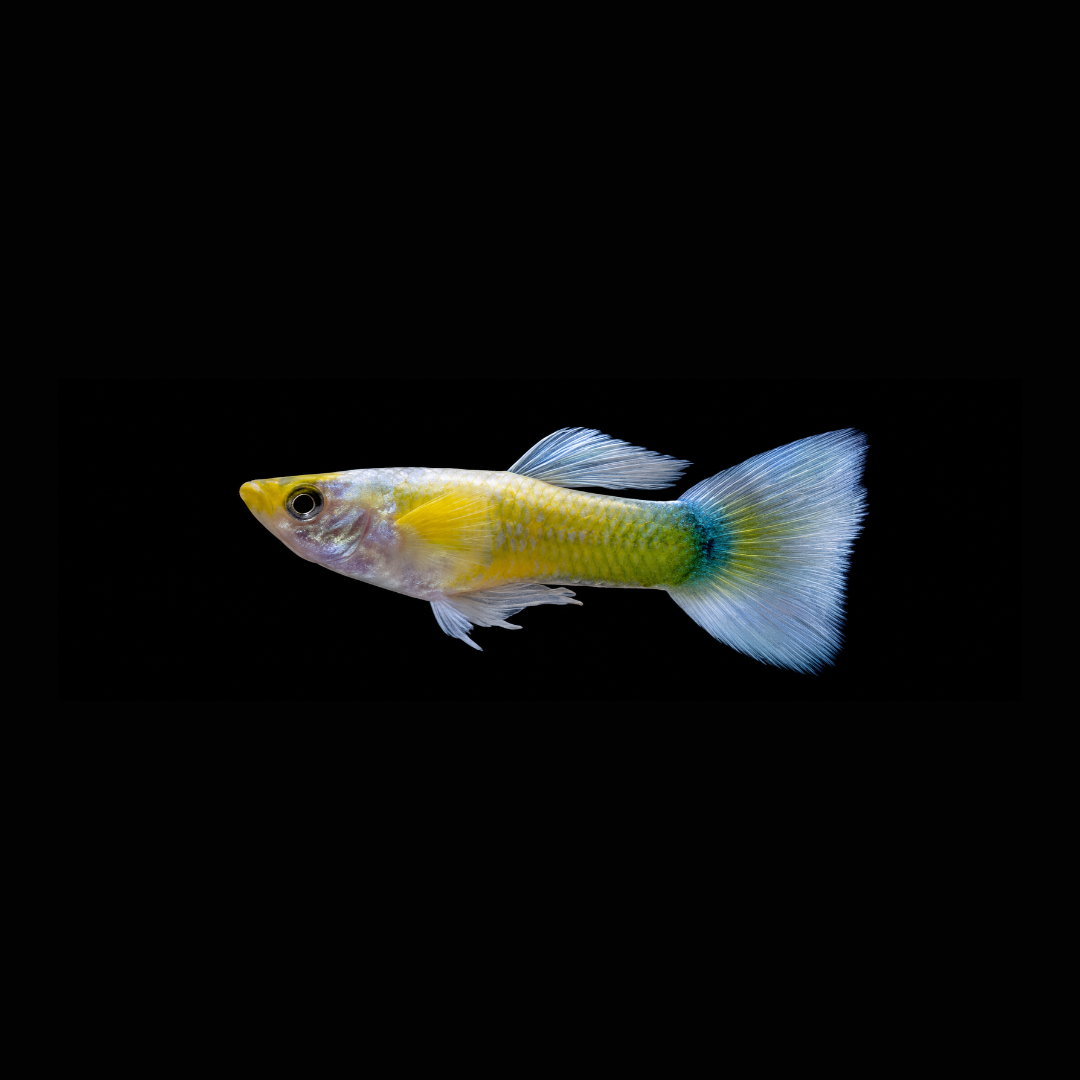
グッピーの体色は、黒色素胞、黄色素胞や赤色素胞、虹色素胞、白色素胞といった複数の色素細胞の組み合わせで決まります。このうちプラチナの金属光沢は、色素によるものではありません。虹色素胞の中に規則正しく重なった薄いグアニンの結晶が、シャボン玉の膜のように特定の光を反射して生まれる「構造色」なのです。結晶の厚みや角度、その下にある黒色素胞や上にある黄色素胞との重なり方によって、銀白、白金、シャンパンゴールド、青白など、さまざまな輝きが生まれます。本品種が金色と銀色の混ざった複雑な光を放つのは、ゴールデンの黄色い地肌、虹色素胞の銀白の反射、さらに白色素胞やタキシードの濃い色の層が重なり合って見えるためと考えられています。照明の角度を変えて眺めると、その表情の移り変わりを楽しめます。A guppy’s color is determined by a combination of several pigment cells: black melanophores, yellow and red xanthophores and erythrophores, iridophores, and white leucophores. The metallic sheen of Platinum does not come from pigment. It is a “structural color” produced when thin guanine crystals stacked neatly inside the iridophores reflect certain wavelengths of light, much like the film of a soap bubble. Depending on the thickness and angle of the crystals and how they overlap with the melanophores below and the xanthophores above, a variety of shines appear, such as silvery white, platinum, champagne gold, and bluish white. The complex blend of gold and silver light in this variety is thought to arise because the yellow Golden skin, the silvery reflection of the iridophores, and the leucophores and dark tuxedo layer are seen layered together. Viewing the fish under different lighting angles lets you enjoy its shifting expressions. |
| 4. 性染色体の上を行き来するプラチナ遺伝子 / 4. Platinum Genes That Move Between Sex Chromosomes |
ゴールデンの遺伝子は性別に関係しない常染色体にあり、オスにもメスにも同じようにメンデルの法則どおりに受け継がれます。これに対し、タキシードやプラチナの遺伝子の多くは、性別を決める性染色体の上にあります。グッピーはヒトと同じく、オスがXY、メスがXXの組み合わせを持ち、Y染色体の遺伝子は父から息子へそのまま受け継がれます。ドイツイエロータキシードでは、タキシードの遺伝子がXとYの両方に載っている系統が多く、尾ビレの色も単色で安定しているため、世代を重ねても姿が崩れにくいことで知られています。一方プラチナの遺伝子は、もともとY染色体に載っているものがよく知られていますが、グッピーでは遺伝子がY染色体からX染色体へ移る「乗り換え(交叉)」が比較的よく起こります。そのため国内の専門ブリーダーの間では、Y染色体にプラチナを固定した系統と、X染色体に移った「Xプラチナ」の系統を分けて管理する、高度な品種改良も行われています。さらに、海外の金属光沢を持つ系統には遺伝的な由来が異なるものが複数あり、別の系統同士を交配すると、子の世代で光沢が一時的に消えることもあるといわれています。The Golden gene sits on an autosome, which has nothing to do with sex, so it passes to males and females alike according to Mendel’s laws. In contrast, most tuxedo and platinum genes are located on the sex chromosomes, which determine sex. As in humans, male guppies are XY and females XX, and genes on the Y chromosome pass directly from father to son. In German Yellow Tuxedo, many lines carry the tuxedo gene on both X and Y, and the solid tail color is also stable, so the variety is known for keeping its appearance over generations. Platinum genes are best known as Y-linked, but in guppies, crossing over that moves genes from the Y to the X chromosome occurs relatively often. Specialist breeders in Japan therefore practice advanced breeding that keeps lines with platinum fixed on the Y chromosome separate from “X-platinum” lines in which it has moved to the X. Moreover, metallic strains overseas come from several different genetic origins, and crossing different lines is said to sometimes make the sheen disappear temporarily in the offspring. |
| 5. 1969年、西ドイツからやってきた80ペア / 5. Eighty Pairs from West Germany in 1969 |
ドイツイエロータキシードのルーツは、1960年代の西ドイツにあります。作出したのは、当時西ドイツに住んでいた歯科医師のゲルハルト・ゲルリッヒ氏とされています。欧州ではすでに、英国のW. George Phillipsがスネークスキン系の基礎を築き、ドイツのEduard Schmidt-Fockeがハーフブラック系を発展させていました。ゲルリッヒ氏はその流れの中で、均整の取れたイエロータキシードを大規模に維持していたようです。転機が訪れたのは1969年でした。国内の愛好家の記録によれば、大阪の故・森伸三氏をはじめとする日本人4名が西ドイツを訪れた際、ゲルリッヒ氏から1人20ペアずつ、合計80ペアを譲り受けて日本へ持ち帰ったと伝えられています。それだけ譲ってもなお親魚が十分に残っていたといわれ、当時の繁殖規模の大きさがうかがえます。当時の尾ビレは柔らかなクリームイエローで、黒いタキシードとエラぶたの上の赤い斑紋とあわせた3色が「黒・赤・黄のドイツ国旗カラー」と呼ばれ、愛好家の間で大きな話題になりました。The German Yellow Tuxedo traces its roots to 1960s West Germany. It is said to have been created by Gerhard Gerlich, a dentist living in West Germany at the time. In Europe, W. George Phillips of Britain had already laid the foundation of the snakeskin lines, and Eduard Schmidt-Focke of Germany had developed the half-black lines. Gerlich appears to have maintained well-balanced yellow tuxedos on a large scale within this tradition. The turning point came in 1969. According to Japanese hobbyist records, when four Japanese hobbyists, including the late Shinzo Mori of Osaka, visited West Germany, Gerlich gave each of them 20 pairs, 80 pairs in total, which they brought back to Japan. It is said that he still had plenty of breeders left even after giving away so many, suggesting the scale of his breeding at the time. The tails of those fish were a soft cream-yellow, and together with the black tuxedo and the red markings above the gill covers, the three colors were called “the black, red, and gold of the German flag,” creating a sensation among hobbyists. |
| 6. 「イエロー」なのに尾ビレが白い理由 / 6. Why a “Yellow” Has a White Tail |
日本へ渡ってきたばかりのドイツイエロータキシードは、実は存続の危機にありました。血統を守るために近い血筋での繁殖が続いた結果、体が弱くなり、メスが稚魚を産みにくいうえ、生まれても浮き袋がうまくできずに底をはい回る稚魚が多く出ていたのです。この危機を救ったのが、日本のブリーダーたちによる大胆な交配でした。伝えられるところでは、まず関東のブリーダーが、ゴールデン体色を持つシンガポール産のイエロータキシード系「パイナップル」を掛け合わせ、産む稚魚の数と丈夫さを大きく改善させました。ところが今度は、尾ビレにシミや赤みが出る個体が混じるようになったため、さらに「ネオンタキシード」との交配と、世代を超えた徹底的な選別が重ねられました。その結果、元のクリームイエローよりも濁りのない白さと、透けない厚みを持つ尾ビレが生まれます。これが、日本のコンテストで「白壁(しろかべ)」とたたえられる現代の国産ドイツイエロータキシードの原型です。名前に「イエロー」を残しながら尾ビレが純白に近いという逆転は、日本独自の美意識と改良の歴史が生んだものなのです。その後、1990年代にはドイツからプラチナ・メタル系統が導入されたとされます。近い血筋での繁殖による弱りを立て直す方法としてゴールデン体色を交配に使う手法も知られていたことから、両者を組み合わせたゴールデンプラチナドイツイエローが、定番の人気品種として定着していきました。German Yellow Tuxedos that had just arrived in Japan were actually on the verge of disappearing. Continued breeding within close bloodlines to preserve the line had weakened them; females had difficulty producing fry, and many of those born had poorly formed swim bladders and crawled along the bottom. Bold crossbreeding by Japanese breeders saved the variety. According to accounts, a breeder in the Kanto region first crossed in “Pineapple,” a Singapore-bred yellow tuxedo line with golden body color, greatly improving brood size and hardiness. However, fish with blemishes or reddish tones on the tail then began to appear, so further crosses with “Neon Tuxedo” and rigorous selection over generations followed. The result was a tail with a purer white than the original cream-yellow and a thickness that does not let light through. This is the prototype of the modern Japanese German Yellow Tuxedo, praised in Japanese contests as “shirokabe” (white wall). The reversal of keeping “Yellow” in the name while the tail is nearly pure white is a product of Japan’s own aesthetic sense and breeding history. Later, platinum and metal lines are said to have been introduced from Germany in the 1990s. Since using golden body color in crosses was also known as a way to restore vigor lost through close breeding, the Golden Platinum German Yellow, which combines both, became established as a popular staple variety. |
| 7. 似た名前の品種との見分け方 / 7. Telling It Apart from Similarly Named Varieties |
金属光沢を持つグッピーには名前の似た品種が多く、店頭でも混同されがちです。本品種は、体の後半にタキシードの濃い色帯が残り、前半の金銀の光沢と白〜淡い黄色の尾ビレがはっきり分かれて見えるのが特徴で、目は黒です。これに対して「フルプラチナホワイト」はタキシードの帯が表に出ず、体から尾ビレまでむらのない白銀色に覆われた印象で、上から見ると頭が青みを帯びることもあります。「フルゴールド(24Kゴールドなど)」は、銀白の反射よりも濃い黄金色が全身を覆い、海外の資料ではプラチナの遺伝子自体は持たないとされています。スリランカで作られた「ミカリフ・ゴールデンイエロー」は、ヒレが小ぶりなかわりに体格が大きく成長が早い品種で、デルタテールの国産ドイツイエロー系とは体つきが大きく異なります。そして「RREAプラチナドイツイエロー」は目が真っ赤で、タキシードの黒い帯がなく、全体が淡く幻想的な色合いになります。目の色とタキシードの帯の有無に注目すると、見分けやすくなるでしょう。Many metallic guppies have similar names and are often confused in shops. This variety is characterized by a dark tuxedo band remaining on the rear half of the body, with a clear division between the gold and silver sheen on the front and the white to pale yellow tail, and it has black eyes. In contrast, the “Full Platinum White” shows no tuxedo band and looks evenly covered in silvery white from body to tail, with the head sometimes appearing bluish from above. The “Full Gold” (such as 24K Gold) is covered in a deep golden color rather than silvery reflection, and foreign sources say it does not carry the platinum gene itself. The “Mikarif Golden Yellow,” developed in Sri Lanka, has small fins but a large body and fast growth, and its build differs greatly from the delta-tailed Japanese German Yellow lines. Finally, the “RREA Platinum German Yellow” has bright red eyes, lacks the black tuxedo band, and has an overall pale, dreamy tone. Paying attention to eye color and whether there is a tuxedo band makes them easier to tell apart. |
| 8. 「グッピー」の名の由来と「ミリオンフィッシュ」 / 8. The Origin of the Name “Guppy” and the “Millionfish” |
「グッピー」という名前は、トリニダード島で標本を集めていたイギリスの博物学者、ロバート・ジョン・レッチミア・グッピーに由来します。1866年、彼が送った標本をもとに、アルベルト・ギュンターが彼の名前にちなんだ学名を付けました。ただし、それより前の1859年にヴィルヘルム・ペータースが記載した学名があったため、正式な学名はPoecilia reticulataとなっています。それでも、グッピーの名にちなんだ呼び名のほうが一般的な名前として世界中に広まりました。英語の発音は本来「ガッピー」に近いものの、日本では「グッピー」という呼び方が定着しています。また、驚くほど繁殖力が高いことから、英語圏では「ミリオンフィッシュ(百万の魚)」とも呼ばれます。入門魚として飼い始めた人が、やがて遺伝やコンテストの奥深さに魅せられて最後にまたグッピーへ戻ってくることから、アクアリウムの世界には「グッピーに始まり、グッピーに終わる」という言葉もあります。The name “guppy” comes from Robert John Lechmere Guppy, a British naturalist who collected specimens on the island of Trinidad. In 1866, Albert Günther gave a scientific name honoring him, based on specimens he had sent. However, because Wilhelm Peters had already described the species in 1859, the valid scientific name is Poecilia reticulata. Even so, the name honoring Guppy spread around the world as the common name. The original English pronunciation is closer to “guh-pee,” while in Japan the name is pronounced “guppii.” Because of its astonishing fertility, it is also called the “Millionfish” in English-speaking countries. And since people who start with it as a beginner’s fish often become captivated by the depth of genetics and contests and return to guppies in the end, the aquarium world has the saying, “You begin with guppies, and you end with guppies.” |
| 9. 温泉地の「野良グッピー」とよく似たカダヤシ / 9. Feral Guppies in Hot Spring Areas and the Look-Alike Mosquitofish |
南米原産のグッピーは、本来なら日本の冬を越すことができません。しかし汚れた水や流れのない水にも強いため、沖縄県の河川や工場の温かい排水が流れ込む水域、北海道などの温泉地の排水路で野生化し、定着しています。華やかな改良品種であっても、野外で世代を重ねると自然の中で派手なヒレや体色が失われていき、地味な野生型に近い姿へ戻っていくといわれています。一方、野外でグッピーのメスとよく似ていて見分けにくいのが、北米原産のカダヤシです。カダヤシは特定外来生物に指定されており、寒さに強く全国で冬を越せるうえ、メダカなど日本在来の魚を追いやってしまうため、生きたまま持ち帰ることや飼育は法律で禁止されています。野外で似た魚を見つけても、安易に持ち帰らないようにしましょう。そしてグッピーも、日本の自然にとっては外来種です。最後まで責任を持って飼育し、決して野外に放さないことが大切です。Guppies, native to South America, normally cannot survive Japanese winters. However, because they tolerate polluted and still water, they have become feral and established in places such as rivers in Okinawa, waters receiving warm factory discharge, and drainage channels in hot spring areas, including in Hokkaido. Even showy fancy varieties are said to gradually lose their flashy fins and colors over generations in the wild, returning to a plain, wild-type appearance. Meanwhile, the fish that most closely resembles female guppies in the wild, and is hard to tell apart from them, is the mosquitofish, native to North America. Designated an Invasive Alien Species in Japan, it is cold-hardy, can overwinter nationwide, and drives out native fish such as medaka, so taking it home alive or keeping it is prohibited by law. If you find a similar fish in the wild, do not casually take it home. Guppies, too, are non-native to Japanese nature, so it is important to care for them responsibly for life and never release them into the wild. |
| 10. 歴史の面影を残す「こめかみの赤斑」 / 10. The “Temple Red Spot,” a Trace of History |
現在の国産ドイツイエロータキシードやゴールデンプラチナドイツイエローは、純白〜淡い黄色の清潔感ある色合いへと磨き上げられてきました。その一方で、1969年に日本へ渡ってきた当時はよく見られた「こめかみの赤斑(レッドライン)」を目にする機会は、とても少なくなっています。それでも、ときおりエラぶたの上にほのかな赤みが浮かぶ個体が現れます。それは、半世紀以上前の西ドイツで生まれた元の系統の名残が、今も静かに受け継がれているしるしなのかもしれません。Today’s Japanese German Yellow Tuxedos and Golden Platinum German Yellows have been refined toward clean, pure white to pale yellow tones. As a result, the “temple red spot” (red line) that was commonly seen when the variety first arrived in Japan in 1969 has become a rare sight. Even so, individuals with a faint red tint above the gill covers still appear now and then. It may be a sign that traces of the original line born in West Germany more than half a century ago are still quietly being passed down. |







コメント