

解説 / Description
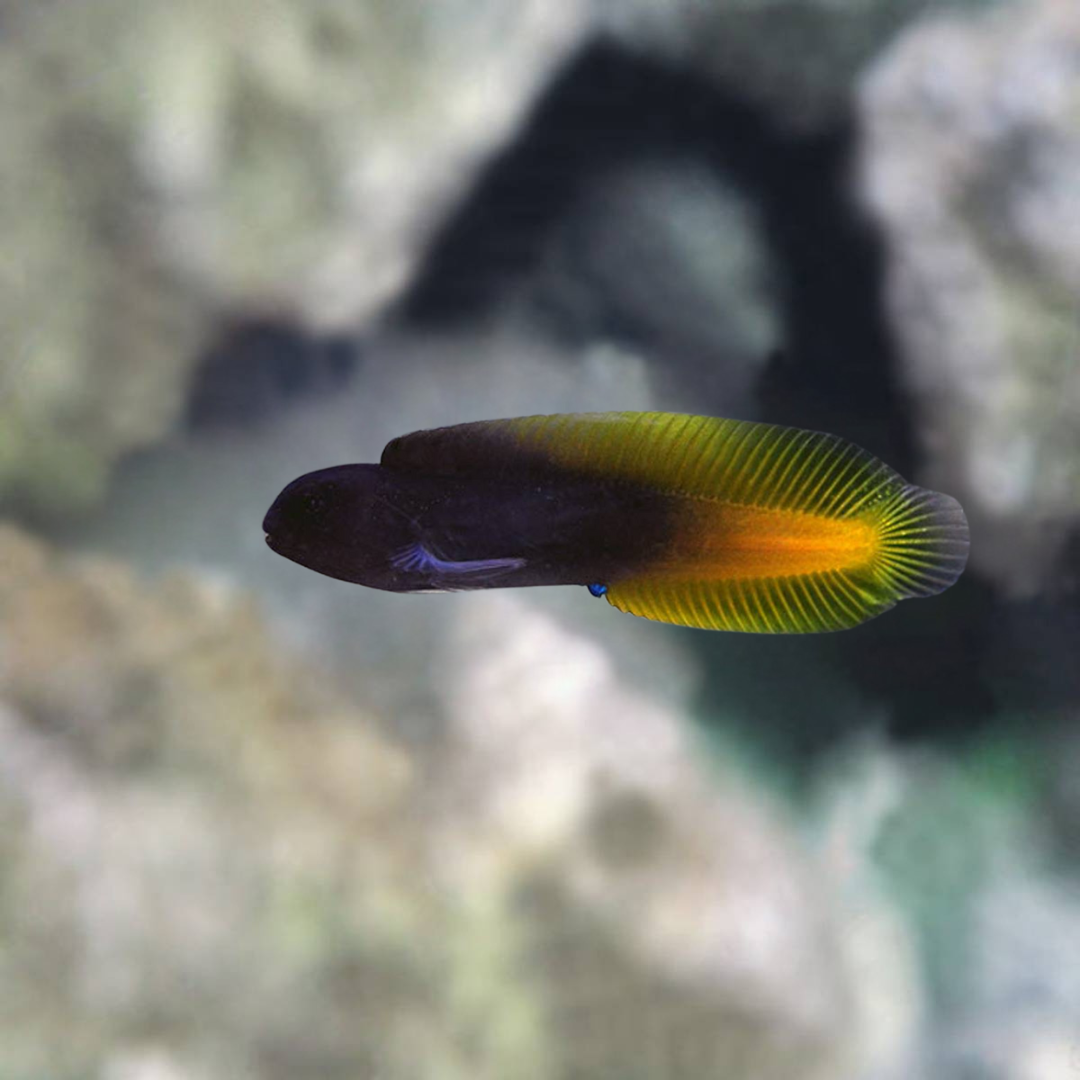
イエローテールブレニーは、黒に近い暗色の体と、尾ビレ・尻ビレ・背ビレ後半に入る明るい黄色が印象的な小型の海水魚です。観賞魚の流通では「イエローテール」や「フレームテール」と呼ばれますが、学術的にはイソギンポ科クロギンポ属の Enchelyurus flavipes と扱うのが適切です。ライブロックの上を短く跳ねるように移動し、岩穴から顔だけを出す姿が楽しい一方、同じような体型の底生魚やシャコガイ類とは相性に注意が必要です。小型ながら、分類・行動・飼育管理の要点がはっきりした、図鑑的にも興味深いブレニーです。 The Yellowtail Blenny is a small marine fish with a dark, almost black body and bright yellow coloration on the caudal, anal, and posterior dorsal fins. In the aquarium trade it is often called the Yellowtail or Flametail Blenny, while the currently appropriate scientific name is Enchelyurus flavipes, a combtooth blenny in the family Blenniidae. It hops across live rock and often peeks out from holes, but care is needed with similarly shaped bottom-dwelling fishes and tridacnid clams. Although small, it is a fascinating blenny with clear points of interest in taxonomy, behavior, and aquarium management.
基本情報 / Basic Information
| 学名 / Scientific Name | Enchelyurus flavipes Peters, 1868 |
|---|---|
| 通称 / Common Name | イエローテールブレニー、フレームテールブレニー、流通上はニラミギンポ系の名称で扱われる場合ありYellowtail Blenny, Flametail Blenny, sometimes sold under trade names associated with Ecsenius-type blennies |
| 分類 / Family | 条鰭綱 イソギンポ目 イソギンポ科 イソギンポ亜科 クロギンポ属Class Actinopterygii, order Blenniiformes, family Blenniidae, subfamily Blenniinae, genus Enchelyurus |
| 英名 / English Name | Yellowfin Blenny, Flametail Blenny, Flame Tail Blenny, Yellowtail Blenny |
| 分布 / Distribution | 西部太平洋、特に南シナ海周辺。浅いサンゴ礁や岩礁、サンゴ片の多い底生環境で見られます。広いインド太平洋全域の魚としてではなく、南シナ海周辺を中心に扱うのが安全です。Western Pacific, especially the South China Sea region. It is associated with shallow coral reefs, rocky areas, and rubble-rich demersal habitats. It is safer to describe it as centered around the South China Sea rather than as a broadly distributed Indo-Pacific species. |
| 最大体長 / Max Size | 約7.6cm(全長)About 7.6 cm total length |
| 寿命 / Lifespan | 本種単独の明確な寿命データは多くありません。安定した海水水槽では、数年単位での長期飼育が期待できます。Detailed lifespan data specifically for this species are limited. In a stable marine aquarium, multi-year care can be expected. |
飼育環境 / Aquarium Environment
| 水槽サイズ / Tank Size | 単独飼育でも最低100L前後を目安にします。日本の規格では60cmワイド水槽以上が扱いやすく、余裕を持つなら90cm規格水槽がより安定します。小型魚ですが、隠れ家と採餌面を確保するため、ライブロックを十分に置ける水量が向いています。Aim for at least around 100 L for a single specimen. In Japanese tank standards, a 60 cm wide tank or larger is practical, while a standard 90 cm tank gives better stability. Although the fish is small, it benefits from enough water volume to provide live rock, shelters, and grazing surfaces. |
|---|---|
| 水温 / Temperature | 24〜26℃前後を目安に安定させます。高低どちらに振れるかよりも、急な変動を避けることが重要です。 Keep the temperature stable at around 24 to 26°C. Avoiding sudden swings is more important than chasing a precise number. |
| 水質 / Water Quality | pHは8.0〜8.4、比重は1.020〜1.025を目安にします。アンモニアと亜硝酸は0ppmを維持し、硝酸塩もできるだけ低めに管理します。濾過が安定した立ち上げ済み水槽への導入が基本です。Target pH 8.0 to 8.4 and specific gravity 1.020 to 1.025. Ammonia and nitrite should remain at 0 ppm, and nitrate should be kept as low as practical. Introduce the fish only to a fully cycled, stable aquarium. |
| レイアウト / Layout | ライブロックを多めに入れ、体が入る穴や細い隙間を複数作ります。岩の表面をついばむように移動するため、採餌できる面積の広いレイアウトが理想です。底床は細かいサンゴ砂など、腹部やヒレを傷つけにくいものが適しています。Use plenty of live rock and provide several narrow holes or crevices that fit the fish’s body. Since it grazes while moving across rock surfaces, a layout with broad grazing area is ideal. Fine coral sand or another gentle substrate is suitable for protecting the belly and fins. |
| 注意点 / Precautions | 驚くと水槽外へ飛び出すことがあるため、フタやメッシュカバーで上部の隙間を必ずふさぎます。また、一部の個体はシャコガイの外套膜をつつくことがあるため、シャコガイを主役にした水槽では導入を避けるのが安全です。コケ取り役として役立つことはありますが、コケ対策だけを目的に過度な期待をしないようにします。Because startled individuals may jump, cover all gaps with a lid or mesh cover. Some individuals may nip at tridacnid clam mantles, so it is safest to avoid this species in aquariums where clams are a priority. It can help graze algae, but it should not be relied on as the sole solution for algae control. |
餌と給餌 / Feeding
| 餌の種類 / Diet | 植物質を多く含む海水魚用ペレット、スピルリナ系フード、乾燥海藻、無添加の焼き海苔、冷凍ブラインシュリンプ、イサザアミ、冷凍海洋プランクトンなどを組み合わせます。自然下では藻類フィルムや糸状藻類をついばむため、植物質を含む餌を切らさないことが大切です。Offer marine pellets rich in plant matter, spirulina-based foods, dried seaweed, additive-free nori, frozen brine shrimp, mysids, and frozen marine plankton. In nature it grazes algal films and filamentous algae, so plant-based foods should remain part of the regular diet. |
|---|---|
| 給餌のポイント / Feeding Tips | 少量を1日1〜2回、痩せやすい個体では様子を見ながら回数を増やします。導入直後に人工飼料へ反応しない場合は、海苔や海藻シートを小石やライブロックに固定して沈めると、岩肌から削り取るような自然な食べ方に近づけられます。水槽内のコケだけに頼ると、長期的には栄養不足になることがあります。Feed small portions once or twice per day, increasing frequency if a specimen begins to lose weight. If a new arrival does not accept prepared foods, attach nori or seaweed sheets to a small stone or live rock so it can graze from a hard surface. Relying only on aquarium algae can lead to long-term nutritional deficiency. |
性格と混泳 / Temperament and Tank Mates
| 性格 / Temperament | 多くの他種に対しては比較的温和ですが、岩穴や採餌場所へのこだわりは強い魚です。小型ながら犬歯が発達しており、同じ生活圏を使う相手には強く出ることがあります。It is generally peaceful toward many unrelated species, but it strongly values shelters and grazing areas. Despite its small size, it has developed canine teeth and may be assertive toward fish that use the same niche. |
|---|---|
| 混泳の相性 / Compatibility | 生活圏が異なる中層遊泳性の小型魚とは混泳しやすい傾向があります。一方で、同種、近縁のギンポ・カエルウオ、細長い底生性ハゼなどとは争う可能性があるため、基本は1水槽1匹が無難です。サンゴにはおおむね無関心とされますが、LPSのポリプやシャコガイをつつく個体には注意します。It usually mixes well with small midwater fishes that occupy different areas of the aquarium. However, it may quarrel with its own species, related blennies, and elongated bottom-dwelling gobies, so one specimen per tank is usually safest. It generally ignores corals, but watch for individuals that nip LPS polyps or tridacnid clams. |
病気と対策 / Diseases and Prevention
| かかりやすい病気 / Common Diseases | 本種だけが特にかかりやすい病気は多く知られていません。ただし、輸送直後や水温変化が大きい環境では、白点病、体表の擦れ、拒食、水質悪化による体調不良が起こることがあります。Not many disease problems are known to be uniquely common in this species. However, after shipping or under unstable temperature conditions, marine ich, skin abrasions, appetite loss, or stress from poor water quality can occur. |
|---|---|
| 対策と予防 / Prevention | 導入時は水合わせを丁寧に行い、可能であれば隔離水槽で状態を確認してから本水槽へ移します。安定した水温、十分な隠れ家、フタの設置、植物質を含む餌の継続給餌が予防の基本です。サンゴや無脊椎動物がいる水槽では薬剤使用に制限があるため、治療は隔離水槽で行うのが安全です。Acclimate carefully and, if possible, observe the fish in a quarantine tank before moving it to the display aquarium. Stable temperature, enough shelters, a secure lid, and regular plant-based feeding are the basics of prevention. In reef tanks, medication options are limited, so treatment is safest in a separate quarantine system. |
増やし方(繁殖) / Breeding
| 雌雄の判別 / Sexing | 外見上の雌雄差は大きくありません。専門的には、メスの生殖孔周辺が周囲より濃く色づくことが手がかりとされますが、一般家庭の水槽で確実に見分けるのは簡単ではありません。Sexual dimorphism is not obvious. Specialists may use the darker pigmentation around the female urogenital region as a clue, but reliable sexing is not easy in a typical home aquarium. |
|---|---|
| 繁殖形態 / Reproduction | 卵生です。岩のくぼみや隙間などの基質に、糸状の接着構造を持つ底生卵を産みつけ、孵化後の仔魚は一時的な浮遊生活に入ります。繁殖はペアで行われるとされます。It is oviparous. Adhesive demersal eggs are laid on protected substrates such as rock cavities and crevices, and the larvae enter a temporary planktonic stage after hatching. Spawning is reported to involve distinct pairing. |
| 繁殖のポイント / Breeding Tips | 高度な飼育者による繁殖例はありますが、一般的な家庭水槽で安定して増やすのは難しい魚です。仔魚が小さく、栄養強化したワムシや植物プランクトンなどの初期餌料、壁面への衝突を避ける繊細な水流管理が必要になります。人工繁殖個体は将来的に期待される選択肢ですが、少なくとも現状では常時大量に流通する種類とは考えない方が現実的です。Advanced aquarists have bred this species, but stable reproduction in a typical home aquarium is difficult. The larvae are small and require enriched rotifers, phytoplankton, and carefully controlled water movement to avoid damage against tank walls. Captive-bred specimens are a promising option, but at present this species should not be assumed to be widely and constantly available as aquacultured stock. |
雑学と豆知識 / Trivia and Fun Facts
| 1. 名前に残る「ウナギのような尾」 / 1. The eel-like tail in the name | 属名の Enchelyurus は、古代ギリシャ語の「ウナギ」と「尾」に由来し、背ビレ・尻ビレ・尾ビレが膜でつながるように見える細長い体つきを表しています。種小名の flavipes は「黄色い足」を意味する語に由来し、記載時には淡い黄色を帯びる腹ビレが意識された名前とされます。現在の観賞魚名では尾の黄色が目立ちますが、学名には記載当時の形態観察の視点が残っています。The genus name Enchelyurus comes from ancient Greek words for “eel” and “tail,” referring to the slender body and the way the dorsal, anal, and caudal fins appear connected by membrane. The species name flavipes means “yellow foot” and is understood to refer to the pale-yellow ventral fins noted in the original naming context. Although the aquarium name highlights the yellow tail, the scientific name preserves the morphological viewpoint of the description. |
|---|---|
| 2. フタイロカエルウオとの見分け方 / 2. How to distinguish it from the Bicolor Blenny | 本種は、黒と黄色の配色からフタイロカエルウオと混同されることがあります。ただし、イエローテールブレニーは頭部と尾ビレがより丸みを帯び、フタイロカエルウオで目立つ眼間部の皮弁を欠く点が手がかりになります。ショップ名だけで判断せず、体型と頭部の細部を確認すると、より正確に同定しやすくなります。This species can be confused with the Bicolor Blenny because of its dark-and-yellow coloration. However, the Yellowtail Blenny has a more rounded head and caudal fin and lacks the cirri between the eyes that are seen in the Bicolor Blenny. Looking beyond the trade name and checking body shape and head details makes identification more reliable. |
| 3. 岩穴に「バックで入る」行動 / 3. Reversing into a rock hole | ライブロックに慣れた個体は、穴やくぼみに体を後ろ向きに収め、顔だけを外へ出して休むことがあります。これは単なる愛嬌ではなく、外を見張りながら柔らかい体を隠すための合理的な姿勢と考えられます。観察する側から見ると、この小さな魚が水槽内の立体構造を細かく使い分けていることがよく分かる、印象的な行動です。A specimen accustomed to live rock may reverse into a hole or depression and rest with only its face showing. This is not merely cute; it is likely a practical posture that allows the fish to watch its surroundings while keeping its body protected. For the observer, it clearly shows how carefully this small fish uses the three-dimensional structure of the aquarium. |
| 4. コケ取り役であり、専門職でもある / 4. An algae grazer and a specialist | 本種は藻類フィルムや糸状藻類をついばむため、水槽内ではお掃除役の魚として期待されることがあります。ただし、すべてのコケを食べ尽くす魚ではなく、餌としての植物質も必要です。サンゴ礁では、こうした小型の藻類食性魚が岩肌を少しずつ利用することで、藻類とサンゴ、微小生物のバランスに関わっています。水槽でも、単なる便利屋ではなく、岩場に適応した小さな専門職として見ると魅力が増します。Because it grazes algal films and filamentous algae, this species is sometimes expected to work as an algae-cleaning fish in the aquarium. However, it will not eat every type of nuisance algae, and plant-based foods are still necessary. On reefs, small algal grazers like this participate in the balance among algae, corals, and microfauna by using rock surfaces little by little. In the aquarium, it is more rewarding to see it not as a utility fish but as a small specialist adapted to rocky reef habitats. |
| 5. 人工繁殖個体への期待 / 5. Hope for captive-bred specimens | 海外では人工飼料に慣れた個体が扱われる例があり、人工繁殖の取り組みも知られています。一方で、仔魚期の育成は難しく、現状では大量に安定供給される魚とは言い切れません。野生採集個体が中心の流通から、より持続的な供給へ進むには、微小な仔魚を育てる餌料・水流・衛生管理の技術が重要になります。本種は小型で身近な魚でありながら、海水魚繁殖の難しさと将来性を教えてくれる存在でもあります。Overseas, specimens accustomed to prepared foods are available in some cases, and captive-breeding efforts are known. However, larval rearing is difficult, and the species cannot yet be described as consistently mass-produced. Moving from mainly wild-caught supply toward more sustainable availability depends on advances in first foods, water-flow control, and hygiene for tiny larvae. Although small and approachable, this fish also illustrates the challenges and promise of marine fish breeding. |
まとめ / Conclusion
イエローテールブレニーは、黒い体と黄色い後方ヒレの対比が美しいだけでなく、岩場に身を寄せ、藻類をついばみ、隠れ家を巧みに使うという、ブレニーらしい魅力を凝縮した小型海水魚です。飼育では、100L前後以上の安定した水量、ライブロックによる隠れ家、植物質を含む餌、そして飛び出しを防ぐフタが基本になります。 The Yellowtail Blenny is not only attractive for its contrast between a dark body and yellow rear fins; it also condenses the classic appeal of blennies through its rock-dwelling habits, algae grazing, and clever use of shelters. In captivity, the basics are a stable tank of around 100 L or more, live rock shelters, plant-based foods, and a secure lid to prevent jumping.
一方で、同じ生活圏を使う魚への縄張り意識や、シャコガイをつつく可能性など、見落とせない注意点もあります。本種を「小さなコケ取り役」としてだけでなく、南シナ海周辺の浅い岩礁環境に適応した一種の専門家として迎えることが、長期飼育の第一歩です。分類名の確認から日々の観察まで丁寧に向き合えば、この魚は水槽の片隅で、サンゴ礁の小さな物語を静かに見せてくれるでしょう。 At the same time, its territorial behavior toward fishes using the same niche and its possible clam-nipping habit should not be overlooked. The first step to long-term success is to welcome this species not merely as a small algae grazer, but as a specialist adapted to shallow rocky reef habitats around the South China Sea. If its taxonomy is checked carefully and its daily behavior is observed with patience, this small fish will quietly bring a fragment of reef life into the aquarium.

気になる道具や飼い方を見つけてみませんか?
 アイのアクアグッズ案内コリドラスのもふもふ時間を楽しむ|餌・底砂・お掃除用品の選び方コリドラスのもふもふする食事風景を楽しむために。沈む餌2種類の違い、口元に配慮した底砂、食べ残しを回収する道具を、アクアグッズナビゲーターのアイが紹介します。記事はコチラ →
 アイのアクアグッズ案内ショップで見かけるカラフルなバケツ。いったい何が入ってる?道具の特徴や使い方、選ぶときのポイントをアイが紹介します。記事はコチラ →
さまざまな飼育テーマをご紹介。リンク先の記事には広告・商品紹介が含まれます。
案内・紹介記事一覧へ →参考文献・参照資料
この記事では、分類・分布・形態・生息環境・繁殖などの種情報は魚類分類データベースと学術資料を中心に確認し、水質管理・導入時の隔離・白点病などの注意点は水産獣医学系の資料で補強しました。店舗、通販、個人ブログ、まとめサイトは参考文献から除外しています。
- World Register of Marine Species. Enchelyurus flavipes Peters, 1868. 有効学名、AphiaID、分類体系の確認に使用。
- Fricke, R., Eschmeyer, W. N. & Van der Laan, R. (eds.). Eschmeyer’s Catalog of Fishes. California Academy of Sciences. 命名者、記載年、魚類分類・命名法上の扱いの確認に使用。
- Froese, R. & Pauly, D. (eds.). FishBase: Enchelyurus flavipes, Yellowfin blenny. 分類、英名、分布、最大体長、形態的特徴、生息環境、卵生・底生粘着卵・浮遊仔魚、IUCN評価の確認に使用。
- Randall, J. E. & Lim, K. K. P. (eds.). 2000. A checklist of the fishes of the South China Sea. The Raffles Bulletin of Zoology, Supplement 8: 569–667. 南シナ海周辺における魚類相・分布情報の基礎資料として使用。
- Francis-Floyd, R. et al. Ammonia in Aquatic Systems. UF/IFAS Extension. アンモニア、亜硝酸、硝酸、pH、水温、生物ろ過など、水槽内の水質管理に関する記述の確認に使用。
- Yanong, R. P. E. Fish Health Management Considerations in Recirculating Aquaculture Systems—Part 3. UF/IFAS Extension. 新規導入魚の隔離、ストレス回復、病原体持ち込み予防、観察期間に関する記述の確認に使用。
- Yanong, R. P. E. Cryptocaryon irritans Infections (Marine White Spot Disease) in Fish. UF/IFAS Extension. 海水魚の白点病、症状、生活環、診断時の注意点に関する記述の確認に使用。
- MSD Veterinary Manual. Protistan Parasites of Fish. Cryptocaryon、Amyloodinium、Brooklynellaなど、海水魚で問題になりやすい原虫性疾患と治療上の注意点の確認に使用。
参照日:2026年6月14日。観賞魚の実践的な飼育情報のうち、店舗ページや通販ページにのみ見られる記述は、この記事の参考文献リストには採用していません。




コメント