

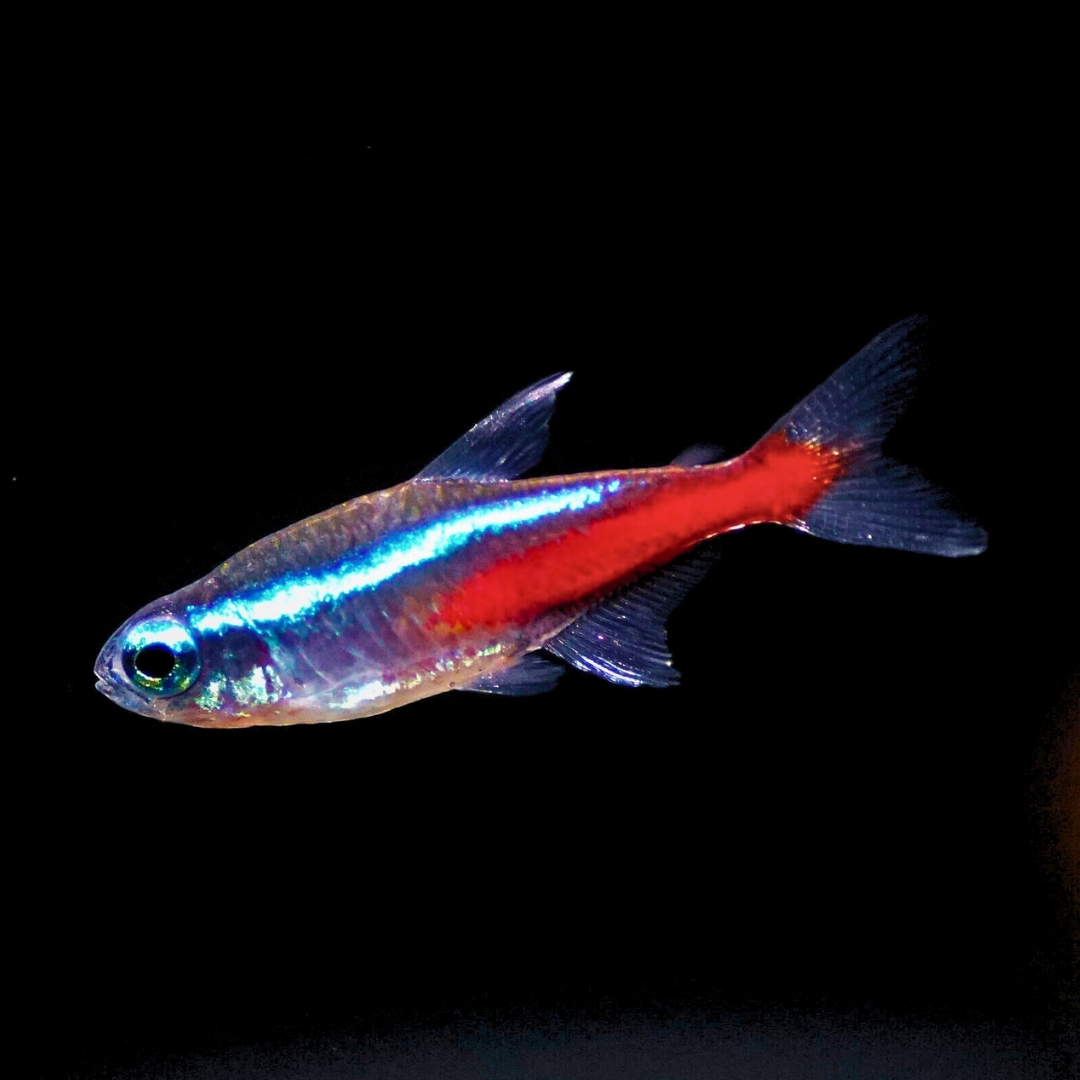
解説 / Description
ネオンテトラは、南米アマゾン川流域に分布する小型の群泳魚です。体側を走る青い輝きと、体の後半に入る赤いラインが美しく、熱帯魚の入門種としても、長く親しまれる定番種としても高い人気を持っています。現在の流通では養殖個体が多く、比較的丈夫で飼いやすい魚ですが、本来はやわらかく酸性寄りの水を好む魚です。落ち着いた水草水槽で複数匹を群れで泳がせると、ネオンテトラらしい色彩と動きがより自然に引き立ちます。 The neon tetra is a small shoaling fish from the Amazon basin of South America. Its glowing blue lateral stripe and red marking on the rear half of the body have made it one of the most familiar tropical aquarium fish. Many fish in the trade are now captive-bred, and the species is generally hardy and approachable, but it naturally favors soft, slightly acidic water. When kept in a calm planted aquarium as a group, its color and natural movement stand out beautifully.
基本情報 / Basic Information
| 学名 / Scientific Name | Paracheirodon innesi (Myers, 1936。旧学名として Hyphessobrycon innesi が用いられた経緯があります)(Myers, 1936. The former combination Hyphessobrycon innesi has also been used historically.) |
|---|---|
| 通称 / Common Name | ネオンテトラ、ネオンNeon tetra |
| 分類 / Family | カラシン目 アケストロラムフス科 パラケイロドン属。古い分類や流通上の表記では、カラシン科として扱われることもあります。Order Characiformes, family Acestrorhamphidae, genus Paracheirodon. In older classifications and aquarium-trade usage, it may also be listed under Characidae. |
| 英名 / English Name | Neon tetra |
| 分布 / Distribution | 南米のブラジル、コロンビア、ペルーにまたがるソリモンエス川水系。ブラックウォーターやクリアウォーターの小支流に生息します。The Solimões River drainage in South America, including areas of Brazil, Colombia, and Peru. It inhabits blackwater and clearwater stream tributaries. |
| 最大体長 / Max Size | 標準体長で約2.5cm。尾びれを含めた全長では約3cm前後になり、飼育情報では3〜4cm程度と表記されることもあります。About 2.5 cm standard length. Including the tail, total length is around 3 cm, and aquarium references may describe it as about 3–4 cm. |
| 寿命 / Lifespan | 飼育下では数年が目安です。導入時の状態、水質の安定、群れでの安心感、病気の有無によって大きく変わるため、年数だけで判断せず、日々の観察を大切にします。A lifespan of several years is a practical guideline in aquaria. It varies greatly with condition at purchase, water stability, group security, and disease prevention, so daily observation is more important than focusing only on a fixed number of years. |
飼育環境 / Aquarium Environment
| 水槽サイズ / Tank Size | 群れで泳がせる魚なので、余裕をもって飼うなら60cm規格水槽が標準的で安心です。少数飼育では45cm規格水槽から検討できますが、水量が少ないほど水質変化が起きやすいため、初めて飼う場合はできるだけ大きめの水槽を選ぶと管理しやすくなります。Because this is a shoaling fish, a standard 60 cm aquarium is a safe and comfortable recommendation. A standard 45 cm tank can be considered for a smaller group, but smaller water volumes change more quickly, so beginners will usually find a larger tank easier to manage. |
|---|---|
| 水温 / Temperature | 20〜26℃を目安に、家庭水槽では24〜25℃前後で安定させると扱いやすいです。急な温度変化は白点病などのきっかけになるため、冬はヒーター、夏は冷却ファンなどで変動を抑えます。 Use 20–26°C as a general range, with around 24–25°C being easy to maintain in home aquaria. Sudden temperature changes can trigger problems such as ich, so use a heater in winter and cooling equipment such as a fan in summer to reduce fluctuations. |
| 水質 / Water Quality | 弱酸性〜中性の軟水が向いています。目安はpH5.0〜7.0前後で、極端に硬い水やアルカリ性に傾きすぎる環境は避けます。日本の水道水を使う場合はカルキ抜きを行い、ソイルや流木を使うと、ネオンテトラに合う落ち着いた水を作りやすくなります。Soft, slightly acidic to neutral water is suitable. A practical guide is around pH 5.0–7.0. Avoid very hard water or conditions that become too alkaline. When using Japanese tap water, always dechlorinate it; aquarium soil and driftwood can help create calmer conditions suited to neon tetras. |
| レイアウト / Layout | 水草、流木、落ち着いた色の底床を組み合わせると、青と赤のラインがよく映えます。中層を泳ぐ魚なので、前面や中央には遊泳スペースを残し、後景や側面に水草の茂みを作ると安心して過ごしやすくなります。Aquatic plants, driftwood, and a subdued substrate help highlight the blue and red stripes. As a midwater swimmer, it benefits from open swimming space in the front or center, with plant cover along the back and sides for security. |
| 注意点 / Precautions | 導入直後の水合わせ、水温の安定、過密を避けることが重要です。群れで安心する魚なので、少なくとも5〜6匹以上、見栄えと安定感を重視するなら10匹以上での飼育がおすすめです。小型魚のため、大型魚や口の大きな魚との混泳は避けます。Careful acclimation, stable temperature, and avoiding overcrowding are important. Keep at least 5–6 individuals, and 10 or more if you want a more stable and attractive group. Because they are small, avoid keeping them with large or large-mouthed fish. |
餌と給餌 / Feeding
| 餌の種類 / Diet | 小型熱帯魚用の人工飼料を主食にできます。野生下では小さな昆虫、甲殻類、動物質の細かな餌などを食べるため、冷凍赤虫、ブラインシュリンプ、細かい冷凍飼料などを副食にするとコンディション維持に役立ちます。A prepared food for small tropical fish can be used as the staple diet. In nature they feed on small insects, crustaceans, and other fine animal-based foods, so frozen bloodworms, brine shrimp, and other small frozen foods can be useful supplements. |
|---|---|
| 給餌のポイント / Feeding Tips | 1日1〜2回、数分で食べ切れる量を与えます。粒が大きい餌は細かく砕き、食べ残しが出た場合は量を減らします。小型魚は水質悪化の影響を受けやすいため、よく食べるからといって多く与えすぎないことが大切です。Feed once or twice a day, only as much as they can finish within a few minutes. Crush large granules and reduce the amount if leftovers remain. Because small fish are sensitive to deteriorating water quality, avoid overfeeding even when they show a strong appetite. |
性格と混泳 / Temperament and Tank Mates
| 性格 / Temperament | 温和で協調性があり、同種同士で大きな争いをすることはほとんどありません。環境に慣れると群れがややゆるくなることもありますが、不安を感じたときや導入直後にはまとまって泳ぐ姿が見られます。Peaceful and social, with little serious aggression among their own kind. Once settled, the group may loosen, but newly introduced or startled fish often school more tightly. |
|---|---|
| 混泳の相性 / Compatibility | 同じく温和な小型魚、コリドラス、小型ラスボラ、オトシンクルス、小型エビなどと相性が良いです。ベタなど個体差の大きい魚、ヒレをつつく魚、肉食性の強い魚との混泳は、相手の性格やサイズをよく確認してから判断します。Good tank mates include other peaceful small fish, Corydoras, small rasboras, Otocinclus, and small shrimp. With fish that vary strongly by individual, such as bettas, fin-nippers, or predatory species, check temperament and size carefully before mixing. |
病気と対策 / Diseases and Prevention
| かかりやすい病気 / Common Diseases | 水温や水質の急変で白点病が出ることがあります。また、尾腐れ病などの細菌性疾患にも注意が必要です。ネオンテトラで特に知られるネオン病は、微胞子虫の一種である Pleistophora hyphessobryconis が関わる病気で、体色の退色、白濁、筋肉の異常、泳ぎ方の乱れなどが見られることがあります。Ich may occur after sudden temperature or water-quality changes. Bacterial diseases such as fin rot also require attention. Neon tetra disease is especially associated with this fish and involves the microsporidian Pleistophora hyphessobryconis; signs may include fading color, whitening, muscle abnormalities, and abnormal swimming. |
|---|---|
| 対策と予防 / Prevention | 基本は、信頼できる入荷状態の個体を選ぶこと、導入時に急な水合わせをしないこと、定期的な換水と底床掃除を行うことです。ネオン病が疑われる個体は、見た目だけで確定診断することは難しいものの、早めに隔離して様子を見ます。確実な治療が難しい病気として扱われるため、持ち込みを防ぐための導入前観察と、日常の水質管理がもっとも重要です。Prevention begins with choosing healthy stock, avoiding rushed acclimation, and maintaining regular water changes and substrate cleaning. If neon tetra disease is suspected, visual signs alone cannot confirm it with certainty, but the fish should be isolated promptly for observation. Because reliable treatment is difficult, careful inspection before introduction and stable daily maintenance are the most important safeguards. |
増やし方(繁殖) / Breeding
| 雌雄の判別 / Sexing | 成熟したメスは腹部に丸みが出やすく、オスは比較的スリムに見える傾向があります。体が小さく、個体のコンディションによっても印象が変わるため、若い個体では判別が難しいことがあります。Mature females tend to have a rounder abdomen, while males are usually slimmer. Because the fish is small and body shape varies with condition, sexing young individuals can be difficult. |
|---|---|
| 繁殖形態 / Reproduction | 水草や産卵床に卵をばらまく散卵性です。親魚は卵を保護せず、卵を食べることもあるため、繁殖を狙う場合は産卵用の別水槽で管理します。Egg scatterer. Adults do not guard the eggs and may eat them, so a separate breeding tank is recommended when breeding is intended. |
| 繁殖のポイント / Breeding Tips | 繁殖は一般飼育より難しく、やわらかい弱酸性の水、暗めで落ち着いた環境、清潔な産卵床が重要です。産卵後は親魚を取り出し、卵が光や水質悪化の影響を受けないよう静かに管理します。市販個体は多くが養殖されていますが、家庭で安定して増やすには水質を細かく整える経験が求められます。Breeding is more difficult than general care. Soft, slightly acidic water, a dim and calm environment, and clean spawning media are important. After spawning, remove the adults and manage the eggs quietly so they are not affected by excessive light or deteriorating water quality. Although many fish in the trade are captive-bred, consistent home breeding requires careful water management. |
雑学と豆知識 / Trivia and Fun Facts
| 1. 名前の由来になった、まばゆい体色 / 1. The Brilliant Color Behind the Name | ネオンテトラという名前は、暗い水の中でも目を引く青い輝きに由来します。現在では小型熱帯魚の定番として親しまれていますが、その色彩は単に派手なだけではありません。薄暗い水域で仲間同士を見つけ、群れを保つためにも役立っていると考えられており、鑑賞魚としての美しさと、野生で生きるための機能が重なった魅力といえます。The name “neon tetra” comes from its striking blue glow, which stands out even in dim water. Today it is a classic small tropical fish, but its color is not merely decorative. The bright stripe is thought to help individuals recognize one another and maintain a group in darker habitats, combining aquarium beauty with a function that supports life in the wild. |
|---|---|
| 2. 青いラインは構造色で輝く / 2. The Blue Stripe Shines by Structural Color | ネオンテトラの青いラインは、青い色素だけで作られているわけではありません。皮膚の虹色素胞にあるグアニン結晶の薄い層が光を反射し、特定の波長を強く見せることで、金属的な青い輝きが生まれます。さらにこの輝きは、光の状態や魚の生理状態によって見え方が変わることが知られています。小さな魚の一筋の光の中に、自然が作る精密な光学構造が隠れているのです。The blue stripe is not produced only by blue pigment. Thin guanine crystal layers in iridophores reflect light and emphasize certain wavelengths, creating the metallic blue glow. The appearance of this color can change depending on light conditions and the fish’s physiological state. In that single shining stripe, a tiny fish carries a remarkably precise natural optical structure. |
| 3. カージナルテトラとの見分け方 / 3. How to Tell It from the Cardinal Tetra | ネオンテトラとよく比較される魚にカージナルテトラがいます。見分けるときは赤いラインの長さを見ると分かりやすく、ネオンテトラでは赤が体の後半に入ります。一方、カージナルテトラでは腹側の赤が頭部付近から尾の付け根まで長く続き、全体により赤の印象が強くなります。水草水槽で控えめに青赤を添えたいならネオンテトラ、よりはっきりした赤を見せたいならカージナルテトラが選ばれやすいです。The cardinal tetra is often compared with the neon tetra. The easiest distinction is the length of the red stripe: in the neon tetra, the red area appears mainly on the rear half of the body, while in the cardinal tetra it extends from near the head to the base of the tail. Neon tetras add a more modest blue-and-red accent to planted tanks, while cardinal tetras create a stronger red impression. |
| 4. 日本の水槽ではソイルが心強い味方 / 4. Aquarium Soil Is a Helpful Tool in Japan | ネオンテトラは軟水寄りの環境を好みますが、日本の水道水は地域によって硬度やpHに差があります。そこで水草水槽でよく使われるソイルは、弱酸性寄りの落ち着いた水を作る助けになります。流木や水草を組み合わせると、見た目にも自然で、魚も落ち着きやすい環境になります。ただし、ソイルの効果は永続的ではないため、長期維持では水質の測定と底床の状態確認も忘れないようにします。Neon tetras prefer softer water, while Japanese tap water varies by region in hardness and pH. Aquarium soil, commonly used in planted tanks, helps create calmer water that tends toward slight acidity. Combined with driftwood and aquatic plants, it produces a natural-looking environment where the fish can feel secure. Soil does not work forever, so long-term tanks still require water testing and substrate monitoring. |
| 5. 定番種だからこそ、状態を見る力が育つ / 5. A Classic Fish That Teaches Observation | ネオンテトラは安価で流通量も多い魚ですが、決して雑に扱ってよい魚ではありません。元気な個体は群れに加わり、体色に透明感があり、餌にもよく反応します。反対に、色が抜ける、群れから離れる、泳ぎ方が乱れるといった変化は、体調不良や環境悪化のサインになることがあります。定番種を丁寧に観察することは、アクアリウム全体の状態を読む力を育ててくれます。The neon tetra is inexpensive and widely available, but that does not mean it should be treated casually. Healthy individuals join the group, show clear color, and respond well to food. Fading color, isolation from the group, or irregular swimming can indicate poor condition or environmental stress. Careful observation of this classic species helps aquarists learn to read the health of the entire aquarium. |
まとめ / Conclusion
ネオンテトラは、熱帯魚図鑑を代表する小型魚の一つです。青と赤のラインが生み出す美しさ、群れで泳ぐ落ち着いた姿、温和で混泳しやすい性格により、初めての水草水槽にも、長く維持するコミュニティ水槽にもよく合います。 The neon tetra is one of the representative small fish of tropical aquarium guides. Its blue and red stripes, calm shoaling behavior, and peaceful compatibility make it suitable for a first planted aquarium as well as a long-term community tank.
この魚を美しく健康に飼うための鍵は、安定した水質、急変の少ない水温、十分な群れ、そして清潔な環境です。小さな体にアマゾンの水辺の色を宿すネオンテトラは、アクアリウムの基本を教えてくれる、いつの時代も図鑑の最後に印象を残す一種です。 The keys to keeping this fish healthy and beautiful are stable water quality, steady temperature, a sufficient group, and clean conditions. Carrying the colors of Amazonian waters in a tiny body, the neon tetra is a species that teaches the fundamentals of aquarium keeping and leaves a lasting impression in any aquarium guide.

気になる道具や飼い方を見つけてみませんか?
 アイのアクアグッズ案内そのごはん、泳いでる! 卵から始めるブラインシュリンプの孵化と道具選び道具の特徴や使い方、選ぶときのポイントをアイが紹介します。記事はコチラ →
 アイのアクアグッズ案内テトラミンって、こんなにあるの? アイとコタロウのごはん探究旅道具の特徴や使い方、選ぶときのポイントをアイが紹介します。記事はコチラ →
さまざまな飼育テーマをご紹介。リンク先の記事には広告・商品紹介が含まれます。
案内・紹介記事一覧へ →分布マップ
ネオンテトラは、南米のブラジル、コロンビア、ペルーにまたがるソリモンエス川水系の小支流などに分布するとされます。この地図では、分布イメージを示すため、ソリモンエス川上流域周辺を概略代表地点として表示しています。
この地点は分布欄の内容から作成した概略プロットです。実際の採集地点や厳密な生息範囲を示すものではありません。
▶ 記事の生体をAMAZONで買う ▶ 記事の生体をYahooで買う
参考文献・根拠資料
この記事では、店舗・通販・個人ブログ・まとめサイトを除外し、分類、分布、生息環境、飼育条件、繁殖、病気、体色のしくみを確認できる資料に絞って参照しています。
-
Eschmeyer’s Catalog of Fishes, California Academy of Sciences. “Paracheirodon innesi (Myers 1936)”
分類、学名の有効性、旧学名、分布を確認するための基礎資料。この記事では、学名、分類、ソリモンエス川水系を中心とした分布表記の根拠として使用しています。
-
Froese, R. and Pauly, D. Editors. FishBase. “Paracheirodon innesi, Neon tetra”
分布、生息環境、水温、pH、硬度、最大体長、食性、群れでの飼育、最小水槽サイズ、繁殖に関する記述を確認するための総合データベース。飼育条件の数値は主にこの資料を基準にしています。
-
Seriously Fish. “Paracheirodon innesi (Myers, 1936) Neon Tetra”
アクアリウム向けの専門種プロフィールとして、推奨水槽サイズ、レイアウト、水質、行動、混泳、繁殖の補助確認に使用しています。販売目的の店舗ページではなく、飼育情報を整理した専門資料として採用しています。
-
ネオンテトラの人工繁殖に関する査読付き論文。酸性の軟水、25℃前後、産卵基質、ふ化・仔魚管理など、記事内の繁殖難易度と繁殖条件を支える資料として使用しています。
-
Merck Veterinary Manual. “Disorders and Diseases of Fish.”
ネオン病に関わる Pleistophora hyphessobryconis、骨格筋への影響、異常遊泳、顕微鏡による確認、感染魚の除去と拡大防止の考え方を確認するための獣医学系資料です。
-
Merck Veterinary Manual. “Mycotic Diseases of Fish.”
微胞子虫症の性質、胞子の感染性、水平伝播、ネオン病の原因生物と症状を確認するための資料。隔離と予防の重要性を確認するためにも参照しています。
-
ネオンテトラの青いラインが色素だけではなく、虹色素胞内のグアニン結晶板による構造色として説明できることを確認するための研究論文です。記事内の「構造色」「ベネチアンブラインド・モデル」の根拠にしています。
-
ネオンテトラの体側色が光条件に応じて変化し、細胞内グアニン結晶の配列と傾きが関わることを示す研究論文。体色変化と構造色の説明を補強する資料として使用しています。





コメント