

解説 / Description
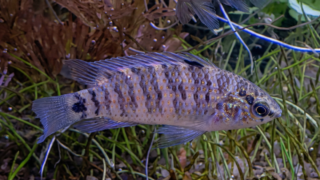
コリドラス・ロブスタスは、ブラジルのアマゾン川中流域に注ぐプルス川水系に暮らす大型のコリドラスです。種小名のロブスタスはラテン語で「頑丈な」を意味し、その名のとおり体高があり、厚みのある力強い体つきをしています。全長は10cm前後に達し、コリドラスの仲間では最大級の大きさです。明るい褐色の体には細かな黒い斑点が散り、目を縦に横切る黒いアイバンドが精悍な顔つきを生み出しています。成熟すると背鰭が後方へ長く伸び、水底を進む姿は帆を張った船を思わせます。2024年の分類の見直しにより、現在の学名はブロキス属のBrochis robustaとなりましたが、日本では今も「コリドラス・ロブスタス」の名で親しまれています。流通するのはほとんどが現地で採集されたワイルド個体です。毒のある棘の扱い、寄生虫への対策、夏場の高水温対策など気を配るべき点は多いものの、それに見合うだけの存在感を備えた種です。 Corydoras robustus is a large cory from the Rio Purus system, a tributary of the middle Amazon in Brazil. Its species name comes from the Latin for “sturdy”, and true to the name it has a deep, thick, powerful build. Reaching around 10 cm in total length, it is among the largest of all corys. Fine black spots are scattered over a light brown body, and a black eye band running vertically through the eye gives it a striking, determined face. As it matures, the dorsal fin grows long and sweeps backward, so that the fish moving along the bottom recalls a ship under sail. Following a 2024 taxonomic revision, its current scientific name is Brochis robusta, in the genus Brochis, yet in Japan it is still widely known as “Corydoras robustus”. Nearly all specimens in the trade are wild-caught. Handling its venomous spines, dealing with parasites, and protecting it from summer heat all require care, but the fish has a presence that more than rewards the effort.
基本情報 / Basic Information
| 学名 / Scientific Name | Brochis robusta (syn. Corydoras robustus) |
|---|---|
| 通称 / Common Name | コリドラス・ロブスタス、ロブスタスCorydoras robustus, Robustus |
| 分類 / Family | ナマズ目カリクティス科コリドラス亜科ブロキス属(旧コリドラス属)Siluriformes, Callichthyidae, Corydoradinae, genus Brochis (formerly Corydoras) |
| 英名 / English Name | Robust Cory |
| 分布 / Distribution | 南米ブラジル・アマゾナス州。アマゾン川中流域に注ぐプルス川水系に分布し、浅く流れの緩やかな小川や氾濫原の砂地、水没林などに生息しています。Amazonas State, Brazil, South America. It is found in the Rio Purus system, a tributary of the middle Amazon, where it lives in shallow, gently flowing streams, sandy floodplains, and flooded forests. |
| 最大体長 / Max Size | 全長10cm前後。雌は雄より一回り大きくなり、雌では標準体長(尾鰭を除いた長さ)で9.5cmに達した記録があります。Around 10 cm in total length. Females grow somewhat larger than males, and females have been recorded at up to 9.5 cm standard length, measured without the tail fin. |
| 寿命 / Lifespan | 情報なし。本種の寿命について信頼できる記録は乏しく、はっきりとしたことは分かっていません。No information. Reliable records on the lifespan of this species are scarce, and nothing definite is known. |
飼育環境 / Aquarium Environment
| 水槽サイズ / Tank Size | 成魚は10cm前後になり、群れで底面を活発に泳ぎ回るため、水槽の底面積の広さが何より重要です。最低でも90cm規格水槽(約180L)、できれば120cm規格水槽(約240L)以上を用意しましょう。群れで暮らす魚なので、5〜6匹以上での飼育が勧められます。Adults reach about 10 cm and actively roam the bottom in groups, so floor area matters most. A 90 cm standard tank (about 180 L) is the minimum, and a 120 cm standard tank (about 240 L) or larger is preferable. As a schooling species, it should be kept in a group of at least five or six. |
|---|---|
| 水温 / Temperature | 22〜26℃。高水温に弱く、28℃を超えると急に調子を崩しやすくなるため、日本の夏には水槽用クーラーが欠かせません。反対に、22℃前後のやや低めの水温でも元気に動き回ります。 22–26°C. It does poorly in heat and can decline suddenly above 28°C, so an aquarium chiller is essential in Japanese summers. Conversely, it remains active at slightly cooler temperatures around 22°C. |
| 水質 / Water Quality | pH6.0〜7.2の弱酸性から中性、総硬度2〜12dGH程度の軟水を好みます。日本の水道水はおおむね軟水なので、カルキを抜けば無理なく適応します。体が大きいぶん排泄量も多く、底床の汚れに敏感です。水中の汚れの指標となる硝酸塩を低く保つため、週に1回、水量の20〜30%を目安に、底床の汚れを吸い出しながら換水しましょう。It prefers slightly acidic to neutral soft water, with a pH of 6.0–7.2 and a general hardness of about 2–12 dGH. Japanese tap water is generally soft, so it adapts easily once dechlorinated. Its large body means plenty of waste, and it is sensitive to a dirty substrate. To keep nitrate, an indicator of accumulated waste, at a low level, change about 20–30% of the water once a week while siphoning debris from the substrate. |
| レイアウト / Layout | ヒゲを使って底砂を掘り返しながら餌を探すため、底床には角の丸い田砂や粒の細かい川砂を薄く敷くのが基本です。大磯砂のように角の立った砂利は、ヒゲを傷める原因になります。流木や乾燥させた落ち葉で、枯れ葉が沈むアマゾンの川底を再現すると、魚が落ち着いて本来の体色を見せてくれます。ただし障害物を置きすぎず、群れで泳げる広い空間を残しておくことが大切です。また、強めの外部式フィルターなどで、水槽内によどみのない水流を作ると効果的です。Because it digs through the substrate with its barbels in search of food, a thin layer of rounded fine sand or river sand is essential. Sharp-edged gravel can damage the barbels. Recreating a leaf-strewn Amazonian streambed with driftwood and dried leaves helps the fish settle and show its natural colors, but avoid crowding the bottom and leave plenty of open space for the group to swim. Creating a steady current with a powerful canister filter or similar equipment is also effective. |
| 注意点 / Precautions | 胸鰭と背鰭の硬い棘には毒腺があり、刺されると強い痛みや腫れが生じます。素手では触れないようにしましょう。網を使うと棘が網目に絡み、外す際に魚を傷つけやすいため、プラケースに追い込んで水ごと掬うのが安全です。また、水面へ空気を吸いに上がる動作が頻繁に続く場合は、水中の酸素が不足しているおそれがあります。エアレーションや水温を見直してください。The hard spines of the pectoral and dorsal fins carry venom glands, and a sting causes intense pain and swelling, so do not handle the fish with bare hands. Nets are best avoided, since the spines catch in the mesh and the fish is easily injured while being freed; it is safer to herd it into a plastic container and scoop it out together with the water. If the fish keeps rising to the surface to gulp air, the water may be short of oxygen, so check aeration and temperature. |
餌と給餌 / Feeding
| 餌の種類 / Diet | 雑食性で食欲旺盛です。冷凍アカムシは食いつきがよく、体格づくりに向いています。イトミミズも優れたタンパク源ですが、生きたものは病原菌や寄生虫を持ち込むおそれがあるため、冷凍やフリーズドライの製品を選ぶと安心です。これらに、植物質や食物繊維を含むコリドラス用の沈下性タブレットを組み合わせましょう。It is omnivorous with a strong appetite. Frozen bloodworms are eagerly taken and help build body condition. Tubifex worms are also an excellent source of protein, but live worms can bring in pathogens and parasites, so frozen or freeze-dried products are the safer choice. Combine these with sinking cory tablets that contain plant matter and fiber. |
|---|---|
| 給餌のポイント / Feeding Tips | 中層を泳ぐ魚に先に食べられないよう、確実に水底まで届く沈下性の餌を与えます。夕方から夜にかけて活発になる傾向があるので、消灯前に与えると効率よく食べさせられます。冷凍餌ばかりでは栄養が偏り、便秘や内臓の不調につながるおそれがあります。タブレットフードと交互に与えて栄養のバランスを保つことが、長く飼うための鍵です。Offer sinking foods that reliably reach the bottom so midwater fish cannot get to them first. It tends to become more active from evening into the night, so feeding just before lights-out lets it eat efficiently. A diet of frozen foods alone becomes unbalanced and may lead to constipation or internal problems. Alternating with tablet foods to keep nutrition balanced is the key to keeping it for many years. |
性格と混泳 / Temperament and Tank Mates
| 性格 / Temperament | 非常に温和で、他の魚を攻撃することはありません。群れで暮らす習性が強く、単独や少数で飼うと物陰に隠れがちになり、体色がくすむこともあります。群れで飼えば、仲間と寄り添いながら水底を探索する自然な姿を見せてくれます。Very peaceful, it does not attack other fish. It has a strong schooling instinct, and when kept alone or in small numbers it tends to hide and its colors may fade. Kept in a group, it shows its natural behavior, exploring the bottom side by side with its companions. |
|---|---|
| 混泳の相性 / Compatibility | 好む水質や水温が近く、泳ぐ層が重ならない魚が好相性です。中層から上層を泳ぐ小型カラシン(カージナルテトラ、ラミーノーズテトラなど)やラスボラの仲間、温和なアピストグラマなどの小型シクリッドがよく合います。一方、長い背鰭をかじるスマトラのような魚、本種を飲み込めるほど大きなナマズ、縄張り意識の強い中・大型シクリッドとの混泳は避けましょう。The best companions are fish with similar water preferences that swim at different levels. Small midwater to upper-level characins such as cardinal tetras and rummy-nose tetras, rasboras, and peaceful dwarf cichlids such as Apistogramma suit it well. Avoid fish that nip fins, such as tiger barbs that may bite its long dorsal fin, catfish large enough to swallow it, and territorial medium to large cichlids. |
病気と対策 / Diseases and Prevention
| かかりやすい病気 / Common Diseases | ワイルド個体には、体表やエラに寄生するギロダクチルスやダクチロギルスなどの吸虫が付いていることが多くあります。寄生されると、体を砂や流木に擦り付けたり、ヒレをたたんでじっとしたりするようになります。また、角の鋭い底砂や底床の汚れで傷ついたヒゲから細菌が入り、ヒゲが溶けるように短くなる症状や、高水温時の細菌感染症にも注意が必要です。Wild specimens often carry flukes such as Gyrodactylus and Dactylogyrus on the skin and gills. Infested fish rub themselves against sand or driftwood, or sit still with clamped fins. Watch also for barbel erosion, in which bacteria enter barbels damaged by sharp substrate or a dirty bottom and the barbels gradually wear away, as well as for bacterial infections when the water is warm. |
|---|---|
| 対策と予防 / Prevention | 新しく迎えた個体はすぐに本水槽へ入れず、別の水槽で1週間ほど様子を見ましょう。寄生虫の兆候があれば駆虫薬で薬浴させますが、コリドラスの仲間は薬に敏感なため、規定量より薄い濃度から慎重に始めるのが安全とされています。飼育者の経験則としては、薬浴は水温25℃以下で行い、長くても48時間以内にとどめ、寄生虫が落ちたのを確認したら換水して薬を抜くのがよいとされています。日頃の予防としては、角の丸い底砂を使い、定期的に換水し、夏場の水温を管理することが何よりの対策になります。Do not place newly acquired fish straight into the main tank; keep them in a separate tank for about a week to observe them. If signs of parasites appear, treat them in an antiparasitic bath, but because corys are sensitive to medication, it is considered safer to start cautiously at a weaker concentration than the standard dose. Keepers’ experience suggests treating at 25°C or below, limiting the bath to 48 hours at most, and changing the water to remove the medication once the parasites have dropped off. For everyday prevention, rounded substrate, regular water changes, and summer temperature control are the most effective measures. |
増やし方(繁殖) / Breeding
| 雌雄の判別 / Sexing | 成熟すると雌雄とも背鰭が長く伸びることがあるため、背鰭だけで見分けるのは確実ではありません。雄は腹鰭も長く伸びるのが目安とされます。雌は雄より一回り大きく、上から見ると腹部がふっくらしています。若魚のうちは判別が難しい場合があります。Because both sexes can develop long dorsal fins when mature, the dorsal fin alone is not a reliable guide. Males are said to be recognizable by their long pelvic fins. Females grow larger than males and look fuller in the belly when viewed from above. Young fish can be difficult to sex. |
|---|---|
| 繁殖形態 / Reproduction | 卵生です。雌が雄の腹部に口先を寄せる「Tポジション」と呼ばれる独特の姿勢をとった後、粘着性の卵をガラス面や水草の葉などに産み付けます。Egg-laying. After the pair adopts the distinctive T-position, in which the female presses her mouth against the male’s belly, she attaches sticky eggs to the glass or to plant leaves. |
| 繁殖のポイント / Breeding Tips | 飼育下での繁殖例は非常に少なく、難しい種です。まず冷凍アカムシや冷凍イトミミズを十分に与えて親魚の体調を整え、雄2〜3匹に対して雌1匹程度の割合で一緒に飼います。そのうえで、ふだんの25〜26℃から22〜23℃程度まで水温が下がるように、少し冷たい水で水槽の半分以上を一度に換水し、雨季の訪れを再現します。シャワーパイプで水面を叩くように注水したり、低気圧が近づくタイミングに合わせたりすると効果的とされています。産卵したら卵を別の容器に移し、24〜25℃で管理しながら、メチレンブルーを少量加えて水カビを防ぎます。卵は3〜5日ほどで孵化します。稚魚がお腹の栄養袋(ヨークサック)を吸収し終えたら、孵化させたばかりのブラインシュリンプを1日3〜4回こまめに与えることが、育成の要となります。Captive spawnings are very rare, making this a difficult species to breed. First bring the adults into good condition with plenty of frozen bloodworms and tubifex, and keep them at a ratio of about two or three males to one female. Then recreate the arrival of the rainy season by replacing more than half of the water at once with slightly cooler water, so that the temperature drops from the usual 25–26°C to around 22–23°C. Spraying the water onto the surface through a spray bar, or timing the change with an approaching low-pressure system, is said to be effective. After spawning, move the eggs to a separate container, keep them at 24–25°C, and add a small amount of methylene blue to prevent fungus. The eggs hatch in about three to five days. Once the fry have absorbed their yolk sacs, feeding freshly hatched brine shrimp three or four times a day is the key to raising them. |
雑学と豆知識 / Trivia and Fun Facts
| 1. 「頑丈な」コリドラスからブロキス属へ / 1. From the “Sturdy” Cory to the Genus Brochis | 本種は1980年、オランダの魚類学者ナイセンとイスブリュッカーによって、オランダの学術誌で新種として記載されました。種小名のrobustusは、多くのコリドラスと比べて体高が高く、厚みのある体つきにちなんだものです。長らくコリドラス属の一員とされてきましたが、この属には進化の道筋が異なる複数のグループが混ざっていることが、以前から指摘されていました。つまり、見た目が似ているというだけで、本来は別々の枝に属する魚たちが一つの属にまとめられていたのです。そこで2024年、ディアスらは体の形態とゲノム規模の遺伝子データを合わせて解析し、旧コリドラス属を7つの属に整理し直しました。本種は、この見直しで復活したブロキス属に移され、学名もBrochis robustaとなりました。同じ見直しで、パンダやジュリーはホプリソマ属へ、エレガンスはガストロデルムス属へと移っています。それでも愛好家の間では、長年親しまれてきた「コリドラス・ロブスタス」という呼び名が今も使われ続けています。This species was described in 1980 by the Dutch ichthyologists Nijssen and Isbrücker in a Dutch scientific journal. The name robustus refers to its deeper, thicker body compared with most corys. It long belonged to the genus Corydoras, but it had been pointed out for some time that the genus mixed together several groups with different evolutionary paths. In other words, fish from separate branches of the family tree had been placed in one genus simply because they looked alike. In 2024, Dias and colleagues analyzed body form together with genome-scale genetic data and reorganized the former Corydoras into seven genera. This species was moved to the revived genus Brochis and became Brochis robusta. In the same revision, the panda and julii corys moved to Hoplisoma and the elegans cory to Gastrodermus. Even so, hobbyists still use the long-familiar name “Corydoras robustus”. |
|---|---|
| 2. 遺伝子が描いた「系統8」 / 2. “Lineage 8” Revealed by DNA | この分類の見直しの土台となったのが、2011年にアレクサンドルーらが発表した大規模な遺伝子解析です。ゲノムの6つの領域を調べて多数の種の系統樹を描いたこの研究により、コリドラスの仲間は大きく9つの系統に分かれることが示されました。ロブスタスが含まれたのは「系統8」と呼ばれるグループで、体高が高く、口先がやや長めの種が集まっています。つまり、体つきの特徴でゆるやかにまとめられていた仲間が、遺伝子の上でも一つのまとまりであると裏付けられたわけです。この系統8が、のちのブロキス属にあたります。The groundwork for the revision was a large genetic study published by Alexandrou and colleagues in 2011. By examining six regions of the genome to build a family tree of a great many species, it showed that corys fall into nine major lineages. Robustus was placed in the group called “Lineage 8”, which gathers deep-bodied species with moderately long snouts. In other words, fish that had been loosely grouped by body shape were confirmed to form a single unit at the genetic level as well. This Lineage 8 corresponds to what later became the genus Brochis. |
| 3. 背鰭を伸ばすのは水流か、生まれ持った素質か / 3. Current or Genes: What Makes the Dorsal Fin Grow? | 長く伸びる背鰭は本種最大の見どころですが、すべての個体が同じように伸ばすわけではありません。日本の愛好家の間では、強い水流に逆らって泳がせると背鰭が美しく伸びやすいという経験則が古くから語られており、流れのあるプルス川の環境を水槽で再現する工夫が重ねられてきました。一方で、同じ水流の中で育てても、大きく伸びる個体とほとんど伸びない個体が出てきます。このことから、水流という外からの刺激だけでなく、個体ごとの生まれ持った素質も大きく関わっていると考えられています。若魚を迎え、背鰭が少しずつ伸びていく過程を見守れるのも、本種ならではの楽しみです。The long dorsal fin is this species’ greatest highlight, yet not every individual develops it in the same way. Japanese hobbyists have long held that making the fish swim against a strong current helps the dorsal fin grow beautifully, and many have worked to recreate the flowing waters of the Rio Purus in their tanks. On the other hand, fish raised in the same current still range from those with spectacular fins to those that barely change. This suggests that inborn traits of each individual play a large role, not only the outside stimulus of the current. Watching a young fish’s dorsal fin lengthen little by little is a pleasure particular to this species. |
| 4. 甲冑に隠された毒の棘 / 4. Venomous Spines Beneath the Armor | 胸鰭と背鰭の最初の棘は非常に硬く鋭く、その付け根近くには小さな毒腺があります。鳥や大型の魚に飲み込まれたとき、棘が喉に刺さって圧力がかかることで毒が出る、身を守るための仕組みと考えられています。プルス川水系の大型種は小型のコリドラスより毒が強い傾向があるとされ、人が刺されると蜂に刺されたような激しい痛みや腫れが起こります。この毒はタンパク質を主成分とし、熱に弱い性質があるため、刺されてすぐに火傷しない程度の熱めのお湯(45℃前後が目安)に患部を浸すと、痛みが和らぐことが知られています。ただし、淡水魚による刺し傷から細菌に感染することもあるため、痛みや腫れが引かない場合は医療機関を受診してください。また、輸送中に強いストレスを受けると、自ら出した毒で弱ってしまう「自家中毒」を起こすことがあるとされ、入荷したばかりで体を傾けてふらつく個体は、その影響が疑われます。The first spines of the pectoral and dorsal fins are extremely hard and sharp, with small venom glands near their bases. This is thought to be a defense: when a bird or large fish swallows the cory, the spines lodge in its throat and the pressure releases the venom. Large species from the Purus system are said to have stronger venom than small corys, and a sting causes severe, bee-sting-like pain and swelling in people. Because the venom is protein-based and breaks down with heat, soaking the wound promptly in water as hot as can be tolerated without scalding, around 45°C as a guide, is known to ease the pain. Stings from freshwater fish can, however, become infected with bacteria, so seek medical care if pain or swelling does not subside. Under heavy stress during transport, the fish is also said to be harmed by its own released venom, a condition known as self-poisoning; newly arrived fish that list and wobble may be suffering from it. |
| 5. 腸で呼吸する魚 / 5. A Fish That Breathes Through Its Gut | アマゾンの氾濫原や小川では、雨季に大量の落ち葉や泥が流れ込んだり、乾季に水温が上がったりして、水中の酸素が不足することがよくあります。そうした環境を生き抜くため、コリドラスの仲間はエラ呼吸に加えて、腸で酸素を取り込む補助的な呼吸法を身につけました。水底から一気に水面へ駆け上がって空気を飲み込み、細かな血管が張り巡らされた腸の壁から酸素を吸収するのです。水槽でときおり見られるこの動作は愛らしいものですが、あまりに頻繁であれば、水中の酸素が足りていないサインでもあります。In Amazonian floodplains and streams, oxygen in the water often runs short, as leaves and mud wash in during the rainy season or temperatures rise in the dry season. To survive such conditions, corys developed a supplementary way of breathing through the gut in addition to their gills. They dash from the bottom to the surface, swallow air, and absorb oxygen through an intestinal wall lined with fine blood vessels. This occasional behavior is charming to watch in the aquarium, but if it becomes very frequent, it is a sign that the water lacks oxygen. |
| 6. 似た模様に隠された共存の戦略 / 6. Shared Patterns, Shared Survival | 同じ川に暮らすコリドラスの中には、遺伝的には遠い関係なのに、そっくりな模様をした種の組み合わせがしばしば見られます。前述の2011年の研究は、これがミューラー型擬態と呼ばれる現象であることを示しました。毒のある棘という共通の武器を持つ種同士が同じ模様をまとうと、捕食者は「この模様の魚は危ない」と早く覚えるため、結果としてどの種も襲われにくくなるのです。ロブスタスの斑点やアイバンドも、プルス川水系に暮らす別系統の種と互いに影響し合いながら進化した結果ではないかと推測されています。また、こうした種同士は口先の長さや餌の採り方を少しずつ違えることで、同じ場所に暮らしながらも餌の奪い合いを避けていると考えられています。Among corys sharing the same river, one often finds pairs of species that look almost identical despite being only distantly related. The 2011 study mentioned above showed this to be a phenomenon called Müllerian mimicry. When species armed with the same weapon, venomous spines, wear the same pattern, predators quickly learn that fish with that pattern are dangerous, and as a result every species involved is attacked less often. The spots and eye band of robustus are thought to have evolved in this way, alongside species from other lineages in the Purus system. Such species are also thought to differ slightly in snout length and feeding style, which lets them live in the same place without competing for food. |
| 7. よく似たそっくりさん / 7. A Look-Alike in the Trade | 幼魚のロブスタスは、同じプルス川水系に暮らす、まだ正式な学名のない種Brochis sp. C049とよく似ています。この種は輸出業者の間で「フォールス・ロブスタス(偽のロブスタス)」と呼ばれ、現地で混ざって出荷されることもあるため、購入時には注意が必要です。コリドラスの世界では、このC049のような「Cナンバー」が、学名のない種や地域変異を見分けるための目印として広く使われています。Juvenile robustus closely resemble Brochis sp. C049, a species from the same Purus system that has not yet received a formal scientific name. Exporters call it the “false robustus”, and the two are sometimes mixed in shipments, so care is needed when buying. In the cory hobby, “C numbers” such as C049 are widely used as labels to tell apart unnamed species and regional variants. |
| 8. 冬に届くアマゾンからの便り / 8. A Winter Delivery from the Amazon | 商業的な繁殖方法が確立されていないため、日本に流通する本種はほとんどがブラジルのプルス川流域で採集されたワイルド個体で、現地の輸出業者を経て空路で日本に届きます。採集量は川の水位に大きく左右され、水位が下がって採りやすくなる時期、日本ではおもに冬場にまとまって入荷する傾向があるとされます。それ以外の時期は入手しにくくなります。輸送の際には、棘による袋の破れや自家中毒を防ぐため、袋を何重にも重ねるなどの配慮がなされています。With no established commercial breeding, nearly all specimens sold in Japan are wild-caught in the Rio Purus basin of Brazil and reach Japan by air through local exporters. Catches depend heavily on river levels, and shipments are said to arrive in quantity when water levels drop and collecting becomes easier, which in Japan is mainly in winter. At other times of year the fish is harder to find. To prevent the spines from puncturing bags and to reduce the risk of self-poisoning, shippers take precautions such as layering several bags. |
| 9. 究極の目標としての繁殖 / 9. Breeding as the Ultimate Goal | 飼育下での繁殖例はごくわずかです。2019年にはドイツの観賞魚卸業者が繁殖個体の出荷を発表し、同社が知る限りではそれ以前に水槽での繁殖成功の報告はなかったとしています。それだけに、本種の繁殖はコリドラス愛好家にとって究極の目標の一つとされています。雨季の訪れを再現する大量換水や水温の調整、低気圧の接近に合わせたタイミングなど、自然のリズムを読み解こうとする試みが、今も多くの飼育者によって続けられています。Captive breeding records are extremely few. In 2019, a German ornamental fish wholesaler announced that it was offering captive-bred specimens, stating that, as far as it knew, no successful aquarium breeding had been reported before. For this reason, breeding this species is regarded as one of the ultimate goals among cory enthusiasts. Many keepers continue to experiment with large water changes and temperature shifts that mimic the arrival of the rainy season, timed with approaching low-pressure systems, in an effort to read the rhythms of nature. |
まとめ / Conclusion
コリドラス・ロブスタスは、全長10cm前後に達する頑丈な体、成熟すると長く伸びる背鰭、捕食者から身を守る毒の棘、そして腸呼吸や擬態といった、アマゾンの厳しい自然が育んだ数々の特徴を併せ持つ魚です。学名がブロキス属へ移った今も、日本の愛好家にとっては変わらず憧れの大型コリドラスです。 Corydoras robustus combines a sturdy body reaching around 10 cm, a dorsal fin that grows long with maturity, venomous spines that protect it from predators, and other traits shaped by the harsh Amazonian environment, such as gut breathing and mimicry. Even with its scientific name now in the genus Brochis, it remains a large cory admired by hobbyists in Japan.
広い底面と角の丸い砂、よどみのない水流、夏の高水温への備え、そして迎え入れるときの丁寧なトリートメント。求められる準備は少なくありませんが、群れで水底を探り、背鰭を帆のように広げてゆったりと泳ぐ姿は、その手間に十分に応えてくれるはずです。 A wide floor, rounded sand, a steady current, protection from summer heat, and careful quarantine on arrival: the preparation it asks for is considerable. Yet the sight of a group searching the bottom together, dorsal fins spread like sails as they swim at an unhurried pace, more than repays the effort.
気になる道具や飼い方を見つけてみませんか?
 アイのアクアグッズ案内ダニオの仲間に合わせる飼育用品|ゼブラダニオから超小型種まで水槽・ろ過・餌を選ぶ道具の特徴や使い方、選ぶときのポイントをアイが紹介します。記事はコチラ →
 アイのアクアグッズ案内水草用ライトの選び方|緑の絨毯と赤い水草を楽しむ照明・植栽用品道具の特徴や使い方、選ぶときのポイントをアイが紹介します。記事はコチラ →
さまざまな飼育テーマをご紹介。リンク先の記事には広告・商品紹介が含まれます。
案内・紹介記事一覧へ →分布マップ
コリドラス・ロブスタス(Brochis robusta)は、南米ブラジル・アマゾナス州を流れ、アマゾン川中流域に注ぐプルス川水系に分布しています。浅く流れの緩やかな小川や氾濫原の砂地、水没林などが主な生息環境です。
※地図はプルス川水系全体が収まる範囲を示した概略表示であり、正確な分布境界を表すものではありません。マーカーは流域のおおよその中心を示す代表地点で、実際の採集地点ではありません。
参考文献 / References
- Nijssen, H. & Isbrücker, I. J. H. (1980). Three new Corydoras species from French Guiana and Brazil (Pisces, Siluriformes, Callichthyidae). Netherlands Journal of Zoology, 30(3), 494–503.
- Reis, R. E. (2003). Family Callichthyidae (Armored catfishes). In: Reis, R. E., Kullander, S. O. & Ferraris, C. J., Jr. (eds.), Check List of the Freshwater Fishes of South and Central America, pp. 291–309. Porto Alegre: EDIPUCRS.
- Alexandrou, M. A., Oliveira, C., Maillard, M., McGill, R. A. R., Newton, J., Creer, S. & Taylor, M. I. (2011). Competition and phylogeny determine community structure in Müllerian co-mimics. Nature, 469, 84–88. https://doi.org/10.1038/nature09660
- Dias, A. C., Tencatt, L. F. C., Roxo, F. F., Silva, G. S. C., Santos, S. A., Britto, M. R., Taylor, M. I. & Oliveira, C. (2024). Phylogenomic analyses in the complex Neotropical subfamily Corydoradinae (Siluriformes: Callichthyidae) with a new classification based on morphological and molecular data. Zoological Journal of the Linnean Society, zlae053. https://doi.org/10.1093/zoolinnean/zlae053
- Wright, J. J. (2009). Diversity, phylogenetic distribution, and origins of venomous catfishes. BMC Evolutionary Biology, 9, 282. https://doi.org/10.1186/1471-2148-9-282
- Kramer, D. L. & McClure, M. (1980). Aerial respiration in the catfish, Corydoras aeneus (Callichthyidae). Canadian Journal of Zoology, 58, 1984–1991.
- Fricke, R., Eschmeyer, W. N. & van der Laan, R. (eds.). Eschmeyer’s Catalog of Fishes: Genera, Species, References. California Academy of Sciences(オンライン版). https://researcharchive.calacademy.org/research/ichthyology/catalog/fishcatmain.asp
- Froese, R. & Pauly, D. (eds.). FishBase. Species summary: Corydoras robustus Nijssen & Isbrücker, 1980. https://www.fishbase.se/summary/46220




コメント