
解説 / Description
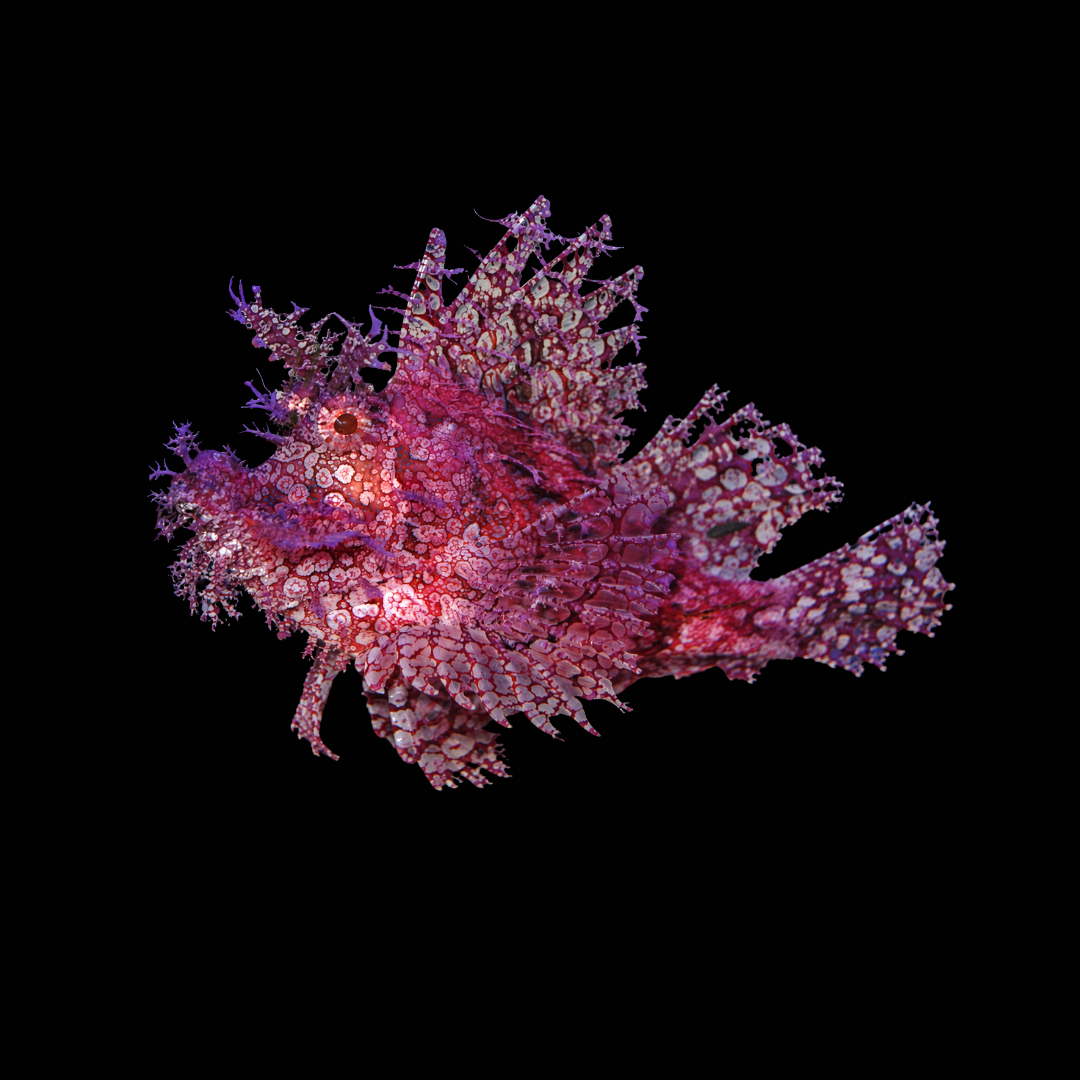
ボロカサゴは、海藻の切れ端をまとったような姿が印象的な、フサカサゴ科の海水魚です。左右に薄く、体高のある体には、皮弁と呼ばれる枝分かれした皮膚の突起があり、褐色、黄色、赤色、紫色など、個体によって異なる色彩を見せます。海底では周囲に溶け込むようにじっと過ごし、小魚や甲殻類が近づくと大きな口で水ごと吸い込みます。泳ぎ回る姿よりも、ひれで体を支えながら底を移動する様子や、流れに合わせて体を揺らす仕草に魅力のある魚です。餌付けと栄養管理に手間がかかり、毒のある棘にも注意が必要なため、海水魚の飼育経験を積んだ方に向いています。 The weedy scorpionfish is a marine member of the family Scorpaenidae, recognizable for its seaweed-like appearance. Its deep, laterally compressed body carries branching skin flaps, and individuals may be brown, yellow, red, or purple. It remains motionless on the seabed until a small fish or crustacean approaches, then draws the prey into its large mouth with a sudden intake of water. Much of its appeal lies in its fin-supported movements along the bottom and its gentle rocking rather than active swimming. Because feeding, nutrition, and venomous-spine safety require careful management, it is best suited to experienced marine aquarists.
基本情報 / Basic Information
| 学名 / Scientific Name | Rhinopias frondosa (Günther, 1892) |
|---|---|
| 通称 / Common Name | ボロカサゴ。「ライノピアス」と呼ばれることもありますが、この呼称は同属の別種にも使われます。Weedy scorpionfish. The trade name “Rhinopias” is also used, but it can refer to other species in the same genus. |
| 分類 / Family | フサカサゴ科ボロカサゴ属。目の扱いは分類体系によって異なり、カサゴ目、またはスズキ目のカサゴ亜目に置かれます。Family Scorpaenidae, genus Rhinopias. Depending on the classification system, it is placed in Scorpaeniformes or in the suborder Scorpaenoidei within Perciformes. |
| 英名 / English Name | Weedy scorpionfish |
| 分布 / Distribution | インド洋から西太平洋に広く分布し、日本の暖かい海域にも生息します。岩礁やサンゴ礁の周辺、砂礫底などで見られ、海藻や付着生物のある環境に紛れて暮らします。Widely distributed in the Indian Ocean and western Pacific, including warm waters around Japan. It occurs around rocky and coral reefs and on sandy or rubble-covered bottoms, blending into algae and other attached organisms. |
| 最大体長 / Max Size | 全長約23cm。尾びれを含む長さです。Approximately 23 cm total length, including the caudal fin. |
| 寿命 / Lifespan | 野生下・飼育下ともに、標準的な寿命を示せるほどの情報はありません。採集時の年齢が分からない場合、飼育できた年数がそのまま本来の寿命を表すわけではありません。長期飼育を見据え、給餌と設備の維持を継続できる体制を整えます。Available information is insufficient to establish a typical lifespan in the wild or captivity. When the age at capture is unknown, years spent in captivity do not directly indicate biological lifespan. Plan for long-term feeding and equipment maintenance. |
飼育環境 / Aquarium Environment
| 水槽サイズ / Tank Size | 成魚1匹を長期飼育する場合は、90cm規格水槽(幅90×奥行45×高さ45cm、公称容量約180L)以上を目安に、底面積と水量に余裕を持たせます。これは本種の飼育に必要な最小容量が確定しているという意味ではなく、成魚の大きさと水質管理を考慮した選び方です。実際の水量は水槽の内寸や水位、砂・岩の量によって少なくなります。遊泳量が少ないことだけを理由に60cm規格水槽(約60L)を選ばず、十分なろ過設備とプロテインスキマーを組み合わせて管理します。For long-term care of one adult, use a standard Japanese 90 cm aquarium measuring 90 × 45 × 45 cm, with a nominal capacity of about 180 L, or larger as a practical planning guide. This is a recommendation based on adult size and water-quality management, not a scientifically established minimum volume. Actual water volume is lower and depends on internal dimensions, water level, substrate, and rocks. Limited swimming activity alone is not a reason to choose a standard 60 cm aquarium of roughly 60 L. Provide adequate filtration and a protein skimmer. |
|---|---|
| 水温 / Temperature | 23〜26℃を管理上の目安とし、急変を避けます。この範囲は本種の耐温限界を示すものではありません。導入時には、それまで維持されていた水温も確認してください。夏季に室温管理だけでは水温を保てない場合は水槽用クーラーを使用し、高温時の酸素不足にも注意します。 Use 23–26°C as a practical husbandry guide and avoid sudden changes. This range does not define the species’ temperature tolerance limits. Check the temperature at which a new specimen has been maintained. Use an aquarium chiller if room temperature control is insufficient, and watch for reduced oxygen availability during hot weather. |
| 水質 / Water Quality | 通常飼育では、一般的な海水魚水槽の管理目安として塩分33〜35‰、比重は25℃でおおむね1.024〜1.026に保ちます。測定器の校正と温度条件も確認してください。pHは8.0〜8.4程度で安定させ、アンモニアと亜硝酸は検出されない状態を維持します。残餌や排泄物による水質悪化を防ぐため、定期的な測定、底にたまった汚れの除去、換水が大切です。蒸発した分は淡水で補い、塩分の上昇を防ぎます。For routine care, standard marine-aquarium targets are salinity of 33–35 ppt and an approximate specific gravity of 1.024–1.026 at 25°C. Check instrument calibration and temperature conditions. Maintain a stable pH around 8.0–8.4, with ammonia and nitrite undetectable. Regular testing, removal of settled debris, and water changes help prevent deterioration caused by uneaten food and waste. Replace evaporated water with freshwater to prevent salinity from rising. |
| レイアウト / Layout | 安定した岩組みと、体を置ける広い砂地や平らな場所を用意します。底砂は鋭利な破片の少ないものを選び、岩の転倒や狭い隙間への挟まりを防ぎます。水槽全体に水が循環するようにしつつ、魚が落ち着ける流れの穏やかな場所も残してください。脱皮を促そうとして、強い水流を魚へ直接当て続けることは避けます。ポンプの吸水口には、接触や吸い込みを防ぐ対策を施します。Provide securely arranged rocks and broad sandy or flat resting areas. Avoid sharp substrate fragments, unstable rocks, and narrow gaps that could trap the fish. Maintain circulation throughout the aquarium while retaining sheltered areas with gentle flow. Do not direct a strong jet continuously at the fish in an attempt to encourage shedding. Guard pump intakes against contact and suction injuries. |
| 注意点 / Precautions | 背びれなどの棘には毒があります。素手で触れたり、魚の位置を確かめずに水槽へ手を入れたりしないでください。一般的なゴム手袋だけで刺傷を防げるとは限りません。作業には長い器具を使い、移動時はひれが絡みやすい網を避け、十分な大きさの硬い容器へ誘導します。導入前には、餌を食べる様子、呼吸、口先の傷、底での姿勢を確認してください。 刺された場合は作業を中止し、速やかに医療機関へ連絡します。息苦しさ、失神、強い全身症状がある場合は119番へ通報してください。傷は清潔な流水で洗い、深く刺さった棘を無理に掘り出さないようにします。受診の手配を優先し、医療者の指示に従って、やけどをしない温水に患部を浸すことで痛みを和らげる場合があります。温度計で確認して45℃を超えないようにし、痛みが軽くなっても受診してください。Spines, including those of the dorsal fin, are venomous. Never handle the fish with bare hands or reach into the aquarium without locating it first. Ordinary rubber gloves alone may not prevent punctures. Use long tools and guide the fish into a suitably sized rigid container for transfers rather than a net that could entangle its fins. Before purchase, observe feeding, breathing, snout condition, and its posture on the bottom. If stung, stop work and contact medical services promptly. In Japan, call 119 for breathing difficulty, fainting, or severe systemic symptoms. Rinse the wound with clean running water and do not dig out deeply embedded spines. Prioritize arranging medical care. Under medical guidance, immersion in non-scalding warm water may help relieve pain. Check the temperature with a thermometer, never exceed 45°C, and seek medical assessment even if the pain improves. |
餌と給餌 / Feeding
| 餌の種類 / Diet | 小魚やエビなどを食べる肉食性です。導入直後に冷凍餌を受け付けない場合は、衛生状態を管理した活きエビなどで摂餌を確保し、徐々に解凍した海産魚やエビへ慣らします。餌は無理なく飲み込める大きさにし、魚と甲殻類を組み合わせて単一食材への偏りを避けます。金魚など一部の魚には、ビタミンB1を分解する酵素「チアミナーゼ」が含まれるため、それらに偏った給餌は避けてください。海産魚であればこの問題がないとは限りません。また、キビナゴやエビなど、ひとつの食材だけを長期間与える方法では、栄養が偏るおそれがあります。A carnivore that eats small fishes and crustaceans. If a new specimen refuses frozen food, establish feeding with live shrimp from a carefully managed source, then gradually introduce thawed marine fish and shrimp. Offer food that can be swallowed comfortably and vary fish and crustacean foods. Some fishes, including goldfish, contain thiaminase, an enzyme that breaks down vitamin B1, so avoid diets dominated by such foods. Marine origin does not guarantee the absence of this enzyme. Long-term reliance on a single food, such as silver-stripe round herring or shrimp, can also result in nutritional imbalance. |
|---|---|
| 給餌のポイント / Feeding Tips | 環境に慣れた成魚では週2〜3回を給餌の目安とし、餌の大きさ、食後の腹部の膨らみ、次の給餌までの体形の変化を見ながら量と間隔を調整します。幼魚や痩せた個体に、この頻度をそのまま当てはめないでください。餌付けでは長い給餌器具で餌をゆっくり動かし、魚が反応するのを待ちます。器具を口へ突き込まず、硬い先端をかみ込ませないように注意します。冷凍餌は必要量だけ衛生的に解凍し、残餌は回収してください。冷凍餌への移行を急いで長期間絶食させず、拒食が続く場合は水質、呼吸、体表の状態と、それまでの摂餌状況を確認します。For a settled adult, two or three feeding sessions per week can serve as a starting point. Adjust the amount and interval according to food size, abdominal fullness after feeding, and changes in body condition between meals. Do not apply this schedule unchanged to juveniles or underweight fish. Move food gently with a long feeding tool and wait for a response. Do not push the tool into the mouth or allow the fish to strike a hard tip. Thaw only the amount needed under hygienic conditions and remove leftovers. Avoid prolonged fasting to force acceptance of frozen food. Persistent refusal warrants checks of water quality, respiration, skin condition, and previous feeding patterns. |
性格と混泳 / Temperament and Tank Mates
| 性格 / Temperament | 普段はあまり移動せず、待ち伏せで獲物を捕らえます。活発に他魚を追い回す性質ではありませんが、おとなしく見えても捕食の危険はあります。大きな口に収まる魚やエビは、しばらく問題なく同居していても、突然捕食される可能性があります。Usually sedentary, it captures prey by ambush rather than actively chasing other fishes. Its quiet appearance does not remove the risk of predation. Fish and shrimp that fit into its large mouth may be eaten suddenly, even after an apparently peaceful period together. |
|---|---|
| 混泳の相性 / Compatibility | 単独飼育が最も管理しやすい選択です。小型のハゼ、スズメダイ、エビなどは捕食対象になります。フグ、モンガラカワハギ、大型ヤッコなど、体表や皮弁をつつくおそれのある魚は避けます。餌を素早く奪う大型肉食魚との同居も不向きです。大きめで穏やかな魚でも安全とは限らず、同属・同科の魚同士でも体格差によって捕食が起こり得ます。混泳を試みる場合は、個別に給餌できるようにし、問題が起きたらすぐに隔離できる設備を用意してください。Keeping it alone is the simplest management option. Small gobies, damselfishes, and shrimp are potential prey. Avoid fishes that may nip its body or skin flaps, such as puffers, triggerfishes, and large angelfishes. Fast-feeding large predators are also unsuitable companions. Even larger, peaceful fishes are not guaranteed to be safe, and size differences can lead to predation among related scorpionfishes. Any mixed setup requires reliable individual feeding and facilities for immediate separation if problems arise. |
病気と対策 / Diseases and Prevention
| かかりやすい病気 / Common Diseases | 飼育中は海水性白点病、ハダムシなどの外部寄生虫、外傷に伴う細菌感染、偏った給餌による栄養障害に注意します。ただし、本種がほかの海水魚より特定の病気にかかりやすいと判断できる情報は限られています。呼吸が速い、餌を食べない、体をこする、白点や潰瘍がある、眼の濁りが続くといった変化を見逃さないでください。薄い膜がはがれる現象は通常の脱皮でも見られますが、眼の白濁や拒食をすべて脱皮に伴う変化と決めつけないことが大切です。Potential problems include marine white spot disease, external parasites such as monogenean flukes, bacterial infections associated with injury, and nutritional disorders. Evidence that this species is more susceptible than other marine fishes to particular diseases is limited. Watch for rapid breathing, refusal of food, rubbing, white spots, ulcers, or persistent eye cloudiness. A thin film peeling away can be normal shedding, but eye cloudiness or loss of appetite should not automatically be attributed to it. |
|---|---|
| 対策と予防 / Prevention | 導入時は別水槽で体調と摂餌を観察し、器具を共用しないことで病原体の持ち込みを減らします。日頃は安定した水質、十分な酸素、偏りのない給餌を維持してください。症状が出た場合は水質を確認し、魚類を診療できる獣医師に相談して、原因に合った治療を選びます。銅系薬剤の安全性は魚種、濃度、製剤、水質によって変わり、本種に安全な使用条件を一律には示せません。低比重療法も、すべての寄生虫に有効な方法ではなく、本種への安全性を無条件に保証できるものではありません。寄生虫用の薬剤や抗菌薬を自己判断で併用せず、必要に応じて隔離水槽を使い、適切な指示に従って治療します。Observe the condition and feeding of new arrivals in a separate aquarium, using dedicated equipment to reduce pathogen transfer. Maintain stable water quality, adequate oxygen, and a varied diet. If symptoms develop, check water quality and consult a veterinarian experienced with fish to select treatment for the cause. Copper safety depends on species, concentration, formulation, and water chemistry, so universally safe conditions cannot be specified for this fish. Hyposalinity is not effective against every parasite, nor can its safety for this species be assumed. Avoid combining antiparasitic drugs or antibiotics without guidance, and use a separate treatment aquarium when appropriate. |
増やし方(繁殖) / Breeding
| 雌雄の判別 / Sexing | 外見だけで確実に雌雄を判別できる実用的な方法は、十分に確立されていません。色彩や皮弁の多さだけで雌雄を判断しないでください。近縁のホウセキカサゴとの形態の違いを、そのままオスとメスの違いとみなすことも適切ではありません。A dependable practical method for sexing individuals by appearance alone is not well established. Color and the abundance of skin flaps should not be used as reliable sex indicators. Structural differences from the related Eschmeyer’s scorpionfish should not simply be interpreted as differences between males and females. |
|---|---|
| 繁殖形態 / Reproduction | 卵生です。本種の産卵条件や仔魚の発育には不明な点が多く、家庭飼育に応用できる情報は限られています。産卵する季節や水深についても、生息域全体に共通する条件として示せるだけの情報はありません。Oviparous. Many aspects of spawning conditions and larval development remain poorly understood, and information that can be applied to home aquaria is limited. Available evidence is also insufficient to specify a spawning season or depth that applies throughout its range. |
| 繁殖のポイント / Breeding Tips | 家庭で安定して再現できる繁殖方法は、十分に確立されていません。まず親魚の健康維持を優先し、繁殖を期待して安易に複数匹を同居させないことが大切です。卵や仔魚が得られた場合も、成魚とは別の管理が必要になります。本種に適した初期餌料や育成条件については、確実な手順を示せるだけの情報がありません。A consistently reproducible home-breeding method is not well established. Prioritize the health of potential broodstock and do not house multiple individuals together casually in the hope of breeding. Any eggs or larvae obtained would require management separate from that of the adults. Information on suitable first foods and rearing conditions is insufficient to provide a reliable protocol for this species. |
雑学と豆知識 / Trivia and Fun Facts
| 1. 「ぼろ」に見える装いに残る発見の歴史 / 1. A Ragged Appearance with a Scientific History | ボロカサゴという和名は、ぼろ布をまとったような姿を思わせます。一方、種小名の「frondosa」は、ラテン語で葉の茂った様子を表す言葉に由来します。同じ皮弁でも、布の切れ端に見立てるか、葉の茂みに見立てるかで、この魚の印象が変わります。本種は1892年、動物学者アルバート・ギュンターによってモーリシャス産の標本をもとに記載され、当初はScorpaena属に置かれていました。現在の学名で記載者名と年が括弧に入っているのは、最初に記載された属から別の属へ移されたことを示しています。見た目の特徴を表す名前には、分類が見直されてきた歴史も残されています。The Japanese name evokes a fish dressed in ragged cloth, while the species name “frondosa” comes from Latin describing a leafy appearance. The same skin flaps suggest a different impression when viewed as scraps of fabric or clusters of leaves. Albert Günther described the species in 1892 from a specimen collected in Mauritius, originally placing it in Scorpaena. The parentheses around the author and year in its current scientific name indicate that it was subsequently transferred to another genus. Its name thus reflects both its appearance and part of its classification history. |
|---|---|
| 2. 色ではなく、体のつくりで見分ける仲間たち / 2. Recognizing Relatives by Structure Rather Than Color | ボロカサゴに似た魚として、ホウセキカサゴ(Rhinopias eschmeyeri)がいます。かつては両者の姿の違いが雌雄差ではないかと考えられたこともありました。しかし、2006年の形態学的研究では、両方の姿をした個体から成熟したメスが確認されています。つまり、見た目の違いを単純にオスとメスの違いだけでは説明できなかったのです。さらに、皮弁やひれなどにも違いが認められ、両者は別種として扱われました。ボロカサゴでは下顎の皮弁が多く、背びれの棘の間の膜に深い切れ込みがあり、体に暗色で縁取られた斑紋が見られます。ホウセキカサゴでは皮弁が少なく、背びれの輪郭や模様も異なります。個体によって変わる色だけでなく、顎の下やひれの形に目を向けることが、仲間を見分ける手がかりになります。A close look-alike is Eschmeyer’s scorpionfish, Rhinopias eschmeyeri. Their different appearances were once suspected of representing males and females of a single species. A 2006 morphological study, however, found mature females with both appearances. The distinction therefore could not be explained simply as a difference between the sexes. Additional differences in skin flaps and fins supported treating them as separate species. Rhinopias frondosa has numerous flaps beneath the lower jaw, deeply notched membranes between the dorsal spines, and dark-bordered spots. Eschmeyer’s scorpionfish has fewer flaps and different fin outlines and markings. Examining the jaw and fins is more informative than relying on color, which varies among individuals. |
| 3. 動かない暮らしを支える「脱皮」 / 3. Shedding in a Sedentary Life | 長い時間じっとしている魚の体には、周囲の岩や海藻と同じように、微細な生物などが付着することがあります。ボロカサゴは体表を覆う薄い膜をはがすことがあり、この現象が「脱皮」と呼ばれています。エビやカニが成長に伴って硬い外骨格を脱ぐ脱皮とは異なり、体表の付着物を取り除く働きがあると考えられています。薄い膜が流れに乗って離れていく様子からは、あまり動かずに暮らす魚ならではの体の保ち方がうかがえます。ただし、脱皮の間隔には個体差があり、回数だけで健康状態を判断することはできません。普段の呼吸や食欲と合わせて観察することが大切です。A fish that remains still for long periods can acquire tiny attached organisms, much like nearby rocks and algae. The weedy scorpionfish sometimes sheds a thin surface covering. Unlike the growth-related molt of a shrimp or crab, this does not involve discarding a rigid external skeleton; it is thought to help remove material attached to the body. Watching the film drift away offers a glimpse of how a sedentary fish maintains its surface. Shedding intervals vary, however, and frequency alone is not a reliable health measure. Respiration and appetite provide essential context. |
| 4. 静かな姿から一転する吸い込み捕食 / 4. A Sudden Strike from a Motionless Predator | ボロカサゴの擬態は、敵から身を隠すだけでなく、獲物に気づかれずに待つうえでも役立ちます。枝分かれした皮弁は体の輪郭を分かりにくくし、ゆっくり揺れる動きとともに、周囲の海藻に紛れる助けになります。ところが、小魚が口元に近づくと、その静けさは一瞬で変わります。口の中の空間を急速に広げ、水と一緒に獲物を取り込むのです。この「吸い込み捕食」によって、長い距離を追いかけずに餌を得られます。水槽内でほとんど動かないことも、捕食の危険が小さい理由にはなりません。静かに待つ姿そのものが、この魚の狩りの一部です。Its camouflage helps it hide from threats and wait without alerting prey. Branching skin flaps obscure the body outline, while slow rocking helps it blend into surrounding vegetation. When a small fish approaches the mouth, that stillness ends abruptly. Rapid expansion of the mouth cavity draws in water and prey together. This suction-feeding strategy allows it to capture food without a long chase. A fish that barely moves in an aquarium therefore still poses a predation risk: waiting quietly is part of its hunting behavior. |
| 5. 美しい色と、変わらない個体選びの基準 / 5. Colorful Individuals and Sound Selection | ボロカサゴは、個体ごとの色の違いも観賞の楽しみです。ただし、体色は変化することがあり、購入時の色がそのまま保たれるとは限りません。色に気を取られすぎると、餌付けや健康状態という大切な点を見落としやすくなります。店頭では、何を、いつ、どのくらい食べているかを確認し、できれば実際の摂餌を見せてもらいましょう。底で安定した姿勢を取れるか、呼吸が過度に速くないか、口先に傷がないかも重要です。色彩の美しさに加えて体調にも目を向けることが、長く飼育するための第一歩になります。Individual color variation is part of the appeal, but coloration can change and the purchase color may not persist. Focusing too closely on appearance can obscure more important questions about feeding and health. Ask what the fish eats, when it last fed, and how much it takes, and request a feeding demonstration where possible. Check that it rests normally on the bottom, does not breathe excessively fast, and has an undamaged snout. Considering its condition alongside its color is the first step toward long-term care. |
まとめ / Conclusion
ボロカサゴは、海藻のような姿と待ち伏せの習性が結びついた海水魚です。皮弁を揺らしてたたずむ姿、ひれで体を支えながら底を移動する仕草、餌を瞬時に吸い込む動きには、海底で暮らす魚ならではの魅力があります。 The weedy scorpionfish combines a seaweed-like appearance with an ambush predator’s habits. Its swaying skin flaps, fin-supported movements along the bottom, and sudden suction-feeding strikes reveal the distinctive appeal of life on the seabed.
飼育では、余裕のある水槽と安定した水質を保ち、食べる餌と体調を丁寧に確認することが大切です。単独飼育を基本に、毒棘に触れない作業方法を整えることで、その静かな存在感と日々の小さな変化を落ち着いて見守れます。 Successful care depends on a spacious aquarium, stable water quality, and close attention to feeding and condition. A dedicated enclosure and maintenance methods that avoid contact with venomous spines allow the keeper to appreciate its quiet presence and subtle daily changes.
気になる道具や飼い方を見つけてみませんか?
 アイのアクアグッズ案内小型カラシンの群れを楽しむ|餌と水換えから考える飼育用品ガイド小型カラシンの群れを眺める時間を、もっと楽しく。泳ぐ余白、餌の食べ方、続けやすい水換えを軸に、日本で揃えやすい用品の選び方を紹介します。記事はコチラ →
 アイのアクアグッズ案内水換え・底砂掃除の道具の選び方|砂利・砂・ソイルに合うクリーナーとポンプ道具の特徴や使い方、選ぶときのポイントをアイが紹介します。記事はコチラ →
さまざまな飼育テーマをご紹介。リンク先の記事には広告・商品紹介が含まれます。
案内・紹介記事一覧へ →分布マップ
ボロカサゴ(Rhinopias frondosa)は、インド洋から西太平洋に広く分布し、日本の暖かい海域にも生息します。
この地図は分布地域を広く見渡すための概略表示です。表示範囲全体に生息することや、正確な分布境界を示すものではありません。マーカーは分布地域を案内するために設定した代表地点(北緯0度・東経85度)であり、実際の採集地点や生息確認地点ではありません。Google Earthのリンクも同じ代表地点を開きます。
参考文献
-
Eschmeyer’s Catalog of Fishes:Rhinopias属
California Academy of Sciences.
学名、記載者、原記載、異名、およびボロカサゴ属各種の分類上の扱い。 -
Validity of the Poorly Known Scorpionfish, Rhinopias eschmeyeri, with Redescriptions of R. frondosa and R. aphanes (Scorpaeniformes: Scorpaenidae)
Motomura, H. & Johnson, J. W.(2006). Copeia, 2006(3): 500–515. 鹿児島大学総合研究博物館公開PDF。
近縁種との識別形質、分布記録、成熟卵を持つ雌の確認に基づく雌雄差説の検討。繁殖に関しては成熟個体の知見を扱う資料。 -
Fishes of Australia:Rhinopias frondosa
Bray, D. J.(2018). Museums Victoria / OzFishNet.
インド洋から西太平洋にかけての分布、生息環境、最大体長、食性、毒棘。 -
Management of Aquarium Fish
Petty, B. D., Francis-Floyd, R. & Yanong, R. P. E. Merck Veterinary Manual.
観賞魚全般の水質管理、導入時の隔離、器具を介した感染予防、診断と薬剤使用の基本。 -
Nutrition in Fish
Nijboer, J. & Fens, A. Merck Veterinary Manual.
魚類全般の栄養管理、肉食魚の餌、ビタミンの供給、体形と摂餌状況に応じた給餌管理。 -
Nutritional Diseases of Fish
Petty, B. D., Francis-Floyd, R. & Yanong, R. P. E. Merck Veterinary Manual.
観賞魚全般の栄養障害、多様な餌を与える意義、餌の大きさと保存、まとまった量を食べる肉食魚の給餌間隔。 -
Parasitic Diseases of Fish
Petty, B. D., Francis-Floyd, R. & Yanong, R. P. E. Merck Veterinary Manual.
海水性白点病、単生類などの寄生虫症の症状・診断・治療。魚類全般を対象とする獣医学資料。 -
Scorpion fish sting
MedlinePlus Medical Encyclopedia. 米国国立医学図書館(NLM)。
カサゴ類による刺傷の症状、速やかな受診、温水による応急処置とやけどの防止。
閲覧日:2026年10月14日
コメント