
解説 / Description
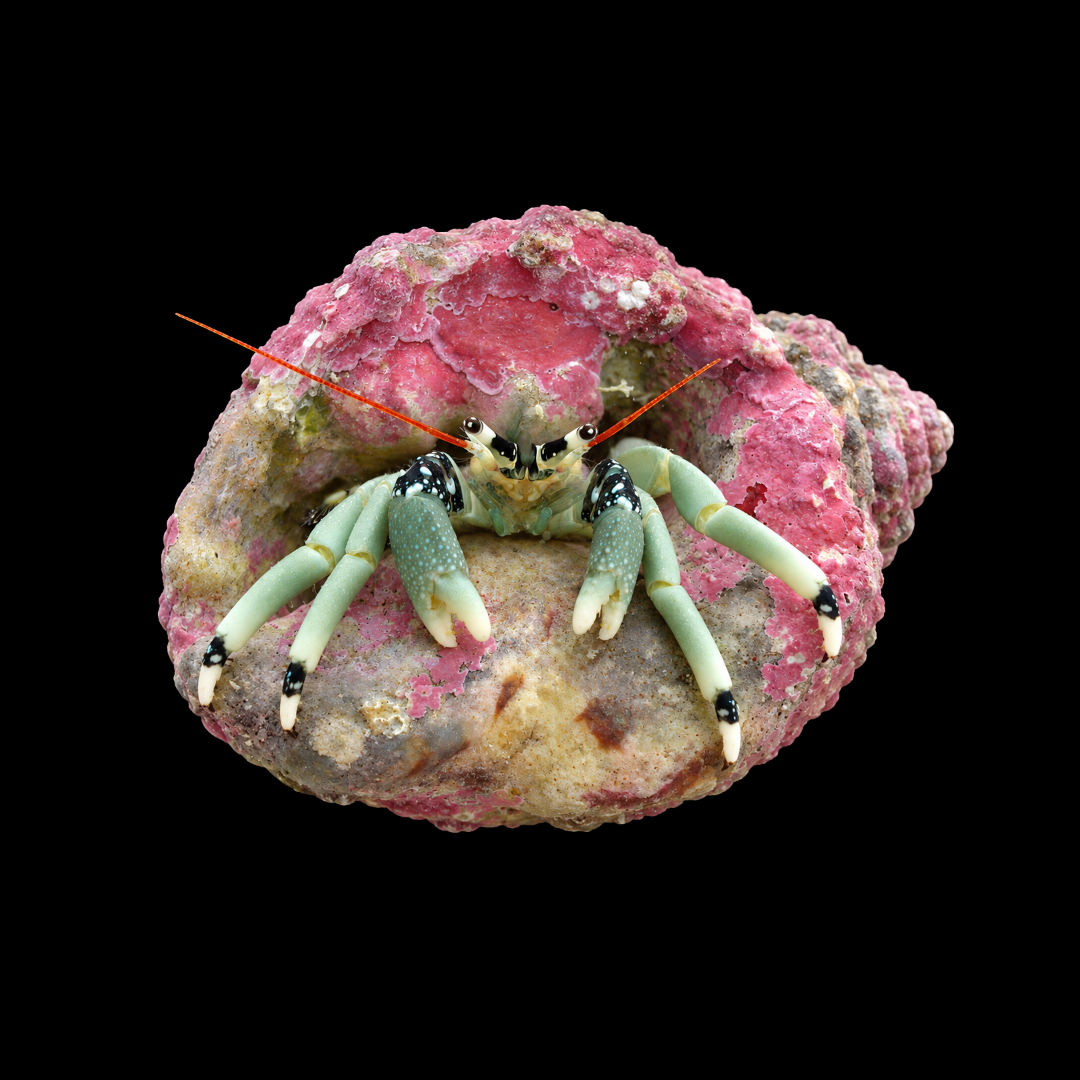
グアムサンゴヤドカリは、岩礁やサンゴ礁の浅い海で暮らす小型の海産ヤドカリです。オリーブ色から黄褐色の体に黒い帯模様が入り、赤みを帯びた触角が彩りを添えます。巻貝の空き殻を背負い、小さなハサミで岩の表面をつまみながら歩く姿は、近くで観察するほど細かな動きが楽しめます。 The Guam hermit crab is a small marine hermit crab inhabiting shallow rocky shores and coral reefs. Its olive to yellowish-brown body bears dark bands, while reddish antennae add a splash of color. Close observation reveals the delicate movements of its claws as it picks at rock surfaces and walks with its borrowed snail shell.
海水水槽では、付着藻類や食べ残しを拾うお掃除役としても親しまれています。ただし、水槽内に十分な餌があるとは限らず、コケや藍藻を確実に取り除く働きも保証できません。安定した海水、安心して隠れられる場所、体に合う交換用の貝殻を用意し、食事と成長を見守ることが飼育の基本です。陸上で暮らすオカヤドカリとは異なり、海水中で飼育します。 In marine aquariums, it is appreciated for picking at attached algae and leftover food. However, available food may be insufficient, and it cannot be relied upon to eliminate algae or cyanobacteria. Stable seawater, secure shelters, suitable replacement shells, and attention to nutrition and growth form the basis of its care. Unlike land hermit crabs, it must be kept underwater in seawater.
基本情報 / Basic Information
| 学名 / Scientific Name | Calcinus guamensis Wooster, 1984 |
|---|---|
| 通称 / Common Name | グアムサンゴヤドカリGuam hermit crab |
| 分類 / Family | 節足動物門・甲殻亜門・軟甲綱・十脚目・異尾下目・ヤドカリ科・サンゴヤドカリ属。Phylum Arthropoda; subphylum Crustacea; class Malacostraca; order Decapoda; infraorder Anomura; family Diogenidae; genus Calcinus. |
| 英名 / English Name | Guam hermit crab / Guam hermit |
| 分布 / Distribution | インド洋から西部・中部太平洋の熱帯〜亜熱帯海域に分布します。グアムを含むマリアナ諸島、ハワイ、インドネシア、オーストラリアなどから知られ、日本では小笠原諸島などで記録されています。岩礁の潮間帯や、サンゴ礁周辺の浅海に生息します。Distributed through tropical and subtropical waters of the Indian Ocean and western to central Pacific. Records include the Mariana Islands, including Guam, Hawaii, Indonesia, Australia, and Japanese waters such as the Ogasawara Islands. It inhabits rocky intertidal shores and shallow reef environments. |
| 最大体長 / Max Size | 小型のヤドカリですが、確かな最大体長は不明です。分類学では、頭胸部前方の硬い部分を測る「前甲長」が使われることが多く、体全体の長さや貝殻の大きさとは区別されます。販売時の「殻込みサイズ」は、ヤドカリ本体の体長を示すものではありません。A small hermit crab, but a reliable maximum body length is not established. Taxonomic descriptions commonly use shield length, measuring the hardened anterior part of the cephalothorax. This differs from total body length and shell size. Measurements that include the occupied shell do not indicate the crab’s body length. |
| 寿命 / Lifespan | 本種の寿命を明確に示す情報は十分ではありません。他種の寿命をそのまま当てはめず、適切な環境で長期飼育を目指します。入手時の年齢が分からない場合、飼育できた期間だけで本来の寿命を判断することはできません。Reliable species-specific lifespan information is insufficient. Lifespans reported for other species should not be applied directly. Aim for long-term care under suitable conditions. When an animal’s age at purchase is unknown, its time in captivity cannot establish its natural lifespan. |
飼育環境 / Aquarium Environment
| 水槽サイズ / Tank Size | 少数の飼育では、45cm規格水槽(幅45×奥行30×高さ30cm程度、水容量約35L)以上を管理上の目安とします。魚やサンゴとの混泳には、60cm規格水槽(幅60×奥行30×高さ36cm程度、水容量約57L)など、水量に余裕のある水槽を選びます。容量は製品や水位によって異なり、岩や底砂を入れると実際の水量はさらに減ります。これらは本種の最低飼育容量を示す数値ではなく、水質の安定性と餌場の広さを重視した目安です。混泳する魚の必要水槽サイズにも合わせてください。For a small number, a standard Japanese 45 cm aquarium, approximately 45 × 30 × 30 cm with a water capacity of about 35 L, is a practical management guide. For a community with fish or corals, choose greater water volume, such as a standard 60 cm aquarium measuring approximately 60 × 30 × 36 cm with about 57 L of water. Capacity varies with the product and water level, and rock and substrate reduce it further. These are practical guidelines for stability and feeding space, not established minimums for this species. Also meet the requirements of any fish kept with it. |
|---|---|
| 水温 / Temperature | 24〜26℃を管理の目安とし、急な変化を避けます。これは一般的な熱帯性海産無脊椎動物の飼育を参考にした設定で、本種の最適水温や耐温限界が実験的に確定したものではありません。季節に応じて冷却や保温を行い、実際の水温を温度計で確認します。Use approximately 24–26°C as a maintenance guide and avoid abrupt changes. This range draws on general care for tropical marine invertebrates; it is not an experimentally established optimum or thermal tolerance limit for this species. Provide seasonal cooling or heating and check the actual temperature with a thermometer. |
| 水質 / Water Quality | 海水専用です。一般的な海水水槽の管理目安として、塩分33〜35‰、比重は25℃でおおむね1.025〜1.026、pH8.0〜8.4とします。比重の測定では機器の温度条件と校正を確認してください。アンモニアと亜硝酸は検出されない状態を維持し、硝酸塩は目安として20mg/L以下に抑えます。十分に立ち上がった生物ろ過と酸素供給を確保し、蒸発した分は真水で補います。海水用人工塩と定期的な換水を基本に、添加剤を使う前に塩分や水質を測定しましょう。Keep exclusively in seawater. General marine aquarium maintenance guides are salinity 33–35‰, approximately specific gravity 1.025–1.026 at 25°C, and pH 8.0–8.4. Check the measuring instrument’s temperature conventions and calibration. Keep ammonia and nitrite undetectable, with nitrate preferably below 20 mg/L. Provide established biological filtration and adequate oxygenation. Replace evaporated water with freshwater, and base maintenance on marine salt and regular water changes. Measure salinity and water quality before using supplements. |
| レイアウト / Layout | ライブロックなどを安定して組み、歩き回れる岩場と身を隠せる隙間を作ります。底砂を厚く敷いたり、特定のろ過方式を採用したりする必要はありません。水流は岩場にも海水が行き渡るように調整し、ポンプの強い噴流が直接当たらない場所も残します。現在の殻と同程度から少し大きめまで、殻口の形が異なる清潔な空き殻を一匹あたり数個用意してください。小さなサンゴや岩の破片は、歩行で落とされないよう固定します。Arrange stable live rock or similar structures with surfaces to explore and crevices for shelter. A deep substrate or a particular filtration method is not required. Circulate water through the rockwork while retaining areas sheltered from direct pump jets. Offer several clean empty shells per crab, ranging from its current size to slightly larger and with different aperture shapes. Secure small coral fragments and loose rock pieces. |
| 注意点 / Precautions | 導入時は輸送水と水槽水の温度・塩分を比べ、差に応じて別容器で徐々に水合わせを行います。長時間の輸送後は、開封した輸送水に長く置くことも負担になるため、一律に長時間の点滴を行うのは避けます。銅を含む魚病薬は飼育水槽で使用せず、銅処理歴のある底砂や岩の再利用にも注意してください。脱皮中は殻から引き出したり、隠れ家を崩したりせず、静かに見守ります。ポンプの吸水口には巻き込み防止の対策を施します。Compare transport water and aquarium temperature and salinity, then acclimate gradually in a separate container according to the differences. After prolonged shipping, remaining in opened transport water for an extended period can also be stressful, so do not apply a fixed, lengthy drip procedure indiscriminately. Never use copper fish medications in the aquarium, and be cautious with previously treated substrate or rock. Leave molting animals and their shelters undisturbed, and protect pump intakes. |
餌と給餌 / Feeding
| 餌の種類 / Diet | 付着藻類や細かな有機物、食べ残しなどを利用する雑食性です。補助餌には、海水生体に適した沈下性の人工飼料、藻類を含む飼料、少量の冷凍アミや細かく刻んだエビなどを使います。植物質と動物質を組み合わせ、肉質の餌だけに偏らないようにします。特定の糸状藻や藍藻を食べる程度は十分に確認されておらず、コケ対策だけを目的に導入するのは避けましょう。An omnivore that uses attached algae, small organic particles, and food remnants. Supplement with suitable sinking marine foods, algae-containing feeds, and small portions of frozen small crustaceans or finely chopped shrimp. Combine plant and animal ingredients rather than relying entirely on meaty foods. Its consumption of particular filamentous algae or cyanobacteria is not sufficiently established, so do not introduce it solely as a remedy for algae problems. |
|---|---|
| 給餌のポイント / Feeding Tips | 岩の表面をつまむ動きだけで餌が足りていると判断せず、実際に食べているか確認します。コケの少ない水槽や餌を取り合う個体が多い水槽では補助給餌を行い、活動しているときに隠れ家の近くへ少量を届けます。魚に横取りされる場合は給餌場所を分け、残った餌は回収してください。食欲が落ちたときは脱皮の可能性も考えながら、水質と同居生体の様子を確認します。殻から出して無理に食べさせることは避けましょう。Picking at rocks does not necessarily mean the crab is receiving enough food. Supplement in aquariums with little algae or substantial competition, placing a small portion near its shelter when it is active. Separate feeding locations if fish steal its food, and remove leftovers. Reduced appetite may precede molting, but also warrants checking water quality and interactions with tank mates. Never pull it from its shell to force-feed it. |
性格と混泳 / Temperament and Tank Mates
| 性格 / Temperament | 普段は岩や底砂の上で餌を探し、危険を感じると貝殻に引っ込みます。小型でも、餌や気に入った貝殻を巡って同種・他種と争うことがあり、常に温和とは限りません。活動する時間帯は照明や同居生体、個体の状態によって変わるため、昼間に姿を見せないだけで異常と判断しないようにしましょう。It normally searches rock and substrate surfaces for food and retreats into its shell when threatened. Despite its small size, it may compete with its own or other species over food and desirable shells. Activity varies with lighting, tank mates, and individual condition; daytime concealment alone does not indicate a problem. |
|---|---|
| 混泳の相性 / Compatibility | 甲殻類を狙わない小型魚とは組み合わせやすいものの、魚種と個体ごとの行動を確認してください。フグ類、モンガラカワハギ類、甲殻類を捕食するベラ類、大型の肉食性のカニなどは避けます。サンゴ水槽でも飼育できますが、サンゴへの接触や小さな株の転倒には注意が必要です。巻貝を襲う可能性もあり、交換用の空き殻を増やしても安全を保証することはできません。他のヤドカリと同居させる場合は、大きな体格差を避け、餌場・隠れ家・空き殻を十分に確保します。It is generally easier to combine with small fish that do not target crustaceans, but assess each species and individual. Avoid puffers, triggerfish, crustacean-eating wrasses, and large predatory crabs. It can be kept in coral aquariums, although contact with corals and displacement of small colonies require attention. Snails may be attacked, and spare shells cannot guarantee their safety. With other hermit crabs, avoid large size differences and provide ample feeding space, shelters, and replacement shells. |
病気と対策 / Diseases and Prevention
| かかりやすい病気 / Common Diseases | 本種に特有の病気や、その発生頻度に関する情報は限られています。飼育では脱皮不全、栄養不足、付属肢の損傷、水質悪化や塩分の急変による衰弱、薬剤による中毒などに注意します。動かない、餌を取らないといった様子だけで感染症とは判断できません。また、ハサミや脚の形が残った脱皮殻を、死骸と見間違えることがあります。Information on diseases specific to this species and their frequency is limited. Husbandry concerns include unsuccessful molting, inadequate nutrition, limb damage, deterioration associated with poor water quality or sudden salinity changes, and chemical toxicity. Inactivity or refusal of food alone does not establish an infection. A shed exoskeleton retaining the shape of claws and legs can also be mistaken for a dead crab. |
|---|---|
| 対策と予防 / Prevention | 塩分・水温・ろ過を安定させ、十分な食事と隠れ家を確保することが基本です。異常が見られたら水質を測り、同居生体による攻撃や殻争い、薬剤の混入がないか確認します。魚用の白点病薬を安易に使わず、特に銅を含む薬剤は避けてください。脱皮不全をヨウ素不足と決めつけ、測定せずにヨウ素やカルシウムを追加することも控えます。死骸のようなものを見つけたときは、まず本人が無事か確認しましょう。脱皮殻と分かり、水質に問題がなければ、すぐに取り除く必要はありません。腐敗した餌や確認できた死骸は回収します。Prevention rests on stable salinity, temperature, filtration, adequate food, and shelter. If problems arise, test the water and check for attacks by tank mates, shell competition, or chemical contamination. Do not use fish white spot medications indiscriminately, especially copper products. Do not assume molting problems indicate iodine deficiency or add iodine or calcium without measurements. If something resembling a dead crab appears, first check whether the animal is alive. A confirmed shed exoskeleton need not be removed immediately if water quality remains satisfactory. Remove decaying food and confirmed dead animals. |
増やし方(繁殖) / Breeding
| 雌雄の判別 / Sexing | 外から見える体色やハサミの大きさだけでは、確実な判別は困難です。ヤドカリ類では腹側の生殖孔や腹部の付属肢などを調べますが、小型で殻に隠れている本種を傷つけずに確認するのは容易ではありません。腹部に卵を抱えている個体は雌です。雌雄を確認するために、殻から無理に引き出さないでください。Visible coloration and claw size alone do not reliably distinguish the sexes. Gonopores and abdominal appendages are examined in hermit crabs, but safely checking these features in a small, shell-dwelling animal is difficult. An individual carrying eggs on its abdomen is female. Never force a crab out of its shell for sex identification. |
|---|---|
| 繁殖形態 / Reproduction | 卵生で、雌は腹部の腹肢に卵を付け、貝殻の内側で保護します。一般的な海産ヤドカリでは、孵化した幼生が水中を漂う時期を経て、底で暮らす稚ヤドカリへと成長します。ただし、本種の幼生の発育段階や発育日数、適した育成餌については、具体的に案内できる情報が十分ではありません。抱卵や幼生の放出が見られても、そのまま混泳水槽で育つとは限りません。An egg-laying species whose females carry eggs on abdominal pleopods, protected inside the shell. Marine hermit crabs generally have a free-swimming larval phase before becoming bottom-dwelling juveniles. However, information sufficient to give precise guidance on this species’ larval stages, development times, and rearing diets is lacking. Egg carrying or larval release does not ensure that juveniles will develop in a community aquarium. |
| 繁殖のポイント / Breeding Tips | 家庭水槽で再現できる繁殖手順は十分に確認されておらず、幼生育成を伴う難しい取り組みです。一般的な海産ヤドカリの幼生育成では、親と別の海水容器を用意し、ろ過装置への吸い込みや同居生体による捕食を防ぎます。穏やかな通気と清潔な海水を維持し、幼生に合う大きさと栄養の餌を検討する必要があります。底で暮らし始める時期に備えてごく小さな空き殻も用意しますが、他種で成功した方法や日数を、本種にそのまま当てはめることはできません。A reproducible home breeding procedure is not sufficiently established, and larval rearing is demanding. General marine hermit crab rearing involves a separate seawater vessel to prevent losses to filtration and predation. Gentle aeration, clean water, and appropriately sized, nutritious larval foods are necessary considerations. Very small empty shells are also prepared for settlement, but methods and development schedules successful with other species cannot be applied directly to this one. |
雑学と豆知識 / Trivia and Fun Facts
| 1. グアムの名前と、二つの記載年 / 1. Guam and Two Publication Dates | 種小名の「guamensis」は、グアムに由来します。本種は、グアムを含むマリアナ諸島のサンゴヤドカリ属を調べたダニエル・S・ウースターによって、新種として記載されました。古い文献では「Wooster, 1982」、現在の分類情報では「Wooster, 1984」と、年が異なる表記を見かけます。これは別々に命名されたためではなく、論文を収めた雑誌に表示された年と、実際に刊行された年が異なるためです。現在、学名に添える著者名と記載年には「Wooster, 1984」が用いられています。The epithet guamensis refers to Guam. Daniel S. Wooster described the species while studying Calcinus hermit crabs from the Mariana Islands. Older literature may cite “Wooster, 1982,” whereas current taxonomic records use “Wooster, 1984.” These are not separate naming events: the journal’s printed year differed from its actual publication year. The current author-date citation is “Wooster, 1984.” |
|---|---|
| 2. 黒い帯は、脚だけで判断しない / 2. Look Beyond the Bands on the Legs | ヤドカリを見分けるときは、背負っている貝殻よりも体の模様が手がかりになります。本種では歩脚の先端の節である指節に黒い帯があり、眼を支える眼柄やハサミ脚にも暗色部が見られます。ただし、ツマジロサンゴヤドカリにも歩脚の暗い帯があるため、脚の模様だけでは十分ではありません。眼柄やハサミ脚も合わせて観察すると、似た種との違いが分かりやすくなります。日本では1992年、小笠原諸島父島で採集された個体に基づく報告で、「グアムサンゴヤドカリ」という和名が提唱されました。Body patterns provide better identification clues than the borrowed shell. This species has dark bands on the terminal segments, or dactyls, of its walking legs, together with dark areas on the eyestalks and claw-bearing limbs. Calcinus latens also has dark leg bands, so examine the eyestalks and claw-bearing limbs as well. The Japanese name Guam-sango-yadokari was proposed in a 1992 report based on a specimen collected at Chichijima in the Ogasawara Islands. |
| 3. 貝殻選びは、暮らしの条件を選ぶこと / 3. Choosing a Shell Means Choosing Living Conditions | 硬いハサミや脚を持つ一方、貝殻の奥に収まる腹部は柔らかく、身を守る住まいが欠かせません。空き殻にハサミを差し込み、持ち上げたり向きを変えたりするのは、新しい住まいを調べる行動です。大きな殻なら何でもよいわけではなく、内側の広さ、殻口の形、重さなどが使いやすさに関わります。体が成長しても貝殻そのものは大きくならないため、引っ越し先を確保することが大切です。形の異なる空き殻を用意すると、その個体がどのように選ぶのかを観察できます。Although its claws and legs are hardened, the abdomen concealed inside its shell is soft and needs protection. Inserting claws into an empty shell, lifting it, and turning it are assessment behaviors. A larger shell is not automatically better: internal space, aperture shape, and weight all affect suitability. The crab grows, but its borrowed shell does not, making replacement housing a continuing need. Offering different shell shapes allows observation of individual choices. |
| 4. 大きな左のハサミが守るもの / 4. What the Larger Left Claw Protects | グアムサンゴヤドカリでは、左のハサミが右より大きく発達します。ヤドカリ科が「左利きのヤドカリ」と呼ばれるのは、このように左のハサミが大きい種が多いためで、人の利き手と同じ意味ではありません。ハサミは餌をつまむだけでなく、身を守るときにも役立ちます。危険を感じて貝殻へ引っ込むと、入口側にハサミを置き、その奥にある柔らかな体を守ります。小さな個体でも、近くで観察すると左右の違いが分かり、体と貝殻を組み合わせた暮らしの工夫が見えてきます。The Guam hermit crab has a larger left claw. Diogenidae are called “left-handed hermit crabs” because many members have this feature, rather than handedness in the human sense. Claws serve both feeding and defense. When the crab withdraws into its shell, positioning them toward the entrance helps protect the soft body behind them. Close observation reveals how its anatomy and borrowed shell work together. |
| 5. 脱皮は、住まいの交換とは別の成長 / 5. Molting Is Different from Changing Homes | 貝殻への引っ越しと脱皮は、別の出来事です。引っ越しでは借りている貝殻を替えますが、脱皮では自分自身の外骨格を脱ぎ、新しい外骨格へと更新します。甲殻類の脱皮は、エクジステロイドと呼ばれる脱皮ホルモンなどによって調節され、栄養状態や環境にも左右されます。つまり、体の準備と周囲の条件が関わる複雑な過程であり、ヨウ素を加えるだけで成功させられるものではありません。脱皮直後の柔らかな体を守れる隠れ家、安定した海水、偏りのない食事を整えることが、飼育者にできる大切な支えです。Changing shells and molting are separate events. Shell changing replaces borrowed housing, whereas molting sheds and renews the crab’s own exoskeleton. Crustacean molting is regulated by ecdysteroid hormones and other signals, with nutrition and environmental conditions also involved. It is a complex process requiring both physiological preparation and suitable surroundings; adding iodine alone cannot ensure success. Secure shelter, stable seawater, and balanced nutrition provide practical support. |
| 6. 島々が育んだサンゴヤドカリ属の多様性 / 6. Islands and the Diversity of Calcinus | サンゴ礁の生き物の多くは、東南アジア周辺の「コーラル・トライアングル」で高い種多様性を示します。一方、サンゴヤドカリ属の研究では、西太平洋やポリネシアの海洋島に多くの種が見られ、遠隔地での種分化が重要だったことが示されています。種分化とは、個体群の違いが積み重なり、別の種へと分かれていく過程です。広い海は幼生を運ぶ一方で、離れた場所の個体群が交流する機会を減らすこともあります。この研究は、島々の隔たりがサンゴヤドカリ属の多様化に関わってきたことを示すもので、本種が生まれた具体的な経緯まで確定したものではありません。小さなヤドカリの多様性にも、島と海の長い歴史が関わっています。Many reef organisms show high diversity in the Southeast Asian Coral Triangle. Research on Calcinus highlights numerous species around oceanic islands of the western Pacific and Polynesia, with speciation in remote areas playing an important role. Speciation is the process by which diverging populations become separate species. The ocean can transport larvae while also limiting exchange between distant populations. The research links island separation to diversification across the genus; it does not establish the precise origin of this species. Even these small crabs reflect a long history of islands and oceans. |
| 7. お掃除役にも、食事と排泄がある / 7. A Cleanup Animal Still Eats and Produces Waste | 岩の表面をつまみ、食べ残しを拾う姿を見ると、水槽の汚れが消えているように感じられます。しかし、食べた物は成長や活動に使われる一方、排泄物にもなります。ヤドカリは有機物を食べて別の形に変えますが、窒素やリンを水槽の外へ取り出すわけではありません。そのため、お掃除役がいても、換水や残餌の回収は引き続き必要です。役割を理解して見守ると、コケを食べる働きだけでなく、食べ方や歩き方、貝殻選びそのものにも楽しさが広がります。Watching a hermit crab pick at rocks and collect leftovers can make it seem as though waste disappears. Food supports growth and activity, but also becomes waste products. The crab transforms organic matter rather than removing nitrogen and phosphorus from the aquarium. Water changes and removal of uneaten food therefore remain necessary. Understanding its role makes its feeding, movement, and shell choices rewarding in their own right. |
まとめ / Conclusion
グアムサンゴヤドカリは、緑褐色と黒い帯模様、そして貝殻を背負って岩場を巡る姿が魅力の小さな海の住人です。近くで見守ると、左右のハサミの違い、餌をつまむ細かな動き、空き殻を確かめるしぐさなど、小さな体の中にさまざまな暮らしの工夫が見えてきます。 The Guam hermit crab is a charming small marine resident, distinguished by greenish-brown colors, dark bands, and its shell-bearing journeys across the rockwork. Close observation reveals unequal claws, delicate feeding movements, and careful examination of empty shells—small details that show how it makes its living.
飼育では、安定した海水、十分な食事、安心して隠れられる場所、成長に合う貝殻を整えることが大切です。脱皮中は静かに見守り、同居生体との関係にも気を配ることで、その暮らしを支えられます。岩場をゆっくり歩き、気に入った貝殻に身を収める姿は、海水水槽を眺める楽しみに細やかな彩りを添えてくれます。 Its care depends on stable seawater, sufficient food, secure shelters, and shells suited to its growth. Giving it peace during molting and watching its interactions with tank mates help support its daily life. Its quiet journeys across the rockwork and retreat into a chosen shell add subtle charm to a marine aquarium.
気になる道具や飼い方を見つけてみませんか?
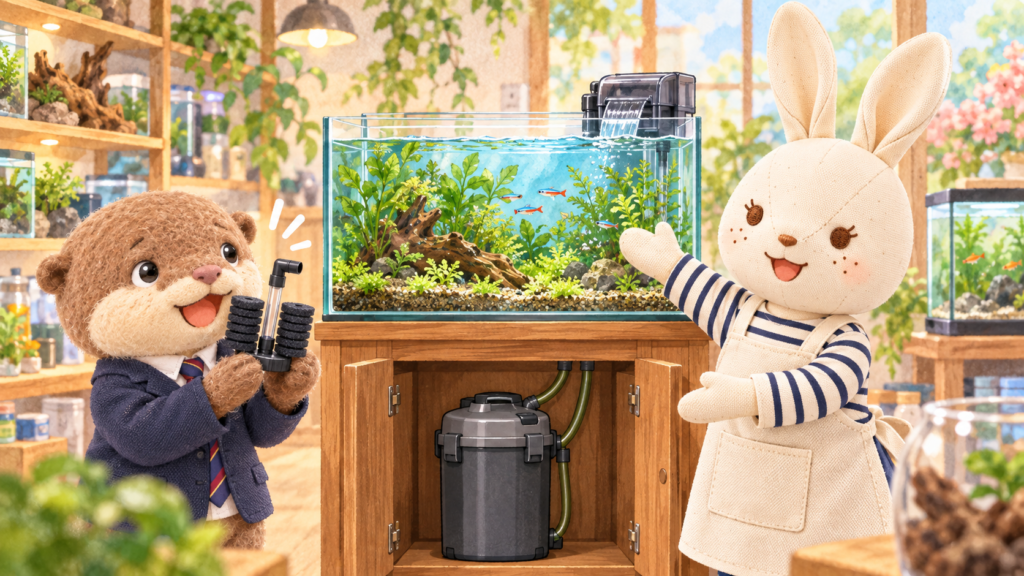 アイのアクアグッズ案内水槽フィルターの選び方|外掛け・外部・上部から小型オーバーフローまで道具の特徴や使い方、選ぶときのポイントをアイが紹介します。記事はコチラ →
 アイのアクアグッズ案内おとひめ物語|養殖生まれの餌を、わが家の魚に合う一粒へ道具の特徴や使い方、選ぶときのポイントをアイが紹介します。記事はコチラ →
さまざまな飼育テーマをご紹介。リンク先の記事には広告・商品紹介が含まれます。
案内・紹介記事一覧へ →分布マップ
グアムサンゴヤドカリ(Calcinus guamensis)は、インド洋から西部・中部太平洋の熱帯〜亜熱帯海域に分布します。マリアナ諸島、ハワイ、インドネシア、オーストラリアなどから知られ、日本では小笠原諸島などで記録されています。
地図は分布地域全体を見渡すための概略表示で、生息範囲の境界や、表示範囲内のすべての場所での生息を示すものではありません。マーカーとGoogle Earthのリンク先は、代表地点として設定したグアム付近です。実際の採集地点を示すものではありません。
参考文献
-
Integrated Taxonomic Information System(ITIS)
Calcinus guamensis Wooster, 1984
Taxonomic Serial Number:660158。学名、分類階層、英名の確認。
-
Wooster, D. S.(1984)
The genus Calcinus (Paguridea, Diogenidae) from the Mariana Islands including three new species
Micronesica, 18(2), 121–162.本種の原記載。体色、形態、生息環境、利用する貝殻、抱卵個体の記録。
-
Asakura, A.(1992)
New record of the intertidal hermit crab, Calcinus guamensis Wooster, 1982 from Japan, with comments on Japanese Calcinus
Journal of the Natural History Museum and Institute, Chiba, 2(1), 37–40.小笠原諸島父島での記録、和名の提唱、近縁種との識別、岩礁潮間帯の生息記録。
-
Morgan, G. J.(1990)
A collection of Thalassinidea, Anomura and Brachyura (Crustacea: Decapoda) from the Kimberley region of northwestern Australia
Zoologische Verhandelingen, 265, 1–90.オーストラリア北西部での記録、既知の分布、原記載論文の表示年と実際の刊行年。
-
Poupin, J., Zubia, M., Gravier-Bonnet, N., Chabanet, P. & Malay, M.(2012)
Illustrated checklist of the Decapoda at Europa Island
Western Indian Ocean Journal of Marine Science, 11(1), 1–25.西インド洋のユローパ島における本種の採集・抱卵個体の記録。
-
Malay, M. C. D. & Paulay, G.(2010)
Peripatric speciation drives diversification and distributional pattern of reef hermit crabs (Decapoda: Diogenidae: Calcinus)
Evolution, 64(3), 634–662.サンゴヤドカリ属の系統関係、地理的分布、海洋島における種多様性と種分化。
-
Ornamental Aquatic Trade Association(OATA)
How to look after marine crustaceans
海産甲殻類の飼育ガイド。海産甲殻類に共通する水質管理、給餌、脱皮時の隠れ家、水合わせ、混泳、交換用の貝殻、幼生育成の基本。
-
Mykles, D. L.(2021)
Signaling pathways that regulate the crustacean molting gland
Frontiers in Endocrinology, 12, 674711.十脚甲殻類の脱皮ホルモンと、脱皮を調節する生理機構。
-
Yanong, R. P. E.
Use of copper in marine aquaculture and aquarium systems
University of Florida, IFAS Extension, FA165.銅の無脊椎動物への毒性、底砂や装飾物への吸着と再溶出、薬剤使用時の注意点。
コメント