

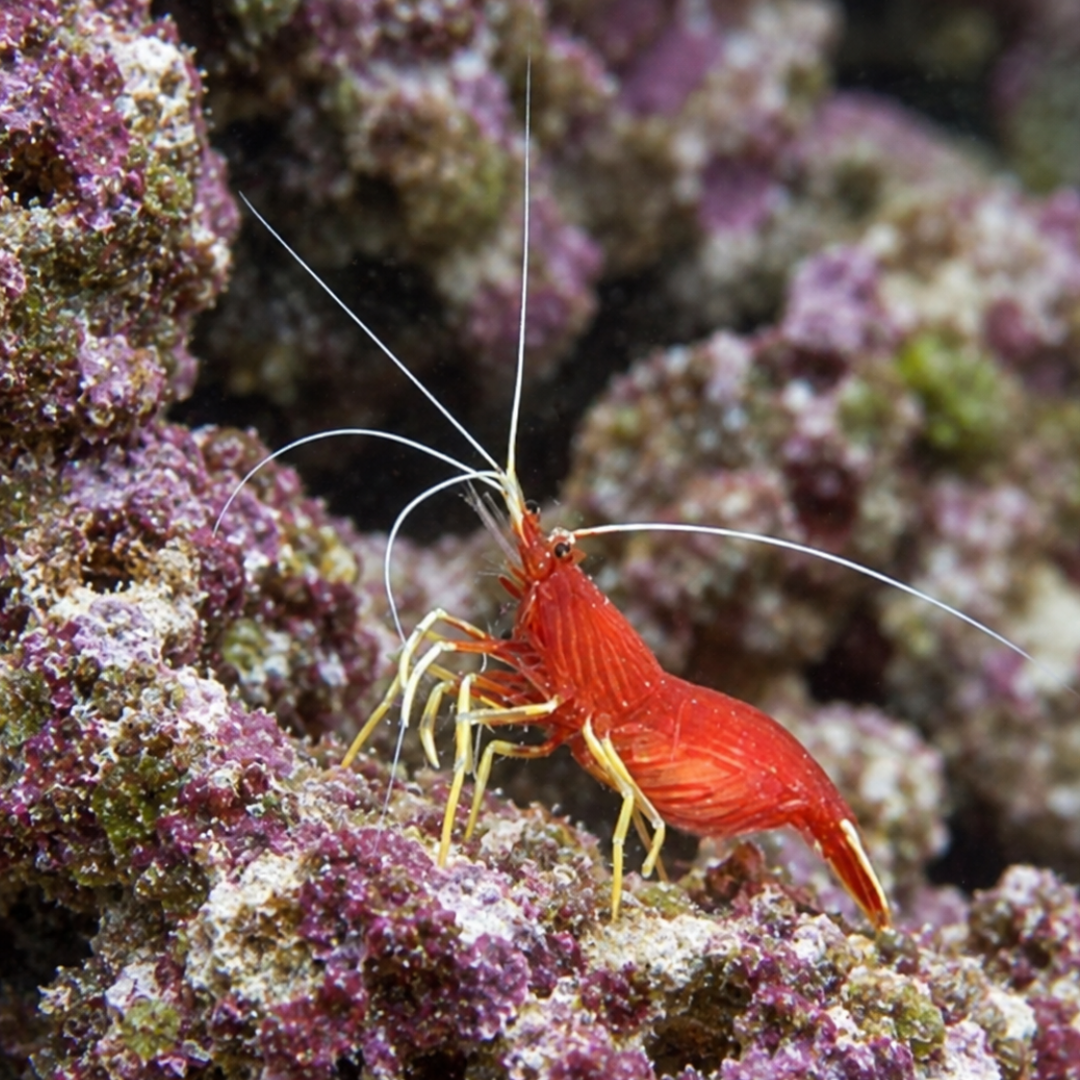
解説 / Description
スカシモエビは、インド西太平洋に分布する小型の海水エビです。半透明の体に赤色の細い縦縞が走り、黄色く縁取られた脚を持つ繊細な姿が特徴です。観賞魚分野ではクリーナーシュリンプの一種として紹介されることがあり、魚に近づいて体表をついばむような行動も観察されています。ただし、本種の野外生態については、アカシマシラヒゲエビなど著名なクリーナーシュリンプほど研究例が多くありません。そのため、魚類の寄生虫除去にどの程度依存して生活しているかなど、細かな生態については断定を避ける必要があります。 Lysmatella prima is a small marine shrimp distributed in the Indo-West Pacific. It is distinguished by a translucent body marked with fine red longitudinal stripes and delicately yellow-edged legs. In the aquarium trade it is often described as a cleaner shrimp, and individuals have been observed approaching fishes and picking at their body surfaces. However, its natural ecology has been studied far less extensively than that of well-known cleaner shrimps such as Lysmata amboinensis, so the importance of fish cleaning and parasite removal in its natural diet should not be overstated.
分類学的にも興味深い種類で、Lysmatella属の模式種であり、現在も同属を代表する種として扱われています。古い文献では広義のモエビ科Hippolytidaeに含められていましたが、分子系統研究によって従来のHippolytidaeが単系統ではないことが示され、現在の分類体系ではLysmatidaeに置かれるのが一般的です。また、本種では「雄性先熟型同時的雌雄同体」と呼ばれる特殊な繁殖様式が報告されており、近縁のLysmata類とともに生殖生物学の面でも注目されてきました。 The species is also taxonomically interesting. It is the type species of the genus Lysmatella and remains the principal species assigned to that genus. Older literature placed it within the broadly defined family Hippolytidae, but molecular studies demonstrated that the traditional Hippolytidae was not monophyletic, and modern classifications generally place Lysmatella in Lysmatidae. Protandric simultaneous hermaphroditism has also been reported for L. prima, making the species noteworthy from the perspective of reproductive biology as well as systematics.
基本情報 / Basic Information
| 学名 / Scientific Name | Lysmatella prima Borradaile, 1915 |
|---|---|
| 通称 / Common Name | スカシモエビStriped cleaner shrimp, Striped small cleaner shrimpなどの名称で流通することがあります。 |
| 分類 / Family | 節足動物門・甲殻亜門・軟甲綱・十脚目・コエビ下目・テッポウエビ上科・Lysmatidae・スカシモエビ属。古い資料ではHippolytidaeに分類されている場合があります。Phylum Arthropoda, Subphylum Crustacea, Class Malacostraca, Order Decapoda, Infraorder Caridea, Superfamily Alpheoidea, Family Lysmatidae, Genus Lysmatella. Older references may list the species under Hippolytidae. |
| 英名 / English Name | 広く統一された英名は確認しにくく、観賞魚分野ではStriped Cleaner Shrimp、Striped Small Cleaner Shrimpなどの名称が用いられます。No single widely standardized English name is consistently used. Striped Cleaner Shrimp and Striped Small Cleaner Shrimp are among the names used in the aquarium trade. |
| 分布 / Distribution | インド西太平洋。東アフリカからインド洋、東南アジア、フィリピン、インドネシア、日本、オーストラリア周辺まで広い範囲から記録されています。サンゴ礁や岩礁に隣接する砂底などで採集され、比較的深い場所から見つかることもあります。Indo-West Pacific, with records extending from eastern Africa and the Indian Ocean through Southeast Asia, the Philippines, Indonesia and Japan to Australia. Specimens have been collected from sandy substrates associated with coral and rocky reef environments, including relatively deep habitats. |
| 最大体長 / Max Size | 観賞魚分野では約2〜2.5cm程度の小型種として扱われます。Generally treated in the aquarium trade as a small shrimp reaching approximately 2–2.5 cm. |
| 寿命 / Lifespan | 本種について信頼できる飼育下寿命のデータは乏しく、具体的な年数を示せるだけの情報はありません。Reliable species-specific data on captive lifespan are limited, so a definitive lifespan cannot currently be stated. |
飼育環境 / Aquarium Environment
| 水槽サイズ / Tank Size | 本種だけを対象とした科学的な最小水量は定められていません。体そのものは小型ですが、水温や比重を安定させやすい環境を優先し、45cmワイド水槽程度の40〜50L前後以上をひとつの実用的な目安とすると管理しやすくなります。海外の観賞魚流通資料では、これより大きな水量を推奨している例もあります。No scientifically established minimum aquarium volume is available specifically for this species. Although the shrimp itself is very small, stability of salinity and temperature is important. As a practical guideline, a 45 cm wide aquarium of roughly 40–50 L or larger is easier to manage, although some aquarium-trade references recommend larger systems. |
|---|---|
| 水温 / Temperature | 24〜26℃前後を中心に安定させると管理しやすいでしょう。観賞魚分野ではおおむね20〜28℃程度の範囲が示されていますが、上限や下限ぎりぎりで維持するより、短時間の大きな変動を避けることを優先します。 A stable temperature around 24–26°C is a practical target. Aquarium references give a broader range of roughly 20–28°C, but avoiding rapid fluctuations is more important than maintaining the shrimp near the extremes of that range. |
| 水質 / Water Quality | 一般的な熱帯性海水無脊椎動物を安定して飼育できる水質を維持します。比重は1.023〜1.025、pHは8.1〜8.4前後を目安とし、アンモニアと亜硝酸は検出されない状態を保ちます。本種について細かな最適値が実験的に確立されているわけではないため、数値を細かく追い込むことよりも、比重・水温・pHを急変させないことが重要です。Maintain the stable water quality expected for tropical marine invertebrates. A specific gravity around 1.023–1.025 and pH around 8.1–8.4 are practical targets, with ammonia and nitrite kept undetectable. Species-specific optimum values have not been experimentally established in detail, so preventing sudden changes in salinity, temperature and pH is more important than pursuing extremely precise numbers. |
| レイアウト / Layout | ライブロックなどを組み、暗く狭い隙間を複数用意します。エビ類は脱皮直後に外骨格が柔らかくなり無防備になるため、他の生体から身を隠せる場所が重要です。底床はサンゴ砂でもベアタンクでも飼育できますが、底砂そのものが脱皮成功の必須条件とはいえません。強い水流が常に直接当たる場所だけにならないよう、流れの穏やかな退避場所も確保します。Provide live rock or similar structures with several narrow, shaded shelters. Like other shrimps, it is vulnerable immediately after molting while the new exoskeleton is still soft, so secure hiding places are important. Coral sand may be used, but substrate itself should not be regarded as essential for successful molting. The aquarium should also include sheltered areas away from continuously strong direct flow. |
| 注意点 / Precautions | 導入時は輸送水と水槽水の水温や比重を確認し、大きな差がある場合は急変を避けながら段階的に合わせます。「必ず何分間」という固定時間で水合わせするのではなく、輸送時間や袋内の水の状態も考慮してください。また、甲殻類は銅を含む魚病薬に弱いため、薬剤を使用する場合は成分を確認します。ヨウ素添加を脱皮不全対策として routine に行う必要性は確立されていないため、測定や明確な目的なしに添加量を増やすことは避けます。When introducing the shrimp, compare the temperature and salinity of the transport water with those of the aquarium and correct substantial differences gradually. Acclimation should not be treated as a fixed process that must always last a predetermined number of minutes; transport duration and the condition of the shipping water should also be considered. Crustaceans are sensitive to copper-containing medications, so medication ingredients must be checked carefully. Routine iodine dosing as a treatment for molting problems is not supported by well-established evidence and should not be increased without a clear reason and appropriate monitoring. |
餌と給餌 / Feeding
| 餌の種類 / Diet | 沈下性の人工飼料、細かく砕いたフレークフード、冷凍ブラインシュリンプ、イサザアミ、コペポーダなど、一般的な海水魚・海水無脊椎動物用の餌を利用できます。水槽内の残餌や細かな有機物もついばみますが、それだけを主食にするのではなく、定期的に餌を与えます。Suitable foods include sinking prepared diets, finely crushed flakes, frozen brine shrimp, mysids and copepods. The shrimp may also pick at leftover food and small organic particles in the aquarium, but scavenging alone should not be relied upon as its sole source of nutrition. |
|---|---|
| 給餌のポイント / Feeding Tips | 体が小さいため、大きな餌は細かくして与えます。ほかの魚に餌を取られている場合は、スポイトなどを使って隠れ場所の近くへ少量届ける方法も有効です。残餌処理をするエビだからと過剰に餌を与えると、水質悪化によってかえって負担をかけるため、食べ切れる量を基本とします。Because of its small size, larger foods should be broken into appropriately small pieces. If faster fishes consume most of the food, a pipette can be used to deliver a small amount close to the shrimp’s shelter. Although it scavenges leftovers, overfeeding should be avoided because declining water quality creates a greater risk than a shortage of excess food. |
性格と混泳 / Temperament and Tank Mates
| 性格 / Temperament | 観賞魚飼育では温和な小型エビとして扱われ、自分から魚を捕食するような種類ではありません。岩陰などを拠点にしながら行動し、魚が近づいた際に触角を動かしたり、体表へ接近したりする個体もいます。同種が複数で見られる野外観察例はありますが、水槽内で複数飼育する場合は、十分な隠れ場所と給餌場所を確保して様子を観察します。In aquarium keeping it is regarded as a peaceful small shrimp and is not considered a predator of fishes. Individuals may remain around rock shelters and sometimes wave their antennae or approach nearby fishes. Groups have been observed in nature, but when keeping several individuals in captivity, provide adequate shelters and feeding opportunities and monitor their interactions. |
|---|---|
| 混泳の相性 / Compatibility | 小型ハゼ、テンジクダイ類、小型スズメダイなど、エビを積極的に捕食しない魚との混泳に向きます。一方、ゴンベ類、大型ベラ類、ハタ類、カエルアンコウ類など、小型甲殻類を食べる可能性が高い魚とは避けた方が安全です。クリーナーシュリンプとして振る舞う種類であっても、水槽内ですべての魚から捕食対象外になるわけではありません。特に脱皮直後は無防備になるため注意が必要です。Suitable companions include small gobies, cardinalfishes, small damselfishes and other fishes unlikely to prey on shrimp. Hawkfishes, large wrasses, groupers, frogfishes and other likely crustacean predators are better avoided. Cleaner behavior does not guarantee that every fish will recognize the shrimp as unsuitable prey, particularly when the shrimp is vulnerable immediately after molting. |
病気と対策 / Diseases and Prevention
| かかりやすい病気 / Common Diseases | スカシモエビに特有の代表的な感染症について、観賞飼育に利用できる詳しい情報はほとんどありません。飼育上は、病名の付いた感染症よりも、水質の急変、輸送による消耗、脱皮時のトラブルなどに注意します。古い外骨格から完全に抜けられない、脱皮後に長時間動けないなどの異常が見られた場合は、まず水温・比重・アンモニア・亜硝酸など基本的な環境条件を確認します。There is little detailed aquarium information on infectious diseases specific to Lysmatella prima. In practice, sudden changes in water conditions, transport stress and complications associated with molting are more immediate husbandry concerns than any particular named disease. If the shrimp becomes trapped in an old exoskeleton or remains severely weakened after molting, basic conditions such as temperature, salinity, ammonia and nitrite should be checked first. |
|---|---|
| 対策と予防 / Prevention | もっとも重要なのは、急激な水質変化を避け、適切な人工海水と定期換水によって安定した海水環境を維持することです。バランスのよい餌を与え、脱皮直後に隠れられるシェルターも確保します。カルシウムやマグネシウムなどは通常の海水として適切な範囲を維持しますが、本種のためだけに特定の添加剤を多量に使用する必要はありません。とくにヨウ素については、脱皮成功のために水中へ追加投与する必要性が十分に確立されていないため、安易な過剰添加は避けます。The most important preventive measure is to avoid sudden changes and maintain stable marine conditions through appropriate saltwater preparation and regular water changes. Provide a balanced diet and secure shelters for the vulnerable post-molt period. Calcium, magnesium and other major ions should remain within normal marine-aquarium ranges, but heavy supplementation specifically for this species is unnecessary. In particular, the need for additional water-column iodine to ensure successful shrimp molting has not been well established, so indiscriminate overdosing should be avoided. |
増やし方(繁殖) / Breeding
| 雌雄の判別 / Sexing | 本種は雄性先熟型同時的雌雄同体を示す種類として報告されています。この繁殖システムでは、若い段階ではオスとして機能し、成長するとオスとしての生殖機能を残しながら卵を形成できる段階へ移行します。そのため、成熟個体を一般的なエビのように「一生オス」「一生メス」という固定的な雌雄として外見だけで判別する考え方は適しません。This species has been reported as a protandric simultaneous hermaphrodite. Under this sexual system, individuals initially function as males and later develop the ability to produce eggs while retaining male reproductive function. Mature individuals therefore cannot appropriately be interpreted as permanently male or permanently female in the same way as gonochoric shrimp species. |
|---|---|
| 繁殖形態 / Reproduction | 雄性先熟型同時的雌雄同体とされています。つまり、最初から完全な同時的雌雄同体として成長するのではなく、まずオスとして成熟した後、成長に伴って卵を形成する機能が加わるという意味です。ただし、スカシモエビそのものについて公表されている生殖生物学の詳細は近縁のLysmata類ほど豊富ではなく、細かな器官変化や交尾様式については近縁種で得られた知見と本種で直接確認された事実を混同しないことが大切です。The species is considered a protandric simultaneous hermaphrodite. This means that an individual does not begin life as a fully functional simultaneous hermaphrodite; it first matures as a male and later gains female reproductive function while retaining male function. Detailed published reproductive studies specifically on Lysmatella prima are more limited than those on related Lysmata species, so detailed anatomical and behavioral findings from Lysmata should not automatically be treated as directly demonstrated in L. prima. |
| 繁殖のポイント / Breeding Tips | 繁殖を狙う場合は成熟した個体を複数飼育し、安定した水質と十分な栄養を維持します。抱卵しても、孵化した幼生はすぐに親と同じ底生生活へ移るわけではなく、浮遊性の幼生期を経ます。そのため、親個体の飼育に成功していても、そのまま通常の水槽内で稚エビまで育つとは限りません。幼生を育成する場合は、吸い込みの少ない専用容器、幼生サイズに適した餌、安定した水質など、親エビとは別の管理が必要になります。For breeding attempts, keep multiple mature individuals under stable conditions with adequate nutrition. Even when eggs are successfully carried, the newly hatched young do not immediately adopt the benthic lifestyle of the adults; they pass through a planktonic larval phase. Consequently, successful adult maintenance does not mean that juveniles will develop automatically in a normal display aquarium. Larval rearing requires separate management, including gentle circulation, appropriately sized foods and stable water quality. |
雑学と豆知識 / Trivia and Fun Facts
| 1. 1915年に記載されたスカシモエビ / 1. A Shrimp Described in 1915 | スカシモエビは1915年、イギリスの動物学者Lancelot Alexander BorradaileによってLysmatella primaとして記載されました。同時に設けられたLysmatella属の模式種であり、現在もLysmatellaを代表する種として扱われています。数センチほどの小さなエビですが、学名が付けられてからすでに100年以上の歴史を持つ種類です。Lysmatella prima was described in 1915 by British zoologist Lancelot Alexander Borradaile. It is the type species of the genus Lysmatella and remains the principal species associated with that genus. Despite being only a few centimeters long, its formal taxonomic history now extends for more than a century. |
|---|---|
| 2. 古い資料と現在で「科」が違う理由 / 2. Why Older and Modern Sources May List Different Families | スカシモエビを調べると、資料によってHippolytidaeとLysmatidaeという異なる科名が現れることがあります。これは単純な誤記ではなく、エビ類の分類体系が分子系統研究によって見直されたためです。かつての広義のHippolytidaeは、遺伝子を使った解析によってひとつの自然な系統群ではないことが示され、Lysmatidaeなど複数の科を独立させる分類が支持されました。そのため、古い文献を読む際には、当時の分類体系が使われていることを理解しておく必要があります。Searching for this species may reveal two different family names, Hippolytidae and Lysmatidae. This is not necessarily a simple error. Molecular phylogenetic work demonstrated that the traditional broad concept of Hippolytidae did not form a single natural lineage, supporting recognition of several separate families including Lysmatidae. Older literature therefore needs to be interpreted in the context of the classification used at the time. |
| 3. Lysmataとの関係は単純ではない / 3. Its Relationship with Lysmata Is Not Simple | スカシモエビはLysmata類と近縁ですが、分子系統解析におけるLysmatella primaの位置は、解析方法や使用するデータによって安定しない部分があります。過去の研究ではLysmatella、Exhippolysmata、一部のLysmataが近い位置に現れる解析結果も得られていますが、それだけでLysmatellaをLysmataの単純なシノニムと断定できる状況ではありません。現在も主要な分類データベースではLysmatella primaという独立した属名・種名が維持されています。つまり、「近縁関係には未解決部分があるが、現在の有効名はLysmatella prima」と理解するのが分かりやすいでしょう。Lysmatella prima is closely related to Lysmata, but its exact position has not been completely stable across molecular analyses and datasets. Some studies have recovered Lysmatella, Exhippolysmata and certain Lysmata species near one another, but these results do not by themselves justify treating Lysmatella automatically as a synonym of Lysmata. Major taxonomic databases continue to recognize Lysmatella prima as a valid genus-species combination. In practical terms, its evolutionary relationships retain unresolved details, while Lysmatella prima remains the accepted name. |
| 4. 「雄性先熟型同時的雌雄同体」とは何か / 4. What Protandric Simultaneous Hermaphroditism Means | この長い用語を分けて考えると理解しやすくなります。「雄性先熟」は、まずオスとして成熟するという意味です。その後、成長した個体は卵を形成する能力を持ちながら、オスとしての生殖機能も残すため「同時的雌雄同体」となります。スカシモエビでもこの繁殖様式が報告されています。ただし、自家受精ができないことや腹肢の形態変化など、近縁のLysmataで詳しく実験された内容をすべてスカシモエビ自身で確認済みの事実として扱うのは適切ではありません。本種について分かっていることと、近縁種から理解されている一般的な仕組みを分けて考える必要があります。The term becomes easier to understand when divided into its components. “Protandric” means that an individual first matures as a male. Later, it develops the ability to produce eggs while retaining male reproductive function, becoming a simultaneous hermaphrodite. This reproductive system has been reported in Lysmatella prima. However, detailed findings such as experimental demonstrations of self-fertilization failure or specific changes in reproductive appendages have been studied much more thoroughly in related Lysmata species and should not automatically be presented as directly demonstrated in L. prima. |
| 5. クリーナーシュリンプとして知られるが、断定しすぎない / 5. Known as a Cleaner Shrimp, but with Important Limits to What Is Known | スカシモエビは観賞魚分野や水中観察の記録でクリーナーシュリンプとして紹介され、触角を動かして魚に接近したり、魚体をついばんだりする様子が知られています。そのため「掃除屋のエビ」と説明すること自体は不自然ではありません。一方で、本種だけを対象に、どの魚種からどの寄生生物をどれほど除去するのかまで詳しく調べた研究は限られています。大型魚との共生関係を完全に解明された生態として描くより、「クリーニング行動が知られている小型エビ」と理解する方が、現在得られている情報に忠実です。Lysmatella prima is described as a cleaner shrimp in aquarium literature and underwater observations, and individuals are known to wave their antennae, approach fishes and pick at their surfaces. Describing it broadly as a cleaner shrimp is therefore reasonable. However, detailed species-specific studies quantifying which parasites it removes from particular fish hosts are limited. It is more accurate to regard it as a small shrimp known to perform cleaning behavior than to imply that every aspect of its cleaning mutualism has been experimentally established. |
| 6. 「深場のエビ」だけではないが、深い場所からも見つかる / 6. Not Exclusively a Deep-Water Shrimp, but Recorded from Considerable Depth | スカシモエビは30〜60m前後の採集記録が知られることから、しばしば深場のエビとして紹介されます。しかし、既知の記録をひとつの狭い水深帯だけに限定するのは適切ではありません。日本でも沖縄本島周辺の水深125mから採集された記録があり、少なくとも比較的浅い大陸棚域からより深い場所まで生息記録があります。観賞魚市場で頻繁に見かけるエビではない背景には、このような採集環境も関係している可能性がありますが、流通量の少なさを水深だけで説明することはできません。Because many records come from depths around several tens of meters, the species is sometimes characterized as a deeper-water shrimp. However, its known occurrence should not be restricted to a single narrow depth band. In Japan, a specimen has even been collected around Okinawa at a depth of 125 m. Its habitat can therefore extend from shelf environments to considerably deeper sites. Collection depth may contribute to its irregular appearance in the aquarium trade, but rarity in commerce cannot be attributed to depth alone. |
| 7. 日本への輸入では分類番号の確認が必要 / 7. Customs Classification Should Be Confirmed When Importing into Japan | 生きたスカシモエビを商業輸入する場合、日本の関税分類では第03類の甲殻類が関係し、「その他のシュリンプ及びプローン」のうち生きているものに対応する0306.36が検討対象になります。ただし、実際に使用する統計品目番号や必要書類は、貨物の内容や輸入時点の制度によって確認する必要があります。「観賞用だから常にこの番号」と固定的に考えず、商業輸入では最新の税関資料や通関業者への確認を前提とするのが安全です。Commercial importation of live specimens into Japan falls within customs classifications relating to crustaceans in Chapter 03. Heading 0306.36, covering other live shrimps and prawns, is relevant to consideration of such shipments. However, the precise statistical code and required documentation must be confirmed according to the shipment and the rules in force at the time of importation. Commercial importers should therefore verify current Japanese Customs information rather than assuming that ornamental use always produces a single fixed classification. |
| 8. 輸送では小さな体を「挟まない」工夫が重要 / 8. Safe Shipping Means Preventing a Tiny Shrimp from Becoming Trapped | 小型エビの輸送では、袋の角に入り込んだ個体が水圧や振動で挟まれる事故を防ぐことが重要です。そのため、生体輸送では丸底や角のできにくい袋が利用されます。さらに、額角などによる穴あきに備えた多重梱包、遮光、発泡スチロール箱による温度変化の緩和も有効です。ただし、酸素量、水量、保温・保冷材の量には輸送時間や季節によって適切な条件があるため、「水を何分の一、酸素を何分の一」といった一律の方法をすべての輸送に当てはめるのではなく、生体の状態と輸送条件に合わせる必要があります。When shipping a very small shrimp, preventing the animal from becoming trapped in sharp bag corners is particularly important. Rounded-bottom or similarly designed livestock bags are therefore useful. Multiple bag layers help guard against punctures from the rostrum, while darkness and insulated foam containers reduce visual stress and temperature change. The appropriate amounts of water, gas space and heating or cooling material depend on transport duration and season, so a single packing ratio should not be treated as universally correct. |
| 9. 「スカシモエビ」という和名の由来は断定しない / 9. The Origin of the Japanese Name Should Not Be Overstated | 半透明の体を見れば、「スカシ」という名前が透明感に由来すると考えたくなります。実際、その姿と非常によく結びつく名称です。しかし、命名者が由来を明記した一次資料を確認できないまま、「透けて見えるから名付けられた」と断定するのは慎重さを欠きます。和名そのものは日本の図鑑類でも使われていますが、その語源については、姿から自然に連想できる説明と、資料によって確認された命名由来とを区別して扱うのが適切です。Its translucent body makes it tempting to assume that the Japanese word “sukashi” in its name directly refers to its see-through appearance, and the association certainly seems natural. However, without a primary source explicitly explaining the intention of the person who coined the name, that explanation should not be presented as a confirmed etymology. The Japanese name itself is established in reference works, but an intuitive interpretation of the name should be distinguished from a documented naming history. |
まとめ / Conclusion
スカシモエビは、半透明の体に赤い縦縞と黄色味のある脚を備えた、小型で印象的な海水エビです。観賞魚分野ではクリーナーシュリンプとして知られていますが、野外での生態や寿命など、本種そのものを対象にした情報にはまだ限りがあります。一方で、分類体系の変遷や雄性先熟型同時的雌雄同体とされる繁殖様式など、体の小ささからは想像しにくいほど興味深い生物学的特徴を持っています。 Lysmatella prima is a small but distinctive marine shrimp, combining a translucent body with red longitudinal markings and yellowish legs. It is known in the aquarium trade as a cleaner shrimp, although species-specific information on its natural ecology and lifespan remains limited. At the same time, its changing taxonomic placement and reported protandric simultaneous hermaphroditism give this tiny shrimp an unusually interesting biological background.
飼育では、特殊な添加剤や複雑な操作に頼ることより、比重や水温を安定させ、適切な餌と脱皮時に隠れられる場所を用意することが基本になります。捕食する魚を避けた落ち着いた環境で状態をよく観察すれば、繊細な体色だけでなく、触角を使った行動や魚への接近、脱皮や抱卵といったエビ本来の生活をじっくり楽しめます。まだ分かっていない部分が残されていることも含めて、観察するほど興味が深まる海水エビです。 Successful care depends less on special additives or complicated procedures than on stable salinity and temperature, appropriate feeding, secure post-molt shelters and protection from predatory tank mates. Under calm conditions, aquarists may observe not only its delicate coloration but also antennal displays, approaches toward fishes, molting and potentially egg carrying. The fact that parts of its biology remain incompletely understood adds to the interest of observing this unusual marine shrimp carefully over time.
気になる道具や飼い方を見つけてみませんか?
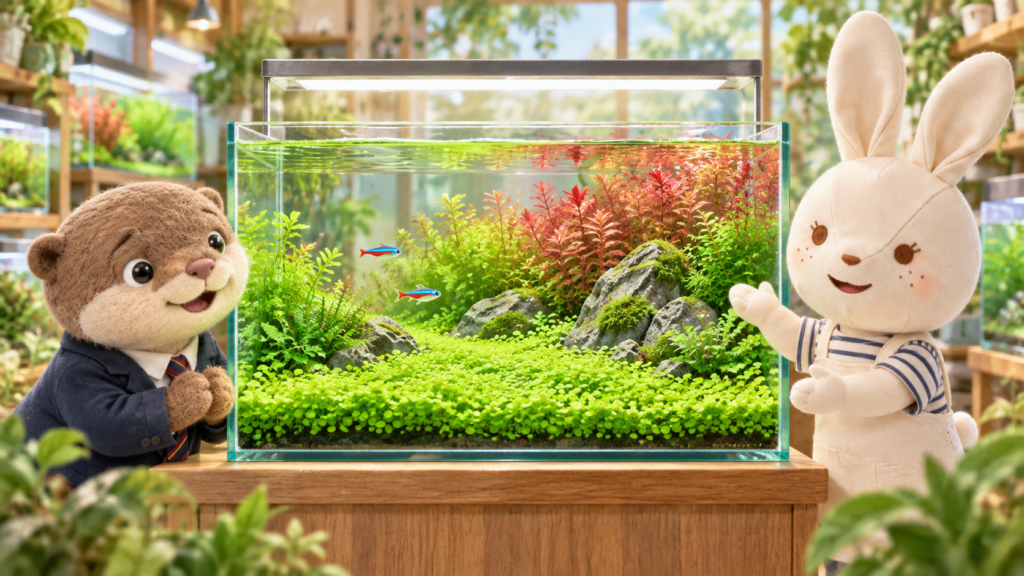 アイのアクアグッズ案内水草用ライトの選び方|緑の絨毯と赤い水草を楽しむ照明・植栽用品道具の特徴や使い方、選ぶときのポイントをアイが紹介します。記事はコチラ →
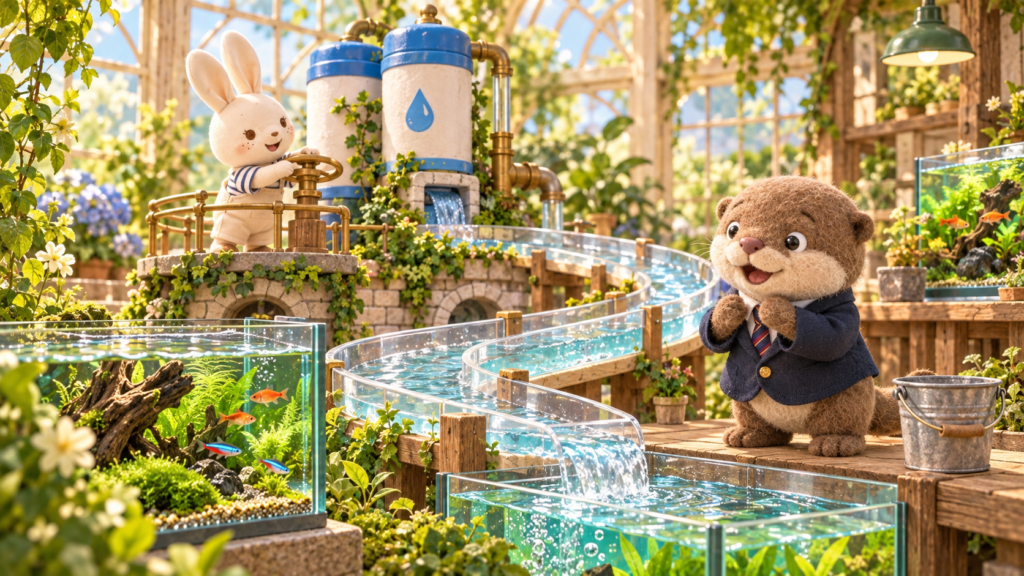 アイのアクアグッズ案内水槽用浄水器の選び方|水換えを楽にするタイプとROの違い道具の特徴や使い方、選ぶときのポイントをアイが紹介します。記事はコチラ →
 アイのアクアグッズ案内水槽ライトの選び方|魚の見え方・水草・海水で選ぶおすすめ照明道具の特徴や使い方、選ぶときのポイントをアイが紹介します。記事はコチラ →
 アイのアクアグッズ案内マジックリーフ物語|一枚の葉がアクアリウム用品になるまで道具の特徴や使い方、選ぶときのポイントをアイが紹介します。記事はコチラ →
さまざまな飼育テーマをご紹介。リンク先の記事には広告・商品紹介が含まれます。
案内・紹介記事一覧へ →分布マップ
スカシモエビ(Lysmatella prima)はインド西太平洋に広く分布し、東アフリカからインド洋、東南アジア、フィリピン、インドネシア、日本、オーストラリア周辺まで記録されています。
この地図は記事中の分布情報をもとに、インド西太平洋の分布範囲を概略的に示したものです。表示しているマーカーは地理的な代表地点であり、実際の採集地点や模式産地を示すものではありません。
参考文献
-
分類・現在の有効名・大区分の分布
Integrated Taxonomic Information System (ITIS). Lysmatella prima Borradaile, 1915, TSN 1173529. Lysmatidaeとしての分類、学名の有効性、Indo-West Pacificという地理区分の確認に使用。 ITIS -
系統分類
De Grave, S., Li, C. P., Tsang, L. M., Chu, K. H. & Chan, T.-Y. (2014). Unweaving hippolytoid systematics (Crustacea, Decapoda, Hippolytidae): resurrection of several families. Zoologica Scripta, 43(5), 496–507. 従来の広義Hippolytidaeの非単系統性とLysmatidaeの独立を支持する分子系統研究。 DOI -
形態・分布・生息環境
Chace, F. A., Jr. (1997). The caridean shrimps (Crustacea: Decapoda) of the Albatross Philippine Expedition, 1907–1910, Part 7: Families Atyidae, Eugonatonotidae, Rhynchocinetidae, Bathypalaemonellidae, Processidae, and Hippolytidae. Smithsonian Contributions to Zoology, 587, 1–106. Lysmatella primaの形態、フィリピンでの採集記録、砂・サンゴ砂などの底質、水深記録、インド西太平洋の分布を確認できる基礎資料。 参考文献情報 -
分布・生態・抱卵個体
Anker, A. & De Grave, S. (2016). An updated and annotated checklist of marine and brackish caridean shrimps of Singapore (Crustacea, Decapoda). Raffles Bulletin of Zoology, Supplement 34, 343–454. シンガポールでの標本記録、岩・泥を伴う硬底、カイメンやソフトコーラルとの随伴、水深62mまでの生息記録、抱卵した雌雄同体個体の記録を含む。 Oxford University Research Archive -
インド洋での分布
Pillai, S. L., Maheswarudu, G., Thomas, J., Ragesh, L., Sreesanth, M., Jose, J. & Chakraborthy, R. D. (2019). New record of Lysmatella prima Borradaile, 1915 (Crustacea, Caridea, Lysmatidae) from the Arabian Sea, Southwestern India. Zootaxa, 4571(2), 281–284. インド南西岸沖・アラビア海の水深30mからの記録で、既知分布の西方への広がりを裏付ける。 DOI -
分子系統・繁殖様式
Fiedler, G. C., Rhyne, A. L., Segawa, R., Aotsuka, T. & Schizas, N. V. (2010). The evolution of euhermaphroditism in caridean shrimps: a molecular perspective of sexual systems and systematics. BMC Evolutionary Biology, 10, 297. Lysmatella primaを含む分子系統解析と、同種で報告された雄性先熟型同時的雌雄同体(PSH)の位置づけを確認する資料。本文中でも本種のPSH情報の一部が未公表観察に基づくことが明記されている。 DOI -
日本での採集記録・形態
沖縄美ら海水族館「スカシモエビ」美ら海生き物図鑑。沖縄本島周辺の水深125mからの採集記録と、赤色の縦縞、白色のV字模様、黄色く縁取られた半透明の胸脚など、日本産個体の外部形態を確認できる。 沖縄美ら海水族館 -
飼育管理・繁殖管理の一般論
Calado, R., Vitorino, A., Dionísio, G. & Dinis, M. T. (2007). A recirculated maturation system for marine ornamental decapods. Aquaculture, 263(1–4), 68–74. Lysmata類を含む海産観賞用十脚類について、安定した水質、循環濾過、シェルター、給餌、抱卵親と孵化幼生の管理などを扱った飼育・繁殖管理の研究。 DOI -
脱皮・水質管理の一般論
Lemos, D. & Weissman, D. (2021). Moulting in the grow-out of farmed shrimp: a review. Reviews in Aquaculture, 13, 5–17. エビ類の脱皮生理を総説し、正常な脱皮には栄養状態、健康状態、良好な水質など複数の条件が関与することを整理した資料。 DOI -
薬剤・銅への注意
Yanong, R. P. E. (2010). Use of Copper in Marine Aquaculture and Aquarium Systems. EDIS, University of Florida IFAS Extension, FA165. 海水魚治療に用いられる銅が多くの無脊椎動物に強い毒性を示すこと、治療水槽で濃度管理が必要であることを解説した公的な水産・獣医学資料。 DOI




コメント