
解説 / Description
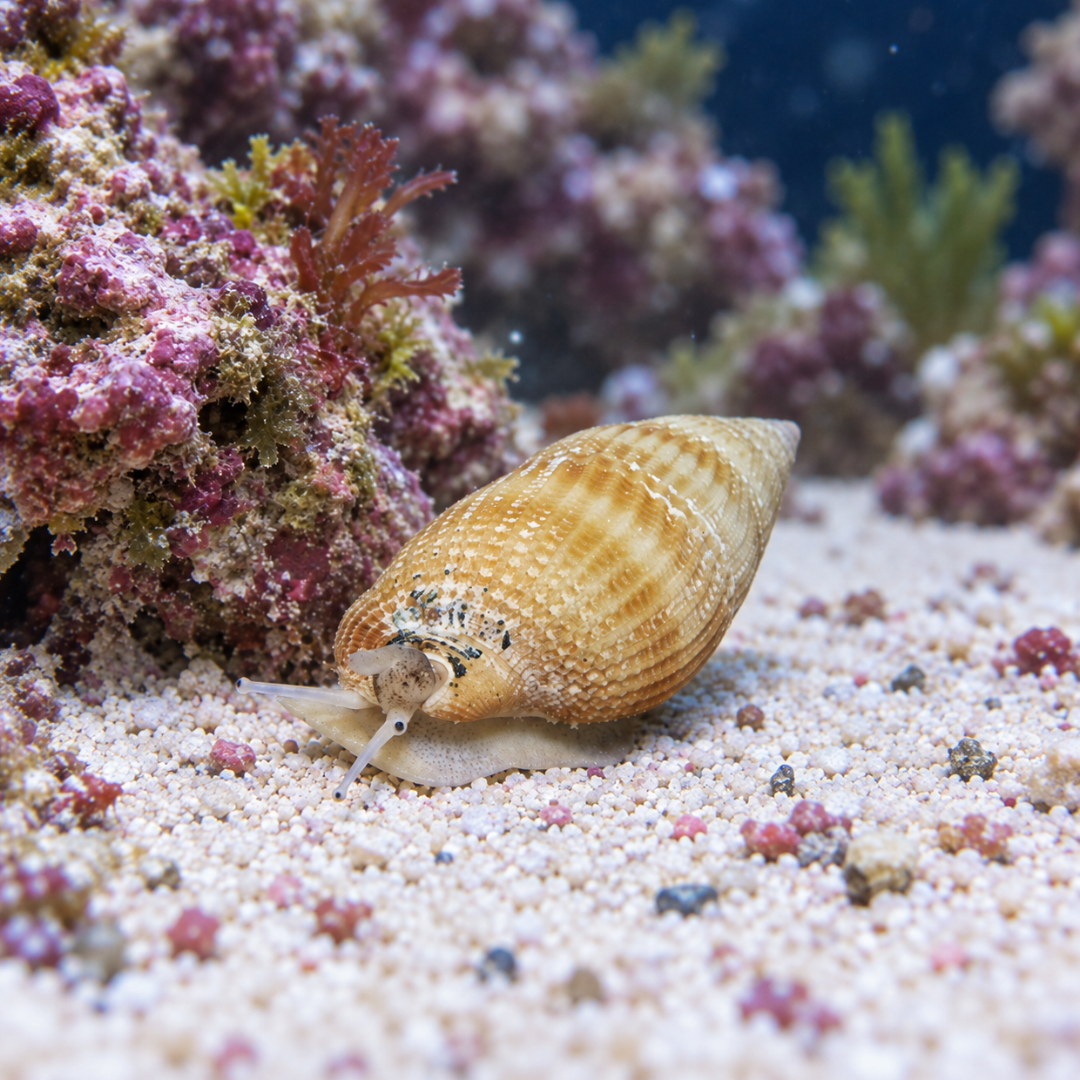
ムシロガイの仲間は、ムシロガイ科に属する海産の巻貝です。世界各地の海に分布し、河口や内湾を含む浅海の砂泥底などで暮らす種が多く知られています。多くの種は動物の死骸などを利用する腐肉食性で、普段は砂の中に潜み、水中に広がった化学的な手掛かりを感知すると餌へ向かいます。こうした性質から、マリンアクアリウムでは底砂周辺に残った動物質の餌などを処理するクリーナー生体として扱われることがあります。ただし、ムシロガイ科には多くの種が含まれ、生息環境や食性には種ごとの差があります。そのため、飼育では「ムシロガイ」という呼び名だけで条件を一律に決めず、可能であれば購入した個体の種類や産地を確認することが大切です。 Nassariid snails are marine gastropods belonging to the family Nassariidae. They occur widely in the world’s oceans, and many species inhabit shallow sandy or muddy environments, including estuaries and sheltered bays. Many are scavengers that feed largely on carrion. They often remain buried in the substrate and emerge after detecting chemical cues associated with food. For this reason, some nassariids are sold in the marine aquarium trade as clean-up animals that consume animal-based food left around the substrate. The family, however, contains many species with different habitats and feeding habits, so their husbandry requirements should not be treated as identical. Whenever possible, the identity and origin of the animals being purchased should be confirmed.
基本情報 / Basic Information
| 学名 / Scientific Name | Nassariidae |
|---|---|
| 通称 / Common Name | ムシロガイ類、ムシロガイ科の仲間Nassariid snail |
| 分類 / Family | 軟体動物門・腹足綱・新腹足目・ムシロガイ科Mollusca, Gastropoda, Neogastropoda, Nassariidae |
| 英名 / English Name | Nassariid Snail |
| 分布 / Distribution | 世界各地の海洋に広く分布します。河口や内湾を含む浅海の砂泥底を主な生息場所とする種が多い一方、岩礁域などで見られる種もいます。日本沿岸にも複数のムシロガイ科の種が分布しています。Widely distributed in marine environments around the world. Many species are associated with shallow sandy or muddy habitats, including estuaries and sheltered bays, although some also occur on rocky shores. Numerous members of the family are found around Japan. |
| 最大体長 / Max Size | 種によって大きく異なります。ムシロガイ科全体に共通する最大サイズは設定できません。Varies substantially among species. There is no single maximum size that can be applied to the entire family. |
| 寿命 / Lifespan | 種や環境によって異なり、ムシロガイ科全体に共通する寿命の目安はありません。Varies by species and environmental conditions, and no single lifespan can be given for the family as a whole. |
飼育環境 / Aquarium Environment
| 水槽サイズ / Tank Size | ムシロガイ科全体に共通する推奨水槽サイズはありません。遊泳空間を広く必要とする生体ではありませんが、潜砂できる底面積と、海水の水質を安定して維持できる水量を確保することが重要です。個体の大きさや飼育数、同居生体に合わせて水槽を選びます。There is no single recommended tank size for the entire family. These snails do not require extensive swimming space, but they do need sufficient substrate area for burrowing and enough water volume to maintain stable marine conditions. Tank size should therefore be chosen according to species, body size, stocking density, and tank mates. |
|---|---|
| 水温 / Temperature | 適温は種や産地によって異なります。温帯域に生息する種と熱帯・亜熱帯の種を同じ水温で一律に管理することは適切ではありません。購入時の飼育水温や産地を確認し、その種に合った範囲を安定して維持してください。短時間での急激な水温変化は避けます。 Suitable temperature varies with species and geographic origin. Temperate and tropical or subtropical nassariids should not automatically be maintained at the same temperature. Check the conditions under which the animals were kept and, whenever possible, their origin, then maintain an appropriate and stable temperature while avoiding abrupt changes. |
| 水質 / Water Quality | その種に適した正常な海水環境を安定して維持します。比重やpHは短時間で大きく変動させず、アンモニアや亜硝酸が蓄積する未成熟な水槽への導入は避けます。貝殻を形成する生物であるため、水槽全体のpHや炭酸塩環境が長期間不安定にならないよう管理することも大切です。Maintain stable marine water conditions appropriate for the species. Avoid abrupt changes in salinity or pH and do not introduce the snails into an immature aquarium where ammonia or nitrite is accumulating. Because these animals build calcium carbonate shells, long-term stability of pH and carbonate chemistry is also important. |
| レイアウト / Layout | 潜砂性の種では、体を無理なく埋められる細かな砂を用意すると本来の行動を取りやすくなります。必要な砂の深さや粒径は個体の大きさや種によって異なるため、ムシロガイ科全体に特定の数値を当てはめる必要はありません。少なくとも、鋭く粗い底床だけで潜砂を妨げる状態は避けた方が管理しやすいでしょう。For burrowing species, provide fine substrate in which the animal can comfortably bury itself. The required depth and grain size vary with species and body size, so a single numerical requirement should not be applied to all nassariids. Substrates made only of coarse, sharp material are less suitable for species that normally bury themselves. |
| 注意点 / Precautions | 導入時の急激な水温・比重・pH変化を避け、十分に安定した海水水槽で飼育します。無脊椎動物であるため、銅などを含む薬剤の使用にも注意が必要です。また、残餌のほとんどない水槽では餌不足になることがあります。殻の白化や傷みが見られた場合は、病気と決めつけず、水質、底床との摩擦、物理的な損傷など飼育環境全体を確認します。Avoid abrupt changes in temperature, salinity, and pH during introduction, and keep the animals in a well-established marine aquarium. As invertebrates, they also require caution around medications containing copper. In very clean aquariums, food availability may become insufficient. If the shell becomes pale or damaged, do not automatically assume disease; review water chemistry, substrate abrasion, physical damage, and the overall environment. |
餌と給餌 / Feeding
| 餌の種類 / Diet | ムシロガイ科では腐肉食性がよく知られており、多くの種が魚介類など動物の死骸や動物質の有機物を利用します。水槽内では魚に与えた餌の食べ残しなどを口にするほか、必要に応じて沈下性の肉食魚用フードや解凍した小型の冷凍餌などを補助的に与えられます。コケを主食とする貝として扱うのは適切ではありません。なお、種によっては生きた小動物を捕食する可能性も報告されています。Scavenging is well documented in the Nassariidae, and many species feed largely on carrion and other animal-derived organic matter. In aquariums they may consume leftover fish food, and sinking carnivore foods or suitably sized thawed frozen foods can be offered when additional feeding is required. They should not be treated primarily as algae-grazing snails. Some species have also been reported to take living animal prey. |
|---|---|
| 給餌のポイント / Feeding Tips | 魚への給餌で十分な動物質の残餌が生じている場合は、それを利用することがあります。一方、残餌がほとんど出ない水槽では、餌不足になっていないか行動や反応を観察し、必要に応じて少量の沈下性フードを底砂付近へ与えます。決まった回数を一律に当てはめるよりも、餌への反応と食べ残しの有無を見ながら量と頻度を調整する方が安全です。Where fish feeding produces suitable animal-based leftovers, nassariids may make use of them. In very clean aquariums, observe the snails for signs of inadequate food and provide small amounts of sinking food near the substrate when necessary. Rather than applying a fixed feeding schedule to every species, adjust the amount and frequency according to feeding response and the presence of uneaten food. |
性格と混泳 / Temperament and Tank Mates
| 性格 / Temperament | 多くのムシロガイ類は底生性で、砂に潜んで休み、餌に由来する化学的な刺激を感じると活動を始めます。腐肉食性の種が多いことから一般に穏やかなクリーナー生体として扱われますが、ムシロガイ科全体の食性が完全に同じわけではありません。生きた小動物を利用することが報告されている種もあるため、科全体を一律に「完全なリーフセーフ」と断定するのは避けた方が適切です。Many nassariids are bottom-dwelling snails that rest beneath the substrate and become active after detecting chemical cues associated with food. Because scavenging is common in the family, they are often treated as peaceful clean-up animals. However, feeding ecology is not identical across the family, and some species have been reported to consume living animal prey. It is therefore more accurate not to describe every member of the family as universally reef-safe. |
|---|---|
| 混泳の相性 / Compatibility | クリーナー生体として流通する種類は、一般的な海水魚やサンゴを主な餌として狙う生体ではありませんが、具体的な相性は種ごとに確認するのが安全です。また、巻貝を捕食する魚や甲殻類との同居には注意します。ヤドカリと同居させる場合は、殻をめぐるトラブルを減らすため、ヤドカリの大きさに合った空の貝殻を複数用意しておく方法があります。Species sold as aquarium scavengers generally do not regard ordinary marine fish or corals as their primary food, but compatibility should still be considered on a species-by-species basis. Fish and crustaceans that prey on snails may present a risk. When hermit crabs are kept in the same aquarium, providing several appropriately sized empty shells can help reduce competition for occupied shells. |
病気と対策 / Diseases and Prevention
| かかりやすい病気 / Common Diseases | 観賞飼育されるムシロガイ類について、魚の白点病のように広く知られた特定の感染症情報は多くありません。飼育下では、急激な水質変化、アンモニアなどによる水質悪化、餌不足、物理的な殻の損傷など、環境に由来する不調に注意する方が実用的です。貝殻の表面が白くなった場合も原因を一つに決めつけず、長期的なpHや炭酸塩環境、摩耗や損傷を含めて確認します。There is relatively little widely established information on specific infectious diseases of aquarium-kept nassariids comparable to common fish diseases such as marine ich. In practice, greater attention should be given to environmental problems such as abrupt water-quality changes, ammonia exposure, inadequate feeding, and physical shell damage. Whitening of the shell should likewise be assessed in the context of long-term pH and carbonate conditions as well as abrasion or other physical damage. |
|---|---|
| 対策と予防 / Prevention | 十分に立ち上がった水槽で飼育し、水温、比重、pHなどを急変させないことが基本です。アンモニアや亜硝酸の蓄積を避け、必要な餌が確保されているかも定期的に確認します。殻に異常が見られた場合は、水質の安定性や底床、同居生体との接触などを順に確認し、原因が特定できない段階で薬剤処置を行うことは避けます。Keep the snails in a mature aquarium and avoid abrupt changes in temperature, salinity, and pH. Prevent the accumulation of ammonia and nitrite and make sure adequate food is available. When shell abnormalities appear, review water stability, substrate conditions, and interactions with tank mates before considering treatment, and avoid unnecessary medication when the cause has not been identified. |
増やし方(繁殖) / Breeding
| 雌雄の判別 / Sexing | 研究されているムシロガイ科の種には雌雄異体のものが知られていますが、一般的な観賞水槽で外見だけから雌雄を簡単に判別できるとは限りません。種類が特定できない個体では、外見による性判別は特に困難です。Separate sexes are known in studied members of the Nassariidae, but males and females are not necessarily easy to distinguish externally in a normal display aquarium. Sexing is particularly difficult when the species itself has not been identified. |
|---|---|
| 繁殖形態 / Reproduction | 複数のムシロガイ科の種で、雌が硬い基質などに卵嚢を産み付け、そこからベリジャー幼生が孵化する生活史が知られています。ただし、卵嚢の形や含まれる卵の数、孵化までの日数、浮遊幼生期の長さは種によって異なります。In several studied nassariid species, females attach egg capsules to hard surfaces and veliger larvae subsequently hatch from them. The shape of the capsules, number of embryos, time to hatching, and duration of the planktonic larval stage vary among species. |
| 繁殖のポイント / Breeding Tips | 水槽内で卵嚢が見られることはありますが、浮遊幼生を成長させて着底まで導くには、親貝とは異なる管理が必要になります。幼生は通常のろ過設備に取り込まれる可能性があり、種類に応じた微細な餌の確保も必要です。実験的に幼生から着底まで育成された種はありますが、一般的な観賞水槽の中で自然に個体数が増えることを期待するのは難しいでしょう。Egg capsules may appear in aquariums, but rearing free-swimming larvae through settlement requires husbandry different from that used for the adults. Larvae may be removed by normal filtration and require appropriately sized foods. Some nassariid species have been successfully reared through metamorphosis under experimental conditions, but spontaneous population growth in an ordinary display aquarium should not generally be expected. |
雑学と豆知識 / Trivia and Fun Facts
| 1. 砂の中から餌を探し当てる化学感覚 / 1. Finding food through chemical cues | ムシロガイ類が砂に潜っているのに、餌を入れると次々に姿を現すのは、彼らが水中の化学的な手掛かりを利用しているためです。ムシロガイ科では、腐肉を感知してその方向へ移動する能力が行動実験でも確認されています。腹足類には外套腔付近に嗅検器と呼ばれる感覚器官がありますが、餌の探索に関わる化学感覚を一つの器官だけで説明するのではなく、複数の化学受容機構による行動として捉える方が適切です。水槽で餌を入れた直後に砂から水管や殻が現れる様子は、この特徴を観察しやすい場面です。When nassariid snails emerge from the sand shortly after food is introduced, they are responding to chemical information dissolved in the water. Behavioral experiments have demonstrated the ability of several nassariids to detect carrion and move toward it. Gastropods possess sensory structures such as the osphradium near the mantle cavity, but food-searching behavior is better understood as the product of a broader chemosensory system rather than being attributed to a single organ alone. In an aquarium, the appearance of siphons and shells from beneath the sand after feeding provides an easy way to observe this behavior. |
|---|---|
| 2. 潜砂と移動で底質を動かす / 2. Burrowing that moves the sediment | ムシロガイ類は砂に潜ったまま休み、餌を感知すると表面へ出て移動し、再び潜る行動を繰り返します。このように底生動物が堆積物を物理的に動かす現象は生物攪拌と呼ばれます。生物攪拌は沿岸の底質環境や物質循環を考えるうえで重要な作用ですが、その影響の大きさは生物の種類、個体数、底質などによって変わります。ムシロガイだけで海底環境が決まるわけではなく、多様な底生生物の活動の一部として見るのが自然です。Nassariid snails may rest beneath the sand, emerge and move after detecting food, and later bury themselves again. Physical disturbance of sediment by benthic animals is known as bioturbation. Bioturbation can be important to sediment conditions and material cycling in coastal environments, although the magnitude of its effects varies with the organisms involved, their abundance, and the nature of the sediment. Nassariid activity is therefore best viewed as one component of a broader benthic community process. |
| 3. 一部の仲間にはテトロドトキシンを持つものがいる / 3. Some members can contain tetrodotoxin | ムシロガイ科のすべてが有毒というわけではありませんが、一部の種ではテトロドトキシンが問題になります。日本ではキンシバイによる食中毒が実際に発生しており、厚生労働省も採取したキンシバイを食べないよう注意喚起しています。調査では筋肉を含む体内から強い毒性が確認された個体もあり、加熱した個体による中毒例も報告されています。したがって、観賞用に飼育しているムシロガイ類はもちろん、海岸で採集した種類不明のムシロガイ科の巻貝も、自己判断で食用にしないことが重要です。Not every nassariid is toxic, but tetrodotoxin is an important concern in certain species. Food-poisoning cases caused by the Japanese snail known as Kinshibai have been documented, and Japan’s Ministry of Health, Labour and Welfare warns against eating collected specimens. Studies have found highly toxic individuals with toxin present in tissues including the muscle, and poisoning has occurred even after the snails were cooked. Aquarium specimens, as well as unidentified wild nassariids collected from the shore, should therefore never be treated as food on the basis of casual identification. |
| 4. 海洋汚染を知らせたインポセックス / 4. Imposex and marine pollution monitoring | ムシロガイ科は、海洋汚染研究でも重要な役割を果たしてきました。船底防汚塗料に使われていたトリブチルスズなどの有機スズ化合物は、海産巻貝の雌に雄性器官が形成される「インポセックス」を引き起こします。現在Tritia reticulataとされる種は、旧学名Nassarius reticulatusの名で多くの研究に登場し、TBT汚染を調べる指標生物として利用されてきました。こうした環境影響に関する知見が蓄積されるなか、船舶の有害な防汚システムを規制する国際条約が整備され、2008年には有害な有機スズ化合物を規制するAFS条約が発効しました。小さな巻貝に現れた生殖異常が、人間には見えにくい化学汚染を知る手掛かりになった例です。Nassariids have also played an important role in marine pollution research. Organotin compounds such as tributyltin, formerly used in antifouling paints, can cause imposex, the development of male sexual characteristics in female marine gastropods. The species now known as Tritia reticulata appears in much of the scientific literature under its former name Nassarius reticulatus and has been used as an indicator of TBT contamination. As evidence of environmental harm accumulated, international restrictions on harmful antifouling systems were established, and the AFS Convention controlling harmful organotin compounds entered into force in 2008. Abnormalities in small marine snails therefore became a valuable warning signal for chemical pollution that was otherwise difficult to see. |
| 5. 数万年前の貝殻が残した装身文化の証拠 / 5. Ancient shells and early personal ornaments | ムシロガイ科の貝殻は、考古学でも重要な資料になっています。南アフリカのブロンボス洞窟では、約7万5千年前の地層からNassarius kraussianusの貝殻41点が見つかり、加工痕や摩耗痕の研究から、穴を開けて身につけたビーズだったと考えられています。モロッコのタフォラルトでも、約8万2千年前の地層からムシロガイ科の貝殻が発見されています。こちらは研究報告ではNassarius gibbosulusと記載されていましたが、現在の分類ではTritia gibbosulaとされています。これらの発見は、当時の人々が貝殻を単なる食料ではなく、身につける物として選び利用していたことを示し、初期の装身文化や象徴的行動を考えるうえで重要な資料となっています。Nassariid shells are also important archaeological material. At Blombos Cave in South Africa, 41 shells of Nassarius kraussianus were recovered from deposits approximately 75,000 years old. Studies of modification and wear indicate that they had been perforated and worn as beads. At Taforalt in Morocco, nassariid shells were found in deposits dating to around 82,000 years ago. The species was reported in the archaeological literature as Nassarius gibbosulus but is currently accepted as Tritia gibbosula. These finds show that shells were selected and used as personal ornaments rather than simply as food and are important evidence in discussions of early ornamentation and symbolic behavior. |
| 6. 大森貝塚にも残るムシロガイの記録 / 6. Nassariids in the record of the Omori Shell Mound | 日本でもムシロガイ類は考古学的な記録に登場します。縄文時代後期から晩期の遺跡として知られる大森貝塚では、多くの貝類とともに「ムシロガイ」が出土貝類として記録されています。ただし、貝塚から見つかったことだけを理由に、それらが食料や装身具として積極的に利用されていたと断定することはできません。小さな貝の存在も含めて、当時の海辺の環境や人々と海との関わりを読み解く資料の一部になっています。Nassariid shells also appear in the archaeological record of Japan. At the Omori Shell Mound, a site dating to the late and final Jomon periods, records of the shell assemblage include nassariid snails among many other mollusks. Their presence alone, however, does not demonstrate that they were deliberately collected as food or used as ornaments. Even such small shells form part of the evidence used to reconstruct ancient coastal environments and the relationship between people and the sea. |
まとめ / Conclusion
ムシロガイ類は、砂に潜んで休みながら、水中の化学的な手掛かりを頼りに餌を探す特徴的な海産巻貝です。腐肉や動物質の有機物を利用する種が多く、マリンアクアリウムでは底砂周辺に残った餌を処理する生体として利用されることがあります。一方で、ムシロガイ科は種類が多く、生息する水温や食性、体の大きさも一様ではありません。飼育では固定された数値だけを頼りにせず、個体の種類や由来を確認しながら、安定した海水環境、潜砂できる底床、十分な餌を整えることが基本になります。 Nassariid snails are distinctive marine gastropods that often rest beneath the substrate and use chemical cues in the water to locate food. Many species consume carrion and other animal-derived organic matter, which is why some are used in marine aquariums to help consume food left around the substrate. The family is diverse, however, and its members do not all share the same temperature requirements, feeding habits, or body size. Successful husbandry therefore depends less on a single set of fixed numerical values than on identifying the animal whenever possible and providing stable seawater, suitable substrate, and adequate food.
水槽の中では目立たない時間の方が長い生き物ですが、餌を察知して砂から現れる行動には、自然の砂泥底で暮らすムシロガイらしさがよく表れています。さらに、一部の種の毒性、海洋汚染を記録してきた指標生物としての役割、数万年前の装身具に残された貝殻など、その背景はアクアリウムの枠を越えて広がっています。種類ごとの違いを意識しながら適切な環境を整えることで、底砂の下に隠れた独特の生活を身近に観察できる巻貝です。 These snails may spend much of their time out of sight, but their sudden emergence from the sand after detecting food clearly reflects their natural life on sandy and muddy seafloors. Their significance also extends beyond the aquarium, from toxicity in certain species and their historical use in pollution monitoring to ancient shells preserved as personal ornaments. By recognizing differences among species and providing suitable conditions, aquarists can observe a distinctive way of life that usually remains hidden beneath the substrate.
気になる道具や飼い方を見つけてみませんか?
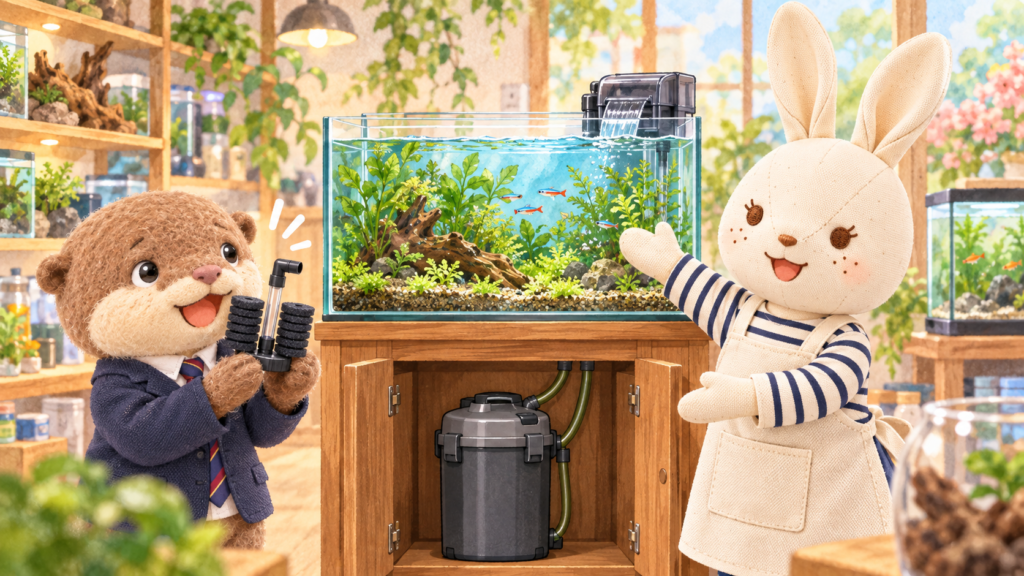 アイのアクアグッズ案内水槽フィルターの選び方|外掛け・外部・上部から小型オーバーフローまで道具の特徴や使い方、選ぶときのポイントをアイが紹介します。記事はコチラ →
 アイのアクアグッズ案内小型カラシンの群れを楽しむ|餌と水換えから考える飼育用品ガイド小型カラシンの群れを眺める時間を、もっと楽しく。泳ぐ余白、餌の食べ方、続けやすい水換えを軸に、日本で揃えやすい用品の選び方を紹介します。記事はコチラ →
 アイのアクアグッズ案内水槽のエアーポンプの選び方|水深・音・泡で選ぶおすすめ用品道具の特徴や使い方、選ぶときのポイントをアイが紹介します。記事はコチラ →
 アイのアクアグッズ案内コリドラスのもふもふ時間を楽しむ|餌・底砂・お掃除用品の選び方コリドラスのもふもふする食事風景を楽しむために。沈む餌2種類の違い、口元に配慮した底砂、食べ残しを回収する道具を、アクアグッズナビゲーターのアイが紹介します。記事はコチラ →
さまざまな飼育テーマをご紹介。リンク先の記事には広告・商品紹介が含まれます。
案内・紹介記事一覧へ →分布マップ
ムシロガイ科(Nassariidae)は世界各地の海洋に広く分布し、河口や内湾を含む浅海の砂泥底を主な生息場所とする種が多く知られています。日本沿岸にも複数の種が分布しています。
この地図は、記事中の分布情報をもとに世界的な分布範囲を概略的に示したものです。表示している代表地点(北緯35度・東経139度)は地図表示の目安として設定したもので、実際の採集地点や特定個体の生息地点を示すものではありません。
参考文献
-
Galindo, L. A., Puillandre, N., Utge, J., Lozouet, P. & Bouchet, P. (2016).
The phylogeny and systematics of the Nassariidae revisited (Gastropoda, Buccinoidea).
Molecular Phylogenetics and Evolution, 99, 337–353.
https://doi.org/10.1016/j.ympev.2016.03.019
分類体系、ムシロガイ科の生態的特徴と生息環境の確認。
-
Ocean Biodiversity Information System (OBIS).
Nassariidae — Taxon 151.
https://obis.org/taxon/151
ムシロガイ科の分類階級と世界各地の分布記録の確認。
-
Morton, B., Chan, K. & Britton, J. C. (1995).
Hunger overcomes fear in Nassarius festivus, a scavenging gastropod on Hong Kong shores.
Journal of Molluscan Studies, 61(1), 55–63.
https://doi.org/10.1093/mollus/61.1.55
砂中に潜む習性、腐肉食性、化学的な手掛かりを利用した採餌行動の確認。
-
Zhang, H., Shin, P. K. S. & Cheung, S. G. (2016).
Physiological responses and scope for growth in a marine scavenging gastropod, Nassarius festivus (Powys, 1835), are affected by salinity and temperature but not by ocean acidification.
ICES Journal of Marine Science, 73(3), 814–824.
https://doi.org/10.1093/icesjms/fsv208
水温・塩分変化への生理反応と、種ごとの環境条件を一律に扱えないことの確認。
-
Chatzinikolaou, E., Grigoriou, P., Keklikoglou, K., Faulwetter, S. & Papageorgiou, N. (2017).
The combined effects of reduced pH and elevated temperature on the shell density of two gastropod species measured using micro-CT imaging.
ICES Journal of Marine Science, 74(4), 1135–1149.
https://doi.org/10.1093/icesjms/fsw219
ムシロガイ科の一種における低pH・水温と貝殻状態の関係の確認。
-
Zupo, V. & Patti, F. P. (2009).
Laboratory spawning, larval development and metamorphosis of the marine snail Nassarius reticulatus (L.) (Caenogastropoda, Nassariidae).
Invertebrate Reproduction & Development, 53(1), 23–31.
https://doi.org/10.1080/07924259.2009.9652286
卵嚢の産卵、ベリジャー幼生、浮遊幼生の飼育と着底・変態の確認。
-
Trenfield, M. A., van Dam, J. W., Harford, A. J., Parry, D., Streten, C., Gibb, K. & van Dam, R. A. (2016).
A chronic toxicity test for the tropical marine snail Nassarius dorsatus to assess the toxicity of copper, aluminium, gallium, and molybdenum.
Environmental Toxicology and Chemistry, 35(7), 1788–1795.
https://doi.org/10.1002/etc.3331
ムシロガイ科幼生に対する銅などの金属毒性と、無脊椎動物飼育で金属を含む薬剤に注意する根拠の確認。
-
厚生労働省.
自然毒のリスクプロファイル:巻貝:フグ毒.
https://www.mhlw.go.jp/stf/seisakunitsuite/bunya/kenkou_iryou/shokuhin/syokuchu/poison/animal_15.html
キンシバイなど一部のムシロガイ科におけるテトロドトキシン、分布・生息環境、食中毒上の注意点の確認。

コメント