

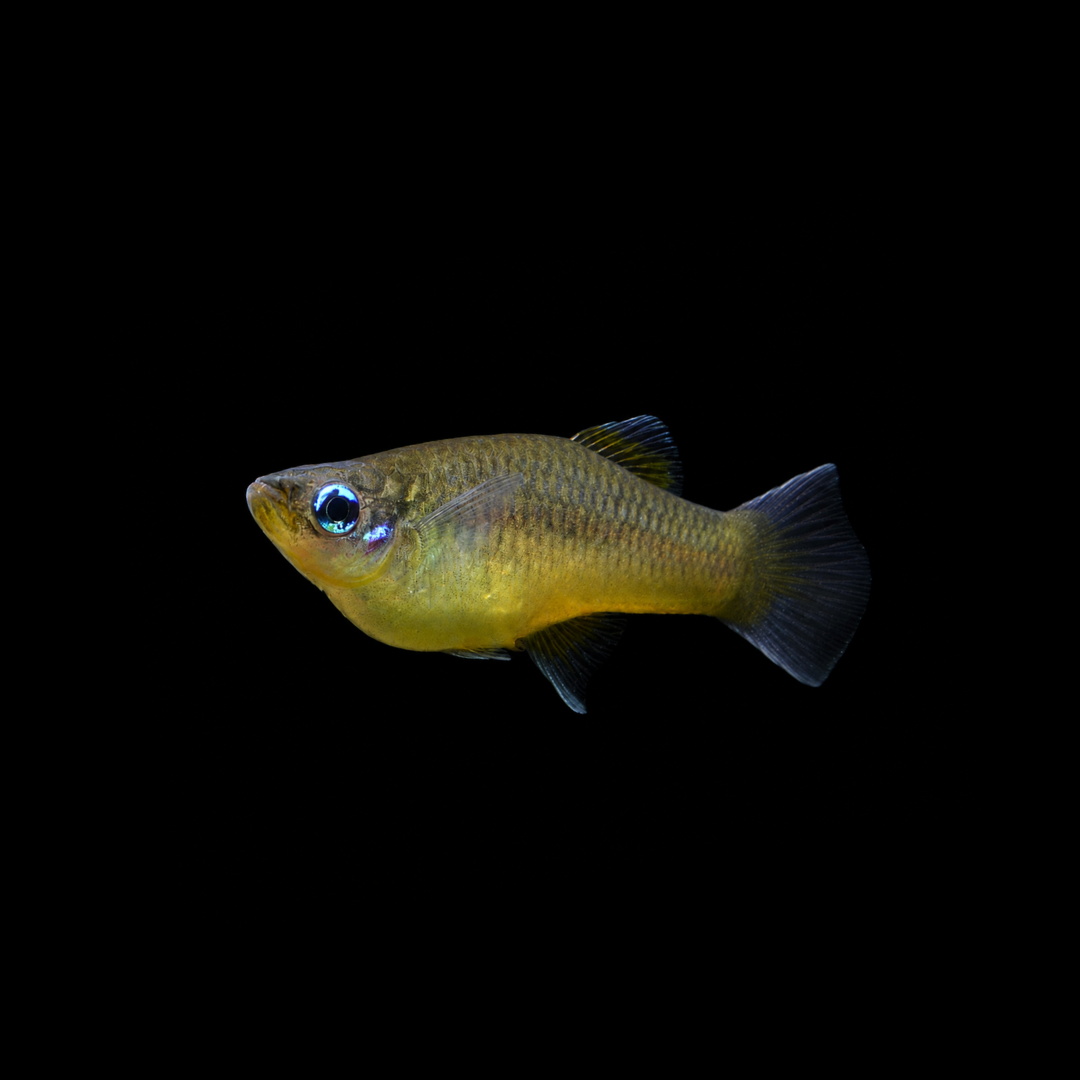
解説 / Description
プリアペラ・インターメディアは、メキシコ南東部の河川に固有なカダヤシ科の小型淡水魚です。黄色味を帯びた銀色の体は一見控えめですが、光を受けると眼の周囲が鮮烈な青色に輝き、透明感のある各鰭と相まって非常に上品な印象を見せます。野生では流れのある河川に暮らしながら、群れは流れがやや緩む場所も利用し、水面近くで昆虫を狙って跳躍することがあります。水槽ではこの俊敏さと臆病さがそのまま現れるため、安定した水質、十分な遊泳空間、落ち着ける茂み、そして隙間のない蓋が飼育の要点になります。一般的なグッピーやプラティほど大量流通する魚ではありませんが、自然な色彩、群れの動き、体内受精を行う繁殖生態までじっくり観察できる、原種卵胎生魚ならではの魅力を備えています。 Priapella intermedia is a small poeciliid freshwater fish endemic to southeastern Mexico. Its yellowish-silver body may appear understated at first, but under suitable light the eye ring shines an intense blue, giving the fish an elegant, translucent appearance. In nature it inhabits flowing rivers while also using calmer margins and eddies, and it is known to leap at the surface to capture insects. The same agility and nervous temperament are evident in aquaria, so stable water quality, ample swimming space, planted refuges, and a tightly fitted lid are essential. Although far less common in the trade than guppies or platies, it offers aquarists the opportunity to observe natural coloration, group behavior, and the reproductive biology of a wild-type livebearer.
基本情報 / Basic Information
| 学名 / Scientific Name | Priapella intermedia Álvarez & Carranza, 1952 |
|---|---|
| 通称 / Common Name | プリアペラ・インターメディア、ブルーアイ系の卵胎生メダカとして紹介されることがありますIsthmian priapella; sometimes described in the aquarium trade as a blue-eyed livebearer |
| 分類 / Family | カダヤシ目(Cyprinodontiformes)・カダヤシ科(Poeciliidae)・カダヤシ亜科(Poeciliinae)・プリアペラ属(Priapella)Order Cyprinodontiformes, family Poeciliidae, subfamily Poeciliinae, genus Priapella |
| 英名 / English Name | Isthmian priapella |
| 分布 / Distribution | メキシコ固有。模式産地はオアハカ州サンタ・マリア・チマラパのArroyo El Zacatal。古典的にはコアツァコアルコス川上流域を中心とする分布が知られ、近年はグリハルバ水系側からの記録も報告されています。分布境界については文献によって扱いに差があります。Endemic to Mexico. The type locality is Arroyo El Zacatal at Santa María Chimalapa, Oaxaca. Classical accounts place the species mainly in the upper Coatzacoalcos basin, while records have also been reported from the Grijalva drainage. The precise limits of its distribution are treated somewhat differently among sources. |
| 最大体長 / Max Size | おおむね4~6cm。オスは約5cmで成魚になることが多く、メスはやや大型になります。飼育資料ではメスが6~7cmほどになる例もあります。Usually about 4–6 cm. Males commonly mature at around 5 cm, while females are generally larger; aquarium references sometimes report females approaching 6–7 cm. |
| 寿命 / Lifespan | 本種に限定した信頼性の高い寿命データは乏しく、明確な年数は定まっていません。良好な環境では数年単位での維持が見込まれますが、固定値として断定するのは避けるのが安全です。Reliable species-specific lifespan data are scarce, and no well-established fixed figure is available. Healthy fish can be maintained for several years under good conditions, but a precise universal lifespan should not be assumed. |
飼育環境 / Aquarium Environment
| 水槽サイズ / Tank Size | 小群での飼育なら最低でも60cm規格水槽(約57L)を目安にします。繁殖を含めて5~8匹ほどをゆったり維持するなら、60cmワイド水槽(約80~100L)以上が扱いやすく、長い遊泳距離を確保できるほど本来の群れの動きを観察しやすくなります。For a small group, a standard 60 cm aquarium of roughly 57 L should be regarded as a practical minimum. For a breeding group of about five to eight fish, a 60 cm wide aquarium of roughly 80–100 L or larger is easier to manage and provides better swimming space. |
|---|---|
| 水温 / Temperature | 25~28℃を基本に、急変を避けて安定させます。長期間の高温化やヒーター故障による急低下を防ぎ、酸素量も十分に確保します。 Maintain 25–28°C with as little sudden fluctuation as possible. Avoid prolonged overheating or abrupt chilling, and ensure good oxygenation. |
| 水質 / Water Quality | pH 7.0~8.0、硬度9~19 dHの中硬水~硬水が目安です。日本の軟水地域では、必要に応じてサンゴ砂などで緩やかに硬度を補いますが、急激な調整は避けます。清浄で酸素の多い水を好むため、ろ過を十分に効かせ、温度と水質を合わせた少量の定期換水を行うと安定しやすくなります。A target range of pH 7.0–8.0 and 9–19 dH is appropriate. In naturally soft-water areas, hardness can be raised gradually with suitable mineral media such as coral sand if necessary, but abrupt chemical changes should be avoided. Strong filtration, good oxygenation, and regular small water changes with matched temperature and chemistry are recommended. |
| レイアウト / Layout | 中央から前面には遊泳空間を残し、側面や背面にミクロソリウム、ウィローモス、ナヤス類などで隠れ場所を作る構成が向きます。野生の採集地には水草の少ない流れのある場所もありますが、水槽では水草の茂みがメスや稚魚の避難場所として役立ちます。フィルターの水流は一方向に強く当て続けるより、流れのある場所と休める緩流域の両方を作ると管理しやすくなります。Leave open swimming space in the center and front while providing refuges along the sides and rear with plants such as Java fern, Java moss, or Najas. Although some wild sites have little submerged vegetation, dense cover is useful in aquaria as shelter for females and fry. Rather than forcing the entire tank into strong current, provide both a flowing zone and calmer resting areas. |
| 注意点 / Precautions | 非常に驚きやすく、跳躍力も強いため、蓋は配管まわりの隙間まで確実に塞ぎます。照明の急な点灯・消灯、ガラス面への衝撃、大きな水質変化は避けてください。単独飼育より複数飼育の方が落ち着きやすく、繁殖を狙う場合はオス1匹に対して複数のメスを用意すると追尾の集中を和らげやすくなります。This species is extremely skittish and a powerful jumper, so the aquarium must be securely covered, including gaps around pipes and cables. Avoid abrupt lighting changes, shocks to the glass, and large sudden water changes. Fish generally settle better in groups than alone, and for breeding it is useful to keep one male with several females so that courtship pressure is not focused on a single fish. |
餌と給餌 / Feeding
| 餌の種類 / Diet | 良質な小粒フレークや顆粒飼料を基本に、ブラインシュリンプ、ミジンコ、冷凍アカムシなどの動物性餌を組み合わせます。野生では水面付近の昆虫を捕らえることが知られており、動きのある小型餌への反応は良好です。Use high-quality small flakes or micro-pellets as a staple, supplemented with animal foods such as brine shrimp, Daphnia, and frozen bloodworms. In the wild the species is known to take insects near the water surface and usually responds strongly to moving small foods. |
|---|---|
| 給餌のポイント / Feeding Tips | 1回に多量を与えるより、食べ切れる量を1日1~2回与え、繁殖前は生餌や冷凍餌を適度に増やしてコンディションを整えます。水面に集まりやすい性質を利用しつつ、食べ残しが水質悪化を招かないよう注意します。稚魚には孵化直後のブラインシュリンプ幼生や微細な人工飼料が使いやすいです。Feed modest portions once or twice daily rather than a large single meal. Before breeding, a varied diet with additional live or frozen foods can improve condition. Because the fish often feed near the surface, monitor uneaten food carefully to protect water quality. Newly hatched brine shrimp and fine powdered foods are suitable for fry. |
性格と混泳 / Temperament and Tank Mates
| 性格 / Temperament | 他魚への攻撃性は強くありませんが、非常に俊敏で神経質です。ゆるい群れを作り、水面から中層を活発に泳ぎます。繁殖期のオスはメスへの求愛と追尾が活発になるため、十分な空間と退避場所が重要です。It is not strongly aggressive toward other fish, but it is fast, alert, and easily startled. Individuals form loose groups and swim actively from the surface to midwater. Breeding males can court and chase females persistently, so generous space and refuges are important. |
|---|---|
| 混泳の相性 / Compatibility | 同程度の大きさで温和かつ、中性~弱アルカリ性の水質に適応できる魚とは混泳可能です。大型魚、強い縄張りを持つ魚、ヒレをかじる魚、極端に動きの激しい魚は避けます。繁殖と系統維持を優先するなら本種のみの種水槽が最も管理しやすく、稚魚の生残率も高めやすくなります。It can coexist with similarly sized, peaceful fish that tolerate neutral to mildly alkaline water. Avoid large predators, strongly territorial species, fin-nippers, and very boisterous tank mates. A species-only aquarium is the easiest option when breeding and lineage maintenance are priorities. |
病気と対策 / Diseases and Prevention
| かかりやすい病気 / Common Diseases | 本種だけに特有の代表的疾病は知られていません。水質悪化や強いストレスが続くと、白点病、ヒレの損傷に伴う細菌感染、体表のただれなど一般的な淡水魚の病気が起こりやすくなります。特に導入直後や大きな環境変化の後は注意が必要です。No major disease is known to be uniquely characteristic of this species. Poor water quality and prolonged stress can predispose fish to common freshwater problems such as ich, bacterial infections following fin damage, and skin lesions. Newly introduced fish and individuals exposed to abrupt environmental change deserve especially close observation. |
|---|---|
| 対策と予防 / Prevention | 最も重要なのは、安定した水温、十分な溶存酸素、低い有機汚濁、急変のない硬度とpHを保つことです。換水は一度に大量交換するより、同じ水質の水を使って少量ずつ定期的に行う方が安全です。新規導入魚は可能であれば別水槽で状態を確認し、病魚が出た場合は原因となる水質やストレス要因も同時に見直します。Prevention depends primarily on stable temperature, high oxygen availability, low organic pollution, and consistent hardness and pH. Regular smaller water changes with well-matched replacement water are safer than abrupt large changes. Quarantine new arrivals when possible, and if disease appears, correct underlying water-quality or stress problems as well as treating the affected fish. |
増やし方(繁殖) / Breeding
| 雌雄の判別 / Sexing | 成熟したオスは尻鰭が細長い交接器のゴノポディウムに変化するため容易に判別できます。オスは比較的小型で細身、メスはより大きく腹部に厚みがあり、妊娠が進むと腹部が目立って膨らみます。Mature males are easy to identify because the anal fin is modified into a slender gonopodium used for internal fertilization. Males are generally smaller and slimmer, while females are larger and fuller-bodied, with a visibly swollen abdomen during advanced pregnancy. |
|---|---|
| 繁殖形態 / Reproduction | 体内受精を行う卵胎生魚です。観賞魚分野では「卵胎生」と呼ばれることが多く、胚は主として卵黄の栄養を利用して発育します。妊娠期間はおおむね約28日から4~6週間で、1回の出産数は多くの場合少数から20匹前後です。若いメスの初産はさらに少ないことがあります。This is an internally fertilizing livebearer, commonly described in the aquarium hobby as ovoviviparous. Embryos develop primarily on yolk reserves. Gestation is typically around 28 days to four to six weeks, and broods are usually modest, often ranging from only a few fry to around twenty. First broods from young females may be smaller. |
| 繁殖のポイント / Breeding Tips | オス1匹に対してメス2~3匹以上を含む小群を用意し、水槽内に細葉の水草やモスを十分に茂らせます。妊娠したメスを出産直前に小さな産仔箱へ移す方法は、驚きやすい本種ではストレスから早産を招く可能性があるため、無理な移動を避け、本水槽側に稚魚の逃げ場を作る方が安全です。稚魚はブラインシュリンプ幼生、細かなミジンコ、微細飼料を食べられます。成長は極端に速くはなく、オスのゴノポディウム形成は生後4~5か月頃から見られ、その後さらに成熟が進みます。Keep a small group with one male and at least two or three females, and provide dense fine-leaved plants or moss. Moving a heavily pregnant female into a small birthing box can be stressful for this nervous species and may contribute to premature parturition, so it is generally safer to provide fry refuge within the main breeding tank. Fry can take newly hatched brine shrimp, small Daphnia, and fine prepared foods. Growth is steady rather than exceptionally fast; male gonopodium development may become apparent at around four to five months, with full reproductive maturity following later. |
雑学と豆知識 / Trivia and Fun Facts
| 1. 学名に残る「プリアーポス」の名 / 1. A genus named after Priapus | 属名Priapellaは、古代ギリシャ・ローマ世界で豊穣や生殖と結びつけられた神プリアーポスの名に由来します。これはカダヤシ科のオスが持つ交接器、ゴノポディウムを連想させる命名です。ゴノポディウムは単なる細長い尻鰭ではなく、複数の鰭条が変形してできた精巧な器官で、カダヤシ科の分類や進化を考えるうえでも重要な形質です。The genus name Priapella derives from Priapus, the Greco-Roman deity associated with fertility and reproduction. The name evokes the male gonopodium, the modified anal fin used in internal fertilization. This structure is not simply an elongated fin: several fin rays are transformed into a complex reproductive organ and provide important characters for poeciliid taxonomy and evolutionary studies. |
|---|---|
| 2. 川の流れと「空中の餌」を利用する魚 / 2. A fish that uses currents and attacks aerial prey | 本種は流れのある河川で記録され、群れは渦や緩流部を利用しながら水面近くを活動します。特に印象的なのが、水面上の昆虫を狙って飛び出す行動です。水槽での飛び出し事故は、この野生の捕食行動と驚いたときの逃避反応が組み合わさったものと考えると理解しやすくなります。美しい青い眼だけでなく、こうした俊敏な生態そのものが本種の個性です。The species is recorded from flowing rivers and often uses eddies or calmer current margins while remaining active near the surface. One of its most striking behaviors is leaping to capture insects above the water. Aquarium escape incidents become easier to understand when viewed as an extension of this natural feeding behavior combined with a rapid startle response. Its vivid blue eyes are only one part of a much more dynamic natural history. |
| 3. 「ソードを好むメス」の有名な研究と本種の位置づけ / 3. The famous sword-preference study and where this species fits | ソードテール類のオスが持つ長い「ソード」が、メスの好みより先に進化したのか、それともメス側の好みが先に存在したのかという問題は、性淘汰研究の代表例として知られています。Alexandra L. Basoloによる古典的な実験では、ソードを自然には持たないプリアペラ属のP. olmecaeのオスに人工的なソードを付けると、メスがソード付きのオスを好み、さらに長いソードほど選好が強くなることが示されました。ここで重要なのは、この実験の直接の対象がP. intermediaではなくP. olmecaeだったことです。P. intermediaは同属の近縁種として、PriapellaとXiphophorusの系統関係を考える比較材料や外群として多くの研究で用いられてきました。つまり本種を飼うことは、古典的な感覚バイアス研究そのものの実験魚を飼うことではありませんが、その研究を生み出した進化的背景に非常に近い魚を観察することだといえます。Whether the male sword of swordtail fishes evolved before or after the female preference for that ornament has become a classic problem in sexual-selection research. In Alexandra L. Basolo’s well-known experiments, females of the naturally swordless Priapella olmecae preferred conspecific males fitted with artificial swords, and the preference increased with sword length. An important distinction is that the direct experimental species was P. olmecae, not P. intermedia. Priapella intermedia is nevertheless a close congener that has frequently been used as comparative material or an outgroup in studies of Priapella and Xiphophorus relationships. Keeping this species therefore does not mean keeping the exact experimental fish, but it does bring the aquarist remarkably close to the evolutionary context that made the classic receiver-bias studies possible. |
| 4. 同属のP. bonitaが伝える保全の重み / 4. What P. bonita teaches about conservation | プリアペラ属には分布の狭い種が多く、同属のP. bonitaは長年再発見されていません。現在のIUCN評価は「データ不足(DD)」ですが、複数の魚類学資料では「おそらく絶滅」と扱われています。かつてIUCNで絶滅扱いだった評価が後にDDへ変更された経緯もあり、「確認できないこと」と「絶滅を証明すること」の難しさを象徴する魚です。P. intermediaは現在Least Concernと評価されていますが、局所的な固有魚にとって河川環境の改変や水質悪化が大きな脅威になり得る点は同じです。Many Priapella species have restricted ranges, and the congener P. bonita has not been rediscovered for decades. Its current IUCN category is Data Deficient, although several ichthyological sources regard it as probably extinct. Its history, including a past IUCN listing as extinct followed by reassessment to DD, illustrates how difficult it is to distinguish a species that has vanished from one that simply remains undetected. P. intermedia is currently assessed as Least Concern, yet its localized freshwater habitat still makes river alteration and water-quality deterioration important conservation concerns. |
| 5. 日本では「欧便」「ヨーロッパブリード」で現れる希少魚 / 5. A rarity often appearing as European-bred stock in Japan | 日本の一般的な熱帯魚売り場で常時見かける種類ではありませんが、専門店や卸の入荷リストでは「欧便」「ヨーロッパブリード」などの表記で不定期に流通します。大量生産される改良グッピーのような魚ではなく、少数の繁殖個体が愛好家のネットワークや専門ルートを通じて維持されているため、入荷の有無や価格の変動が大きいのが特徴です。購入時には産地名や系統情報、雌雄、導入時の水質を確認しておくと、その後の系統維持に役立ちます。This is not a species routinely stocked by ordinary tropical-fish retailers in Japan, but it appears intermittently through specialist shops and wholesalers, often labeled as European imports or European captive-bred stock. Unlike mass-produced fancy guppies, it is generally maintained in relatively small numbers through specialist breeding networks, so availability and price can fluctuate widely. When purchasing, it is useful to record any locality or strain information, sex ratio, and the water conditions in which the fish were being maintained. |
| 6. 1960年代から続く「難魚」と「飼える魚」の間の評価 / 6. From a difficult rarity to a manageable specialist fish | ヨーロッパの飼育史では、P. intermediaが生きた状態で本格的に紹介された1960年代、強い水流、頻繁な換水、低い産仔数などが強調され、「難しい魚」という印象が先行しました。その後の長期飼育では、重要なのは流速そのものより酸素に富んだ清浄な水と安定した環境であり、十分な水量と適切な群れ、稚魚の隠れ場所を整えれば繁殖可能であることが示されてきました。現在でも初心者向けの丈夫な卵胎生魚とは言いにくいものの、性質を理解して環境を合わせれば、決して手の届かない難魚ではありません。When live P. intermedia became established in European aquaristics during the 1960s, early reports emphasized strong current, frequent water changes, small broods, and reproductive difficulties, giving the species a formidable reputation. Later long-term experience suggested that the crucial factors are not extreme current itself but clean, oxygen-rich, stable water, adequate space, appropriate group structure, and refuge for fry. It is still less forgiving than common beginner livebearers, yet it is not an impossible species when its natural behavior and environmental needs are respected. |
まとめ / Conclusion
プリアペラ・インターメディアは、青く輝く眼、透明感のある鰭、流れの中を機敏に泳ぐ姿が印象的な、メキシコ固有の卵胎生魚です。丈夫さだけを求める魚ではありませんが、中硬水から硬水の安定した清浄な水、十分な酸素、隙間のない蓋、落ち着ける群れと退避場所を整えることで、その繊細な美しさと生き生きした行動を長く楽しめます。 Priapella intermedia is a distinctive Mexican livebearer whose intense blue eyes, translucent fins, and agile swimming make a strong impression. It is not a fish chosen for extreme hardiness, but with stable clean medium-hard to hard water, high oxygen availability, a secure lid, suitable group structure, and ample refuges, its subtle beauty and lively behavior can be enjoyed for a long time.
繁殖では、メスを急に隔離するよりも本水槽に安全な茂みを作り、複数のメスを含む小群で自然に産仔させる方法が本種の神経質な性質に合っています。派手な改良品種とは異なる静かな色彩の奥に、河川への適応、体内受精、性淘汰研究につながる系統史まで重なっており、日々の観察がそのまま魚類の進化と生態を読み解く楽しさにつながる一種です。 For breeding, the species’ nervous temperament is better accommodated by providing secure plant cover in the main aquarium than by repeatedly moving heavily pregnant females into small birthing containers. A small group containing several females allows more natural reproduction. Beneath its restrained wild coloration lies a story of river adaptation, internal fertilization, and a lineage closely connected with classic research on sexual selection, making everyday observation unusually rewarding for aquarists interested in both husbandry and evolutionary biology.

気になる道具や飼い方を見つけてみませんか?
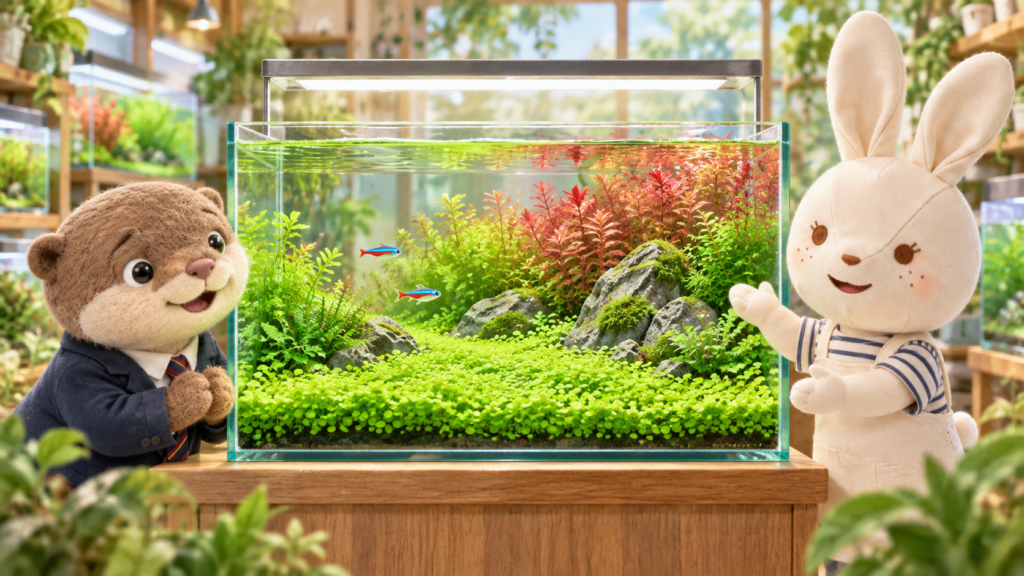 アイのアクアグッズ案内水草用ライトの選び方|緑の絨毯と赤い水草を楽しむ照明・植栽用品道具の特徴や使い方、選ぶときのポイントをアイが紹介します。記事はコチラ →
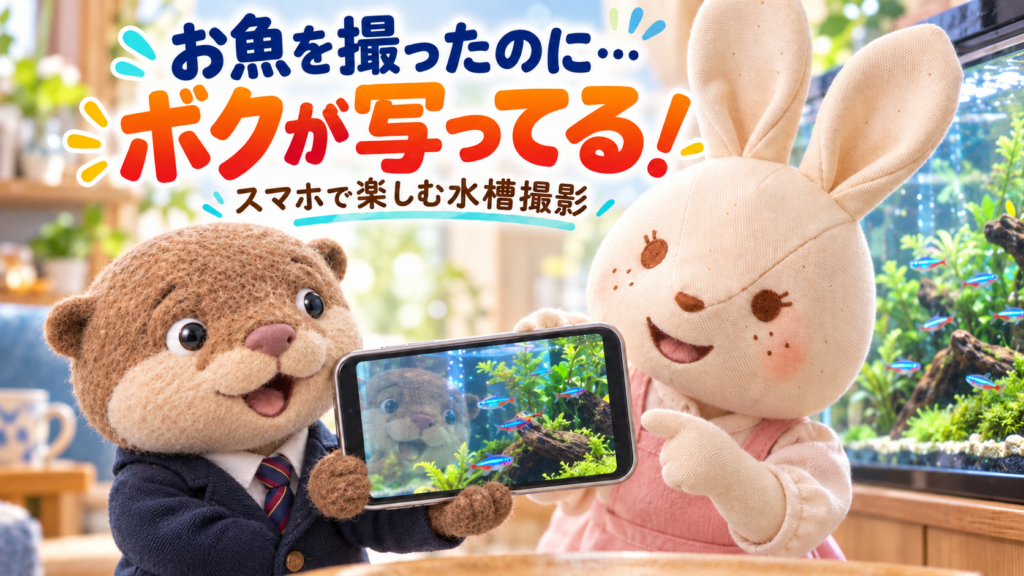 アイのアクアグッズ案内お魚を撮ったのに、ボクが写ってる! スマホで楽しむ水槽撮影と便利な道具道具の特徴や使い方、選ぶときのポイントをアイが紹介します。記事はコチラ →
さまざまな飼育テーマをご紹介。リンク先の記事には広告・商品紹介が含まれます。
案内・紹介記事一覧へ →分布マップ
プリアペラ・インターメディア(Priapella intermedia)はメキシコ固有種で、主にオアハカ州を含むコアツァコアルコス川上流域に分布し、グリハルバ水系側からも記録されています。
※この地図は文献上の分布地域をもとにした概略表示です。マーカーは模式産地があるサンタ・マリア・チマラパ周辺を示す代表地点であり、実際の採集地点や個体の確認地点を示すものではありません。
参考文献
- Álvarez, J. & Carranza, J. (1952). Cuatro especies nuevas de peces dulceacuícolas del sureste de México. Ciencia, 11(10–12), 281–289. Eschmeyer’s Catalog of Fishes 収録情報
- Froese, R. & Pauly, D. (eds.). FishBase: Priapella intermedia Álvarez & Carranza, 1952. 分類、最大体長、分布、水温25–28℃、pH 7.0–8.0、硬度9–19 dH、生息時の群れ・跳躍行動、約28日の妊娠期間と5–20匹の産仔数を収録。 FishBase
- López-Segovia, E., Del Moral-Flores, L. F. & Hernández-Arellano, T. (2020). Ictiofauna de la Selva Zoque de Santa María Chimalapa, Oaxaca, México. Hidrobiológica, 30(2), 107–124. DOI
- Gómez-González, A. E., Velázquez-Velázquez, E. & Anzueto-Calvo, M. de J. (2014). Primer registro de Xiphophorus clemenciae (Cyprinodontiformes: Poeciliidae) en la cuenca del río Grijalva, México. Revista Mexicana de Biodiversidad, 85(3), 975–978. グリハルバ川水系におけるPriapella intermediaの存在記録を含む。 DOI
- Zúñiga-Vega, J. J., Olivera-Tlahuel, C., Saleh-Subaie, N. et al. (2024). Life histories of poeciliid fishes: searching for a size-dependent trade-off between number and size of offspring. Ichthyological Research, 71, 106–118. Priapella intermediaの繁殖投資、胚サイズ、産仔数、および弱い母体由来栄養供給の可能性を検討。 DOI
- Petty, B. D., Francis-Floyd, R. & Yanong, R. P. E. Management of Aquarium Fish. MSD Veterinary Manual. 水質管理、環境変化、隔離、バイオセキュリティなど観賞魚の疾病予防に関する獣医学的指針。 MSD Veterinary Manual
- Petty, B. D., Francis-Floyd, R. & Yanong, R. P. E. Bacterial Diseases of Fish. MSD Veterinary Manual. 水質悪化、有機物負荷、輸送、急な水温変化、低酸素などのストレス要因と細菌感染リスクの関係を解説。 MSD Veterinary Manual
- Francis-Floyd, R., Yanong, R. P. E. & Pouder, D. B. Ichthyophthirius multifiliis (White Spot) Infections in Fish. UF/IFAS Extension, University of Florida. 淡水魚の白点病の病原体、感染経路、管理および隔離による予防を解説。 UF/IFAS Extension




コメント