
解説 / Description
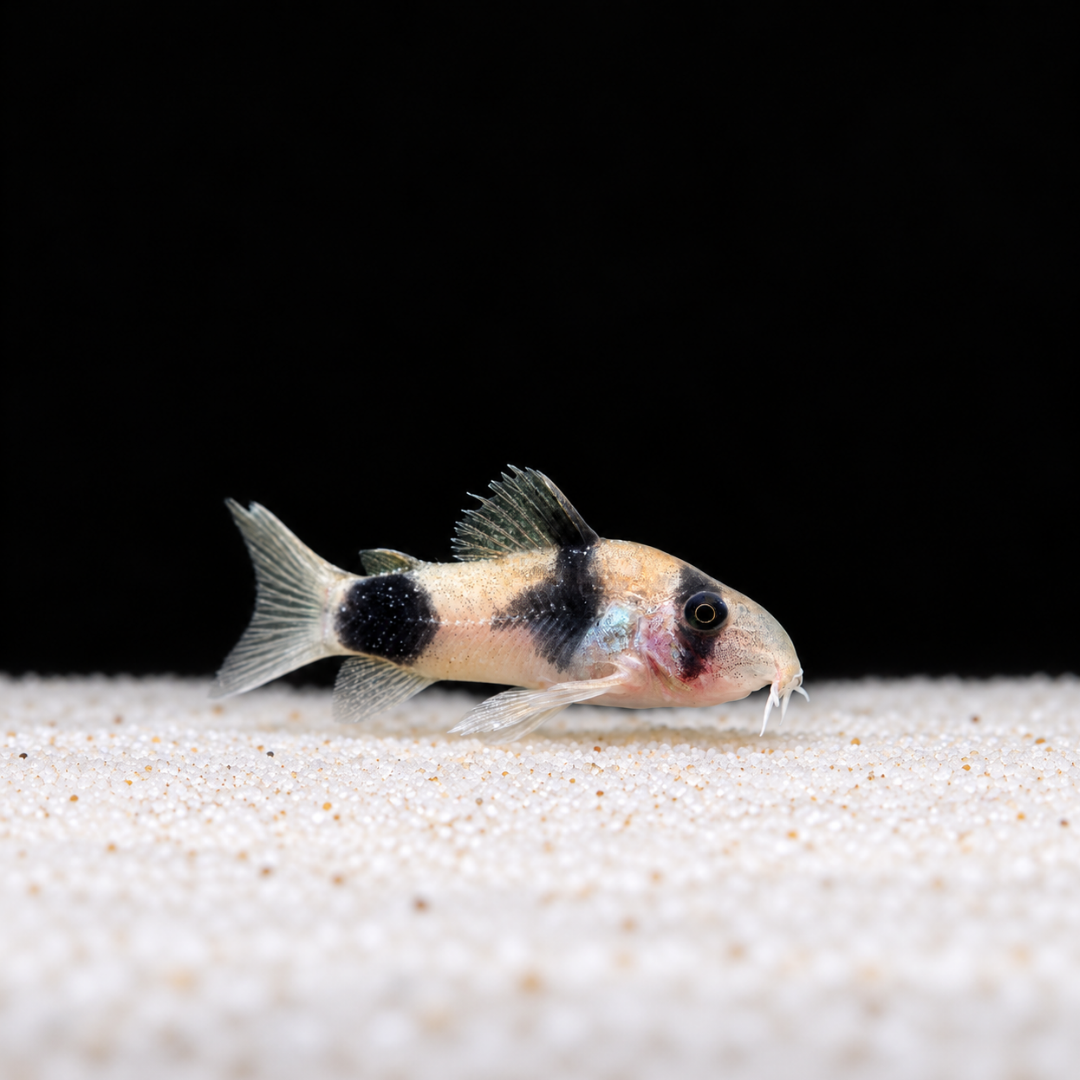
コリドラス・ワイツマニィは、ペルー南東部のアマゾン上流域に生息する、吻(口先)の短いショートノーズタイプの小型ナマズです。淡い黄褐色の体に、目を横切るアーチ状の黒い帯(マスク)と、背びれの下と脂びれの下にひとつずつ現れる大きな暗色斑を持ち、シンプルながら一度見たら忘れられない端正な姿をしています。1971年に新種として記載されたものの、記録された産地が実際の生息地とは大きく異なっていたため、その後30年以上にわたって生きた姿が確認されず、「幻のコリドラス」として語られてきました。2004年にマドレ・デ・ディオス地方で再発見されると大きな話題となり、当初は非常に高価で取引されましたが、各国のブリーダーによる繁殖が進んだ現在では、比較的手の届きやすい価格で見かけるようになっています。分類の面では、2024年に発表された遺伝子レベルの大規模な系統解析をもとに、現在はホプリソマ属(Hoplisoma)に移されています。性格は温和で丈夫な部類ですが、長く健康に飼うためには、水温を上げすぎないことと、ヒゲを傷めない細かい砂を用意することが大切です。 Corydoras weitzmani is a small short-snouted catfish from the upper Amazon drainage of southeastern Peru. Its pale yellowish-tan body bears an arched black band across the eye (the “mask”) and two large dark blotches, one below the dorsal fin and one below the adipose fin, giving it a simple yet unforgettable appearance. Although it was described as a new species in 1971, the recorded locality differed greatly from its true habitat, and for more than thirty years afterward no living specimens were seen, earning it a reputation as a “phantom Cory.” Its rediscovery in the Madre de Dios region in 2004 caused a sensation, and it initially sold for very high prices, but thanks to breeders around the world it is now available at far more reasonable prices. Taxonomically, it has been moved to the genus Hoplisoma based on a large-scale genetic analysis of relationships published in 2024. It is peaceful and fairly hardy, but to keep it healthy for years it is important not to let the temperature run too high and to provide fine sand that will not damage its barbels.
基本情報 / Basic Information
| 学名 / Scientific Name | Hoplisoma weitzmani (Nijssen, 1971) 旧学名:Former name: Corydoras weitzmani |
|---|---|
| 通称 / Common Name | コリドラス・ワイツマニィ、ワイツマニ、ホプリソマ・ワイツマニィWeitzman’s Cory, Two-saddle Cory, Corydoras weitzmani |
| 分類 / Family | ナマズ目 カリクティス科 コリドラス亜科 ホプリソマ属Siluriformes, Callichthyidae, Corydoradinae, genus Hoplisoma |
| 英名 / English Name | Weitzman’s Cory, Two-saddle Cory |
| 分布 / Distribution | 南米ペルー南東部。マドレ・デ・ディオス川流域のイナンバリ川水系やタンボパタ川水系など、アマゾン上流の熱帯雨林を流れる河川や小川に生息します。Southeastern Peru, South America. It inhabits rivers and streams flowing through the upper Amazon rainforest, including the Inambari and Tambopata systems within the Madre de Dios basin. |
| 最大体長 / Max Size | 約5〜5.5cm(メスのほうがやや大きくなります)About 5–5.5 cm (approx. 2–2.2 in); females grow slightly larger |
| 寿命 / Lifespan | 5年前後。良好な環境では、さらに長く生きる例もあると考えられています。Around 5 years; in good conditions it is thought that some individuals may live considerably longer. |
飼育環境 / Aquarium Environment
| 水槽サイズ / Tank Size | 60cm規格水槽(約57L)以上を推奨します。群れで暮らす魚なので6匹以上で飼うのが理想的です。少数で飼うと落ち着かずにストレスをためやすく、拒食や体調不良につながることがあります。A 60 cm standard tank (about 57 L) or larger is recommended. As a schooling fish it is ideally kept in groups of six or more. Kept in very small numbers, it tends to stay unsettled and stressed, which can lead to refusal of food or poor health. |
|---|---|
| 水温 / Temperature | 22〜26℃。28℃を超える高水温が長く続く状態は避けましょう。夏場はファンやクーラーで水温を管理する必要があります。 22–26°C (72–79°F). Avoid prolonged periods above 28°C; in summer, cooling fans or a chiller may be needed to manage the temperature. |
| 水質 / Water Quality | 弱酸性〜中性(pH6.0〜7.5程度)、軟水〜中硬水(GH2〜12程度)。水質への特別なこだわりは必要なく、カルキを抜いた日本の水道水で十分に飼育できます。ただし、アンモニアや亜硝酸がわずかでも検出される水はヒゲを傷める原因になるため、ろ過が十分に立ち上がった水槽に導入してください。Slightly acidic to neutral (around pH 6.0–7.5), soft to moderately hard (about GH 2–12). It has no special water requirements, and dechlorinated Japanese tap water is perfectly adequate. However, even trace amounts of ammonia or nitrite can damage the barbels, so introduce the fish only into an aquarium whose filtration is fully established. |
| レイアウト / Layout | 底床には、粒径0.1〜1mm程度の角のない細かい砂(ボトムサンドや白砂など)が最適です。砂を1〜2cm程度と薄めに敷くと、砂の内部に酸素の届かない層ができにくくなります。流木や落ち葉、陰性水草で隠れ家を作り、照明をやや控えめにすると、落ち着いて過ごしてくれます。フィルターは、スポンジフィルターや、シャワーパイプで水流を分散させた外部式フィルターなど、流れが穏やかになるものが向いています。The best substrate is fine, rounded sand with grains of about 0.1–1 mm. Laying it thinly, around 1–2 cm, helps prevent oxygen-depleted layers from forming inside the sand. Provide hiding places with driftwood, leaf litter, and shade-tolerant plants, and keep the lighting somewhat subdued so the fish feel secure. Filters that produce gentle flow, such as sponge filters or canister filters with a spray bar to diffuse the outflow, are suitable. |
| 注意点 / Precautions | 大粒の砂利や角の鋭い溶岩石はヒゲをすり減らし、細菌感染のきっかけになるため避けてください。サンゴ砂や貝殻の混じった砂は水質をアルカリ性に傾けるので向いていません。細かい砂は汚れがたまりやすいため、週1回25〜30%程度の換水とあわせて、プロホースなどで底砂を掃除しましょう。また、ステルバイのように高めの水温を好む種とは適温がずれるため、同じ水槽で飼う場合は水温の設定に注意が必要です。Avoid coarse gravel and sharp lava rock, which wear down the barbels and can lead to bacterial infection. Coral sand or sand containing shell fragments raises pH and is unsuitable. Fine sand tends to trap waste, so clean it with a gravel siphon along with weekly 25–30% water changes. Species such as the Sterba’s Cory prefer warmer water, so take care with the temperature setting if keeping them together. |
餌と給餌 / Feeding
| 餌の種類 / Diet | 雑食性です。主食にはコリドラス用のタブレットなど、沈むタイプの人工飼料が適しています。冷凍アカムシや冷凍ブラインシュリンプ、イトミミズなども喜んで食べ、栄養の補給や繁殖前の体づくりに役立ちます。Omnivorous. Sinking prepared foods such as Corydoras tablets make a good staple. It also eagerly takes frozen bloodworms, frozen brine shrimp, and tubifex worms, which are useful for supplementary nutrition and for conditioning before breeding. |
|---|---|
| 給餌のポイント / Feeding Tips | 水面に浮くフレークは中層の魚に先に食べられてしまうため、底まで確実に届く沈下性の餌を選びましょう。1日1〜2回、消灯前など他の魚が落ち着いた時間帯に与えると、ワイツマニィまでしっかり行き渡ります。食べ残しは底砂を汚す原因になるので、しばらくたっても残っている分はスポイトなどで取り除いてください。Floating flakes are often eaten by midwater fish first, so choose sinking foods that reliably reach the bottom. Feeding once or twice a day at a time when other fish have settled, such as just before lights-out, ensures the food reaches this species. Leftovers foul the sand, so remove anything still uneaten after a while with a pipette or similar tool. |
性格と混泳 / Temperament and Tank Mates
| 性格 / Temperament | 非常に温和で、仲間と寄り添いながら底砂をつついて過ごします。群れの数が多いほど物陰から出てくる時間が増え、自然な行動を観察しやすくなります。Very peaceful, spending its time sifting the sand alongside its companions. The larger the group, the more time the fish spend out in the open, making their natural behavior easier to observe. |
|---|---|
| 混泳の相性 / Compatibility | 小型カラシン、ラスボラ、ペンシルフィッシュ、ハチェットフィッシュなどの温和な小型魚や、アピストグラマなどの小型シクリッド、オトシンクルスとの相性は良好です。口に入る大きさの魚を食べてしまう大型魚や、底を占領する気の荒い魚との組み合わせは避けましょう。また、ホプリソマ属の近縁種同士は水槽内で交雑する可能性が指摘されています。繁殖を考えている場合や純粋な系統を保ちたい場合は、近縁のショートノーズ系コリドラスとは分けて飼うと安心です。It does well with peaceful small fish such as small characins, rasboras, pencilfish, and hatchetfish, as well as dwarf cichlids like Apistogramma and Otocinclus. Avoid large fish that can swallow it and aggressive bottom-dwellers that monopolize the substrate. It has also been pointed out that closely related Hoplisoma species may hybridize in aquaria. If you plan to breed it or wish to keep pure lines, it is safest to keep it separate from related short-snouted Corydoras. |
病気と対策 / Diseases and Prevention
| かかりやすい病気 / Common Diseases | 代表的なのは、底床の汚れや合わない砂によってヒゲが溶けたり欠けたりする症状と、その傷口から広がるエロモナス症などの細菌感染症です。導入直後や水温の変化が大きい時期には白点病にも注意が必要です。ワイルド個体は、輸送で痩せていたり、寄生虫を持ち込んでいたりする場合もあります。The most typical problems are barbel erosion caused by dirty or unsuitable substrate, and bacterial infections such as Aeromonas that spread from the damaged tissue. White spot disease (ich) is also a concern right after introduction or during periods of large temperature swings. Wild-caught fish may arrive thin from transport or carrying parasites. |
|---|---|
| 対策と予防 / Prevention | 細かい砂を薄く敷き、定期的な換水と底砂掃除で清潔を保つことが一番の予防になります。新しく迎えた個体、特にワイルド個体は、別の水槽でしばらく様子を見てから本水槽に合流させると安心です。コリドラスは薬に敏感な傾向があるため、薬浴をする場合は規定量より薄い濃度から始めるなど、慎重に行ってください。The best prevention is a thin layer of fine sand kept clean with regular water changes and substrate cleaning. Newly acquired fish, especially wild-caught ones, are best observed in a separate tank for a while before joining the main aquarium. Corydoras tend to be sensitive to medications, so treat carefully, for example by starting at a lower concentration than the standard dose. |
増やし方(繁殖) / Breeding
| 雌雄の判別 / Sexing | 成熟したメスはオスより一回り大きく、上から見ると腹部がふっくらとした幅広の体型になります。オスはより細身で、腹びれがやや尖って見えます。Mature females are slightly larger than males and appear broader with a fuller belly when viewed from above. Males are slimmer, and their pelvic fins look somewhat more pointed. |
|---|---|
| 繁殖形態 / Reproduction | 卵生で、水草やガラス面に卵を産み付けます。オスがメスを追いかけたあと、メスがオスの腹部に口を寄せる「Tポジション」と呼ばれるコリドラス特有の姿勢をとります。このときメスは腹びれで抱えた卵を受精させてから、水草などに産み付けると考えられています。1回の産卵数は数十個程度が一般的です。Egg-laying; the eggs are attached to plants or the glass. After the male chases the female, the pair adopts the “T-position” characteristic of Corydoras, with the female placing her mouth against the male’s belly. It is thought that she then fertilizes the eggs held between her pelvic fins before attaching them to plants or other surfaces. A single spawning typically yields a few dozen eggs. |
| 繁殖のポイント / Breeding Tips | オス2:メス1程度の比率で、スポンジフィルターとウィローモスなどの産卵床を入れた40〜60cm水槽を用意します。冷凍アカムシなどで親魚の栄養状態を十分に整え、メスのお腹が膨らんできたら、普段よりやや冷たい水で25〜30%程度の換水を行い、水温を2℃前後下げます。これが雨季の増水を思わせる刺激となり、産卵を促せることが知られています。親魚は卵を食べてしまうことがあるため、産卵後は親か卵のどちらかを別の容器に移しましょう。白く濁った無精卵はカビの原因になるので、早めに取り除きます。卵は24℃前後でおよそ4〜5日で孵化し、稚魚がお腹の栄養(ヨークサック)を使い切ったら、ブラインシュリンプの幼生やマイクロワームを与えます。稚魚の時期は水質の悪化から細菌感染を起こして落ちやすいため、食べ残しの除去とこまめな少量換水が欠かせません。Set up a 40–60 cm tank with a sponge filter and a spawning medium such as Java moss, using roughly two males to one female. Condition the parents well with frozen bloodworms and similar foods. Once the female’s belly is visibly full, carry out a 25–30% water change with slightly cooler water to lower the temperature by about 2°C; this acts as a cue reminiscent of rainy-season flooding and is known to encourage spawning. Because the adults may eat their eggs, move either the parents or the eggs to a separate container after spawning, and promptly remove any cloudy white infertile eggs, which can develop fungus. At around 24°C the eggs hatch in roughly four to five days; once the fry have used up their yolk sac, feed newly hatched brine shrimp or microworms. Fry are prone to losses from bacterial infections caused by poor water quality, so removing leftover food and making frequent small water changes are essential. |
雑学と豆知識 / Trivia and Fun Facts
| 1. 標高3,400mの「幻の産地」 / 1. The “Phantom Locality” at 3,400 Meters | この魚の物語は、1949年にC.カリノウスキーが最初の標本を採集したところから始まります。それから20年以上たった1971年、オランダの魚類学者H.ナイセンが正式に新種として記載しましたが、そこに記された産地は「ペルー南部、クスコ近郊のビルカノタ川水系」でした。クスコは標高およそ3,400mのアンデス高地にある都市で、熱帯の小型ナマズが暮らす場所とは考えにくい環境です。この産地情報が誤りだったことは現在では分かっていますが、なぜそう記録されたのかについては、採集地をあえて伏せたという見方や、隣り合う「クスコ県」を指していたのではないかという見方などがあり、はっきりしたことは分かっていません。いずれにしても、この情報を頼りに探しても魚は見つからず、高地に住む冷水性のコリドラスではないかという憶測まで生まれるなか、生きた姿を誰も確認できないまま長い年月が過ぎていきました。This fish’s story begins in 1949, when C. Kalinowski collected the first specimens. More than twenty years later, in 1971, the Dutch ichthyologist H. Nijssen formally described it as a new species, giving the locality as “the Vilcanota River system near Cusco in southern Peru.” Cusco is a city in the Andean highlands at about 3,400 meters, hardly a place one would expect a tropical catfish to live. It is now known that this locality was incorrect, but why it was recorded that way remains unclear; some suggest the true collecting site was deliberately concealed, while others think the record may have referred to the Cusco department, which borders the real habitat. Either way, searches based on this information turned up nothing, speculation even arose that it might be a cold-water Cory from the highlands, and many years passed without anyone seeing the fish alive. |
|---|---|
| 2. 2004年の再発見と熱狂 / 2. Rediscovery in 2004 and the Frenzy That Followed | 転機が訪れたのは2004年です。ペルー南東部の低地、マドレ・デ・ディオス地方で観賞魚の採集者たちがついに野生の個体を見つけ、観賞魚として輸出されるようになりました。ちょうどコリドラスの人気が高まっていた時期でもあり、数cmの幼魚に驚くほどの高値がついたと伝えられています。その後、ヨーロッパをはじめ世界各地の愛好家が繁殖に成功し、ブリード個体が出回るにつれて価格は落ち着いていきました。最初の採集から半世紀あまり謎に包まれていた魚が、今では多くの水槽で泳いでいるという事実そのものが、アクアリウムの世界の大きな物語の一つといえます。The turning point came in 2004, when ornamental fish collectors finally found wild individuals in the lowland Madre de Dios region of southeastern Peru, and the fish began to be exported for the aquarium trade. This coincided with a surge in the popularity of Corydoras, and juveniles only a few centimeters long are said to have fetched astonishing prices. Hobbyists in Europe and around the world later succeeded in breeding it, and as captive-bred fish became available, prices settled down. That a fish shrouded in mystery for more than half a century after its first collection now swims in so many aquariums is itself one of the great stories of the aquarium hobby. |
| 3. コリドラスからホプリソマへ / 3. From Corydoras to Hoplisoma | 長らくコリドラス属の一員とされてきた本種ですが、2024年にディアスらが発表したコリドラス亜科の大規模な遺伝子解析によって、分類が大きく見直されました。この研究で、それまでのコリドラス属は、実際には別々に進化してきたいくつものグループの寄せ集めだったことが示され、複数の属に分けて整理し直されたのです。ワイツマニィを含むショートノーズ系の多くの種は、古くに提唱されながら長く使われていなかったホプリソマ属に収められることになりました。ショップでは今も「コリドラス・ワイツマニィ」の名で親しまれていますが、学術的にはHoplisoma weitzmaniが現在の正式な学名とされています。パンダなど身近なショートノーズ系の仲間と同じ属になったことで、それらとの血縁の近さがよりはっきりと意識されるようになりました。Long treated as a member of the genus Corydoras, this species was reclassified following a large-scale genetic study of the subfamily Corydoradinae published by Dias and colleagues in 2024. The study showed that the old genus Corydoras was actually a mixture of several separately evolved groups, which were then reorganized into multiple genera. Many short-snouted species, including weitzmani, were placed in Hoplisoma, a genus name proposed long ago but out of use for many years. Shops still sell it as “Corydoras weitzmani,” but scientifically Hoplisoma weitzmani is now regarded as its valid name. Being placed in the same genus as familiar short-snouted relatives such as the Panda Cory has made its close kinship with them much clearer. |
| 4. 仮面と斑紋の意味 / 4. The Meaning of the Mask and Blotches | 目を横切る黒い帯と、体の背側に並ぶ2つの大きな暗色斑。英語で「ツーサドル(2つの鞍)」とも呼ばれるこの模様は、落ち葉や流木が積もった川底で体の輪郭をぼかし、捕食者から目の位置を見えにくくする役割を果たしているのではないかと考えられています。目を隠すような模様は魚に限らず多くの動物に見られるもので、ワイツマニィの端正な模様も、自然の中で生き抜くための工夫の一つなのかもしれません。また、腹部は小さな骨の板がモザイク状に並んで覆われており、細かい砂に口先を潜らせて餌を探す暮らしに適した体のつくりになっています。A black band across the eye and two large dark blotches along the back. This pattern, which earns it the English name “Two-saddle Cory,” is thought to blur the body’s outline against a riverbed strewn with leaves and driftwood and make the eye harder for predators to locate. Eye-concealing markings are found in many animals, not only fish, and weitzmani’s elegant pattern may likewise be one of its adaptations for survival in the wild. Its belly is covered by small bony plates arranged in a mosaic, a body structure well suited to probing fine sand with its snout in search of food. |
| 5. 名前に刻まれた魚類学者 / 5. The Ichthyologist Behind the Name | 種小名の「weitzmani」は、アメリカ・スミソニアン国立自然史博物館の魚類学者スタンレー・H・ワイツマン博士(1927〜2017年)に献名されたものです。博士は南米の小型カラシン類を中心に、骨格の精密な観察にもとづく分類学で大きな功績を残しました。その業績をたたえ、南米の淡水魚から深海の発光魚まで、さまざまなグループに「weitzmani」の名を持つ魚がいます。水槽の底で砂をつつくこの小さなナマズも、南米の魚たちの研究に生涯を捧げた一人の学者の名を今に伝えているのです。The species name “weitzmani” honors Dr. Stanley H. Weitzman (1927–2017), an ichthyologist at the Smithsonian National Museum of Natural History. He made major contributions to taxonomy based on detailed skeletal study, particularly of small South American characins. In recognition of his work, fish bearing the name “weitzmani” can be found across many groups, from South American freshwater fishes to light-producing deep-sea fishes. This little catfish sifting sand at the bottom of the aquarium carries forward the name of a scientist who devoted his life to the study of South American fishes. |
| 6. 故郷の川が抱える課題 / 6. Challenges Facing Its Home Rivers | ワイツマニィのふるさとであるマドレ・デ・ディオス地方は、砂金の採掘が盛んな地域としても知られています。採掘で流れ出る大量の土砂は川底を埋め、金の精錬に使われる水銀による水質汚染も深刻な問題として指摘されています。川底で暮らし、限られた水系にしか分布しない本種にとって、こうした環境の変化は決して無関係ではないと考えられています。飼育下で健全な個体群を守り、純粋な系統を大切に殖やしていくことは、この魚の未来にとっても意味のある取り組みといえるでしょう。The Madre de Dios region, home to weitzmani, is also known for intensive gold mining. Large amounts of sediment released by mining smother riverbeds, and water pollution from the mercury used to refine gold has been identified as a serious problem. For a species that lives on the riverbed and is confined to a limited range of river systems, such environmental changes are thought to be far from irrelevant. Maintaining healthy captive populations and carefully breeding pure lines can be considered a meaningful contribution to this fish’s future. |
まとめ / Conclusion
コリドラス・ワイツマニィは、目元の仮面と背中の2つの暗色斑という、控えめながら印象的な装いを持つショートノーズ系の名品です。22〜26℃のやや低めの水温、角のない細かい砂、そして仲間と群れて暮らせる環境を整えてあげれば、温和で丈夫な性質を存分に見せてくれます。 Corydoras weitzmani is a gem among short-snouted Corydoras, dressed in an understated yet striking pattern of a masked face and two dark blotches on the back. Given a slightly cool temperature of 22–26°C, fine rounded sand, and companions to live with in a group, it will readily display its peaceful and hardy nature.
アンデスの高地に記された幻の産地から、アマゾン上流の低地での再発見、そして世界中のブリーダーによる繁殖へ。長い時を経て人々の前に姿を現したこの魚が、砂の上を群れでゆっくりと進む姿を眺めていると、小さな体に刻まれた物語の重みと、その命をつないでいく楽しさを感じられることでしょう。 From a phantom locality recorded high in the Andes, to its rediscovery in the lowlands of the upper Amazon, to captive breeding by hobbyists around the world, this fish took a long time to reveal itself. Watching a group of them glide slowly across the sand, you may sense both the weight of the story carried in their small bodies and the joy of helping their lineage continue.

困りごとの解決から、用品えらび、水槽づくり、生き物えらびまで。飼育に役立つ案内です。
分布マップ
Hoplisoma weitzmani(コリドラス・ワイツマニィ)は、南米ペルー南東部、マドレ・デ・ディオス川流域に分布します。イナンバリ川水系やタンボパタ川水系など、アマゾン上流の熱帯雨林を流れる河川や小川に生息しています。
※この地図は分布地域のおおよその範囲を示す概略表示です。マーカーはマドレ・デ・ディオス川流域を示すための代表地点であり、実際の採集地点を示すものではありません。地図データ:© OpenStreetMap contributors
参考文献
分類・記載
- Nijssen, H. (1971). Two new species and one new subspecies of the South American catfish genus Corydoras (Pisces, Siluriformes, Callichthyidae). Beaufortia, 19(250), 89–98.
- Dias, A. C., Tencatt, L. F. C., Roxo, F. F., et al. (2024). Phylogenomic analyses in the complex Neotropical subfamily Corydoradinae (Siluriformes: Callichthyidae) with a new classification based on morphological and molecular data. Zoological Journal of the Linnean Society, 202(1), zlae053. https://doi.org/10.1093/zoolinnean/zlae053
- Fricke, R., Eschmeyer, W. N. & Van der Laan, R. (eds.). Eschmeyer’s Catalog of Fishes: Genera, Species, References. California Academy of Sciences. 種 weitzmani, Corydoras の項. https://researcharchive.calacademy.org/research/ichthyology/catalog/fishcatget.asp?spid=4922
- Ferraris, C. J., Jr. (2007). Checklist of catfishes, recent and fossil (Osteichthyes: Siluriformes), and catalogue of siluriform primary types. Zootaxa, 1418, 1–628. https://doi.org/10.11646/zootaxa.1418.1.1
- Reis, R. E. (2003). Family Callichthyidae (Armored catfishes). In R. E. Reis, S. O. Kullander & C. J. Ferraris Jr. (eds.), Check List of the Freshwater Fishes of South and Central America (pp. 291–309). EDIPUCRS, Porto Alegre.
分布・生息環境
- Ortega, H., Hidalgo, M., Correa, E., Espino, J., Chocano, L., Trevejo, G., Meza, V., Cortijo, A. M. & Quispe, R. (2012). Lista anotada de los peces de aguas continentales del Perú: Estado actual del conocimiento, distribución, usos y aspectos de conservación (2ª ed.). Ministerio del Ambiente / Museo de Historia Natural, UNMSM, Lima.
- Asner, G. P., Llactayo, W., Tupayachi, R. & Luna, E. R. (2013). Elevated rates of gold mining in the Amazon revealed through high-resolution monitoring. Proceedings of the National Academy of Sciences of the United States of America, 110(46), 18454–18459. https://doi.org/10.1073/pnas.1318271110
飼育・繁殖・病気
- Fuller, I. A. M. & Evers, H.-G. (2005). Identifying Corydoradinae Catfish: Aspidoras, Brochis, Corydoras, Scleromystax & C-numbers. Ian Fuller Enterprises / A.C.S. GmbH (Aqualog).
- Kohda, M., Tanimura, M., Kikue-Nakamura, M. & Yamagishi, S. (1995). Sperm drinking by female catfishes: a novel mode of insemination. Environmental Biology of Fishes, 42, 1–6. https://doi.org/10.1007/BF00002345
- Noga, E. J. (2010). Fish Disease: Diagnosis and Treatment (2nd ed.). Wiley-Blackwell, Ames.



コメント