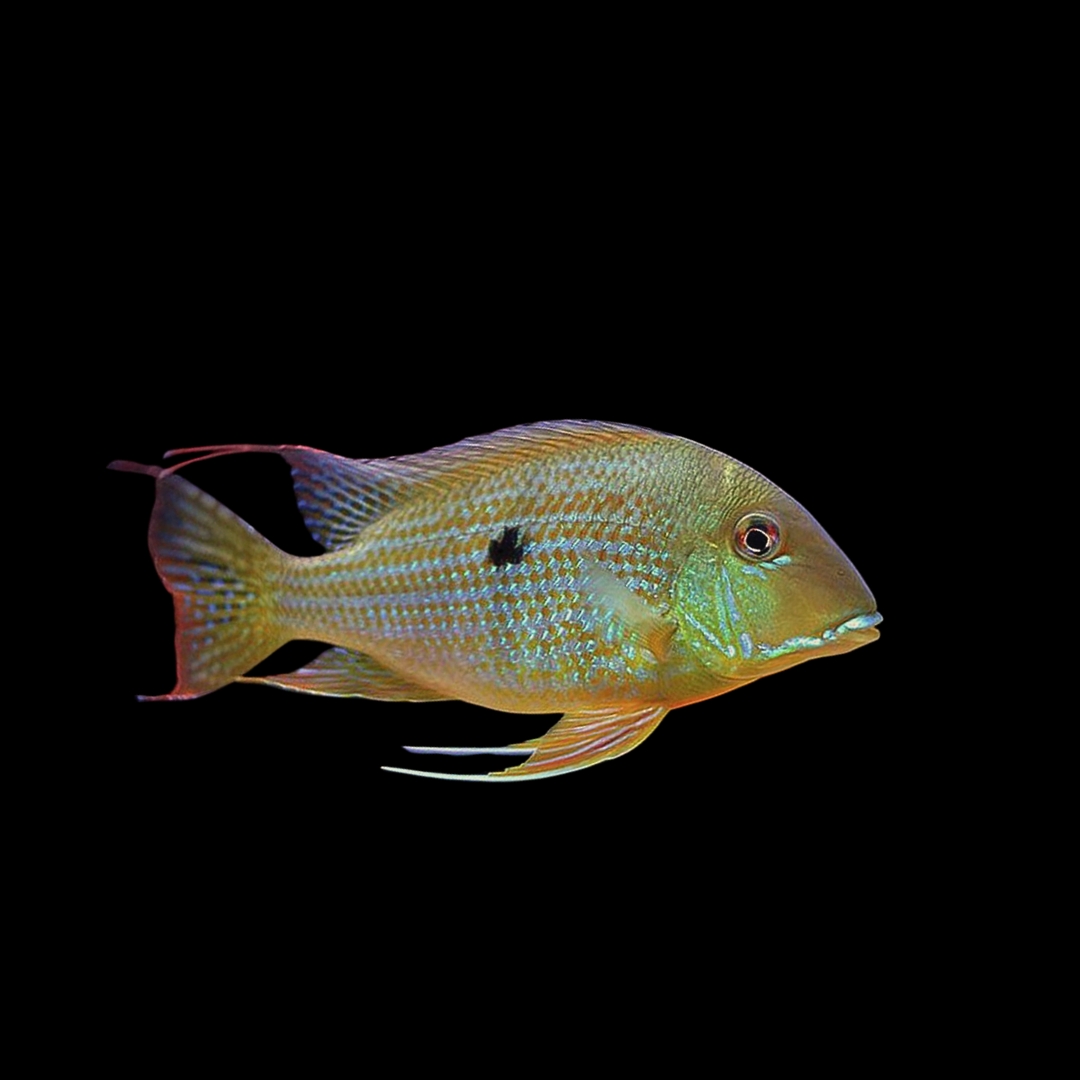
レッドゲオファーガスは、南米産のゲオファーガス類のうち、赤みのある体色や美しいヒレを持つ個体に日本の観賞魚市場で用いられてきた流通名です。単一の学名を指す名前ではなく、ゲオファーガス・アルティフロンス、かつてスリナメンシス名で扱われてきた近縁種、そしてレッドヘッドタパジョスとして親しまれるゲオファーガス・ピロケファルスなどが、この名で紹介されることがあります。最大の魅力は、細かな砂を口に含み、食べられるものだけを選り分けて砂を吐き出す「アースイーター」らしい行動です。水槽内では美しさだけでなく、底面を探りながら暮らす自然な仕草そのものが観察の楽しみになります。Red Geophagus is a Japanese aquarium trade name applied to reddish and attractive South American geophagine cichlids. It does not indicate a single scientific species, and fish sold under this name may include Geophagus altifrons, species historically traded under the name Geophagus surinamensis, and the Red Head Tapajos, Geophagus pyrocephalus. Their greatest appeal is the classic eartheater behavior: taking fine sand into the mouth, separating edible particles, and expelling the sand again. In the aquarium, their natural bottom-sifting behavior is as fascinating as their coloration.
レッドゲオファーガス、レッドヘッドタパジョス、ゲオファーガス、アースイーターRed Geophagus, Red Head Tapajos, Geophagus, Eartheater Cichlid
分類 / Family
シクリッド科に属する南米産ゲオファーガス類。文献や分類体系により、ゲオファーガス類は Geophaginae または Geophagini として扱われることがあります。South American geophagine cichlids in the family Cichlidae. Depending on the taxonomic treatment, these fishes may be referred to under Geophaginae or Geophagini.
英名 / English Name
Red Geophagus, Red Head Tapajos Eartheater, Orange Head Tapajos, South American Eartheater
分布 / Distribution
流通名としては、ブラジルのアマゾン川水系、タパジョス川水系、ギアナ地方などに由来する複数種を含みます。真正の G. surinamensis はスリナム川・サラマッカ川・マロウェイネ川周辺に分布し、レッドヘッドタパジョスの G. pyrocephalus はブラジルのタパジョス川水系に由来します。As a trade name, it can include several species from areas such as the Amazon basin in Brazil, the Tapajos drainage, and the Guianas. True G. surinamensis is associated with the Suriname, Saramacca, and Marowijne river systems, while the Red Head Tapajos, G. pyrocephalus, comes from the Tapajos River basin in Brazil.
最大体長 / Max Size
種類により差があり、おおむね16〜30cm前後です。レッドヘッドタパジョスは比較的小型で16〜20cm前後、アルティフロンスや大型の近縁種では25cmを超えることがあります。Size varies by species, generally around 16 to 30 cm. Red Head Tapajos is relatively small at about 16 to 20 cm, while Geophagus altifrons and larger related forms may exceed 25 cm.
寿命 / Lifespan
飼育環境が安定していれば、目安として8年前後、良好な環境ではさらに長期の飼育も期待できます。With stable care, a lifespan of around eight years is a reasonable guide, and longer keeping is possible in excellent conditions.
飼育環境 / Aquarium Environment
水槽サイズ / Tank Size
若魚や小型種の一時飼育では90cm規格水槽から始められますが、成魚の長期飼育では120cm規格水槽以上を基本に考えます。群れで泳がせる場合や、アルティフロンスのように大型化しやすいタイプでは、150cm〜180cm水槽、または120cmワイド水槽以上、水量300L以上を目安にすると安心です。Juveniles or smaller species can be started in a standard 90 cm tank, but adults are best kept in at least a standard 120 cm tank. For groups or larger forms such as Geophagus altifrons, a 150 to 180 cm aquarium or a wide 120 cm tank with roughly 300 liters or more is a safer long-term target.
水温 / Temperature
24〜29℃で飼育できます。日常管理では26〜28℃前後に安定させると、代謝と体調のバランスを取りやすくなります。They can be kept at 24 to 29°C. For everyday care, keeping the temperature stable around 26 to 28°C provides a good balance for metabolism and condition.
水質 / Water Quality
弱酸性〜中性、軟水〜中程度の硬度が扱いやすい範囲です。目安はpH 6.0〜7.5ですが、数値を極端に追うよりも、急変を避けて清潔な水を維持することが大切です。ワイルド個体では産地の水質に合わせた丁寧な導入を行います。Slightly acidic to neutral water with soft to moderately hard conditions is suitable. A practical range is pH 6.0 to 7.5, but stable, clean water is more important than chasing extreme numbers. Wild-caught fish should be acclimated carefully according to their origin.
レイアウト / Layout
角のない細かい砂を底床に使うことが最重要です。田砂やボトムサンドのような細砂を敷き、流木や表面の滑らかな石で隠れ家と産卵床を作ります。水草は掘り返されやすいため、活着系水草、鉢植え、石に固定したものが向いています。Fine, rounded sand is the most important element. Use fine aquarium sand and provide driftwood or smooth stones as shelters and potential spawning surfaces. Rooted plants may be uprooted, so epiphytes, potted plants, or plants fixed to stones are better choices.
注意点 / Precautions
粗い砂利、大粒の底床、角ばった素材、崩れやすいソイルは、口やエラを傷めたり、誤飲や水質悪化につながったりするため不向きです。砂を巻き上げる魚なので、外部式フィルターやオーバーフロー濾過では吸水口にスポンジを付け、インペラーへの砂の侵入を防ぎます。底面に汚れがたまりやすいため、週1回を目安に十分な換水と底床表面の掃除を行います。Coarse gravel, large substrate, sharp materials, and fragile soil substrates are unsuitable because they can injure the mouth or gills, be swallowed, or degrade water quality. Because these fish stir sand, use a sponge pre-filter on canister or sump intakes to protect the impeller. Waste collects easily on the bottom, so generous weekly water changes and surface cleaning of the substrate are recommended.
餌と給餌 / Feeding
餌の種類 / Diet
沈下性のシクリッド用ペレットや沈下性顆粒フードを主食にし、冷凍アカムシ、冷凍ブラインシュリンプ、ディスカスハンバーグ、細かく砕いたクリルなどを補助的に与えます。植物片や有機物も利用するため、スピルリナ入りフードや植物質を含む配合飼料を混ぜると栄養バランスを整えやすくなります。Use sinking cichlid pellets or sinking granules as the staple diet, supplemented with frozen bloodworms, frozen brine shrimp, discus-style frozen foods, and finely crushed krill. Since they also utilize plant material and organic matter, foods containing spirulina or vegetable ingredients help broaden the nutritional balance.
給餌のポイント / Feeding Tips
浮上性フードよりも、底に落ちて砂と一緒に探せる餌が向いています。1回量を多くするより、食べ切れる量を少量ずつ与えると水を汚しにくくなります。冷凍餌だけに偏ると消化不良や水質悪化につながるため、人工飼料を軸にしてローテーションします。Sinking foods are more suitable than floating foods because they match the fish’s bottom-feeding behavior. Offer small portions that are eaten quickly rather than large meals. Avoid relying only on frozen foods, as this can lead to digestive issues and poor water quality; rotate them around a quality prepared staple.
性格と混泳 / Temperament and Tank Mates
性格 / Temperament
南米シクリッドの中では比較的温和で、普段は底層を中心にゆったり泳ぎます。一方で、同種間では順位争いが起こり、繁殖期にはペアが産卵場所の周囲を強く守ります。臆病な面もあるため、落ち着ける隠れ場所と十分な遊泳スペースが必要です。They are relatively peaceful for South American cichlids and usually move calmly around the lower areas of the aquarium. However, hierarchy disputes occur among similar fish, and breeding pairs can strongly defend the spawning area. They can also be shy, so shelters and open swimming space are both important.
混泳の相性 / Compatibility
口に入らないサイズのカラシン、レインボーフィッシュ、温和な中型シクリッド、プレコ類などと相性が良いです。コリドラスなどの底層魚は混泳できる場合もありますが、餌場が重なるため広い底面積と十分な給餌が必要です。ゲオファーガス同士を少数だけで飼うと弱い個体に攻撃が集中しやすいため、単独、安定したペア、または5匹以上のグループ飼育が扱いやすい組み合わせです。Suitable tank mates include larger tetras, rainbowfish, peaceful medium cichlids, and plecos that cannot be swallowed. Bottom dwellers such as Corydoras may work, but feeding areas overlap, so a large footprint and careful feeding are necessary. Keeping only a few Geophagus together can focus aggression on the weakest fish, so a single fish, a stable pair, or a group of five or more is usually easier to manage.
病気と対策 / Diseases and Prevention
かかりやすい病気 / Common Diseases
白点病、細菌感染、外傷からの二次感染、消化不良、頭部や側線周辺のびらんに注意します。原因としては、水質悪化、硝酸塩の蓄積、底床による口やエラの傷、輸入直後の体力低下、栄養の偏りがよく関係します。Watch for ich, bacterial infections, secondary infections from injuries, digestive problems, and erosion around the head or lateral line. Common triggers include poor water quality, nitrate accumulation, mouth or gill injuries from unsuitable substrate, post-import stress, and nutritional imbalance.
対策と予防 / Prevention
予防の基本は、細かい砂、十分な濾過、定期換水、過密回避、偏りの少ない給餌です。新規導入個体は可能であれば別水槽で様子を見て、痩せ、白点、ヒレや口先の傷、呼吸の速さを確認してから本水槽へ移します。薬浴を行う場合は、酸欠と水質悪化に注意し、急激な水質変化を避けます。Prevention depends on fine sand, adequate filtration, regular water changes, avoiding overcrowding, and a balanced diet. If possible, quarantine new arrivals and check for thinness, white spots, fin or mouth injuries, and rapid breathing before moving them to the main aquarium. When medication is needed, maintain oxygen and water quality and avoid sudden changes.
増やし方(繁殖) / Breeding
雌雄の判別 / Sexing
若魚の雌雄判別は難しく、成魚でも確実ではありません。一般にオスはやや大きくなり、背ビレや尻ビレが伸び、発色が強く出る傾向があります。成熟したメスは産卵前に腹部がふくらみ、産卵管が見えることがあります。Sexing juveniles is difficult, and even adults are not always obvious. Males often grow slightly larger, develop longer dorsal and anal fins, and show stronger coloration. Mature females may become fuller before spawning, and the ovipositor may become visible.
繁殖形態 / Reproduction
ゲオファーガス類には口腔内保育を行う種が多く、卵を早い段階で口に含むタイプと、石や流木などの産卵床で卵を守った後、孵化前後の仔魚を口に含むタイプがあります。レッドヘッドタパジョスは後者に近いラーヴォフィル・マウスブルーダーとして知られます。Many Geophagus species practice mouthbrooding. Some take eggs into the mouth at an earlier stage, while others guard the eggs on a stone, driftwood, or similar spawning surface and then mouthbrood the larvae around hatching. Red Head Tapajos is known as a larvophilic mouthbrooder, closer to the latter pattern.
繁殖のポイント / Breeding Tips
若魚を複数匹育て、自然にできたペアを繁殖用水槽へ移す方法が安定します。平たい石や流木を用意し、pHを弱酸性〜中性、水温を27℃前後に安定させます。産卵後の親魚は神経質になりやすいため、過度な覗き込みやレイアウト変更は避けます。稚魚が自由遊泳を始めたら、孵化直後のブラインシュリンプや微細な粉末フードを少量ずつ与えます。The most reliable approach is to raise a group of juveniles and allow a natural pair to form. Provide flat stones or driftwood, keep the water slightly acidic to neutral, and stabilize the temperature around 27°C. After spawning, avoid excessive disturbance. Once the fry begin free swimming, offer newly hatched brine shrimp and fine powdered foods in small portions.
雑学と豆知識 / Trivia and Fun Facts
1. 「土を食べる魚」という名前 / 1. A fish named “earth eater”
学名の Geophagus は、ギリシャ語系の「大地」と「食べる」に由来する名前です。ただし、土そのものを栄養として食べるわけではありません。砂や泥を口に含み、その中に混ざった小さな無脊椎動物、植物片、有機物を選り分け、不要な砂を口やエラから出します。この一連の動きが、水槽内で見られる最大の見どころです。The name Geophagus comes from Greek-derived words meaning “earth” and “to eat.” They do not feed on earth itself. Instead, they take sand or mud into the mouth, separate tiny invertebrates, plant fragments, and organic matter, and expel the unwanted sand through the mouth or gills. This sequence is one of the finest behaviors to observe in the aquarium.
2. レッドゲオファーガスは一種類ではない / 2. Red Geophagus is not one species
「レッドゲオファーガス」は便利な流通名ですが、図鑑上は単一種名として扱うと誤解が生じます。昔からスリナメンシス名で売られてきた個体の中には別種や近縁種が含まれることがあり、現在はアルティフロンス系やレッドヘッドタパジョスなども、この名前の近い範囲で紹介されます。購入時は流通名だけで判断せず、学名、産地、入荷名、成魚写真を確認するのが理想です。“Red Geophagus” is a convenient trade name, but it can be misleading if treated as a single species name. Fish historically sold as Geophagus surinamensis may include other species or close relatives, and forms such as Geophagus altifrons and Red Head Tapajos may appear in the same general trade category. When buying, check the scientific name, locality, import name, and adult photographs whenever possible.
3. レッドヘッドタパジョスが学名を得るまで / 3. The long road to a scientific name
レッドヘッドタパジョスは、長い間 Geophagus sp. “Tapajos red head” などの未記載名で愛好家に親しまれてきました。2022年に Geophagus pyrocephalus として正式に記載され、タパジョス川水系の種であること、頭部に模様がなく、体側に9本の縦帯を持ち、尾ビレに縦方向の帯模様が現れることなどが識別点として示されました。種小名の pyrocephalus は、燃えるような頭部の色彩を思わせる印象的な名前です。The Red Head Tapajos was long known to aquarists under informal names such as Geophagus sp. “Tapajos red head.” It was formally described in 2022 as Geophagus pyrocephalus. Diagnostic points include its Tapajos River origin, the absence of head markings, nine vertical bars on the flanks, and longitudinal bands in the caudal fin. The species name pyrocephalus evokes the image of its fiery head coloration.
4. 砂は装飾ではなく生活の一部 / 4. Sand is part of their life
ゲオファーガス類にとって、細かい砂は見た目を整える飾りではなく、毎日の採餌行動を支える環境そのものです。粗い砂利では、口やエラを痛めるだけでなく、砂をふるう自然な行動も妨げられます。美しく育てるためには、発色を上げる餌だけでなく、魚が安心して底を探れる環境を整えることが欠かせません。For Geophagus-type fishes, fine sand is not just decoration; it is the foundation of daily feeding behavior. Coarse gravel can injure the mouth or gills and prevents natural sifting. Raising them beautifully is not only about color-enhancing food; it also depends on providing a bottom environment they can explore safely.
5. 日本国内で選ぶときの見方 / 5. Choosing fish in the Japanese trade
国内では、海外で繁殖されたブリード個体と、南米から輸入されるワイルド個体の両方が見られます。ブリード個体は入手しやすく状態が安定しやすい一方、ワイルド個体は産地や入荷時期によって体型、色、価格、コンディションに差が出ます。店頭では、痩せていないか、口先やエラに傷がないか、呼吸が荒くないか、底砂をついばむ自然な動きを見せるかを確認すると、導入後の失敗を減らしやすくなります。In Japan, both captive-bred fish from overseas farms and wild-caught imports from South America are available. Captive-bred fish are usually easier to obtain and more stable in condition, while wild fish vary by locality, season, coloration, price, and condition. At the shop, check that the fish is not thin, has no mouth or gill injuries, is not breathing heavily, and shows natural bottom-sifting behavior.
まとめ / Conclusion
レッドゲオファーガスは、名前だけで選ぶ魚ではなく、「どの種・どの産地に近い個体なのか」を知るほど魅力が深まる南米シクリッドです。赤みを帯びた体色や伸びるヒレの美しさに加え、砂を口に含んでふるい分ける行動、ペアで卵や稚魚を守る繁殖行動など、日々の観察に物語があります。図鑑として見るなら、この魚の本質は派手さだけでなく、底砂とともに暮らす生態そのものにあります。Red Geophagus is not a fish to choose by name alone; its appeal grows as you learn which species or locality a specimen is closest to. Beyond reddish colors and graceful fins, it offers a story in daily observation: sifting sand through the mouth, forming pairs, and protecting eggs or fry. In a reference-book sense, the heart of this fish is not only its beauty but its life as a sand-sifting cichlid.
飼育では、広めの水槽、角のない細かい砂、安定した濾過、定期的な換水をそろえることが基本です。この条件が整うと、レッドゲオファーガスは温和で存在感のある主役魚となり、成長とともに色彩、ヒレ、行動のすべてで水槽に奥行きを与えてくれます。砂の上をゆっくり進みながら餌を探す姿こそ、この魚を迎える最大の理由といえるでしょう。Successful care begins with a spacious aquarium, fine rounded sand, stable filtration, and regular water changes. When these conditions are met, Red Geophagus becomes a peaceful yet impressive centerpiece fish, adding depth to the aquarium through its color, fins, and behavior as it matures. Its slow, deliberate search for food across the sand is perhaps the best reason to keep it.
コメント