

解説 / Description
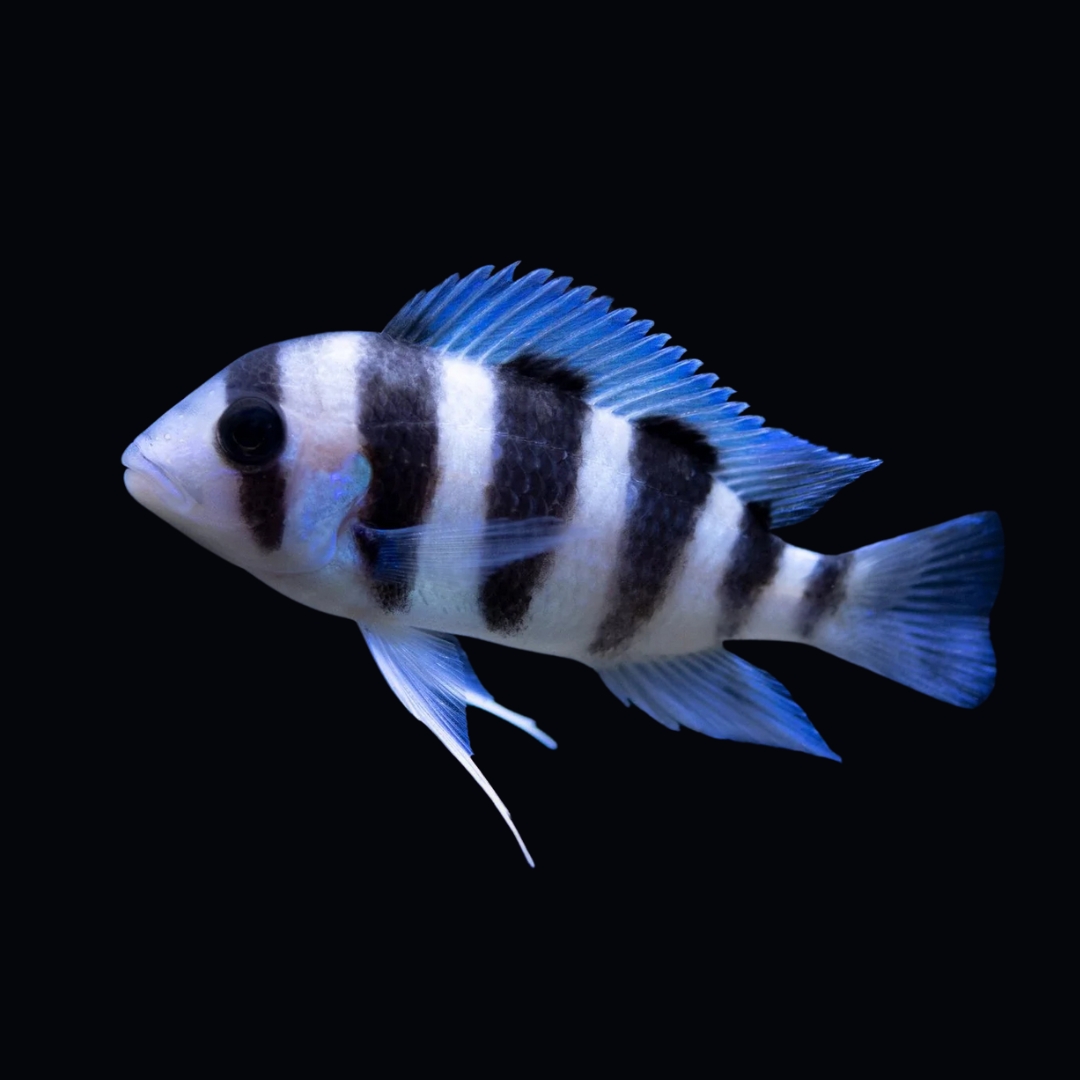
キフォティラピア属は、アフリカのタンガニーカ湖に固有の大型シクリッドです。日本では長く「フロントーサ」の名で親しまれてきましたが、現在の分類では主に北部のキフォティラピア・フロントーサと、南部のキフォティラピア・ギベローサを分けて扱います。白から淡青色の体に黒い縦帯が入り、成熟個体では前頭部が盛り上がる、堂々とした姿が魅力です。流通上は今でもギベローサの地域型が「フロントーサ」と呼ばれることがあるため、飼育や繁殖を考える際は、学名だけでなく産地名も確認することが大切です。 Cyphotilapia is a genus of large cichlids endemic to Lake Tanganyika in Africa. In Japan, these fish have long been known by the familiar trade name Frontosa, but current taxonomy generally separates the northern Cyphotilapia frontosa from the southern Cyphotilapia gibberosa. They are admired for their pale white to bluish bodies, bold black vertical bars, and the imposing forehead hump that develops in mature fish. Because some regional forms of C. gibberosa are still sold under the Frontosa trade name, both the scientific name and the locality name should be checked when keeping or breeding them.
基本情報 / Basic Information
| 学名 / Scientific Name | Cyphotilapia frontosa、Cyphotilapia gibberosa |
|---|---|
| 通称 / Common Name | フロントーサ、ギベローサ、ザイールブルー、ブルンジ、キゴマ、ザンビアンブルー、ムピンブエなどFrontosa, Gibberosa, Zaire Blue, Burundi, Kigoma, Zambian Blue, Mpimbwe |
| 分類 / Family | カワスズメ科、キフォティラピア属Family Cichlidae, genus Cyphotilapia |
| 英名 / English Name | Frontosa Cichlid, Humphead Cichlid, Gibberosa |
| 分布 / Distribution | アフリカ大陸東部のタンガニーカ湖固有。キフォティラピア・フロントーサは主に湖の北半部、キフォティラピア・ギベローサは主に南半部に分布するとされます。キゴマ産の7バンド個体群は、現在はフロントーサ内の地域変異として扱うのが一般的です。Endemic to Lake Tanganyika in eastern Africa. Cyphotilapia frontosa is generally associated with the northern half of the lake, while Cyphotilapia gibberosa is associated with the southern half. The seven-bar Kigoma form is generally treated as a regional form within C. frontosa. |
| 最大体長 / Max Size | フロントーサは約33cmに達する大型種として扱われます。ギベローサは標準体長で約21cmとされる資料もありますが、飼育計画では30cm級の大型シクリッドとして余裕を見ておくのが安全です。C. frontosa is treated as a large species reaching about 33 cm. Some references list C. gibberosa at about 21 cm standard length, but for aquarium planning it is safest to allow for a large cichlid in the 30 cm class. |
| 寿命 / Lifespan | 長期飼育では20年以上、条件が整えば25年級の飼育例も語られる長寿魚です。短期的な飼育ではなく、終生飼育を前提に迎えるべき魚です。They are long-lived fish, often discussed as capable of living for over 20 years and, under excellent care, potentially into the 25-year range. They should be kept with a lifelong commitment rather than as a short-term aquarium fish. |
飼育環境 / Aquarium Environment
| 水槽サイズ / Tank Size | 単独または少数飼育でも最低75ガロン、約280L以上を目安とし、可能であれば200cm以上の大型水槽を用意します。群れで自然に近く飼う場合は、240×60×60cm程度、約800L以上の水槽が望ましいです。日本の規格水槽で考えると、90cm規格水槽では長期飼育に不足しやすく、少数飼育でも120cmワイド水槽以上、理想的には180cm水槽から240cm水槽級を検討します。For a single fish or a small group, at least 75 gallons, about 280 L, should be considered the minimum, with tanks over 200 cm preferred whenever possible. For a more natural group setup, a tank around 240 x 60 x 60 cm, or about 800 L or more, is recommended. In Japanese aquarium terms, a standard 90 cm tank is usually insufficient for long-term care; even small groups should be planned around a 120 cm wide tank or larger, ideally 180 to 240 cm class tanks. |
|---|---|
| 水温 / Temperature | 22〜28℃。安定して飼うなら23〜27℃を目安にします。急な水温変化は避け、冬季輸送や水換え時の温度差にも注意します。 22 to 28°C, with 23 to 27°C as a practical stable range. Sudden temperature swings should be avoided, especially during winter shipping and water changes. |
| 水質 / Water Quality | pH8.0〜9.5のアルカリ性、GH179〜447ppm程度の硬水を目安に維持します。日本の水道水はそのままでは軟水寄りになりやすいため、タンガニーカ湖産シクリッド用のバッファー剤やミネラル添加剤、サンゴ砂、石灰岩などを活用して、硬度とpHを安定させます。アンモニアと亜硝酸は常に検出されない状態を保ち、硝酸塩もできるだけ低く、少なくとも50mg/L未満を目標にします。Maintain alkaline water around pH 8.0 to 9.5 and hard water around GH 179 to 447 ppm. Since Japanese tap water is often relatively soft, Tanganyikan cichlid buffers, mineral additives, coral sand, limestone, or similar materials should be used to stabilize hardness and pH. Ammonia and nitrite must always remain undetectable, and nitrate should be kept as low as possible, ideally below 50 mg/L. |
| レイアウト / Layout | 細かい砂を底床に敷き、角の取れた岩を組んで洞窟や隠れ家を作ります。大型のオスが休める広いシェルターと、メスや弱い個体が逃げ込める小さな隙間の両方を用意すると落ち着きやすくなります。深場の魚なので、照明は明るすぎない設定が向いています。強すぎる水流は避けつつ、酸素供給とろ過能力は十分に確保します。Use fine sand as the substrate and arrange smooth rocks to create caves and shelters. Provide both large shelters where dominant males can rest and smaller gaps where females and subordinate individuals can retreat. As a deep-water fish, they usually settle better under subdued lighting. Avoid excessively strong current, while maintaining good oxygenation and powerful filtration. |
| 注意点 / Precautions | 大型で排泄量が多いため、外部式フィルターの複数台運用やオーバーフロー水槽など、強力なろ過システムが必要です。水質悪化に敏感なので、十分に立ち上がった水槽へ導入し、週に30〜50%程度の水換えを基本に管理します。また、長寿魚であるため、引っ越しや生活環境の変化まで含めて長期計画を立ててください。飼いきれなくなっても、河川や湖沼へ放流してはいけません。Because they are large and produce a heavy waste load, powerful filtration is essential, such as multiple external canister filters or a sump-based overflow system. They are sensitive to poor water quality, so introduce them only to a fully matured aquarium and maintain regular water changes of about 30 to 50% per week. Since they are long-lived fish, long-term planning must include future moves and lifestyle changes. Never release unwanted fish into rivers, ponds, reservoirs, or natural waters. |
餌と給餌 / Feeding
| 餌の種類 / Diet | 主食は大型シクリッド用の高品質な沈下性ペレットやフレークを中心にします。補助的に、冷凍または活きたブラインシュリンプ、アカムシ、エビ、クリル、イサザアミなどを与えるとよいでしょう。栄養の偏りを防ぐため、スピルリナ入り飼料や細かくしたエンドウ豆など、植物質を含む餌も取り入れます。Use high-quality sinking pellets or flakes for large cichlids as the staple diet. Frozen or live brine shrimp, bloodworms, shrimp, krill, and mysid shrimp can be offered as supplements. To avoid nutritional imbalance, include foods with plant matter such as spirulina-based feeds or finely prepared peas. |
|---|---|
| 給餌のポイント / Feeding Tips | 自然下では薄暗い時間帯に小魚などを狙う捕食者とされるため、朝と夕方に少量ずつ与える方法が合います。食べ残しは水質悪化の原因になるため、数分で食べきる量に調整します。牛ハツや鶏肉など、哺乳類・鳥類由来の肉は脂質代謝の負担が大きいとされるため与えません。金魚やメダカなどのフィーダーフィッシュも、寄生虫や病原菌を持ち込むリスクがあるため常用は避けます。In the wild, they are predators that often feed during dimmer periods, so small feedings in the morning and evening work well. Adjust the amount so all food is eaten within a few minutes, as leftovers quickly degrade water quality. Avoid mammal or bird meats such as beef heart or chicken, as these are considered unsuitable and may burden fat metabolism. Feeder fish such as goldfish or medaka should not be used routinely because of the risk of introducing parasites and pathogens. |
性格と混泳 / Temperament and Tank Mates
| 性格 / Temperament | 大型シクリッドとしては比較的ゆったりしていますが、群れの中では優位性の順位ができ、成熟したオス同士では圧力が強くなることがあります。臆病な面もあり、急な照明変化や激しい物音、狭すぎる水槽ではストレスを受けやすくなります。For a large cichlid, they are relatively calm, but a dominance hierarchy forms within the group and mature males can exert strong pressure on one another. They can also be shy, and sudden changes in lighting, loud disturbances, or cramped tanks may cause stress. |
|---|---|
| 混泳の相性 / Compatibility | 口に入る小魚は捕食対象になるため避けます。混泳させる場合は、同じタンガニーカ湖産で水質条件が合い、サイズ差が大きすぎない魚を慎重に選びます。ただし、繁殖や純血統の維持を重視する場合は、産地違いやフロントーサとギベローサの混泳は避け、同一産地のコロニーで管理するのが望ましいです。Small fish that fit into their mouths may be eaten and should be avoided. Tank mates should be chosen carefully from Tanganyikan species that share similar water requirements and are not too different in size. If breeding or maintaining pure bloodlines is a priority, avoid mixing localities or keeping C. frontosa and C. gibberosa together; a same-locality colony is preferable. |
病気と対策 / Diseases and Prevention
| かかりやすい病気 / Common Diseases | 水質悪化によるエロモナス症状、白点病、外傷からの二次感染、消化不良、腹部膨満などに注意します。導入直後や輸送後は、ストレスと水質変化が重なり体調を崩しやすい時期です。Watch for bacterial problems associated with poor water quality, ich, secondary infections from injuries, digestive trouble, and abdominal bloating. The period just after introduction or shipping is especially risky because stress and water-parameter changes overlap. |
|---|---|
| 対策と予防 / Prevention | 最も重要なのは、安定した高アルカリ・硬水環境と清浄な水を保つことです。新規導入魚は可能であれば検疫し、混泳魚や活餌からの病原体持ち込みを避けます。餌の与えすぎ、急なpH変動、未成熟な水槽への導入は避けてください。大型魚なので、治療時の隔離水槽もあらかじめ用意できると安心です。The most important prevention is maintaining stable alkaline, hard, and clean water. Quarantine new fish when possible, and avoid introducing pathogens through tank mates or live feeder fish. Do not overfeed, avoid sudden pH swings, and never introduce them to an immature aquarium. Because they are large, having a suitable hospital tank available is also reassuring. |
増やし方(繁殖) / Breeding
| 雌雄の判別 / Sexing | 成熟したオスは体が大きくなりやすく、前頭部のこぶがより発達する傾向があります。ただし個体差があり、若魚では外見だけの判別は難しいです。確実性を高めるには、成熟後の体格、行動、繁殖管の確認などを組み合わせます。Mature males often become larger and tend to develop a more pronounced forehead hump, but there is individual variation and juveniles are difficult to sex by appearance alone. For better accuracy, combine mature body size, behavior, and examination of the vent area. |
|---|---|
| 繁殖形態 / Reproduction | メスが卵と稚魚を口内で守る、母性マウスブルーダーです。産卵数は多くなく、卵や稚魚を長期間保護する少産少死型の繁殖戦略をとります。メスが保育中にも細かな餌を取り込み、口内の稚魚に栄養を届けるような行動が知られています。They are maternal mouthbrooders, with the female protecting eggs and fry in her mouth. They produce relatively few eggs and invest heavily in protecting the young. Females are known to take in fine food particles during brooding, which may help nourish the fry inside the mouth. |
| 繁殖のポイント / Breeding Tips | 成熟まで時間がかかるため、幼魚から始める場合は数年単位で考えます。1匹の成熟オスに対して複数のメスを入れ、過度な追い回しを避ける構成が向きます。国内ブリーダーの間では、産卵後1〜2週間ほどでメスから卵や初期稚魚を取り出し、エッグタンブラーで人工孵化させる方法が用いられることがあります。ただし、メスや稚魚を傷つける危険があるため、初心者向けの作業ではありません。They take a long time to mature, so starting with juveniles requires planning over several years. A setup with one mature male and multiple females helps reduce excessive pressure on any single female. Some breeders in Japan remove eggs or early fry from the female after about one to two weeks and raise them in an egg tumbler. However, this can injure the female or fry if done poorly, so it is not a beginner-level procedure. |
雑学と豆知識 / Trivia and Fun Facts
| 1. フロントーサという名前に隠れた分類の歴史 / 1. The Taxonomic History Behind the Name Frontosa | キフォティラピア属の代表種であるフロントーサは1906年に記載され、長い間この属を代表する唯一の種のように扱われてきました。その後、2003年に南部個体群がギベローサとして記載され、アクアリウムでおなじみだった「フロントーサ」という呼び名の中に、実は複数の分類単位や地域変異が含まれていたことが整理されました。つまりこの魚は、見た目の美しさだけでなく、タンガニーカ湖の地理と進化の歴史をそのまま背負った存在でもあります。The representative species of the genus, C. frontosa, was described in 1906 and was long treated as if it were the sole member of the genus. In 2003, southern populations were described as C. gibberosa, clarifying that the familiar aquarium name Frontosa had been used for more than one taxonomic and regional form. In other words, these fish are not only beautiful aquarium subjects but also living examples of the geography and evolutionary history of Lake Tanganyika. |
|---|---|
| 2. 7本線のキゴマと、6本線の地域型 / 2. Seven-Bar Kigoma and Six-Bar Regional Forms | 多くの地域型では6本前後の黒い縦帯が目立ちますが、キゴマ産の個体群は7本線として知られ、古くから愛好家の注目を集めてきました。かつては別種の可能性も話題にされましたが、現在はフロントーサの地域変異として扱うのが一般的です。単なる模様の違いに見えても、採集地名がそのまま市場価値や繁殖管理に結びつく点が、タンガニーカ湖産シクリッドらしい奥深さです。Many regional forms show around six dark vertical bars, while the Kigoma population is famous among aquarists for its seven-bar pattern. Although it was once discussed as possibly distinct at the species level, it is now generally treated as a regional form of C. frontosa. What may look like a simple pattern difference is closely tied to locality, market value, and breeding management, which is part of the depth of Tanganyikan cichlid keeping. |
| 3. 深場のゆっくりした捕食者 / 3. A Slow Predator of Deeper Waters | キフォティラピア属は、俊敏に獲物を追い回すタイプの魚ではありません。自然下では深場の岩礁帯に暮らし、薄暗い時間帯にキプリクロミス類などの小魚を狙う捕食者とされています。アクアリウムで落ち着いた照明、広い遊泳空間、岩陰を用意すると本来の雰囲気が出やすいのは、この深場生活に由来します。Cyphotilapia are not high-speed chase predators. In nature, they inhabit deeper rocky zones and are regarded as predators that feed on small fishes such as Cyprichromis during dimmer periods. In aquaria, subdued lighting, open swimming space, and rocky shelters help bring out their natural atmosphere because these conditions reflect their deeper-water lifestyle. |
| 4. こぶは単なる飾りではない / 4. The Hump Is More Than Decoration | 成魚の前頭部に発達するこぶは、フロントーサの象徴的な特徴です。オスでより目立つ傾向がありますが、個体差もあり、こぶだけで性別を断定するのは危険です。暗い深場で同種や成熟度を認識するための視覚的な手がかりとして働いている可能性があり、堂々とした外見の裏には行動や進化の意味が隠れています。The forehead hump of mature fish is one of the most iconic traits of Frontosa-type cichlids. It tends to be more pronounced in males, but there is individual variation, so sex should not be determined from the hump alone. It may function as a visual cue for recognizing conspecifics or maturity in dim deeper habitats, meaning that this impressive feature has behavioral and evolutionary significance behind its appearance. |
| 5. 保全情報は断定しすぎないことが大切 / 5. Conservation Status Should Be Stated Carefully | フロントーサ(C. frontosa)は、IUCNレッドリストの2025年版で準絶滅危惧(NT)とされています。以前の低懸念(LC)という評価を掲載した資料もあるため、評価年と学名を併せて確認することが大切です。ギベローサ(C. gibberosa)は別種なので、この評価をそのまま当てはめることはできません。Cyphotilapia frontosa is listed as Near Threatened (NT) in the 2025 IUCN Red List. Older sources may still show its previous Least Concern (LC) assessment, so check both the assessment year and the scientific name. Cyphotilapia gibberosa is a separate species and should not automatically be assigned the same status. |
まとめ / Conclusion
キフォティラピア属は、タンガニーカ湖の深場に適応した大型シクリッドで、迫力ある姿と落ち着いた存在感を兼ね備えた魅力的な魚です。一方で、30cm級に育つ可能性、硬水・高アルカリ環境、大型水槽、強力なろ過、長い寿命など、導入前に考えるべき条件は決して軽くありません。 Cyphotilapia are impressive large cichlids adapted to the deeper zones of Lake Tanganyika, combining a powerful appearance with a calm presence. At the same time, they require serious planning before purchase, including the possibility of 30 cm-class size, hard alkaline water, a large aquarium, powerful filtration, and a long lifespan.
美しい地域変異を楽しむ魚であるほど、産地名と学名を大切にし、無計画な交雑や放流を避ける姿勢が求められます。十分な設備と長期的な覚悟を持って向き合えば、キフォティラピア属はアクアリウムの中でタンガニーカ湖の深い時間と進化の物語を感じさせてくれる、特別な存在になってくれるでしょう。 Because these fish are appreciated for beautiful regional variation, locality names and scientific names should be respected, and unplanned hybridization or release must be avoided. With proper equipment and long-term commitment, Cyphotilapia can become a truly special presence in the aquarium, offering a glimpse into the deep time and evolutionary story of Lake Tanganyika.

気になる道具や飼い方を見つけてみませんか?
 アイのアクアグッズ案内アカヒレの仲間に合わせる飼育用品|無加温・混泳・繁殖の水槽とろ過道具の特徴や使い方、選ぶときのポイントをアイが紹介します。記事はコチラ →
 アイのアクアグッズ案内海水魚初心者の必需品|水槽・人工海水・比重計・水質検査道具の特徴や使い方、選ぶときのポイントをアイが紹介します。記事はコチラ →
さまざまな飼育テーマをご紹介。リンク先の記事には広告・商品紹介が含まれます。
案内・紹介記事一覧へ →参考文献・参照資料
本記事では、キフォティラピア属の分類、分布、生息環境、飼育条件、繁殖、病気・管理上の注意点を確認するため、店舗・通販サイト、個人ブログ、まとめサイトを除外し、学術論文、公的・準公的データベース、魚類学・魚病学の専門書を中心に参照しています。
1. Takahashi, T. and Nakaya, K. (2003). New species of Cyphotilapia (Perciformes: Cichlidae) from Lake Tanganyika, Africa. Copeia, 2003(4), 824-832.
C. frontosaとC. gibberosaを区別する分類学的根拠、側線間鱗列数、体高、歯数、分布域など、記事内の分類・地域変異・識別ポイントの中核資料です。DOI: 10.1643/IA03-148.1
2. Boulenger, G. A. (1906). Fourth contribution to the ichthyology of Lake Tanganyika. Report on the collection of fishes made by Dr. W. A. Cunnington during the Third Tanganyika Expedition, 1904-1905. Transactions of the Zoological Society of London, 17, 537-601.
Paratilapia frontosa、現在のCyphotilapia frontosaの原記載に関わる古典的文献です。学名の由来や分類史を記述する際の一次資料として位置づけています。
3. Fricke, R., Eschmeyer, W. N. and van der Laan, R. (eds.). Eschmeyer’s Catalog of Fishes. California Academy of Sciences.
有効名、命名者、原記載、シノニム確認に用いる魚類分類の基礎データベースです。記事内の学名・分類表記の確認資料として参照しています。Eschmeyer’s Catalog of Fishes
4. Froese, R. and Pauly, D. (eds.). FishBase: Cyphotilapia frontosa.
C. frontosaの分布、淡水・底生遊泳性、最大サイズ、分類、保全情報を確認するための参照資料です。FishBase species summary
5. Froese, R. and Pauly, D. (eds.). FishBase: Cyphotilapia gibberosa.
C. gibberosaの南部個体群としての分布、タイプ標本の採集深度、形態診断、最大サイズ、IUCN評価状況の確認に用いています。FishBase species summary
6. IUCN (2025). Red List version 2025-2, Table 7.
C. frontosaの評価がLCからNTへ変更されたことを確認できるIUCN公式一覧です。IUCN 2025-2 評価変更一覧(PDF)
7. Edmond, J. M., Stallard, R. F., Craig, H., Craig, V., Weiss, R. F. and Coulter, G. W. (1993). Nutrient chemistry of the water column of Lake Tanganyika. Limnology and Oceanography, 38(4), 725-738.
タンガニーカ湖の高アルカリ性・安定した水質環境を理解するための湖沼学文献です。記事内のpH、硬水、急変を避けた水質管理の背景資料として参照しています。DOI: 10.4319/lo.1993.38.4.0725
8. Coulter, G. W. (ed.) (1991). Lake Tanganyika and Its Life. Oxford University Press.
タンガニーカ湖の地形、湖沼環境、生物相を総合的に扱う専門書です。深場の岩礁帯、湖の安定した環境、タンガニーカ湖産魚類の生態を説明する際の基礎資料として選定しています。
9. Konings, A. (1998, revised editions). Tanganyika Cichlids in Their Natural Habitat. Cichlid Press.
タンガニーカ湖産シクリッドの自然下での生息環境、地域変異、行動、アクアリウムでの扱いを確認するための専門書です。流通名や地域変異を扱う際は、学術論文・データベースと照合した補助資料として使用します。
10. Loiselle, P. V. (1985). The Cichlid Aquarium. Tetra Press.
シクリッド類のマウスブルーディング、繁殖行動、飼育下での基本管理を支える専門書です。キフォティラピア属の繁殖説明では、種固有の情報と合わせて、シクリッド一般の繁殖理解を補う資料として扱っています。
11. Noga, E. J. (2010). Fish Disease: Diagnosis and Treatment, 2nd ed. Wiley-Blackwell.
白点病、細菌感染、寄生虫、輸送・水質悪化によるストレスなど、観賞魚の病気と予防の一般原則を確認するための魚病学専門書です。記事内の病気と対策は、種固有の断定を避け、このような魚病学の基本に基づいて記述しています。




コメント