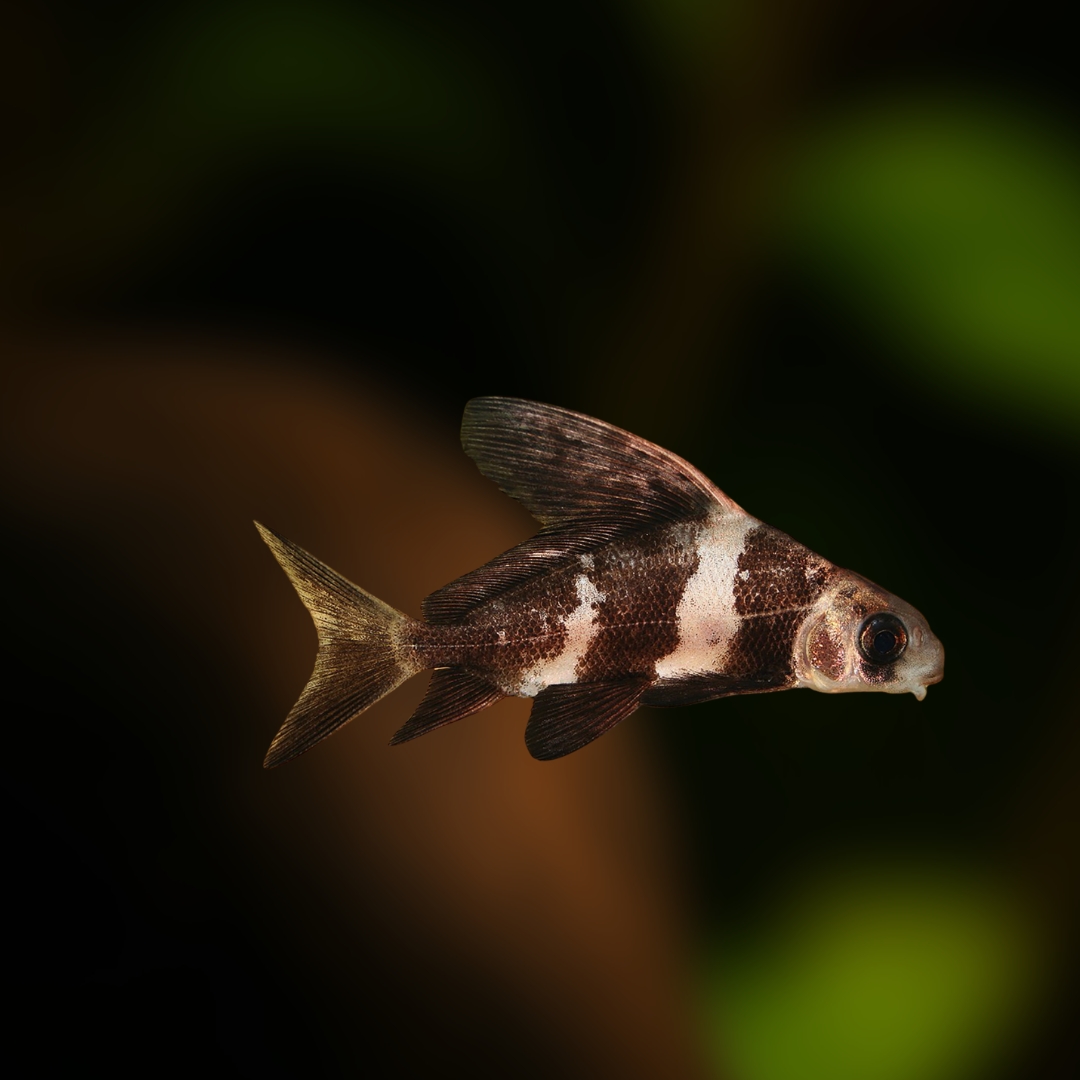
エンツユイは、中国の長江水系に分布する大型の淡水魚です。幼魚のころは高く伸びた三角形の背びれと、体側に入る太い斜めの帯模様がよく目立ち、観賞魚店では「中国ハイフィンバンデッドシャーク」などの名前で販売されることもあります。ただし、名前に「シャーク」と付いていてもサメの仲間ではなく、コイ目サッカー科に属する底生傾向の強い魚です。The Chinese sucker is a large freshwater fish native to the Yangtze River basin in China. Juveniles are especially striking, with a tall triangular dorsal fin and bold diagonal bands along the body. In the aquarium trade, it is often sold under names such as Chinese high-fin banded shark. Despite the word “shark,” it is not related to true sharks; it is a bottom-oriented cypriniform fish in the sucker family, Catostomidae.
最大体長については資料により差があり、FishBaseでは最大68.0cm TL・最大体重4.0kgとされています。一方で、観賞魚の流通解説や飼育資料では1m級に達する可能性がある大型魚として扱われることが多いため、家庭で飼う場合は「かなり大型化する冷水・温帯性の魚」と考えて準備するのが安全です。幼魚のかわいらしい姿だけで購入すると、将来的な水槽サイズ、水温管理、給餌管理で行き詰まりやすい魚でもあります。Reported maximum size varies by source. FishBase lists a maximum length of 68.0 cm TL and a maximum published weight of 4.0 kg, while many aquarium-trade references treat it as a very large fish that may approach or exceed the one-meter class under some conditions. For practical husbandry, it is safest to plan for a large, cool-water or temperate fish rather than a small community-tank species. Buying it only for its attractive juvenile appearance often leads to problems later with space, summer temperature control, and feeding competition.
基本情報 / Basic Information
学名 / Scientific Name
Myxocyprinus asiaticus
通称 / Common Name
エンツユイ、中国サッカー、中国ハイフィンバンデッドシャーク、チャイニーズセイルフィンサッカーChinese sucker, Chinese high-fin banded shark, Chinese sailfin sucker, wimple carp
分類 / Family
条鰭綱 コイ目 サッカー科 エンツユイ亜科。エンツユイ亜科およびエンツユイ属は単型として扱われます。Class Actinopterygii, order Cypriniformes, family Catostomidae, subfamily Myxocyprininae. The subfamily and genus are treated as monotypic.
英名 / English Name
Chinese sucker / Chinese high-fin banded shark / Chinese sailfin sucker
分布 / Distribution
中国の長江水系。歴史的には岷江、雅礱江、嘉陵江などの支流にも関連して記録されますが、野生個体群は減少しており、保全上の注意が必要な種です。Native to the Yangtze River basin in China. Historical records also involve tributaries such as the Min, Yalong, and Jialing rivers, but wild populations have declined and the species is of conservation concern.
最大体長 / Max Size
FishBaseでは最大68.0cm TL・最大体重4.0kg。観賞魚資料ではより大きくなる可能性が紹介されることもあるため、飼育計画では60cm級以上の大型魚として扱い、余裕を持った水槽や池を想定します。FishBase lists a maximum of 68.0 cm TL and a maximum published weight of 4.0 kg. Because aquarium sources often describe the species as potentially larger, husbandry plans should treat it as a large fish of at least the 60 cm class and allow generous space in a very large aquarium or pond.
寿命 / Lifespan
適切な環境では長寿で、20年以上の飼育を前提に考えたい魚です。元資料では野生下で25年以上生きることがあるとされています。A long-lived species that should be planned for as a 20-plus-year commitment under suitable conditions. The source material notes that wild individuals may live for more than 25 years.
飼育環境 / Aquarium Environment
水槽サイズ / Tank Size
導入直後の5〜10cm前後の幼魚であれば、管理の行き届いた60cm規格水槽から始められる場合があります。ただし、これは一時的な育成環境です。成長後は最低でも120cm以上、できれば180cm以上の大型水槽、または水量の大きい屋内外の池を前提にします。奥行きと遊泳スペースが不足すると、体形の乱れや慢性的なストレスにつながりやすいため、将来の移動先を決めてから迎えるのが安全です。Juveniles around 5–10 cm can sometimes be started in a well-managed standard 60 cm aquarium, but this is only a temporary grow-out setup. Adults should be planned for in at least a 120 cm tank, preferably 180 cm or larger, or in a high-volume indoor or outdoor pond. Insufficient footprint and swimming space can contribute to chronic stress and poor body condition, so the long-term home should be planned before purchase.
水温 / Temperature
長期飼育では15〜24℃前後を目安にします。FishBaseの環境情報では15〜28℃とされていますが、観賞魚としては冷涼で酸素の多い水を好む魚として扱うのが無難です。日本の夏は水温が上がりやすいため、屋内水槽では水槽用クーラーや強いエアレーションを用意し、高温状態を長く続けないことが重要です。For long-term care, aim for roughly 15–24°C. FishBase gives an environmental range of 15–28°C, but in aquarium practice this species is best treated as a cool, oxygen-loving fish. In Japanese summers, indoor aquaria can overheat easily, so an aquarium chiller and strong aeration are often necessary to avoid prolonged high-temperature stress.
水質 / Water Quality
弱酸性から弱アルカリ性まで適応しますが、中性付近で清潔な水を保つのが扱いやすいです。目安はpH6.5〜7.5前後。大型化するうえ、酸素要求量も高いため、強力なろ過、十分なエアレーション、定期的な水換えでアンモニア、亜硝酸、硝酸塩、有機物の蓄積を抑えます。It can adapt from slightly acidic to slightly alkaline water, but clean, near-neutral water is easiest to manage. A practical target is around pH 6.5–7.5. Because this fish becomes large and benefits from oxygen-rich water, use strong filtration, generous aeration, and regular water changes to control ammonia, nitrite, nitrate, and organic waste.
レイアウト / Layout
底をよく探る魚なので、角の鋭い砂利よりも、田砂や細かい丸みのある砂利など、口を傷つけにくい底床が向いています。流木や岩は使えますが、遊泳スペースを圧迫しないよう配置します。水流は弱すぎないほうがよく、外部フィルターや水流ポンプで川のような適度な流れを作ると状態を保ちやすくなります。Because it forages along the bottom, use fine sand or smooth rounded gravel rather than sharp substrates that may damage the mouth. Driftwood and rocks can be used, but they should not crowd the swimming area. Moderate current from external filtration or a circulation pump helps recreate a river-like environment and supports good condition.
注意点 / Precautions
最も注意したいのは、幼魚の見た目に反して大型化すること、そして一般的な熱帯魚より低めの水温管理が必要になることです。CITESについては、2026年6月時点で主要データベース上、附属書掲載種としては確認できません。ただし、中国国内では保護対象として扱われる種であり、日本で流通する個体は人工繁殖由来として販売されるものを選ぶのが望ましいです。The most important points are that the fish grows far larger than its juvenile appearance suggests and that it requires cooler water than typical tropical community fish. As of June 2026, major databases do not show it as a CITES Appendix-listed species. However, it is treated as a protected species in China, so aquarium specimens should be selected from legal captive-bred sources.
餌と給餌 / Feeding
餌の種類 / Diet
底生生物や藻類、デトリタスなどを利用する雑食性です。飼育下では沈下性の人工飼料、コイ用飼料、プレコ用や草食魚用のタブレット、スピルリナ系フード、冷凍アカムシ、イトミミズ、ゆでたホウレン草などを組み合わせます。コケだけで長期維持できる魚ではありません。It is an omnivore that browses benthic organisms, algae, and detritus. In captivity, offer a varied diet of sinking pellets, koi food, algae or herbivore tablets, spirulina-based foods, frozen bloodworms, tubifex-type foods, and blanched leafy greens such as spinach. It should not be expected to survive long-term on algae alone.
給餌のポイント / Feeding Tips
採食はおっとりしており、底を探りながら少しずつ食べます。混泳水槽では餌が届く前に他魚に食べられ、気づかないうちに痩せることがあります。沈下性の餌を複数か所に落とす、消灯前に与える、同居魚を少なくするなど、確実に口に入る工夫が必要です。It feeds slowly, browsing the bottom bit by bit. In community tanks, faster fish may consume the food before it reaches the Chinese sucker, leading to unnoticed weight loss. Use sinking foods in several spots, feed near lights-out when appropriate, and avoid excessive competition so the fish reliably gets enough food.
性格と混泳 / Temperament and Tank Mates
性格 / Temperament
性格はとても温和で、他魚を積極的に攻撃するタイプではありません。幼魚期は臆病に感じられることもあり、落ち着いた環境では底層から中層をゆったり泳ぎながら餌を探します。Its temperament is very peaceful, and it is not the type of fish that actively attacks tank mates. Juveniles may appear shy, and in a calm environment they browse slowly from the bottom to midwater.
混泳の相性 / Compatibility
攻撃性の面では混泳しやすい魚ですが、給餌競争には弱いです。コイ、金魚、温帯性の大型魚など、低めの水温に合う穏やかな魚となら候補になりますが、餌を奪う活発な底棲魚や、ひれをつつく魚は避けます。長期育成を重視するなら、単独飼育または同種を中心にした広い水槽・池での飼育が最も管理しやすいです。Aggression is rarely the issue; feeding competition is. Peaceful, cool-water companions such as koi, goldfish, or other temperate large fishes may be possible in sufficiently large systems, but active bottom feeders and fin-nipping species should be avoided. For long-term growth and reliable feeding, single-species or Chinese-sucker-centered setups in a large aquarium or pond are easiest to manage.
病気と対策 / Diseases and Prevention
かかりやすい病気 / Common Diseases
特定の観賞魚病だけが突出して多いというより、水温上昇、酸欠、水質悪化、餌不足、口や体表の傷から体調を崩しやすい魚です。白点病、細菌性の体表トラブル、ひれの傷み、痩せ、成長不良には注意します。Rather than being associated with one unique aquarium disease, this species is prone to decline when exposed to overheating, low oxygen, poor water quality, underfeeding, or injuries to the mouth and body surface. Watch for ich, bacterial skin problems, fin damage, weight loss, and poor growth.
対策と予防 / Prevention
予防の中心は、低めの安定した水温、十分な酸素、強いろ過、定期的な水換え、口を傷つけにくい底床、そして確実な給餌です。導入時は水合わせを丁寧に行い、痩せている個体、ひれが裂けている個体、呼吸が荒い個体は避けます。薬浴が必要な場合は、冷水性・温帯性の大型魚であることを考慮し、急な昇温や過密な隔離を避けます。Prevention centers on cool and stable water, high oxygen, strong filtration, regular water changes, mouth-safe substrate, and reliable feeding. Acclimate new fish carefully and avoid individuals that are thin, have damaged fins, or show labored breathing. If medication is needed, remember that this is a large cool-water fish and avoid sudden warming or cramped quarantine conditions.
増やし方(繁殖) / Breeding
雌雄の判別 / Sexing
成熟した繁殖期のオスは赤みが強くなり、頭部や体表に追星を出すとされます。メスは暗い紫色を帯び、体側に赤みのある広い帯状の領域が出るとされます。ただし、一般的な幼魚や若魚の段階で確実に雌雄を見分けるのは困難です。During the breeding season, mature males are described as becoming more reddish and developing breeding tubercles on the head and body. Females may become darker purple with a broad reddish area along the side. However, reliable sexing of juveniles and subadults in the aquarium trade is difficult.
繁殖形態 / Reproduction
野生下では、長江本流などから流れのある上流域へ移動して産卵する遡河回遊的な淡水魚とされています。卵は水流や産卵環境の影響を受けるため、一般的な家庭水槽で簡単に再現できる繁殖形態ではありません。In the wild, it is considered a potamodromous freshwater spawner, migrating within the river system from main channels toward flowing upstream areas to spawn. Its spawning conditions are closely tied to river flow and habitat, making reproduction difficult to reproduce in ordinary home aquaria.
繁殖のポイント / Breeding Tips
家庭水槽での繁殖は現実的ではありません。中国では人工繁殖や養殖が行われ、観賞魚として流通する個体も人工繁殖由来とされるものが中心です。飼育者にとっての目標は繁殖よりも、十分な水量、低めの水温、餌不足を避ける管理によって長期飼育を成立させることです。Breeding in home aquaria is not realistic. Artificial propagation and aquaculture are practiced in China, and aquarium specimens are generally sold as captive-bred. For hobbyists, the practical goal is not breeding but long-term maintenance through ample water volume, cool conditions, and prevention of feeding failure.
雑学と豆知識 / Trivia and Fun Facts
1. 「サメ」ではなく、サッカー科の魚 / 1. A sucker, not a shark
英名に「shark」と入るため誤解されがちですが、エンツユイは軟骨魚類のサメではありません。分類上はコイ目サッカー科に属する硬骨魚類で、下向きの厚い口で底面を探るように餌を取ります。幼魚の高い背びれがサメの背びれを連想させるため、観賞魚市場で印象的な名前が使われてきたと考えられます。Because many trade names contain the word “shark,” this fish is often misunderstood. It is not a cartilaginous shark but a bony cypriniform fish in the sucker family. Its thick, downward-facing mouth is used to browse the bottom. The dramatic dorsal fin of juveniles likely inspired the shark-like trade names.
2. 幼魚と成魚で印象が大きく変わる魚 / 2. A fish that changes dramatically with age
幼魚期のエンツユイは、白黒に近い帯模様と高い背びれによって非常に目立ちます。しかし成長すると模様は薄れ、背びれの相対的な高さも落ち着き、より流線型の大型魚らしい姿へ変化します。元資料で触れられている「逆みにくいアヒルの子」という表現は、幼魚期の観賞価値が特に高く見られ、成長とともに落ち着いた姿へ変わる本種の特徴をよく表しています。Juveniles are visually striking, with bold pale-and-dark bands and a very tall dorsal fin. As they grow, the bands fade, the dorsal fin becomes proportionally less dramatic, and the body becomes more streamlined. The “ugly duckling in reverse” phrase mentioned in the source material captures how the most eye-catching appearance occurs in youth, followed by a more subdued adult form.
3. 学名の由来 / 3. Meaning of the scientific name
属名Myxocyprinusは、FishBaseではギリシャ語のmyxos、つまり粘液と、ラテン語のcyprinus、つまりコイに由来すると説明されています。直訳すれば「粘液のあるコイ」のような意味合いで、ぬめりを持つコイ目魚類らしい印象を含んだ名前です。種小名asiaticusは「アジアの」を意味し、東アジアを代表する特異なサッカー科魚類であることを示しています。FishBase explains the genus name Myxocyprinus as deriving from Greek myxos, meaning mucus, and Latin cyprinus, meaning carp. It can be understood loosely as a “mucus carp,” evoking the slimy-bodied character of many cypriniform fishes. The species name asiaticus means Asian, fitting this unusual East Asian member of the sucker family.
4. 保全状況と流通の見方 / 4. Conservation and trade perspective
IUCNの評価ではエンツユイはVulnerable、つまり危急種とされます。長江水系でのダム建設、環境改変、水質悪化、乱獲などが減少要因として語られてきました。CITES附属書掲載種としては確認できないため、国際取引上の扱いだけを見ると厳格なCITES対象魚とは異なりますが、それは「野生で安全」という意味ではありません。愛好家にとって大切なのは、合法的な人工繁殖個体を選び、最後まで飼いきれる設備で迎えることです。The IUCN assessment treats the Chinese sucker as Vulnerable. Dams, river alteration, pollution, overfishing, and collection pressure have all been discussed as factors in its decline. It is not confirmed as a CITES Appendix-listed species, so its international-trade treatment differs from strictly CITES-controlled species; however, that does not mean the wild population is secure. Hobbyists should choose legal captive-bred fish and keep them only when they can provide lifelong housing.
まとめ / Conclusion
エンツユイは、幼魚期のかわいらしさと成魚の迫力をあわせ持つ、とても魅力的な大型淡水魚です。サメのような名前で売られることがありますが、実際には長江水系に由来するサッカー科の魚で、底を探りながら餌を食べる穏やかな性格をしています。The Chinese sucker is a fascinating large freshwater fish, combining a charming juvenile appearance with the presence of a powerful adult. Although it is often sold under shark-like names, it is actually a sucker-family fish from the Yangtze basin, with a peaceful temperament and a bottom-browsing feeding style.
飼育の核心は、大型化を前提にした広い水槽や池、15〜24℃前後を意識した涼しい水温、強いろ過と酸素供給、そして餌負けさせない給餌管理です。小さな幼魚を一般的な熱帯魚感覚で迎える魚ではありませんが、十分な設備と長期計画を用意できる飼育者にとっては、東アジアの河川生態を感じさせてくれる特別な存在になります。Successful care depends on planning for a large adult size, providing a spacious aquarium or pond, maintaining cool water around 15–24°C, using strong filtration and oxygenation, and preventing feeding competition. It should not be purchased as a small tropical community fish, but for aquarists with the right equipment and long-term plan, it can become a remarkable ambassador of East Asian river life.



 ポチップ
ポチップ



コメント