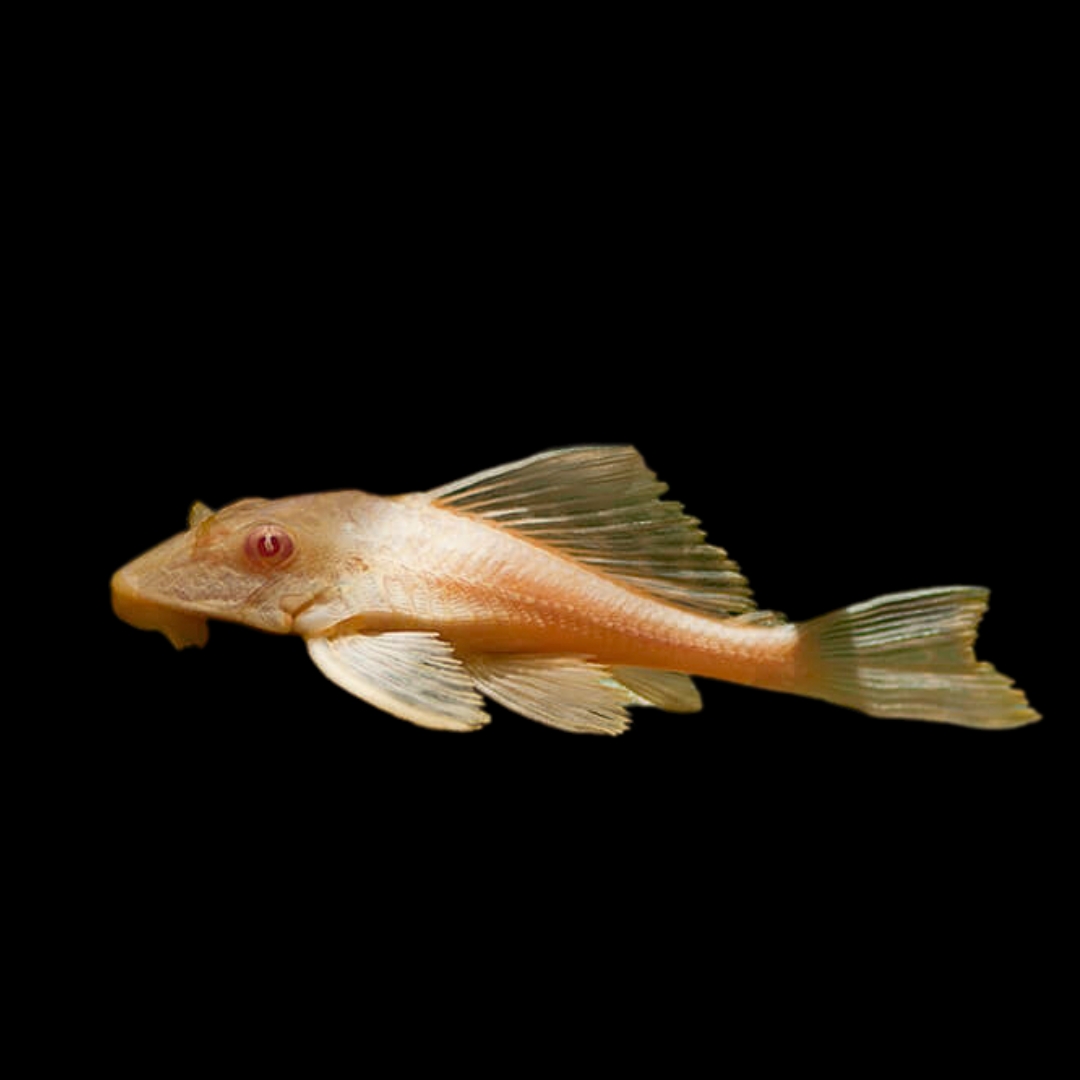
アルビノセルフィンプレコは、南米のアマゾン川・オリノコ川水系に分布するセルフィンプレコ、Pterygoplichthys gibbiceps のアルビノ品種として流通する大型プレコです。クリーム色から淡い黄色の体色、血管が透けて見える赤い瞳、そして帆船の帆のように大きく広がる背びれが大きな魅力です。幼魚は数cmで販売されることが多く、コケ取り能力の高さから水槽の「お掃除役」として親しまれますが、成長すると35cm以上になることも珍しくありません。終生飼育には大型水槽、強力なろ過、十分な流木、そして最後まで飼い切る責任が欠かせません。The Albino Sailfin Pleco is a large pleco sold as an albino form of Pterygoplichthys gibbiceps, a sailfin pleco species native to the Amazon and Orinoco drainage systems of South America. It is admired for its creamy to pale yellow body, red eyes caused by visible blood vessels, and a large sail-like dorsal fin. Juveniles are often sold at only a few centimeters and are popular as algae-eating “clean-up” fish, but they commonly grow beyond 35 cm in aquariums. Long-term care requires a large tank, powerful filtration, plenty of driftwood, and a firm commitment to keeping the fish for its entire life.
ナマズ目 ロリカリア科Order Siluriformes, Family Loricariidae
英名 / English Name
Albino Sailfin Pleco, Albino Leopard Pleco
分布 / Distribution
原種 Pterygoplichthys gibbiceps は、南米のアマゾン川中・上流域およびオリノコ川水系に分布するとされます。日本で流通するアルビノ個体の多くは、東南アジアなどの養殖場で繁殖されたブリード個体です。The wild form, Pterygoplichthys gibbiceps, is reported from the middle and upper Amazon and Orinoco basins of South America. Most albino individuals sold in Japan are commercially bred fish, often produced in Southeast Asian farms.
最大体長 / Max Size
原種では全長50cm程度の記録があり、飼育下でも35〜45cm前後まで成長することがあります。近縁のセルフィンプレコ類にはさらに大型になる種もいるため、販売名だけで小型種と判断しないことが大切です。The wild species is recorded at around 50 cm total length, and aquarium specimens may reach about 35–45 cm. Some related sailfin plecos can grow even larger, so the trade name alone should never be used to assume a small adult size.
寿命 / Lifespan
飼育下で10〜15年以上が目安です。良好な環境ではさらに長生きする可能性があります。Usually around 10–15 years in aquariums, and potentially longer under excellent conditions.
飼育環境 / Aquarium Environment
水槽サイズ / Tank Size
幼魚期は60cm規格水槽でも一時的に飼育できますが、成長が非常に早いため終生飼育には最低でも120cm規格水槽、理想的には150cm以上の大型水槽を用意します。高さよりも底面積の広さが重要です。Juveniles can be kept temporarily in a standard 60 cm tank, but they grow very quickly. For lifelong care, use at least a standard 120 cm tank, ideally 150 cm or larger. A wide bottom area is more important than height.
水温 / Temperature
23〜27℃前後を中心に管理すると安定しやすく、22〜29℃程度までは飼育範囲として扱われます。夏は30℃以上で酸欠になりやすいため冷却対策を行い、冬は大型水槽に対応したヒーターで安定させます。A stable range around 23–27°C is recommended, with about 22–29°C often treated as a practical aquarium range. In summer, temperatures above 30°C can reduce oxygen levels, so cooling measures may be needed. In winter, use a heater suitable for a large tank.
水質 / Water Quality
弱酸性から中性のpH 6.5〜7.5を中心に管理します。原種はpH 6.0〜8.0程度の範囲にも適応するとされますが、大量の排泄物で水質が悪化しやすいため、アンモニアや亜硝酸を蓄積させない管理が重要です。Maintain slightly acidic to neutral water, centered around pH 6.5–7.5. The wild species is reported to tolerate roughly pH 6.0–8.0, but heavy waste production means ammonia and nitrite must not be allowed to accumulate.
レイアウト / Layout
流木を必ず複数配置します。流木は隠れ家、視線を遮る仕切り、そして消化を助ける繊維質の供給源として重要です。アルビノ個体は強い光に敏感になりやすいため、照明を避けられる日陰やシェルターも用意します。鋭い角のある石や流木は、体表やひれを傷つけないよう注意して選びます。Provide several pieces of driftwood. Driftwood serves as shelter, a visual barrier that reduces territorial stress, and a source of fiber that supports digestion. Because albino individuals can be sensitive to strong light, shaded hiding places are especially important. Avoid sharp rocks or wood that may damage the body or fins.
注意点 / Precautions
「小さなコケ取り魚」として購入すると、すぐに水槽が手狭になります。強い吸盤口で水草を抜いたり柔らかい葉をかじったりするため、水草レイアウト水槽には向きません。また、飼えなくなっても野外へ放流してはいけません。沖縄などで問題化しているのは主にセルフィンプレコ類、マダラロリカリアなどを含む Pterygoplichthys 属の外来個体群であり、本記事のアルビノ品種そのものに限定される話ではありませんが、飼育放棄のリスクは同じです。Do not treat this fish as a small algae eater; it will quickly outgrow modest tanks. Its strong sucker mouth may uproot plants or rasp soft leaves, so it is poorly suited to planted aquascapes. Never release it into the wild. In places such as Okinawa, invasive populations mainly involve sailfin pleco relatives, including species such as vermiculated sailfin catfish within the genus Pterygoplichthys. The issue is not limited to the albino strain in this article, but the risk from abandonment is the same.
餌と給餌 / Feeding
餌の種類 / Diet
主食はプレコ用の植物性沈下性タブレットやスピルリナ系フードです。補助としてズッキーニ、キュウリ、茹でたほうれん草、グリーンピースなどの野菜を与えるとよいでしょう。冷凍赤虫やブラインシュリンプ、肉食魚用ペレットなどの動物性の餌も食べますが、与えすぎると肥満や水質悪化につながるため、少量にとどめます。Use vegetable-based sinking pleco tablets and spirulina foods as the staple diet. Supplement with vegetables such as zucchini, cucumber, blanched spinach, and peas. Animal-based foods such as frozen bloodworms, brine shrimp, or carnivore pellets may be accepted, but they should be offered sparingly to avoid obesity and water pollution.
給餌のポイント / Feeding Tips
幼魚期は水槽内のコケもよく食べますが、成長するとコケだけでは栄養が不足します。夜行性の傾向があるため、消灯前に沈下性の餌を入れると食べやすくなります。食べ残しは水質悪化の原因になるため、翌朝確認して取り除きます。Juveniles often graze on aquarium algae, but algae alone will not support a growing fish. Because this species is mainly nocturnal, offer sinking foods shortly before lights out. Remove uneaten food the next morning to prevent water pollution.
性格と混泳 / Temperament and Tank Mates
性格 / Temperament
基本的には温和で、他魚を積極的に捕食するタイプではありません。ただし、同種や体格の近い底棲魚に対しては縄張り意識を見せることがあります。体が大きくなるほど、意図せず他魚を押しのける力も強くなります。Generally peaceful and not an active predator of tank mates. However, it can show territorial behavior toward its own kind or similarly shaped bottom-dwelling fish. As it grows, it can also displace smaller fish simply by its size and strength.
混泳の相性 / Compatibility
中型から大型魚との混泳に向きますが、ディスカス、エンゼルフィッシュ、ポリプテルスなど体表粘液が多い魚には夜間に吸い付くことがあるため注意します。小型プレコ類との混泳では、体格差によるストレスを避けるため、多数の流木と隠れ家を用意します。ネオンテトラのような小型魚を捕食する魚ではありませんが、成魚の水槽規模や水流、給餌量は小型魚向けの環境とは合わないことがあります。It can live with many medium to large fish, but care is needed with fish that produce abundant body mucus, such as discus, angelfish, and bichirs, because the pleco may rasp their sides at night. When keeping it with smaller plecos, provide many pieces of driftwood and hiding places to reduce stress from size differences. It is not a typical predator of small fish such as neon tetras, but the tank size, flow, and feeding required for adults may not suit delicate small-fish setups.
病気と対策 / Diseases and Prevention
かかりやすい病気 / Common Diseases
強健な魚ですが、水質悪化が続くとヒレに小さな穴が開くピンホール状の症状、細菌感染、痩せ、消化不良などが見られることがあります。輸入直後や購入直後の個体では、輸送ストレスや絶食による衰弱にも注意します。This is a hardy fish, but poor water quality can lead to pinhole-like fin damage, bacterial infections, weight loss, and digestive problems. Newly imported or recently purchased individuals may also be weakened by shipping stress or fasting.
対策と予防 / Prevention
大型フィルターによる強力なろ過、定期的な換水、底面にたまる糞の掃除を徹底します。流木を入れて消化を助け、植物性の餌を中心にした食事にします。薬浴が必要な場合は、ナマズ類が薬品に敏感なことを考慮し、使用量や薬剤の種類を慎重に選びます。Use powerful filtration, perform regular water changes, and remove waste from the bottom. Provide driftwood to support digestion and keep the diet mainly plant-based. If medication is needed, choose the type and dosage carefully because catfish can be sensitive to some treatments.
増やし方(繁殖) / Breeding
雌雄の判別 / Sexing
外見だけでの判別は容易ではありません。成熟個体では体格、頭部の幅、腹部のふくらみ、胸びれ周辺の発達などが手がかりになることがありますが、確実な判別には経験が必要です。Sexing by appearance is not easy. In mature fish, body shape, head width, abdominal fullness, and development around the pectoral fins may provide clues, but reliable identification requires experience.
繁殖形態 / Reproduction
セルフィンプレコ類は、自然下では川岸や池の土手に穴を掘り、その巣穴の中で産卵する習性が知られています。産卵後は雄が卵を守るペアレンタルケアを行うとされます。Sailfin plecos are known to dig burrows in river or pond banks and spawn inside them. After spawning, the male is reported to guard the developing eggs as part of parental care.
繁殖のポイント / Breeding Tips
家庭用水槽での繁殖は非常に困難です。商業養殖では、泥池の斜面を利用して自然産卵を促す方法が利用されます。大型水槽に流木や土管を入れるだけでは、必要な巣穴環境を再現しにくい点を理解しておきましょう。Breeding in home aquariums is extremely difficult. Commercial farms use mud ponds with suitable banks to encourage natural spawning. Simply adding driftwood or tubes to a large aquarium usually does not reproduce the necessary tunnel-spawning environment.
雑学と豆知識 / Trivia and Fun Facts
1. 学名に込められた「こぶ頭」の意味 / 1. The meaning behind its scientific name
Pterygoplichthys gibbiceps の種小名「gibbiceps」は、ラテン語で「こぶ」や「隆起」を意味する語と「頭」を意味する語に由来します。頭部から背びれにかけて盛り上がるような体型を、名前そのものが表しているのです。属名も、翼のようなひれ、装甲、魚を連想させる語から成り、骨板に覆われた体と大きな背びれを持つこの仲間らしい名前になっています。The specific name “gibbiceps” is derived from Latin roots associated with a hump or swelling and the head. In other words, the name reflects the raised profile from the head toward the dorsal fin. The genus name also evokes fin-like wings, armor, and fish, fitting a pleco with bony plates and a dramatic sail-like dorsal fin.
2. アルビノの赤い瞳は「赤い色素」ではありません / 2. The red eyes are not caused by red pigment
アルビノ個体ではメラニン色素の生成が大きく抑えられるため、体は淡いクリーム色から黄色味を帯び、目には血管の色が透けて赤く見えます。美しい外見の一方で、強い照明に敏感になりやすい点には配慮が必要です。水槽では明るさを抑え、流木やシェルターで安心できる暗がりを作ってあげると落ち着きやすくなります。In albino individuals, melanin production is strongly reduced, producing a creamy to yellowish body. The eyes appear red because blood vessels are visible through tissues that lack dark pigment. This attractive appearance also means the fish can be sensitive to strong light, so shaded areas created with driftwood and shelters are important.
3. 低酸素に強い補助的な空気呼吸能力 / 3. Auxiliary air breathing in low-oxygen conditions
セルフィンプレコの仲間は、低酸素環境で水面から空気を取り込み、補助的に酸素を利用できる魚として知られています。原産地では乾季に水位が下がり、水たまりのような環境に取り残されることがあります。このような厳しい環境に耐える力が、観賞魚としての丈夫さにつながる一方、野外に放流された場合には定着力の高さにもつながってしまいます。Sailfin plecos are known for their ability to take in air at the surface and use it as an auxiliary oxygen source in low-oxygen conditions. In their native range, dry seasons can leave fish in shrinking, oxygen-poor pools. This resilience makes them hardy aquarium fish, but it also contributes to their ability to establish populations when released into non-native waters.
4. 世界の観賞魚流通を支える泥池養殖 / 4. Mud-pond farming supports global aquarium trade
日本で見かけるアルビノセルフィンプレコの多くは、海外の養殖場で増やされた個体です。本種や近縁のセルフィンプレコ類は、土手に巣穴を掘る繁殖習性を持つため、商業養殖では泥池の斜面を利用して繁殖させる方法が用いられます。家庭用水槽で繁殖が難しい魚が店頭では比較的安価に流通する背景には、この大規模な養殖技術と国際的な物流網があります。Most Albino Sailfin Plecos seen in Japanese shops are farm-bred overseas. This species and related sailfin plecos use bank burrows for spawning, so commercial farms use mud ponds with suitable slopes. The reason a fish that is difficult to breed at home can be sold relatively cheaply is the existence of large-scale aquaculture and international distribution networks.
5. 沖縄で問題になっているのは「セルフィンプレコ類」 / 5. In Okinawa, the issue involves sailfin pleco relatives
沖縄県の一部河川で問題になっている外来プレコは、アルビノセルフィンプレコそのものと断定するより、マダラロリカリアなどを含むセルフィンプレコ類、すなわち Pterygoplichthys 属の外来個体群として捉えるのが適切です。これらは土手に巣穴を掘ることで浸食や濁りを招いたり、底生環境に影響を与えたりすることが懸念されています。現在、日本でプレコ類は特定外来生物には指定されていませんが、だからこそ飼育者の放流防止意識が重要です。The invasive pleco problem in some Okinawan rivers is best understood as involving sailfin pleco relatives within the genus Pterygoplichthys, including species such as vermiculated sailfin catfish, rather than assuming it is specifically the albino strain described here. Their burrowing can contribute to erosion and turbidity, and their grazing may affect benthic habitats. Plecos are not currently listed as specified invasive alien species under Japanese law, which makes responsible prevention of release by keepers especially important.
6. 食材として見直されることもある「厄介者」 / 6. A troublesome invader sometimes reconsidered as food
南米の一部地域では、プレコ類は古くから食用魚として扱われてきました。日本でも外来種問題の啓発を目的に、捕獲個体を食材として活用する試みが紹介されることがあります。泥臭さの処理には工夫が必要ですが、身は弾力のある白身とされ、調理法次第では未利用資源としての可能性が語られています。ただし、これはあくまで放流後の対処の一例であり、最も大切なのは野外に出さないことです。In parts of South America, plecos have long been used as food fish. In Japan, efforts to use captured invasive individuals as food have sometimes been introduced as a way to raise awareness. Although odor control requires careful preparation, the flesh is described as firm and white, suggesting potential as an underused resource. Still, this is only a response after release has occurred; the most important action is preventing release in the first place.
まとめ / Conclusion
アルビノセルフィンプレコは、赤い瞳と淡い体色、大きく広がる背びれを持つ非常に魅力的な大型プレコです。コケ取り能力が高く、幼魚期は丈夫で飼いやすく見えますが、成長後のサイズと排泄量は一般的な小型熱帯魚とはまったく別物です。終生飼育を考えるなら、120cm以上の水槽、強力なろ過、豊富な流木、適切な餌を最初から計画しておくことが大切です。The Albino Sailfin Pleco is a highly attractive large pleco with red eyes, pale coloration, and an impressive sail-like dorsal fin. It is an excellent algae grazer and may appear easy to keep when young, but its adult size and waste production are very different from those of small community fish. For lifelong care, plan from the beginning for a tank of at least 120 cm, powerful filtration, abundant driftwood, and an appropriate diet.
一方で、本種や近縁のセルフィンプレコ類は、飼育放棄によって外来種問題を引き起こす力を持つ魚でもあります。丈夫で長生きする魚だからこそ、購入前に最終サイズと必要設備を確認し、最後まで水槽内で飼い切る覚悟を持ちましょう。正しい知識と責任ある飼育があってこそ、アルビノセルフィンプレコの美しさと存在感を長く楽しむことができます。At the same time, this species and related sailfin plecos can contribute to serious invasive-species problems when abandoned. Because it is hardy and long-lived, its final size and required equipment must be understood before purchase, and the owner must be prepared to keep it in an aquarium for its entire life. With proper knowledge and responsible care, the beauty and presence of the Albino Sailfin Pleco can be enjoyed for many years.
U.S. Geological Survey, Nonindigenous Aquatic Species Database. “Leopard Pleco (Pterygoplichthys gibbiceps) Species Profile.”
原産分布、23〜27℃の熱帯淡水域、夜行性、藻類や死骸も食べる食性、観賞魚放流による導入経路、近縁種同様に泥岸の巣穴で卵を保護すると推定される繁殖記述の確認に使用。 https://nas.er.usgs.gov/queries/FactSheet.aspx?speciesID=2637
Orfinger, A. B. and Goodding, D. D. 2018. “The Global Invasion of the Suckermouth Armored Catfish Genus Pterygoplichthys…” Zoological Studies, 57: 7. Pterygoplichthys 属の世界的侵入、観賞魚由来の導入、低酸素耐性・硬い体表・高い定着力など、外来種リスクの背景整理に使用。 https://pmc.ncbi.nlm.nih.gov/articles/PMC6517723/
Collazos-Lasso, L. F., et al. 2018. “Induced reproduction of the sailfin pleco, Pterygoplichthys gibbiceps…” AACL Bioflux. P. gibbiceps の人為的繁殖誘導研究、商業的な繁殖・養殖の可能性、家庭水槽での繁殖が特殊環境を要することの補助資料として使用。 https://bioflux.com.ro/docs/2018.724-729.pdf



 アイのアクアグッズ案内アフリカンシクリッドの飼育用品|水槽・ろ過・底砂・岩組み・餌の選び方道具の特徴や使い方、選ぶときのポイントをアイが紹介します。記事はコチラ →
 アイのアクアグッズ案内水槽の底砂の選び方|砂・砂利の違いとおすすめ商品道具の特徴や使い方、選ぶときのポイントをアイが紹介します。記事はコチラ →



コメント