

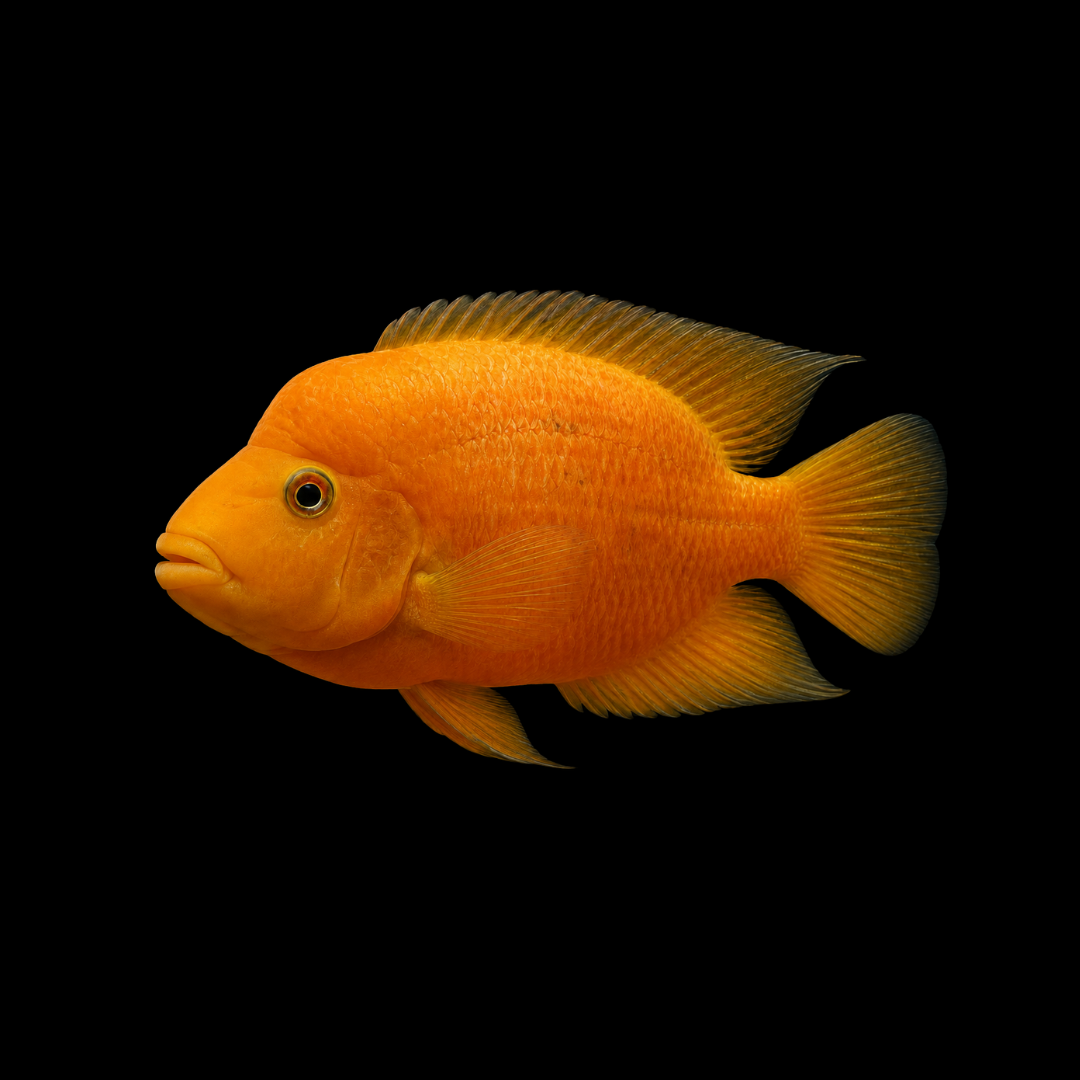
解説 / Description
フラミンゴシクリッドは、ニカラグアを中心とする中央アメリカの淡水域に分布する大型のシクリッドです。日本では白桃色、黄色、オレンジ色から赤橙色までの鮮やかな個体が「フラミンゴシクリッド」として親しまれ、英語圏ではミダス王にちなむ「Midas cichlid」の名で広く知られています。すべての個体は暗色の体色で成長を始めますが、遺伝的にゴールド型となる個体では、成長途中に黒色素胞が失われ、下層の黄色から橙色の色彩が目立つようになります。繁殖期には雌雄とも頭部に隆起が発達することがあり、一般にはオスでより大きく目立ちます。非常に縄張り意識が強いため混泳には慎重さが必要ですが、飼育者の接近や給餌に明確な反応を示す個体も多く、単独飼育でも多彩な行動を観察できる魚です。 The Flamingo Cichlid is a large Central American cichlid distributed mainly in freshwater habitats of Nicaragua and adjacent parts of Central America. In Japan, brightly colored individuals ranging from pale peach and yellow to vivid orange-red are commonly sold as “Flamingo Cichlids,” while the species is widely known in English as the Midas cichlid, a name inspired by the legendary King Midas. All individuals begin life with dark coloration, but genetically gold individuals later lose dark melanophores, allowing yellow to orange coloration beneath to become conspicuous. Both sexes can develop a nuchal swelling around breeding condition, although it is generally larger and more conspicuous in males. The species is strongly territorial and requires caution with tank mates, but many individuals respond clearly to the keeper’s approach and feeding activity, providing a wide range of behaviors even when housed alone.
基本情報 / Basic Information
| 学名 / Scientific Name | Amphilophus citrinellus (Günther, 1864) |
|---|---|
| 通称 / Common Name | フラミンゴシクリッド、ミダスシクリッドMidas cichlid |
| 分類 / Family | 条鰭綱・シクリッド目(Cichliformes)・シクリッド科(Cichlidae)・アンフィロフス属(Amphilophus)Class Actinopterygii, Order Cichliformes, Family Cichlidae, Genus Amphilophus |
| 英名 / English Name | Midas cichlid |
| 分布 / Distribution | 中央アメリカ。主にニカラグア湖、マナグア湖とその周辺水系に分布し、コスタリカの一部河川にも見られます。ニカラグアの火口湖にも本種または近縁のミダスシクリッド類が生息しますが、湖ごとに複数の固有種が記載されています。特にアポヨ湖の個体群は複数種に整理されているため、同湖を単純にフラミンゴシクリッド1種の分布地として扱うのではなく、ミダスシクリッド種群として区別して考える必要があります。Central America. Amphilophus citrinellus occurs mainly in Lakes Nicaragua and Managua and their surrounding drainages, with populations also reported from some rivers in Costa Rica. Midas cichlids also occur in Nicaraguan crater lakes, but several endemic species have been described from individual lakes. Lake Apoyo in particular contains multiple recognized Amphilophus species, so its assemblage is better treated as part of the wider Midas cichlid species complex rather than simply listed as a locality for A. citrinellus alone. |
| 最大体長 / Max Size | 飼育下では全長30cm前後まで成長する大型種で、個体や系統によっては30cmを超えることがあります。測定法によって数値が変わるため、標準体長と全長の記録を単純に比較しないことが大切です。A large species that commonly reaches around 30 cm in total length in aquaria, with some individuals or strains growing larger. Published size figures can differ depending on whether standard length or total length is used, so values measured by different methods should not be compared directly. |
| 寿命 / Lifespan | 飼育下での平均寿命を一律に示せる信頼性の高い資料は十分ではありません。大型シクリッドとして長期飼育を前提に、成魚になってからも維持できる水槽と設備を用意して迎えることが大切です。Reliable data supporting a single average captive lifespan for this species are limited. It is best treated as a long-term aquarium commitment, with a tank and filtration system that can continue to support the fish after it reaches full adult size. |
飼育環境 / Aquarium Environment
| 水槽サイズ / Tank Size | 成魚の終生飼育では120cm規格水槽(約240L)以上を基本目安とします。大型のオスや、より安定した水質とメンテナンス性を重視する場合は、120cmワイド水槽(約300〜450Lクラス)以上が安心です。90cm規格水槽では若魚期の管理は可能でも、成魚では旋回空間と水量の余裕が不足しやすくなります。For long-term adult care, a 120 cm standard aquarium of roughly 240 L should be regarded as a practical minimum target. Large males and keepers seeking greater water stability and easier maintenance will benefit from a 120 cm wide aquarium in the roughly 300–450 L class or larger. A standard 90 cm tank may serve for juveniles but usually offers too little turning room and water volume for a mature specimen. |
|---|---|
| 水温 / Temperature | 24〜28℃を基本に安定させます。短期的にはより広い温度域に耐えることがありますが、急変を避け、年間を通じて一定に保つことが重要です。 Maintain a stable 24–28°C for routine aquarium care. The species can tolerate a broader range for short periods, but sudden changes should be avoided and long-term stability is more important than chasing a precise number. |
| 水質 / Water Quality | 中性〜弱アルカリ性を中心に、目安としてpH7.0〜8.5程度。日本では地域によって軟水の水道水が多いため、換水直後の数値だけでなく、飼育中にpHが下がり続けていないかも確認します。緩衝力が不足する場合は、サンゴ砂やカキ殻をろ材の一部に少量用いる方法もありますが、必須ではありません。pHと硬度を測定しながら急変を避けて調整してください。大型で排泄量が多いため、強力な生物ろ過と定期換水が重要です。Neutral to moderately alkaline water is suitable, with roughly pH 7.0–8.5 as a practical range. Because soft tap water is common in many parts of Japan, check not only the value immediately after a water change but also whether pH steadily declines between maintenance sessions. If buffering capacity is insufficient, a small amount of coral sand or oyster shell can be used in the filtration system, but this is not universally required. Adjust gradually while monitoring pH and hardness. Powerful biological filtration and regular water changes are essential because this large fish produces substantial waste. |
| レイアウト / Layout | 大型の石や太い流木を使う場合は、魚が底砂を掘っても崩れないよう水槽底面に安定させて配置します。底砂は薄敷き、またはメンテナンスしやすい構成が向きます。水草は掘り返されたり噛まれたりしやすいため、植栽中心のレイアウトには不向きです。ヒーターはヒーターカバーを使うか、魚が直接接触しにくい位置へ設置し、吸水パイプや配線も大型魚の衝突に耐えられるよう固定します。If large rocks or heavy wood are used, place them securely so that they cannot collapse when the fish excavates the substrate. A shallow substrate or other maintenance-friendly arrangement is practical. Planted layouts are generally unsuitable because plants are easily uprooted or damaged. Protect heaters with a guard or position them where the fish cannot strike them directly, and secure intake pipes, fittings and cables against the force of a large cichlid. |
| 注意点 / Precautions | 非常に力が強く、縄張り意識も強い魚です。ガラス蓋や機材を動かす個体もいるため、蓋は確実に固定し、割れやすい機材を水槽内にむき出しで置かないようにします。水槽内へ手を入れる際は繁殖期の咬みつきにも注意が必要です。また、pHだけを数値合わせで急変させるより、アンモニアと亜硝酸を検出させず、硝酸塩の蓄積を抑えた安定した環境を維持することを優先してください。This is a powerful and highly territorial fish. Some individuals will move lids or strike equipment, so covers should be secured and fragile devices should not be left exposed. Be cautious when placing hands in the aquarium, especially during breeding. Rather than making abrupt chemical adjustments simply to reach a target pH, prioritize stable conditions with undetectable ammonia and nitrite and controlled nitrate accumulation. |
餌と給餌 / Feeding
| 餌の種類 / Diet | 雑食性です。主食は大型シクリッド向けの高品質な人工飼料とし、副食としてクリル、エビ類、冷凍赤虫、昆虫由来の餌などを組み合わせると栄養の幅を持たせられます。野生では付着藻類、巻貝、水生昆虫、底生動物、小魚など幅広い餌資源を利用します。生きた餌魚の常用は、栄養の偏りや病原体持ち込みの危険があるため避けた方が安全です。Omnivorous. A high-quality pellet formulated for large cichlids should form the staple diet, supplemented with foods such as krill, shrimp, frozen bloodworms and insect-based items for variety. In nature, Midas cichlids consume a broad range of resources including aufwuchs, snails, aquatic insects, benthic organisms and small fish. Routine use of live feeder fish is best avoided because of nutritional imbalance and the risk of introducing pathogens. |
|---|---|
| 給餌のポイント / Feeding Tips | 成魚は1日1〜2回を目安に、短時間で食べ切れる量を与えます。食欲が強く、要求されるまま与えると肥満や水質悪化につながりやすいため、体型と糞の状態を見ながら量を調整します。カロテノイドは体色を構成する色素の一部ですが、飼料中のカロテノイド量を増やしても皮膚の色が変化しなかった給餌実験があります。ゴールド型への変化には遺伝的な基盤があるため、発色用飼料だけで暗色型をゴールド型へ変えることはできません。Feed adults about once or twice daily, offering only what can be consumed promptly. Their strong appetite can easily lead to overfeeding, obesity and deteriorating water quality, so portions should be adjusted according to body condition and waste production. Carotenoids contribute to skin pigmentation, but feeding trials found that increased dietary carotenoids did not alter skin color. The transition to the gold morph has a genetic basis, so color-enhancing food alone cannot convert a dark morph into a gold morph. |
性格と混泳 / Temperament and Tank Mates
| 性格 / Temperament | 非常に縄張り意識が強く、同種・他種を問わず攻撃的になることがあります。個体差は大きいものの、成熟すると水槽全体を自分の縄張りとして扱う個体も珍しくありません。一方で、飼育者が近づいたときや給餌時には水槽前面へ寄ってくるなど、周囲の変化に対して明確な反応を示す個体が多く見られます。底砂を運ぶ、石の位置を変えるといった巣作り・探索行動も盛んです。Highly territorial and potentially aggressive toward both conspecifics and other species. Individual variation is considerable, but mature fish may treat the entire aquarium as their territory. At the same time, many individuals respond conspicuously to changes around the aquarium, often approaching the front glass when the keeper arrives or food is offered. Digging, moving substrate and rearranging objects are also normal and frequent behaviors. |
|---|---|
| 混泳の相性 / Compatibility | 単独飼育が最も安全です。小型魚、エビ類、コリドラス類などは捕食・攻撃対象になりやすく、同サイズの大型魚でも深刻な闘争が起こる可能性があります。大型水槽で同程度の体格を持つ魚との混泳例はありますが、成功は個体の性格、水槽面積、隠れ場所、導入順序に強く左右されます。ペアであっても常に安全とは限らないため、繁殖を狙う場合は仕切り板を準備し、いつでも隔離できる状態にしておくことが重要です。Solitary housing is the safest option. Small fish, shrimp and bottom-dwelling community fish can be attacked or eaten, and even similarly sized large fish may suffer severe aggression. Mixed-species arrangements are sometimes maintained in very large aquaria, but success depends heavily on individual temperament, floor space, visual barriers and introduction order. Even a bonded pair is not guaranteed to remain peaceful, so breeding setups should always include a divider or other means of immediate separation. |
病気と対策 / Diseases and Prevention
| かかりやすい病気 / Common Diseases | 強健な部類ですが、水質悪化や慢性的なストレスが続くと、頭部に陥没が生じる頭部穴あき症状、腸管の鞭毛虫症、細菌感染による潰瘍や全身症、白点病などが問題になります。シクリッドの頭部穴あき症状では鞭毛虫が病変から確認された報告がある一方、劣悪な水質や過密環境と結びついた例もあります。外見だけで原因を一つに決めつけず、まず水質と飼育環境を確認することが重要です。Although generally hardy, prolonged poor water quality or chronic stress can predispose this species to pitting lesions commonly described as hole-in-the-head, intestinal flagellate infections, bacterial ulcers or systemic disease, and ich. Flagellates have been recovered from head lesions in some cichlids, while other cases have been associated with crowding and poor water quality. The appearance alone should not be used to assume a single cause; water quality and husbandry should be checked first. |
|---|---|
| 対策と予防 / Prevention | 最大の予防策は、十分なろ過、水温の安定、定期換水、過密と過剰給餌の回避です。人工飼料は高温多湿を避けて保管し、開封後に長期間経過したものは使用しません。食欲低下、白い糞、体表の潰瘍、呼吸の増加、体色の急変などが見られたら早めに隔離して水質を確認します。治療薬や塩分濃度は症状と原因によって適否が異なるため、病名を決めつけず、必要に応じて魚病に詳しい専門店や獣医師へ相談してください。Prevention centers on strong filtration, stable temperature, regular water changes and avoidance of crowding and overfeeding. Store dry food away from heat and humidity and discard products that have been open for an excessive period. If the fish develops appetite loss, pale or stringy feces, ulcers, rapid breathing or abrupt color changes, isolate it early and test the water. Medication and salt concentration should be selected according to the actual condition rather than used routinely, and difficult cases are best discussed with an experienced aquatic specialist or veterinarian. |
増やし方(繁殖) / Breeding
| 雌雄の判別 / Sexing | 成熟したオスはメスより大型になりやすく、背鰭や尻鰭の先端が長くなる傾向があります。頭部のコブはオスで目立ちやすいものの、繁殖前にはメスにも発達することがあるため、コブだけで性別を判断することはできません。繁殖期には生殖突起の形も参考になり、メスは産卵管が太く丸みを帯び、オスはより細く見える傾向があります。Mature males tend to grow larger than females and often develop more extended dorsal and anal fins. The nuchal hump is usually more conspicuous in males, but females can also develop a swelling before spawning, so hump size alone is not a reliable sexing method. During breeding condition, the genital papilla can also be useful: females generally show a broader, blunter ovipositor, while the male papilla tends to be narrower. |
|---|---|
| 繁殖形態 / Reproduction | 石、流木、洞窟内面などの硬い基質に産卵する基質産卵型で、雌雄が卵と稚魚を守る両親保護を行います。状態の良いペアでは数百個規模の産卵が見られます。水温によりますが、受精卵はおおむね2〜3日ほどで孵化し、その後ヨークサックを吸収した仔魚が自由遊泳へ移行します。A substrate-spawning cichlid that lays eggs on hard surfaces such as rocks, wood or cave surfaces. Both parents normally guard the eggs and fry. Well-conditioned pairs may produce several hundred eggs. Depending on temperature, eggs generally hatch in roughly two to three days, after which the larvae remain in a wriggler stage until the yolk sac is absorbed and free swimming begins. |
| 繁殖のポイント / Breeding Tips | 最大の難関は産卵そのものより、ペア間の攻撃管理です。十分な大きさの繁殖水槽に平たい石や大型の産卵基質を用意し、相手から逃げられる視覚的な遮蔽物と頑丈な仕切り板を準備します。相性確認は仕切り越しから始め、激しい追尾や咬傷が続く場合はすぐ隔離します。仔魚が自由遊泳を始めた後は、ブラインシュリンプ幼生など口に合う小型餌へ移行できます。親魚の保護行動が弱まった時点で稚魚や片親が攻撃されることもあるため、継続的な観察が欠かせません。The main challenge is not inducing spawning but managing aggression between the pair. Use a large breeding aquarium with flat stones or other substantial spawning surfaces, visual barriers and a sturdy divider. Initial pair introduction is safest through a partition, and persistent chasing or injury should trigger immediate separation. Once the fry become free swimming, newly hatched brine shrimp and other appropriately sized foods can be offered. Because parental behavior can change suddenly as the brood develops, continued observation is essential and either fry or one parent may need to be removed. |
雑学と豆知識 / Trivia and Fun Facts
| 1. 「ミダス」の名を持つ魚 / 1. A Fish Named after Midas | 日本名の「フラミンゴシクリッド」は、白桃色からオレンジ色へ発色した姿を鳥のフラミンゴになぞらえた呼び名です。一方、英名のMidas cichlidは、触れたものを黄金へ変えたというギリシャ神話のミダス王に由来します。暗い縞模様をまとった幼魚の一部が、成長とともに黄金色へ姿を変えていく様子を知ると、この英名が単なる派手な愛称ではなく、この魚の成長物語そのものを表した名前であることが分かります。The Japanese name “Flamingo Cichlid” evokes the pale peach to orange coloration of brightly colored adults. The English name, Midas cichlid, refers to the mythical King Midas whose touch turned things to gold. The name feels especially appropriate once one sees that some dark, barred juveniles genuinely transform during growth into striking golden adults; the common name captures an entire developmental story rather than merely describing a bright fish. |
|---|---|
| 2. ゴールドモルフは、黒色素胞が失われて現れる / 2. Gold Appears as Dark Pigment Cells Are Lost | フラミンゴシクリッドの有名な体色変化は、愛好家の間で「ピーリング」と呼ばれることがあります。遺伝的にゴールド型となる個体も幼魚期には暗色ですが、成長の途中で黒色素胞が死滅して取り除かれ、その下にある黄色から橙色の色素細胞が目立つようになります。つまり、新しい色が突然付け加わるというより、暗色を作っていた細胞が失われることで下層の色彩が表面に現れる変化です。ゴールド型には遺伝的な基盤があるため、発色用飼料だけで暗色型をゴールド型へ変えることはできません。The famous color transition is sometimes called “peeling” by aquarists. Genetically gold individuals are also dark when young, but during growth their melanophores die and are removed, allowing yellow to orange pigment cells beneath to become conspicuous. In other words, the transformation is not simply the addition of new color; it is largely the result of losing the cells that produced the dark covering. Because the gold morph has a genetic basis, color-enhancing food alone cannot convert a dark morph into a gold morph. |
| 3. 進化を目の前で考えさせるアポヨ湖のシクリッド / 3. Lake Apoyo and the Study of Speciation | ニカラグアの火口湖は、ミダスシクリッド種群を進化研究の重要な対象にしました。2006年のアポヨ湖の研究では、当時フラミンゴシクリッドとされた祖先的な高体高の系統から、細長い体で沖合を利用するアローシクリッド Amphilophus zaliosus が、地理的な隔離を伴わずに分化したとする強い証拠が示されました。その後、アポヨ湖ではさらに複数の固有種が記載され、種群全体の成り立ちをめぐる研究が続いています。同所的種分化は立証が難しく、複数回の侵入や遺伝子流動をどこまで排除できるかについて議論もありました。つまりこの湖は、同じ水域の中で生息場所や食性、体型の違いが積み重なり、種の分化につながる過程を調べる自然の研究系として重要なのです。Nicaragua’s crater lakes have made the Midas cichlid species complex an important model for evolutionary research. A 2006 study of Lake Apoyo presented strong evidence that the elongated, open-water Amphilophus zaliosus arose without a geographic barrier from a deep-bodied ancestral lineage then treated as A. citrinellus. Additional endemic species were subsequently described from Lake Apoyo, and research has continued on the origin of the entire assemblage. Because sympatric speciation is difficult to prove, scientists have debated how fully alternative scenarios involving repeated colonization or gene flow can be excluded. In practical terms, the lake provides a natural system for studying how differences in habitat, diet and body form can accumulate within the same body of water and contribute to species divergence. |
| 4. 口だけではなく、喉の奥にも「第二の顎」がある / 4. A Second Set of Jaws in the Throat | シクリッド科には、口の顎とは別に喉の奥で餌を処理する咽頭顎があります。フラミンゴシクリッドを用いた飼育実験では、硬さの異なる餌を与えると下咽頭顎の形に違いが生じ、硬い餌を砕く機械的な刺激がその変化に関与することが示されました。つまり、顎の形は遺伝だけで固定されているのではなく、成長中にどのような餌を処理するかによっても変わり得ます。この柔軟性は、火口湖の中で異なる食物資源を利用する系統が分化してきた過程を考えるうえで重要な手がかりになっています。Cichlids possess a pharyngeal jaw in the throat in addition to the oral jaws. In a feeding experiment with Amphilophus citrinellus, fish raised on diets differing in mechanical hardness developed measurable differences in the lower pharyngeal jaw, with the mechanical resistance of hard food contributing to the change. This means that jaw form is not determined only by inherited differences; it can also respond during growth to the type of food being processed. Such plasticity provides an important clue for understanding how lineages using different food resources could diverge within crater lakes. |
| 5. 頭部のコブは、オスだけの特徴ではない / 5. The Nuchal Hump Is Not Exclusive to Males | フラミンゴシクリッドの頭部のコブはオスで目立ちやすいものの、繁殖前にはメスにも発達することがあります。古典的な組織学研究では、繁殖前に急速に膨らむ部分は主として頭部皮下組織の浮腫によるもので、脂肪だけでできた「脂肪の塊」ではないことが示されています。一方、同じ組織に蓄えられた脂肪が、飼育下で残る持続的な隆起に関与する可能性はあります。野生のオスでは繁殖に入る時期に比較的控えめなコブが見られるのに対し、飼育下ではより大きくなることがあります。したがって、コブの大きさを性別や健康状態の単独の指標にするのではなく、繁殖状態や個体差を含めて見ることが大切です。The nuchal hump is usually more conspicuous in male Midas cichlids, but females can also develop a swelling before spawning. Classic histological work showed that the rapid prespawning enlargement is produced mainly by edema in modified tissue beneath the skin, rather than being simply a lump of fat. Fat stored in the same tissue may, however, contribute to a more persistent residual hump in captivity. Wild males generally develop a more modest hump around breeding condition, whereas captive fish can show much larger enlargements. Hump size should therefore not be used by itself as a definitive indicator of sex or health; breeding condition and individual variation also matter. |
| 6. 現代の改良シクリッド文化へ残した大きな影響 / 6. Influence on Modern Hybrid Cichlid Culture | フラミンゴシクリッドは、アジアで発展した大型改良シクリッドとも関わりがあります。パロットファイヤー(ブラッドパロット)は、フラミンゴシクリッドと Vieja melanura の交雑魚として扱う研究例があり、同じ組み合わせから実験的にハイブリッドを作出した報告もあります。一方、フラワーホーンについては、公開された一次資料だけでは系統ごとの作出履歴を十分に追えないため、特定の親魚構成を一律に断定することは避けるのが適切です。フラミンゴシクリッドが一部の改良シクリッドに関与してきたことと、すべての改良系統の起源を本種だけで説明することは分けて考える必要があります。The Midas cichlid is also connected with the development of ornamental hybrid cichlids in Asia. Blood parrot cichlids are treated in research as hybrids between Amphilophus citrinellus and Vieja melanura, and that same cross has also been reproduced experimentally. For flowerhorns, however, the published primary literature does not provide a complete breeding history for every commercial line, so it is better not to assign one parental combination to all strains. The documented contribution of A. citrinellus to some ornamental hybrids should therefore be kept separate from broader claims about the ancestry of every hybrid cichlid line. |
| 7. 「人懐っこい」と「攻撃的」が同時に成立する / 7. Responsive to People, Intolerant of Rivals | 大型シクリッドらしさがよく表れるのが、水槽の外の人や給餌には目立った反応を示す一方、水槽内では他魚に強く縄張りを主張することがある点です。これは「人には懐くのに魚には攻撃的」という単純な性格づけより、状況に応じて異なる行動を示す魚と捉えると分かりやすくなります。給餌時に前面へ出る、掃除道具に反応する、底砂を繰り返し同じ場所へ運ぶといった日々の行動には個体差があり、単独飼育でも長く観察する楽しさがあります。A characteristic feature of large cichlids is that conspicuous responses to people and feeding can coexist with strong territorial aggression toward fish inside the aquarium. Rather than reducing this to a simple description such as “friendly to people but aggressive to fish,” it is more useful to see the species as responding differently to different contexts. Daily behaviors such as approaching the front at feeding time, reacting to cleaning tools or repeatedly moving substrate to the same place vary among individuals and provide plenty to observe even in solitary housing. |
まとめ / Conclusion
フラミンゴシクリッドは、力強い体格と鮮やかな体色に加え、一部の個体で見られる暗色からゴールド系への変化、強い縄張り行動、繁殖期に発達する頭部の隆起など、成長とともに見どころが増していく大型シクリッドです。その迫力を安全に楽しむには、120cmクラス以上の十分な水量、強力なろ過、安定した水質、機材の保護、そして混泳を無理に成立させない判断が欠かせません。 The Flamingo Cichlid combines a powerful body form and vivid coloration with traits that become increasingly interesting as the fish matures, including the dark-to-gold transition seen in some individuals, strong territorial behavior and development of the nuchal hump around breeding condition. Keeping such a powerful fish safely requires substantial water volume in the 120 cm aquarium class or larger, strong filtration, stable water chemistry, protected equipment and a willingness to avoid forced community arrangements.
単独飼育でじっくり向き合うと、給餌時の反応、底砂を動かす行動、成長に伴う頭部や体色の変化など、その個体ならではの姿が少しずつ見えてきます。十分な設備を整え、長期飼育を前提に付き合える飼育者にとって、フラミンゴシクリッドは一匹でも水槽の中心となり、日々の変化を観察する楽しさを感じさせてくれる魚です。 When kept alone and observed over time, the fish reveals individual patterns in its feeding response, substrate-moving behavior and the changes in head profile and coloration that accompany growth. For a keeper able to provide appropriate equipment and a long-term commitment, a single Flamingo Cichlid can become the clear focus of an aquarium and remain rewarding to observe from day to day.

気になる道具や飼い方を見つけてみませんか?
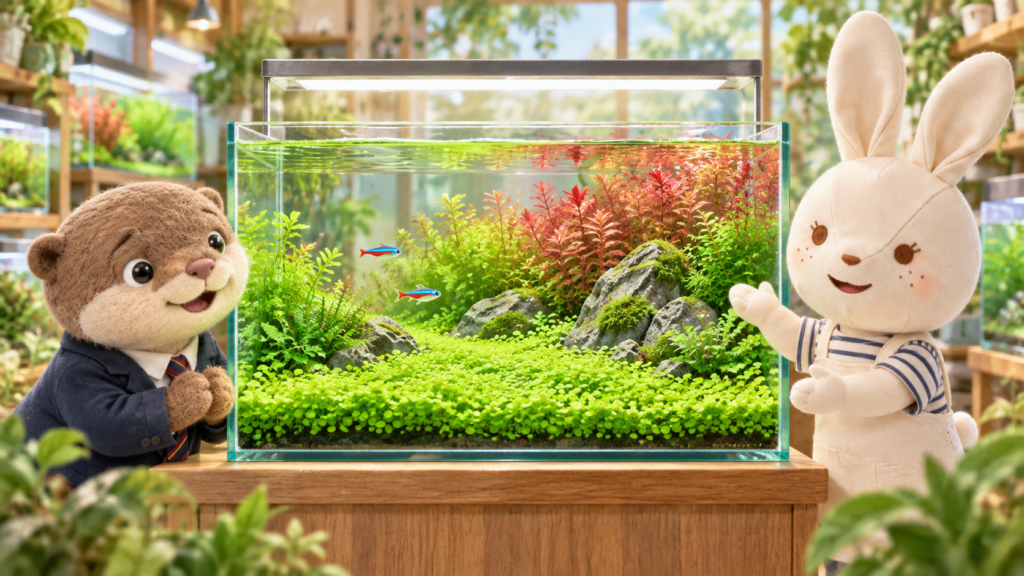 アイのアクアグッズ案内水草用ライトの選び方|緑の絨毯と赤い水草を楽しむ照明・植栽用品道具の特徴や使い方、選ぶときのポイントをアイが紹介します。記事はコチラ →
 アイのアクアグッズ案内水草トリミングの道具とやり方|ハサミ・ピンセットを水草に合わせて選ぼう伸びすぎた水草は切っていい? 有茎草の差し戻し、前景草の絨毯、流木のモスを整える場面から、水草用ハサミ・ピンセット・ゴミ取りネットの選び方と片付けを紹介します。記事はコチラ →
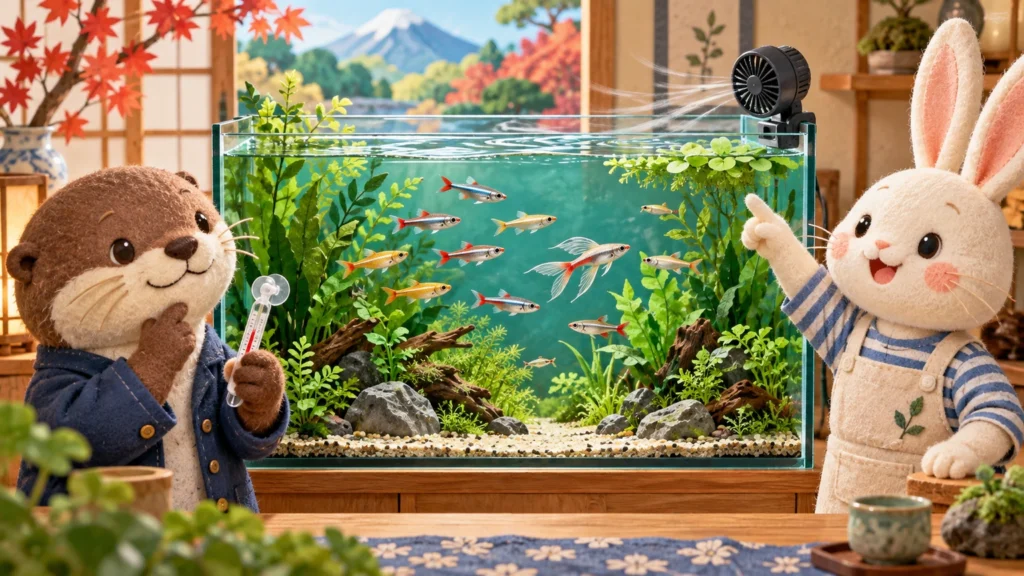 アイのアクアグッズ案内アカヒレの仲間に合わせる飼育用品|無加温・混泳・繁殖の水槽とろ過道具の特徴や使い方、選ぶときのポイントをアイが紹介します。記事はコチラ →
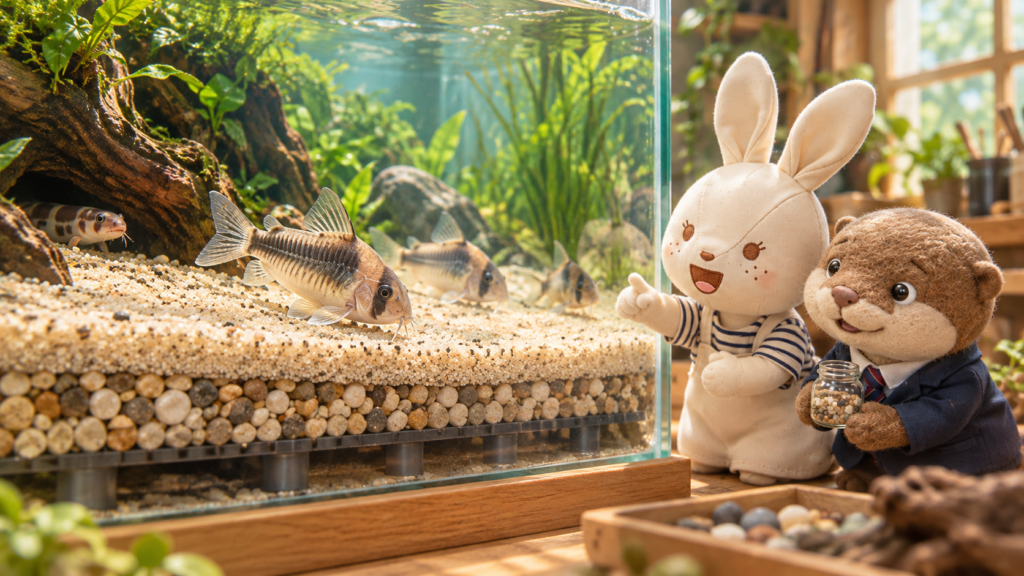 アイのアクアグッズ案内水槽の底砂の選び方|砂・砂利の違いとおすすめ商品道具の特徴や使い方、選ぶときのポイントをアイが紹介します。記事はコチラ →
さまざまな飼育テーマをご紹介。リンク先の記事には広告・商品紹介が含まれます。
案内・紹介記事一覧へ →分布マップ
フラミンゴシクリッド(Amphilophus citrinellus)は中央アメリカに分布し、主にニカラグア湖、マナグア湖とその周辺水系、コスタリカの一部河川で見られます。
※この地図は記事中の分布情報をもとに、主要な分布地域が見えるよう設定した概略表示です。マーカーは分布の目安としてニカラグア湖周辺に置いた代表地点であり、実際の採集地点や個体の確認地点を示すものではありません。また、ニカラグアの火口湖には近縁のミダスシクリッド類や固有種も分布するため、表示範囲全体が本種のみの分布域を意味するものではありません。
参考文献
-
Eschmeyer's Catalog of Fishes — Amphilophus citrinellus (Günther, 1864)California Academy of Sciences.参照項目:有効学名、分類、原記載、自然分布
-
FishBase — Amphilophus citrinellus (Günther, 1864), Midas cichlidFroese, R. & Pauly, D. (eds.). FishBase.参照項目:分布、生息環境、最大体長、食性、水温域、産卵基質、両親による保護
-
Stauffer, J. R. Jr., McCrary, J. K. & Black, K. E. (2008)Three new species of cichlid fishes (Teleostei: Cichlidae) from Lake Apoyo, Nicaragua. Proceedings of the Biological Society of Washington, 121(1), 117–129.参照項目:アポヨ湖のミダスシクリッド種群、湖内固有種の分類上の扱い
-
Kratochwil, C. F., Sefton, M. M., Liang, Y. & Meyer, A. (2017)Tol2 transposon-mediated transgenesis in the Midas cichlid (Amphilophus citrinellus) — towards understanding gene function and regulatory evolution in an ecological model system for rapid phenotypic diversification. BMC Developmental Biology, 17, 15.参照項目:飼育下で用いられた水温・pH条件、繁殖個体の生殖孔の特徴、基質産卵
-
Oldfield, R. G. (2011)Aggression and welfare in a common aquarium fish, the Midas cichlid. Journal of Applied Animal Welfare Science, 14(4), 340–360.参照項目:攻撃性、縄張り行動、水槽の広さと環境複雑性が飼育福祉に与える影響
-
Rogers, W. (1988)Parental Investment and Division of Labor in the Midas Cichlid (Cichlasoma citrinellum). Ethology, 79(2), 126–142.参照項目:繁殖時の縄張り防衛、雌雄による両親保護、親魚間の役割分担
-
Petty, B. D., Francis-Floyd, R. & Yanong, R. P. E. — Management of Aquarium FishMerck Veterinary Manual. Reviewed May 2022; updated September 2024.参照項目:アンモニア・亜硝酸、硝化と生物ろ過、pH低下、換水、隔離・疾病予防など観賞魚飼育の基本的な水質管理
-
Paull, G. C. & Matthews, R. A. (2001)Spironucleus vortens, a possible cause of hole-in-the-head disease in cichlids. Diseases of Aquatic Organisms, 45(3), 197–202.参照項目:シクリッドの頭部穴あき症状と鞭毛虫 Spironucleus vortens の関連




コメント