

解説 / Description
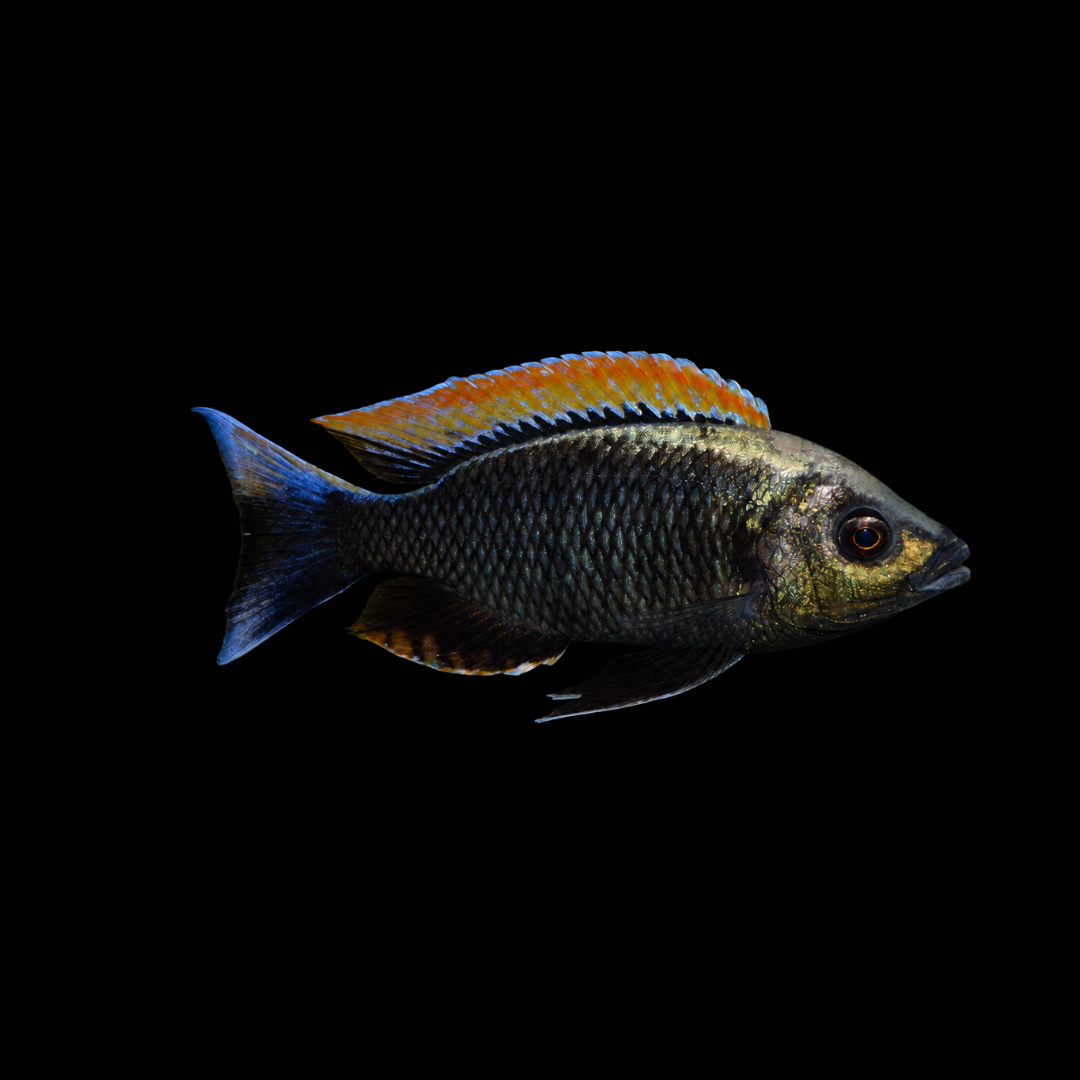
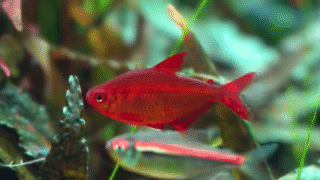
コパディクロミス・ヴィルギナリス “ファイヤークレスト”の名で流通する魚は、マラウイ湖産のウタカとして知られるコパディクロミスの一型です。成熟したオスは、暗い青色から青黒色の体に、頭部から背部へ赤橙色の鮮やかな発色を見せます。その色彩から観賞魚として高い人気がありますが、分類学上の扱いには注意が必要です。2022年に公表された形態・ゲノム研究では、従来「C. sp. “firecrest mloto”」と呼ばれていたゴメ産の型はC. mlotoではなくC. virginalisに近い系統と考えられ、「C. sp. “firecrest”」と呼ぶことが提案されました。ただし、C. virginalisそのものと正式に同一種と確定されたわけではなく、独立種である可能性も残されています。 The fish widely traded as Copadichromis virginalis “Firecrest” is an utaka-type Copadichromis from Lake Malawi. Mature males develop a striking red-orange blaze over the head and dorsal region against a dark blue to blue-black body. Its brilliant coloration has made it highly sought after in the aquarium trade, but its taxonomic identity requires caution. A morphological and genomic study published in 2022 concluded that the Gome form formerly called C. sp. “firecrest mloto” is more closely allied to C. virginalis than to C. mloto and suggested the name C. sp. “firecrest”. The study did not, however, formally establish it as identical to C. virginalis, and the possibility that it represents a distinct species remains open.
基本情報 / Basic Information
| 学名 / Scientific Name | Copadichromis sp. “firecrest” (C. virginalis種群。流通名ではC. virginalis “Firecrest”とも呼ばれる) (C. virginalis species complex; also traded as C. virginalis “Firecrest”) |
|---|---|
| 通称 / Common Name | ファイヤークレスト、ファイヤークレスト・ゴメFirecrest, Firecrest Gome |
| 分類 / Family | シクリッド科・コパディクロミス属Family Cichlidae, genus Copadichromis |
| 英名 / English Name | Firecrest |
| 分布 / Distribution | マラウイ湖東南部のゴメ周辺で知られています。分類研究でもゴメ産の“firecrest”が取り上げられており、C. virginalisに近縁な未記載型として扱われています。Known from the Gome area in the southeastern part of Lake Malawi. Taxonomic research has also discussed the Gome “firecrest” as an undescribed form allied to C. virginalis. |
| 最大体長 / Max Size | 飼育資料では成魚でおよそ13〜17cm程度とされます。ただし、未記載型であるため、正式な種記載に基づく最大体長値は確立していません。Aquarium references generally place adult size at roughly 13–17 cm. Because this remains an undescribed form, a formal species-level maximum size has not been established. |
| 寿命 / Lifespan | 本型について、信頼性の高い学術資料に基づく寿命の定量的な情報は確認されていません。長期飼育を前提に、安定した水質と栄養管理を続けることが重要です。A well-supported species-specific lifespan figure for this form has not been established in the scientific literature. It should be maintained as a long-term aquarium fish with stable water quality and consistent nutrition. |
飼育環境 / Aquarium Environment
| 水槽サイズ / Tank Size | 中層を活発に泳ぐため、横幅を重視した大型水槽が適しています。余裕を持って飼育するなら150cm規格水槽クラスを推奨します。少数飼育でも遊泳空間を十分に確保し、複数のオスを収容する場合は、さらに広い水槽を用意します。As an active mid-water swimmer, this fish benefits from a large aquarium with generous horizontal space. A tank around 150 cm in length is recommended for comfortable long-term maintenance. Even with a small group, ample swimming room is important, and multiple males require still more space. |
|---|---|
| 水温 / Temperature | 24〜28℃を目安にします。急激な温度変化を避け、年間を通して安定させることが大切です。 Aim for approximately 24–28°C. Avoid abrupt temperature changes and maintain stable conditions throughout the year. |
| 水質 / Water Quality | マラウイ湖産シクリッドとして、弱アルカリ性でミネラルを含む水を安定して維持します。pHはおおむね7.5〜8.5を目安とし、日本の軟水地域では必要に応じてサンゴ砂やアラゴナイト系底床、シクリッド用ミネラル剤などを利用します。数値を追うこと以上に、急変を避けて安定させることが重要です。As a Lake Malawi cichlid, it should be kept in stable, mineral-rich, slightly alkaline water. A pH of roughly 7.5–8.5 is a practical target. In soft-water regions, coral sand, aragonite-based substrates or mineral supplements formulated for African cichlids may be used when necessary. Stability is more important than chasing exact numbers. |
| レイアウト / Layout | 細かな砂を敷き、石組みは水槽の両端や後方に寄せて、中央部に広い遊泳空間を残します。C. virginalisに近い型では、繁殖時に岩の張り出し付近の柔らかな底質へ浅い産卵床を作ることが知られているため、砂地と岩場を組み合わせた構成が自然な行動を引き出しやすくなります。Use fine sand and place rockwork mainly along the sides and rear, leaving a broad open swimming area in the center. Forms allied to C. virginalis are known to build shallow bowers in soft substrate close to overhanging rocks, so a combination of sand and rockwork can encourage more natural behavior. |
| 注意点 / Precautions | 過密飼育、水質の急変、強い魚から継続的に追われる環境は避けます。ろ過能力と酸素量を十分に確保し、定期的な換水で有機物や硝酸塩の蓄積を抑えます。体色の急な退色、隠れて出てこない、摂餌が落ちるといった変化が見られた場合は、水質と混泳関係の両方を確認します。Avoid overcrowding, abrupt changes in water chemistry and persistent harassment from aggressive tank mates. Provide strong filtration and good oxygenation, and use regular water changes to limit the accumulation of waste and nitrate. Sudden fading, persistent hiding or reduced feeding should prompt checks of both water quality and social stress. |
餌と給餌 / Feeding
| 餌の種類 / Diet | コパディクロミス属のウタカは、野生下では主に動物プランクトンを利用する魚です。飼育下では、小粒のシクリッド用ペレットを主食にし、冷凍のイサザアミ、ブラインシュリンプ、細かなオキアミなどを副食として組み合わせます。Utaka of the genus Copadichromis feed primarily on zooplankton in the wild. In captivity, small cichlid pellets can be used as the staple diet, supplemented with foods such as frozen mysids, brine shrimp and finely chopped krill. |
|---|---|
| 給餌のポイント / Feeding Tips | ウタカは比較的小さく前方へ伸びる口を持つため、一度に大きな餌を与えるより、小粒の餌を少量ずつ与えるほうが適しています。1日1〜2回を目安に、短時間で食べ切れる量にとどめます。高栄養の冷凍餌だけに偏らせず、主食となる人工飼料と組み合わせて栄養の偏りと水質悪化を防ぎます。Utaka have relatively small, protrusible mouths, so small foods offered in modest portions are preferable to large items. Feed once or twice daily in quantities that are consumed quickly. Avoid relying exclusively on rich frozen foods; combine them with a balanced prepared staple to reduce nutritional imbalance and unnecessary water pollution. |
性格と混泳 / Temperament and Tank Mates
| 性格 / Temperament | 他種に対しては比較的穏やかなウタカですが、繁殖期のオス同士では縄張り争いが起こります。また、発情したオスがメスを追い続けることもあります。ハーレム形式で飼育する場合は、オス1匹に対してメスを複数匹用意し、追尾の負担が1匹に集中しないようにします。It is relatively peaceful toward other species for an utaka, but breeding males can become territorial toward one another. Courting males may also pursue females repeatedly. When kept as a harem, provide several females per male so that courtship pressure is not concentrated on a single individual. |
|---|---|
| 混泳の相性 / Compatibility | アウロノカラ属やレトリノプス属など、攻撃性が強すぎず、同程度の水質を好むマラウイ湖産シクリッドが候補になります。強い縄張り性を示すムブナとの混泳は、本種が追い回される状況を生みやすいため慎重に判断します。また、血統を維持して繁殖させる場合は、交雑の可能性を避けるため、他のコパディクロミス属や外見のよく似た近縁型との同居を避けるほうが安全です。Suitable companions include Lake Malawi cichlids with comparable water requirements and moderate temperaments, such as many Aulonocara and Lethrinops. Highly territorial mbuna should be approached cautiously because persistent aggression can overwhelm this more open-water form. When maintaining a breeding line, avoid other Copadichromis and closely similar forms to reduce the risk of hybridization. |
病気と対策 / Diseases and Prevention
| かかりやすい病気 / Common Diseases | ファイヤークレストだけに特有と確認されている病気はありません。飼育下では、ほかのマラウイ湖産シクリッドと同様に、水質悪化や過密、強いストレスが続くことで体調を崩し、外部寄生虫や細菌性の症状が表面化することがあります。No disease unique to the Firecrest form has been established. As with other Lake Malawi cichlids, deteriorating water quality, overcrowding and chronic stress can weaken the fish and allow parasitic or bacterial problems to become apparent. |
|---|---|
| 対策と予防 / Prevention | 予防の基本は、安定した水質、十分な酸素量、過密を避けた飼育密度、そして適切な混泳相手の選定です。新しく導入する魚は状態をよく観察し、食欲、呼吸、ヒレ、体表、排泄物などに異常がないか確認します。治療が必要な場合は、症状を見極めずに薬剤を重ねて使用するのではなく、原因を絞ったうえで対応します。Prevention depends on stable water quality, good oxygenation, sensible stocking density and appropriate tank mates. Observe newly introduced fish carefully for changes in appetite, breathing, fins, skin and waste. If treatment becomes necessary, identify the likely cause before using medication rather than combining treatments without a diagnosis. |
増やし方(繁殖) / Breeding
| 雌雄の判別 / Sexing | 成熟したオスは、暗い青色から青黒色の体に、頭部から背部へ赤橙色の鮮やかな発色が現れます。メスと若魚は銀灰色を基調とし、オスほど強い色彩を示しません。幼魚の段階では雌雄判別が難しいため、発色だけで早期に断定しないほうが安全です。Mature males develop a dark blue to blue-black body with a vivid red-orange blaze over the head and dorsal region. Females and juveniles remain primarily silvery gray and lack the intense male coloration. Sexing young fish is difficult, so early identification based on color alone should be treated cautiously. |
|---|---|
| 繁殖形態 / Reproduction | メスが受精卵と仔魚を口内で保護する母性口内保育型です。近縁のC. virginalisでは、オスが砂地に産卵床を作り、メスが産卵後に卵を口へ回収して保育する行動が知られています。ファイヤークレストの飼育下でも、同様の繁殖行動が観察されています。This form is a maternal mouthbrooder in which the female protects fertilized eggs and developing fry in her mouth. In closely related C. virginalis, males construct spawning sites in sand and females collect the eggs into the mouth immediately after spawning. Comparable behavior is reported for Firecrest in captivity. |
| 繁殖のポイント / Breeding Tips | オスが産卵場所を確保できる砂地と、メスが追尾から逃れられる空間を用意します。抱卵中のメスは摂餌が大きく減るため、周囲からの圧力を受けない環境が必要です。C. virginalisの飼育情報では口内保育期間は約3週間とされており、稚魚を確実に残したい場合は、リリース時期が近づいたメスを落ち着いた隔離水槽へ移す方法があります。稚魚には孵化直後のブラインシュリンプや細かな稚魚用飼料を与えます。Provide sandy spawning space for the male and enough room for females to escape persistent courtship. Brooding females feed very little and should not be subjected to constant social pressure. Husbandry records for C. virginalis indicate a mouthbrooding period of roughly three weeks. If fry survival is a priority, a female close to release can be moved carefully to a quiet separate tank. Newly released fry can take freshly hatched brine shrimp and fine fry foods. |
雑学と豆知識 / Trivia and Fun Facts
| 1. 60年以上続いた“pure utaka”の分類問題 / 1. A Taxonomic Puzzle Lasting More Than Six Decades | C. virginalisとC. mlotoをめぐる混乱は、1960年の原記載までさかのぼります。C. virginalisのタイプ標本には、現地で「Kaduna」と「Kajose」と呼ばれていた二つの型が含まれていました。その後もC. mlotoの成熟オスを確実に同定できない状態が続き、分類は長く混乱しました。2022年に公表された研究では、51個体の全ゲノム配列と形態解析から二つの明瞭な系統が示され、Kaduna型を真のC. virginalis、Kajose型をC. mlotoとみなす解釈が強く支持されました。Confusion surrounding C. virginalis and C. mloto dates back to their original descriptions in 1960. The type series of C. virginalis included two forms known locally as “Kaduna” and “Kajose”, while mature male C. mloto remained difficult to identify with certainty for decades. A study published in 2022 combined whole-genome sequences from 51 specimens with morphological analysis and recovered two clear lineages, strongly supporting the Kaduna form as true C. virginalis and the Kajose form as C. mloto. |
|---|---|
| 2. ファイヤークレストは“C. virginalis確定”ではない / 2. Firecrest Is Not Formally Confirmed as C. virginalis | かつて“firecrest mloto”と呼ばれていたことから、ファイヤークレストはC. mlotoの一型と考えられることがありました。しかし、最新の分類研究では、その類縁関係はC. mlotoよりもC. virginalis側にあると判断されています。一方、研究者はゴメに異なる色彩型が共存することにも注目し、ファイヤークレストが独立種として扱われる可能性を残しています。そのため、現時点では“Copadichromis sp. ‘firecrest’”とする表記が最も慎重です。Because the fish was once known as “firecrest mloto”, it was often associated with C. mloto. Recent taxonomic work instead places its affinities closer to C. virginalis. At the same time, researchers noted the presence of strongly different color forms around Gome and left open the possibility that Firecrest may deserve recognition as a separate species. For now, “Copadichromis sp. ‘firecrest’” is the more cautious designation. |
| 3. “ファイヤークレスト”という名前は色彩を表す流通名 / 3. “Firecrest” Is an Aquarium Trade Name Based on Appearance | 成熟オスの頭部から背部に現れる赤橙色は、暗い体色の上で炎のように目立ちます。“Firecrest”という呼び名は、その外見をよく表す流通名として定着しています。ヨーロッパの野鳥Common Firecrestに結びつける説もありますが、直接の命名由来は明確ではありません。炎を思わせる鮮やかな色彩によく合う呼び名です。The red-orange coloration across the head and back of a mature male stands out like a flame against its dark body, and “Firecrest” has become an established aquarium trade name that captures this appearance. The name is sometimes linked to the European Common Firecrest bird, but its direct naming history remains unclear. It is a fitting description of the vivid, flame-like coloration. |
| 4. ウタカの小さな口には理由がある / 4. Why Utaka Have Small, Protrusible Mouths | ウタカは、水中を漂う動物プランクトンを利用する方向へ適応したシクリッドです。コパディクロミス属では、小さく前方へよく伸びる口と、多数の長い鰓耙が特徴として挙げられています。岩の表面を削り取るムブナとは異なり、水中の小さな獲物を拾う生活様式が、口や鰓の形態にも反映されています。水槽内で小粒の餌が食べやすいのも、こうした体のつくりを考えると理解しやすくなります。Utaka are cichlids adapted to feeding on zooplankton suspended in the water column. Copadichromis species are characterized by relatively small, highly protrusible mouths and numerous long gill rakers. Unlike rock-grazing mbuna, their feeding system reflects a lifestyle centered on collecting small prey from open water. This also helps explain why appropriately sized foods are preferable in the aquarium. |
| 5. IUCNの準絶滅危惧評価は“真のC. virginalis”に対するもの / 5. The IUCN Near Threatened Status Applies to Recognized C. virginalis | IUCNでは、正式種C. virginalisが2018年の評価で準絶滅危惧(NT)とされています。ただし、ファイヤークレストは現在も分類上の位置づけが確定していないため、このNT評価をそのままファイヤークレストの保全カテゴリーとして表示するのは適切ではありません。流通名と正式な分類単位を分けて考えることは、希少なシクリッドを扱ううえで大切な視点です。The IUCN assessed the formally recognized species C. virginalis as Near Threatened in 2018. Firecrest, however, remains taxonomically unresolved, so that status should not automatically be presented as the conservation category of C. sp. “firecrest”. Distinguishing aquarium trade names from formally assessed taxonomic units is especially important when discussing the conservation of uncommon cichlids. |
まとめ / Conclusion
コパディクロミス・ファイヤークレストは、暗い青色の体と、頭部から背部を走る赤橙色の発色が鮮烈なコントラストを生み出す、マラウイ湖産ウタカの中でも印象的な存在です。その一方で、現在も正式な種としての位置づけは確定しておらず、外見の美しさと同じくらい、分類学的な背景にも興味深さがあります。 Copadichromis Firecrest is one of the most visually distinctive utaka forms from Lake Malawi, combining a dark blue body with a vivid red-orange blaze across the head and back. At the same time, its formal taxonomic position remains unresolved, making its scientific background nearly as intriguing as its appearance.
飼育では、広い遊泳空間と安定した弱アルカリ性の水質を整え、攻撃性の強すぎる魚を避けることが、美しい発色と落ち着いた行動を引き出す基本になります。成熟したオスの華やかな姿だけでなく、砂地での繁殖行動やメスの口内保育まで観察できれば、この魚が持つウタカらしい生態をより深く楽しめます。分類の不確実性を理解し、他系統との交雑を避けながら丁寧に飼育することが、その魅力を長く受け継いでいくことにもつながります。 Successful care depends on generous swimming space, stable slightly alkaline water and tank mates that are not excessively aggressive. Beyond the brilliant colors of mature males, observing spawning behavior over sand and maternal mouthbrooding reveals the natural character of an utaka cichlid. Understanding its unresolved taxonomy and avoiding unnecessary hybridization also helps preserve the distinctive identity of this remarkable aquarium fish.

気になる道具や飼い方を見つけてみませんか?
 アイのアクアグッズ案内エンゼルフィッシュの飼育用品|高さのある水槽・ろ過・水草・餌の選び方道具の特徴や使い方、選ぶときのポイントをアイが紹介します。記事はコチラ →
 アイのアクアグッズ案内水槽のろ材の選び方|ウール・リング・活性炭の違いとおすすめ商品フィルターの中の綿や石は何をしている? アイとコタロウが、ウール・スポンジ・セラミック・焼結ガラス・活性炭・ゼオライトを比較。機種との相性、入れ方、洗い方と交換まで商品とともに紹介します。記事はコチラ →
 アイのアクアグッズ案内水槽のエアーポンプの選び方|水深・音・泡で選ぶおすすめ用品道具の特徴や使い方、選ぶときのポイントをアイが紹介します。記事はコチラ →
 アイのアクアグッズ案内水草トリミングの道具とやり方|ハサミ・ピンセットを水草に合わせて選ぼう伸びすぎた水草は切っていい? 有茎草の差し戻し、前景草の絨毯、流木のモスを整える場面から、水草用ハサミ・ピンセット・ゴミ取りネットの選び方と片付けを紹介します。記事はコチラ →
さまざまな飼育テーマをご紹介。リンク先の記事には広告・商品紹介が含まれます。
案内・紹介記事一覧へ →分布マップ
マラウイ湖東南部のゴメ周辺で知られています。地図では、記事に記載された分布地域が確認しやすいよう、ゴメ周辺を含む湖東南部を概略範囲として表示しています。
※この地図は記事の分布情報をもとにした概略表示です。分布欄に詳細な座標が記載されていないため、表示範囲とマーカー位置はゴメ周辺を把握するための代表値を設定しています。マーカーは実際の採集地点や個体の確認地点を示すものではありません。
参考文献
- Turner, G. F., Crampton, D. A., Rusuwa, B., Hooft van Huysduynen, A., & Svardal, H. (2023). Taxonomic investigation of the zooplanktivorous Lake Malawi cichlids Copadichromis mloto (Iles) and C. virginalis (Iles). Hydrobiologia, 850, 2165–2175. https://doi.org/10.1007/s10750-022-05025-1
- Iles, T. D. (1960). A group of zooplankton feeders of the genus Haplochromis (Cichlidae) in Lake Nyasa. Annals and Magazine of Natural History, Series 13, 2, 257–280. https://doi.org/10.1080/00222935908650866
- Anseeuw, D., Maes, G. E., Busselen, P., Knapen, D., Snoeks, J., & Verheyen, E. (2008). Subtle population structure and male-biased dispersal in two Copadichromis species (Teleostei, Cichlidae) from Lake Malawi, East Africa. Hydrobiologia, 615, 69–79. https://doi.org/10.1007/s10750-008-9565-z
- Eccles, D. H. (1974). An outline of the physical limnology of Lake Malawi (Lake Nyasa). Limnology and Oceanography, 19(5), 730–742. https://doi.org/10.4319/lo.1974.19.5.0730
- Egger, B., Klaefiger, Y., Theis, A., & Salzburger, W. (2011). A sensory bias has triggered the evolution of egg-spots in cichlid fishes. PLoS ONE, 6(10), e25601. https://doi.org/10.1371/journal.pone.0025601
- Grone, B. P., Carpenter, R. E., Lee, M., Maruska, K. P., & Fernald, R. D. (2012). Food deprivation explains effects of mouthbrooding on ovaries and steroid hormones, but not brain neuropeptide and receptor mRNAs, in an African cichlid fish. Hormones and Behavior, 62(1), 18–26. https://doi.org/10.1016/j.yhbeh.2012.04.012
- Dai, C., Zheng, J., Qi, L., Deng, P., Wu, M., Li, L., & Yuan, J. (2023). Chronic stress boosts systemic inflammation and compromises antiviral innate immunity in Carassius gibel. Frontiers in Immunology, 14, 1105156. https://doi.org/10.3389/fimmu.2023.1105156




コメント