

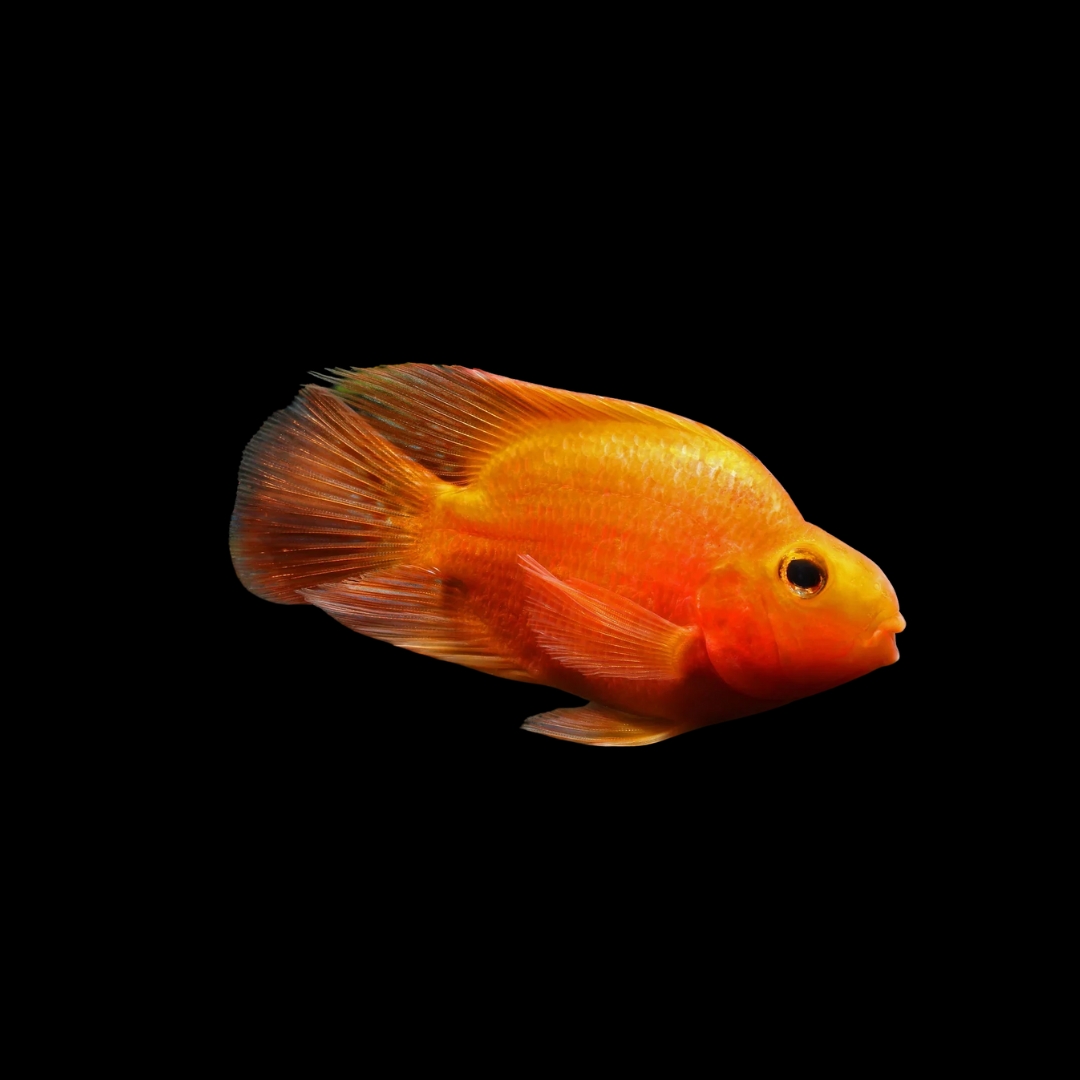
解説 / Description
キングコングパロットは、ブラッドパロットをもとに選別・改良されてきた大型のハイブリッドシクリッドです。丸みを帯びながらも厚みのある体格、深い赤からオレンジにかけての鮮やかな体色、そして飼い主に反応しやすい愛嬌のある行動で人気があります。従来のブラッドパロットでは口が開きにくい個体が問題視されることがありましたが、キングコングパロットはより自然に機能する口を持つ個体が重視されるため、摂餌しやすく、堂々とした体格に育ちやすい点が魅力です。 The King Kong Parrot is a large hybrid cichlid developed through selective breeding from blood parrot lines. It is admired for its thick, robust body, vivid red to orange coloration, and interactive, pet-like behavior. While traditional blood parrots are sometimes criticized for restricted mouth function, King Kong Parrots are valued for a more functional mouth structure, which generally helps them feed more naturally and develop a stronger, more imposing body.
基本情報 / Basic Information
| 学名 / Scientific Name | 正式な二名法学名はなし。中米産大型シクリッドをもとにした人工交雑系統。No valid binomial scientific name; an artificial hybrid line derived from large Central American cichlids. |
|---|---|
| 通称 / Common Name | キングコングパロット、キングコングパロットシクリッド、スーパーレッドキングコング、パロットシクリッドKing Kong Parrot, King Kong Parrot Cichlid, Super Red King Kong, Parrot Cichlid |
| 分類 / Family | スズキ目カワスズメ科に属するシクリッドの人工交雑種A hybrid cichlid belonging to the family Cichlidae |
| 英名 / English Name | King Kong Parrot Cichlid |
| 分布 / Distribution | 野生分布はありません。台湾やタイなど、アジアの観賞魚ファームで作出・繁殖されてきた人工改良品種です。It has no natural wild distribution. It is an ornamental hybrid developed and bred mainly in Asian fish farms, especially in regions such as Taiwan and Thailand. |
| 最大体長 / Max Size | 一般的には約20cm前後。良好な環境で育った大型個体では25〜30cm近くに達することもあります。Usually around 20 cm, with well-grown large individuals sometimes approaching 25 to 30 cm. |
| 寿命 / Lifespan | 適切な水質管理と給餌ができれば10〜15年ほど生きることがあります。With proper water quality and nutrition, it may live for about 10 to 15 years. |
飼育環境 / Aquarium Environment
| 水槽サイズ / Tank Size | 成魚は体格が大きく排泄量も多いため、単独飼育でも最低200L前後、目安として90cm規格水槽以上が望ましいです。余裕を持って育てるなら120cm水槽が理想的です。複数飼育やアロワナ、ポリプテルス、ダトニオなどとの混泳では、さらに大きな水槽を用意します。Because adults become bulky and produce a large amount of waste, a single specimen should ideally be kept in at least around 200 L, roughly equivalent to a 90 cm standard tank or larger. A 120 cm tank is preferable for long-term comfort. For groups or tank mates such as arowanas, bichirs, or datnioides, an even larger aquarium is recommended. |
|---|---|
| 水温 / Temperature | 25〜28℃を目安に安定させます。日本では季節による水温変化が大きいため、ヒーターとサーモスタットで急変を防ぐことが大切です。 Keep the temperature stable at around 25 to 28°C. In Japan, seasonal temperature swings can be significant, so a reliable heater and thermostat are important. |
| 水質 / Water Quality | 弱酸性から中性付近、pH6.5〜7.8程度が目安です。日本の水道水は比較的扱いやすい場合が多いものの、大型魚のため水を汚しやすく、強力なろ過と定期的な換水が欠かせません。週1〜2回を目安に、底の汚れも含めて管理します。Slightly acidic to neutral water, around pH 6.5 to 7.8, is a good target. Japanese tap water is often suitable after dechlorination, but this large fish can pollute the water quickly. Strong filtration and regular water changes, ideally once or twice a week, are essential. |
| レイアウト / Layout | 遊泳スペースを広く取り、流木や大きな石、擬岩などで落ち着ける場所を作ります。底床を敷く場合は、口や体表を傷つけにくい角の丸い砂が向いています。清掃性を重視するなら、底砂を敷かないベアタンク管理も有効です。Provide open swimming space along with driftwood, large stones, or artificial caves for security. If substrate is used, rounded sand is preferable to avoid injury to the mouth and body. A bare-bottom tank is also a practical option when easy cleaning is a priority. |
| 注意点 / Precautions | 丈夫な魚ですが、大型化するほど水質悪化の影響を受けやすくなります。底床に汚れがたまると消化不良や転覆症状の引き金になることがあるため、餌の与えすぎと底砂の放置に注意します。また、力があるため、ヒーターカバーやしっかりした水槽フタを用意すると安心です。Although hardy, larger individuals are vulnerable to deteriorating water quality. Waste trapped in the substrate may contribute to digestive issues and buoyancy problems, so avoid overfeeding and neglected bottom debris. Because the fish is strong, heater guards and a secure lid are also recommended. |
餌と給餌 / Feeding
| 餌の種類 / Diet | 雑食性で、シクリッド用ペレット、パロットシクリッド専用フード、クリル、冷凍赤虫、エビ系の乾燥飼料などをよく食べます。赤みを維持したい場合は、アスタキサンチンやカロテノイドを含む色揚げ用フードを主食に組み込むと効果が期待できます。It is omnivorous and readily accepts cichlid pellets, parrot cichlid foods, krill, frozen bloodworms, and dried shrimp-based foods. To maintain strong red coloration, color-enhancing foods containing astaxanthin or other carotenoids can be included as a staple. |
|---|---|
| 給餌のポイント / Feeding Tips | 一度に大量に与えるより、食べきれる量を観察しながら与えます。丸みのある体型のため、過食や古い餌による消化不良には注意が必要です。食後に腹部が張りすぎる、浮き気味になる、姿勢が不安定になる場合は、給餌量を見直し、必要に応じて短期間の絶食で腸を休ませます。Feed only what the fish can finish, rather than offering large amounts at once. Its rounded body shape means that overeating or stale food may lead to digestive trouble. If the belly becomes overly swollen, the fish floats abnormally, or its posture becomes unstable after meals, reduce feeding and consider a short fasting period to rest the digestive tract. |
性格と混泳 / Temperament and Tank Mates
| 性格 / Temperament | 基本的には丈夫で人に慣れやすく、飼い主を見つけると前面に寄ってくるようなペットフィッシュらしい一面があります。一方でシクリッドらしい縄張り意識もあり、狭い水槽や繁殖行動の時期には小競り合いが起こることがあります。It is generally hardy, responsive, and often behaves like a pet fish, coming to the front when it recognizes its keeper. However, as a cichlid, it can show territorial behavior, especially in cramped tanks or during spawning behavior. |
|---|---|
| 混泳の相性 / Compatibility | 同程度のサイズで、極端に攻撃的ではない魚と相性が良いです。同種のパロットシクリッド、セベラム、ゲオファーガス類、大型プレコ、ジャイアントダニオなどが候補になります。日本ではアジアアロワナ、ポリプテルス、ダトニオなど大型魚水槽の中層を彩る混泳魚として選ばれることも多いです。口に入る小型魚や、ヒレをかじる魚、攻撃性の強いフラワーホーン成魚などとの混泳は避けます。It is best kept with similarly sized fish that are not extremely aggressive. Suitable candidates may include other parrot cichlids, severums, geophagus-type cichlids, large plecos, and giant danios. In Japan, it is also popular as a colorful mid-level tank mate for large-fish aquariums containing Asian arowanas, bichirs, or datnioides. Avoid very small fish that can be swallowed, fin-nipping species, and highly aggressive adult flowerhorns. |
病気と対策 / Diseases and Prevention
| かかりやすい病気 / Common Diseases | 注意したいのは、消化不良や浮き袋の不調に関連する転覆症状です。水面に浮き気味になる、底に沈んで姿勢を保てない、横倒しになるといった症状が見られることがあります。原因としては、低水温、過食、古い餌、水質悪化、底床の汚れなどが考えられます。一般的な熱帯魚と同じく、白点病や細菌感染にも注意します。One condition to watch for is buoyancy trouble related to digestive problems or swim bladder dysfunction. Symptoms may include floating at the surface, sinking and struggling to maintain posture, or lying on the side. Possible triggers include low temperature, overfeeding, stale food, poor water quality, and dirty substrate. As with other tropical fish, ich and bacterial infections should also be monitored. |
|---|---|
| 対策と予防 / Prevention | 水温を25〜28℃で安定させ、餌を与えすぎず、底の汚れを残さないことが基本です。転覆症状が軽い場合は、まず3日ほど絶食して消化器官を休ませ、同時に水質を改善します。底砂を敷いている水槽では水換え時に底床クリーナーでデトリタスを吸い出し、清掃が難しい場合はベアタンク管理も検討します。症状が進行している場合や外傷、赤斑、体表の荒れを伴う場合は、早めに隔離して観察します。The basics are stable water at 25 to 28°C, careful feeding, and removal of bottom debris. If buoyancy symptoms are mild, fasting for about three days while improving water quality can help rest the digestive system. In tanks with substrate, use a gravel cleaner during water changes to remove detritus. If cleaning is difficult, a bare-bottom setup may be considered. If symptoms worsen or are accompanied by injuries, red patches, or damaged skin, isolate the fish for close observation. |
増やし方(繁殖) / Breeding
| 雌雄の判別 / Sexing | 成熟した個体では、繁殖期に生殖孔の形で判別できることがあります。オスはやや尖った突起状、メスは太く短い管状に見えるとされます。また、オスでは頭部のコブが発達しやすい傾向がありますが、個体差があるため外見だけでの判別は確実ではありません。In mature fish, sexing may be possible during breeding condition by observing the genital papilla. Males may show a more pointed projection, while females may show a thicker, shorter tube. Males may also develop a more pronounced nuchal hump, but appearance alone is not always reliable. |
|---|---|
| 繁殖形態 / Reproduction | 岩や流木、平らな面に卵を産みつける基質産卵型の行動を見せます。ペアが形成されると、産卵場所を掃除したり、卵を守るような行動を取ることがあります。It shows substrate-spawning behavior, laying eggs on rocks, driftwood, or other flat surfaces. A pair may clean a spawning site and guard the eggs. |
| 繁殖のポイント / Breeding Tips | 家庭水槽で産卵することはありますが、ハイブリッド由来の性質によりオスが稔性を持たないことが多く、卵は無精卵のまま白濁してしまう例が一般的です。そのため、観賞目的で飼育する魚と考え、自家繁殖はかなり難しいものとして扱うのが現実的です。産卵後に攻撃性が高まる場合は、混泳魚の退避場所を確保します。Spawning may occur in home aquariums, but because of its hybrid origin, males are often infertile, and the eggs commonly remain unfertilized and turn white. It is therefore best regarded mainly as an ornamental fish, with home breeding considered very difficult. If aggression increases after spawning, provide refuges for tank mates. |
雑学と豆知識 / Trivia and Fun Facts
| 1. ブラッドパロットからの改良という背景 / 1. A refined form developed from blood parrot lines | キングコングパロットを理解するうえで欠かせないのが、ブラッドパロットとの関係です。ブラッドパロットは1980年代以降、台湾を中心に広まったハイブリッドシクリッドとして知られますが、初期の個体には口の開閉が難しい、体型に無理があるといった問題が指摘されることがありました。キングコングパロットは、その流れの中でより大きく、より厚みがあり、より自然に餌を食べやすい個体を選んで作られてきた系統として語られます。つまり、ただ赤いだけの魚ではなく、観賞魚としての美しさと飼いやすさの両方を高めようとした改良の歴史を背負った魚なのです。To understand the King Kong Parrot, it is important to look at its relationship with the blood parrot. Blood parrots became known as hybrid cichlids popularized mainly from Taiwan after the 1980s, but some early lines were criticized for restricted mouth movement and unnatural body structure. The King Kong Parrot is often described as a later refinement, selected for a larger body, thicker build, and more natural feeding ability. In other words, it is not merely a red fish, but a line shaped by attempts to improve both ornamental beauty and practical husbandry. |
|---|---|
| 2. パープルパロットとの違い / 2. Difference from Purple Parrot | ここでいう違いは、体色の違いではなく、同じ赤系・紫系に見える個体を並べたときに、どこを見てキングコングパロットらしさを判断するかという点です。一般的なパープルパロットは、ブラッドパロット系の丸く詰まった体型を強く残し、口が小さく、いわゆるおちょぼ口に見える個体が多い傾向があります。これに対してキングコングパロットは、より大型化しやすく、体高だけでなく体幅と前後の長さが出て、がっしりした印象になります。さらに、口がより自然に開閉しやすいこと、成長したオスでは頭部のコブが出やすいことも大きな見分けどころです。つまり、同じような濃赤色や紫がかった赤色に見えても、パープルパロットは「色名を含んだパロット系の流通名」、キングコングパロットは「体格、口の機能、頭部の発達まで含めて選別された大型・上位系統」と考えると分かりやすいでしょう。購入時は色の濃さだけでなく、口がしっかり動くか、体に厚みがあるか、背中から頭部にかけてのラインが力強いかを確認すると、見た目の似た個体の違いを判断しやすくなります。The key difference here is not body color, but what to look for when two fish show a similar deep red or purplish-red tone. A typical Purple Parrot often retains the compact, rounded body of blood parrot-type lines and may show a small, beak-like mouth. In contrast, a King Kong Parrot is expected to grow larger, with not only height but also stronger body thickness and more front-to-back length, giving it a sturdier impression. A more naturally functional mouth and, in mature males, the potential for a pronounced nuchal hump are also important points. In simple terms, even if the color looks similar, Purple Parrot is often best understood as a trade name emphasizing a parrot-type color form, while King Kong Parrot refers to a larger, higher-grade line selected for body mass, mouth function, and head development. When choosing one, look beyond color intensity and check whether the mouth moves properly, whether the body has real thickness, and whether the line from the back to the head looks strong. |
| 3. マモンはさらに選別された上位グレードとして語られる / 3. Mammon is often treated as a further selected premium grade | パロットシクリッドの世界では、ブラッドパロット、キングコングパロット、マモンというように、体型や発色、口の形、全体のバランスで品質を語る文化があります。マモンはキングコングパロット系の中でも、丸く整った体型、濃い赤、しっかりした厚みなどを厳しく選別した高級系統として扱われることがあります。単なるサイズ違いではなく、ブリーダーが重視する「比率の美しさ」や「成長後の完成度」が評価の中心になる点が、アジアの観賞魚文化らしい奥深さです。In the world of parrot cichlids, quality is often discussed through categories such as blood parrot, King Kong Parrot, and Mammon, with emphasis on body shape, coloration, mouth structure, and overall balance. Mammon is often treated as a premium selection within King Kong Parrot-type lines, prized for a rounded body, deep red color, and strong thickness. It is not simply a size difference; the evaluation focuses on proportion, balance, and how complete the fish looks as it matures, reflecting the depth of Asian ornamental fish culture. |
| 4. 大型魚水槽で重宝される理由 / 4. Why it is valued in large-fish aquariums | 日本のアクアリウムでは、キングコングパロットがアロワナやポリプテルスなどの大型魚水槽に入れられることがあります。理由は見た目の華やかさだけではありません。中層でよく動き、赤やオレンジの色彩を足してくれるため、水槽全体の印象が明るくなります。また、餌への反応がよく、食べこぼしを拾うこともあるため、飼育者からは実用的な混泳魚として見られることもあります。ただし、これは掃除役として水質管理を任せられるという意味ではありません。大型魚同士の混泳では、最終的な体格差、性格、餌の取り合いを観察しながら調整することが大切です。In Japanese aquariums, King Kong Parrots are sometimes kept with large fish such as arowanas and bichirs. The reason is not only their bright appearance. They move actively in the middle layers and add red or orange color, making the entire tank look more vivid. Because they respond well to food and may pick up leftovers, some keepers see them as practical tank mates. However, this does not mean they can replace proper maintenance. In large-fish communities, it is important to monitor final size differences, temperament, and food competition. |
| 5. 人工着色魚との付き合い方 / 5. How to think about artificially colored fish | パロット系の魚には、過去に人工染色や尾ビレの切除によって見た目を変えられた個体が流通してきた歴史があります。ジェリービーンパロットやハートパロットと呼ばれるものがその代表例です。こうした加工は魚の健康や寿命に悪影響を与える可能性があるため、現在では避けるべきものとして考える愛好家が増えています。キングコングパロットを選ぶときも、派手な名前や珍しい色だけで判断せず、体型が無理なく整っているか、口が機能しているか、発色が自然かを見て選ぶことが、魚にも飼い主にも優しい選び方です。Parrot-type fish have a history in which some individuals were sold after artificial dyeing or tail modification. Examples include names such as jellybean parrot and heart parrot. Such procedures may negatively affect health and lifespan, so many hobbyists now consider them something to avoid. When choosing a King Kong Parrot, it is better not to judge only by flashy names or unusual colors. Looking for a balanced body, functional mouth, and natural coloration is a kinder choice for both the fish and the keeper. |
まとめ / Conclusion
キングコングパロットは、丈夫さ、発色、存在感、そして人に慣れやすい性格を兼ね備えた魅力的な大型ハイブリッドシクリッドです。90cm規格水槽以上、できれば120cm水槽でゆったり飼い、強力なろ過とこまめな換水を続けることで、本来の体格と色彩を楽しみやすくなります。 The King Kong Parrot is an appealing large hybrid cichlid that combines hardiness, vivid coloration, strong presence, and a responsive personality. Keeping it in at least a 90 cm standard tank, preferably a 120 cm tank, with strong filtration and regular water changes will help bring out its natural body shape and color.
一方で、ハイブリッド魚であるため繁殖は難しく、人工着色魚との混同にも注意が必要です。自然な発色、無理のない体型、餌をしっかり食べられる口の機能を重視して選べば、長年にわたって水槽の主役として楽しめるでしょう。 At the same time, because it is a hybrid fish, breeding is difficult, and care should be taken not to confuse naturally colored fish with artificially colored ones. By choosing a fish with natural coloration, a balanced body, and a functional mouth, it can become a centerpiece of the aquarium for many years.

気になる道具や飼い方を見つけてみませんか?
 アイのアクアグッズ案内プレコ飼育に必要なもの|餌・流木・ろ過・隠れ家・掃除用品道具の特徴や使い方、選ぶときのポイントをアイが紹介します。記事はコチラ →
 アイのアクアグッズ案内コリドラスのもふもふ時間を楽しむ|餌・底砂・お掃除用品の選び方コリドラスのもふもふする食事風景を楽しむために。沈む餌2種類の違い、口元に配慮した底砂、食べ残しを回収する道具を、アクアグッズナビゲーターのアイが紹介します。記事はコチラ →
 アイのアクアグッズ案内水槽用浄水器の選び方|水換えを楽にするタイプとROの違い道具の特徴や使い方、選ぶときのポイントをアイが紹介します。記事はコチラ →
 アイのアクアグッズ案内アカヒレの仲間に合わせる飼育用品|無加温・混泳・繁殖の水槽とろ過道具の特徴や使い方、選ぶときのポイントをアイが紹介します。記事はコチラ →
さまざまな飼育テーマをご紹介。リンク先の記事には広告・商品紹介が含まれます。
案内・紹介記事一覧へ →参考文献・根拠資料
この記事の参考文献は、キングコングパロットが人工交雑魚であり、種単独の学術情報が限られる点を考慮し、ハイブリッド報告、親候補種の魚類データベース、大学・公的機関の水質管理資料、獣医学資料に絞って選定しています。店舗、通販、個人ブログ、まとめサイト、一般的な飼育レビューは除外しました。なお、パープルパロットに関する流通名レベルの情報は商用ページに偏るため、参考文献には採用していません。
選定方針:分類・分布・生息環境は親候補種であるミダスシクリッドとレッドヘッドシクリッドの信頼資料で補強し、飼育条件、ろ過、水質悪化、疾病予防は魚類医学・養殖水質管理の資料で裏付けています。
1. ハイブリッドとしての由来・形態・注意点
-
Aqmal-Naser, M. and Ahmad, A. B. (2020). First report of the hybrid blood parrot cichlid from a rice agroecosystem in Seberang Perai Tengah, Penang, Peninsular Malaysia, with notes on syntopic Midas cichlid, Amphilophus citrinellus (Günther, 1864). BioInvasions Records, 9(3), 588–598.
使用箇所:ブラッドパロット系ハイブリッドの人工交雑としての位置づけ、親候補種、狭い口や浮き袋の異常など形態的問題、野外放逐リスクの補強。 -
U.S. Fish and Wildlife Service. (2018). Ecological Risk Screening Summary: Redhead Cichlid, Vieja melanura.
使用箇所:Vieja melanuraの有効名、過去のシノニム、シクリッド科としての分類、ハイブリッド品種との関連、pH・水温など環境情報の補強。
2. 分類・分布・生息環境の根拠
-
Fricke, R., Eschmeyer, W. N. and Van der Laan, R. (eds.). Eschmeyer’s Catalog of Fishes: Amphilophus citrinellus. California Academy of Sciences.
使用箇所:ミダスシクリッドの有効学名、カワスズメ科・シクリッド亜科、中央アメリカの分布、淡水魚であることの確認。 -
Froese, R. and Pauly, D. (eds.). FishBase: Amphilophus citrinellus, Midas cichlid.
使用箇所:ミダスシクリッドの熱帯淡水域、23〜33℃の温度範囲、湖沼・緩流域・岩や流木などの構造物を利用する生息環境、硬い基質への産卵と親の保護行動の補強。 -
Fricke, R., Eschmeyer, W. N. and Van der Laan, R. (eds.). Eschmeyer’s Catalog of Fishes: Vieja synspilum as synonym of Vieja melanurus. California Academy of Sciences.
使用箇所:レッドヘッドシクリッド周辺の名称整理、Vieja synspilumやParaneetroplus synspilumがVieja melanurusのシノニムとして扱われる点の確認。 -
Froese, R. and Pauly, D. (eds.). FishBase: Vieja melanurus, Redhead cichlid.
使用箇所:レッドヘッドシクリッドの中央アメリカ分布、淡水から汽水への適応、pH7.0〜8.0、24〜30℃、湖沼や下流域の生息環境、産卵数など繁殖情報の補強。 -
U.S. Geological Survey, Nonindigenous Aquatic Species Program. Midas Cichlid (Amphilophus citrinellus) Species Profile.
使用箇所:ミダスシクリッドの自然分布、湖沼・河口・構造物周辺を利用する生態、雑食性、基質産卵と親による保護行動の補強。
3. 飼育条件・水質管理・ろ過の根拠
-
Yanong, R. P. E. Fish Health Management Considerations in Recirculating Aquaculture Systems—Part 1: Introduction and General Principles. University of Florida IFAS Extension.
使用箇所:アンモニア、亜硝酸、硝酸塩、pH、水温、溶存酸素、硬度、アルカリ度を管理対象にする必要性、魚の収容密度・給餌量・生物ろ過能力が長期的な水質を左右する点の補強。 -
Francis-Floyd, R. et al. Ammonia in Aquatic Systems. Texas A&M AgriLife Extension / Southern Regional Aquaculture Center.
使用箇所:アンモニアが魚に有害であること、窒素循環、生物ろ過の確立、pH・水温とアンモニア毒性の関係、過給餌時に給餌停止や換水が必要になる点の補強。 -
Vanderzwalmen, M. et al. (2022). The Effect of Substrate on Water Quality in Ornamental Fish Aquaria. Animals.
使用箇所:底床の有無や種類が観賞魚水槽の水質に影響しうる点を補強し、底砂清掃やベアタンク管理を検討する記述の背景資料として使用。
4. 病気・転覆症状・検疫の根拠
-
Petty, B. D. Management of Aquarium Fish. Merck Veterinary Manual.
使用箇所:魚の生理機能が水温に強く影響されること、浮き袋が浮力調整に関わること、家庭水槽での水質問題、検疫・バイオセキュリティの重要性の補強。 -
Francis-Floyd, R. and Petty, B. D. Disorders and Diseases of Fish. MSD Veterinary Manual.
使用箇所:魚病の多くがストレス、水質悪化、過密、検疫不足と関係すること、白点病、細菌性疾患、皮膚・鰓障害、栄養管理と古い餌への注意、衛生管理の重要性の補強。




コメント