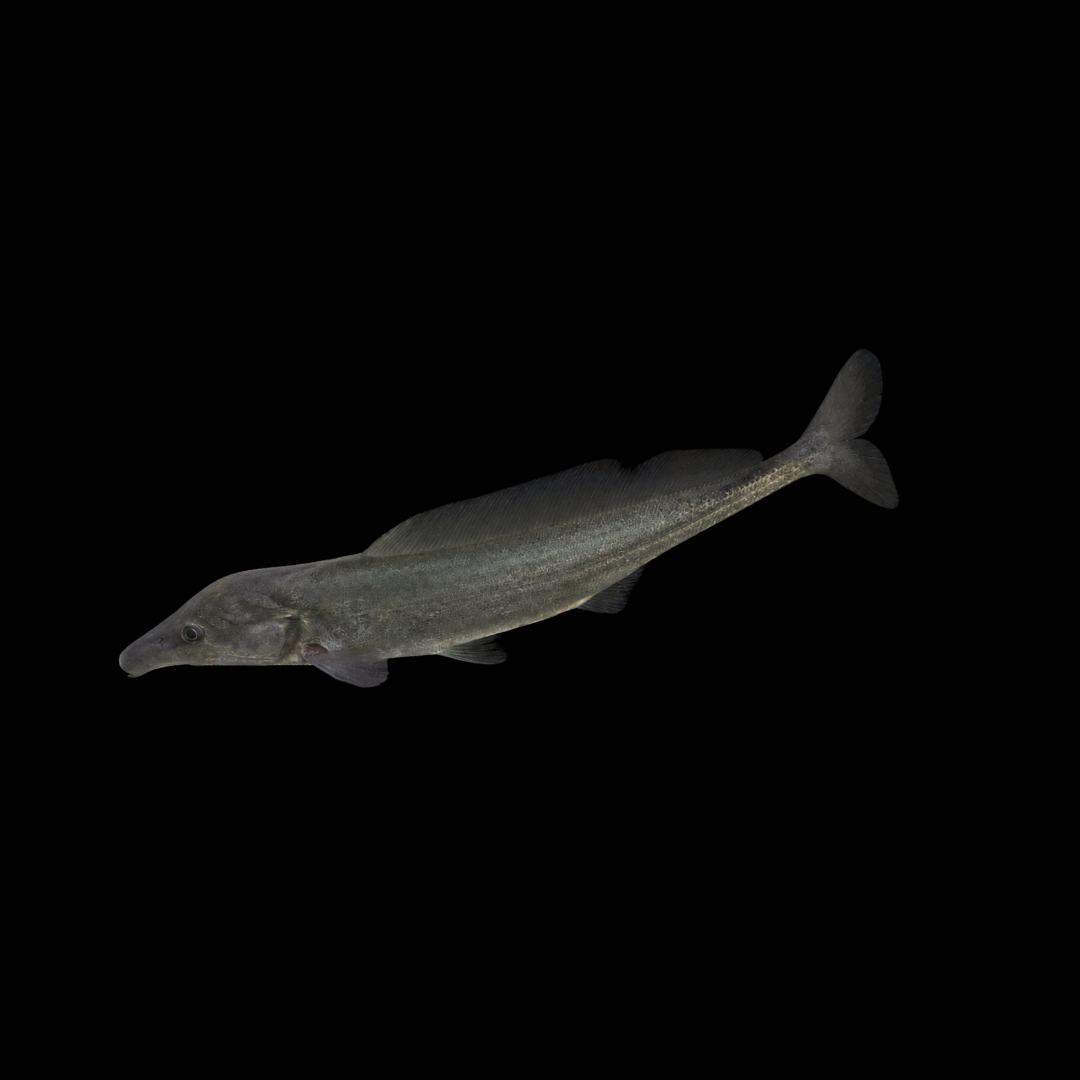
モルミルス・プロボスシロストリスは、コンゴ川中・上流域に分布するモルミルス科の弱電気魚で、現在は一般に Mormyrus rume の亜種として扱われます。下方へ伸びる細長い吻と、長い背鰭に対して短い尻鰭をもつ体型が特徴です。尾部の発電器官から微弱な電気パルスを出し、体表の電気受容器で電場の変化を読み取ることで、視界の悪い水中でも周囲を探ることができます。さらに、放電の間隔や相互応答は同種間の社会的なやり取りにも関わり、ロボット魚を用いた研究では、放電の同期やエコー応答が社会的注意や個体間のまとまりと結び付くことが示されています。飼育では、十分な遊泳空間、隠れ家、安定した水質、確実な給餌を整え、長い吻を傷つけないレイアウトを心掛けることが大切です。なお、日本で使われる「ドルフィンモルミルス」「トランペットモルミルス」といった流通名は別種にも用いられるため、本亜種を選ぶ際は学名と産地表示の確認が欠かせません。Mormyrus rume proboscirostris is a weakly electric mormyrid from the middle and upper Congo River basin and is generally treated as a subspecies of Mormyrus rume. It is characterized by an elongated downward-directed snout and a body plan with a long dorsal fin and a much shorter anal fin. Weak electric pulses produced by the caudal electric organ are detected through specialized electroreceptors, allowing the fish to investigate its surroundings in dark or turbid water. Discharge timing also contributes to social interaction; experiments using robotic fish have linked synchronized and echo-like responses with social attention and group cohesion. In captivity, generous swimming space, shelters, stable water conditions, reliable feeding, and a layout that protects the long snout are important. Japanese trade names such as “Dolphin Mormyrus” and “Trumpet Mormyrus” are also applied to other species, so the scientific name and stated origin should be checked before purchase.
基本情報 / Basic Information
学名 / Scientific Name
Mormyrus rume proboscirostris (Boulenger, 1898)
通称 / Common Name
モルミルス・プロボスシロストリス。国内流通では「ドルフィンモルミルス」「トランペットモルミルス」などの名称が使われる場合がありますが、これらは別種にも用いられるため、通称だけでの同定はできません。Mormyrus rume proboscirostris. Trade names such as “Dolphin Mormyrus” and “Trumpet Mormyrus” may be used, but they are not species-specific and should not be relied upon for identification.
分類 / Family
アロワナ目(Osteoglossiformes)モルミルス科(Mormyridae)モルミルス属(Mormyrus)。Mormyrus proboscirostris として記載され、現在は Mormyrus rume の亜種として扱われるのが一般的です。Order Osteoglossiformes, family Mormyridae, genus Mormyrus. Originally described as Mormyrus proboscirostris, it is now generally treated as a subspecies of Mormyrus rume.
英名 / English Name
No unambiguous standardized English common name; commonly listed by scientific name
分布 / Distribution
中央アフリカのコンゴ川中流域から上流域。Pool Malebo、Kasai、Sankuru、Ruki、Ubangi、Uélé、Aruwimi、Lualaba などから記録されています。Middle and upper Congo River basin in Central Africa, with records from areas including Pool Malebo, Kasai, Sankuru, Ruki, Ubangi, Uélé, Aruwimi, and Lualaba.
最大体長 / Max Size
本亜種だけに限定した信頼できる最大体長は明確ではありません。Mormyrus rume 全体では最大100cm標準体長の記録がありますが、この数値をそのまま本亜種の一般的な成魚サイズとみなすことはできません。研究で用いられた本亜種の成魚・長期飼育個体には10〜17cm前後の例があります。A reliable maximum size specifically for this subspecies is not clearly established. Mormyrus rume as a species is reported to reach 100 cm standard length, but that figure should not automatically be treated as the typical adult size of this subspecies. Long-term captive and research specimens of M. r. proboscirostris have often been around 10–17 cm SL.
寿命 / Lifespan
本亜種の寿命上限は確立されていません。Mormyrus rume では最大報告年齢6年が示されており、本亜種でも約6歳の飼育個体が行動研究に用いられています。The maximum lifespan of this subspecies has not been established. Mormyrus rume has a reported maximum age of six years, and approximately six-year-old captive M. r. proboscirostris have been used in behavioral studies.
飼育環境 / Aquarium Environment
水槽サイズ / Tank Size
成長上限に不確実性があるため、若魚でも将来の拡張を前提に考えます。目安として90cm規格水槽は小型個体の一時的な管理向けとし、長期飼育では120cm水槽以上を基本に、成長が大きい個体では150〜180cm級への移行を検討します。単純な水量より、長い吻をぶつけずに方向転換できる底面積と遊泳距離を重視します。Because adult size is uncertain, even juveniles should be housed with future upgrading in mind. A standard 90 cm tank is best regarded as temporary accommodation for small fish; for long-term care, a 120 cm tank or larger is a practical starting point, with 150–180 cm systems considered for unusually large individuals. Floor area and unobstructed turning space are more important than volume alone.
水温 / Temperature
25℃前後を中心に安定させると管理しやすい魚です。研究飼育ではおおむね25℃で維持された例が多く、一般飼育では23〜28℃程度の範囲で急変を避けます。Stable temperatures around 25°C are suitable; many research colonies have been maintained near this temperature. In aquarium practice, approximately 23–28°C is a reasonable range provided sudden changes are avoided.
水質 / Water Quality
本亜種固有の厳密なpH適正値は十分に確立されていません。研究飼育では電気伝導度約100〜150µS/cmの軟水寄りの環境が用いられています。家庭では弱酸性〜中性を大きく外さない安定した水を基本とし、アンモニアと亜硝酸を検出させない成熟したろ過、十分な溶存酸素、急激な水質変化を避ける管理を優先します。A precise species-specific pH optimum is not well established. Research colonies have often been maintained in relatively soft water at about 100–150 µS/cm conductivity. In home aquaria, stable slightly acidic to neutral water, mature filtration with undetectable ammonia and nitrite, good oxygenation, and avoidance of abrupt changes are more important than chasing a narrow numerical target.
レイアウト / Layout
吻で底面を探るため、角のない細砂や滑らかな底床が扱いやすく、尖った石や硬い装飾は避けます。塩ビ管、土管、流木の陰など、体を落ち着かせられる隠れ場所を複数用意します。繁殖研究では砂利底や流水を選ぶ傾向も報告されていますが、通常飼育では安全性と清掃性を優先して構いません。Because the fish probes the bottom with its snout, smooth fine sand or another non-abrasive substrate is practical, while sharp rocks and hard projections should be avoided. Provide several secure shelters using pipes, ceramic tubes, or shaded areas under wood. Breeding studies have reported preferences for gravel and flowing water, but routine husbandry should prioritize safety and maintainability.
注意点 / Precautions
長い吻は接触傷を受けやすいため、狭い隙間や鋭いレイアウトを作らないことが重要です。導入直後は暗めで静かな環境を用意し、給餌反応と体つきを観察します。弱電気魚だからといって強い水流や特殊な電気設備が必要なわけではありませんが、安定した酸素供給と水質維持は欠かせません。飛び出し事故を防ぐため、蓋も確実に閉めます。The elongated snout is vulnerable to contact injuries, so avoid narrow gaps and sharp décor. Newly introduced fish should be given a quiet, dim environment while feeding response and body condition are monitored. Weakly electric fish do not require special electrical equipment or strong current, but stable oxygenation and water quality are essential. A secure lid also helps prevent jumping accidents.
餌と給餌 / Feeding
餌の種類 / Diet
冷凍アカムシは本亜種の研究飼育でも継続的に使用されている実績のある餌です。野生の Mormyrus rume は昆虫やその幼虫を食べることが知られており、飼育下でも小型の底生無脊椎動物を好みます。人工飼料へ移行できる個体もいますが、導入直後は冷凍アカムシなど嗜好性の高い餌を中心に状態を整えます。Frozen bloodworms have been used successfully as a regular food in research colonies of this subspecies. Wild Mormyrus rume are known to feed on insects and insect larvae, and captive fish readily take small benthic invertebrate foods. Some individuals can be trained onto prepared foods, but newly imported fish are best stabilized first with highly palatable foods such as frozen bloodworms.
給餌のポイント / Feeding Tips
薄暗い時間帯に沈む餌を与え、確実に食べているかを確認します。痩せた輸入個体では、1回に大量に与えるよりも少量を複数回に分けた方が状態を把握しやすくなります。長期的には単一の餌だけに固定せず、受け入れる範囲で冷凍餌や人工飼料を組み合わせると管理しやすくなります。Offer sinking food during dim periods and confirm that the fish is actually feeding. For thin newly imported specimens, several smaller meals make it easier to monitor intake than one very large feeding. Over the long term, a varied diet using accepted frozen and prepared foods is preferable to unnecessary dependence on a single item.
性格と混泳 / Temperament and Tank Mates
性格 / Temperament
警戒心が強い一方、周囲を積極的に探索し、同種の放電にも細かく反応する社会性のある魚です。研究下では複数個体の維持も行われていますが、順位関係や攻撃行動が生じることがあり、とくに繁殖状態では社会的ストレスが産卵を妨げることもあります。単純に「温和」「凶暴」と決めつけず、個体間の距離を確保できる環境が必要です。The species is cautious but highly exploratory and socially responsive to the electric signals of conspecifics. Groups have been maintained successfully in research facilities, yet dominance relationships and aggression can occur, and social stress may even inhibit breeding. It is therefore better understood as socially complex rather than simply “peaceful” or “aggressive.”
混泳の相性 / Compatibility
同種複数飼育は不可能ではありませんが、大きな水槽、複数の隠れ家、視線を切れるレイアウトが必要です。他種とは、極端に活発で餌を独占する魚、体表へ吸い付く習性のある魚、本種を捕食できる大型魚を避けます。小型魚は捕食される可能性があるため、十分なサイズ差がある組み合わせは不向きです。他の弱電気魚との混泳については一律に禁止できるだけのデータは乏しく、電気的・空間的な干渉を考えて慎重に判断します。Keeping conspecifics together is possible but requires a large aquarium, multiple shelters, and visual barriers. Avoid excessively active feeders, fishes that may rasp or attach to the body surface, and predators large enough to consume the mormyrid. Very small tank mates may also be at risk. There is insufficient evidence to declare all combinations with other weakly electric fishes categorically unsuitable, but possible electrical and spatial interference warrants a cautious approach.
病気と対策 / Diseases and Prevention
かかりやすい病気 / Common Diseases
本亜種だけに特有の代表的な疾病は十分に整理されていません。実際の飼育では、輸送や硬いレイアウトとの接触による吻・体表の擦過傷、そこからの二次的な細菌感染、導入時の痩せをまず警戒します。白点病など一般的な淡水魚の感染症にもかかり得るため、食欲低下、呼吸の変化、白点、充血、潰瘍などを早期に確認します。No distinctive disease syndrome specific to this subspecies is well established. In practice, priority concerns include abrasions of the snout or body after transport or contact with hard décor, secondary bacterial infection, and severe weight loss after import. Common freshwater diseases such as ich can also occur, so appetite, respiration, white spots, redness, and ulcers should be monitored closely.
対策と予防 / Prevention
予防は、隔離導入、安定した水質、十分な酸素、安全なレイアウト、確実な給餌が基本です。モルミルス類を「無鱗魚」とみなして一律に薬を半量にする根拠はなく、本種には鱗があります。一方、本亜種に対する各魚病薬の安全域を示すデータも限られるため、銅系薬剤や色素系薬剤を含め自己判断で高濃度使用せず、製品の対象魚・用量を確認し、可能なら隔離水槽で慎重に治療します。高水温や塩水浴だけを万能な治療法として扱うことも避けます。Prevention begins with quarantine, stable water quality, good oxygenation, safe décor, and reliable nutrition. Mormyrids should not automatically be treated as “scaleless fish”; this species does possess scales. At the same time, species-specific safety data for many medications are limited, so copper- or dye-based drugs should not be overdosed empirically. Follow product indications carefully and, when possible, treat in a separate hospital tank. Elevated temperature or salt alone should not be presented as universal cures.
増やし方(繁殖) / Breeding
雌雄の判別 / Sexing
成熟したオスでは尻鰭基部の骨格と体形に性的二型が現れ、求愛時にはオスの尻鰭がメスの尻鰭を包むように働きます。若魚では外見からの判別が難しく、研究でも小型の未成熟個体は雌雄を確実に判断できない場合があります。Mature males develop sexually dimorphic modifications of the anal-fin complex and body contour, and the male anal fin helps envelop the female’s anal fin during courtship. Juveniles are difficult to sex externally, and even research specimens cannot always be sexed reliably before maturity.
繁殖形態 / Reproduction
卵生です。本亜種は研究施設で繁殖に成功しており、水の電気伝導度を下げる操作が生殖腺の成熟を促し、逆に伝導度を上げると退縮が誘導されることが示されています。水位上昇や降雨の模擬だけでは成熟・産卵を誘導できなかった研究もあり、雨季そのものより水質変化が重要な手掛かりになると考えられています。This is an egg-laying species that has been bred successfully in research facilities. Experimental reduction of water conductivity can induce gonadal maturation, while increased conductivity promotes regression. Simulated rainfall or increased water level alone did not induce maturation and spawning in one study, indicating that water chemistry can be a more important reproductive cue than rain simulation by itself.
繁殖のポイント / Breeding Tips
研究では、メス1個体あたり1回の部分産卵で平均364卵、産卵間隔は約21日、実験全体のふ化率は約40%と報告されています。砂利底や流水を選ぶ傾向も知られていますが、繁殖状態では攻撃性や社会的ストレスが成功を妨げることがあります。家庭水槽で再現するには、水質の季節変化、十分なスペース、成熟個体の組み合わせを精密に管理する必要があり、一般的な熱帯魚より難易度は高いと考えるべきです。Research reports an average of 364 eggs per fractional spawning, spawning intervals of about 21 days, and an overall hatching rate of roughly 40% across experiments. Gravel and running water may be preferred during spawning, but aggression and social stress can prevent successful reproduction. Reproducing these conditions at home requires careful management of seasonal water chemistry, space, and mature pair compatibility, making breeding substantially more demanding than for typical aquarium fishes.
雑学と豆知識 / Trivia and Fun Facts
1. 「プロボスシロストリス」はどのような魚か / 1. What Does “proboscirostris” Represent?
本亜種は1898年に Boulenger によって Mormyrus proboscirostris として記載されました。現在の主要な魚類データベースでは Mormyrus rume に含める扱いが一般的で、FishBase や ITIS では M. rume proboscirostris という亜種名が使われています。一方、Eschmeyer’s Catalog of Fishes では M. proboscirostris を M. rume のシノニムとして扱いつつ、亜種としての使用歴も明記しています。学名を調べると資料によって表示の仕方が少し異なるのは、この分類史が背景にあります。The taxon was described by Boulenger in 1898 as Mormyrus proboscirostris. Major databases now generally place it within Mormyrus rume, with FishBase and ITIS using the subspecies combination M. rume proboscirostris. Eschmeyer’s Catalog of Fishes lists M. proboscirostris as a synonym of M. rume while noting its history of recognition at subspecies rank. This taxonomic history explains why different references may display the name somewhat differently.
2. 巨大な小脳は本種でも確認されている / 2. An Enlarged Cerebellum Is Documented in This Subspecies
モルミルス科は、電気感覚の処理と感覚運動統合に関わる脳領域が著しく発達した魚として知られます。本亜種でも成長に伴う脳形態が詳しく研究され、成魚では複雑で大きな小脳系が確認されています。よく引用される「脳が全身の酸素消費の約60%を占める」という数値は、近縁のエレファントノーズ Gnathonemus petersii で実測された値です。本亜種の固有値として60%を断定することはできませんが、モルミルス類の脳が例外的に大きく、神経生理学の重要な研究対象であることは確かです。Mormyrids are known for unusually developed brain regions involved in electrosensory processing and sensorimotor integration. Brain development has been studied directly in this subspecies, and adults possess a large and complex cerebellar system. The frequently quoted figure that the brain consumes about 60% of whole-body oxygen was measured in the related elephantnose fish Gnathonemus petersii, not directly in M. r. proboscirostris. It should therefore not be presented as a species-specific measurement, although the exceptional development of the mormyrid brain is well established.
3. 放電の同期は「妨害回避」だけでは説明できない / 3. Synchronization Is More Than Simple Jamming Avoidance
本亜種では、相手の放電に短い潜時で応答するエコーや、放電タイミングを合わせる同期が研究されています。ロボット魚との実験では、動的なエコー信号に対して魚の相互的な応答が強まり、接近や追従と結び付くことが示されました。さらに2025年の研究では、実際のジャミング自体はまれで、同期やエコーが直前の妨害への単純な反応ではないことが報告されています。現在は、これらの信号が社会的注意や群れのまとまりを保つコミュニケーションとして働く可能性が有力です。This subspecies has been studied for echo responses, in which a fish answers another discharge after a short delay, and for synchronization of discharge timing. Robotic-fish experiments found stronger interactive signaling in response to dynamic echoes and linked these responses with approach and following behavior. A 2025 study further reported that actual jamming was rare and that synchronization and echoing were not simple reactions to recent interference. These signals are therefore increasingly interpreted as mechanisms for social attention and group cohesion.
4. 電気は「周囲を見る」ためにも使われる / 4. Electricity Is Also Used to “See” the Surroundings
モルミルス類は、尾部の発電器官から短い電気パルスを出し、その電場が物体によってどのように変形したかを体表の電気受容器で検出します。この能動的電気定位によって、暗い場所や濁った水でも障害物や餌を探ることができます。同じ電気信号が社会的コミュニケーションにも使われるため、1つの放電系が「感覚」と「会話」の両方を担っている点が、モルミルス類の大きな特徴です。Mormyrids emit brief electric pulses from a caudal electric organ and detect how nearby objects distort the resulting field through electroreceptors distributed over the body. This active electrolocation allows them to investigate obstacles and prey even in darkness or turbid water. The same electric signaling system is also used socially, making it unusual in that a single modality supports both environmental sensing and communication.
5. 迷路学習では電気感覚だけに頼らない / 5. Maze Learning Uses Several Senses Together
Mormyrus rume proboscirostris を使った迷路研究では、魚が経路を学習し、障壁を取り除いた後も以前の経路に対応する行動を示すことが調べられました。結果は、能動的電気感覚だけでなく、視覚と側線感覚も組み合わせて学習と想起を行うことを示しています。したがって「電気だけで完璧な地図を作る魚」と表現するより、複数の感覚情報を統合して柔軟に空間を把握する魚と捉える方が、研究結果に忠実です。Maze experiments with Mormyrus rume proboscirostris examined route learning and recall after maze barriers were removed. The results indicate that the fish combines active electrosense with vision and lateral-line information during learning and recall. Rather than describing it as building a perfect map from electricity alone, it is more accurate to view the species as flexibly integrating several sensory channels for navigation.
6. 古代エジプトの「オクシリンコス」と本亜種は同一ではない / 6. The Ancient Egyptian “Oxyrhynchus” Was Not This Congo Subspecies
古代エジプトでは、長い吻をもつモルミルス類が「オクシリンコス」と結び付けられ、魚形の護符や青銅像も残されています。UCL の資料では mormyrus fish と oxyrhynchus fish が対応付けられ、メトロポリタン美術館にも末期王朝〜プトレマイオス朝時代の Oxyrhynchus fish の像が収蔵されています。ただし、本亜種はコンゴ川水系の魚であり、ナイル流域の古代エジプトで崇拝された魚を M. rume proboscirostris と特定することはできません。文化史との関係は「モルミルス類」という広い範囲で楽しむのが適切です。In ancient Egypt, long-snouted mormyrid fishes were associated with the “Oxyrhynchus,” and fish-shaped amulets and bronze figures survive. UCL resources explicitly associate the mormyrus fish with the oxyrhynchus fish, and the Metropolitan Museum of Art holds Oxyrhynchus fish figures from the Late–Ptolemaic Period. However, M. r. proboscirostris is a Congo-basin fish, so the sacred fish of the Nile region cannot be identified specifically as this subspecies. The cultural connection is best understood at the broader mormyrid level.
7. 日本の流通名は学名確認が重要 / 7. Japanese Trade Names Require Scientific-Name Confirmation
日本では「ドルフィンモルミルス」という名前が Mormyrus longirostris に使われる例があり、「トランペットモルミルス」は Oxymormyrus zanclirostris の販売名として使われる例も確認できます。そのため、呼び名や「コンゴ便」という情報だけで M. rume proboscirostris と判断するのは危険です。購入時は学名、輸入産地、吻の形、背鰭と尻鰭の比率などを合わせて確認し、販売名はあくまで流通上のラベルとして扱うのが安全です。In Japan, the name “Dolphin Mormyrus” is used for fish sold as Mormyrus longirostris, while “Trumpet Mormyrus” is also used commercially for Oxymormyrus zanclirostris. A nickname or a statement such as “Congo shipment” is therefore insufficient to identify M. r. proboscirostris. Buyers should check the scientific name, stated origin, snout shape, and fin proportions, treating trade names only as informal market labels.
まとめ / Conclusion
モルミルス・プロボスシロストリスの魅力は、長く伸びた吻という外見だけではありません。微弱な電気を使って周囲を探り、同種の放電に応答し、複数の感覚を組み合わせて空間を学習する姿には、濁ったアフリカの淡水環境で磨かれてきた独自の進化が表れています。照明を落とした水槽で底面を丁寧に探る動きや、隠れ家から周囲をうかがう行動を観察すると、一般的な熱帯魚とは異なる感覚世界をもつ魚であることが実感できます。The appeal of Mormyrus rume proboscirostris extends far beyond its elongated snout. Its ability to probe the environment electrically, respond to the discharges of other fish, and integrate multiple senses during spatial learning reflects a distinctive evolutionary history shaped in African freshwater habitats where visibility is often limited. Watching it search the bottom under dim light or cautiously investigate the space around a shelter reveals a sensory world quite unlike that of most familiar aquarium fishes.
長期飼育では、珍しさよりも「傷つけないこと」「痩せさせないこと」「落ち着ける場所を確保すること」を優先したい魚です。十分な水槽サイズと安全な底床、安定した水質、確実な給餌を整え、同居魚との関係を丁寧に観察すれば、派手さとは別のところにある知的で繊細な行動が少しずつ見えてきます。学名や流通名の混同にも注意しながら、その魚が本来備えている感覚と行動を尊重して飼うことが、モルミルス・プロボスシロストリスの奥深さを最も長く味わう方法です。For long-term care, preventing injury, maintaining body condition, and providing secure resting places matter more than rarity or display value. With sufficient tank space, a safe substrate, stable water quality, dependable feeding, and careful observation of tank-mate relationships, the fish gradually reveals subtle and highly specialized behavior. Respecting its sensory biology—and checking scientific identification rather than relying on ambiguous trade names—is the best way to appreciate this remarkable mormyrid over time.
Fricke, R., Eschmeyer, W. N. & Van der Laan, R. (eds.). Eschmeyer’s Catalog of Fishes, California Academy of Sciences. “proboscirostris, Mormyrus Boulenger, 1898.”
Worm, M., Kirschbaum, F. & von der Emde, G. (2017). Social interactions between live and artificial weakly electric fish: Electrocommunication and locomotor behavior of Mormyrus rume proboscirostris towards a mobile dummy fish. PLoS ONE, 12(9), e0184622.
Worm, M., Landgraf, T. & von der Emde, G. (2021). Electric signal synchronization as a behavioural strategy to generate social attention in small groups of mormyrid weakly electric fish and a mobile fish robot. Biological Cybernetics, 115, 599–613.
Moller, P., Schugardt, C. & Kirschbaum, F. (2004). Permanent and seasonal expressions of sexual dimorphisms in a weakly electric fish, Mormyrus rume proboscirostris Boulenger 1898 (Mormyridae, Teleostei). Environmental Biology of Fishes, 70(2), 175–184.
Schugardt, C. & Kirschbaum, F. (2004). Control of gonadal maturation and regression by experimental variation of environmental factors in the mormyrid fish, Mormyrus rume proboscirostris. Environmental Biology of Fishes, 70(3), 227–233.
Saunders, A. N. & Gallant, J. R. (2024). A review of the reproductive biology of mormyroid fishes: An emerging model for biomedical research. Journal of Experimental Zoology Part B: Molecular and Developmental Evolution, 342, 144–163.






コメント