

解説 / Description
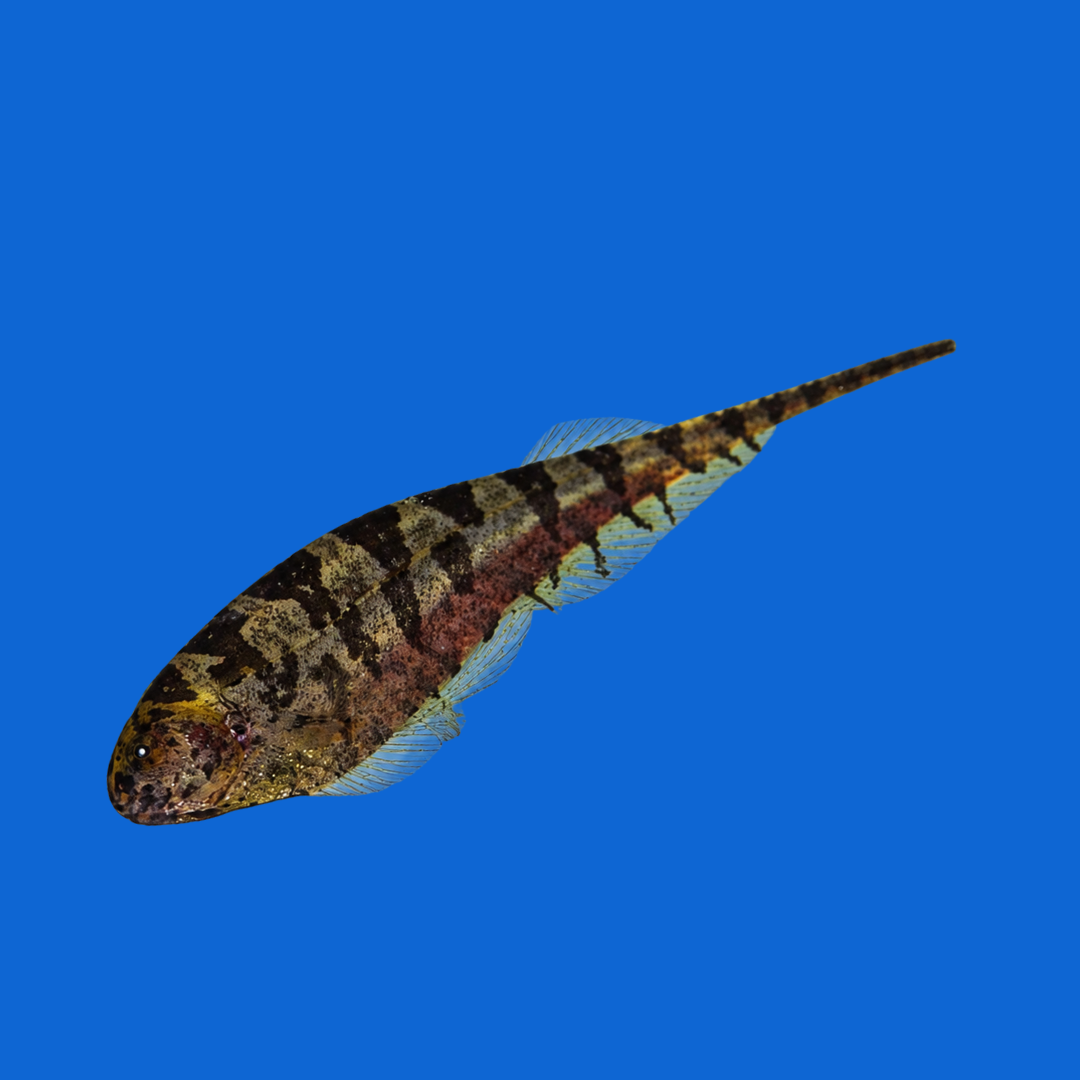
リーフナイフフィッシュは、日本の観賞魚市場でSteatogenys属の魚に用いられる流通名です。南米の淡水域に生息する弱電気魚で、細長く側扁した体と、腹側に伸びる長い臀鰭を備えています。臀鰭に波を送ることで、体の向きを変えずに前進や後退ができ、流木や落ち葉が入り組む場所でも細やかに移動します。周囲に微弱な電場を作り、その変化を感じ取る能動的電気定位によって、暗い水中でも障害物や小さな獲物を探します。茶褐色の縞模様は落ち葉の中で目立ちにくく、S. duidaeでは体を横たえて枯れ葉に似せる行動も報告されています。飼育では、種名を流通名だけで断定せず、薄暗い環境、安定した水質、十分な隠れ家、夜間の給餌を整えることが重要です。 Leaf knifefish is a Japanese trade name used for fishes of the genus Steatogenys. These weakly electric South American freshwater fishes have elongated, laterally compressed bodies and a long anal fin along the underside. Waves travelling along this fin allow precise forward and backward movement without turning the body, an advantage among tangled roots and leaf litter. They use active electrolocation, generating a weak electric field and detecting changes in it to locate obstacles and small prey in darkness. Their brown banding provides camouflage among fallen leaves, and side-lying leaf mimicry has been documented in S. duidae. Aquarium care should therefore emphasize cautious identification, subdued lighting, stable water conditions, secure shelters, and feeding after dark.
基本情報 / Basic Information
| 学名 / Scientific Name | Steatogenys spp.(流通名だけでは種を確定できない場合があります)(species may not be identifiable from the trade name alone) |
|---|---|
| 通称 / Common Name | リーフナイフフィッシュ、センチピードナイフフィッシュLeaf knifefish, centipede knifefish, barred knifefish |
| 分類 / Family | デンキウナギ目・サンドナイフ科(Rhamphichthyidae)・Steatogenys属。科の扱いには研究史上の変遷があり、古い文献や一部資料ではミズヒキナイフ科(Hypopomidae)とされています。Order Gymnotiformes, family Rhamphichthyidae, genus Steatogenys. The family placement has changed through time, and older or alternative references may list the genus in Hypopomidae. |
| 英名 / English Name | Leaf Knifefish / Centipede Knifefish / Barred Knifefish |
| 分布 / Distribution | 南米のアマゾン川流域を中心に、オリノコ川水系やギアナ地方の河川にも分布します。分布域と好む環境は種によって異なります。Distributed mainly in the Amazon basin, with records from the Orinoco system and rivers of the Guianas. Exact range and habitat preferences differ among species. |
| 最大体長 / Max Size | 種によりおおむね約20〜30cm。S. elegansでは全長29.4cmの記録があります。Generally about 20–30 cm depending on species. A total length of 29.4 cm has been recorded for S. elegans. |
| 寿命 / Lifespan | 信頼できる飼育寿命の定量的資料は乏しく、明確な年数は不明です。数年以上の長期飼育を前提に、成長後の設備まで準備して迎える必要があります。Reliable quantitative lifespan data in aquaria are scarce, so no precise figure can be given. Keepers should plan for several years of care and provide for the fish’s adult size from the outset. |
飼育環境 / Aquarium Environment
| 水槽サイズ / Tank Size | 10cm未満の若魚は60cm規格水槽で一時的に管理できますが、成魚の単独飼育には90cm規格水槽以上を基本とし、できれば奥行きと水量に余裕のある水槽を選びます。複数飼育では120cm規格水槽または120cmワイド水槽以上を目安にし、個体ごとの隠れ場所を確保してください。Juveniles under 10 cm may be managed temporarily in a standard 60 cm aquarium. For an adult kept singly, a standard 90 cm tank or larger should be regarded as the baseline, preferably with generous depth and water volume. Groups require at least a 120 cm standard or wide aquarium and a separate retreat for each fish. |
|---|---|
| 水温 / Temperature | 22〜26℃を目安とし、24〜26℃前後で安定させます。適温内であっても、短時間の急変は避けてください。 Use 22–26°C as a practical range and keep the aquarium stable around 24–26°C. Rapid changes should be avoided even within the acceptable range. |
| 水質 / Water Quality | 弱酸性から中性の、硬度が低めの水が適しています。目安はpH6.0〜7.0です。アンモニアと亜硝酸塩を検出させないことを優先し、週1回20〜30%程度の部分換水を出発点として、給餌量や飼育密度に合わせて調整します。数値を急に変えるより、安定した状態を保つことが重要です。Soft, slightly acidic to neutral water is suitable, with pH 6.0–7.0 as a useful guide. Ammonia and nitrite should remain undetectable. A weekly 20–30% partial water change is a reasonable starting point, adjusted to feeding and stocking levels. Stability is more important than forcing rapid changes toward a target value. |
| レイアウト / Layout | 底床には細かな田砂や川砂など、体表を傷つけにくい素材を薄く敷きます。流木、落ち葉、土管、塩ビパイプなどを組み合わせ、昼間に全身を隠せる暗い場所を複数設けます。浮き草や控えめな照明も有効です。強すぎる水流は避けつつ、濾過と酸素供給は十分に確保してください。Use a thin layer of fine, smooth sand that is unlikely to damage the body. Combine driftwood, aquarium-safe leaf litter, ceramic caves, and PVC pipes to create several dark shelters large enough to conceal the whole fish. Floating plants and subdued lighting are helpful. Avoid excessive current while maintaining effective filtration and oxygenation. |
| 注意点 / Precautions | 夜行性で臆病なため、導入直後に明るい場所へ出そうとして追い回してはいけません。水合わせは時間をかけ、尖った装飾物や狭すぎる隙間は避けます。食べ残しや死んだ生餌は水質を悪化させるため、消灯後の摂食状況を確認し、残餌を早めに取り除いてください。Because these fishes are nocturnal and shy, they should not be chased into the open after introduction. Acclimate them gradually and avoid sharp decorations or gaps in which the body could become trapped. Check feeding after dark and remove uneaten food or dead live food promptly. |
餌と給餌 / Feeding
| 餌の種類 / Diet | 野生下では水生昆虫の幼虫、小型甲殻類、蠕虫などの無脊椎動物を食べます。飼育下では冷凍アカムシ、イトミミズ、刻んだミミズ、小型エビ、イサザアミなどが利用できます。環境に慣れた個体は、沈下性の肉食魚用ペレットやタブレットを食べる場合があります。In the wild they feed on invertebrates such as aquatic insect larvae, small crustaceans, and worms. In aquaria they can be offered frozen bloodworms, tubifex worms, chopped earthworms, small shrimp, and mysid shrimp. Settled individuals may also accept sinking carnivore pellets or tablets. |
|---|---|
| 給餌のポイント / Feeding Tips | 消灯直前から消灯後に、隠れ家の入口付近へ餌を沈めると摂食を確認しやすくなります。導入直後は食べ慣れた冷凍餌や活餌を少量ずつ与え、状態が安定してから人工飼料を試します。腹部の痩せや体幅の変化を観察し、同居魚に餌を奪われる場合はスポイトや給餌用ピンセットで個別に届けてください。Feed shortly before or after lights-out, placing food near the entrance to the shelter so that feeding can be observed. Begin with small portions of familiar frozen or live foods, and introduce prepared diets only after the fish has settled. Monitor body width and abdominal condition, and target-feed with a pipette or feeding tongs if tank mates take the food. |
性格と混泳 / Temperament and Tank Mates
| 性格 / Temperament | 同程度の大きさの魚に対しては比較的温和とされますが、非常に臆病で、個体差もあります。狭い水槽や隠れ家不足では同属個体を追い払うことがあるため、複数飼育では十分な床面積、個体数以上の隠れ家、視線を遮る流木が必要です。They are generally regarded as relatively peaceful toward similarly sized fishes, but they are very shy and individual behavior varies. In cramped conditions or when shelters are scarce, individuals may displace one another. Group housing therefore requires ample floor area, more retreats than fish, and wood that breaks lines of sight. |
|---|---|
| 混泳の相性 / Compatibility | 口に入らない大きさで、攻撃性が低く、夜間の給餌を妨げない中層魚が候補になります。底層魚との同居は、隠れ家や餌場が競合しないかを確認してください。ヒレをかじる魚、餌を独占する活発な魚、攻撃的なシクリッドは避けます。小型魚や小型エビは夜間に捕食される可能性があります。Suitable companions are peaceful midwater fishes that are too large to swallow and do not interfere with nocturnal feeding. Bottom-dwelling tank mates require extra caution because shelters and feeding areas may overlap. Avoid fin-nippers, highly competitive feeders, and aggressive cichlids. Small fishes and dwarf shrimp may be taken as prey at night. |
病気と対策 / Diseases and Prevention
| かかりやすい病気 / Common Diseases | Steatogenys属に特有の疾病発生率を示す資料は乏しいものの、輸送や水温変化の後には白点病など一般的な外部寄生虫症、体表の細菌感染、食欲不振、痩せに注意が必要です。採集個体として販売される場合は、外見に異常がなくても内部寄生虫や長期輸送による消耗を抱えている可能性があります。Species-specific disease incidence data for Steatogenys are limited. After transport or temperature stress, watch for common tropical-fish problems such as white spot, external bacterial lesions, loss of appetite, and emaciation. Wild-collected specimens may also carry internal parasites or arrive depleted after prolonged shipping even when no external signs are obvious. |
|---|---|
| 対策と予防 / Prevention | 新しい個体は可能であれば隔離水槽で観察し、まず水温、水質、摂食を安定させます。治療は症状を確認してから行い、急激な昇温や根拠のない薬浴は避けてください。薬剤を使用する場合は、製品の対象魚、用量、禁忌を確認し、薬剤感受性が不明な魚として慎重に扱います。判断が難しい場合は、観賞魚に詳しい獣医師または経験豊富な専門店へ相談してください。Observe new specimens in a quarantine aquarium when possible, first stabilizing temperature, water quality, and feeding. Treat only after assessing the symptoms, and avoid abrupt heating or unsupported medication. Check the product’s approved species, dosage, and contraindications, and proceed cautiously because drug sensitivity is poorly documented. Seek advice from an aquatic veterinarian or an experienced specialist when the diagnosis is uncertain. |
増やし方(繁殖) / Breeding
| 雌雄の判別 / Sexing | 外見だけで確実に雌雄を判別する一般的な方法は確立されていません。体格や電気信号の違いが手掛かりになる可能性はありますが、家庭水槽での判定は困難です。No generally accepted external method reliably distinguishes the sexes. Body proportions or electric signals may provide clues in research settings, but routine sexing in home aquaria is difficult. |
|---|---|
| 繁殖形態 / Reproduction | 卵生とされていますが、Steatogenys属の産卵行動、卵、仔魚に関する詳細な記録は限られています。雨季に伴う環境変化が繁殖に関係する可能性はありますが、本属で再現性が確認された条件ではありません。They are regarded as egg-layers, but detailed records of spawning behavior, eggs, and larvae in Steatogenys are limited. Seasonal changes associated with the rainy period may play a role, but reproducible conditions have not been demonstrated for this genus. |
| 繁殖のポイント / Breeding Tips | 家庭水槽で確立された繁殖方法はありません。試みる場合でも、成熟個体を大型で安定した水槽に収容し、十分な隠れ家と良質な餌を用意することが前提です。水位や水質を変化させる方法は仮説的な試みであり、急変によって魚を弱らせないよう、福祉を優先して慎重に行う必要があります。There is no established home-breeding method. Any attempt would first require mature fish in a large, stable aquarium with abundant shelters and high-quality food. Manipulating water level or chemistry remains experimental and must be approached conservatively, with fish welfare taking priority over inducing spawning. |
雑学と豆知識 / Trivia and Fun Facts
| 1. 電気は武器ではなく感覚のため / 1. Electricity as a Sense, Not a Weapon | リーフナイフフィッシュが作る電場は、デンキウナギの強い放電のように獲物を麻痺させるためのものではありません。魚の周囲に生じた電場は、流木や石、生き物に触れるとわずかに変化します。その変化を電気受容器で読み取ることで、光の少ない水中でも周囲の形や動きを把握します。弱電気魚では放電が同種間の信号にも使われ、視覚に頼らない感覚世界を形作っています。The electric field produced by leaf knifefishes is not a powerful discharge used to incapacitate prey. Objects and organisms slightly distort the field around the fish, and electroreceptors detect those changes, allowing the animal to perceive shape and movement in dim water. In weakly electric fishes, discharges also contribute to communication, creating a sensory world that does not depend primarily on vision. |
|---|---|
| 2. 顎下と胸部にある副電気器官 / 2. Accessory Electric Organs Near the Head | Steatogenys属には、体幹の主電気器官とは別に、顎下と胸部付近に対になった副電気器官があります。この構造の存在と組織学的特徴は確認されていますが、電気定位や情報伝達の中で担う具体的な役割には、まだ解明されていない部分があります。口の近くで電場を調整し、底床や落ち葉の中を細かく探る働きに関係する可能性が考えられています。Members of Steatogenys possess paired accessory electric organs in the mental and humeral regions in addition to the main electric organ along the body. Their anatomy and tissue structure are documented, but their exact roles in electrolocation and signalling remain incompletely understood. One possibility is that they help shape the electric field near the mouth during close inspection of leaf litter and the bottom. |
| 3. 枯れ葉に似せる行動はS. duidaeで記録 / 3. Leaf Mimicry Documented in S. duidae | 野外調査では、S. duidaeが昼間に落ち葉や根の間で体を横たえる様子が観察されています。茶褐色の体色、縞模様、薄い体、静かな姿勢が重なることで、川底の枯れ葉に紛れやすくなります。攪乱を受けたときに、水を含んだ葉のように漂う行動も報告されました。ただし、この観察をSteatogenys属のすべての種にそのまま当てはめることはできません。Field observations have documented S. duidae lying on its side among leaves and roots during the day. Brown coloration, banding, a thin body, and a still posture combine to make the fish resemble leaf litter. Drifting like a waterlogged leaf when disturbed has also been reported. This observation, however, should not automatically be generalized to every species in the genus. |
| 4. 長い臀鰭が生む前後自在の遊泳 / 4. Forward and Reverse Swimming with One Fin | デンキウナギ目の魚は背鰭と腹鰭を欠き、腹側の長い臀鰭を主な推進器官として使います。鰭に送る波の向きを変えると、魚は体を反転させずに後退できます。流木の隙間で静止し、必要な方向へ滑るように移動できるこの泳ぎ方は、障害物の多い川底で暮らす生活に適しています。Gymnotiform fishes lack dorsal and pelvic fins and rely mainly on the long anal fin for propulsion. Reversing the direction of the travelling wave along the fin allows the fish to move backward without turning around. This precise system is well suited to hovering and gliding through cluttered habitats. |
| 5. 流通名と学名は一致するとは限らない / 5. Trade Names Do Not Guarantee Species Identity | Steatogenys属ではS. elegans、S. duidae、S. ocellatusの3種が広く認められています。日本では複数の産地や学名でリーフナイフフィッシュが販売されており、流通名だけで種を確定することはできません。臀鰭の模様や腹側の斑紋は手掛かりになりますが、正確な同定には産地情報と形態の詳しい確認が必要です。購入時には、販売店が示す学名と採集地を記録しておくと、その後の検討に役立ちます。Three species are widely recognized in Steatogenys: S. elegans, S. duidae, and S. ocellatus. In Japan, leaf knifefishes are sold under more than one locality and scientific name, so the trade name alone cannot establish identity. Anal-fin pattern and ventral markings may provide clues, but reliable identification requires locality data and detailed morphological examination. Recording the seller’s scientific name and collection locality is therefore useful. |
まとめ / Conclusion
リーフナイフフィッシュは、微弱な電気で周囲を捉える感覚、長い臀鰭による精密な遊泳、落ち葉の中に溶け込む体色を備えた、南米の淡水環境を象徴する弱電気魚です。流通名の背後には複数種が含まれる可能性があり、分類や野外での行動には未解明の部分も残されています。そのため、確かな情報と観察記録を積み重ねながら向き合う価値のある魚といえます。 Leaf knifefishes are distinctive South American weakly electric fishes, combining electric sensing, precise propulsion by a long anal fin, and coloration that blends into leaf litter. Because a single trade name may cover more than one species, and because aspects of their classification and natural behavior remain incompletely understood, they reward careful identification and long-term observation.
薄暗い水槽、急変のない清浄な水、全身を隠せる場所、夜間に確実に届く餌がそろうと、本来の落ち着いた行動を示しやすくなります。派手な色彩で目を引く魚ではありませんが、昼は落ち葉のように気配を消し、夜になると滑るように動き出す姿には、環境へ適応してきた生き物ならではの奥深さがあります。適切な設備と慎重な管理のもとで、その静かな存在感を長く観察できることが、リーフナイフフィッシュを飼育する大きな魅力です。 In a dim aquarium with clean, stable water, full-body retreats, and food that reliably reaches the fish after dark, natural behavior is more likely to emerge. These fishes do not rely on brilliant color for their appeal: by day they seem to disappear into the leaf litter, and by night they begin to glide through the aquarium. With suitable equipment and patient management, their quiet presence offers an unusually close view of adaptation to life in dark, complex freshwater habitats.

気になる道具や飼い方を見つけてみませんか?
 アイのアクアグッズ案内小型カラシンの群れを楽しむ|餌と水換えから考える飼育用品ガイド小型カラシンの群れを眺める時間を、もっと楽しく。泳ぐ余白、餌の食べ方、続けやすい水換えを軸に、日本で揃えやすい用品の選び方を紹介します。記事はコチラ →
 アイのアクアグッズ案内水槽フィルターの選び方|外掛け・外部・上部から小型オーバーフローまで道具の特徴や使い方、選ぶときのポイントをアイが紹介します。記事はコチラ →
さまざまな飼育テーマをご紹介。リンク先の記事には広告・商品紹介が含まれます。
案内・紹介記事一覧へ →分布マップ
リーフナイフフィッシュの仲間は、南米のアマゾン川流域を中心に、オリノコ川水系やギアナ地方の河川にも分布します。種によって分布域は異なります。
地図を読み込んでいます。
※地図上の印は、記事に記載された広域分布を分かりやすく示すための概略代表位置です。実際の採集地点や、厳密な生息範囲を示すものではありません。
参考文献
リーフナイフフィッシュ(Steatogenys属)の分類、分布、生息環境、飼育条件、繁殖、病気と注意点を確認するため、査読論文、国際的な魚類データベース、大学・専門機関の資料から選定しています。店舗、通販サイト、個人ブログ、一般的なまとめサイトは含めていません。
資料の適用範囲
成魚に90cm規格水槽以上を用いること、週ごとの換水量、流木や落ち葉を使ったレイアウトなどは、最大体長、生息環境、水質情報と一般的な観賞魚管理を組み合わせた実務上の目安です。これらの数値や設備条件をSteatogenys属だけで比較検証した飼育実験は確認できませんでした。また、同属の繁殖方法、特定の病気への感受性、薬剤耐性に関する種特異的な資料は限られているため、疾病資料は一般的な魚病診断、隔離、白点病対策の根拠として参照しています。
分類・系統・有効種
- Janzen, F. H., Sabaj, M. H., Crampton, W. G. R., & Lovejoy, N. R. (2026). Molecular phylogenetics and a new taxonomy of the neotropical electric fishes (Actinopterygii: Otophysi: Gymnotiformes). Molecular Phylogenetics and Evolution, Article 108678. 主に支える内容:Steatogenys属をサンドナイフ科(Rhamphichthyidae)に位置づける最新の分子系統学的整理。 DOI:10.1016/j.ympev.2026.108678
- Tagliacollo, V. A., Bernt, M. J., Craig, J. M., Oliveira, C., & Albert, J. S. (2016). Model-based total evidence phylogeny of Neotropical electric knifefishes (Teleostei, Gymnotiformes). Molecular Phylogenetics and Evolution, 95, 20–33. 主に支える内容:デンキウナギ目全体の系統関係と、旧来の分類から現在の科配置へ至る学術的背景。 DOI:10.1016/j.ympev.2015.11.007
- Ferraris, C. J., Jr., de Santana, C. D., & Vari, R. P. (2017). Checklist of Gymnotiformes (Osteichthyes: Ostariophysi) and catalogue of primary types. Neotropical Ichthyology, 15(1), e160067. 主に支える内容:デンキウナギ目の有効名、記載情報、タイプ標本を含む分類学的確認。 DOI:10.1590/1982-0224-20160067
- Fricke, R., Eschmeyer, W. N., & Van der Laan, R. (eds.). Eschmeyer’s Catalog of Fishes: Classification. California Academy of Sciences. 主に支える内容:科・属・種の現行名と分類上の扱いを確認する国際的な魚類分類データベース。 California Academy of Sciences
分布・生息環境・行動
- Crampton, W. G. R., Thorsen, D. H., & Albert, J. S. (2004). Steatogenys ocellatus: A new species of Neotropical electric fish (Gymnotiformes: Hypopomidae) from the lowland Amazon Basin. Copeia, 2004(1), 78–91. 主に支える内容:Steatogenys属の形態的識別、種間差、アマゾン低地における分布と採集環境。 DOI:10.1643/CI-03-072RI
- Sazima, I., Carvalho, L. N., Mendonça, F. P., & Zuanon, J. (2006). Fallen leaves on the water-bed: Diurnal camouflage of three night-active fish species in an Amazonian streamlet. Neotropical Ichthyology, 4(1), 119–122. 主に支える内容:Steatogenys duidaeが昼間に体を横たえ、沈んだ枯れ葉に似せる行動の野外観察。 SciELO掲載ページ
- Carvalho, L. N., Fidelis, L., Arruda, R., Galuch, A., & Zuanon, J. (2013). Second floor, please: The fish fauna of floating litter banks in Amazonian streams and rivers. Neotropical Ichthyology, 11(1), 85–94. 主に支える内容:アマゾンの河川・小河川に形成される落ち葉堆積環境と、そこを利用する魚類群集の生態。 DOI:10.1590/S1679-62252013000100010
水質・体長・飼育条件・繁殖情報
-
Froese, R., & Pauly, D. (eds.). FishBase: Steatogenys elegans and Steatogenys duidae species summaries.
主に支える内容:分布、最大体長、報告水温、pH、硬度、生息場所の概要。繁殖欄に十分な種特異的情報がないことも確認できます。水槽寸法や換水率を直接示す資料ではありません。
FishBase:Steatogenys elegans
FishBase:Steatogenys duidae
病気・隔離・治療上の注意
- Noga, E. J. (2010). Fish Disease: Diagnosis and Treatment (2nd ed.). Wiley-Blackwell. 主に支える内容:観賞魚を含む魚類の疾病診断、寄生虫・細菌性疾患、環境性疾患、治療判断の標準的な魚病学的枠組み。 DOI:10.1002/9781118786758
- University of Florida IFAS Extension. Ichthyophthirius multifiliis (White Spot) Infections in Fish, FA006. 主に支える内容:白点病の生活環、導入魚の隔離、治療時の水質管理、魚種ごとの薬剤・塩分耐性に注意する必要性。 University of Florida IFAS Extension
最終確認日:2026年7月17日。オンラインデータベースは更新されるため、分類名や収録情報を引用する際は閲覧日を併記してください。




コメント