

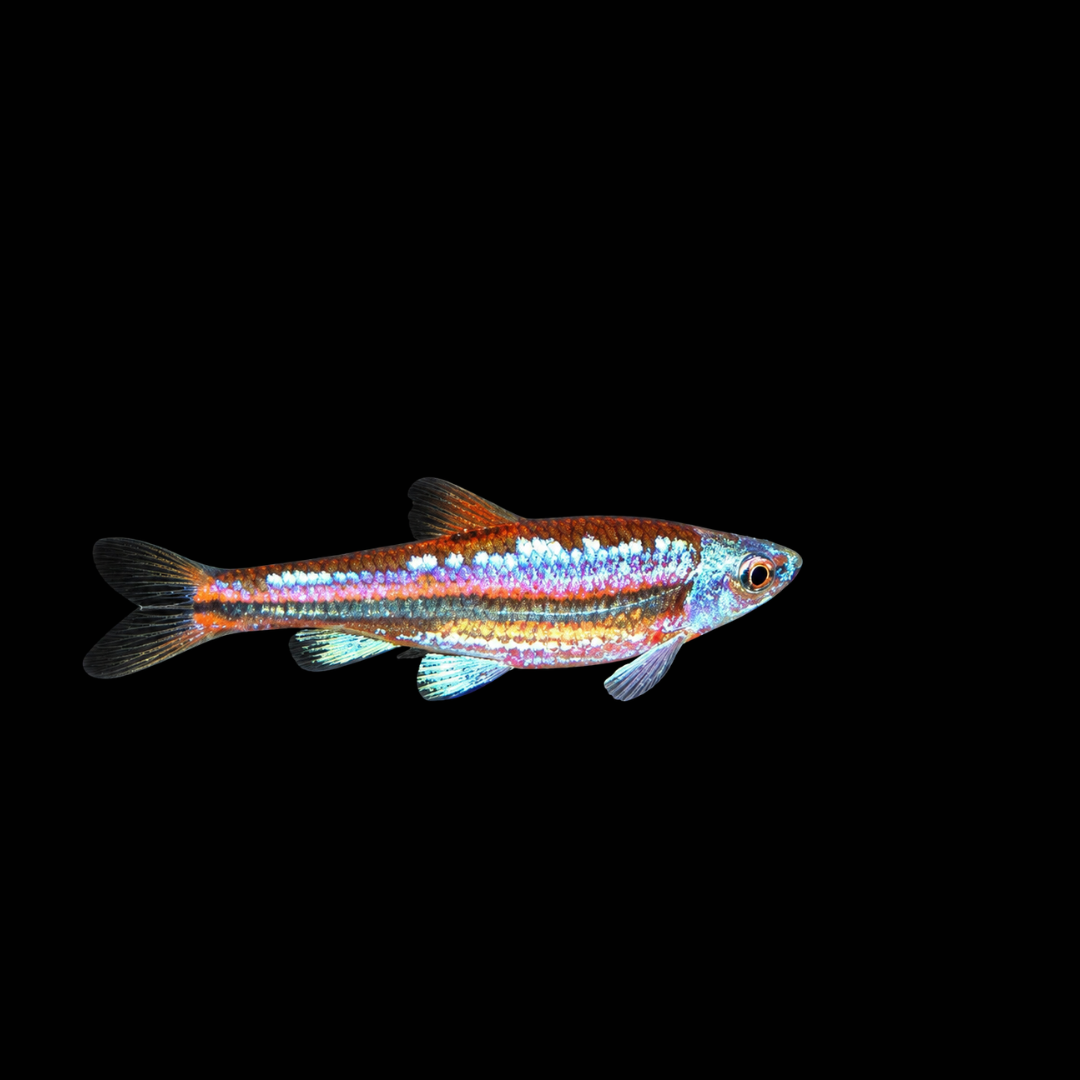
解説 / Description
レインボーシャイナーは、アメリカ合衆国南東部の清流に分布する小型の温帯性淡水魚です。通常時は銀色から淡いオリーブ色を帯びた控えめな姿ですが、繁殖期の雄は青、紫、赤が金属光沢を帯びて強く発色し、群れで泳ぐ姿に独特の華やかさが生まれます。日本の室内水槽では冬にヒーターを使わず飼えることが多い一方、熱帯魚ではないため、夏の高水温と酸欠を避ける管理がとても重要です。The rainbow shiner is a small temperate freshwater fish native to clear streams in the southeastern United States. Outside the breeding season it is modestly colored in silvery to pale olive tones, but breeding males can develop vivid metallic blues, purples, and reds, giving a school of these fish a striking presence. In Japanese indoor aquaria it can often be kept without a heater in winter, but it is not a tropical fish, so preventing high summer temperatures and low oxygen is essential.
基本情報 / Basic Information
| 学名 / Scientific Name | Hydrophlox chrosomus(旧学名:Notropis chrosomus) (formerly Notropis chrosomus) |
|---|---|
| 通称 / Common Name | レインボーシャイナーRainbow shiner |
| 分類 / Family | コイ目、ウグイ科(Leuciscidae)、Pogonichthyinae亜科、Hydrophlox属。古い資料や観賞魚の流通名では、広義のコイ科として扱われることがあります。Order Cypriniformes, family Leuciscidae, subfamily Pogonichthyinae, genus Hydrophlox. Older references and aquarium trade descriptions may place it in Cyprinidae in the broad traditional sense. |
| 英名 / English Name | Rainbow shiner |
| 分布 / Distribution | アメリカ合衆国南東部。主にモービル湾流域のクーサ川、カハバ川、アラバマ川、ブラックウォリアー川最上流部の水系を中心に、アラバマ州、ジョージア州北西部、テネシー州南東部に分布します。Southeastern United States, mainly in the Mobile Bay drainage, including the Coosa, Cahaba, Alabama, and extreme upper Black Warrior River systems in Alabama, northwestern Georgia, and southeastern Tennessee. |
| 最大体長 / Max Size | 一般的には5cm前後。最大で約8cmに達する小型魚です。Usually around 5 cm, with a maximum size of about 8 cm. |
| 寿命 / Lifespan | 野外調査では平均寿命はおよそ1年前後、最長で2年前後とされます。飼育下でも、低温・高酸素・清潔な水を保つことが長期維持の鍵になります。Field studies indicate an average lifespan of roughly one year and a maximum of around two years. In aquaria, cool, oxygen-rich, clean water is the key to maintaining them well. |
飼育環境 / Aquarium Environment
| 水槽サイズ / Tank Size | 最低でも60cm規格水槽、できれば90cm規格水槽以上がおすすめです。活発に泳ぐ群泳魚なので、水量だけでなく横方向の遊泳距離を確保します。A 60 cm standard aquarium is the practical minimum, while a 90 cm standard aquarium or larger is preferable. This is an active schooling fish, so horizontal swimming space is as important as water volume. |
|---|---|
| 水温 / Temperature | 飼育の中心は18〜22℃前後。10〜25℃程度まで対応できますが、25℃を超える状態を長く続けないようにします。日本の夏は冷却ファンや水槽用クーラーで、酸素量を落とさない管理が大切です。Keep them mainly around 18–22°C. They can tolerate roughly 10–25°C, but prolonged temperatures above 25°C should be avoided. In Japanese summers, use cooling fans or an aquarium chiller and maintain strong aeration. |
| 水質 / Water Quality | 清澄で酸素の多い水を好みます。pHは中性付近から弱アルカリ性を中心に、極端な軟水や酸性に傾けすぎない安定した水質が向きます。硝酸塩は低めに保ち、定期的な換水を行います。They prefer clear, oxygen-rich water. Stable water near neutral to slightly alkaline is suitable, and very soft or strongly acidic conditions should be avoided. Keep nitrate low with regular water changes. |
| レイアウト / Layout | 丸みのある川砂利や小石を敷き、流木や石を端に寄せて中央に遊泳スペースを残します。水流ポンプや外部式フィルターで流れを作ると、本来の渓流魚らしい泳ぎが引き出されます。水草はミクロソリウム、アヌビアス、バリスネリアなど、低〜中水温と水流に耐える丈夫な種類が向きます。Use rounded river gravel or small pebbles, place wood and stones toward the sides, and leave an open swimming lane. A powerhead or canister filter can create current and bring out their stream-fish behavior. Hardy plants such as Java fern, Anubias, and Vallisneria are suitable. |
| 注意点 / Precautions | 最も注意したいのは夏の高水温、酸欠、屋外への逸出です。屋外ビオトープでは大雨やオーバーフローで流出する可能性があるため、基本的には脱走防止を徹底した屋内水槽で終生飼育します。The main risks are high summer temperatures, low oxygen, and escape into the outdoors. Outdoor ponds can overflow during heavy rain, so they are best kept for life in a secure indoor aquarium. |
餌と給餌 / Feeding
| 餌の種類 / Diet | 小型魚用フレーク、マイクロペレットを主食にし、冷凍アカムシ、ミジンコ、ブラインシュリンプなどを補助的に与えます。藻類や植物質も多少摂るため、スピルリナやクロレラを含むフードを時々混ぜると栄養が偏りにくくなります。Use fine flakes or micro pellets for small fish as the staple diet, supplemented with frozen bloodworms, daphnia, and brine shrimp. Because they also take some algae and plant matter, occasional spirulina- or chlorella-based foods help balance the diet. |
|---|---|
| 給餌のポイント / Feeding Tips | 1日1〜2回、数分で食べ切れる量を与えます。繁殖を狙う場合は、低温期の後に水温を少しずつ上げながら、冷凍アカムシや活き餌を増やして親魚の状態を整えます。高水温期は食べ残しが水質悪化につながりやすいため、控えめにします。Feed once or twice daily, only as much as they finish within a few minutes. For breeding, gradually warm the water after a cool period and condition the adults with richer frozen or live foods. During hot weather, feed lightly because leftovers can quickly reduce water quality. |
性格と混泳 / Temperament and Tank Mates
| 性格 / Temperament | 温和ですが非常に活発で、群れでいるほど落ち着きます。単独や少数では臆病になったり、色が出にくくなったりします。最低6匹、できれば10匹以上で飼うと、群泳と雄同士のディスプレイを観察しやすくなります。Peaceful but very active, and most confident in a group. When kept alone or in too small a group, they may become shy and show less color. Keep at least six, and preferably ten or more, to observe natural schooling and male displays. |
|---|---|
| 混泳の相性 / Compatibility | 同じく低〜中水温と水流を好む、機敏な小型魚や底生魚と相性が良いです。候補はアカヒレ、ゼブラダニオ、ヨシノボリ類、ドジョウ類、ホンコンプレコなどです。ベタ、グッピー、エンゼルフィッシュのような動きの遅い魚や長いヒレを持つ魚は、落ち着かなくなりやすいため避けます。Good companions are agile small fish or bottom dwellers that also enjoy cool to moderate temperatures and current, such as white cloud mountain minnows, zebra danios, Rhinogobius gobies, loaches, and hillstream loaches. Avoid slow-moving or long-finned fish such as bettas, guppies, and angelfish, which may be stressed by the shiners’ speed. |
病気と対策 / Diseases and Prevention
| かかりやすい病気 / Common Diseases | 特定の病気に極端に弱い魚ではありませんが、高水温、酸欠、水質悪化、輸送直後のストレスが重なると、白点病、水カビ、尾ぐされ、細菌性の肌荒れが出ることがあります。体色が白っぽく抜ける、鼻上げをする、泳ぎが鈍るといった変化は、病気だけでなく熱ストレスのサインとしても確認します。They are not unusually prone to one specific disease, but high temperature, low oxygen, poor water quality, and transport stress can lead to ich, fungal infections, fin rot, or bacterial skin irritation. Pale color, surface gasping, and sluggish swimming should be checked as possible signs of disease or heat stress. |
|---|---|
| 対策と予防 / Prevention | 予防の中心は、低めの水温、強いエアレーション、清潔な水、過密を避けた群れ管理です。導入時は水合わせを丁寧に行い、可能であれば隔離期間を設けます。薬浴が必要な場合も、まず水温と酸素量を確認し、急激な環境変化を避けながら処置します。Prevention depends on cool, well-oxygenated, clean water and avoiding overcrowding. Acclimate new fish carefully and quarantine them when possible. If medication is needed, first check temperature and oxygen levels and avoid sudden changes. |
増やし方(繁殖) / Breeding
| 雌雄の判別 / Sexing | 雌は雄より体高が出やすく、成熟すると腹部がふっくらします。雄は繁殖期に頭部や体側が青紫色、腹部やヒレ周辺が赤く発色し、頭部や体表に追星が出ることがあります。Females tend to be deeper-bodied and become fuller in the abdomen when mature. Males develop intense blue-purple tones on the head and body, red around the belly and fins, and may show breeding tubercles during the breeding season. |
|---|---|
| 繁殖形態 / Reproduction | 自然界では、ブルーヘッドチャブなど他種が作った小石の巣を利用して産卵する、巣依存型のばらまき産卵を行います。水槽内ではビー玉、丸い小石、ウィローモス、産卵モップなどの隙間に卵を落とさせる方法で再現できます。親魚は卵を守らず食べてしまうため、産卵後は親を隔離します。In nature they are nest-associated egg scatterers, often spawning over pebble nests made by other fishes such as bluehead chubs. In aquaria this can be simulated with marbles, rounded pebbles, Java moss, or spawning mops. Adults do not guard the eggs and may eat them, so remove the parents after spawning. |
| 繁殖のポイント / Breeding Tips | 冬にあたる低温期を経験させ、その後2〜3週間かけて水温を20〜24℃前後へゆっくり上げると、春の繁殖スイッチを再現しやすくなります。孵化後の稚魚は非常に小さいため、最初はインフゾリアや微粉末フードを使い、成長に合わせてブラインシュリンプ幼生へ移行します。A cool winter-like period followed by a gradual rise to around 20–24°C over two to three weeks can help simulate the spring breeding trigger. Newly hatched fry are very small, so start with infusoria or very fine powdered fry food, then move to newly hatched baby brine shrimp as they grow. |
雑学と豆知識 / Trivia and Fun Facts
| 1. 「水中の炎」という属名 / 1. A genus name meaning “flame in water” | レインボーシャイナーは長くNotropis属として扱われてきましたが、2022年の分子系統研究を受けて、近縁のレッドリップシャイナー、グリーンヘッドシャイナー、イエローフィンシャイナー、サフランシャイナーとともにHydrophlox属へ整理されました。Hydrophloxは「水」と「炎」を組み合わせた名で、繁殖期の雄が水中で燃えるように見える姿をよく表しています。Rainbow shiners were long treated in the genus Notropis, but after molecular phylogenetic work in 2022 they were placed in Hydrophlox with the redlip, greenhead, yellowfin, and saffron shiners. The name Hydrophlox combines “water” and “flame,” a fitting image for breeding males that seem to burn underwater. |
|---|---|
| 2. 色は塗られているのではなく、光で輝く / 2. Their color is light, not just pigment | 繁殖期の金属光沢は、単純な赤や青の色素だけでなく、皮膚の光反射細胞が関わる構造色として説明されます。光の角度や魚の興奮状態で見え方が変わるため、同じ個体でも一瞬ごとに青み、紫み、赤みの印象が変化します。The breeding-season metallic sheen is not merely red or blue pigment; it is also explained as structural color produced by reflective cells in the skin. Because the appearance changes with light angle and the fish’s condition, the same individual can shift between blue, purple, and red impressions from moment to moment. |
| 3. 他の魚の巣を借りる繁殖戦略 / 3. A breeding strategy that borrows nests | 自然界では、自分で巣を作るのではなく、ブルーヘッドチャブなどが小石を積み上げた巣を利用して産卵します。この行動は、卵を安全な隙間へ送り込める利点がある一方、親が卵を守らないため、水槽で繁殖させる場合は産卵床と親魚を分ける工夫が必要です。In the wild, they do not build their own nests; instead, they spawn over pebble nests built by fishes such as bluehead chubs. This helps place the eggs into protected spaces, but because the adults do not care for them, aquarists must separate the spawning medium or remove the parents after spawning. |
| 4. 美しさと外来種リスクは表裏一体 / 4. Beauty and escape risk are inseparable | 冬の無加温飼育に向く丈夫さは魅力ですが、それは日本の屋外でも一時的に生き残れる可能性を示します。野外へ放流しないこと、屋外池から流出させないことは、飼育者が守るべき大切な約束です。水槽の中だけでその美しさを楽しむ姿勢が、本種にも日本の淡水魚にもやさしい飼い方です。Their ability to live in unheated winter aquaria is part of their appeal, but it also means they may survive outdoors for a time in Japan. Never release them and prevent escapes from ponds or outdoor containers. Enjoying them only inside a secure aquarium is the responsible choice for both this species and Japan’s native freshwater fish. |
| 5. 保全状態と飼育者の責任 / 5. Conservation status and aquarist responsibility | 本種は原産地では比較的低い保全懸念として扱われていますが、それは日本の自然へ出してよいという意味ではありません。観賞魚として親しまれる生き物ほど、入手後の管理、譲渡、終生飼育の計画が大切になります。In its native range, this species is treated as a relatively low conservation concern, but that does not mean it can be released into Japanese waters. The more familiar an aquarium fish becomes, the more important responsible ownership, rehoming plans, and lifelong care become. |
まとめ / Conclusion
レインボーシャイナーは、小さな体に清流魚らしい俊敏さと、繁殖期にだけ一段と際立つ鮮やかな発色を秘めた魚です。群れが流れに向かって泳ぐ姿は涼しげで、光を受けた雄が青や赤をきらめかせる瞬間には、温帯魚ならではの澄んだ美しさが感じられます。The rainbow shiner is a small fish that holds both the quickness of a clear-stream species and the vivid colors that become especially striking in the breeding season. A school swimming into the current looks cool and lively, and when a male catches the light in blue and red, it shows the clear beauty that makes temperate fishes so appealing.
その魅力を引き出す鍵は、低めの水温、豊富な酸素、よく流れる清潔な水、そして安心できる数の仲間です。水槽の外へ出さず、季節の変化に寄り添いながら大切に飼い込むことで、この魚はただ派手なだけではない、清流の空気まで運んでくれるような存在になります。The key to bringing out that charm is cool water, abundant oxygen, clean current, and a group large enough for the fish to feel secure. When kept carefully inside a secure aquarium and cared for in tune with the seasons, this fish becomes more than a colorful display; it brings the feeling of a clear stream into the aquarist’s room.

気になる道具や飼い方を見つけてみませんか?
 アイのアクアグッズ案内水草用ソイルの選び方|土・砂の違いとおすすめ商品道具の特徴や使い方、選ぶときのポイントをアイが紹介します。記事はコチラ →
 アイのアクアグッズ案内マジックリーフ物語|一枚の葉がアクアリウム用品になるまで道具の特徴や使い方、選ぶときのポイントをアイが紹介します。記事はコチラ →
 アイのアクアグッズ案内コケを食べるコイの仲間に合わせる飼育用品|フライングフォックス・アルジイーター・ガラ道具の特徴や使い方、選ぶときのポイントをアイが紹介します。記事はコチラ →
 アイのアクアグッズ案内コリドラスのもふもふ時間を楽しむ|餌・底砂・お掃除用品の選び方コリドラスのもふもふする食事風景を楽しむために。沈む餌2種類の違い、口元に配慮した底砂、食べ残しを回収する道具を、アクアグッズナビゲーターのアイが紹介します。記事はコチラ →
さまざまな飼育テーマをご紹介。リンク先の記事には広告・商品紹介が含まれます。
案内・紹介記事一覧へ →分布マップ
レインボーシャイナーは、アメリカ合衆国南東部のモービル湾流域を中心に、アラバマ州、ジョージア州北西部、テネシー州南東部の河川水系に分布します。
この地図は分布イメージを示すための概略プロットです。実際の採集地点や厳密な生息範囲を示すものではありません。
参考文献・主要参照資料
レインボーシャイナー(Hydrophlox chrosomus)の分類、分布、生息環境、飼育管理などに関する参考文献です。店舗・通販サイト、個人ブログ、まとめサイトは除外し、学術論文、公的・専門データベース、獣医学系資料、大学出版の専門書に絞っています。
-
Fricke, R., Eschmeyer, W. N. & Van der Laan, R. (eds.). Eschmeyer’s Catalog of Fishes. California Academy of Sciences. “Hydrophlox chrosomus.”
分類・学名・原記載・分布
Eschmeyer’s Catalog of Fishesで確認する -
Stout, C., Schönhuth, S., Mayden, R. L., Garrison, N. L. & Armbruster, J. W. (2022). Phylogenomics and classification of Notropis and related shiners (Cypriniformes: Leuciscidae) and the utility of exon capture on lower taxonomic groups. PeerJ, 10, e14072.
分類・Hydrophlox属への再整理
論文DOIで確認する -
Froese, R. & Pauly, D. (eds.). FishBase. “Hydrophlox chrosomus, Rainbow shiner.”
最大体長・分布・生息環境・淡水性
FishBaseで確認する -
NatureServe Explorer. “Hydrophlox chrosomus.”
分布・河川環境・保全上の位置づけ
NatureServe Explorerで確認する -
U.S. Geological Survey. Nonindigenous Aquatic Species Database. “Notropis chrosomus (Rainbow Shiner) – Species Profile.”
自然分布・移入記録・放流防止の注意
USGS NASで確認する -
Holder, D. S. & Powers, S. L. (2010). Life-history aspects of the Rainbow Shiner, Notropis chrosomus (Teleostei: Cyprinidae), in northern Georgia. Southeastern Naturalist, 9(2), 347-358.
寿命・成長・食性・繁殖期・野外水温
論文DOIで確認する -
Johnston, C. E. & Kleiner, K. J. (1994). Reproductive behavior of the Rainbow Shiner (Notropis chrosomus) and the Rough Shiner (Notropis baileyi), nest associates of the Bluehead Chub (Nocomis leptocephalus) (Pisces: Cyprinidae) in the Alabama River drainage. Journal of the Alabama Academy of Science, 65(4), 230-240.
繁殖行動・巣利用・産卵習性 -
Goldstein, R. J., Harper, R. W. & Edwards, R. (2000). American Aquarium Fishes. Texas A&M University Press.
北米産淡水魚の水槽飼育・繁殖・取り扱い上の注意 -
Merck Veterinary Manual. “Disorders and Diseases of Fish.” Reviewed/Revised Feb. 2020; Modified Apr. 2026.
病気・ストレス・水質悪化・過密・検疫の重要性
Merck Veterinary Manualで確認する -
MSD Veterinary Manual. “Routine Health Care of Fish.”
新規導入魚の検疫・日常管理・感染拡大予防
MSD Veterinary Manualで確認する
参照日:2026年6月24日。分類名は将来的に更新される可能性があるため、学名・分類階級はCatalog of Fishesや主要データベースでの再確認を推奨します。




コメント