

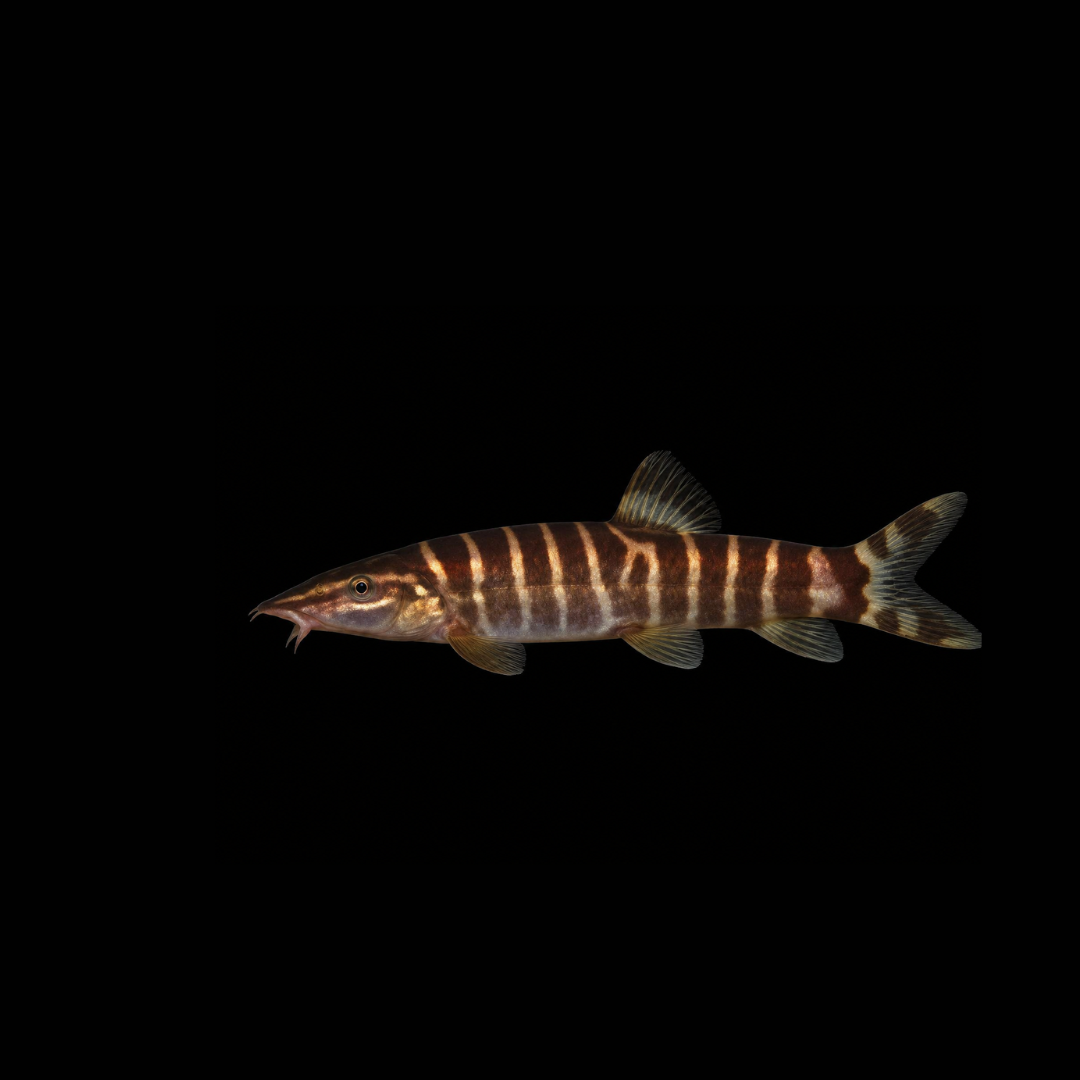
解説 / Description
シニボティア・プルクラは、中国南部からベトナムにかけて知られる小型から中型のボチア科ローチです。細長くしなやかな体に褐色から黄褐色の横帯が入り、流通名ではゴールデンゼブラローチやシニボチア・プルクラと呼ばれることもあります。観賞魚としては流通量が多い魚ではありませんが、状態よく導入できれば、清浄な水、十分な溶存酸素、適度な水流、そして同種の仲間をそろえることで、底面を活発に探索する魅力的な姿を見せてくれます。 Sinibotia pulchra is a small to medium-sized botiid loach known from southern China and Viet Nam. It has an elongated, flexible body marked with brown to yellowish-brown vertical bands, and it may appear in the aquarium trade under names such as golden zebra loach or Chinese golden zebra loach. It is not a commonly available aquarium fish, but when introduced in good condition and kept in clean, well-oxygenated water with suitable current and companions of its own kind, it becomes an engaging bottom-dweller with lively foraging behavior.
基本情報 / Basic Information
| 学名 / Scientific Name | Sinibotia pulchra (Wu, 1939) |
|---|---|
| 通称 / Common Name | シニボティア・プルクラ、シニボチア・プルクラ、ゴールデンゼブラローチGolden zebra loach, Chinese golden zebra loach, 12-banded Chinese loach |
| 分類 / Family | コイ目 ボチア科 シニボティア属Order Cypriniformes, family Botiidae, genus Sinibotia |
| 英名 / English Name | Golden Zebra Loach, Chinese Golden Zebra Loach, 12-banded Chinese Loach |
| 分布 / Distribution | 中国南部およびベトナム。分類学上の原記載では中国南部の漓江、陽朔周辺が関係し、現在のデータベースでは中国とベトナムに分布する淡水底生魚として扱われています。Southern China and Viet Nam. The original taxonomic record is associated with Li-Kiang, Yangso, southern China, while modern databases treat the species as a freshwater demersal fish distributed in China and Viet Nam. |
| 最大体長 / Max Size | 約8〜10cm。資料によって8cm前後から最大10cm程度とされます。About 8–10 cm. Published aquarium and database sources generally place the species around 8 cm, with a maximum of about 10 cm. |
| 寿命 / Lifespan | 本種単独の信頼できる寿命データは少なく、断定は避けるべきです。短期飼育向けではなく、安定した水質と低めの水温を維持して長期飼育を前提に迎えたい魚です。Reliable species-specific lifespan data are scarce, so a firm number should be avoided. This is not a short-term display fish; it should be kept with long-term maintenance in mind, using stable water quality and relatively cool conditions. |
飼育環境 / Aquarium Environment
| 水槽サイズ / Tank Size | 同種を5匹以上で維持するなら、最低でも200L前後を目安にし、底面積は120×30cm以上を確保したいところです。日本の規格水槽では120cm規格水槽以上が扱いやすく、余裕を持つなら120cmワイド水槽が安心です。For a group of five or more, aim for roughly 200 liters or more, with a footprint of at least about 120 × 30 cm. A standard 120 cm aquarium is a practical minimum, and a wider 120 cm setup gives better swimming space and layout flexibility. |
|---|---|
| 水温 / Temperature | 20〜25.5℃を中心に管理します。複数の資料では20〜24℃、22〜26℃など近い範囲が示されているため、普段は22〜24℃前後を安定させ、日本の夏季に26℃を超える状態が続く場合は冷却やエアレーション強化を検討します。 Maintain the aquarium mainly within 20–25.5°C. Published ranges include values such as 20–24°C and 22–26°C, so a stable everyday target around 22–24°C is sensible. If summer temperatures remain above about 26°C, consider cooling and stronger aeration. |
| 水質 / Water Quality | pHは6.5〜8.0前後、硬度は軟水から中硬水まで対応しやすい範囲です。重要なのは数値を大きく動かさないことと、有機汚れをためないことです。硝酸塩は50mg/L未満を上限の目安とし、実際の飼育ではできるだけ低く保ちます。A pH around 6.5–8.0 is suitable, and the species can be maintained from soft to moderately hard water. Stability and cleanliness matter more than chasing a single number. Keep nitrate below 50 mg/L as an upper limit, and aim lower in routine maintenance. |
| レイアウト / Layout | 角のない細砂や丸みのある川砂利を敷き、丸石、スレート、流木で複数の隠れ家と視線を遮る場所を作ります。底を探るヒゲを傷めないことが大切です。照明はやや暗めにし、水流ポンプや強めのろ過で水槽全体に酸素が行き渡るようにします。Use smooth sand or rounded gravel, and arrange rounded stones, slate, and driftwood to create multiple hiding places and visual barriers. Avoid anything that can damage the sensitive barbels. Lighting should be subdued, and filtration or powerheads should keep the water well oxygenated throughout the aquarium. |
| 注意点 / Precautions | 立ち上げ直後の未成熟な水槽には入れず、必ず生物ろ過が安定した水槽へ導入します。飛び出し事故を防ぐため、フタは隙間なく設置します。ボチア類に見られる眼下棘は網に絡むことがあるため、移動時は目の細かい網で無理に追い込まず、プラケースなどで落ち着いて扱います。Do not add this species to a biologically immature aquarium; the biofilter should already be stable. Use a tight-fitting lid, as loaches can escape through small gaps. Like other botiids, it has sub-ocular spines that may snag in nets, so use a container rather than forcing the fish into a coarse net. |
餌と給餌 / Feeding
| 餌の種類 / Diet | 沈下性のボチア用タブレット、ナマズ用ペレット、マイクロペレット、冷凍赤虫、冷凍ブラインシュリンプ、ミジンコ、ボウフラ系の冷凍餌などをよく食べます。補助的にアルジーウェーハや薄切りのキュウリなどを与えると、メニューに幅を持たせられます。小型の巻貝を食べることもありますが、スネール駆除だけを目的に導入する魚ではありません。Offer sinking botiid tablets, catfish pellets, micro pellets, frozen bloodworms, frozen brine shrimp, daphnia, and frozen mosquito larvae. Algae wafers and thin slices of cucumber can add variety. It may eat small snails, but it should not be acquired solely as a snail-control tool. |
|---|---|
| 給餌のポイント / Feeding Tips | 餌の匂いに強く反応し、底面だけでなく中層まで出てくることがあります。水を汚しやすい高タンパク餌ばかりに偏らせず、少量を食べ切れる範囲で与えます。混泳水槽では、動きの遅い底生魚が餌負けしていないか確認してください。It often responds strongly to food scents and may leave the bottom to feed in midwater. Do not rely only on rich, high-protein foods; feed small portions that are consumed promptly. In community aquaria, make sure slower bottom-dwellers are not being outcompeted. |
性格と混泳 / Temperament and Tank Mates
| 性格 / Temperament | 同種の仲間と関わりながら暮らす社会性のあるローチです。単独では隠れがちになったり、他魚へ落ち着かない反応を見せたりすることがあるため、最低3匹、できれば5匹以上での飼育が望まれます。群れの中では小競り合いや順位づけが起こることがありますが、十分な隠れ家と個体数があれば安定しやすくなります。This is a social loach that benefits from interaction with its own kind. Single specimens may become reclusive or display unsettled behavior toward other fishes, so keep at least three, and preferably five or more. Some hierarchy-related chasing may occur, but a suitable group size and ample hiding places help keep behavior stable. |
|---|---|
| 混泳の相性 / Compatibility | 適度な水流と高い酸素量を好む中上層魚、たとえばデバリオ、ダニオ、大型になりすぎないバルブ類などと相性がよい傾向があります。底生魚ではガラ、クロスオケイルス、ヒルストリームローチ類など、流れを好む種類が候補になります。長いヒレを持つ魚、動きの遅い魚、強い水流を嫌う魚、餌取りで負けやすい底生魚との混泳は慎重に考えます。Good candidates include active mid- and upper-water fishes that tolerate current and high oxygen, such as Devario, Danio, and moderately sized barbs. Bottom-dwelling candidates include Garra, Crossocheilus, and hillstream loaches that appreciate flow. Avoid or carefully assess long-finned, slow-moving, or low-current fishes, as well as bottom-dwellers that may lose out at feeding time. |
病気と対策 / Diseases and Prevention
| かかりやすい病気 / Common Diseases | 本種だけに限定される病気というより、輸入直後のストレス、内部寄生虫や消化器系の不調による痩せ、白点病、ヒゲの損傷からの細菌感染に注意します。ワイルド個体として入荷することが多い魚では、見た目が回復していても体内のコンディションが整っていない場合があります。Concerns are not necessarily unique to this species, but include import stress, weight loss linked to internal parasites or digestive problems, white spot disease, and bacterial infections following barbel damage. Wild-origin fish may look outwardly recovered before their internal condition has fully stabilized. |
|---|---|
| 対策と予防 / Prevention | 新規導入個体はメイン水槽にすぐ入れず、検疫水槽で数週間観察します。水温、水質、呼吸の速さ、痩せ方、糞の状態、餌食いを確認し、異常があれば魚病薬の表示や専門家の助言に従って対処します。日常管理では、鋭い底床を避け、換水とろ過でアンモニア、亜硝酸、硝酸塩、有機汚れをためないことが最も重要です。Quarantine new arrivals for several weeks before adding them to the main aquarium. Watch temperature, water quality, breathing rate, body condition, feces, and appetite; if problems appear, follow appropriate medication instructions or seek specialist advice. In daily care, avoid sharp substrate and prevent the buildup of ammonia, nitrite, nitrate, and organic waste through strong filtration and regular water changes. |
増やし方(繁殖) / Breeding
| 雌雄の判別 / Sexing | 確実な外見差は知られていません。成熟したメスは腹部がややふっくら見える可能性がありますが、単独の外見だけで断定するのは困難です。Reliable external sexing characters are not well established. Mature females may appear fuller-bodied, but sex should not be determined confidently from appearance alone. |
|---|---|
| 繁殖形態 / Reproduction | 家庭のアクアリウムでの安定した繁殖例は広く知られていません。自然下での詳しい産卵条件も十分には整理されておらず、繁殖形態の詳細は不明な点が多い魚です。Stable breeding in the home aquarium is not widely documented. Natural spawning conditions are also poorly summarized in accessible sources, so many details of reproduction remain uncertain. |
| 繁殖のポイント / Breeding Tips | 現時点では、一般飼育者が再現できる確立された繁殖手順はありません。繁殖を狙うよりも、まずは同種の群れ、清浄な水、低めで安定した水温、十分な酸素、隠れ家をそろえ、長期維持できる環境を作ることが優先です。There is currently no established, repeatable breeding protocol for typical aquarists. Rather than focusing on breeding, prioritize long-term maintenance with a proper group, clean water, relatively cool and stable temperatures, high oxygen levels, and ample cover. |
雑学と豆知識 / Trivia and Fun Facts
| 1. 名前に残る分類史 / 1. A taxonomic history preserved in the name | 本種は1939年にBotia pulchraとして記載され、現在はSinibotia pulchraとして扱われています。古い文献や流通情報ではBotiaの名が残ることがあり、同じ魚を指しているのか、近縁種や旧分類名が混ざっているのかを確認する楽しさがあります。pulchraはラテン語で美しいという意味を持ち、縞模様の整った姿にふさわしい名前です。The species was described in 1939 as Botia pulchra and is now treated as Sinibotia pulchra. Older references and trade information may still preserve the name Botia, making it useful to check whether a source refers to the same species, a close relative, or an outdated classification. The epithet pulchra means beautiful in Latin, a fitting name for a neatly banded loach. |
|---|---|
| 2. 「急流魚」と言い切りすぎない理由 / 2. Why it should not be described only as a fast-current fish | アクアリウムでは水流と酸素量が重視されますが、自然環境の記述では清澄な小川や河川本流の底部、流れは中程度からゆるやかな場所も示されています。そのため、本種を急流だけに住む魚と断定するよりも、清浄で酸素の多い流れのある河川環境に適応した底生魚と捉えるほうが安全です。Aquarium care emphasizes current and high oxygen levels, yet habitat descriptions also include the bottom areas of clear streams and main rivers with moderate or slow flow. It is therefore safer to regard the species as a bottom-dweller adapted to clean, well-oxygenated river habitats rather than as a fish restricted only to torrents. |
| 3. 網に絡みやすい眼下棘 / 3. Sub-ocular spines that can snag in nets | ボチア科の仲間には、眼の下に可動式の棘を持つものがいます。普段は目立ちませんが、驚いたときに展開されることがあり、粗い網に絡むと魚にも飼育者にも負担になります。観察するときは美しい縞模様に目が行きますが、移動や水合わせではこの小さな防衛器官の存在を思い出すと扱いが丁寧になります。Many botiid loaches possess movable sub-ocular spines below the eyes. They are not always obvious, but may be extended when the fish is alarmed and can snag in coarse nets. The banded pattern draws the eye, but remembering this small defensive structure encourages gentler handling during transfers and acclimation. |
| 4. 音を出すローチとしての一面 / 4. A loach with a sonic side | ボチア類は、餌を奪い合うときや緊張した場面でクリック音のような音を出すことがあります。仕組みは種ごとの詳しい研究が限られるため断定は避けますが、咽頭歯や浮き袋に関わる音響的な働きが考えられています。薄暗い石の隙間で暮らす魚にとって、視覚だけでなく振動や音もコミュニケーションの助けになっているのかもしれません。Botiid loaches may produce clicking sounds during feeding competition or tense encounters. Detailed species-specific studies are limited, so the mechanism should not be overstated, but pharyngeal teeth and the swim bladder are often discussed in relation to sound production and resonance. For a fish living among dim crevices, vibration and sound may complement visual signals. |
| 5. 希少流通だからこそ丁寧に迎える魚 / 5. A rarely traded fish that deserves careful introduction | 日本国内では入荷が極めて少ない魚として扱われることがあります。珍しさに惹かれて即決するより、導入前に水槽の成熟、低めの水温、強いろ過、酸素量、同種の導入数を整えておくことが大切です。希少な魚ほど、見つけた瞬間より迎えた後の数週間が勝負になります。In Japan, this species may be treated as a very rarely imported fish. Rather than buying it simply because it is unusual, prepare a mature aquarium, relatively cool water, strong filtration, high oxygen, and an appropriate group size before introduction. With rare fishes, the first few weeks after arrival matter more than the moment of finding them. |
まとめ / Conclusion
シニボティア・プルクラは、細長い体に入る縞模様の美しさだけでなく、石の間を縫うように泳ぐ柔軟な動き、仲間同士で築く社会性、餌を探すときの力強い探索行動まで楽しめるローチです。派手さで一瞬に目を奪うタイプではなく、環境になじむほど水槽の奥行きを深めてくれる存在です。 Sinibotia pulchra is appealing not only for its banded, elongated body, but also for its flexible movement through stones, social interactions with its own kind, and energetic foraging behavior. It is not merely a fish that impresses at first glance; as it settles in, it adds depth and character to the aquarium.
清浄な水、十分な酸素、ゆるやかすぎない流れ、傷つけない底床、安心できる隠れ家、そして同種の仲間。これらがそろった水槽では、シニボティア・プルクラは希少魚という肩書きだけでは語れない、清流性ローチらしい落ち着いた魅力を長く見せてくれます。 Clean water, abundant oxygen, suitable current, a gentle substrate, secure hiding places, and companions of its own kind are the foundation of its care. In an aquarium that provides these conditions, Sinibotia pulchra reveals a calm, river-loach charm that goes far beyond its reputation as a rare import.

気になる道具や飼い方を見つけてみませんか?
 アイのアクアグッズ案内コリドラスのもふもふ時間を楽しむ|餌・底砂・お掃除用品の選び方コリドラスのもふもふする食事風景を楽しむために。沈む餌2種類の違い、口元に配慮した底砂、食べ残しを回収する道具を、アクアグッズナビゲーターのアイが紹介します。記事はコチラ →
 アイのアクアグッズ案内水槽のコケ掃除|道具の選び方とお掃除生体の得意・不得意道具の特徴や使い方、選ぶときのポイントをアイが紹介します。記事はコチラ →
 アイのアクアグッズ案内水槽のろ材の選び方|ウール・リング・活性炭の違いとおすすめ商品フィルターの中の綿や石は何をしている? アイとコタロウが、ウール・スポンジ・セラミック・焼結ガラス・活性炭・ゼオライトを比較。機種との相性、入れ方、洗い方と交換まで商品とともに紹介します。記事はコチラ →
 アイのアクアグッズ案内水草トリミングの道具とやり方|ハサミ・ピンセットを水草に合わせて選ぼう伸びすぎた水草は切っていい? 有茎草の差し戻し、前景草の絨毯、流木のモスを整える場面から、水草用ハサミ・ピンセット・ゴミ取りネットの選び方と片付けを紹介します。記事はコチラ →
さまざまな飼育テーマをご紹介。リンク先の記事には広告・商品紹介が含まれます。
案内・紹介記事一覧へ →分布マップ
シニボティア・プルクラは、中国南部およびベトナムに分布するとされる淡水底生魚です。原記載に関係する中国南部の漓江・陽朔周辺を、分布イメージ用の概略代表地点として示しています。
※この地図は分布欄の記述をもとにした概略プロットです。実際の採集地点や厳密な生息範囲を示すものではありません。
参考文献・根拠資料
本リストは、シニボティア・プルクラの分類、分布、生息環境、飼育条件、繁殖情報の扱い、病気・注意点を支えるための資料に絞って選定しています。店舗、通販ページ、個人ブログ、一般的なまとめサイトは除外し、魚類分類データベース、査読論文、獣医療系資料を中心にしています。
-
分類・模式産地・分布
California Academy of Sciences. Eschmeyer's Catalog of Fishes: Sinibotia pulchra (Wu, 1939).
現行の有効名、旧組み合わせ名 Botia pulchra、Botiidae / Botiinae での扱い、模式産地、Pearl River basin を中心とする分布記述の確認に使用。
-
基本情報・分布・生息環境・水温
Froese, R. and Pauly, D. eds. FishBase: Sinibotia pulchra.
最大体長、淡水・底生性、亜熱帯性、22–26℃、中国・ベトナム分布、清澄で中程度から緩やかに流れる河川底部という生息環境の確認に使用。繁殖データが十分に埋まっていない点も、繁殖情報を断定しない判断材料とした。
-
ボチア類の分類史
Kottelat, M. 2004. Botia kubotai, a new species of loach (Teleostei: Cobitidae) from the Ataran River basin (Myanmar), with comments on botiine nomenclature and diagnosis of a new genus. Zootaxa 401: 1–18.
Botiinae の命名・体系整理、アジア産ボチア類の属レベルでの扱いを確認するための基礎文献として使用。
-
シニボティア亜属・近縁分類
Yang, J.-X. and Chen, Y.-R. 1992. Revision of the subgenus Botia (Sinibotia) with description of a new species (Cypriniformes: Cobitidae). Ichthyological Exploration of Freshwaters 2(4): 341–349.
Sinibotia をめぐる古典的な分類整理、近縁種比較、形態・生息情報を補強する文献として使用。
-
近縁種比較・形態・系統
Bohlen, J., Šlechtová, V., Šlechta, V., and Ráb, P. 2016. A Ploidy Difference Represents an Impassable Barrier for Hybridisation in Animals. Is There an Exception among Botiid Loaches (Teleostei: Botiidae)? PLOS ONE 11(7): e0159311.
Leptobotia guilinensis、Sinibotia pulchra、Sinibotia zebra 周辺の形態比較、系統的位置、眼下棘などボチア類の形態的特徴を説明する際の補助資料として使用。
-
保全状況
IUCN. The IUCN Red List of Threatened Species: Sinibotia pulchra.
野生個体群の情報が十分ではないこと、保全状況を断定しすぎないことを確認するために使用。アクセス状況によっては、FishBase 上の IUCN Red List Status 欄も併せて確認対象とする。
-
水質管理・酸素・窒素化合物
Merck Veterinary Manual. Environmental Diseases of Aquatic Animals in Aquatic Systems.
低溶存酸素、高アンモニア、pH、窒素化合物などが魚の健康に与える影響を確認するために使用。水流・ろ過・換水・高水温時の酸素不足への注意を支える一般的な獣医療系根拠。
-
水質基準・塩素・硝酸塩
MSD Veterinary Manual. Normal Reference Ranges for Routine Water Quality Analysis.
淡水での溶存酸素、pH、アンモニア、亜硝酸、硝酸塩、塩素・クロラミンに関する目安を確認するために使用。記事内の水質管理・水道水処理の注意点の根拠とした。
-
寄生虫・痩せ・検疫
Merck Veterinary Manual. Parasitic Diseases of Fish.
野生採集魚が寄生虫を保有しうること、Spironucleus などの内部寄生性原虫が体重減少や摂食不良に関わることを確認するために使用。導入初期の検疫・観察の必要性を支える資料。
-
薬剤使用時の注意
MSD Veterinary Manual. Management of Aquarium Fish.
フェンベンダゾールやレバミゾールなどの駆虫薬について、魚種差・投与経路・安全性に注意が必要であることを確認するために使用。投薬時は、魚種や投与方法によって安全性が変わる点に注意が必要です。
飼育条件の補足:本種だけを対象とした水槽サイズや混泳、繁殖の研究は限られています。記載した条件は自然環境や体の大きさを踏まえた目安です。実際の成長や魚同士の関係に応じて、飼育スペースを見直してください。




コメント