

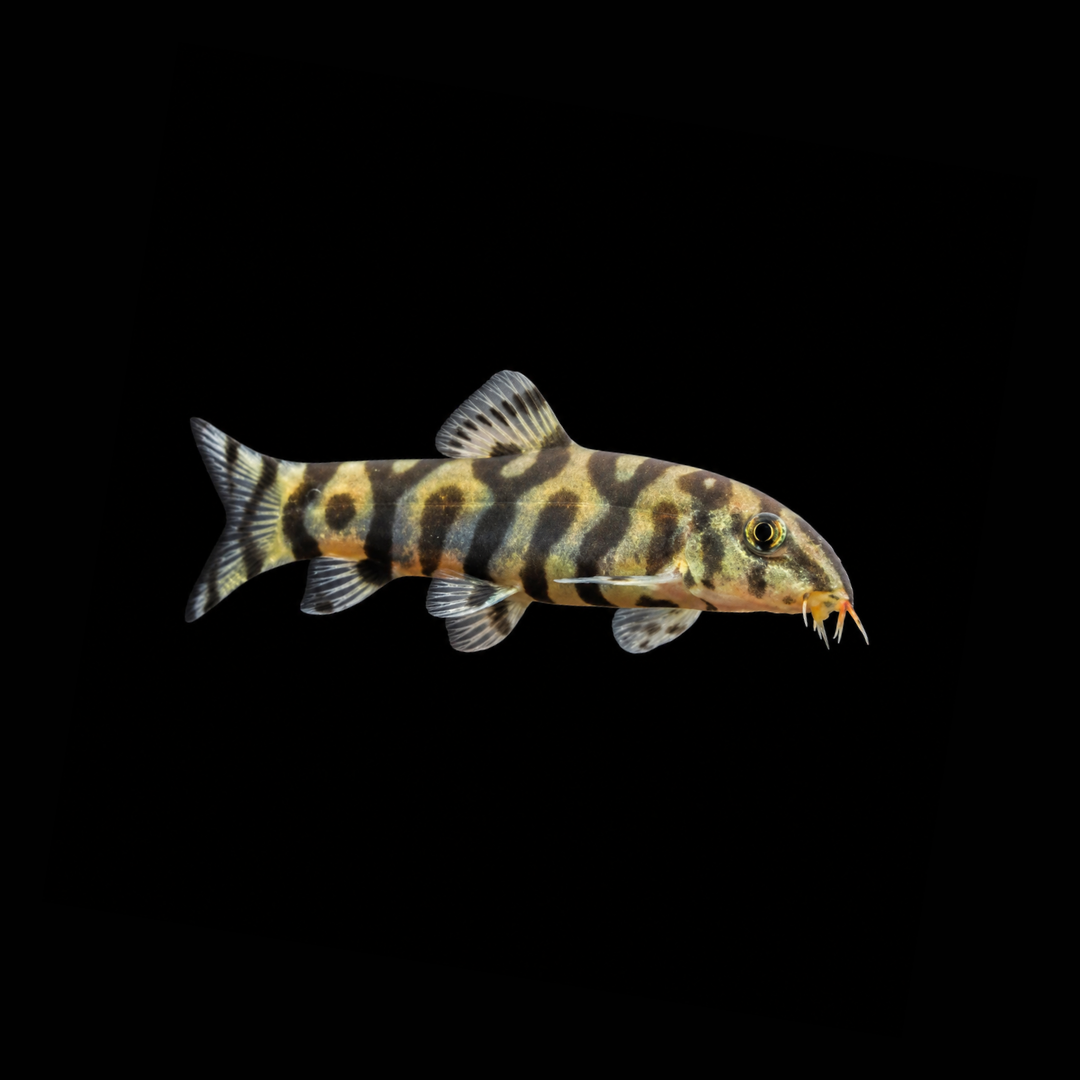
解説 / Description
パキスタンローチは、日本の観賞魚店で古くから親しまれているヨーヨーローチ系のボティアです。銀色から淡い黄褐色の体に暗色の帯や網目模様が入り、若魚では「Y」と「O」が並んだように見えることから、英語圏ではヨーヨーローチとも呼ばれます。学術上はBotia almorhaeの名で扱われることがありますが、流通個体にはBotia lohachataや近縁種、あるいはよく似た地域型が含まれる可能性があり、名称にはやや混乱があります。そのため、ここでは国内で「パキスタンローチ」として流通するヨーヨーローチ系ボティアを、飼育上の実用性を重視して解説します。 The Pakistani loach is a familiar yo-yo loach type Botia in the Japanese aquarium trade. It has dark bands or reticulated markings over a silvery to pale yellowish-brown body, and juveniles often show patterns that resemble the letters “Y” and “O,” giving rise to the English name “yo-yo loach.” Scientifically, the name Botia almorhae is often used, but trade specimens may include Botia lohachata, close relatives, or similar regional forms, so the naming is somewhat confused. This guide therefore treats the fish practically as the yo-yo loach type Botia sold in Japan under the name “Pakistani loach.”
基本情報 / Basic Information
| 学名 / Scientific Name | Botia almorhae Gray, 1831 として紹介されることが多いですが、流通上はis often used, but trade fish may also be treated as Botia lohachata Chaudhuri, 1912 または近縁種名義の個体を含む場合があります。or related forms. |
|---|---|
| 通称 / Common Name | パキスタンローチ、ヨーヨーローチ、アルモラローチ、レティキュレートローチPakistani loach, yo-yo loach, Almorha loach, reticulate loach |
| 分類 / Family | コイ目 アユモドキ科 ボティア属Order Cypriniformes, family Botiidae, genus Botia |
| 英名 / English Name | Yo-yo loach, Pakistani loach, Almorha loach, Reticulate loach |
| 分布 / Distribution | 学術上のBotia almorhaeは主にインドとネパールのヒマラヤ山麓水系に関連づけられます。Botia lohachataはパキスタン、インド、バングラデシュ、ネパールに分布するとされ、流通名としてのパキスタンローチでは両者や近縁タイプが混同されることがあります。Scientifically recognized Botia almorhae is mainly associated with India and Nepal in Himalayan foothill drainages. Botia lohachata is listed from Pakistan, India, Bangladesh, and Nepal, and trade fish sold as Pakistani loaches may involve these names or closely related forms. |
| 最大体長 / Max Size | 最大で15cm前後です。家庭水槽では8〜12cmほどで見かけることが多いものの、長期飼育ではより大きくなる余地があります。Around 15 cm at maximum. In home aquaria it is often seen at about 8–12 cm, but well-kept individuals can grow larger over time. |
| 寿命 / Lifespan | 5〜8年程度が目安です。水質が安定し、十分な遊泳スペースと群れが確保されていれば、より長く付き合えることもあります。Usually around 5–8 years. With stable water quality, enough swimming space, and a proper group, it may live longer. |
飼育環境 / Aquarium Environment
| 水槽サイズ / Tank Size | 若魚の一時的な飼育なら60cm規格水槽でも管理できますが、終生飼育では90cm規格水槽以上が安心です。5〜6匹以上で飼うなら、120cm規格水槽またはそれに近い底面積を用意すると、遊泳と順位行動に余裕が出ます。Juveniles can be managed temporarily in a standard 60 cm tank, but a standard 90 cm tank or larger is safer for long-term care. For a group of 5–6 or more, a standard 120 cm tank or a similar footprint gives them better room for swimming and social behavior. |
|---|---|
| 水温 / Temperature | 24〜30℃が目安です。低水温や急な水温変化は白点病などのきっかけになりやすいため、冬場はヒーターで安定させます。 Keep the temperature around 24–30°C. Low temperatures and sudden changes can trigger problems such as ich, so a heater should be used to maintain stability in winter. |
| 水質 / Water Quality | 弱酸性〜中性を中心に、pH6.0〜7.5前後が扱いやすい範囲です。極端な硬水や汚れた水を避け、よく効いたろ過と定期的な換水で、酸素量の多い清浄な水を維持します。Slightly acidic to neutral water, around pH 6.0–7.5, is easy to manage. Avoid extreme hardness and polluted water, and maintain clean, oxygen-rich conditions with effective filtration and regular water changes. |
| レイアウト / Layout | 角の丸い細かな砂を敷き、流木、石組み、土管、シェルターで隠れ家を複数作ります。ヒゲで底床を探るため、角の鋭い砂利は避けると安心です。水草を使う場合は、掘り返されにくいアヌビアス、ミクロソリウム、ウィローモスなどの活着系が扱いやすいです。Use fine, rounded sand and provide several shelters with driftwood, rocks, caves, or pipes. Because the fish probes the substrate with its barbels, sharp gravel is best avoided. If using plants, attached species such as Anubias, Microsorum, and Java moss are easier because they are less likely to be uprooted. |
| 注意点 / Precautions | 驚くと飛び出すことがあるため、フタは必須です。目の下に格納式の眼下棘を持つため、網に絡まったり輸送袋を傷つけたりすることがあります。移動時は追い回さず、袋や容器へゆっくり誘導するように扱います。A lid is essential because startled fish may jump. Retractable subocular spines below the eyes can catch in nets or damage transport bags. When moving the fish, avoid chasing it aggressively and guide it calmly into a bag or container. |
餌と給餌 / Feeding
| 餌の種類 / Diet | 沈下性ペレット、コリドラス用タブレット、冷凍アカムシ、ブラインシュリンプ、イトメなどをよく食べます。補助的にスピルリナ系タブレットや柔らかくした野菜を少量与えると、食性に幅を持たせやすくなります。水槽内のサカマキガイやラムズホーンなども捕食します。It readily eats sinking pellets, bottom-feeder tablets, frozen bloodworms, brine shrimp, and small worms. Spirulina-based tablets or small portions of softened vegetables can add variety. It also preys on pest snails such as bladder snails and ramshorn snails. |
|---|---|
| 給餌のポイント / Feeding Tips | 食欲が強く動きも速いため、同居するコリドラスなどに餌が行き渡っているか観察します。沈下性の餌を複数箇所へ落とすと、餌の独占を防ぎやすくなります。スネールを食べる魚ではありますが、貝だけに頼らず、栄養バランスのよい人工飼料を基本にします。Because it is energetic and has a strong appetite, watch whether slower tank mates such as Corydoras are getting enough food. Dropping sinking foods in several places helps reduce food monopolization. Although it eats snails, do not rely on snails alone; a balanced prepared diet should remain the staple. |
性格と混泳 / Temperament and Tank Mates
| 性格 / Temperament | 好奇心が強く、昼間もよく動く活発な底生魚です。同種間で順位を作るため小競り合いは見られますが、十分な数で飼うと攻撃が分散され、本来の行動が出やすくなります。物陰で横向きに寝転がる姿は、ボティア類によく見られる正常な休息姿勢です。It is a curious and active bottom-dweller that often moves during the day. Individuals form a social hierarchy, so minor sparring can occur, but keeping a proper group disperses aggression and encourages natural behavior. Resting on its side under cover is a normal relaxed posture for Botia loaches. |
|---|---|
| 混泳の相性 / Compatibility | ラスボラ、中型テトラ、ダニオなど、中〜上層を泳ぐ素早い魚とは相性がよいです。コリドラスとの混泳も可能ですが、餌の競合には注意します。ベタ、グッピー、エンゼルフィッシュのようなヒレが長い魚、小型エビ、観賞用の巻貝は、ヒレかじりや捕食の対象になりやすいため避けます。Fast mid- to upper-level fish such as rasboras, medium-sized tetras, and danios are good companions. Corydoras can also work, but food competition should be monitored. Avoid long-finned fish such as bettas, guppies, and angelfish, as well as small shrimp and ornamental snails, because they may be nipped or eaten. |
病気と対策 / Diseases and Prevention
| かかりやすい病気 / Common Diseases | 導入直後や水温変化の大きい時期には白点病に注意が必要です。ボティア類は鱗が非常に細かく、薬品への反応が強く出ることがあるため、一般的な熱帯魚より慎重な管理が向きます。ヒゲや腹部を傷つけると、細菌性の二次感染につながることもあります。Ich is the main disease to watch for, especially soon after introduction or during periods of temperature fluctuation. Botia loaches have very small scales and can react strongly to medications, so they should be treated more cautiously than many common tropical fish. Injuries to the barbels or belly can also lead to secondary bacterial infections. |
|---|---|
| 対策と予防 / Prevention | 導入時は水合わせを丁寧に行い、急な低水温を避けます。白点病治療では隔離水槽を使い、薬剤の説明書にあるローチ類、ナマズ類、古代魚などへの注意を必ず確認します。マラカイトグリーン系やメチレンブルー系の薬を使う場合も、最初から強く処理せず、魚の反応を見ながら慎重に進めます。薬効を吸着しやすいソイルや活性炭は薬浴時に避け、強めのエアレーションを行います。昇温は白点虫の生活環を進める補助になりますが、魚の体力と酸素量を見ながらゆっくり行います。Acclimate new fish carefully and avoid sudden low temperatures. For ich treatment, use a separate hospital tank and always check the medication label for warnings about loaches, catfish, or other sensitive fishes. If using malachite green or methylene blue medications, avoid strong treatment from the start and proceed while watching the fish’s reaction. Avoid soil substrates and activated carbon during treatment because they can absorb medication, and provide strong aeration. Raising the temperature can help speed the ich parasite’s life cycle, but it should be done gradually while monitoring the fish’s condition and oxygen level. |
増やし方(繁殖) / Breeding
| 雌雄の判別 / Sexing | 外見だけでの判別は難しい魚です。成熟したメスは抱卵時に腹部がふっくら見えることがありますが、個体差や給餌状態でも変化するため、確実な判断材料にはなりません。Sexing by appearance is difficult. Mature females may look fuller in the abdomen when carrying eggs, but body condition and feeding can create similar differences, so this is not a fully reliable method. |
|---|---|
| 繁殖形態 / Reproduction | 卵生です。自然下では季節的な水位変化や水流、移動行動が繁殖に関わると考えられます。流通個体は東南アジアなどで商業的に繁殖されたものが多く、ホルモン誘導繁殖が用いられる例があります。It is an egg-layer. In nature, seasonal water-level changes, flow, and movement behavior are thought to be involved in reproduction. Many trade specimens are commercially bred in Southeast Asia or elsewhere, and hormone-induced breeding may be used. |
| 繁殖のポイント / Breeding Tips | 一般的な家庭水槽での自然繁殖はかなり難しい魚です。単に水温や換水を調整するだけでは、野生下の季節変化や移動環境を再現しにくいためです。飼育では繁殖を狙うよりも、群れを安定させ、長く健康に飼うことを目標にするとよいでしょう。Natural breeding in a typical home aquarium is very difficult. Temperature changes and water changes alone are unlikely to reproduce the seasonal shifts and movement conditions of the wild habitat. In home aquaria, it is more realistic to focus on a stable group and long-term health rather than breeding. |
雑学と豆知識 / Trivia and Fun Facts
| 1. ヨーヨーローチという名前の由来 / 1. Origin of the name “yo-yo loach” | 若い個体の体側には、暗色の帯と明るい地色が組み合わさり、アルファベットの「Y」と「O」が並んだような模様が現れます。この印象的な姿から、英語圏ではヨーヨーローチという名前で親しまれるようになりました。水槽内を上下左右に機敏に動き回る様子も、どこか玩具のヨーヨーを思わせます。Juveniles display alternating dark and pale markings that can look like the letters “Y” and “O.” This striking pattern led to the common English name “yo-yo loach.” Its quick movements around the aquarium also evoke the motion of a toy yo-yo. |
|---|---|
| 2. 名前と学名に残る混乱 / 2. Confusion in names and scientific identity | パキスタンローチという流通名はとても有名ですが、学術上のBotia almorhaeと、観賞魚として流通するヨーヨーローチ系の実体は必ずしも一枚岩ではありません。Botia lohachataを別種として扱う資料もあり、流通個体は近縁種や地域型を含めて扱われている場合があります。これは誤りというより、よく似たボティア類が長く観賞魚として流通してきた歴史の名残といえます。The trade name “Pakistani loach” is very familiar, but the scientific name Botia almorhae and the actual yo-yo loach type fish in the aquarium trade do not always refer to a single clear entity. Some references treat Botia lohachata as a separate species, and trade specimens may include related species or regional forms. Rather than a simple mistake, this reflects the long trade history of very similar Botia loaches. |
| 3. 成長とともに変わる模様 / 3. Patterns that change with age | 若いころのY-O-Y-O模様は、成長するにつれて線がつながり、網目状の複雑な模様へ変化していきます。この変化があるため、幼魚と成魚では印象がかなり異なります。購入時のはっきりした文字模様だけでなく、年を重ねた個体に現れる落ち着いた網目模様も、この仲間の大きな魅力です。The clear Y-O-Y-O pattern of young fish gradually connects and becomes a more complex reticulated pattern as the fish matures. Because of this change, juveniles and adults can look quite different. The bold juvenile markings and the more subdued adult reticulation are both part of the appeal of this group. |
| 4. カチカチ音とスネール退治 / 4. Clicking sounds and snail hunting | パキスタンローチは、餌を食べるときや仲間とやり取りするときに、カチカチという音を出すことがあります。これは咽頭歯の働きと関係するとされ、巻貝を食べる能力にもつながります。水草水槽で増えすぎたサカマキガイやラムズホーンの抑制に役立つことがありますが、石巻貝など観賞目的の貝まで攻撃される可能性があります。Pakistani loaches may produce clicking sounds while feeding or interacting with each other. These sounds are associated with the pharyngeal teeth, which also help them exploit snails as food. They can help control pest snails such as bladder snails and ramshorn snails in planted tanks, but ornamental snails such as nerites may also be attacked. |
| 5. 目の下に隠された小さな武器 / 5. A hidden defense below the eyes | ボティア類の目の下には、普段は目立たない格納式の眼下棘があります。野生下では捕食者から身を守る防御器官ですが、飼育下では網に絡まったり、輸送袋を傷つけたりする原因になります。見た目は愛らしい魚ですが、移動や梱包の場面ではこの小さな棘の存在を知っておくことが、安全な取り扱いにつながります。Botia loaches have retractable subocular spines hidden below the eyes. In the wild, they help defend against predators, but in aquaria they can catch in nets or damage transport bags. The fish may look charming, yet knowing about these small spines is important for safe handling and transport. |
まとめ / Conclusion
パキスタンローチは、底層魚でありながら水槽全体に動きを生み出してくれる、明るく表情豊かなボティアです。若魚のY-O-Y-O模様、成長後の網目模様、仲間同士のにぎやかなやり取り、砂を探る仕草は、日々の観察に小さな発見を与えてくれます。 The Pakistani loach is an expressive Botia that brings movement to the entire aquarium despite being a bottom-dwelling fish. Its juvenile Y-O-Y-O pattern, adult reticulation, lively group interactions, and substrate-searching behavior offer small discoveries every day.
名前や分類には少し複雑な背景がありますが、飼育の基本ははっきりしています。広めの水槽、清浄で酸素の多い水、角の丸い砂、複数の隠れ家、そして仲間のいる環境を整えることです。その条件がそろうと、パキスタンローチは底層をただ泳ぐだけでなく、水槽の景色にリズムと個性を添える頼もしい存在になります。 Its naming and classification have a somewhat complex background, but the essentials of care are clear: a spacious tank, clean oxygen-rich water, rounded sand, multiple shelters, and companions of its own kind. When those conditions are met, the Pakistani loach becomes more than a bottom swimmer; it adds rhythm and character to the aquarium.

気になる道具や飼い方を見つけてみませんか?
 アイのアクアグッズ案内バルブの仲間に合わせる飼育用品|チェリーバルブ・スマトラ・中型種の水槽とろ過道具の特徴や使い方、選ぶときのポイントをアイが紹介します。記事はコチラ →
 アイのアクアグッズ案内水槽用浄水器の選び方|水換えを楽にするタイプとROの違い道具の特徴や使い方、選ぶときのポイントをアイが紹介します。記事はコチラ →
 アイのアクアグッズ案内ラスボラ・ボララスの群泳を楽しむ飼育用品|水槽・ろ過・ヒーター・餌・水草道具の特徴や使い方、選ぶときのポイントをアイが紹介します。記事はコチラ →
 アイのアクアグッズ案内プレコ飼育に必要なもの|餌・流木・ろ過・隠れ家・掃除用品道具の特徴や使い方、選ぶときのポイントをアイが紹介します。記事はコチラ →
さまざまな飼育テーマをご紹介。リンク先の記事には広告・商品紹介が含まれます。
案内・紹介記事一覧へ →分布マップ
パキスタンローチとして流通するヨーヨーローチ系ボティアは、インド・ネパールのヒマラヤ山麓水系を中心に、近縁タイプを含めてパキスタン、インド、バングラデシュ、ネパール周辺と関連づけられます。下の地図では、この広い分布イメージをインド北部〜ネパール周辺の概略代表地点で示しています。
※この地図は、記事内の分布欄をもとにした分布イメージ用の概略プロットです。実際の採集地点や厳密な生息範囲を示すものではありません。流通名のパキスタンローチには、Botia almorhae、Botia lohachata、近縁タイプが混同される場合があります。
分類、分布、生息環境、飼育条件、繁殖、病気や注意点の根拠として、店舗・通販ページ、個人ブログ、一般的なまとめサイトを除外し、学術データベース、査読誌・研究論文、獣医・大学系資料、専門性の高い種別プロファイルに絞って選定しています。流通名としての「パキスタンローチ」は Botia almorhae と Botia lohachata、または近縁タイプが混同される場合があるため、両名を確認対象に含めています。
-
Froese, R. and Pauly, D. (eds.). FishBase: Botia almorhae, Almorha loach.
分類、最大体長、インド・ネパールを中心とする分布、丘陵溪流・岩礫底の淵を好む生息環境、IUCN評価の確認に使用。
https://www.fishbase.se/summary/Botia-almorhae -
Froese, R. and Pauly, D. (eds.). FishBase: Botia lohachata, Reticulate loach.
流通名「パキスタンローチ」と関係する可能性がある近縁名の分類、パキスタン・インド・バングラデシュ・ネパールの分布、24〜30℃、pH6.0〜8.0、硬度5〜12dHなどの水質範囲、卵生である点の確認に使用。
https://www.fishbase.se/summary/Botia-lohachata -
Kottelat, M. 2012. Conspectus cobitidum: an inventory of the loaches of the world. The Raffles Bulletin of Zoology, Supplement No. 26: 1–199.
ローチ類全体の分類整理、Botiidaeを含むコイ目ドジョウ上科魚類の分類体系、Botia周辺の分類上の扱いを確認するための基礎文献として使用。
https://lkcnhm.nus.edu.sg/app/uploads/2017/06/Conspectus_cobitidum.pdf -
GBIF Backbone Taxonomy: Botia lohachata Chaudhuri, 1912.
Botia lohachataの原記載情報、分類階級、英名として Pakistani loach、Y-Loach、reticulate loach が扱われる点を確認する補助資料として使用。
https://www.gbif.org/species/2368026 -
Seriously Fish. Botia almorhae — Yo-Yo Loach.
水槽サイズ、水温、pH、硬度、底床、隠れ家、群れでの管理、混泳上の注意など、家庭水槽での実用的な飼育条件を確認するための専門性の高い種別プロファイルとして使用。
https://www.seriouslyfish.com/species/botia-almorhae/ -
Joshi, K. D. and Pathani, S. S. Spawning biology of a hill stream fish, Botia almorhae Day of Kumaun Himalaya, Uttarakhand. Indian Journal of Fisheries.
自然下での繁殖期、産卵場所としての流れの緩い小支流、抱卵数など、繁殖生態を支える資料として使用。
https://epubs.icar.org.in/index.php/IJF/article/view/6843 -
Dey, A. and Barat, S. 2015. Standardization of proper dose of synthetic hormone for induced breeding of three loaches of genus Botia. International Journal of Multidisciplinary Research and Development, 2(10): 507–509.
Botia dario、Botia lohachata、Botia almorhaeのホルモン誘導繁殖、WOVA-FH投与量、流水式繁殖水槽、過量投与時のリスクを確認するために使用。
https://www.allsubjectjournal.com/assets/archives/2015/vol2issue10/2-10-90.pdf -
University of Florida IFAS Extension. Ichthyophthirius multifiliis (White Spot) Infections in Fish.
白点病の原因生物、生活環が水温に左右されること、治療が複数回必要になること、二次感染や再感染への注意を確認するために使用。
https://ask.ifas.ufl.edu/publication/FA006 -
MSD Veterinary Manual. Parasitic Diseases of Fish.
Ichthyophthirius multifiliis感染症に対する薬剤処理、ホルマリン、銅、マラカイトグリーンを含む市販薬、治療間隔が水温に左右される点など、病気と薬浴の注意点を支える獣医系資料として使用。
https://www.msdvetmanual.com/exotic-and-laboratory-animals/aquarium-fish/parasitic-diseases-of-fish
参照日:2026年6月23日。流通個体の同定は販売名だけでは確定しにくいため、分類・分布に関する記述では Botia almorhae と Botia lohachata の双方を確認対象としています。




コメント