

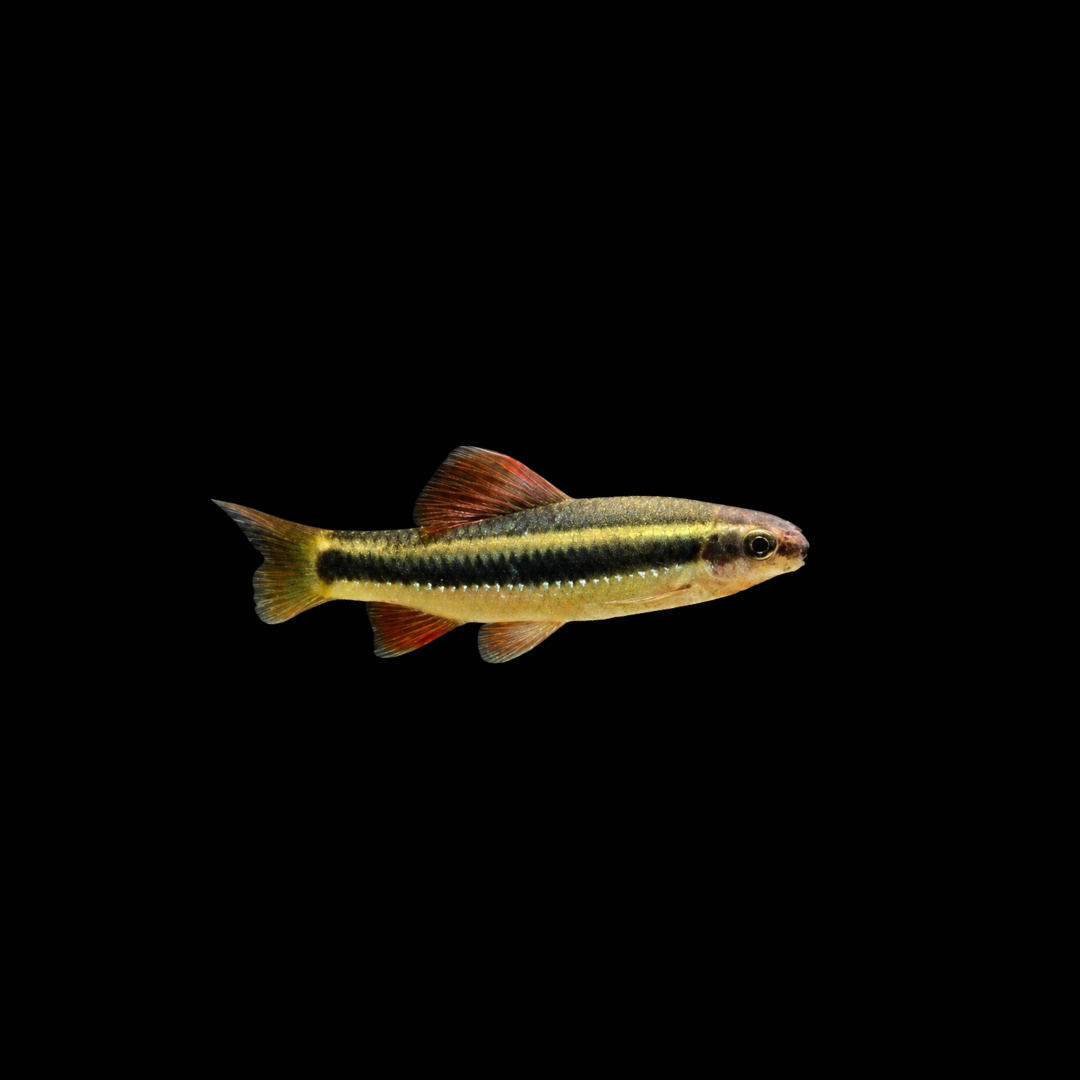
解説 / Description
中国コヒガイは、中国の淡水域に分布する小型のコイ目魚類です。黄褐色からオリーブ色の体に、吻端から尾柄部まで伸びる太い暗色縦帯が入り、落ち着いた照明の下では金色を帯びたラインが上品に映えます。ふだんは温和で群れを作って泳ぐ一方、繁殖期のオスは各鰭や頭部に鮮やかな朱色の婚姻色を現し、アジア産淡水魚らしい渋さと華やかさを併せ持つ存在になります。 Chinese Kohigai is a small cypriniform freshwater fish distributed in China. Its yellowish brown to olive body is marked by a bold dark stripe running from the snout to the caudal peduncle, and under gentle lighting the stripe can show a refined golden sheen. It is generally peaceful and prefers to swim in groups, while mature males develop vivid vermilion nuptial coloration on the fins and head during the breeding season.
基本情報 / Basic Information
| 学名 / Scientific Name | Sarcocheilichthys parvus Nichols, 1930 |
|---|---|
| 通称 / Common Name | 中国コヒガイ、小鳈Chinese Kohigai, Xiao quan |
| 分類 / Family | 条鰭綱 コイ目 カマツカ科またはコイ科カマツカ亜科として扱われるグループ ヒガイ属Class Actinopterygii, order Cypriniformes, family Gobionidae or Cyprinidae: Gobioninae depending on the taxonomic treatment, genus Sarcocheilichthys |
| 英名 / English Name | Chinese Neon Golden Stripe Shark(観賞魚流通名) |
| 分布 / Distribution | 中国に分布します。研究例では、長江中下流域、鄱陽湖水系、漢江、珠江水系、銭塘江、椒江、甌江などの集団が扱われています。Distributed in China. Research samples and populations include the middle and lower Yangtze drainage, Lake Poyang tributaries, Han River, Pearl River drainage, Qiantang River, Jiao River, and Ou River. |
| 最大体長 / Max Size | よく見られる体長は5〜7cmほどで、最大は標準体長で8.7cm前後とされています。Commonly about 5 to 7 cm, with a reported maximum of around 8.7 cm standard length. |
| 寿命 / Lifespan | 明確な飼育下寿命の公開情報は限られます。安定した水質と群泳環境を維持できれば、小型コイ目魚類として数年単位の飼育が期待できます。Published aquarium lifespan data are limited. With stable water quality and suitable group keeping, it can reasonably be expected to live for several years like many small cypriniform fishes. |
飼育環境 / Aquarium Environment
| 水槽サイズ / Tank Size | 活発に泳ぐため、5匹以上の群れで60cm規格水槽以上を目安にします。余裕を持って群泳させるなら、90cm規格水槽も適しています。A standard 60 cm tank or larger is recommended for a group of five or more, as this species is active and social. A standard 90 cm tank is even better for a more spacious group display. |
|---|---|
| 水温 / Temperature | 18〜24℃が扱いやすく、許容範囲はおよそ15〜28℃です。冬季に室温が大きく下がる環境では、22℃前後を目安にヒーターで安定させると安心です。 18 to 24°C is ideal, with an approximate tolerable range of 15 to 28°C. In cold indoor conditions, maintaining around 22°C with a heater is advisable. |
| 水質 / Water Quality | 中性付近のpH 6.5〜7.5、軟水から中程度の硬度が向きます。清澄で酸素を多く含む水を好むため、ろ過を安定させつつ、緩やかから中程度の水流を作ります。Near-neutral water, roughly pH 6.5 to 7.5, and soft to moderately hard water are suitable. Provide clean, well-oxygenated water with stable filtration and gentle to moderate flow. |
| レイアウト / Layout | 角のない細かな砂や砂礫を敷き、流木や水草で落ち着ける場所を作ります。前面や中央には泳ぎ回れる空間を残し、明るすぎない照明にすると体側のラインと婚姻色が引き立ちます。Use fine, smooth sand or gravel, with driftwood and aquatic plants for cover. Leave open swimming space in the front or center, and avoid overly bright lighting so the lateral stripe and nuptial colors stand out. |
| 注意点 / Precautions | 単独飼育では臆病になりやすいため、できるだけ群れで飼育します。導入直後は輸送疲れや水質変化に弱ることがあるため、水合わせを丁寧に行い、落ち着いた環境で状態を確認してください。日本への輸入実務では、該当する水産動物区分や対象疾病の確認が必要になるため、信頼できる専門店や輸入業者から入手することが大切です。Avoid keeping it singly, as individuals may become shy and stressed. Newly imported or transported fish may be sensitive to water changes, so acclimate carefully and observe them in a calm environment. For import into Japan, applicable aquatic-animal categories and listed diseases must be checked in practice, so obtaining fish from reliable specialist dealers and importers is important. |
餌と給餌 / Feeding
| 餌の種類 / Diet | 雑食性で、細かい沈下性またはゆっくり沈む人工飼料に慣れやすい魚です。発色やコンディションを高めるには、冷凍アカムシ、ミジンコ、ブラインシュリンプなどを副食として与えると効果的です。It is omnivorous and usually adapts well to fine sinking or slow-sinking prepared foods. Frozen bloodworms, daphnia, and brine shrimp are useful supplements for conditioning and coloration. |
|---|---|
| 給餌のポイント / Feeding Tips | 口が小さくやや下向きなので、粒の大きすぎる餌は避けます。底付近をついばむように食べるため、他魚に餌を取られすぎないよう、沈む餌を少量ずつ行き渡らせます。Because the mouth is small and slightly inferior, avoid oversized pellets. Since it picks at food near the bottom, offer small amounts of sinking food so faster tank mates do not consume everything first. |
性格と混泳 / Temperament and Tank Mates
| 性格 / Temperament | 基本的には温和で、他魚を積極的に攻撃するタイプではありません。群れでいると本来の活発さが出やすく、中層から底層を軽快に泳ぎ回ります。Generally peaceful and not inclined to attack other fish. In a group, it becomes more confident and actively swims through the mid to lower levels. |
|---|---|
| 混泳の相性 / Compatibility | 同程度の大きさで活発に泳ぐコイ目魚類、ダニオ類、ドジョウ類、コリドラス類などと相性がよいです。極端に動きの遅い魚や神経質な小型魚は、本種の素早い動きに落ち着かなくなる場合があります。Suitable companions include similarly sized active cypriniform fishes, danios, loaches, and Corydoras. Very slow-moving or nervous small fish may be unsettled by its quick movements. |
病気と対策 / Diseases and Prevention
| かかりやすい病気 / Common Diseases | 特定の病気に極端に弱い魚として知られるわけではありませんが、導入直後や低水温、急な水質悪化では白点病、尾ぐされ、水カビ、細菌性の体表トラブルに注意が必要です。輸入流通段階では、水産動物の疾病侵入を防ぐための検査・検疫制度との関係も確認されます。It is not especially known as a delicate species, but after introduction, during low temperatures, or under poor water quality, watch for ich, fin rot, fungal infections, and bacterial skin problems. During import and distribution, it may also be subject to checks related to aquatic-animal disease prevention systems. |
|---|---|
| 対策と予防 / Prevention | 急な水温変化を避け、ろ過を安定させ、定期的な換水で清潔な水を保ちます。新しく迎えた個体はすぐに本水槽へ入れず、隔離水槽で状態を見てから合流させると安全です。Avoid sudden temperature changes, keep filtration stable, and maintain clean water with regular water changes. Newly acquired fish should ideally be observed in a quarantine tank before being introduced to the main aquarium. |
増やし方(繁殖) / Breeding
| 雌雄の判別 / Sexing | 繁殖期のオスは頭部や各鰭に朱色の婚姻色を現し、眼の周辺も赤みを帯びます。メスは大きな体色変化は少ない一方、産卵期には腹部から短い産卵管を伸ばします。During the breeding season, males develop vermilion coloration on the head and fins, with reddish tones around the eyes. Females show less dramatic coloration but extend a short ovipositor when ready to spawn. |
|---|---|
| 繁殖形態 / Reproduction | 生きた淡水産二枚貝を産卵床として利用します。メスは貝の入水管側から短い産卵管を差し入れ、外套腔周辺に産卵し、オスの精子は貝が吸い込む水流に乗って運ばれると考えられます。It uses living freshwater bivalves as spawning sites. The female inserts a short ovipositor toward the inhalant siphon, depositing eggs near the mantle cavity, while the male’s sperm is thought to be carried in by the mussel’s inhalant current. |
| 繁殖のポイント / Breeding Tips | 一般家庭の水槽では、淡水二枚貝を長期維持することが難しいため繁殖難易度は非常に高いです。日本動物園水族館協会の繁殖表彰リストには、栃木県なかがわ水遊園による「コヒガイ」の自然繁殖が平成20年度に記録されています。資料上の表記は「コヒガイ」であり、中国コヒガイとして扱う場合は追加確認の余地を残しつつ、二枚貝産卵型の魚を繁殖させるには高度な管理技術が必要であることを示す重要な事例です。Breeding in home aquaria is extremely difficult because maintaining healthy freshwater bivalves for long periods is challenging. The breeding award list of the Japanese Association of Zoos and Aquariums records natural breeding of “Kohigai” by Nakagawa Aquatic Park in fiscal year 2008. The source uses the name Kohigai, so a cautious note remains when treating it specifically as Chinese Kohigai, but the case still illustrates the advanced management required for mussel-spawning fishes. |
雑学と豆知識 / Trivia and Fun Facts
| 1. 学名に込められた「小さな魚」という意味 / 1. A scientific name that means a small fish | 本種は1930年にJohn Treadwell Nicholsによって記載されました。種小名のparvusはラテン語で「小さい」を意味し、ヒガイ属の中でも小柄な姿をよく表しています。派手な大型魚ではありませんが、細身の体にくっきり走る暗色縦帯と、成熟したオスが見せる朱色の発色が、近くでじっくり眺めたくなる魅力を作っています。The species was described by John Treadwell Nichols in 1930. The specific name parvus means small in Latin, reflecting its modest size within the genus. It is not a large show fish, but its bold lateral stripe and the vermilion colors of mature males reward close observation. |
|---|---|
| 2. 二枚貝を使う繁殖はタナゴに似ていて少し違う / 2. Mussel spawning resembles bitterlings, but with a twist | 中国コヒガイの繁殖は、淡水二枚貝の体内を利用する点でタナゴ類を思わせます。ただし、タナゴ類が主に出水管側から卵を送り込むのに対し、ヒガイ属では入水管側を利用し、卵の置かれる位置も貝の鰓そのものではなく外套腔周辺とされます。同じ二枚貝を使う戦略でも、細部の仕組みが異なるところに、淡水魚の進化の面白さがあります。Its breeding strategy recalls bitterlings because it uses living freshwater mussels. However, bitterlings typically place eggs through the exhalant siphon, while Sarcocheilichthys uses the inhalant side and deposits eggs around the mantle cavity rather than deep in the gills. Similar strategies can therefore hide very different details. |
| 3. 古代中国の文字にもつながる魚 / 3. A fish connected to ancient Chinese writing | 中国語名の小鳈に使われる「鳈」は、清らかな水辺の小魚を思わせる古い字です。石鼓文には「鰟」と「鳈」が並んで記された例があるとされ、タナゴ類とヒガイ類のような魚が、古くから別々の存在として認識されていた可能性を感じさせます。ただし、古文献上の魚名を現代の特定種へ直接対応させることには慎重さが必要です。The Chinese name Xiao quan uses the character quan, associated with small fishes of clear waters. Ancient stone drum inscriptions are said to mention pang and quan together, suggesting that fish comparable to bitterlings and Sarcocheilichthys-like species may have long been recognized as distinct. However, ancient fish names should be linked to modern species cautiously. |
| 4. 氷河期の海面変動が刻んだ系統地理 / 4. Phylogeography shaped by ancient sea-level changes | ミトコンドリアDNAを用いた研究では、中国コヒガイの集団が大きく2つの系統に分かれることが示され、浙閩隆起帯による隔離や更新世後期以降の集団拡大が分化に関わったと考えられています。海面が下がった時代には、現在は分かれている沿岸河川の下流部がつながり、魚たちの遺伝的交流を助けた可能性があります。小型魚でありながら、体の中には中国南部の地形史が刻まれているのです。Mitochondrial DNA studies indicate that populations of this species are divided into two major lineages, likely influenced by isolation associated with the Zhe-Min Uplift and later Pleistocene population expansion. During periods of lowered sea level, lower coastal rivers may have become connected, allowing genetic exchange between drainages. This small fish therefore reflects a broad geological history. |
| 5. 近年の寄生虫研究から見える宿主との関係 / 5. Recent parasite research and host relationships | 東洞庭湖のSarcocheilichthys属魚類を対象にした近年の研究では、中国コヒガイの胆嚢からMyxidium parvusis n. sp.という新種の粘液胞子虫が報告されています。これは観賞魚飼育で直接恐れるべき病名として扱う情報ではなく、むしろ野生魚が持つ宿主特異的な生物関係を知るための学術的な話題です。小さな魚の体内にも、その生息地で積み重ねられてきた生物同士の関係が残されています。Recent work on Sarcocheilichthys species from East Dongting Lake reported a new myxozoan, Myxidium parvusis n. sp., from the gallbladder of S. parvus. This should not be read as a routine aquarium disease warning, but as an academic example of host-associated biodiversity in wild fish. Even a small fish can carry traces of long-standing ecological relationships. |
| 6. 似た種類が流通名をややこしくすることも / 6. Similar species can complicate trade names | 観賞魚として入荷する個体には、よく似たヒガイ属の近縁種が混じる可能性が指摘されています。たとえばSarcocheilichthys vittatusは、S. parvusやS. caobangensisと同じく吻端から尾柄部へ続く黒い縦帯を持つ近縁種として記載されています。入荷直後の若い個体を正確に見分けるのは簡単ではないため、購入時は体型、縦帯、オスの発色、産地情報を総合的に確認するとよいでしょう。Closely related Sarcocheilichthys species may sometimes appear under confusing aquarium trade names. Sarcocheilichthys vittatus, for example, was described as a close relative sharing a black longitudinal band from the snout to the caudal-fin base with S. parvus and S. caobangensis. Young imported fish can be difficult to identify confidently, so body form, lateral stripe, male coloration, and locality information should be considered together. |
| 7. 「シャーク」という英名でもサメではない / 7. The shark name does not mean it is a shark | 英名として使われるChinese Neon Golden Stripe Sharkは、観賞魚流通上のキャッチーな呼び名です。分類学的にはサメとは無関係で、実際には温和なコイ目の淡水魚です。名前の印象だけで気性の荒い魚と考える必要はなく、むしろ群れで泳ぐ姿や底床をついばむ仕草を楽しむタイプの魚です。The trade name Chinese Neon Golden Stripe Shark is a catchy aquarium-market name. Taxonomically, it has nothing to do with true sharks and is actually a peaceful cypriniform freshwater fish. Rather than being aggressive, it is best appreciated for its schooling behavior and delicate foraging movements. |
まとめ / Conclusion
中国コヒガイは、ひと目で水槽の主役を奪うような大型魚ではありません。しかし、清流魚らしい端正な体つき、体側をまっすぐ走る縦帯、群れで泳ぐ軽快な動き、そして成熟したオスがまとう朱色の婚姻色が重なり、眺めるほどに味わいが深まっていきます。 Chinese Kohigai is not a large fish that immediately dominates an aquarium. Yet its clean stream-fish shape, straight lateral stripe, lively group swimming, and the vermilion nuptial colors of mature males combine into a fish whose appeal deepens the longer it is observed.
清潔で酸素を多く含む水、十分な遊泳空間、安心できる群れを用意できれば、その魅力は自然に引き出されます。二枚貝と関わる繁殖生態、似た近縁種との境界、中国南部の地形史まで知ることで、小さな体に宿る物語はいっそう鮮明になります。静かな水景の中で、時間をかけて美しさを見せてくれる、東アジア淡水魚ならではの奥行きを持った一種です。 With clean, oxygen-rich water, ample swimming space, and the security of a group, its best qualities emerge naturally. Understanding its mussel-associated reproduction, its close relatives, and the geological history of southern China makes the story held in its small body even clearer. In a calm aquascape, it reveals its beauty gradually, offering the quiet depth that makes East Asian freshwater fishes so rewarding.

気になる道具や飼い方を見つけてみませんか?
 アイのアクアグッズ案内水槽用ヒーターの選び方|固定式・温度調節式と、水量に合うW数の考え方水槽の魚は冬に寒くない? アイとコタロウが水温計から固定式・温度調節式・分離式ヒーターまで比較。水量と室温に合うW数、設置場所、水換えや交換の注意点を、国内メーカーの商品とともに紹介します。記事はコチラ →
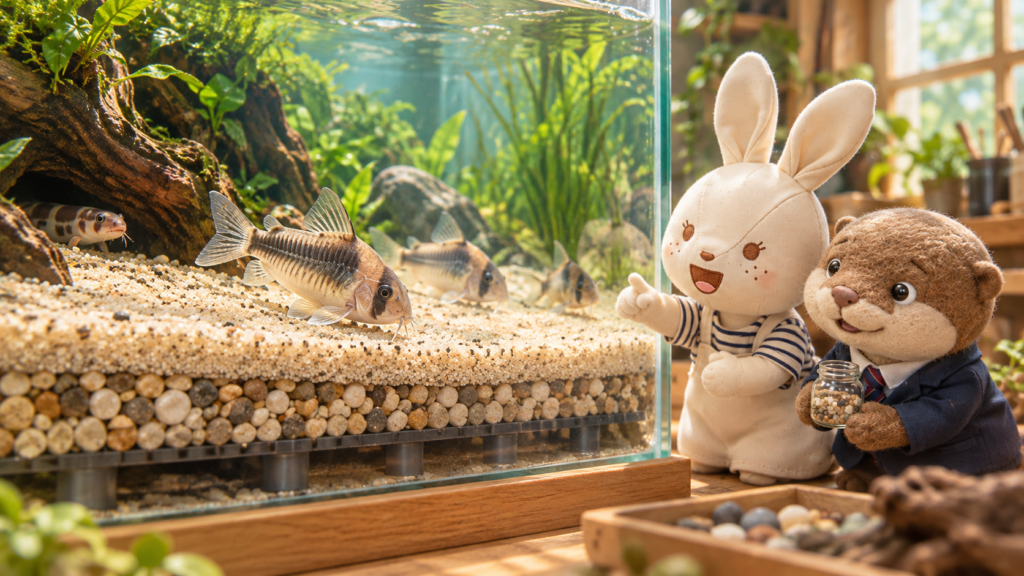 アイのアクアグッズ案内水槽の底砂の選び方|砂・砂利の違いとおすすめ商品道具の特徴や使い方、選ぶときのポイントをアイが紹介します。記事はコチラ →
 アイのアクアグッズ案内バルブの仲間に合わせる飼育用品|チェリーバルブ・スマトラ・中型種の水槽とろ過道具の特徴や使い方、選ぶときのポイントをアイが紹介します。記事はコチラ →
 アイのアクアグッズ案内水槽用浄水器の選び方|水換えを楽にするタイプとROの違い道具の特徴や使い方、選ぶときのポイントをアイが紹介します。記事はコチラ →
さまざまな飼育テーマをご紹介。リンク先の記事には広告・商品紹介が含まれます。
案内・紹介記事一覧へ →分布マップ
中国コヒガイは中国に分布し、長江中下流域、鄱陽湖水系、漢江、珠江水系、銭塘江、椒江、甌江などの集団が知られています。この地図では、中国南東部から長江中下流域周辺の分布イメージを概略で示します。
Google Earthで開くこの地図は分布欄の記述をもとにした概略プロットです。表示地点や範囲は分布イメージ用の代表位置であり、実際の採集地点や厳密な生息範囲を示すものではありません。
参考文献・根拠資料
この記事では、分類、分布、生息環境、飼育条件、繁殖、病気や導入時の注意点を支える資料として、学術データベース、公的機関、査読論文、動物園水族館協会資料を中心に選定しています。店舗、通販ページ、個人ブログ、一般的なまとめサイト、価格や入荷頻度だけを示す情報源は除外しました。
-
分類
分布
最大体長
Froese, R. and Pauly, D. (eds.). Sarcocheilichthys parvus Nichols, 1930. FishBase.
本種をGobionidaeの淡水・底中層性魚類として扱い、中国分布、最大8.7cm SL、IUCN低懸念などの基礎情報を確認するための主要データベースです。
https://www.fishbase.se/FieldGuide/FieldGuideSummary.php?c_code=156&genusname=Sarcocheilichthys&speciesname=parvus -
分類
学名
記載情報
GBIF Secretariat. Sarcocheilichthys parvus Nichols, 1930. GBIF Backbone Taxonomy / Catalogue of Life.
学名、著者年、受理名、和名表記、原記載文献の書誌情報を照合するための分類データベースです。分類階級はデータベースにより扱いが異なるため、記事ではGobionidaeまたはCyprinidae: Gobioninaeの併記にしています。
https://www.gbif.org/species/2361875 -
原記載
学名
Fricke, R., Eschmeyer, W. N. and van der Laan, R. (eds.). Eschmeyer’s Catalog of Fishes, Reference Record: Nichols, J. T. 1930. Some Chinese freshwater fishes. XXIV. Two new Mandarin fishes. XXV. New Sarcocheilichthys in northeastern Kiangsi. American Museum Novitates 431: 1–6.
Nicholsによる1930年の原記載文献を確認するための魚類分類学上の基礎資料です。
https://researcharchive.calacademy.org/research/ichthyology/catalog/getref.asp?id=16112 -
分布
生息環境
食性
繁殖
系統地理
Li, M., Yang, X., Ni, X. and Fu, C. 2023. The role of landscape evolution in the genetic diversification of a stream fish Sarcocheilichthys parvus from Southern China. Frontiers in Genetics 13:1075617.
長江中下流域、鄱陽湖水系、漢江、珠江、銭塘江、椒江、甌江などの分布集団、砂礫底・底層寄りの生活、底生無脊椎動物や藻類を利用する食性、短い産卵管と二枚貝利用の可能性、2大系統への分化を支える中心的な査読論文です。
DOI: 10.3389/fgene.2022.1075617 -
近縁種
同定注意
An, C.-T., Zhang, E. and Shen, J.-Z. 2020. Sarcocheilichthys vittatus, a new species of gudgeon (Teleostei: Cyprinidae) from the Poyang Lake Basin in Jiangxi Province, South China. Zootaxa 4768(2):201–220.
S. parvus、S. caobangensis、S. vittatusが黒い縦帯を共有する近縁群として扱われ、流通名や若魚での同定に慎重さが必要であることを支える資料です。
DOI: 10.11646/zootaxa.4768.2.3 -
繁殖
同属補助資料
大阪府立環境農林水産総合研究所. カワヒガイ|淡水魚図鑑(在来種).
同属または近縁のヒガイ類が淡水二枚貝の入水管側を利用し、外套腔に産卵するという繁殖様式を補強する公的研究機関の解説です。S. parvusそのものの一次資料ではないため、記事では同属の繁殖様式を説明する補助資料として扱います。
https://www.knsk-osaka.jp/zukan/zukan_database/tansui/2150b2c26b1c855/2550b5ba14a5ad6.html -
繁殖事例
飼育下繁殖
公益社団法人日本動物園水族館協会. 繁殖表彰受賞動物一覧(平成29年度受賞分まで).
水遊園による「コヒガイ」の自然繁殖が平成20年度の繁殖表彰として記録されています。資料上の表記は「コヒガイ」であるため、中国コヒガイと完全同一視せず、二枚貝産卵型のヒガイ類を飼育下で繁殖させる難しさを示す事例として参照します。
https://www.jaza.jp/assets/document/about-jaza/protection-nature/h29_hansyoku_list.pdf -
輸入時の注意
防疫
対象疾病
農林水産省. 水産輸入防疫制度について/動物検疫所. Entry into Japan – Aquatic animals -.
水産資源保護法に基づく輸入防疫制度、対象水産動物、対象疾病、衛生条件の確認に用いる公的資料です。S. parvusが常に同じ手続区分になると断定するのではなく、実務上は輸入時の該当区分と疾病条件の確認が必要、という注意書きの根拠として使います。
https://www.maff.go.jp/j/syouan/suisan/suisan_boueki/sui_boueki2.html
https://www.maff.go.jp/aqs/english/animal/im_aquatic_animal.html -
病気
予防
検疫
MSD Veterinary Manual. Routine Health Care of Fish / Disorders and Diseases of Fish.
水質、栄養、清掃、隔離観察を魚病予防の基本に置くこと、淡水魚の白点病がIchthyophthirius multifiliisによる一般的な原虫性疾患であることを確認するための獣医学資料です。記事中の白点病、細菌性トラブル、導入直後の隔離観察に関する一般論の根拠として参照します。
https://www.msdvetmanual.com/all-other-pets/fish/routine-health-care-of-fish
https://www.msdvetmanual.com/all-other-pets/fish/disorders-and-diseases-of-fish -
寄生虫
注意点
学術的豆知識
Dai, W., Yin, Q., Liu, Y., Zhao, X. and Ren, S. 2026. Morphology and Molecular Characterizations of Two New Myxidium Species (Bivalvulida: Myxidiidae) Infecting the Gallbladder of Sarcocheilichthys spp. from the East Dongting Lake, China. Diversity 18(4):233.
S. parvusの胆嚢からMyxidium parvusis n. sp.が報告されたという寄生虫学的な話題を支える資料です。一般的な水槽内疾患として煽るためではなく、野生魚の宿主特異的な生物関係を紹介する根拠として扱います。
DOI: 10.3390/d18040233
補足: 水槽サイズ、pH、混泳相性などの飼育実務は、S. parvusに限定した査読済み飼育論文が限られるため、上記の体サイズ、生息環境、底層寄りの生活、食性、魚病予防の一般原則から安全側に整理しています。販売価格、入荷頻度、店舗別在庫情報は時間変動が大きく、この記事の根拠資料からは意図的に外しています。




コメント