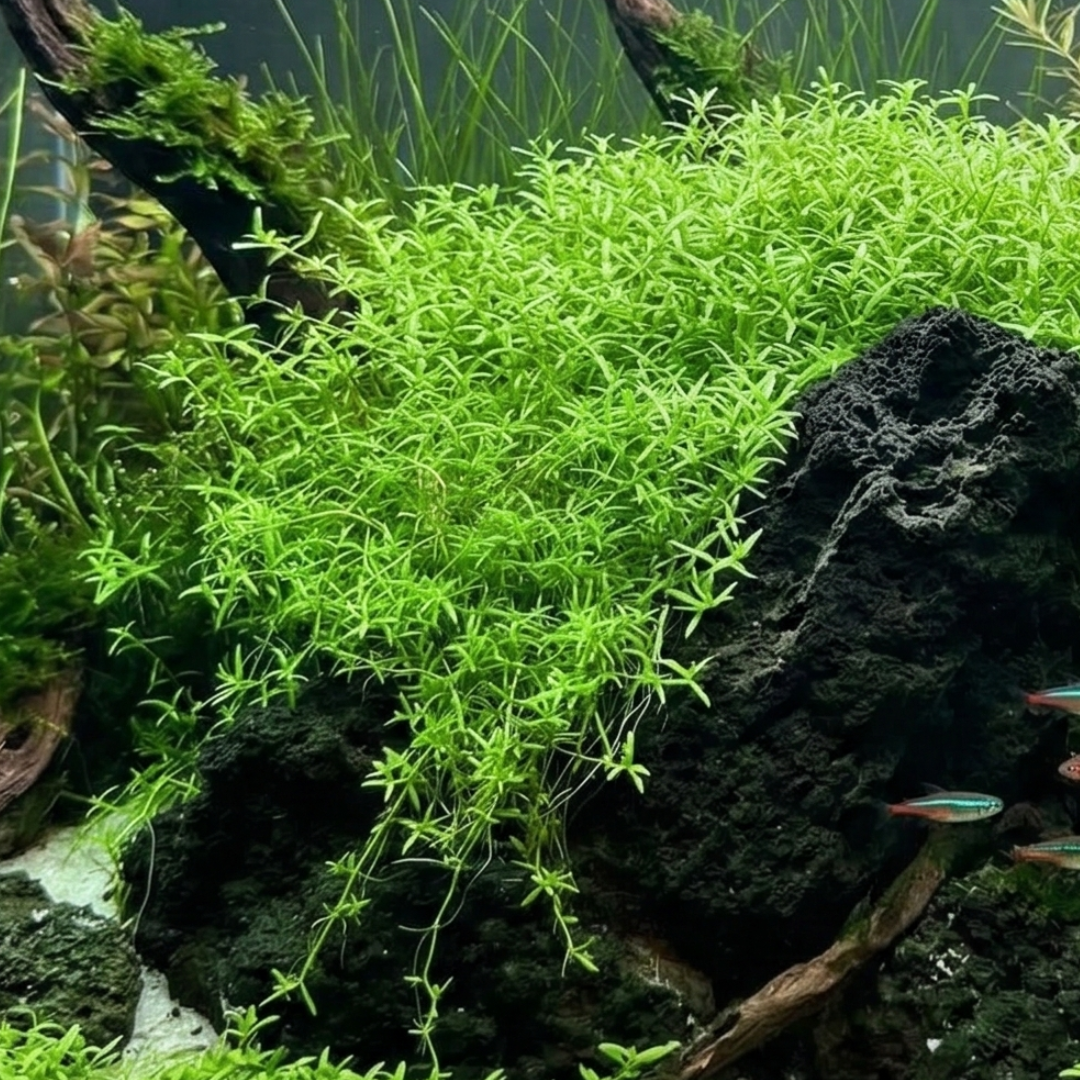
インディアンクラッスラは、その繊細な草姿と鮮やかなライトグリーンの色彩が魅力的な前景草です。日本では古くから水田に自生するスズメハコベとして知られてきましたが、現在は絶滅の危機に瀕する非常に貴重な植物となっています。アクアリウムにおいては、絹糸のように細い茎から数ミリメートルの極小の葉を対生させ、環境を整えることで水底を覆い尽くす美しい草原を作り出します。その成長は環境に敏感で、かつて水田の豊かな泥土と太陽光を浴びて育った記憶を呼び起こすかのように、豊富な栄養と強い光、そして二酸化炭素の添加を必要とします。手をかけるほどに密度を増していくその姿は、小型水槽のジオラマから大型水槽のアクセントまで、幅広いレイアウトにおいて唯一無二の存在感を放ちます。Indian Crassula (Microcarpaea minima) is a charming foreground plant known for its delicate appearance and vibrant light green color. While it has long been known in Japan as “Suzume-hakobe,” a plant native to rice paddies, it is now an endangered species in the wild. In aquariums, it features thread-like stems and tiny opposite leaves just a few millimeters long. Under proper conditions, it creates a stunning underwater meadow. Its growth is sensitive to the environment, requiring abundant nutrients, strong lighting, and CO2 injection, reminiscent of its natural habitat in sun-drenched, nutrient-rich paddy mud. The more care you provide, the denser it grows, making it a unique element for everything from nano-tank dioramas to accents in large aquascapes.
基本情報 / Basic Information
学名 / Scientific Name
Microcarpaea minima
通称 / Common Name
インディアンクラッスラ、スズメハコベIndian Crassula, Suzume-hakobe
分類 / Family
ハエドクソウ科(旧ゴマノハクサ科)スズメノハコベ属Phrymaceae (formerly Scrophulariaceae), Microcarpaea genus
分布 / Distribution
日本、東アジア、南アジア、東南アジア、オーストラリアJapan, East Asia, South Asia, Southeast Asia, Australia
育成難易度 / Difficulty
中程度(水質管理と底床の栄養維持が重要)Moderate (Water quality and substrate nutrients are key)
育成環境 / Cultivation Environment
光量 / Light
強光推奨(60cm規格水槽で20W型3灯以上、または高出力LED)High (3x 20W tubes or high-output LED for a standard 60cm tank)
CO2添加 / CO2 Injection
必須(1滴/3秒以上の添加が望ましい)Essential (recommended at least 1 drop per 3 seconds)
水質 / Water Quality
pH 5.0~7.0、弱酸性から中性の軟水pH 5.0–7.0, soft water from slightly acidic to neutral
前景から中景(密度を高めて草原を表現する)Foreground to Midground (to create a meadow effect)
注意点 / Precautions
一本ずつが非常に細いため、植栽時は5本程度の束にしてピンセットで深く植え込むのがコツです。光が不足すると上に伸びやすくなるため、低床付近の光量維持に配慮してください。Since each stem is very delicate, it is best to plant in bundles of about 5 stems. Deep planting with tweezers is recommended. It tends to grow vertically if light is insufficient, so ensure high light intensity at the substrate level.
増やし方(トリミング) / Propagation & Trimming
増やし方 / Propagation
差し戻し、ランナー。節から根を出しながら這うように増えます。Cuttings and runners. It propagates by spreading across the substrate and rooting from nodes.
トリミング / Trimming
差し戻し、またはピンチカット。密度が上がりすぎた場合は、適度に間引くことで下方の葉への光遮断を防ぎます。Replanting cuttings or pinch-cutting. If the density becomes too high, thinning is necessary to prevent light from being blocked for the lower leaves.
病気と対策(コケなど) / Pests & Algae
かかりやすい病気 / Common Issues
新芽の白化(クロロシス)。鉄分や微量元素、または窒素・リンの不足で起こりやすい現象です。Chlorosis (whitening of new growth). This often occurs due to a lack of iron, trace elements, or macronutrients like nitrogen and phosphorus.
対策と予防 / Prevention
底床への固形肥料の追加と、定期的な液体肥料の投与が効果的です。特に鉄分を含む肥料を適宜追加することで、美しい色彩を維持できます。アオミドロが絡みやすいので、ヤマトヌマエビなどのお掃除役を適切に導入しましょう。Adding root tabs to the substrate and regular liquid fertilization are effective. Adding iron-rich fertilizers is particularly helpful for maintaining color. Use algae eaters like Amano shrimp to prevent filamentous algae from tangling in the delicate stems.
雑学と豆知識 / Trivia and Fun Facts
1. クラッスラの名を持つ「非多肉植物」1. A “Non-Succulent” with the name Crassula
インディアンクラッスラという名は、多肉植物として有名なクラッスラ属(ベンケイソウ科)を連想させますが、実際には全く異なるハエドクソウ科の植物です。この商業名は、かつて本種がその小さな葉の様子から誤解を招く形で名付けられた「ミスノーマー(誤称)」の名残です。多肉植物のように乾燥を好むわけではなく、むしろ水を切らすとすぐに枯れてしまう湿生植物ですので注意が必要です。The name Indian Crassula might remind you of the succulent genus Crassula (Crassulaceae), but it actually belongs to the entirely different family Phrymaceae. This commercial name is a misnomer derived from its small, leaf-like appearance. Unlike true succulents that prefer dry conditions, this is a wetland plant that will wither quickly if allowed to dry out.
2. 激減した日本の在来種「スズメハコベ」2. The Disappearing Native: Suzume-hakobe
和名スズメハコベは、かつては日本の水田でごく普通に見られた雑草でした。しかし、農薬(除草剤)への耐性が非常に低く、圃場整備による乾田化や水質の変化によって激減し、現在は環境省のレッドリストで絶滅危惧II類に指定されています。私たちが水槽で楽しんでいるこの美しい光景は、かつての日本の原風景を切り取った貴重な宝物とも言えるのです。In Japan, it is known as Suzume-hakobe and was once a common weed in rice paddies. However, due to its low resistance to herbicides and the modernization of agriculture, its numbers have plummeted. It is currently listed as Vulnerable (VU) on Japan’s Red List. The beautiful scenery we enjoy in our aquariums is a precious fragment of Japan’s original landscape.
3. アーユルヴェーダに伝わる薬用効果3. Medicinal Uses in Ayurveda
インドやネパールの伝統医学アーユルヴェーダにおいては、この小さな植物に薬効が見出されてきました。切り傷や火傷、皮膚の感染症などの治療に用いられてきた歴史があり、湿地という過酷な微生物環境で生き抜くために備えた抗菌作用を人々は経験的に利用してきたのです。単なる観賞用としてだけでなく、人類の歴史と深く関わってきた植物です。In Ayurvedic medicine in India and Nepal, medicinal properties have been attributed to this small plant. It has a history of being used to treat cuts, burns, and skin infections, as people empirically utilized the antibacterial properties it developed to survive in microbial-rich wetland environments. It is a plant deeply intertwined with human history.
4. 学名の由来:微小な果実4. Etymology: Tiny Fruits
属名の Microcarpaea は、ギリシャ語で「小さな(micro)」と「果実(karpos)」を意味します。その名の通り、花が咲いた後には肉眼で確認するのも困難なほど小さな卵形の蒴果(果実)をつけます。この微小な種子が風や水、時には鳥の体に付着して運ばれることで、アジアからオセアニアまでという広大な分布域を獲得したと考えられています。The genus name Microcarpaea is derived from the Greek words for “small” (micro) and “fruit” (karpos). As the name suggests, it produces tiny, egg-shaped capsules after flowering that are nearly impossible to see with the naked eye. These tiny seeds are thought to have been carried by wind, water, or birds, allowing the species to achieve a vast distribution from Asia to Oceania.
まとめ / Conclusion
インディアンクラッスラは、その美しさだけでなく、日本の自然環境の変遷や世界の伝統文化という深い物語を背負った水草です。水槽の中でライトグリーンの鮮やかな茂みを作り上げるには、細やかな水質管理と栄養補給が必要ですが、その繊細な葉が密生した光景は、他のどんな水草にも代えがたい魅力を持っています。Indian Crassula is not just a beautiful plant; it carries deep stories of Japan’s changing natural environment and global traditional cultures. Creating a vibrant light green thicket requires careful water management and nutrition, but the sight of its delicate, dense leaves is a unique charm that no other plant can match.
もしあなたの水槽で新芽が白くなってしまったら、それはこの植物からの「お腹が空いた」というサインかもしれません。かつての水田のような豊かな環境を再現し、この絶滅が危惧される小さな命をあなたの手で美しく輝かせてみてください。それはきっと、アクアリウムという趣味の深さを改めて教えてくれる体験になるはずです。If the new shoots in your tank turn white, it may be a sign from the plant that it is hungry for nutrients. By recreating the rich environment of an old rice paddy, you can make this tiny, endangered life shine beautifully in your own hands. It will surely be an experience that reminds you of the true depth of the aquarium hobby.



 アイのアクアグッズ案内水槽フィルターの選び方|外掛け・外部・上部から小型オーバーフローまで道具の特徴や使い方、選ぶときのポイントをアイが紹介します。記事はコチラ →
 アイのアクアグッズ案内海水魚初心者の必需品|水槽・人工海水・比重計・水質検査道具の特徴や使い方、選ぶときのポイントをアイが紹介します。記事はコチラ →
 アイのアクアグッズ案内水槽のコケ掃除|道具の選び方とお掃除生体の得意・不得意道具の特徴や使い方、選ぶときのポイントをアイが紹介します。記事はコチラ →
 アイのアクアグッズ案内水草水槽のCO₂添加|3つの方式の選び方とおすすめ用品道具の特徴や使い方、選ぶときのポイントをアイが紹介します。記事はコチラ →



コメント