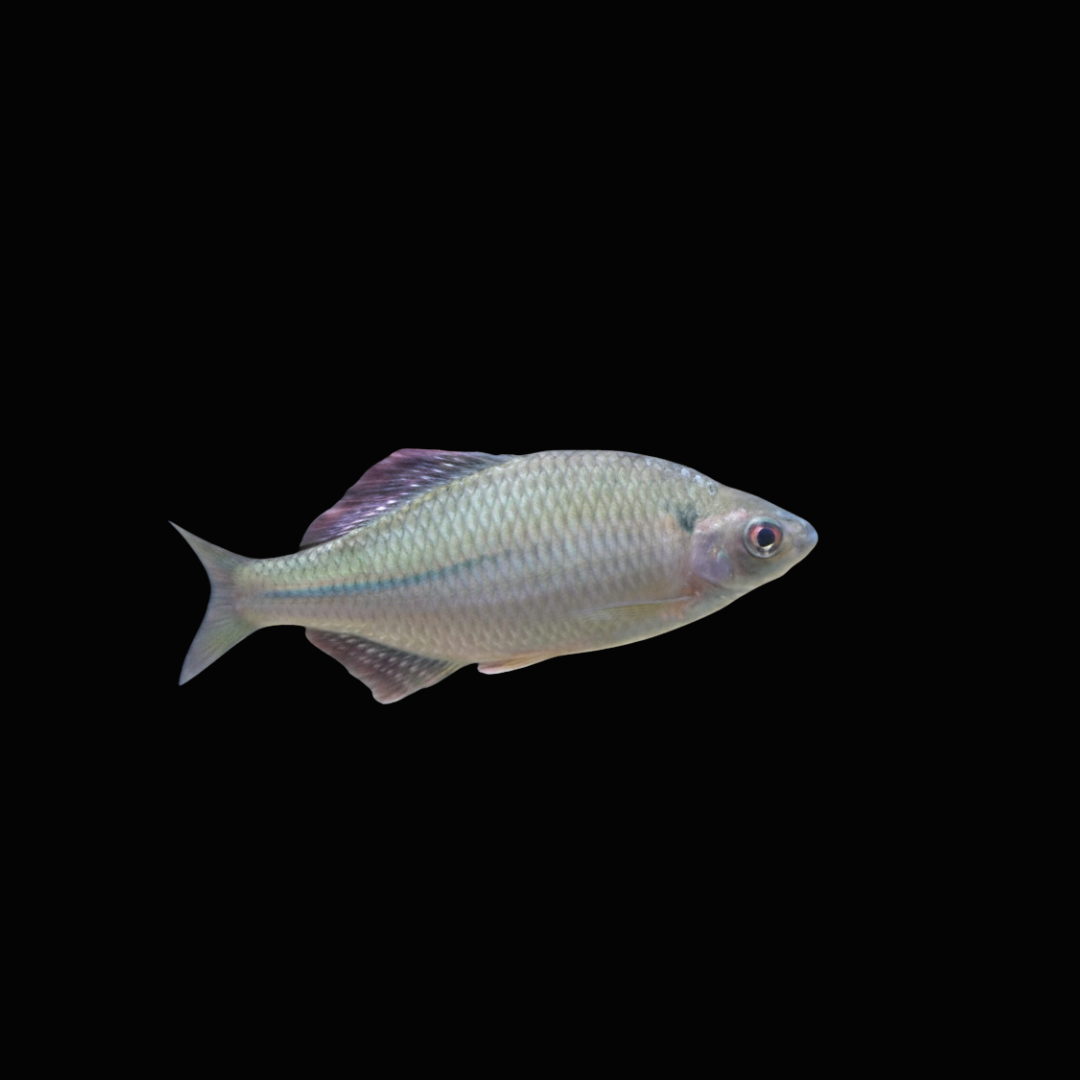
カネヒラは、日本のタナゴ類の中でも最大級の体躯を誇る、まさに日本淡水魚界の王者の風格を備えた魚です。その体は著しく左右に平たく、美しい菱形のシルエットを描きます。最大の特徴は、多くのタナゴが春に繁殖するのに対し、カネヒラは秋にその最盛期を迎えるという点です。秋の訪れと共にオスが身にまとう婚姻色は、青緑色の金属光沢と鮮烈なピンク色が混じり合い、水草の緑に映えるその姿は息を呑むほどの美しさです。大型になるため遊泳力も非常に高く、広々とした水槽で群れをなして泳ぐ姿は、アクアリストに季節の移ろいと力強い生命力を感じさせてくれます。The Kanehira (Acheilognathus rhombeus) is one of the largest bitterling species in Japan, possessing the majesty of a king among native freshwater fish. Its body is significantly compressed laterally, creating a beautiful rhomboid silhouette. Its most notable characteristic is its autumn spawning cycle, unlike many other bitterlings that breed in spring. With the arrival of autumn, males display stunning nuptial coloration, a blend of metallic blue-green and vivid pink that is breathtakingly beautiful against aquatic plants. Due to its large size and strong swimming ability, a school of Kanehira in a spacious tank offers aquarists a profound sense of seasonal change and vibrant vitality.
基本情報 / Basic Information
学名 / Scientific Name
Acheilognathus rhombeus
通称 / Common Name
カネヒラKanehira / Flat Bitterling
分類 / Family
コイ目 コイ科 タナゴ亜科 タナゴ属Order Cypriniformes, Family Cyprinidae, Subfamily Acheilognathinae, Genus Acheilognathus
英名 / English Name
Flat bitterling
分布 / Distribution
自然分布は西日本(近畿以西)および朝鮮半島。現在は国内外来種として東日本の一部(霞ヶ浦など)にも定着。Naturally distributed in Western Japan (west of the Kinki region) and the Korean Peninsula. Currently established in parts of Eastern Japan (such as Lake Kasumigaura) as a domestic alien species.
最大体長 / Max Size
12cm 〜 16cm12cm – 16cm
寿命 / Lifespan
2年 〜 3年(飼育下ではさらに長生きする場合もあります)2 – 3 years (can live longer under optimal aquarium care)
飼育環境 / Aquarium Environment
水槽サイズ / Tank Size
90cm規格水槽(90×45×45cm)以上を推奨。活発に泳ぎ、大型になるためゆとりあるサイズが必要です。Recommended 90cm standard tank (90x45x45cm) or larger. A spacious tank is necessary as they are active swimmers and grow large.
水温 / Temperature
15℃ 〜 25℃(繁殖を狙う場合は秋に20℃以下へ下げる必要があります)15°C – 25°C (Temperature drop below 20°C in autumn is required to trigger breeding)
水質 / Water Quality
中性(pH 7.0)付近の、溶存酸素が豊富な新しい水を好みます。Prefers neutral water (pH around 7.0) that is fresh and rich in dissolved oxygen.
レイアウト / Layout
砂泥底または細かな砂を敷き、硬めの水草(アヌビアス等)や流木で隠れ家を作ります。草食性が強いため、柔らかい水草は食害に注意してください。Use a sandy or silty substrate and provide hiding places with hard-leaved plants (like Anubias) and driftwood. Note that they may eat soft aquatic plants due to their herbivorous nature.
注意点 / Precautions
遊泳力が高く驚くと跳ねるため、蓋は必須です。また、国内外来種としての側面があるため、飼育個体を自然界へ放流することは絶対に行わないでください。A lid is essential as they are powerful swimmers and may jump when startled. Also, never release captive fish into the wild, as they are considered a domestic invasive species in some regions.
餌と給餌 / Feeding
餌の種類 / Diet
雑食性ですが植物質を好みます。人工飼料(タナゴ専用種)、冷凍赤虫、スピルリナ配合の餌など。Omnivorous but prefers vegetable matter. Artificial bitterling food, frozen bloodworms, and foods containing Spirulina.
給餌のポイント / Feeding Tips
健康な腸内細菌叢を維持するため、植物質主体の餌を日常的に与えることが色揚げや消化促進に繋がります。Providing a plant-based diet regularly helps maintain healthy gut microbiota, promoting better coloration and digestion.
性格と混泳 / Temperament and Tank Mates
性格 / Temperament
非常に活発です。繁殖期のオスは二枚貝の周囲で強い縄張り意識を持ち、他個体を追い払うことがあります。Very active. During the breeding season, males become highly territorial around host mussels and may chase away other fish.
混泳の相性 / Compatibility
ヤリタナゴやオイカワなどの同サイズの日淡と混泳可能ですが、水槽サイズに余裕を持たせることが喧嘩防止のコツです。Can be kept with similar-sized native Japanese fish like Spear Bitterlings or Pale Chubs, provided the tank is large enough to minimize aggression.
病気と対策 / Diseases and Prevention
かかりやすい病気 / Common Diseases
白点病、水カビ病、尾腐れ病、エロモナス感染による穴あき病など。White spot disease, water mold disease, tail rot, and ulcer disease (Aeromonas infection).
対策と予防 / Prevention
水温の急変を避け、高密度飼育を避けます。発症時はメチレンブルー(寄生虫・真菌)やエルバージュ(細菌)による薬浴が有効です。Avoid sudden temperature changes and overstocking. For treatment, medicated baths using Methylene Blue (for parasites/fungi) or Elbagin (for bacteria) are effective.
増やし方(繁殖) / Breeding
繁殖形態 / Reproduction
秋季産卵型。淡水産の二枚貝(ドブガイやマツカサガイ等)の体内に産卵します。Autumn spawner. They lay eggs inside freshwater mussels such as Sinanodonta or Nodularia species.
繁殖のポイント / Breeding Tips
日照時間を約11時間に設定し、水温を19℃付近まで下げることで産卵を誘発します。貝の維持が最大の課題となるため、プランクトンの補給が重要です。Trigger spawning by setting the photoperiod to about 11 hours and lowering the water temperature to around 19°C. The biggest challenge is maintaining the health of the host mussels with adequate plankton supply.
雑学と豆知識 / Trivia and Fun Facts
1. 学名に刻まれた「菱形」の姿 / 1. The “Rhombus” in its Scientific Name
カネヒラの学名である Acheilognathus rhombeus。この種小名の rhombeus はラテン語で「菱形」を意味しています。これは、本種の体高が著しく高く、横から見たシルエットが美しい菱形を呈しているという形態的な特徴を、19世紀の科学者たちが正確に捉えて名付けたものです。The specific epithet ‘rhombeus’ in its scientific name, Acheilognathus rhombeus, means ‘rhombus’ in Latin. This was named by 19th-century scientists who accurately captured its morphological trait of having a significantly high body depth, forming a beautiful diamond-shaped silhouette.
2. 驚異の越冬戦略「ダイアパウズ」 / 2. The Amazing Overwintering Strategy: “Diapause”
カネヒラは秋に貝の中へ卵を産みますが、孵化した稚魚がそのまま成長して出てくるわけではありません。厳しい冬の低水温を乗り切るため、胚は「ステージD」という段階で自らの成長を一時停止させます。これを「休眠(ダイアパウズ)」と呼び、春に水温が10℃を超えるまでエネルギー消費を極限まで抑えてじっと耐え忍ぶのです。Kanehira lay eggs in mussels during autumn, but the larvae do not emerge immediately. To survive the harsh winter, the embryos temporarily halt their growth at “Stage D,” a process called “diapause.” They minimize energy consumption and wait patiently until the water temperature rises above 10°C in spring.
3. 貝の体内にしがみつく「魔法の突起」 / 3. “Magic Spikes” to Cling Inside the Mussel
二枚貝の鰓(えら)の中は常に水流があり、遊泳力のない胚は流されてしまう危険があります。しかし、カネヒラの胚の体表には「微小結節」と呼ばれる非常に鋭い突起が形成されます。これが面ファスナーのように貝の組織に食い込み、強力なアンカーとなって冬の間中、流されるのを防いでいるのです。The gills of a mussel have constant water flow, risking the displacement of immobile embryos. To counter this, Kanehira embryos develop sharp “minute tubercles” on their surface. These act like Velcro, anchoring the embryo firmly to the mussel’s tissue throughout the winter to prevent being washed away.
4. 婚姻色を輝かせる腸内細菌の秘密 / 4. The Secret of Gut Microbes and Nuptial Coloration
カネヒラは植物質を多く摂取しますが、自力では分解できない多糖類も、腸内に住むバクテロイデス門などの細菌が発酵させることでエネルギーに変えています。この細菌たちが作る短鎖脂肪酸は、カネヒラの活力の源となります。健康な腸内環境こそが、あの目も眩むような美しい婚姻色を生み出す基盤となっているのです。While Kanehira consume much plant matter, they rely on gut bacteria like Bacteroidetes to ferment complex polysaccharides into energy. The short-chain fatty acids produced by these microbes are a major energy source. A healthy gut environment is the foundation for producing their dazzlingly beautiful nuptial colors.
まとめ / Conclusion
カネヒラは、単に美しいだけでなく、日本の自然環境と宿主二枚貝との間で極めて精緻な相互関係を築き上げてきた、生物学的にも非常に価値のある魚種です。秋に輝くその婚姻色は、長い冬を貝の中で耐え抜き、春に力強く泳ぎ出した命の結晶とも言えるでしょう。The Kanehira is not merely a beautiful fish but a biologically significant species that has developed an incredibly precise relationship with Japan’s natural environment and host mussels. The nuptial colors that shine in autumn are the culmination of a life that endured the long winter inside a shell and emerged vigorously in the spring.
その大型で活発な性質から、飼育には相応の設備と覚悟が必要ですが、それに見合うだけの深い感動を与えてくれます。国内外来種としての責任ある管理を念頭に置きつつ、日本の四季が生んだこの「菱形の宝石」の飼育にぜひ挑戦してみてください。Due to their large size and active nature, keeping them requires appropriate equipment and commitment, but they offer a profound emotional reward in return. While keeping mindful of responsible management as a domestic invasive species, we encourage you to take on the challenge of raising this “rhomboid gem” born of Japan’s four seasons.
・Kim, J. W., & Baek, H. J. (2007). Ovarian cycle and recruitment of the bitterling, Acheilognathus rhombeus in the Somjin River, Korea. Journal of Environmental Biology, 28(2), 433-437.
・Miyake, S., Ngugi, D. K., & Stingl, U. (2015). Diet-specific fish gut microbiomes with distinct genetic potential. Scientific Reports, 5, 11729.
・Nagata, Y. (1985). Minute tubercles on the skin surface of larvae of Acheilognathus rhombeus (Cyprinidae). Japanese Journal of Ichthyology, 32(3), 344-347.



 アイのアクアグッズ案内金魚を長く楽しむ飼育用品|水槽・フィルター・エアレーション・水換え道具の特徴や使い方、選ぶときのポイントをアイが紹介します。記事はコチラ →
 アイのアクアグッズ案内水槽の中に陸地がある!? コタロウと探るアクアテラリウムのメカニズム滝の水はどこから来るの? 白い霧の正体は? アイとコタロウが、水の循環、隠れたポンプ、霧の装置、陸上の植物と水草の葉の変化から、アクアテラリウムのメカニズムを探ります。記事はコチラ →



コメント