

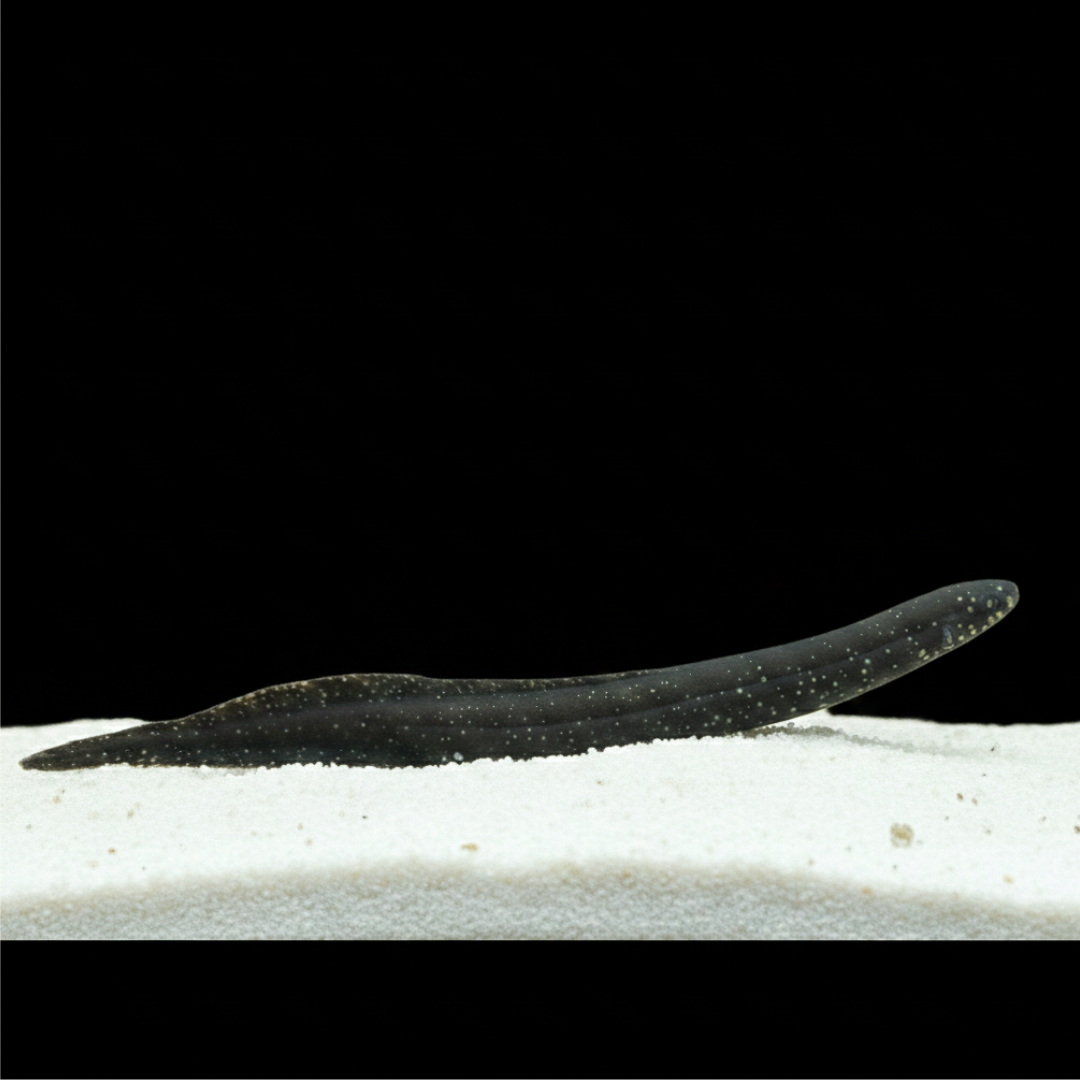
解説 / Description
ミナミアメリカハイギョは、南アメリカ大陸に自然分布する唯一のハイギョです。ウナギのように細長い体、糸状に伸びた胸鰭と腹鰭、幼魚期の黒い体に散る金色の斑点が印象的で、成長すると褐色から暗灰色の落ち着いた姿へ変化します。水中の酸素だけでは生きられず、定期的に水面へ上がって一対の肺で呼吸するため、飼育では水質管理以上に「必ず空気を吸える水面」を守ることが重要です。 The South American lungfish is the only living lungfish native to South America. It has an eel-like body, slender filamentous paired fins, and striking golden spots on a black background when young; these markings fade into brown or dark gray as it matures. Because it cannot survive on dissolved oxygen alone and must regularly surface to breathe through a pair of lungs, maintaining unobstructed access to air is even more important than conventional water-quality management.
基本情報 / Basic Information
| 学名 / Scientific Name | Lepidosiren paradoxa |
|---|---|
| 通称 / Common Name | レピドシレン・パラドクサ、ピランボイアSouth American lungfish, Piramboia, American mud-fish, scaly salamanderfish |
| 分類 / Family | 肉鰭綱・ハイギョ目・ミナミアメリカハイギョ科・ミナミアメリカハイギョ属Class Sarcopterygii, Order Ceratodontiformes, Family Lepidosirenidae, Genus Lepidosiren |
| 英名 / English Name | South American lungfish |
| 分布 / Distribution | 南アメリカのアマゾン川、パラグアイ川、パラナ川下流域を中心とする沼地、氾濫原、流れの弱い水域Swamps, floodplains, and slow-moving waters of the Amazon, Paraguay, and lower Paraná river basins in South America |
| 最大体長 / Max Size | 最大約125cm。飼育個体でも大型化するため、購入時の幼魚サイズだけで設備を判断しないことが大切です。Up to approximately 125 cm. Captive individuals can also become very large, so permanent housing must not be planned around juvenile size. |
| 寿命 / Lifespan | 信頼できる公表記録では8年程度が示されていますが、本種の寿命研究は限られており、飼育下の上限は明確ではありません。大型魚として長期飼育を前提に迎える必要があります。Reliable published records indicate about eight years, but lifespan data for this species remain limited and the maximum captive lifespan is uncertain. It should therefore be acquired only with a long-term commitment appropriate for a very large fish. |
飼育環境 / Aquarium Environment
| 水槽サイズ / Tank Size | 全長20cm未満の幼魚は60〜90cm規格水槽から始められますが、成長に合わせて120cm、180cm水槽へ早めに移行します。終生飼育では幅240cm×奥行90cm級を最低ラインとし、最大級の個体には幅300cm×奥行120cm級以上の特注アクリル水槽や屋内大型池がより現実的です。ろ過槽を含む総水量ではなく、魚が方向転換できる底面積を優先してください。Juveniles under 20 cm may begin in a standard 60–90 cm aquarium, but should be upgraded early to 120 cm and then 180 cm systems as they grow. For permanent housing, a custom acrylic tank with at least a 240 × 90 cm footprint is a minimum starting point; exceptionally large specimens are better suited to a 300 × 120 cm or larger system or an indoor pond. Prioritize usable floor area for turning rather than quoting total system volume alone. |
|---|---|
| 水温 / Temperature | 23〜28℃。急変を避け、24〜27℃前後で安定させると管理しやすいでしょう。 23–28°C. Stable conditions around 24–27°C are generally practical, and sudden changes should be avoided. |
| 水質 / Water Quality | 弱酸性から中性を目安とし、pH6.0〜7.5程度で安定させます。アンモニアと亜硝酸は常に0mg/L、硝酸塩は定期換水で低く保ちます。大型化すると排泄量が急増するため、オーバーフロー式など余裕のある生物ろ過と物理ろ過が必要です。Maintain stable, slightly acidic to neutral water, approximately pH 6.0–7.5. Ammonia and nitrite must remain at 0 mg/L, while nitrate should be kept low through regular water changes. Waste production increases dramatically with size, requiring generously sized mechanical and biological filtration, preferably a sump-based system. |
| レイアウト / Layout | 掃除のしやすいベアタンク、または角のない細砂を薄く敷く構成が適しています。幼魚には水面付近の浮草や安全なシェルターを用意すると落ち着きやすくなります。大型個体は底床を掘り返し、水草や不安定な流木を動かすため、転倒や挟まり事故を起こさない簡潔な配置にします。A bare-bottom setup or a very thin layer of smooth fine sand is most practical. Juveniles benefit from floating cover and safe shelters near the surface. Large individuals dig, uproot plants, and shift unsecured wood, so the layout should remain simple and free of objects that can topple, trap, or injure the fish. |
| 注意点 / Precautions | 水面と蓋の間に呼吸用の空気層を必ず確保し、水面を浮草や器具で塞がないでください。満水状態や密閉構造は窒息事故につながります。体はしなやかで力が強く、小さな隙間から脱走するため、配管周辺まで塞いだ頑丈な蓋を固定します。手を入れる際は強力な歯板による咬傷にも注意が必要です。Always leave an air space between the water surface and the lid, and never block the surface with plants or equipment. Filling the tank to the lid or sealing the air space can cause suffocation. The fish is flexible and powerful enough to escape through small gaps, so a securely fixed heavy lid must also seal openings around pipes. Its crushing dental plates can inflict serious bites, so hands should be kept clear. |
餌と給餌 / Feeding
| 餌の種類 / Diet | 大型肉食魚用の良質な沈下性ペレットを主食にし、補助的に冷凍オキアミ、エビ、貝のむき身、魚肉などを与えます。野生では昆虫幼生、巻貝、二枚貝、甲殻類、小型脊椎動物、藻類などを食べる雑食傾向の強い捕食者です。活餌の常用は寄生虫、栄養偏り、持ち込み病原体の危険があるため避けます。Use a high-quality sinking pellet formulated for large carnivorous fish as the staple diet, supplemented with frozen krill, shrimp, shellfish meat, and pieces of fish. In nature it is an opportunistic omnivorous predator that consumes insect larvae, snails, clams, crustaceans, small vertebrates, and algae. Routine use of live feeder fish is discouraged because of parasites, nutritional imbalance, and pathogen introduction. |
|---|---|
| 給餌のポイント / Feeding Tips | 幼魚には1日1回、腹部が軽く膨らむ程度を目安に与えます。成長後は週2〜3回を基本とし、体型と活動量を見ながら調整します。嗅覚を頼りに餌を探すため、消灯前後に落ち着いて給餌すると食べやすくなります。食べ残しは早めに回収し、過食による肥満と水質悪化を防ぎます。Feed juveniles once daily in portions that produce only a slight abdominal fullness. Adults are usually maintained on two or three feedings per week, adjusted to body condition and activity. Because the fish relies heavily on scent, feeding around dim-light periods can improve response. Remove leftovers promptly to prevent obesity and deterioration of water quality. |
性格と混泳 / Temperament and Tank Mates
| 性格 / Temperament | アフリカハイギョ類より温和と評されることがありますが、基本的には単独性が強く、口に入らない相手でも反射的に噛む可能性があります。視覚より嗅覚や側線感覚への依存が大きく、餌を探す際の誤認咬傷が起こりやすい点を忘れてはいけません。It is often described as calmer than African lungfishes, yet it remains a largely solitary animal and may bite even tank mates too large to swallow. Its heavy reliance on smell and lateral-line sensation rather than precise vision makes accidental feeding bites a persistent risk. |
|---|---|
| 混泳の相性 / Compatibility | 安全性を最優先するなら生涯単独飼育が最善です。同種複数飼育や大型魚との混泳例はありますが、成功を保証できる性質ではなく、突然の咬傷や欠損が起こり得ます。プレコ類など体表を吸着して保護粘液を傷める魚、小型魚、細長い魚、攻撃的な魚との混泳は避けてください。Permanent solitary housing is the safest approach. Although group housing and mixed displays with other large fishes have occasionally succeeded, compatibility is never guaranteed and sudden bites or tissue loss can occur. Avoid plecos and other fishes that rasp or attach to the skin, as well as small, elongated, or aggressive species. |
病気と対策 / Diseases and Prevention
| かかりやすい病気 / Common Diseases | 本種だけに特有の飼育病は十分に整理されていませんが、水質悪化による皮膚炎、擦り傷からの細菌・真菌の二次感染、外部寄生虫、食べ過ぎによる肥満や消化不良に注意します。呼吸回数の急増、体表の白濁や発赤、食欲低下、浮き沈みの異常は環境悪化の手掛かりになります。Species-specific aquarium diseases are not well documented, but important concerns include dermatitis caused by poor water quality, secondary bacterial or fungal infection of abrasions, external parasites, obesity, and digestive problems from overfeeding. A sudden increase in surfacing frequency, cloudy or reddened skin, appetite loss, or abnormal buoyancy can indicate environmental or health problems. |
|---|---|
| 対策と予防 / Prevention | 大型個体に見合うろ過能力と換水量を確保し、アンモニア・亜硝酸を検出させないことが基本です。尖った装飾を避け、新規導入生体や餌は隔離・衛生管理を行います。肺呼吸魚では薬剤への反応に関する情報が限られるため、自己判断で高濃度の薬浴を行わず、異常時は魚類を診療できる獣医師や経験豊富な専門店に相談してください。Prevention begins with filtration and water-change capacity appropriate to the adult fish, keeping ammonia and nitrite undetectable. Avoid sharp decorations and quarantine new animals or biological foods. Because medication responses in lungfishes are incompletely documented, do not apply strong treatments by guesswork; consult an aquatic veterinarian or a highly experienced specialist retailer when illness is suspected. |
増やし方(繁殖) / Breeding
| 雌雄の判別 / Sexing | 通常期の外見だけで確実に判別することは困難です。繁殖期の成熟したオスでは、腹鰭に多数の羽毛状フィラメントが発達するため識別しやすくなります。Reliable sexing from ordinary external appearance is difficult. Mature males become much easier to identify during the breeding season, when numerous feathery filaments develop on the pelvic fins. |
|---|---|
| 繁殖形態 / Reproduction | 雨季の水位上昇に同調して繁殖する卵生魚です。オスが泥や植物の根元に深い巣穴を作り、産卵後は卵と仔魚を保護します。孵化仔魚は外鰓と接着器官を持ち、成長に伴って肺呼吸へ移行します。This is an egg-laying species whose reproduction is synchronized with rising water during the rainy season. The male constructs a deep burrow in mud or among plant roots and guards the eggs and larvae. Newly hatched larvae possess external gills and adhesive organs, later transitioning to pulmonary breathing as they grow. |
| 繁殖のポイント / Breeding Tips | 家庭水槽での計画繁殖は極めて困難です。大型の親魚、雌雄の確保、深い泥質の巣穴、水位・降雨・水温変化を含む季節刺激、仔魚用の低刺激環境が必要になります。野生採集個体の利用を増やさないためにも、繁殖を目指す場合は研究施設や大型魚繁殖の専門家と連携することが現実的です。Planned breeding in a home aquarium is exceptionally difficult. It requires large mature adults of both sexes, deep muddy nesting structures, seasonal cues involving water level, rainfall, and temperature, and a low-disturbance rearing system for larvae. Collaboration with a research facility or specialist in breeding very large fishes is the most realistic approach, particularly if the goal is to reduce reliance on wild collection. |
雑学と豆知識 / Trivia and Fun Facts
| 1. 動物界最大級のゲノム / 1. The Largest Known Animal Genome | 2024年に公表された全ゲノム解析では、本種のゲノムは約910億塩基対、すなわち91Gbに達しました。ヒトのおよそ30倍で、解析された動物の中では最大です。それでもタンパク質を作る遺伝子の数が桁違いに多いわけではなく、巨大化の主因はトランスポゾンを含む反復配列と、拡大した遺伝子間領域やイントロンです。大きなゲノムを抱えながら生命活動を維持する仕組みは、ゲノム進化を考えるうえで格好の研究対象になっています。A whole-genome study published in 2024 estimated the genome of this species at roughly 91 billion base pairs, or 91 Gb—about thirty times the size of the human genome and the largest yet sequenced in an animal. This does not reflect a proportionally greater number of protein-coding genes. Instead, the expansion largely consists of repetitive DNA, including transposable elements, together with enlarged intergenic regions and introns. Its ability to maintain normal life processes while carrying such an immense genome makes it a remarkable model for genome evolution. |
|---|---|
| 2. 四肢動物に近い「魚」 / 2. A Fish Close to Tetrapods | ハイギョ類はシーラカンスよりも四肢動物に近い現生の姉妹群と考えられています。そのため、本種の肺、心臓、血液循環、鰭の発生を調べることは、魚類の祖先から両生類を含む陸上脊椎動物へ至る過程を理解する手掛かりになります。19世紀の研究者が魚か両生類かで論争したのも、現代から見れば、このモザイク状の特徴を正確に感じ取っていたためでしょう。Living lungfishes are regarded as closer relatives of tetrapods than coelacanths are. Studying their lungs, heart, circulation, and fin development therefore helps reconstruct the evolutionary path from fish-like ancestors toward amphibians and other land vertebrates. The nineteenth-century debate over whether this animal was a fish or an amphibian now reads as an early recognition of its striking mosaic of characteristics. |
| 3. 水の中でも溺れる魚 / 3. A Fish That Can Drown Underwater | 成体の鰓は著しく退化しており、本種は肺呼吸を欠かせない絶対的空気呼吸者です。水中に酸素が十分あっても、水面へ到達できなければ生存できません。水槽では「よく呼吸できるようエアレーションを強くする」だけでは不十分で、魚が頭を出して空気を飲み込める開放された水面と、その上の空気層が必要です。The adult gills are greatly reduced, making this species an obligate air-breather. Even oxygen-rich water cannot sustain it if access to the surface is denied. In an aquarium, stronger aeration alone is not enough; the fish requires an open route to the surface and an air space above the water into which it can raise its head and gulp air. |
| 4. 乾季を泥の部屋で耐える / 4. Surviving the Dry Season in Mud | 生息地が乾くと、本種は泥へ潜って小部屋を作り、代謝を落とす夏眠に入ります。泥の表面には呼吸のための小さな通気孔が残されます。アフリカハイギョのように厚い粘液の繭で完全に包まれるという説明は本種では単純化しすぎる場合がありますが、乾燥と低酸素を乗り切るために活動と代謝を大きく抑える点は共通しています。When its habitat dries, the fish burrows into the mud, forms a chamber, and enters aestivation with greatly reduced activity and metabolism. Small openings remain at the surface for breathing. Descriptions of a thick, complete mucus cocoon like that of African lungfishes can oversimplify the condition in this species, but the central adaptation is the same: profound metabolic suppression that allows survival through drought and severe oxygen limitation. |
| 5. 一生使い続ける歯板 / 5. Lifelong Crushing Dental Plates | 口の中には一般的な魚の列状の歯ではなく、硬い歯板があります。成長とともに縁へ新しい歯質が加わり、巻貝や二枚貝、甲殻類を砕く強力な道具として働きます。この構造は硬い餌を処理する能力を支える一方、飼育者の指や同居魚に深刻な傷を与えられることも意味します。Instead of ordinary rows of replaceable fish teeth, the mouth contains hard crushing dental plates. New dental material is added along the margins as the animal grows, creating a powerful tool for breaking snails, clams, and crustaceans. The same adaptation that handles hard prey can also inflict serious injury on a keeper’s fingers or on tank mates. |
| 6. オスの腹鰭フィラメントをめぐる再検討 / 6. Rethinking the Male Pelvic-Fin Filaments | 繁殖期のオスの腹鰭には、外鰓のようなフィラメントが発達します。かつては巣内へ酸素を放出する逆向きの鰓と説明されました。しかし2017年の組織学・電子顕微鏡・遺伝子発現解析では、毛細血管が厚い上皮で隔てられ、典型的なガス交換器官とは異なることが示されました。酸素供給説を完全に証明する根拠は弱まり、現在も触覚刺激や水流形成など別の役割が検討されています。During the breeding season, the male’s pelvic fins develop filaments resembling external gills. These were long described as “reverse gills” that released oxygen into the nest. However, histology, electron microscopy, and gene-expression work published in 2017 showed that the capillaries are separated from the environment by a thick epithelium unlike that of a typical gas-exchange organ. Direct support for the oxygen-release hypothesis is therefore weak, and alternative roles such as tactile stimulation or water movement remain under consideration. |
| 7. 幼魚の金色模様は成長の記録 / 7. Golden Juvenile Spots Mark a Life Stage | 国内で販売されることの多い小型個体は、黒い体に金色の斑点が散り、成魚とは別種のように見えます。この模様は成長とともに薄れ、褐色や灰色を基調とする姿へ移ります。幼魚の華やかさだけで選ぶのではなく、その先に1m級の落ち着いた色彩の大型魚がいることまで理解して迎える必要があります。Small specimens commonly seen in the aquarium trade are black with scattered golden spots and may look almost like a different species from the adult. The pattern fades with growth, giving way to a mostly brown or gray animal. A purchase should therefore be based not only on the beauty of the juvenile but on a full understanding that it can become a subdued, meter-long adult. |
| 8. 日本での流通と飼育責任 / 8. Trade in Japan and the Responsibility of Ownership | 日本では南米便の入荷時に6〜10cm前後の幼魚が販売されることがありますが、常時在庫される魚ではありません。小さな販売水槽に収まる姿から終生設備を想像するのは難しく、購入前に大型水槽の設置場所、床荷重、電気代、ろ過設備、停電時の水温維持、将来の引き取り先まで具体的に考える必要があります。野外放流は生態系への影響だけでなく、魚自身を苦しめる行為でもあり、決して選択肢にはなりません。In Japan, juveniles around 6–10 cm occasionally appear with South American imports, but they are not consistently available. Their appearance in a small retail tank gives little sense of their permanent needs. Before purchase, the keeper must plan the location of a very large aquarium, floor loading, electricity costs, filtration, emergency temperature control during outages, and a realistic contingency for future rehoming. Release into the wild is never an acceptable option, both because of ecological risk and because it subjects the animal to suffering. |
まとめ / Conclusion
ミナミアメリカハイギョは、肺呼吸、夏眠、独特の循環器、巨大ゲノムという多くの特徴を一身に備え、脊椎動物の進化を身近に感じさせてくれる魚です。静かに水底で休み、時おり水面へ上がって空気を飲み込む姿には、乾季と雨季を生き抜いてきた長い歴史が表れています。 The South American lungfish brings together pulmonary breathing, aestivation, unusual circulation, and an immense genome, offering a living glimpse into vertebrate evolution. Its quiet rest on the bottom and deliberate journeys to the surface for air reflect a lineage shaped by alternating drought and flood.
その魅力を長く守るには、幼魚のかわいらしさではなく、成魚の大きさと力強さを基準に準備することが欠かせません。十分な底面積、確実な空気呼吸経路、脱走できない蓋、強力なろ過、節度ある給餌、そして単独飼育を基本とした安全な環境が整ってこそ、この稀有な古代魚は水槽の中で穏やかな存在感を見せ続けてくれます。 Preserving that appeal for the long term requires planning for the size and strength of the adult rather than the charm of the juvenile. Only with ample floor space, guaranteed access to air, an escape-proof lid, powerful filtration, restrained feeding, and a safely managed solitary environment can this exceptional ancient fish maintain its calm presence in captivity.

気になる道具や飼い方を見つけてみませんか?
 アイのアクアグッズ案内コリドラスのもふもふ時間を楽しむ|餌・底砂・お掃除用品の選び方コリドラスのもふもふする食事風景を楽しむために。沈む餌2種類の違い、口元に配慮した底砂、食べ残しを回収する道具を、アクアグッズナビゲーターのアイが紹介します。記事はコチラ →
 アイのアクアグッズ案内海水魚初心者の必需品|水槽・人工海水・比重計・水質検査道具の特徴や使い方、選ぶときのポイントをアイが紹介します。記事はコチラ →
さまざまな飼育テーマをご紹介。リンク先の記事には広告・商品紹介が含まれます。
案内・紹介記事一覧へ →分布マップ
南アメリカのアマゾン川、パラグアイ川、パラナ川下流域を中心とする、沼地・氾濫原・流れの弱い水域に分布します。地図上の範囲と地点は、分布全体を把握するための概略表示です。
この地図は記事の分布記述をもとにした概略図です。表示した範囲や代表地点は、実際の採集地点、個体の確認地点、厳密な生息範囲、分布境界を示すものではありません。
LEPIDOSIREN PARADOXA
ミナミアメリカハイギョの分類、分布、生息環境、呼吸、夏眠、繁殖、疾病予防に関する記述を確認するため、魚類分類の専門データベース、査読付き論文、専門書章、魚類獣医学資料を選定しています。販売店、通販サイト、個人ブログ、一般向けまとめサイトは含めていません。
出典を適用する際の注意
現行のEschmeyer’s Catalog of Fishesは、本種の分布にアマゾン川、パラグアイ川、パラナ川下流域に加えてオリノコ川流域も含めています。また、幅240cm×奥行90cm級という水槽寸法、pH6.0〜7.5、成魚への週2〜3回給餌などは、成魚サイズと一般的な魚類飼育原則から導いた実務上の目安であり、本種を用いた比較飼育試験で確立された固定値ではありません。
- Fricke, R., Eschmeyer, W. N. & van der Laan, R. (eds.). Eschmeyer’s Catalog of Fishes: Lepidosiren paradoxa Fitzinger, 1837. California Academy of Sciences. 2026年7月29日閲覧。 有効学名、記載者・記載年、科、淡水性、現在採用される分布域の確認に使用。
- Froese, R. & Pauly, D. (eds.). FishBase: Lepidosiren paradoxa, South American lungfish. オンラインデータベース。2026年7月29日閲覧。 分布、淡水底生性、緩流・止水環境、最大体長、報告年齢、水温、食性、絶対的空気呼吸の概要確認に使用。
- Almeida-Val, V. M. F. et al. (2011). Biology of the South American Lungfish, Lepidosiren paradoxa. In Jørgensen, J. M. & Joss, J. (eds.), The Biology of Lungfishes, pp.129–147. Science Publishers. 分布、生息環境、季節的乾燥への適応、食性、繁殖行動を横断的に扱う専門書章。
- de Moraes, M. F. P. G., Höller, S., da Costa, O. T. F., Glass, M. L. & Fernandes, M. N. (2005). Morphometric Comparison of the Respiratory Organs in the South American Lungfish Lepidosiren paradoxa (Dipnoi). Physiological and Biochemical Zoology, 78(4), 546–559. 肺、鰓、皮膚の呼吸面積と拡散能を比較し、肺への強い依存を示す一次研究。水面への常時アクセスが必要という注意点の主要根拠。
- da Silva, G. S. F. et al. (2009). Aestivation in the South American lungfish, Lepidosiren paradoxa: Effects on cardiovascular function, blood gases, osmolality and leptin levels. Respiratory Physiology & Neurobiology, 165(1). 季節的に乾燥する湿地、泥中での夏眠、夏眠時の循環・血液ガス変化を扱う一次研究。
- Mesquita-Saad, L. S. B., Leitão, M. A. B., Paula-Silva, M. N., Chippari-Gomes, A. R. & Almeida-Val, V. M. F. (2002). Specialized metabolism and biochemical suppression during aestivation of the extant South American lungfish—Lepidosiren paradoxa. Brazilian Journal of Biology, 62(3). 泥中での夏眠と代謝抑制を裏づける一次研究。
- Kerr, J. G. (1900). The External Features in the Development of Lepidosiren paradoxa, Fitz. Philosophical Transactions of the Royal Society of London. Series B, 192, 299–330. 巣内での発生、外鰓を持つ仔魚、初期生活史を記録した古典的な一次資料。
- Lima, S. Q. et al. (2017). Morphological and Molecular Analyses of an Anatomical Novelty: The Pelvic Fin Filaments of the South American Lungfish. Journal of Experimental Zoology Part B: Molecular and Developmental Evolution, 328(1–2), 97–105. 繁殖期のオスに発達する腹鰭フィラメントを組織学、電子顕微鏡、遺伝子発現から検討し、単純なガス交換器官説を支持しなかった一次研究。
- Pala, G. et al. (2019). The South American lungfish Lepidosiren paradoxa as a new host for Trichodina quelenii. Brazilian Journal of Biology, 79(2), 321–325. 本種から確認された外部寄生性繊毛虫の症例報告。寄生虫感染が起こり得ることは示すが、本種が特に罹患しやすいことを示す資料ではありません。
- Petty, B. D., Francis-Floyd, R. & Yanong, R. P. E. (2024 update). Management of Aquarium Fish. MSD Veterinary Manual. 2026年7月29日閲覧。 アンモニア・亜硝酸管理、生物ろ過、換水、隔離、器具の分離、魚類診療での検査という一般的な予防原則の根拠。
- Francis-Floyd, R. & Petty, B. D. (2026 update). Disorders and Diseases of Fish. MSD Veterinary Manual. 2026年7月29日閲覧。 水質悪化、ストレス、過密、隔離不足が疾病リスクを高めること、細菌・真菌・原虫・寄生虫による感染が生じることの一般的な獣医学的根拠。
飼育条件の目安について
本種に固有の標準飼育法、最小水槽寸法、最適pH、給餌回数、混泳成功率、薬剤ごとの安全濃度については、査読付きの比較試験や公的飼育基準が十分ではありません。紹介した飼育条件は実用上の目安であり、本種を対象とした比較試験で確立された基準ではありません。また、FishBaseの「報告年齢8年」は確認された一記録であり、本種の最大寿命を示すものではありません。
最終確認日:2026年7月29日




コメント