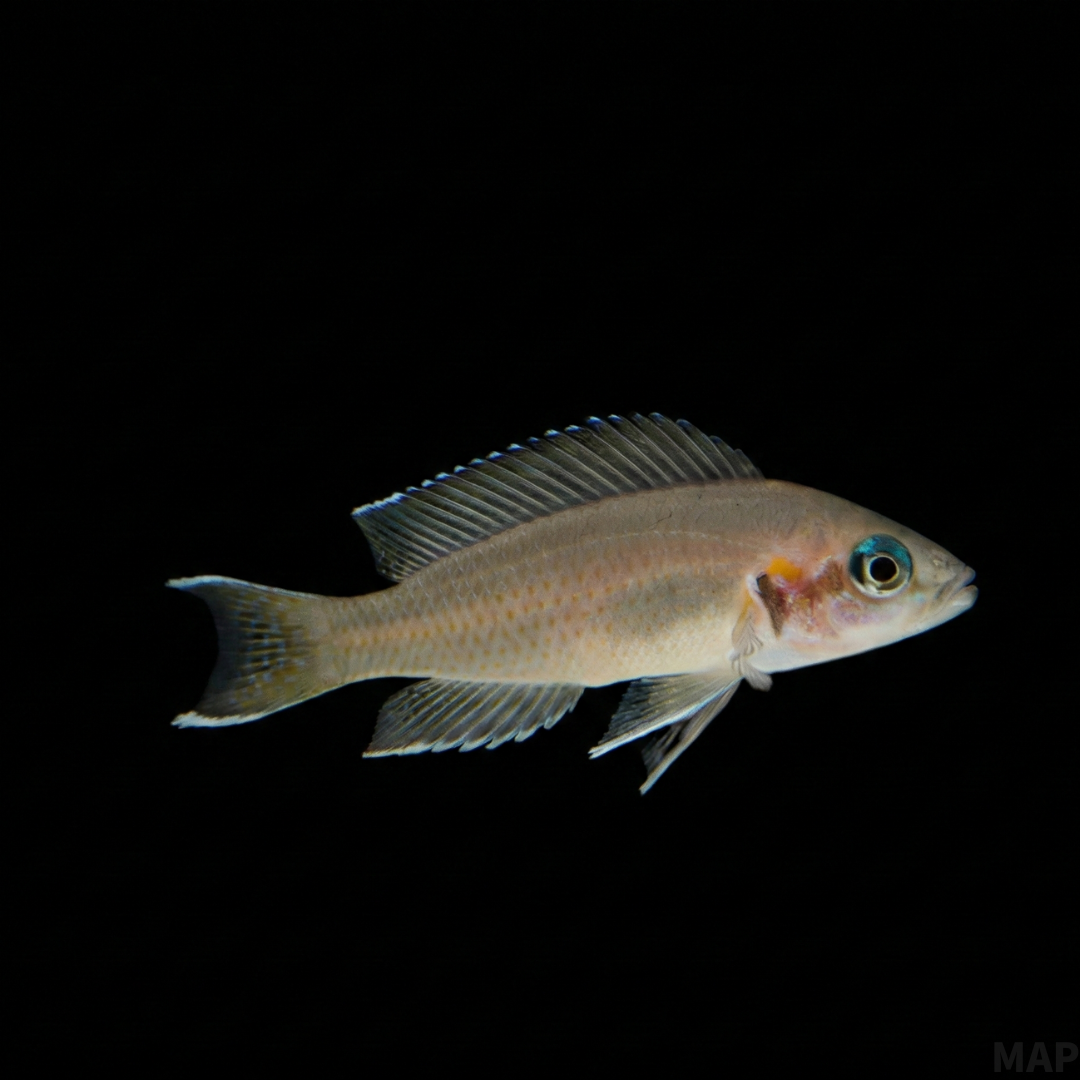
アフリカの古代湖、タンガニーカ湖を代表するこの美しいシクリッドは、優雅に伸長するライヤーテールと上品なベージュの体色から、「フェアリー(妖精)シクリッド」や「プリンセス・オブ・ブルンジ」という愛称で親しまれています。しかし、その可憐な外見の裏には、脊椎動物全体で見ても極めて珍しい、高度で厳格な社会システムが隠されています。彼らは単に群れるのではなく、親だけでなく成長した子供たちが「ヘルパー」として弟や妹の世話をする「協同繁殖」という家族形態を営みます。水槽という小さな生態系の中で繰り広げられる、世代を超えた家族の絆と生存戦略のドラマは、飼育者に対し単なる観賞魚以上の深い感動と発見を与えてくれることでしょう。Representing the ancient Lake Tanganyika in Africa, this beautiful cichlid is affectionately known as the “Fairy Cichlid” or “Princess of Burundi” due to its elegantly elongated lyretail and refined beige coloration. However, behind its lovely appearance lies a highly sophisticated and strict social system that is extremely rare among vertebrates. They do not merely school together; instead, they engage in “cooperative breeding,” a family structure where not only the parents but also the grown offspring act as “helpers” to care for their younger siblings. The drama of family bonds and survival strategies that unfolds within the microcosm of the aquarium offers the keeper deep emotions and discoveries that go beyond mere fish keeping.
基本情報 / Basic Information
学名 / Scientific Name
Neolamprologus brichardi / Neolamprologus pulcher
通称 / Common Name
ネオランプロローグス・ブリチャージ、フェアリーシクリッドBrichardi, Fairy Cichlid, Princess of Burundi
分類 / Family
スズキ目 カワスズメ科(シクリッド科)Cichlidae
英名 / English Name
Fairy Cichlid, Princess of Burundi
分布 / Distribution
アフリカ・タンガニーカ湖(岩礁地帯)Lake Tanganyika, Africa (Rocky littoral zone)
最大体長 / Max Size
約9cm(飼育下ではさらに大型化することもある)Approx. 9cm (Can grow larger in captivity)
寿命 / Lifespan
5年〜8年(適切な管理下では長期飼育が可能)5-8 years (Long-term care is possible with proper management)
飼育環境 / Aquarium Environment
水槽サイズ / Tank Size
60cm規格水槽(約60L)以上が必須です。本来の魅力であるコロニー飼育を長期的に楽しむ場合は、90cm規格水槽(約157L)や120cm水槽の導入を強く推奨します。水量の多さは、彼らが好む特殊な水質の安定にも寄与します。A 60cm standard tank (approx. 60L) or larger is essential. For long-term colony keeping, which is their true charm, a 90cm standard tank (approx. 157L) or a 120cm tank is strongly recommended. Larger water volume also contributes to stabilizing the specific water quality they prefer.
水温 / Temperature
24〜26℃
水質 / Water Quality
弱アルカリ性(pH 8.0 – 9.0)、中硬水〜硬水(GH 10-15)。日本の水道水は軟水であることが多いため、サンゴ砂を底床に使用したり、専用のバッファー剤(添加剤)を用いて、高pHと硬度を維持する必要があります。Weakly alkaline (pH 8.0 – 9.0), medium hard to hard water (GH 10-15). Since tap water in Japan is often soft, it is necessary to maintain high pH and hardness by using coral sand for the substrate or using specialized buffering agents.
レイアウト / Layout
岩組みレイアウトが基本です。単なる装飾ではなく、社会的な緊張を緩和するための「構造物」として設計します。視線を遮るように岩を配置したり、大小様々な隙間(ケーブ)を作ることで、弱い個体の避難場所や産卵床を確保します。Rock arrangement is fundamental. Design it not just as decoration, but as a “structure” to alleviate social tension. Arrange rocks to block lines of sight and create various sized crevices (caves) to secure hiding places for weaker individuals and spawning grounds.
注意点 / Precautions
アルカリ性の水質では、魚にとって猛毒であるアンモニアの毒性が強まる傾向があります。そのため、強力な外部式フィルターや上部式フィルターを用いて、高い生物濾過能力を確保することが極めて重要です。In alkaline water, the toxicity of ammonia, which is deadly to fish, tends to increase. Therefore, it is extremely important to ensure high biological filtration capacity using powerful external or top filters.
餌と給餌 / Feeding
餌の種類 / Diet
自然界では動物性プランクトンを主食とするため、動物性タンパク質の豊富な餌を好みます。人工飼料(シクリッド用ペレットやフレーク)に加え、冷凍ブラインシュリンプや赤虫、細かく砕いたクリルなどをバランスよく与えます。As they feed mainly on zooplankton in the wild, they prefer food rich in animal protein. In addition to artificial feed (cichlid pellets and flakes), feed a balanced diet of frozen brine shrimp, bloodworms, and finely crushed krill.
給餌のポイント / Feeding Tips
中層を漂う餌を好んで食べます。黄色味の強い個体(ダフォディルなど)には、色揚げ効果のあるクリルや色揚げ用飼料を与えることで、美しい発色を維持することができます。They prefer to eat food drifting in the middle layer. For individuals with strong yellow coloration (such as Daffodil), feeding krill or color-enhancing food can help maintain their beautiful coloration.
性格と混泳 / Temperament and Tank Mates
性格 / Temperament
テリトリー意識が強く、特に同種や似た体型の魚に対しては攻撃的になります。ペアやコロニーが形成されると、その結束力で他魚を排除しようとする傾向が強まります。これを「シクリッド・タンクの制圧」と呼ぶこともあります。They are strongly territorial and aggressive, especially towards their own species or fish with similar body shapes. Once a pair or colony is formed, their solidarity tends to exclude other fish. This is sometimes called “domination of the cichlid tank.”
混泳の相性 / Compatibility
エンゼルフィッシュやグッピーなど、泳ぎが遅くヒレの長い魚との混泳は避けてください。岩の隙間に住む「ジュリドクロミス」や、遊泳層が異なり中層〜上層を泳ぐ「キプリクロミス」の仲間とは比較的相性が良いですが、水槽サイズに余裕があることが前提です。Avoid keeping them with slow-swimming, long-finned fish like Angelfish or Guppies. They are relatively compatible with rock-dwelling “Julidochromis” or open-water swimming “Cyprichromis” that occupy different swimming layers, provided the tank is large enough.
病気と対策 / Diseases and Prevention
かかりやすい病気 / Common Diseases
水質の急変によるpHショックや、過密飼育のストレスによる体調不良が見られることがあります。また、スレ傷からの感染症にも注意が必要です。They may suffer from pH shock due to sudden changes in water quality or poor health due to stress from overcrowding. Also, be careful of infections from abrasions.
対策と予防 / Prevention
最も重要な予防策は、適切なpHと硬度の維持です。換水時には必ず水質調整を行い、バッファー剤を活用して環境を安定させます。また、コロニーが拡大して過密になった場合は、適切な「間引き」や里親探しを行うことも、病気予防(崩壊防止)の重要な管理技術です。The most important preventive measure is maintaining appropriate pH and hardness. Always adjust the water quality during water changes and use buffering agents to stabilize the environment. Also, if the colony expands and becomes overcrowded, appropriate “culling” or finding new owners is an important management technique for disease prevention (and preventing colony collapse).
増やし方(繁殖) / Breeding
繁殖形態 / Reproduction
基質産卵型(ケーブスポウナー)です。岩の隙間や天井に卵を産み付けます。本種の最大の特徴は、生まれた子供たちが成長しても親元に留まり、次世代の弟や妹の世話(卵の掃除や防衛)を手伝う「ヘルパー」となることです。Substrate spawner (Cave spawner). They lay eggs in crevices or on the ceilings of rocks. Their most unique feature is that the offspring stay with their parents even after growing up, becoming “helpers” that assist in caring for the next generation of siblings (cleaning eggs and defense).
繁殖のポイント / Breeding Tips
5〜6匹の若魚から飼育を始め、自然にペアができるのを待ちます。特別な操作をしなくても、環境が整っていれば頻繁に繁殖します。稚魚には孵化したてのブラインシュリンプを与えると生存率が高まります。Start with 5-6 young fish and wait for a pair to form naturally. Even without special manipulation, they breed frequently if the environment is right. Feeding newly hatched brine shrimp to the fry increases their survival rate.
なぜ子供たちは独立せずに実家に留まり、子育てを手伝うのでしょうか? これには「Pay-to-Stay(滞在費を払って居させてもらう)」という進化的な契約があると考えられています。外の世界は天敵が多く危険なため、子供は労働力(防衛や掃除)を親に提供することで、安全なテリトリーに住む権利を得ているのです。サボると親から攻撃されることも実験で確認されています。Why do the offspring stay home and help raise siblings instead of becoming independent? This is believed to be due to an evolutionary contract called “Pay-to-Stay.” Since the outside world is dangerous with many predators, the offspring provide labor (defense and cleaning) to their parents in exchange for the right to live in a safe territory. Experiments have confirmed that they are attacked by their parents if they slack off.
2. ブリチャージとプルッヘルの謎 / 2. Brichardi vs. Pulcher
一般的に、頬に黒いT字模様があるのが「ブリチャージ」、二本の三日月模様があるのが「プルッヘル(ダフォディル等)」として流通していますが、近年の遺伝子解析では両者の境界は非常に曖昧であることが分かっています。模様の違いは進化の過程で何度も独立して現れた「並行進化」の結果である可能性が高く、生物学的には同種、あるいは「複合体」として扱うのが主流になりつつあります。Generally, those with a black T-shaped pattern on the cheek are sold as “Brichardi,” and those with two crescent patterns as “Pulcher” (Daffodil, etc.), but recent genetic analysis shows the boundary is very ambiguous. The difference in patterns is likely the result of “parallel evolution” appearing independently multiple times, and biologically, it is becoming mainstream to treat them as the same species or a “complex.”
3. 多彩な地域変異(モルフ) / 3. Diverse Local Morphs
タンガニーカ湖の岩場は砂地によって分断されているため、地域ごとに独自の変異(モルフ)が生まれています。全身が鮮やかな黄色の「ダフォディル」、頬に青みが入る「キク」、コントラストの強い「フルウェ」など、コレクション性の高い多様なタイプが存在します。日本のアクアリストの間では、これらを産地ごとにこだわって収集する楽しみ方も定着しています。Since the rocky areas of Lake Tanganyika are divided by sandy areas, unique variations (morphs) have emerged in each region. There are diverse types with high collection value, such as the vividly yellow “Daffodil,” “Kiku” with blue on the cheeks, and the high-contrast “Fulwe.” Among Japanese aquarists, enjoying collecting these specific to their localities has become established.
まとめ / Conclusion
ネオランプロローグス・ブリチャージは、その上品な美しさだけでなく、家族で助け合う姿を通じて、私たちに生物の社会性の奥深さを教えてくれる特別な魚です。日本国内でも入手しやすく「入門種」とされていますが、その真価を発揮させるには、水質への理解と適切な環境づくりが欠かせません。Neolamprologus brichardi is a special fish that teaches us the depth of biological sociality through its elegant beauty and the way families help each other. It is easily available in Japan and considered an “entry-level species,” but understanding water quality and creating an appropriate environment are essential to bring out its true value.
岩組みの隙間から、小さなヘルパーたちが一生懸命に弟や妹を守る姿を観察できたとき、あなたは単なる魚の飼い主から、小さな王国の守護者へと変わる喜びを感じるはずです。ぜひ、この魅力的なフェアリーシクリッドとの生活を始めてみてください。When you observe the small helpers frantically protecting their younger siblings from the crevices of the rocks, you will surely feel the joy of transforming from a mere fish keeper to the guardian of a small kingdom. Please start your life with this fascinating Fairy Cichlid.



 アイのアクアグッズ案内アカヒレの仲間に合わせる飼育用品|無加温・混泳・繁殖の水槽とろ過道具の特徴や使い方、選ぶときのポイントをアイが紹介します。記事はコチラ →
 アイのアクアグッズ案内コリドラスのもふもふ時間を楽しむ|餌・底砂・お掃除用品の選び方コリドラスのもふもふする食事風景を楽しむために。沈む餌2種類の違い、口元に配慮した底砂、食べ残しを回収する道具を、アクアグッズナビゲーターのアイが紹介します。記事はコチラ →
 アイのアクアグッズ案内水槽のエアーポンプの選び方|水深・音・泡で選ぶおすすめ用品道具の特徴や使い方、選ぶときのポイントをアイが紹介します。記事はコチラ →
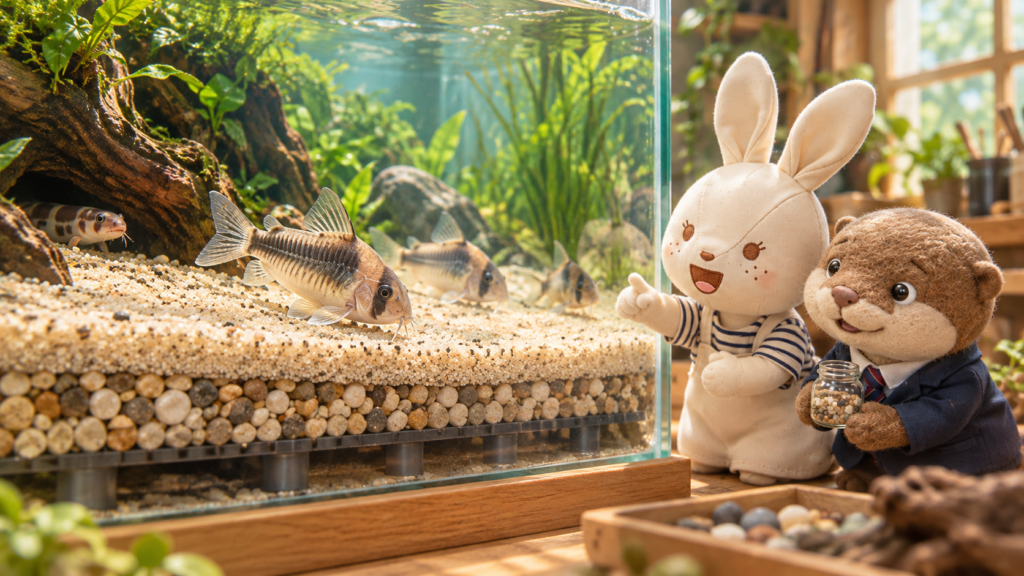 アイのアクアグッズ案内水槽の底砂の選び方|砂・砂利の違いとおすすめ商品道具の特徴や使い方、選ぶときのポイントをアイが紹介します。記事はコチラ →



コメント