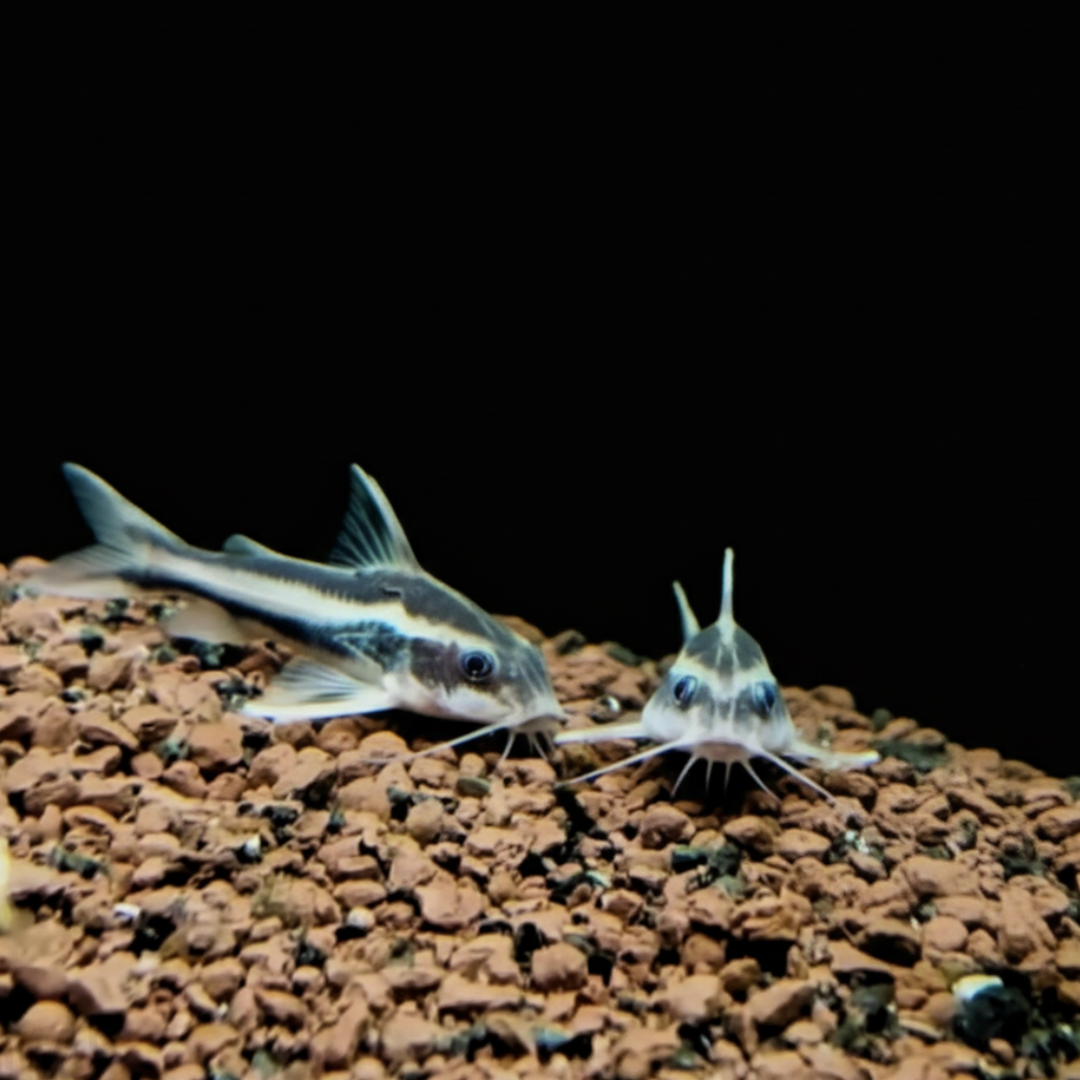
ストライプトーキングキャットは、南米原産のドラス科に属する中型ナマズです。その名の通り、体側に走る鮮やかな白黒のストライプ模様と、水から引き上げられた際などに「ギギギ」と音を発する独特の性質から、世界中のアクアリストに親しまれています。全身が強固な装甲(スキュート)で覆われており、外敵から身を守るための鋭い棘を装備しているのが特徴です。夜行性で日中は隠れ家に潜んでいますが、その強健さと愛嬌のある姿、そして「お掃除役の魚」としての有能さから、中・大型魚の混泳相手として日本国内でも定番の存在となっています。The Striped Talking Catfish is a medium-sized catfish from South America belonging to the family Doradidae. As the name suggests, it is popular among aquarists worldwide for its vibrant black and white stripes and its unique ability to produce a “creaking” sound when taken out of water. It is characterized by its tough armor (scutes) and sharp spines for defense. Being nocturnal, it hides during the day, but its hardiness, charming appearance, and effectiveness as a “utility fish” make it a staple tank mate for medium to large fish in Japan.
アマゾン川、パラグアイ川、パラナ川、オリノコ川下流域Amazon, Paraguay, Paraná, and lower Orinoco River basins
最大体長 / Max Size
15cmから24cm程度Approximately 15cm to 24cm
寿命 / Lifespan
10年から15年(適切に管理すれば20年から30年以上)10 to 15 years (Can reach over 20 to 30 years with proper care)
飼育環境 / Aquarium Environment
水槽サイズ / Tank Size
最低でも90cm規格水槽以上(成魚の終生飼育には120cmワイド水槽を推奨)At least a 90cm standard tank (120cm wide tank recommended for lifelong care of adults)
水温 / Temperature
24度から28度(20度から30度の広範囲に耐えますが、安定した保温が重要です)24°C to 28°C (Tolerates 20°C to 30°C, but stable heating is crucial)
水質 / Water Quality
pH 6.0から7.5(弱酸性から中性を好みますが、適応力は非常に高いです)pH 6.0 to 7.5 (Prefers slightly acidic to neutral, with high adaptability)
レイアウト / Layout
細かい砂を底砂に用い、流木や石、土管などで十分な「隠れ家」を用意してください。Use fine sand as substrate and provide ample hiding spots with driftwood, rocks, or PVC pipes.
注意点 / Precautions
夜行性のため強い照明は避け、日中落ち着ける場所を作ること。また成長に伴い狭い場所に挟まる事故に注意してください。Avoid bright lighting due to their nocturnal nature and ensure they have a calm place during the day. Watch for accidents where they get stuck in narrow spaces as they grow.
餌と給餌 / Feeding
餌の種類 / Diet
底生雑食性。沈下性の人工飼料、冷凍アカムシ、ブラインシュリンプなど。Benthic omnivore. Sinking pellets, frozen bloodworms, brine shrimp, etc.
給餌のポイント / Feeding Tips
満腹感を感じにくく、あればあるだけ食べてしまう貪欲な性質があります。肥満を防ぐため、1日1回消灯前に適量を与えるよう飼育者が厳格に管理してください。They rarely feel full and will eat as much as available. Owners must strictly manage portions once a day before lights out to prevent obesity.
性格と混泳 / Temperament and Tank Mates
性格 / Temperament
非常に温和で、他魚を攻撃することはありません。Very peaceful and will not actively attack other fish.
混泳の相性 / Compatibility
自分より大きな魚(中・大型カラシン、ポリプテルス等)とは好相性ですが、夜間に口に入るサイズの小型魚は食べてしまうため避けてください。Great with larger fish (medium to large characins, Polypterus, etc.), but avoid small fish that can fit in their mouth at night.
ナマズ類は「銅イオン」を含む薬品に極めて弱いため、治療の際は薬品選びに注意し、規定量より薄い濃度から開始するか、高水温による治療を検討してください。Catfish are extremely sensitive to copper-based medications. Be careful choosing treatments; start with a lower dose than prescribed or consider heat treatment.
増やし方(繁殖) / Breeding
雌雄の判別 / Sexing
外見での判別は困難ですが、メスの方が腹部がふっくらする傾向があります。Difficult to distinguish visually, but females tend to have a rounder abdomen.
繁殖形態 / Reproduction
卵生。Egg-layer.
繁殖のポイント / Breeding Tips
一般水槽での自然繁殖は極めて稀です。現在流通している個体の多くは、東南アジアの養殖施設でホルモン剤等を用いて人工的に繁殖されたものです。Natural breeding in home aquariums is extremely rare. Most commercially available individuals are mass-bred in Southeast Asian facilities using hormone treatments.
雑学と豆知識 / Trivia and Fun Facts
1. 学名の歴史と市場での混乱 / 1. Taxonomic History and Market Confusion
長年、本種はプラティドラス・コスタートゥス(Platydoras costatus)の名で流通してきましたが、近年の研究で、頭部までストライプが入る一般的な流通種はプラティドラス・アルマトゥルス(Platydoras armatulus)であることが判明しました。本来のコスタートゥスは分布域が極めて限定的で、外見も異なる別種です。For many years, this species was traded under the name Platydoras costatus. However, recent studies revealed that the common species with stripes reaching the head is actually Platydoras armatulus. The true P. costatus has a very limited range and a different appearance.
2. 幼魚期に見られる意外な「クリーニング行動」 / 2. Unexpected Cleaning Behavior in Juveniles
本種の幼魚は、野生下で大型肉食魚であるホプリアスの体表を掃除する「クリーニング行動」をとることが報告されています。鮮明な白黒のストライプは、自分が捕食対象ではなく掃除役であることを示す標識色として機能していると考えられており、淡水魚としては非常に珍しい共生例です。Juveniles of this species have been observed performing “cleaning behavior” on large predatory fish like Hoplias in the wild. Their distinct black and white stripes are thought to act as a signal that they are cleaners rather than prey, a rare example of symbiosis in freshwater fish.
3. 「話す」ための二つの高度なメカニズム / 3. Two Advanced Mechanisms for “Talking”
彼らが音を出す仕組みは二つあります。一つは胸鰭の棘の根元を擦り合わせる「摩擦音」、もう一つは「弾性スプリング装置」で鰾を振動させる「振動音」です。これにより、状況に合わせて異なる種類の音を使い分け、コミュニケーションや威嚇を行っています。They have two ways to produce sound: one is “stridulation” by rubbing the pectoral spine base, and the other is a “drumming” mechanism that vibrates the swim bladder using an “elastic spring apparatus.” They use these different sounds for communication and intimidation.
4. 水温が変えるコミュニケーションの質 / 4. Water Temperature and Communication Quality
最新の研究では、環境水温が彼らの発音能力に影響を与えることがわかっています。水温が30度近い高水温下では、筋肉の収縮速度が上がるため、摩擦音がより高く鋭い音に変化し、聴覚感度も向上します。水槽の温度管理は、彼らの会話の質にも影響しているのです。Recent research shows that water temperature affects their sound production. At high temperatures around 30°C, muscle contraction speeds up, making the sounds sharper and higher-pitched, and improving their hearing sensitivity. Temperature management even affects the quality of their “conversations.”
5. 網は厳禁!「ウォーターリフト」での移動 / 5. Never Use Nets! Use the “Water Lift”
体側に鋭い棘があるため、魚網ですくうと網目に絡まり、無理に外そうとすると魚に怪我をさせたり、人間が刺されたりする危険があります。刺されると激しい痛みが生じるため、移動の際はプラケースなどで水ごと掬い上げる「ウォーターリフト」が鉄則です。Because of their sharp spines, they easily get tangled in fish nets. Trying to free them can injure the fish or cause a painful sting to humans. The “water lift” method—scooping them up with a plastic container and water—is the absolute rule for safe moving.
まとめ / Conclusion
ストライプトーキングキャットは、そのユニークな発音能力と堅牢な装甲、そして高い適応力を持つ魅力溢れるナマズです。安価で「お掃除役の魚」として導入されがちですが、実際には20年から30年という驚異的な長寿を誇る、一生のパートナーになり得る存在です。The Striped Talking Catfish is a fascinating catfish with unique vocal abilities, solid armor, and high adaptability. While often introduced cheaply as a “utility fish,” it can live for an astonishing 20 to 30 years, making it a lifelong partner for the dedicated aquarist.
適切な広さの水槽と隠れ家、そして過食に注意した給餌管理を行うことで、彼らは静かに、しかし力強く水槽の守り神となってくれるでしょう。安易な放流は厳禁です。この古風で知的なナマズとの長い旅を、ぜひ楽しんでください。With an appropriately sized tank, plenty of hiding spots, and careful feeding, they will quietly yet powerfully become the guardians of your aquarium. Never release them into the wild. Enjoy your long journey with this ancient and intelligent catfish.
【分類学:Platydoras属の再編と分布】Piorski, N. M., Garavello, J. C., Arce H., M., and Sabaj Perez, M. H. (2008). Platydoras brachylecis, a new species of thorny catfish (Siluriformes: Doradidae) from northeastern Brazil. Neotropical Ichthyology, 6(3), 481-494.※市場流通種が P. costatus ではなく P. armatulus であるとする同定根拠および分布情報の一次資料。
【生理学:発音メカニズムと環境温度の依存性】Padohani, G., and Ladich, F. (2012). Temperature-induced changes in the sound production and hearing of the thorny catfish Platydoras armatulus. The Journal of Experimental Biology, 215(21), 3785-3793.※水温上昇に伴う発音周波数の変化と、聴覚感度の向上に関する実験データ。
【生態学:幼魚期におけるクリーニング行動の観察】Sabino, J., and Sazima, I. (1999). Association between juvenile catfish Platydoras costatus and the holostean fish Hoplias malabaricus. Ichthyological Exploration of Freshwaters, 10(4), 309-312.※ホプリアスとの掃除共生に関する野生下での観察記録。論文上の名称は当時の慣習に従い P. costatus。
【分布・外来種リスク:北米における定着確認とデータベース】U.S. Geological Survey. (2024). Platydoras armatulus (Valenciennes in Cuvier and Valenciennes, 1840). Nonindigenous Aquatic Species Database, Gainesville, FL.※米国における野外発見例と、外来種としてのリスク評価に関する公式記録。

 アイのアクアグッズ案内旅行中、お魚のごはんはどうする? 自動給餌器・使える餌・スマート水槽の選び方旅行中の魚の餌やりを助ける自動給餌器を、アイとコタロウが紹介。時間指定、おかわり給餌、対応するフレークや顆粒、設置台、スマホ管理、一体型水槽、留守番フードまで、使いどころと選び方を案内します。記事はコチラ →
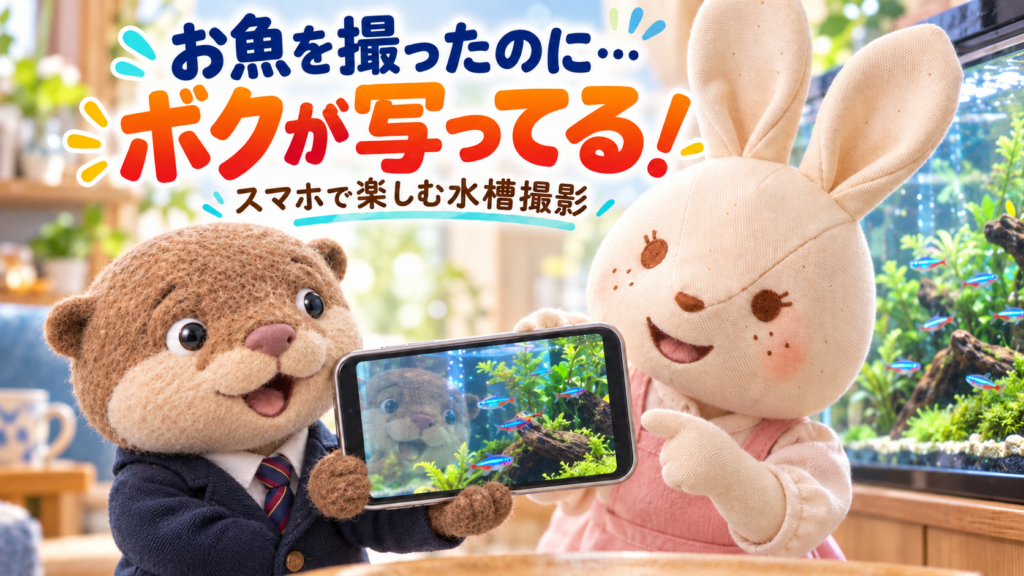 アイのアクアグッズ案内お魚を撮ったのに、ボクが写ってる! スマホで楽しむ水槽撮影と便利な道具道具の特徴や使い方、選ぶときのポイントをアイが紹介します。記事はコチラ →
 アイのアクアグッズ案内水槽用ヒーターの選び方|固定式・温度調節式と、水量に合うW数の考え方水槽の魚は冬に寒くない? アイとコタロウが水温計から固定式・温度調節式・分離式ヒーターまで比較。水量と室温に合うW数、設置場所、水換えや交換の注意点を、国内メーカーの商品とともに紹介します。記事はコチラ →
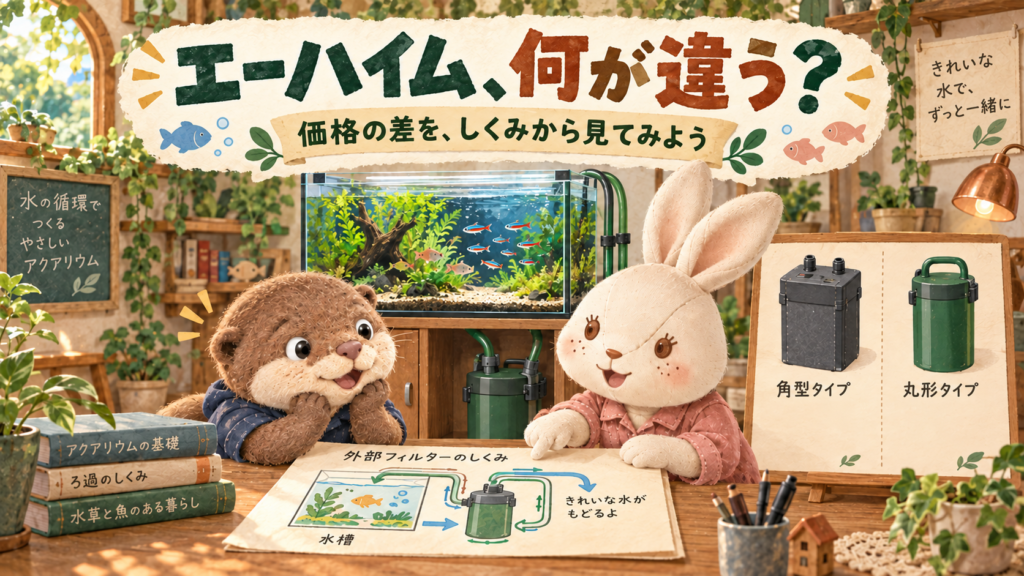 アイのアクアグッズ案内エーハイム、安いのと高いのは何が違う? コタロウと見比べる外部フィルター道具の特徴や使い方、選ぶときのポイントをアイが紹介します。記事はコチラ →
コメント