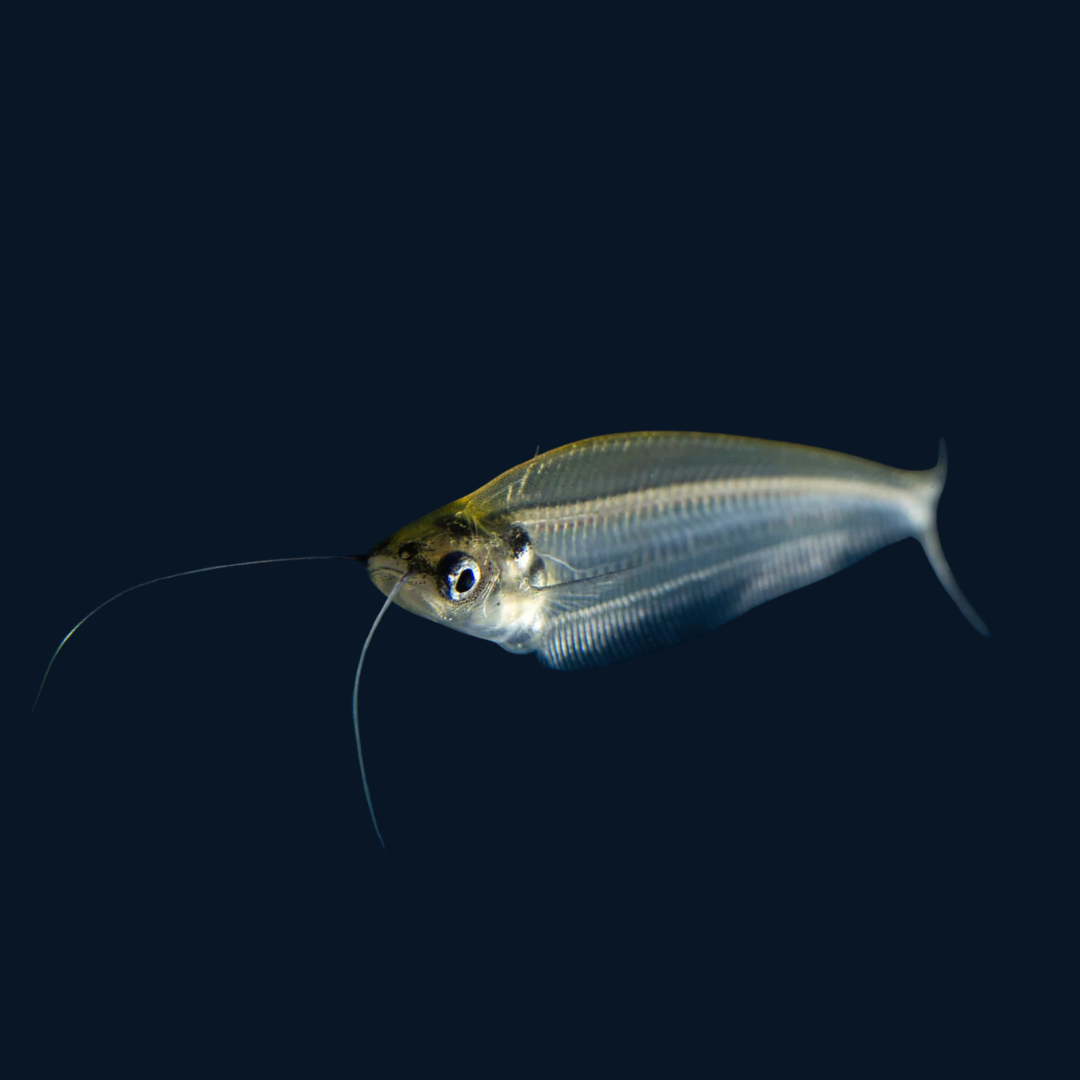
トランスルーセントグラスキャットフィッシュは、ガラス細工のように透き通った体を持つ小型のナマズの仲間です。骨格や腹部の銀色に見える内臓周辺部が透けて見えるほど透明度が高く、群れでゆったりと泳ぐ姿は、一般的な熱帯魚とは違った静かな美しさがあります。古くから「グラスキャット」として親しまれてきましたが、現在では観賞魚として流通する透明な個体は、主にKryptopterus vitreolusとして扱われます。The translucent glass catfish is a small silurid catfish known for its remarkably transparent body. Its skeleton and some internal structures can be seen through the body, and a group swimming calmly in midwater creates a quiet beauty unlike many brightly colored tropical fish. Long traded as the “glass catfish,” the transparent aquarium form is now generally treated as Kryptopterus vitreolus.
基本情報 / Basic Information
学名 / Scientific Name
Kryptopterus vitreolus
通称 / Common Name
トランスルーセントグラスキャットフィッシュ、グラスキャット、ゴーストキャットGlass catfish, Asian glass catfish, ghost catfish
分類 / Family
ナマズ目 ナマズ科 クリプトプテルス属Order Siluriformes, family Siluridae, genus Kryptopterus
英名 / English Name
Glass Catfish / Asian Glass Catfish
分布 / Distribution
タイに分布する小型種で、南部を中心とした河川水系や流れの緩やかな水路、泥炭湿地林周辺の水域と関わりが深い魚です。It is known from Thailand, especially southern river drainages and slow-moving waters associated with peat swamp and lowland forest habitats.
最大体長 / Max Size
標準体長で最大約6.5cm、飼育下で見た全長では約7〜8cm前後が目安です。Up to about 6.5 cm in standard length; in aquaria, total length is often roughly 7–8 cm.
寿命 / Lifespan
飼育下ではおおむね3〜5年ほどが目安です。導入時の状態と水質の安定が寿命に大きく影響します。In aquaria, a rough expectation is about 3–5 years. Initial condition and stable water quality strongly affect longevity.
飼育環境 / Aquarium Environment
水槽サイズ / Tank Size
単独ではなく群れで飼う魚のため、最低でも45cm規格水槽、できれば60cm規格水槽以上がおすすめです。6匹以上で飼育すると落ち着きやすく、群泳の魅力も引き出しやすくなります。Because this species should be kept in a group rather than singly, at least a standard 45 cm aquarium is recommended, with a standard 60 cm aquarium or larger being preferable. A group of six or more individuals is easier to settle and shows its schooling behavior more naturally.
水温 / Temperature
24〜27℃前後を安定して維持します。急な低水温や換水時の温度差に弱いため、導入時や冬季の水換えでは水温差をできるだけ小さくすることが大切です。Maintain the water at around 24–27°C. The species is sensitive to sudden chilling and temperature differences during water changes, so matching the replacement water temperature is especially important during acclimation and winter maintenance.
水質 / Water Quality
弱酸性〜中性の軟水を好みます。pHはおおむね6.0〜7.0前後を目安にし、アンモニアや亜硝酸が出ない、よく立ち上がった水槽で飼育します。水質の急変に弱いため、大量換水よりも少量を定期的に行う管理が向いています。It prefers soft water from slightly acidic to neutral, with a rough pH target of about 6.0–7.0. Keep it in a mature aquarium with no detectable ammonia or nitrite. Since sudden water-quality changes are stressful, small regular water changes are preferable to large abrupt ones.
レイアウト / Layout
中層を群れで泳ぐため、前面から中央には遊泳スペースを残し、背面や側面に水草、流木、マジックリーフなどを配置すると落ち着きやすくなります。強い水流は苦手ですが、完全な止水よりも緩やかな一方向の流れがある環境のほうが群れの姿を観察しやすくなります。Leave open swimming space in the front and center for midwater schooling, while placing plants, driftwood, and leaf litter toward the back and sides. It dislikes strong current, but a gentle directional flow often helps the group hold position naturally.
注意点 / Precautions
透明な体は魅力である一方、状態の変化も見えやすい魚です。体が白く濁る、群れから離れる、呼吸が荒い、ヒゲが短くなるといった変化は、輸送疲れ、水質悪化、低水温、細菌感染などのサインになり得ます。導入直後は特に慎重な水合わせと観察が必要です。Its transparent body is attractive, but it also makes health changes easy to notice. Milky whitening, isolation from the group, rapid breathing, or shortened barbels may indicate transport stress, poor water quality, chilling, or bacterial infection. Careful acclimation and observation are especially important after introduction.
餌と給餌 / Feeding
餌の種類 / Diet
冷凍赤虫、ブラインシュリンプ、イトメ、ミジンコ類、細かな顆粒フードなどを与えます。人工飼料にも慣れる個体は多いものの、導入初期や痩せた個体には嗜好性の高い冷凍餌を併用すると安心です。Offer frozen bloodworms, brine shrimp, tubifex, small crustaceans, and fine granulated foods. Many individuals can adapt to prepared foods, but newly imported or thin fish often benefit from highly palatable frozen foods.
給餌のポイント / Feeding Tips
水面や底だけの餌を取りに行くのは得意ではなく、中層をゆっくり漂う餌を食べやすい魚です。混泳魚に餌を奪われやすい場合は、消灯前の少し暗い時間に与えたり、複数箇所へ分けて投入したりして、群れ全体に行き渡るようにします。This fish is best at taking food drifting through the midwater and is less efficient at feeding only from the surface or bottom. If tank mates outcompete it, feed shortly before lights-out or distribute food in several areas so the whole group can eat.
性格と混泳 / Temperament and Tank Mates
性格 / Temperament
非常に温和で、同種同士で群れを作る性質が強い魚です。単独や少数では臆病になりやすく、隠れたままになったり、餌食いが落ちたりすることがあります。複数匹でまとまって泳ぐ状態が、本来の魅力を見せやすい飼い方です。It is very peaceful and strongly inclined to school with its own kind. Single fish or very small groups often become shy, hide frequently, or feed poorly. Keeping several together is the best way to see its natural appeal.
混泳の相性 / Compatibility
ネオンテトラ、カージナルテトラ、小型ラスボラ、温和なグラミー、コリドラス、クーリーローチ、オトシンクルスなど、穏やかで本種を傷つけない魚と相性が良いです。エンゼルフィッシュの成魚、大型シクリッド、大型プレコ、肉食性の強い中大型魚との混泳は、突かれたり食べられたりする危険があるため避けるべきです。Suitable tank mates include peaceful species that will not injure it, such as neon tetras, cardinal tetras, small rasboras, gentle gouramis, Corydoras, kuhli loaches, and Otocinclus. Avoid adult angelfish, large cichlids, large plecos, and predatory medium-to-large fish, as the glass catfish may be nipped, damaged, or eaten.
病気と対策 / Diseases and Prevention
かかりやすい病気 / Common Diseases
白点病、カラムナリス症、細菌性の体表トラブル、ヒゲの先端の傷みなどに注意が必要です。鱗を持たないため薬剤に敏感で、水質悪化や急な温度変化がそのまま体調不良につながりやすい魚です。Watch for ich, columnaris, bacterial skin problems, and damage to the tips of the barbels. Because it lacks scales, it is sensitive to medications, and poor water quality or sudden temperature changes can quickly lead to health problems.
対策と予防 / Prevention
最も重要なのは、よく立ち上がった水槽で水温と水質を安定させることです。換水用の水は水槽と近い温度に合わせ、底床の汚れや残餌をためないようにします。薬浴が必要な場合は、ナマズ類や無鱗魚に使える薬剤かどうかを確認し、規定量より薄めた濃度から慎重に行うことが重要です。The most important prevention is to keep temperature and water quality stable in a mature aquarium. Match replacement water temperature closely and prevent waste and uneaten food from accumulating in the substrate. If medication is needed, confirm that it is safe for catfish and scaleless fish, and begin cautiously at a reduced concentration.
増やし方(繁殖) / Breeding
雌雄の判別 / Sexing
外見だけでの雌雄判別は難しい魚です。成熟したメスは抱卵時に腹部がややふっくら見えることがありますが、一般的な飼育下で確実に見分けるのは容易ではありません。Sexing by appearance is difficult. Mature females may look slightly fuller when carrying eggs, but reliable identification in ordinary aquaria is not easy.
繁殖形態 / Reproduction
卵生です。水草などの基質に付着する小さな卵を産むと考えられ、原産国ではホルモン誘導を用いた人工繁殖の研究報告があります。It is an egg-laying fish. The small eggs are thought to adhere to substrates such as aquatic plants, and induced breeding using hormonal treatment has been reported in its country of origin.
繁殖のポイント / Breeding Tips
一般家庭の水槽で自然繁殖を狙うのはかなり難しい魚です。水質、季節変化、親魚の成熟、稚魚の初期餌などの条件がそろいにくいため、観賞魚としては繁殖を前提にするよりも、群れを健康に長期維持することを目標にしたほうが現実的です。Natural breeding in a home aquarium is very difficult. Water conditions, seasonal cues, maturity of the adults, and suitable first foods for fry are all challenging to provide, so long-term maintenance of a healthy group is a more realistic goal for most aquarists.
雑学と豆知識 / Trivia and Fun Facts
1. 80年近く続いた名前の混乱 / 1. A name clarified after decades of confusion
本種は長いあいだKryptopterus bicirrhisやKryptopterus minorの名前で扱われてきました。しかし、観賞魚として親しまれている透明なグラスキャットは、2013年にNgとKottelatによってKryptopterus vitreolusとして記載され、学術的な整理が進みました。今でも古い学名が流通名や店舗表記に残ることがあるため、名前だけでなく魚の特徴も確認して選びましょう。For many years, this fish was traded and discussed under the names Kryptopterus bicirrhis or Kryptopterus minor. In 2013, Ng and Kottelat described the transparent aquarium glass catfish as Kryptopterus vitreolus, helping resolve the long-standing confusion. Older names may still appear in trade lists or shop labels, so check the characteristics of the fish as well as its name.
2. 学名に隠された「見えない鰭」と「小さなガラス」 / 2. The “hidden fin” and “little glass” in its name
属名のKryptopterusは「隠れた鰭」を意味する言葉に由来し、背鰭が非常に小さく目立たないことを表しています。種小名のvitreolusはガラスを思わせる言葉で、透明な体を持つ本種にふさわしい名前です。流通名の「グラスキャット」だけでなく、学名そのものにもこの魚の特徴が刻まれています。The genus name Kryptopterus refers to a “hidden fin,” reflecting the greatly reduced and inconspicuous dorsal fin. The species name vitreolus evokes glass, perfectly matching the fish’s transparent body. Its defining character is therefore expressed not only in the trade name “glass catfish,” but also in the scientific name itself.
3. 透明な体が虹色に見える理由 / 3. Why the transparent body can shimmer like a rainbow
本種の体は単に色素が少ないだけではなく、光が通り抜けやすい構造を持つことが報告されています。さらに、角度によって体が淡く虹色に輝くことがありますが、これは体表の色素で発色しているというより、筋肉の微細な構造を光が通過することで生じる構造色に近い現象と考えられています。水槽内で群れが向きを変えた瞬間にきらりと光る姿は、この魚ならではの見どころです。Its body is not merely low in pigment; it is structured to allow light to pass through efficiently. At certain angles, the body can show a faint rainbow-like shimmer, thought to be related to structural color produced as light passes through fine muscular structures rather than ordinary surface pigmentation. The flash seen when a school changes direction is one of this species’ most distinctive charms.
4. 透明だからこそ状態が見えやすい / 4. Transparency makes condition easy to read
トランスルーセントグラスキャットフィッシュは、体調を崩すと透明感が失われ、体が白く濁って見えることがあります。これは「色が変わった」というより、ストレスや感染、死亡後の組織変化などが透明な体にそのまま現れるためです。美しい透明感を保つには、強い光や派手なレイアウトよりも、安定した水質、落ち着ける群れ、温度差の少ない管理が重要です。When a translucent glass catfish declines in condition, its body may lose clarity and become milky white. This is less a simple color change than a direct visual sign of stress, infection, or tissue changes after death appearing through the transparent body. To maintain its beautiful clarity, stable water quality, a calm group, and careful temperature management are more important than intense lighting or showy decoration.
5. タイの民話に残る「骨の魚」 / 5. The “bone fish” remembered in Thai folklore
タイでは、透明な体から骨だけの魚のように見える本種が、民話や地域文化の中で語られることがあります。古い伝承では、食べ終えた魚の骨に命が宿り、透明な魚となって泳ぎ出したという物語と結びつけられることもあります。科学的には透明化という進化の結果ですが、人の目には昔から神秘的な存在として映っていた魚だといえます。In Thailand, this fish’s transparent body, which can make it look almost like a swimming skeleton, has been linked with folklore and local culture. Some stories connect it to the idea of fish bones receiving life again and swimming away as a transparent fish. Scientifically, its transparency is an evolutionary feature, but culturally it has long appeared mysterious to human observers.
まとめ / Conclusion
トランスルーセントグラスキャットフィッシュは、透明な体と穏やかな群泳が魅力の小型ナマズです。派手な色彩で目立つ魚ではありませんが、水草水槽や落ち着いたコミュニティタンクに入れると、静かに存在感を放ちます。古くから親しまれてきた魚でありながら、学名や透明な体の仕組みには今なお興味深い背景がある魚です。The translucent glass catfish is a small catfish admired for its transparent body and peaceful schooling behavior. It is not a fish that stands out through bright coloration, but in a planted aquarium or calm community tank it has a quiet and memorable presence. Although long familiar in the aquarium hobby, its scientific name and transparent body still hold fascinating stories.
飼育では、群れでの導入、安定した弱酸性〜中性の水質、急な温度変化を避ける管理が重要です。デリケートな面はありますが、環境を丁寧に整えれば、ガラスのような体で中層を漂う美しい群泳を長く楽しめます。For successful care, keep it in a group, maintain stable slightly acidic to neutral water, and avoid sudden temperature changes. It is a delicate species in some respects, but with careful husbandry, its glass-like body and graceful midwater schooling can be enjoyed for a long time.
Ng, H. H. & Kottelat, M. (2013). After eighty years of misidentification, a name for the glass catfish (Teleostei: Siluridae). Zootaxa, 3630(2), 308-316.
Froese, R. & Pauly, D. (eds.). FishBase: Kryptopterus vitreolus Ng & Kottelat, 2013. 分類、分布、最大体長、形態的特徴の確認に参照。
Eschmeyer’s Catalog of Fishes, California Academy of Sciences: Kryptopterus vitreolus. 学名、命名者、分類上の扱いの確認に参照。
Fan, X. et al. (2023). Light diffraction by sarcomeres produces iridescence in transmission in the transparent ghost catfish. Proceedings of the National Academy of Sciences, 120(12), e2219300120.
Bian, C. et al. (2024). Chromosome-level genome assembly of the glass catfish (Kryptopterus vitreolus) reveals molecular clues to its transparent phenotype. Communications Biology.
Khunjaroenrak, W., Ponza, P. & Ponza, S. (2019). Induced Breeding of Glass Catfish, Kryptopterus vitreolus (Ng and Kottelat, 2013). Journal of Fisheries and Environment, 43(3).



 アイのアクアグッズ案内おとひめ物語|養殖生まれの餌を、わが家の魚に合う一粒へ道具の特徴や使い方、選ぶときのポイントをアイが紹介します。記事はコチラ →
 アイのアクアグッズ案内テトラミンって、こんなにあるの? アイとコタロウのごはん探究旅道具の特徴や使い方、選ぶときのポイントをアイが紹介します。記事はコチラ →



コメント