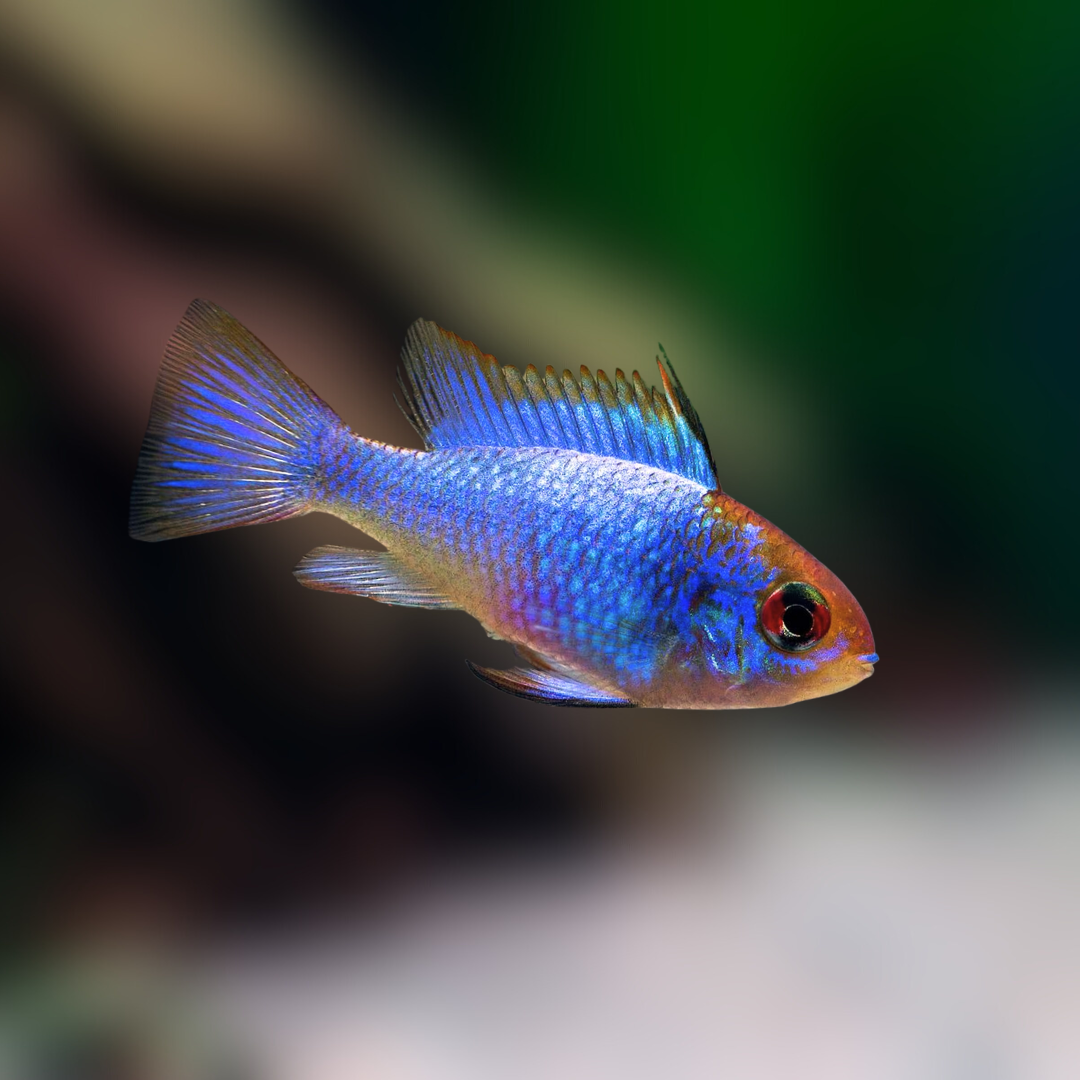
コバルトブルー・ラミレジィは、南米原産のラミレジィをもとに固定・流通している青色系の改良品種です。原種が持つ赤、黄、黒、青の複雑な模様とは異なり、体全体に青い光沢が広がる姿が大きな魅力です。小型で美しい魚ですが、一般的な丈夫な小型魚とは異なり、高めの水温、清浄な水質、落ち着ける環境を必要とします。とくに導入直後の水質変化や低水温に弱いため、見た目の華やかさだけでなく、予防的な管理を意識して飼育することが大切です。The Cobalt Blue Ram is a blue ornamental strain of the ram cichlid, Mikrogeophagus ramirezi, established and distributed through captive breeding. Unlike the wild-type form with a complex mixture of red, yellow, black, and blue markings, this variety is admired for its bluish sheen across much of the body. Although small and highly attractive, it is not as forgiving as many hardy community fish. It requires warm, clean, stable water and a calm environment. Careful preventive husbandry is especially important because newly introduced fish can be sensitive to sudden water changes and low temperatures.
基本情報 / Basic Information
学名 / Scientific Name
Mikrogeophagus ramirezi var.
通称 / Common Name
コバルトブルー・ラミレジィ、コバルトブルーラム、ブルーラム系改良品種Cobalt Blue Ram, Electric Blue Ram, Blue Ram strain
分類 / Family
シクリッド目シクリッド科ミクロゲオファーグス属Order Cichliformes, family Cichlidae, genus Mikrogeophagus
英名 / English Name
Cobalt Blue Ram, Electric Blue Ram Cichlid
分布 / Distribution
コバルトブルー・ラミレジィは改良品種のため、自然分布はありません。原種のラミレジィは、ベネズエラとコロンビアにまたがるオリノコ川流域のリャノス地域に分布します。The Cobalt Blue Ram is a captive-bred ornamental strain and has no natural wild distribution. The wild-type ram cichlid occurs in the Llanos region of the Orinoco River basin in Venezuela and Colombia.
最大体長 / Max Size
約5〜6cm。資料によっては全長7cm前後とされることもありますが、水槽内では5cm前後でまとまる個体が多いです。オスのほうがやや大きくなりやすく、メスはやや小ぶりにまとまる傾向があります。Around 5–6 cm. Some references list a total length of about 7 cm, but many aquarium specimens remain closer to 5 cm. Males tend to become slightly larger, while females usually remain a little smaller.
寿命 / Lifespan
おおむね2〜3年程度が目安です。状態のよい個体を安定した高水温・清浄な水質で飼育できれば、より長く維持できる場合もあります。Usually around 2–3 years. Well-conditioned individuals kept in warm, clean, stable water may live longer.
飼育環境 / Aquarium Environment
水槽サイズ / Tank Size
ペア飼育なら45cm規格水槽以上から可能ですが、安定性を重視するなら45cmワイド水槽や60cm規格水槽が扱いやすいです。水量としては30〜60L以上を確保すると水質変化が緩やかになり、導入後の不調を抑えやすくなります。A pair can be kept from a standard 45 cm aquarium, but a 45 cm wide tank or standard 60 cm tank is easier when stability is the priority. A water volume of at least 30–60 L helps buffer sudden changes in water quality.
水温 / Temperature
27〜30℃が目安です。一般的な小型熱帯魚よりやや高めを好み、低水温では活性低下や白点病などの不調につながりやすくなります。A range of 27–30°C is recommended. This species prefers warmer water than many common small tropical fish, and low temperatures can reduce activity and increase the risk of problems such as ich.
水質 / Water Quality
弱酸性寄りの軟水が適しています。目安はpH5.0〜6.8、GHは低めから中程度です。通常飼育では急なpH操作を避け、安定を優先します。アンモニアと亜硝酸は検出されない状態を保ち、硝酸塩も溜め込まないよう、少量の定期換水を安定して続けることが重要です。Soft water leaning acidic is suitable. A practical target is pH 5.0–6.8 with low to moderate hardness. In routine care, stability is more important than forcing sudden pH changes. Ammonia and nitrite should remain undetectable, and nitrate should be kept low through steady, moderate water changes.
レイアウト / Layout
細かい砂やソイルを薄く敷き、流木、石、水草で視線を遮る場所を作ります。アヌビアス、ミクロソリウム、クリプトコリネなどの丈夫な水草と相性がよく、繁殖を狙う場合は平らな石や素焼き片を産卵床として置いておくと扱いやすいです。Use fine sand or aquasoil with driftwood, stones, and plants to create visual barriers. Hardy plants such as Anubias, Microsorum, and Cryptocoryne work well. If breeding is intended, provide a flat stone or terracotta shard as a spawning surface.
注意点 / Precautions
導入直後の温度差、水質差、輸送ストレスに弱い個体が多いため、水合わせは丁寧に行います。安価な大量流通個体では体力にばらつきがある場合もあるため、体型が崩れていないこと、呼吸が荒くないこと、腹部が極端に痩せていないことを確認して選ぶと安心です。Many individuals are sensitive to temperature differences, water chemistry shifts, and shipping stress just after introduction, so acclimation should be slow and careful. Mass-produced inexpensive fish can vary in condition, so choose individuals with good body shape, steady breathing, and no severe emaciation.
餌と給餌 / Feeding
餌の種類 / Diet
人工飼料を主食に、冷凍赤虫、冷凍ブラインシュリンプ、イトミミズ、ミジンコなどを補助的に与えます。口が小さいため、粒の細かい沈下性フードや小型シクリッド向けの餌が適しています。野生型の食性を考えると、底面付近で小さな無脊椎動物や有機物をついばむ魚として捉えると給餌しやすいです。Use quality prepared foods as the staple diet, supplemented with frozen bloodworms, frozen brine shrimp, tubifex-type foods, and daphnia. Because the mouth is small, fine sinking foods or foods designed for dwarf cichlids are suitable. Considering the natural feeding style, it is useful to think of this fish as one that picks at small invertebrates and organic particles near the substrate.
給餌のポイント / Feeding Tips
一度に多く与えるより、少量を確実に食べ切らせるほうが安全です。高水温飼育では餌の傷みや残餌の分解が早いため、与えすぎは水質悪化に直結します。開封後のフードは湿気と高温を避け、古く酸化した餌を使わないことが大切です。Small, controlled feedings are safer than large meals. In warm aquaria, uneaten food decomposes quickly and can rapidly degrade water quality. Store opened foods away from heat and moisture, and avoid using old or oxidized food.
性格と混泳 / Temperament and Tank Mates
性格 / Temperament
ドワーフシクリッドの中では比較的温和ですが、ペア形成後や繁殖期には縄張り意識が強くなります。小さな体でもシクリッドらしい自己主張があり、隠れ家の少ない水槽では弱い個体が追い込まれることがあります。It is relatively peaceful for a dwarf cichlid, but territorial behavior increases after pair formation and during breeding. Despite its small size, it behaves like a true cichlid, and weaker fish may be stressed in tanks lacking cover.
混泳の相性 / Compatibility
中〜上層を泳ぐ小型テトラ、ラスボラ、ハチェットフィッシュなどとは比較的相性がよいです。オトシンクルス類も水槽条件が合えば候補になります。一方で、アピストグラマなど低層で縄張りが重なる魚、産卵床に入り込みやすい底生魚、小型シュリンプはトラブルや捕食の対象になりやすいため注意が必要です。Small mid- to upper-water fish such as tetras, rasboras, and hatchetfish are generally suitable companions. Otocinclus can also work if the aquarium conditions are appropriate. Fish that compete for bottom territories, such as Apistogramma, bottom dwellers that enter spawning sites, and small shrimp may cause conflicts or be preyed upon.
病気と対策 / Diseases and Prevention
かかりやすい病気 / Common Diseases
白点病、細菌性の皮膚炎やヒレの傷み、カラムナリス症、腹部膨満、頭部や側線部のびらんなどに注意します。とくに水温低下、導入時のストレス、古い水、底床の汚れ、酸化した餌は発症のきっかけになりやすいです。病名を決め打ちせず、症状と進行速度を見ながら早めに隔離・観察する姿勢が大切です。Watch for ich, bacterial skin problems, fin damage, columnaris, abdominal swelling, and erosions around the head or lateral line. Sudden temperature drops, introduction stress, old water, dirty substrate, and oxidized food can all contribute to disease outbreaks. Rather than assuming a single diagnosis immediately, isolate and observe affected fish early while checking the symptoms and speed of progression.
対策と予防 / Prevention
予防の基本は、27℃以上の安定した水温、清浄なろ過、急変を避けた換水、導入時の慎重な水合わせです。発症時は病魚を隔離し、症状に合った観賞魚用薬を規定量で使用します。塩水浴を併用する場合もありますが、水草やろ過バクテリアへの影響を考え、本水槽ではなく治療容器で慎重に行うと安全です。極端な高水温や急激なpH調整は負担が大きいため、一般記事では推奨手順として扱わず、まずは安定化と適切な薬剤選択を優先します。Prevention depends on stable warm water above 27°C, clean filtration, gentle water changes, and careful acclimation. If disease appears, isolate the affected fish and use an appropriate aquarium medication at the labeled dose. Salt baths may be used in some cases, but they are safer in a separate treatment container to avoid harming plants or biological filtration. Extreme heat treatments or sudden pH adjustments can be stressful, so this general guide prioritizes stabilization and appropriate medication rather than presenting them as standard procedures.
増やし方(繁殖) / Breeding
雌雄の判別 / Sexing
オスはメスよりやや大きく、背びれや尻びれの先が伸びて尖りやすい傾向があります。メスは腹部に丸みが出やすく、産卵期には輸卵管が確認できることがあります。ただしコバルトブルー系統では体色による差が分かりにくいため、複数匹を育てて自然にペアを選ばせる方法が確実です。Males tend to be slightly larger and may develop more pointed extensions on the dorsal and anal fins. Females often have a rounder abdomen, and the ovipositor may become visible when ready to spawn. Because color differences are less obvious in the cobalt blue strain, raising a small group and allowing natural pairing is often the most reliable method.
繁殖形態 / Reproduction
平らな石や葉、底面に産卵する基質産卵型です。ペアで卵や仔魚を守る行動が見られ、親魚が卵に新鮮な水を送ったり、孵化後の仔魚をくぼみに移動させたりすることがあります。It is a substrate spawner that lays eggs on flat stones, leaves, or the aquarium floor. Both parents may guard the eggs and fry, fan the clutch with fresh water, and move newly hatched larvae into shallow pits.
繁殖のポイント / Breeding Tips
繁殖を狙う場合は、45cm規格水槽程度の落ち着いた環境を用意し、弱酸性の軟水と28℃前後の水温を安定させます。卵はおおむね2〜3日で孵化し、その後数日で浮上します。稚魚は非常に小さいため、初期はインフゾリアや微細な初期餌料を用意し、成長に合わせてブラインシュリンプの幼生へ移行すると育てやすくなります。若いペアでは食卵や育児放棄が起こることもあるため、最初から成功を前提にせず、環境を安定させて経験を重ねさせることが重要です。For breeding, provide a calm aquarium around the size of a standard 45 cm tank, with stable soft, slightly acidic water and a temperature near 28°C. Eggs usually hatch in about 2–3 days, and the fry become free-swimming several days later. The fry are very small, so infusoria or other tiny starter foods are useful at first, followed by newly hatched brine shrimp as they grow. Young pairs may eat eggs or abandon the brood, so stable conditions and repeated experience are important rather than expecting perfect success from the first attempt.
雑学と豆知識 / Trivia and Fun Facts
1. 青色は「青い色素」だけで作られているわけではない / 1. The blue color is not simply made by blue pigment
コバルトブルー・ラミレジィの魅力は、全身を覆うような青い輝きにあります。魚の青色は、絵の具のような青い色素だけで説明されるものではなく、虹彩色素胞と呼ばれる反射性の細胞による光の反射や干渉が関わることがよくあります。ラミレジィ本来の複雑な斑紋の上に、青い反射が強く表れる個体を選抜していくことで、現在のような均一感のある青い品種が作られてきたと考えられます。このため、照明の角度や体調によって見え方が変わる点も、本品種ならではの面白さです。The main appeal of the Cobalt Blue Ram is its glowing blue appearance. Blue coloration in fish is not always explained by a simple blue pigment; reflection and interference from reflective cells called iridophores are often involved. The modern strain is thought to have been developed by selectively breeding individuals in which this blue reflection strongly covers the natural ram pattern. This is why the color can look different depending on lighting angle and the fish’s condition.
2. ラミレジィの名前と分類の歩み / 2. The name and taxonomic history of the ram cichlid
ラミレジィは、かつてアピストグラマ属やパピリオクロミス属として扱われた時期があり、現在はミクロゲオファーグス属に整理されています。属名のMikrogeophagusは「小さな土を食べるもの」という意味合いを持ち、底面をついばみながら細かな餌を探すような行動を連想させます。現在の分類名を知っておくと、古い書籍や海外資料で別名が出てきたときにも、同じ魚を指していると理解しやすくなります。The ram cichlid has previously been placed in genera such as Apistogramma and Papiliochromis, but it is now treated as Mikrogeophagus. The genus name Mikrogeophagus can be understood as meaning “small earth-eater,” evoking the way the fish picks at the substrate while searching for fine food particles. Knowing this taxonomic history helps when older books or foreign references use different names for the same fish.
3. 原種の故郷は季節で姿を変えるリャノス / 3. The wild form comes from the seasonally changing Llanos
原種のラミレジィが暮らすオリノコ川流域のリャノスは、雨期と乾期で水辺の姿が大きく変わる地域です。雨期には広い範囲が水に覆われ、乾期には水位が下がり、浅く暖かい水域が点在します。ラミレジィが高めの水温と軟らかい弱酸性の水を好む背景には、このような自然環境が関係しています。水槽内で再現する際は、極端なブラックウォーターにこだわるよりも、清浄で安定した暖かい水を保つことが現実的な近道です。The wild ram cichlid inhabits the Llanos of the Orinoco basin, a region that changes dramatically between wet and dry seasons. During the wet season, broad areas become flooded, while in the dry season the water retreats into warm, shallow habitats. This background helps explain why rams prefer warm, soft, slightly acidic water. In the aquarium, maintaining clean, stable, warm water is more important than trying to create an extreme blackwater setup.
4. 美しさと飼育難度は必ずしも別々ではない / 4. Beauty and sensitivity are often connected
コバルトブルー・ラミレジィは、選抜交配によって強い発色が固定されてきた改良品種です。その一方で、色彩や形質を重視して繁殖された改良品種では、系統や生産環境によって体力や繁殖力に差が出ることがあります。すべての個体が弱いわけではありませんが、購入時の状態差が飼育結果に大きく影響しやすい魚です。発色の濃さだけでなく、腹の張り、ヒレの開き、泳ぎ方、呼吸の落ち着きまで観察して選ぶことが、長期飼育への第一歩になります。The Cobalt Blue Ram is a selected ornamental strain in which strong coloration has been established through breeding. However, in ornamental strains bred with strong emphasis on color or form, vitality and fertility can vary depending on the line and production conditions. This does not mean every individual is weak, but the condition of the fish at purchase can strongly affect the outcome. Looking beyond color and checking body shape, fin posture, swimming, and breathing is the first step toward long-term success.
まとめ / Conclusion
コバルトブルー・ラミレジィは、小型魚でありながら主役級の存在感を持つ、美しい改良品種です。飼育の要点は、27〜30℃の高めで安定した水温、弱酸性寄りの清浄な軟水、そして視線を遮れる落ち着いたレイアウトにあります。pHや硬度の数値だけを追い込むより、急変を避けて清潔に保つことが長期飼育では重要です。The Cobalt Blue Ram is a beautiful ornamental strain with a presence far greater than its small size. The key to keeping it well is warm, stable water at 27–30°C, clean soft water leaning slightly acidic, and a calm layout with visual barriers. For long-term care, avoiding sudden changes and keeping the aquarium clean is more important than forcing exact pH or hardness values.
導入時の個体選びと水合わせを丁寧に行い、餌の与えすぎや古い水を避ければ、その青い体色とペアで見せる豊かな行動をじっくり楽しめます。派手さだけで選ぶ魚ではなく、安定した環境を用意して魅力を引き出す魚と考えると、長く付き合いやすい存在です。With careful selection, slow acclimation, controlled feeding, and consistently clean water, this fish rewards the aquarist with vivid blue coloration and fascinating pair behavior. It should not be chosen for color alone; it is best enjoyed as a fish whose beauty is brought out through a stable, well-planned environment.
Kullander, S. O. 2011. Nomenclatural availability of putative scientific generic names applied to the South American cichlid fish Apistogramma ramirezi Myers & Harry 1948 (Teleostei: Cichlidae). Zootaxa 3131: 35-51.
Mikrogeophagus、Papiliochromis、Microgeophagus など、ラミレジィの属名をめぐる分類史を確認するために参照しました。 https://mapress.com/zt/article/view/zootaxa.3131.1.2
Burduhos, P. et al. 2023. Reproduction of Mikrogeophagus ramirezi (Myers & Harry, 1948). Aquaculture, Aquarium, Conservation & Legislation Bioflux.
ラミレジィの繁殖条件、産卵、仔魚育成、給餌に関する実用的な情報を補強するために参照しました。 https://abah.bioflux.com.ro/docs/2023.78-80.pdf
Gur, D. et al. 2024. The physical and cellular mechanism of structural color change in zebrafish. Proceedings of the National Academy of Sciences.
魚類の虹彩色素胞、グアニン結晶、構造色に関する一般的な仕組みを説明するために参照しました。ラミレジィ専用の研究ではないため、記事内では一般論として扱っています。 https://pmc.ncbi.nlm.nih.gov/articles/PMC11161791/



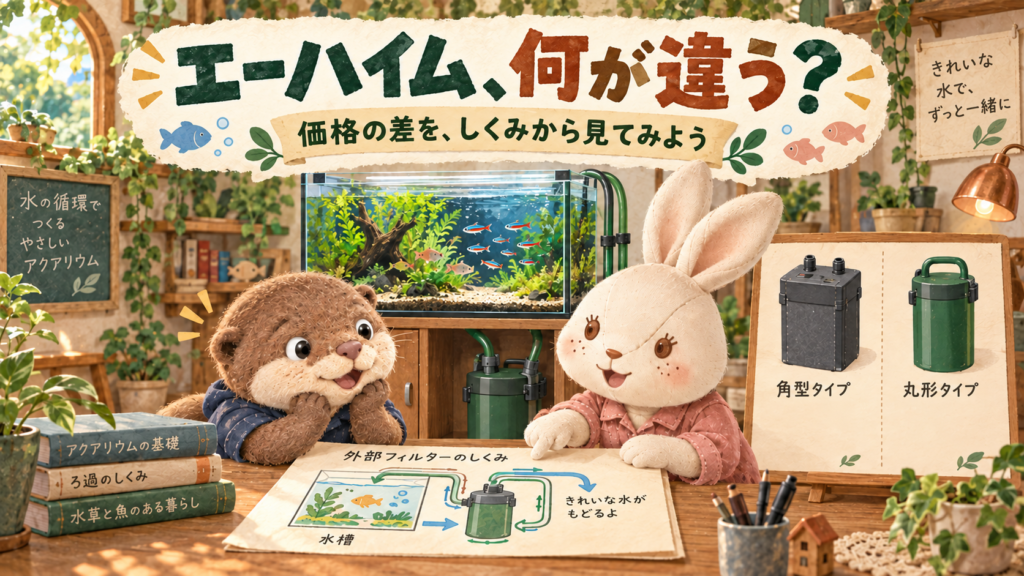 アイのアクアグッズ案内エーハイム、安いのと高いのは何が違う? コタロウと見比べる外部フィルター道具の特徴や使い方、選ぶときのポイントをアイが紹介します。記事はコチラ →
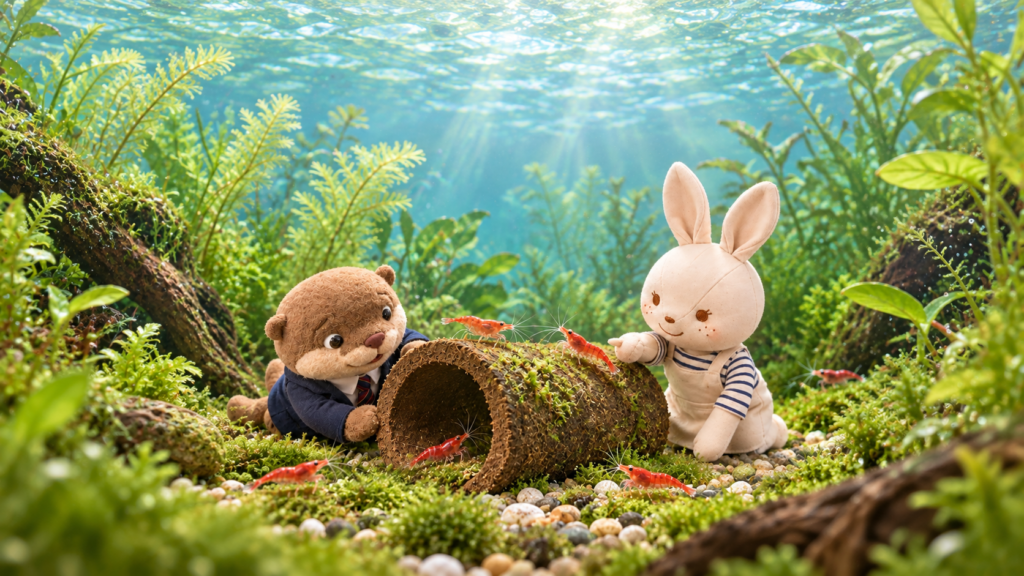 アイのアクアグッズ案内エビのおうち、食べちゃっていいの!? コタロウと探る、不思議なエビのごはん道具の特徴や使い方、選ぶときのポイントをアイが紹介します。記事はコチラ →



コメント