
解説 / Description
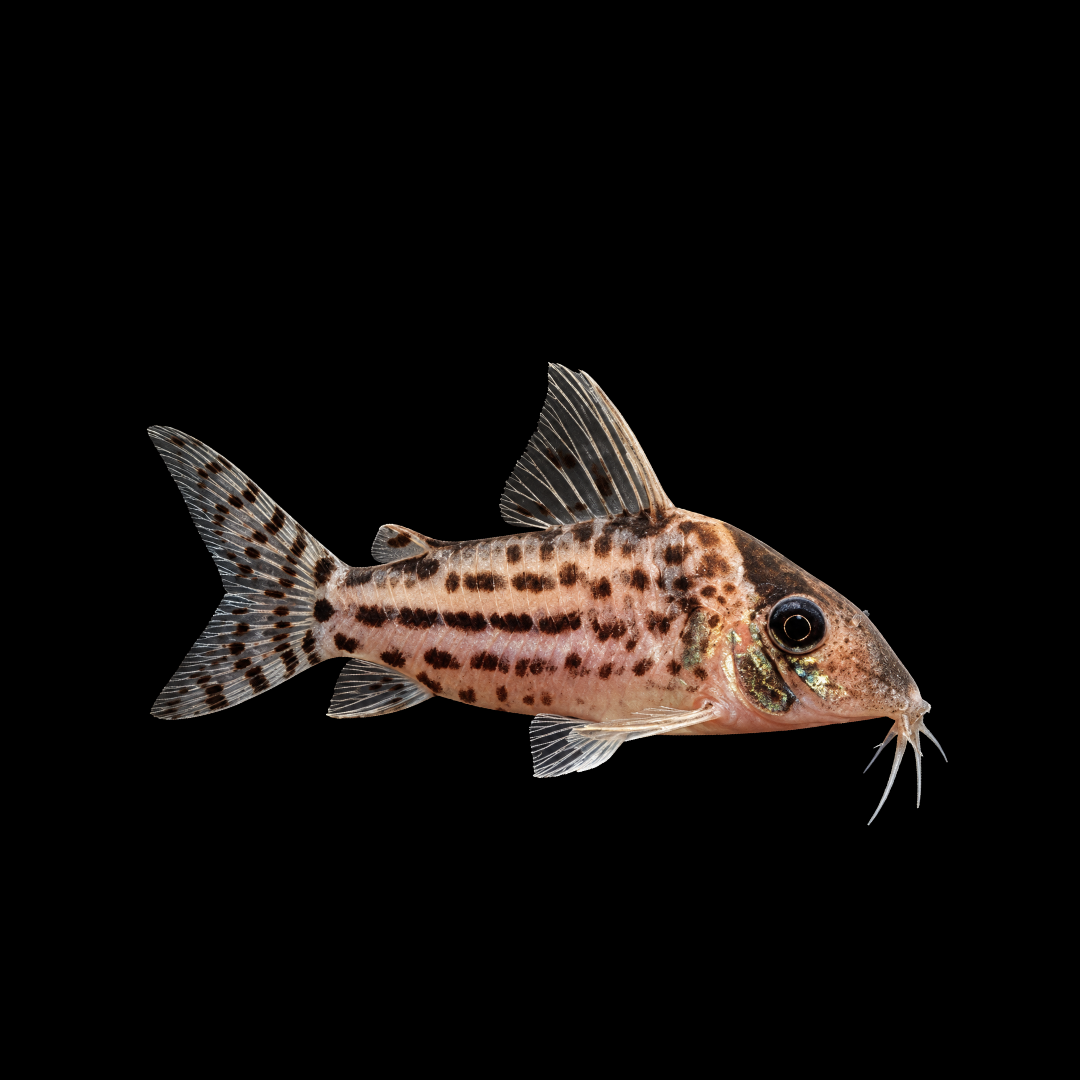
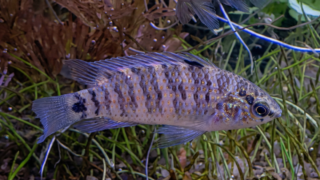
コリドラス・ホワイトフィンは、背びれの前縁を支える硬い棘条(きょくじょう)が白く、淡い体色に黒い斑紋が映える小型のナマズの仲間です。日本でよく見られるのは、吻(ふん、口先の部分)がやや前に伸びたセミロングノーズ型で、体側には斑点が連なったような線が現れます。線がはっきりつながる個体もいれば、細かな点模様が目立つ個体もあり、一匹ずつ見比べる楽しさがあります。砂を口に含んで餌を探したり、仲間のそばで静かに休んだりする姿も、この魚ならではの魅力です。「ホワイトフィン」は正式な種名ではなく流通名で、異なるタイプが同じ名前で扱われることがあります。国内で代表的なセミロングノーズ型は、現在、流通上ブロキス属の未同定種として扱われています。飼育では、清潔な底床、十分な酸素、底まで届く食事を整えることが大切です。 The White Fin Cory is a small armored catfish with a conspicuous pale spine supporting the leading edge of its dorsal fin and dark markings against a light background. Fish commonly sold under this name in Japan have a moderately extended snout, often described in the hobby as a semi-long nose, with rows of spots that may merge into longitudinal lines. Some individuals develop clear stripes, while others retain more separate spots, giving each fish a distinctive appearance. Their habit of sifting sand for food and resting beside companions adds to their appeal. “White Fin” is a trade name rather than a formally established species name, and different forms may be sold under it. The representative semi-long-snouted form in Japan is currently treated in the aquarium trade as an unidentified species of Brochis. Successful long-term care depends on clean substrate, good oxygenation, and food that reliably reaches the bottom.
基本情報 / Basic Information
| 学名 / Scientific Name | Brochis sp. “White Fin” 従来の流通表記:Corydoras sp. “White Fin”。種が確定していない魚に用いられる便宜的な表記です。Traditional trade notation: Corydoras sp. “White Fin”. This is a provisional designation for fish whose species identity has not been established. |
|---|---|
| 通称 / Common Name | コリドラス・ホワイトフィン、コリドラスsp.ホワイトフィン。ホワイトフィンオルナータス、コリドラス・オルナータス“ホワイトフィン”という販売名もあります。White Fin Cory. Japanese trade names also include Corydoras sp. White Fin, White Fin Ornatus, and Corydoras ornatus “White Fin”. |
| 分類 / Family | ナマズ目・カリクティス科・コリドラス亜科。国内で一般的なセミロングノーズ型は、流通上ブロキス属として扱われます。ただし、流通名だけではすべての個体の種や属を確定できません。Order Siluriformes, family Callichthyidae, subfamily Corydoradinae. The semi-long-snouted form commonly sold in Japan is treated as Brochis in the aquarium trade. However, a trade name alone cannot establish the species or genus of every individual sold under it. |
| 英名 / English Name | White Fin Cory, White-fin Corydoras |
| 分布 / Distribution | 南米ブラジル。国内ではアマゾン川流域のプルス水系産として流通するタイプが知られます。詳しい採集地点は入荷個体によって不明な場合があり、同じ販売名の魚がすべて同一産地とは限りません。Brazil, South America. A form sold in Japan is reported from the Purus drainage within the Amazon basin. Precise collection localities are not always available, and fish sharing this trade name should not automatically be assumed to originate from the same locality. |
| 最大体長 / Max Size | 成魚は6cm前後が目安です。流通するタイプや個体によって差があり、この名前で販売される魚すべてに共通する厳密な上限ではありません。Approximately 6 cm is a useful adult-size guide for the commonly traded form. Size varies among individuals and trade forms, so this should not be treated as a strict maximum for every fish sold as White Fin. |
| 寿命 / Lifespan | この流通名に限定した、信頼できる寿命の目安は分かっていません。野生採集個体では、購入時点の年齢が不明なこともあります。長く世話を続ける前提で迎えたい魚です。A reliable lifespan estimate has not been established for this trade form. Wild-caught individuals may also be of unknown age when purchased. These fish should be acquired with a commitment to long-term care. |
飼育環境 / Aquarium Environment
| 水槽サイズ / Tank Size | 同じタイプを5〜6匹ほどで飼うなら、60cmワイド水槽(幅60×奥行45×高さ45cm、総容量約120L)以上をおすすめします。ほかの魚との混泳や、より多くの個体を楽しむ場合は、90cm規格水槽(幅90×奥行45×高さ45cm、総容量約180L)が選択肢になります。底層で過ごす魚なので、水槽の高さだけでなく底面積を重視しましょう。容量は寸法から求めた概算で、底砂や水位、レイアウトによって実水量は少なくなります。For a group of about five or six of the same form, a Japanese 60 cm wide-format aquarium measuring 60 × 45 × 45 cm, with a gross capacity of approximately 120 L, or larger is recommended. A Japanese standard 90 cm aquarium measuring 90 × 45 × 45 cm, approximately 180 L gross, offers more room for tank mates or a larger group. Floor space is especially important for these bottom-dwelling fish. These capacities are estimates calculated from dimensions; substrate, furnishings, and the operating water level reduce the actual water volume. |
|---|---|
| 水温 / Temperature | 22〜27℃を飼育の目安とし、日常は23〜26℃程度で安定させると管理しやすくなります。夏は高温と酸素不足に注意し、室温管理や冷却ファン、水槽用クーラーを状況に応じて使い分けます。冬はサーモスタット付きヒーターを使用し、温度計で実際の水温も確認しましょう。エアレーションは酸素供給に役立ちますが、必要な冷却の代わりにはなりません。 Use 22–27°C as a general husbandry range, with stable everyday conditions around 23–26°C. During summer, monitor both overheating and oxygen availability, using room cooling, aquarium fans, or a chiller as appropriate. In winter, use a thermostatically controlled heater and verify the actual water temperature with a thermometer. Aeration improves oxygen supply but does not replace effective temperature control when cooling is needed. |
| 水質 / Water Quality | 弱酸性〜中性付近、pH6.0〜7.5程度を管理の目安にします。数値だけを追って急に調整するより、導入元の水質との差を確認し、安定させることを優先しましょう。アンモニアと亜硝酸は検出されない状態を維持し、硝酸塩も蓄積させないようにします。硝酸塩20mg/L以下を管理目標の一例として、通常は週1回、全体の1/4〜1/3程度の換水から始め、魚の数や水質の測定値に合わせて調整します。新しい水はカルキを抜き、水温を合わせて使用してください。Slightly acidic to near-neutral water, approximately pH 6.0–7.5, is a practical maintenance guide. Prioritize stability and check differences from the supplier’s water rather than making abrupt adjustments to reach a particular number. Ammonia and nitrite should remain undetectable, and nitrate should not be allowed to accumulate. A nitrate target of 20 mg/L or less can be used as a practical management goal. Start with weekly changes of approximately one quarter to one third of the water, adjusting the schedule to stocking and water-test results. Dechlorinate replacement water and match its temperature before use. |
| レイアウト / Layout | 角の丸い細かな砂を、掃除しやすいように薄く敷き、口先を差し込んで餌を探せる場所を広く残します。底砂は材質名だけで判断せず、粒の鋭さや汚れのたまりやすさも確認してください。奥や側面には流木を置き、アヌビアスやミクロソリウムなどを添えると、落ち着いて休める陰をつくれます。流木の下や石の隙間には体が挟まらない余裕を持たせ、水面まで上がれる通路も確保します。底層にも水が緩やかに巡るようにしつつ、強い水流を避けて休める場所を残しましょう。Provide a shallow, easily cleaned layer of fine sand with rounded grains, leaving generous open areas where the fish can probe and sift for food. Assess the sharpness of the grains and their tendency to trap waste rather than relying only on the substrate’s product name. Wood along the back or sides, accompanied by plants such as Anubias or Java fern, creates shaded resting places. Leave sufficient space beneath furnishings to prevent fish from becoming trapped, and maintain clear routes to the surface. Gentle circulation should reach the bottom while sheltered areas remain available away from stronger currents. |
| 注意点 / Precautions | 十分にろ過が機能した水槽へ迎え、導入直後は食欲、腹部の張り、呼吸の様子をよく観察します。底床の表面だけでなく、流木の下などにたまる残餌や排泄物も取り除きましょう。水面へ空気を吸いに上がるため、浮草で水面を覆い尽くさず、飛び出しを防ぐ蓋と水面上の空間を確保します。背びれや胸びれには硬い棘があるので、素手でつかまないでください。移動の際は、魚が無理なく入る容器で水ごとすくうと、棘が網に絡まるのを避けやすくなります。Introduce these fish into a mature aquarium with established filtration, and closely observe appetite, body condition, and breathing after arrival. Remove food remains and waste from beneath wood and other furnishings as well as from exposed substrate. Because the fish visit the surface to gulp air, avoid covering the entire surface with floating plants and provide both a secure lid and an air space above the water. The dorsal and pectoral fins contain stiff spines, so do not grasp the fish with bare hands. For transfers, gently scoop the fish with water into a suitably sized container to reduce the risk of its spines becoming entangled in a net. |
餌と給餌 / Feeding
| 餌の種類 / Diet | 主食には、栄養バランスのよいコリドラス用の沈下性ペレットやタブレットを使います。補助として冷凍アカムシ、冷凍ブラインシュリンプ、ミジンコなどを組み合わせ、食事に変化をつけます。イトミミズなどの生き餌を使う場合は、入手先と管理状態に気を配りましょう。動物質の餌を好みますが、一種類だけに偏らないことが大切です。ほかの魚の食べ残しだけでは、必要な量と栄養を安定して確保できません。Use a nutritionally balanced sinking pellet or tablet formulated for cory catfishes as the staple diet. Supplement it with foods such as frozen bloodworms, frozen brine shrimp, and daphnia to provide variety. If using live tubifex or similar foods, pay attention to their source and hygiene. These fish readily accept animal-based foods, but the diet should not depend on a single item. Leftovers from other fish do not provide a reliable supply of either sufficient food or balanced nutrition. |
|---|---|
| 給餌のポイント / Feeding Tips | 成魚には1日1〜2回を目安に、食べ方と体つきを見ながら少量ずつ与えます。混泳水槽では餌が底へ届いているか、すべての個体が食べているかを確認してください。餌を数か所へ分けて落とす、照明を落とす直前に与えるといった工夫も役立ちます。腹部がへこむ、頭に比べて胴が細いときは、食事量や餌の取り合いを見直しましょう。食べ残しを長時間放置せず、十分な給餌と底床の清潔さを両立させることが、長期飼育の基本です。Feed adults small portions once or twice daily, adjusting amounts to feeding behavior and body condition. In a community aquarium, check that food reaches the bottom and that every individual eats. Distributing food across several locations or feeding shortly before the lights go out can help. A sunken abdomen or a body that appears thin behind the head warrants a review of food intake and competition. Remove persistent leftovers and balance adequate nutrition with clean substrate. |
性格と混泳 / Temperament and Tank Mates
| 性格 / Temperament | 基本的に温和で、仲間と一緒に底を探ったり、同じ陰で休んだりします。同じタイプの個体を複数で飼うと、こうした行動を観察しやすくなります。導入直後や周囲が騒がしい環境では隠れることもあるため、隠れ家を用意し、急な振動や強い光を避けて落ち着かせましょう。繁殖期には追尾が見られることがありますが、傷や疲弊につながるほど続く場合は飼育状況を見直します。Generally peaceful, these fish forage near companions and may share shaded resting places. Keeping several individuals of the same form makes such social behavior easier to observe. Newly introduced fish or those exposed to frequent disturbance may hide, so provide cover and minimize sudden vibrations and harsh lighting. Courtship may involve chasing, but persistent pursuit that causes injury or exhaustion requires attention to the aquarium setup and group composition. |
|---|---|
| 混泳の相性 / Compatibility | 飼育水温や水質の合う、温和な小型テトラやラスボラなどと組み合わせやすい魚です。別種のコリドラスとの混泳も可能ですが、底面積に余裕を持たせ、どの個体にも餌が行き渡るようにしてください。大型の肉食魚、ひれをかじる魚、底層で強い縄張りを持つ魚との組み合わせは避けます。小さな卵や稚エビは食べられる可能性があるため、エビの繁殖を優先する水槽では分けて飼うと安心です。ホワイトフィンの繁殖を目指す場合は、産地やタイプの分かる個体で群れを整えると、親魚や子の由来を管理しやすくなります。Peaceful small tetras and rasboras with compatible temperature and water requirements are generally suitable companions. Other corydoradine catfishes may also be kept with them, provided there is adequate floor space and food for everyone. Avoid large predators, fin-nipping species, and fish that aggressively defend territories on the bottom. Small eggs and newly hatched shrimp may be eaten, so separate housing is preferable when shrimp breeding is a priority. For a White Fin breeding project, maintaining a group with known provenance and matching trade-form identity makes it easier to track the origins of the parents and their offspring. |
病気と対策 / Diseases and Prevention
| かかりやすい病気 / Common Diseases | 導入直後や水質が悪化したときは、白点病などの寄生虫感染、細菌性のひれや口部の炎症、体表の傷に注意が必要です。白点病は白点虫の感染によって起こり、急な水温変化やストレスは発症を助長することがあります。口ひげが短くなる「ヒゲ溶け」は一つの病名ではなく、擦り傷、底床の汚れ、感染などが関係する症状です。食欲低下、腹部のへこみ、体をこすりつける動き、普段より速い呼吸も見逃さないようにしましょう。外見だけで原因を断定することはできません。After introduction or when water quality deteriorates, watch for parasitic infections such as white spot disease, bacterial inflammation of the fins or mouth, and skin injuries. White spot disease is caused by infection with the white spot parasite; abrupt temperature changes and stress can favor an outbreak. Shortening or erosion of the barbels is a symptom rather than a single disease and may involve abrasion, dirty substrate, or infection. Reduced appetite, a sunken abdomen, rubbing against objects, and unusually rapid breathing also deserve attention. Appearance alone cannot reliably establish the cause. |
|---|---|
| 対策と予防 / Prevention | 新しい魚は別水槽で約1か月を目安に観察し、網や掃除道具の共用による病原体の持ち込みにも注意します。日常は底床の汚れを取り除き、過密と過剰給餌を避け、水温・pH・アンモニア・亜硝酸を定期的に確認しましょう。異常が見られたら、まず水質と酸素供給を確認し、必要に応じて隔離して原因に合う対処を選びます。 薬剤への反応は成分や魚の状態によって異なります。コリドラス類への使用可否を確認し、製品の用法・用量と実水量に基づいて使用してください。「ナマズの仲間だから半量」と一律に薄めたり、使用できない製品を減量して使ったりしないことが大切です。塩の常用や、病名を確かめずに30℃近くまで昇温する方法も避けます。薬浴中は十分な酸素を供給し、ろ過への影響とアンモニアの上昇に注意してください。薬の適否が分からない場合はメーカーへ、症状の原因が分からない場合は魚の診療に対応する獣医師へ、早めに相談しましょう。Observe new fish in a separate aquarium for approximately one month, and avoid introducing pathogens through shared nets or cleaning equipment. Routinely remove substrate waste, prevent overcrowding and overfeeding, and monitor temperature, pH, ammonia, and nitrite. If abnormalities appear, first check water quality and oxygen supply, then isolate affected fish when appropriate and select treatment suited to the cause. Sensitivity to medication depends on the active ingredient and the fish’s condition. Confirm suitability for corydoradine catfishes and follow the product’s directions using the actual water volume. Do not automatically halve every dose because the fish is a catfish, or attempt to make an unsuitable product safe by reducing its concentration. Avoid routine salt addition and raising the temperature toward 30°C without identifying the problem. During treatment, maintain good oxygenation and monitor possible effects on filtration and ammonia levels. Ask the manufacturer promptly if medication suitability is unclear, and consult a veterinarian who treats fish if the cause of the symptoms is uncertain. |
増やし方(繁殖) / Breeding
| 雌雄の判別 / Sexing | 十分に成熟すると、メスはオスより腹部の幅が広く、上から見た体形がふっくらする傾向があります。オスは比較的細身です。腹びれがメスで丸みを帯びる場合もありますが、流通タイプや個体差があるため、体形と行動を合わせて判断します。幼魚や痩せた個体の判別は難しく、背びれの高さや棘の白さだけでは雌雄を確定できません。Mature females tend to have a broader abdomen and appear fuller when viewed from above, while males are usually slimmer. Females may also have more rounded pelvic fins, but trade-form variation and individual differences mean that body shape and behavior should be considered together. Juveniles and underweight fish can be difficult to sex, and dorsal-fin height or the whiteness of the spine alone is not a reliable indicator. |
|---|---|
| 繁殖形態 / Reproduction | 卵生です。コリドラス類に特徴的な、雌雄が直角に組み合う「Tポジション」が見られ、メスは腹びれの間に卵を保持した後、ガラス面や水草などへ粘着性の卵を産み付けます。親魚による継続的な卵や稚魚の保護は期待できず、卵が食べられることもあります。「ホワイトフィン」の名前で国内の飼育下繁殖例がありますが、流通するすべてのタイプで繁殖条件が共通するとは限りません。These fish are egg layers. Spawning involves the characteristic corydoradine T-position, in which the male and female align at right angles. The female holds eggs between her pelvic fins before attaching the adhesive eggs to surfaces such as glass or aquatic plants. Continued parental protection of eggs or fry should not be expected, and adults may eat the eggs. Captive breeding has been achieved in Japan with fish sold as White Fin, although this does not establish identical breeding requirements for all forms traded under the name. |
| 繁殖のポイント / Breeding Tips | まずは同じタイプの成熟した個体を複数で飼い、偏りのない食事と安定した水質で体調を整えます。成熟までにかかる期間は一律には示せないため、飼育年数だけで繁殖に適した状態かどうかを判断することはできません。換水などの環境変化が産卵のきっかけになることはありますが、水温を大きく下げずに繁殖した例もあります。急な冷却や大量換水で無理に刺激を与えることは避け、親魚の状態を優先しましょう。 卵を確認したら、傷つけないように別容器へ移すか、親魚を分けて食卵を防ぎます。親水槽に近い水温・水質を保ち、穏やかな通水やエアレーションを行い、白濁して傷んだ卵は取り除きます。孵化までの日数は水温やタイプによって変わるため、決まった日数だけで判断せず、卵の発生を観察しましょう。 孵化した稚魚が卵黄を吸収して餌を探し始めたら、口の大きさに合う孵化直後のブラインシュリンプや稚魚用飼料を少量ずつ与えます。餌が底まで届くようにし、食べ残しをこまめに除去してください。吸水口にはスポンジを取り付け、水温と水質を合わせた少量の換水で、急変と汚れの蓄積を防ぎます。Begin with several mature fish of the same form and condition them with a varied, balanced diet and stable water quality. The time required to reach maturity cannot be stated uniformly, so time in captivity alone does not establish whether a fish is ready to breed. Water changes and other environmental shifts may trigger spawning, but successful breeding has also been reported without a substantial reduction in temperature. Avoid forcing a response through abrupt cooling or very large water changes, and prioritize the condition of the adults. Once eggs are found, carefully transfer them to a separate container or remove the adults to prevent egg predation. Maintain temperature and water chemistry close to those of the parent aquarium, provide gentle circulation or aeration, and remove deteriorating opaque eggs. Incubation time depends on temperature and the form involved, so follow development rather than relying on a fixed number of days. When the fry have absorbed their yolk and begin searching for food, offer small portions of newly hatched brine shrimp or fry food suited to their mouth size. Ensure that food reaches the bottom and remove leftovers frequently. Protect filter intakes with sponge and use small water changes with closely matched water to limit both sudden changes and waste accumulation. |
雑学と豆知識 / Trivia and Fun Facts
| 1. 流通名とCナンバーの読み解き方 / 1. Understanding Trade Names and Identification Numbers | 背びれの白い棘は目を引く特徴ですが、それだけで魚の種類が決まるわけではありません。コリドラスの仲間には、よく似た模様を持ちながら吻の形や骨格が異なる魚がいて、「ホワイトフィン」という名前も複数のタイプに使われてきました。国内で流通するセミロングノーズ型はC141と関連づけられることがありますが、この名前で流通する個体すべてがC141に該当すると確認されているわけではありません。一方、スーパーシュワルツィに用いられるCW028は、現在Hoplisoma sp. CW028として扱われています。この番号も、国内でホワイトフィンとして販売される魚すべてに当てはめることはできません。 CナンバーやCWナンバーは、種の整理が進む途中でも魚のタイプを区別し、情報を共有するための目印です。番号が付いていること自体が、正式に独立した種と認められた証明になるわけではありません。また、学名に添えられる「sp.」は種を特定していないことを示し、必ず未記載の新種であるという意味でもありません。名前に加えて吻の形、斑紋、産地を見比べると、一匹の魚をより丁寧に理解できます。A pale dorsal spine is striking, but it does not establish a fish’s identity on its own. Corydoradine catfishes can share similar markings while differing in snout shape and skeletal structure, and “White Fin” has been used for more than one form. The semi-long-snouted fish traded in Japan is sometimes associated with C141, but not every fish sold under this name has been confirmed to correspond to C141. CW028 is used for the fish known as Super Schwartzi, currently treated as Hoplisoma sp. CW028. This number likewise should not be applied to every fish sold as White Fin in Japan. C-numbers and CW-numbers help aquarists distinguish forms and share information while their taxonomy is being resolved. Having a number does not itself demonstrate recognition as a formally distinct species. Likewise, “sp.” indicates that the species has not been specified; it does not necessarily prove that the fish is an undescribed new species. Comparing snout shape, markings, and provenance alongside the name provides a more careful understanding of the fish. |
|---|---|
| 2. ブロキスという古くて新しい名前 / 2. Brochis: An Old Name in a New Classification | 長く親しまれてきた「コリドラス」という呼び名の内側には、見た目だけでは分かりにくい進化の枝分かれが隠れていました。2024年に公表された研究では、DNAと体の構造を組み合わせてその関係が検討され、従来コリドラス属にまとめられていた多くの魚が、ブロキス属、ホプリソマ属、オステオガステル属などへ整理されました。販売名にコリドラスと書かれ、学名にはブロキスと書かれていても、長年の愛称と学術上の分類が併存していると考えると理解しやすくなります。 ブロキスという属名そのものは19世紀から存在し、ギリシャ語で「輪」を意味する言葉に由来します。命名者が当時観察した、口ひげと下顎をつなぐ輪に似た構造にちなむ名前です。現在ブロキス属に含まれる魚すべてが、目立つ輪状のひげを持つという意味ではありません。古い名前が新たな研究によって再び使われるところにも、魚を理解する歴史の積み重ねが感じられます。The familiar name “Corydoras” has long encompassed evolutionary relationships that are not obvious from outward appearance. Research published in 2024 combined DNA evidence with anatomical information and reassigned many fishes formerly placed in Corydoras to genera including Brochis, Hoplisoma, and Osteogaster. A fish may therefore retain “Corydoras” in its aquarium trade name while appearing as Brochis in its scientific designation: a longstanding hobby name and a revised scientific classification can coexist. Brochis itself is a nineteenth-century name derived from a Greek word meaning “loop.” It refers to a loop-like structure connecting the barbels and lower jaw that the describing author observed at the time. This does not mean that every fish now included in Brochis has conspicuously looped barbels. The renewed use of an old name reflects how modern research builds on earlier observations. |
| 3. 小さな体を守る骨板と棘 / 3. Bony Armor and Defensive Spines | 砂の上で静かに休む姿からは想像しにくいものの、コリドラスの仲間は小さな体にしっかりした防御の仕組みを備えています。体側を覆うのは、多くの魚に見られる薄い鱗ではなく、列をなして並ぶ硬い骨板です。さらに背びれと胸びれの硬い棘は、捕食者に飲み込まれにくくする役割を持ちます。 仲間の赤コリなどでは、胸びれの付け根付近に開く「腋窩腺(えきかせん)」という分泌器官も研究されています。腋窩腺は周囲の水へ分泌物を出す器官で、胸びれの棘に関連する毒腺とは区別されます。ホワイトフィンの分泌物の性質や毒性は、十分には分かっていません。温和な魚であっても棘は鋭いため、移動の際には容器でそっとすくう配慮が必要です。こうした特徴を身を守るための体のつくりとして眺めると、その姿が少し違って見えてきます。A fish resting quietly on the sand may look unassuming, yet corydoradine catfishes possess substantial defenses for their size. Their flanks are covered by rows of hard bony plates rather than the thin scales familiar from many other fishes. Stiff dorsal and pectoral spines also make them more difficult for predators to swallow. Related species, including the bronze cory, have been studied for secretory organs called axillary glands, which open near the bases of the pectoral fins. These glands release substances into the surrounding water and are distinct from the venom-associated glandular tissue of the pectoral spines. The properties and toxicity of secretions specific to White Fin are not well established. Although these fish are peaceful, their spines are sharp, so gentle transfers using a container are advisable. Seen as adaptations for self-defense, these structures add another dimension to the fish’s appearance. |
| 4. 水面へ向かうひと泳ぎの秘密 / 4. Why They Make a Quick Trip to the Surface | 底で餌を探していた個体が、突然すっと水面へ向かい、ひと息ついて戻ってくることがあります。これはコリドラスの仲間に見られる腸呼吸です。口から飲み込んだ空気を利用し、腸の一部で酸素を取り込みます。赤コリでは、腸の後方の壁が薄く、毛細血管が発達しており、空気と血液の間でガス交換しやすい構造になっていることが分かっています。 こうした仕組みは、川の水位や水の流れが変わり、酸素の少ない場所が生じる環境で役立つと考えられます。酸素が足りている水槽でも空気を吸いに上がることがあるため、浮上そのものを病気と考える必要はありません。ただし、普段より著しく頻繁になったり、ほかの魚も苦しそうにしていたりするときは、水温、水質、酸素供給を確認しましょう。腸呼吸ができても、水中の良好な酸素環境は欠かせません。A fish searching the bottom may suddenly dart to the surface, gulp air, and return. This is intestinal air breathing, a behavior found in corydoradine catfishes. Swallowed air supplies oxygen through a specialized region of the intestine. In the bronze cory, the posterior intestine has thin walls and a rich capillary supply that facilitate gas exchange between air and blood. This ability is thought to be useful where changing water levels and flow create oxygen-poor habitats. Fish may also gulp air in a well-oxygenated aquarium, so an occasional surface visit is not itself a sign of illness. A marked increase over normal behavior, especially if other fish also appear distressed, should prompt checks of temperature, water quality, and oxygen supply. Intestinal breathing does not remove the need for well-oxygenated aquarium water. |
| 5. 似た模様で暮らす仲間たち / 5. Similar Patterns Among Different Neighbors | コリドラスの仲間を見比べていると、別の種類なのによく似た模様の魚に出会います。南米では、こうした魚が同じ場所で暮らす例があります。このうち、防御手段を持つ別々の種類がよく似た警告模様を共有する関係は、「ミューラー型擬態」として研究されてきました。捕食者がある模様を食べにくい相手の目印として覚えれば、同じような防御手段と模様を持つ別の魚も攻撃を受けにくくなると考えられます。 同じ場所での共存には、餌をめぐる競争も関係します。吻の形や体の大きさの違いが、食べる餌の違いと結びつき、よく似た姿の魚が共存する助けになっていることが示されています。ホワイトフィンの白い棘そのものに警告の役割が実証されているわけではありませんが、模様と吻を一緒に観察すると、美しさの向こうに川底での暮らしが見えてきます。Comparing corydoradine catfishes often reveals different species with remarkably similar markings. In South America, some of these fishes live together. Relationships in which different defended species share similar warning patterns have been studied as Müllerian mimicry. If a predator learns to associate a pattern with an unpleasant or difficult prey item, other defended fishes with that pattern may also gain protection. Competition for food also matters to coexistence. Differences in snout shape and body size have been linked to differences in resource use, helping similar-looking fishes live together. A warning function has not been demonstrated specifically for the pale spine of White Fin, but observing both pattern and snout shape offers a glimpse of the ecological relationships behind their appearance. |
| 6. Tポジションの先にある繁殖の不思議 / 6. The Reproductive Mystery Behind the T-Position | 雌雄が直角に組み合うTポジションは、コリドラスの繁殖を象徴する行動です。その後、メスが腹びれで卵を抱え、産み付ける場所を探す様子には、小さな体の中で進む複雑な繁殖の仕組みが表れています。仲間の赤コリでは、メスがオスの精液を口から取り込み、消化管を通した精子によって、腹びれの間に抱えた卵を体外で受精させる独特の仕組みが研究されています。 2025年には、赤コリの精液に含まれるタンパク質の一つが、精子の運動を抑えることが示されました。精子を早い段階で泳がせないことが、卵の近くへ届くまでのエネルギーの節約につながる可能性があります。これはホワイトフィンで同じ経路や仕組みが確認されたことを意味しませんが、見慣れた魚の繁殖にも、細胞や分子の働きにまで及ぶ奥深さがあることを教えてくれます。The T-position, in which male and female align at right angles, is one of the most recognizable features of corydoradine spawning. The female’s subsequent handling of eggs between her pelvic fins and her search for a deposition site reflect a complex reproductive process. In the related bronze cory, researchers have investigated an unusual process in which the female takes semen into her mouth and passes sperm through the digestive tract so that they can fertilize eggs held externally between her pelvic fins. Research published in 2025 demonstrated that one protein in bronze cory seminal fluid suppresses sperm movement. Keeping sperm from swimming too early may help conserve their energy until they approach the eggs. This does not establish the same route or mechanism in White Fin, but it reveals how the reproductive behavior of familiar aquarium fishes can involve intricate processes at cellular and molecular levels. |
| 7. 産地と飼育記録がつなぐ次の世代 / 7. Keeping Provenance and Husbandry Records | 日本では野生採集のホワイトフィンが流通しており、店頭に並ぶまでに採集、保管、輸送という環境の変化を経験しています。迎える際には背びれの白い棘の美しさに加えて、腹部がへこんでいないか、口元が傷んでいないか、餌を探す動きが見られるかを確かめると、健康状態を見極める手掛かりになります。 購入時の名称、伝えられた産地、入手日、体の写真を残しておくことも、この魚を楽しむ方法の一つです。分類や流通名の整理が進んだときに手元の個体を見直す手掛かりになり、繁殖に成功すれば、親魚の由来と育成条件を次の飼育者へ伝えられます。産地が不明なら不明のまま記録し、推測で補わないことも大切です。日々の観察は、一匹一匹に合った飼育を考える手掛かりになり、まだ十分に分かっていないこの仲間への理解にもつながります。Wild-caught White Fin are available in Japan, and these fish experience changes associated with collection, holding, and transport before reaching an aquarium shop. Alongside the attractive pale dorsal spine, examine whether the abdomen is filled out, the mouth is undamaged, and the fish actively searches for food. These observations provide useful clues to the fish’s condition. Recording the purchase name, reported locality, acquisition date, and photographs is another rewarding part of keeping this fish. Such records may help clarify an individual’s identity as taxonomy and trade names are resolved. If breeding succeeds, they also allow parental provenance and rearing conditions to be passed to another keeper. When a locality is unknown, record it as unknown rather than filling the gap with an assumption. Consistent observations can guide the care of individual fish and contribute to a better understanding of this still incompletely known group. |
まとめ / Conclusion
コリドラス・ホワイトフィンは、背びれの白い棘と繊細な斑紋に加え、砂を探る仕草や仲間と過ごす穏やかな姿も魅力の魚です。広い底面、清潔な砂、十分な酸素、確実に届く食事を用意し、年間を通して水温を安定させることが、長期飼育の基本になります。落ち着いた環境で見せる自然な動きが、水槽の底に豊かな表情を添えてくれます。 The White Fin Cory is appealing for its pale dorsal spine and intricate markings, as well as its sand-sifting behavior and quiet interactions with companions. A spacious floor area, clean sand, good oxygenation, reliable access to food, and stable temperatures throughout the year form the basis of long-term care. Its natural behavior in a settled aquarium brings interest and character to the bottom of the tank.
同じ名前で迎えた魚でも、模様や体つき、餌を探す様子には小さな違いがあります。それぞれの特徴を知り、日々の変化に気を配ることが、長い付き合いの土台になります。仲間と並んで休む姿や、砂にそっと口先を差し込む仕草は、日々の観察に穏やかな楽しみを添えてくれます。 Even fish acquired under the same name can differ subtly in markings, body shape, and foraging behavior. Learning those individual traits and noticing changes over time builds the foundation for lasting care. Watching them rest beside companions or gently probe the sand brings quiet enjoyment to everyday observation.
気になる道具や飼い方を見つけてみませんか?
 アイのアクアグッズ案内水槽のコケ掃除|道具の選び方とお掃除生体の得意・不得意道具の特徴や使い方、選ぶときのポイントをアイが紹介します。記事はコチラ →
 アイのアクアグッズ案内水草の肥料の選び方|底床用・液肥・メネデールの使い分け道具の特徴や使い方、選ぶときのポイントをアイが紹介します。記事はコチラ →
さまざまな飼育テーマをご紹介。リンク先の記事には広告・商品紹介が含まれます。
案内・紹介記事一覧へ →分布マップ
コリドラス・ホワイトフィン(Brochis sp. “White Fin”)は、ブラジルのアマゾン川流域にあるプルス水系産として流通するタイプが知られています。同じ流通名でも、すべての個体が同じ産地とは限りません。
※地図はプルス水系周辺の位置関係を示す概略表示です。周辺国を含む表示範囲全体が、この魚の生息域を示すものではありません。マーカーとGoogle Earthのリンク先は地域を示す代表地点であり、実際の採集地点ではありません。
参考文献
-
Dias, A. C. et al.(2024年先行公開). Phylogenomic analyses in the complex Neotropical subfamily Corydoradinae (Siluriformes: Callichthyidae) with a new classification based on morphological and molecular data. Zoological Journal of the Linnean Society, 203(3), zlae053(2025年巻号掲載). 訂正論文(2025), 203(4), zlaf035.
分類・系統:コリドラス亜科の分子系統解析と、Brochis・Hoplisomaなどの属の再編。
-
Ziesler, R. & Ardizzone, G. D.(1979). The Inland Waters of Latin America / Las aguas continentales de América Latina. COPESCAL Technical Paper No. 1. FAO, Rome.
分布地域の地理:プルス川と主要支流の位置、ソリモエンス川とのつながり。
-
Silva, A. E. P., Angelis, C. F., Machado, L. A. T. & Waichaman, A. V.(2008). Influência da precipitação na qualidade da água do Rio Purus. Acta Amazonica, 38(4), 733–742.
流域環境:プルス川の水温・pH・溶存酸素などの水質と、降水に伴う変動。
-
Chiang, A. et al.(2024). Comprehensive Husbandry Protocol for Corydoras Catfish and Many Other Amazonian Species. Journal of the American Association for Laboratory Animal Science, 63(5), 472–479. DOI: 10.30802/AALAS-JAALAS-24-039.
飼育・繁殖:研究施設におけるコリドラス類の水質管理、底床、給餌、繁殖、卵と稚魚の育成。
-
Kohda, M., Tanimura, M., Kikue-Nakamura, M. & Yamagishi, S.(1995). Sperm drinking by female catfishes: a novel mode of insemination. Environmental Biology of Fishes, 42, 1–6.
繁殖行動:アエネウスで観察された産卵行動と、雌が精子を取り込んで卵を受精させる仕組み。
-
Francis-Floyd, R., Yanong, R. P. E. & Pouder, D. B.(2026年5月改訂). Ichthyophthirius multifiliis (White Spot) Infections in Fish. UF/IFAS Extension, CIR920/FA006.
病気・予防:白点病の原因と生活環、水温との関係、導入魚の隔離と感染予防。
-
Petty, B. D., Francis-Floyd, R. & Yanong, R. P. E.(2024年9月更新). Bacterial Diseases of Fish. Merck Veterinary Manual.
病気・対策:エロモナス感染症やカラムナリス症、水質悪化・輸送・外傷などとの関係、診断と抗菌薬の選択。
-
農林水産省 動物医薬品検査所(2025). グリーンFゴールド顆粒. 動物用医薬品等データベース.
薬剤の使用上の注意:観賞魚用医薬品の効能・用法・用量、使用対象に関する制限。
-
Kramer, D. L. & McClure, M.(1980). Aerial respiration in the catfish, Corydoras aeneus (Callichthyidae). Canadian Journal of Zoology, 58(11), 1984–1991.
呼吸生理:アエネウスの腸呼吸と、水中の酸素条件に応じた浮上行動。
-
Wright, J. J.(2009). Diversity, phylogenetic distribution, and origins of venomous catfishes. BMC Evolutionary Biology, 9, 282.
防御機構:コリドラス類を含むナマズ類の鰭の棘と毒腺に関する比較研究。



コメント