
解説 / Description
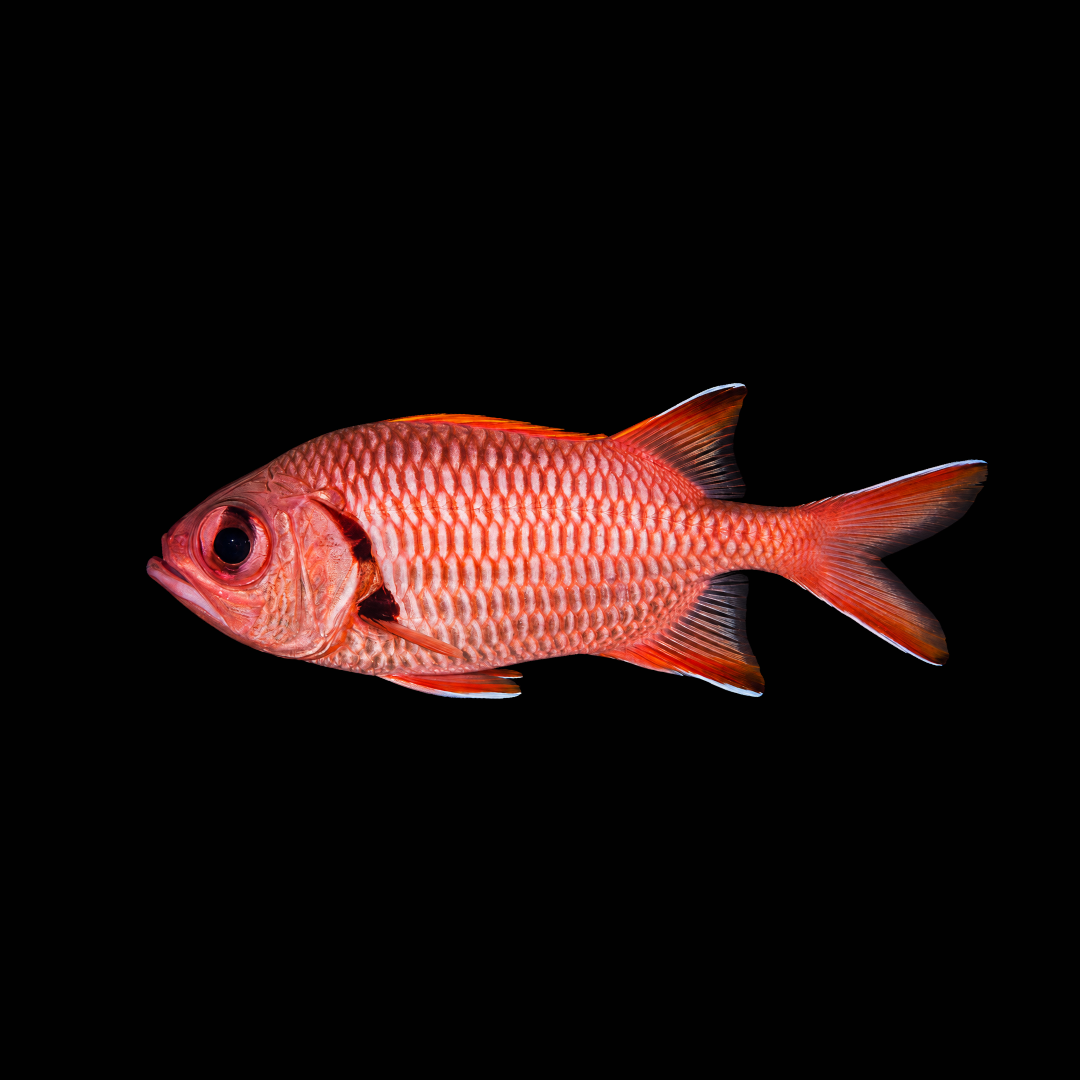
アカマツカサは、赤く縁取られた大きな鱗と、丸く大きな目が印象的なイットウダイ科の海水魚です。体には銀色から淡い桃色の光沢があり、背びれの一部に見られる黄橙色や、ひれの白い縁取りが繊細な彩りを添えます。サンゴ礁の洞窟や岩棚の下をすみかとし、昼間は仲間と岩陰で過ごし、夜になると外へ出て小型甲殻類などを探します。日本でも小笠原諸島や南西諸島などに生息する、南の海の魚です。飼育では落ち着ける暗い場所と、全長約30cmになる成魚に見合う広い空間が大切になります。小魚や小型のエビは捕食されることがあるため、混泳相手の大きさにも気を配りながら、昼と夜で変わる姿を楽しみたい魚です。 The blotcheye soldierfish is a marine member of the family Holocentridae, distinguished by large, red-edged scales and remarkably large eyes. Its body has a silvery to pale pink sheen, complemented by yellow-orange coloring on part of the dorsal fin and delicate white fin margins. It shelters in reef caves and beneath ledges, gathering with other soldierfish during the day and emerging at night to search for small crustaceans and other animal prey. In Japan, it occurs around the Ogasawara Islands and parts of the Nansei Islands, among other southern localities. Successful care requires shaded retreats and generous swimming space for an adult that may reach about 30 cm in total length. Small fishes and ornamental shrimp may be eaten, so suitable companions must be chosen with care. With its needs met, this species offers an engaging view of the contrast between daytime sheltering and nighttime activity.
基本情報 / Basic Information
| 学名 / Scientific Name | Myripristis berndti Jordan & Evermann, 1903 |
|---|---|
| 通称 / Common Name | アカマツカサBlotcheye soldierfish, bigscale soldierfish |
| 分類 / Family | イットウダイ科(Holocentridae)・アカマツカサ亜科(Myripristinae)・アカマツカサ属(Myripristis)。目の扱いは分類体系によって異なり、イットウダイ目とする体系と、キンメダイ目に含める体系があります。Family Holocentridae, subfamily Myripristinae, genus Myripristis. Placement at the order level varies between classification systems: some recognize Holocentriformes, while others include the family in Beryciformes. |
| 英名 / English Name | Blotcheye soldierfish, Bigscale soldierfish |
| 分布 / Distribution | 東アフリカ沿岸からインド洋、西・中央太平洋、ハワイ、ガラパゴス諸島などの熱帯東太平洋まで広く分布します。日本では小笠原諸島、南鳥島、屋久島、奄美大島、久米島、慶良間諸島、西表島などで記録されています。主にサンゴ礁の洞窟や岩棚下、岩の割れ目を利用し、浅場から水深約160mまで見られます。Widely distributed from the coast of East Africa across the Indian Ocean and western and central Pacific, including Hawaii, to tropical eastern Pacific islands such as the Galapagos. Japanese records include the Ogasawara Islands, Minamitorishima, Yakushima, Amami Oshima, Kumejima, the Kerama Islands, and Iriomotejima. It primarily occupies caves, ledges, and crevices on coral reefs, from shallow water to approximately 160 m. |
| 最大体長 / Max Size | 全長約30cm。体高のある魚なので、購入時の小さな姿だけで判断せず、成魚の体格を基準に飼育設備を用意します。Approximately 30 cm in total length. This is a deep-bodied fish, so plan the aquarium around its adult build rather than its size at purchase. |
| 寿命 / Lifespan | 飼育下の平均寿命は十分に分かっていません。野生個体の耳石を調べた研究では、米領サモアで17歳、フランス領ポリネシアで24歳と推定された個体が報告されています。長く生きる可能性を踏まえ、長期の飼育を見据えて迎えたい魚です。Average lifespan in captivity is not well established. Studies of otoliths from wild fish have reported individuals estimated to be 17 years old in American Samoa and 24 years old in French Polynesia. These age estimates indicate the potential for a long life and support planning for long-term care. |
飼育環境 / Aquarium Environment
| 水槽サイズ / Tank Size | 成魚の体格と夜間の遊泳を考えた目安として、成魚1尾でも180cmワイド水槽(幅180×奥行75×高さ60cm、満水時の計算容量約810L)程度以上の大型水槽を推奨します。底砂や岩組みを入れた実水量はこれより少なくなるため、水量に加えて十分な奥行きと遊泳空間を確保しましょう。同種を複数飼育する場合は、さらに大きな水槽と個体数に応じた隠れ場所が必要です。As a practical guideline based on adult body size and nighttime swimming, aim for a large aquarium of roughly 180 × 75 × 60 cm or larger even for one adult. This corresponds to a wide 180 cm tank with a calculated full volume of about 810 L. Actual water volume will be lower after adding substrate and rockwork, so adequate width and swimming room matter alongside capacity. Keeping several individuals requires a larger aquarium and enough shelters for the group. |
|---|---|
| 水温 / Temperature | 25〜27℃程度を通常管理の目安に、急な変化を避けて安定させます。高水温時は酸素不足にも注意し、水面の動きと十分なガス交換を確保してください。導入時には販売店での管理水温を確認し、温度差が大きい場合は慎重に馴らします。 A practical routine target is approximately 25–27°C, maintained with minimal sudden change. Pay particular attention to oxygen availability at higher temperatures, providing surface movement and effective gas exchange. Check the temperature at which the fish has been held before purchase and acclimate carefully when there is a substantial difference. |
| 水質 / Water Quality | ろ過が十分に立ち上がった海水水槽で飼育します。通常の管理目安はpH8.0〜8.4、塩分33〜35‰で、比重では25℃付近でおおむね1.024〜1.026です。測定器の基準温度や校正方法も確認しましょう。アンモニアと亜硝酸は検出されない状態を維持し、硝酸塩の慢性的な蓄積を抑えます。動物質の餌を多く与えるため、余裕のある生物ろ過、プロテインスキマー、残餌の回収、定期的な換水を組み合わせて管理します。Use a fully cycled marine aquarium. Practical maintenance targets are pH 8.0–8.4 and salinity of 33–35 ppt, corresponding approximately to a specific gravity of 1.024–1.026 near 25°C. Check the reference temperature and calibration requirements of the measuring instrument. Keep ammonia and nitrite undetectable and prevent persistent nitrate accumulation. Because substantial animal-based food is offered, combine ample biological filtration, protein skimming, removal of uneaten food, and regular water changes. |
| レイアウト / Layout | 体全体を隠せる暗い洞窟や、張り出した岩の下の空間を複数設けます。隠れ場所は成長後にも出入りしやすい広さにし、岩組みは崩れないようしっかり固定してください。前面や岩組みの周囲には夜間に泳げる空間を残します。照明が強い場合も、魚が自分で暗所へ退避できるようにしましょう。水流は体に強く当たり続けないよう分散させ、洞窟内にも緩やかに水が通る構造にすると、汚れがたまるのを抑えられます。Provide several dark caves or spaces beneath overhanging rockwork large enough to conceal the whole fish. Entrances must remain spacious as the fish grows, and all rockwork should be securely supported. Leave open swimming areas in front of and around the rocks for nighttime activity. Even under strong aquarium lighting, the fish should be able to retreat into genuine shade. Distribute circulation so that the fish is not continually exposed to a strong direct jet, while allowing gentle flow through shelters to limit waste accumulation. |
| 注意点 / Precautions | 導入直後は照明を控えめにし、隠れている魚を無理に追い出さず、環境に慣れる時間を与えます。驚いて急に泳ぎ出したときの衝突や飛び出しに備え、鋭い突起を避けた配置と、隙間の少ないふたを用意しましょう。大きな目やひれの棘を傷めないよう、移動時は網で強く追い回さず、大きな容器へ静かに誘導すると扱いやすくなります。Keep lighting subdued after introduction and allow the fish time to settle without forcing it out of hiding. Arrange decor to minimize sharp collision hazards and use a well-fitted cover in case it darts suddenly when startled. Protect its large eyes and fin spines during transfers. Gently guiding it into a suitably large container is often preferable to chasing it vigorously with a net. |
餌と給餌 / Feeding
| 餌の種類 / Diet | 動物食性で、自然下では甲殻類の幼生などの動物プランクトンや、アミ類、ヨコエビ類などの小さな動物を食べます。飼育では冷凍イサザアミ、食べやすく切ったオキアミや海産の小エビ、イカ、海産魚、貝のむき身などを組み合わせます。肉食性海水魚用の配合飼料に慣れる個体もいるため、状態を見ながら取り入れ、餌の種類が偏らないようにしましょう。Carnivorous, feeding naturally on zooplankton such as crustacean larvae, as well as small animals including mysids and amphipods. Aquarium foods can include frozen mysid shrimp, suitably sized krill and marine shrimp, and small pieces of squid, marine fish, and shellfish flesh. Some individuals accept formulated foods for carnivorous marine fishes. Introduce these as the fish settles and offer a varied diet. |
|---|---|
| 給餌のポイント / Feeding Tips | 薄暗くなる時間帯や消灯前後を中心に、口に収まりやすい大きさの餌を少量ずつ与えます。導入直後の個体や臆病な個体には、給餌用のスポイトや長いピンセットで隠れ場所の近くまで餌を届けると、摂餌を確認しやすくなります。同居魚に先に食べ尽くされていないか、一尾ずつ確認してください。冷凍餌は解凍して与え、食べ残しは早めに回収します。人工飼料への切り替えは、食べ慣れた餌と組み合わせながら徐々に進めましょう。Offer small portions of appropriately sized food in dim light, particularly around the transition to darkness. For newly introduced or shy individuals, use a feeding pipette or long feeding tongs to deliver food near the shelter and confirm that it is eaten. Watch each fish to ensure faster companions do not consume everything first. Thaw frozen foods before feeding and promptly remove leftovers. Introduce formulated diets gradually alongside accepted foods. |
性格と混泳 / Temperament and Tank Mates
| 性格 / Temperament | 比較的穏やかで、導入直後は臆病な面を見せます。昼間に岩陰で過ごしていても、夜間には活発に泳いで採餌します。自然下では群れを作りますが、水槽内では隠れ場所や餌をめぐって短い追いかけ合いが起こることもあります。群れる性質だけを理由に多く入れず、個体同士の距離に余裕を持たせ、それぞれが十分に餌を食べられているか見守りましょう。Generally peaceful and often shy when first introduced. Although it spends much of the day in shelter, it can swim actively and forage at night. It forms aggregations in the wild, but brief chasing may occur around shelters or food in an aquarium. Its social behavior does not justify crowding; provide enough room between individuals and check that each fish is getting sufficient food. |
|---|---|
| 混泳の相性 / Compatibility | 口に入らない大きさで、攻撃性の低い海水魚が候補になります。小型のハゼや細身の小魚、小型のエビ・カニなどは捕食されるおそれがあり、穏やかな性格でも安全とは限りません。追い回す魚や、餌を独占するほど活発な魚との組み合わせも避けましょう。サンゴを主な餌とする魚ではありませんが、サンゴ水槽の小動物には注意が必要です。同種の複数飼育は、十分に大きな水槽で体格差の少ない個体を選び、複数の退避場所を設けて検討します。Potential companions are relatively peaceful marine fishes too large to be swallowed. Small gobies, slender little fishes, and small shrimp or crabs may be eaten despite the soldierfish’s generally calm temperament. Avoid companions that harass it or dominate feeding. Corals are not its usual food, but small animals in a reef aquarium remain at risk. Groups of its own species should be considered only in sufficiently large aquariums, using similarly sized individuals and providing multiple retreats. |
病気と対策 / Diseases and Prevention
| かかりやすい病気 / Common Diseases | 本種が特にかかりやすい病気については、十分に分かっていません。一般的な海水魚と同様に、海水白点病やウーディニウム病などの寄生虫症、外傷に伴う細菌感染に注意します。大きな目の傷や白濁も見逃さないようにしましょう。体表の白点だけでなく、呼吸が速い、体をこする、餌を食べないといった変化も重要な手がかりになります。Species-specific susceptibility to particular diseases is not well established. As with other marine fishes, concerns include marine ich, marine velvet, and bacterial infections associated with injuries. Check the large eyes for damage or cloudiness. Visible spots are only one possible sign; rapid breathing, rubbing against objects, and loss of appetite also deserve attention. |
|---|---|
| 対策と予防 / Prevention | 新しい個体は別のろ過系を持つ隔離水槽で観察し、食欲、呼吸、体表、目、ひれの状態を確認します。30〜45日程度は観察期間の一つの目安ですが、症状や治療経過によって延長が必要です。日々の水質管理と偏りのない給餌を基本に、異常があれば水質と酸素供給を確認し、魚の診療に対応する獣医師などへ相談してください。薬剤の使用は診断と製品の指示に従い、銅剤などをサンゴやエビ・貝のいる水槽へ直接使用しないようにします。Observe new arrivals in a separate, independently filtered quarantine aquarium, checking appetite, breathing, skin, eyes, and fins. Around 30–45 days is one practical observation window, but symptoms or treatment may require a longer period. Maintain stable water quality and a balanced diet. If abnormalities appear, check water conditions and oxygenation and consult a veterinarian experienced with fish. Use medication according to diagnosis and product instructions, and do not apply copper treatments directly to aquariums containing corals, shrimp, or mollusks. |
増やし方(繁殖) / Breeding
| 雌雄の判別 / Sexing | 外見だけで雌雄を確実に見分けるのは難しく、体色や体の大きさだけでは判断できません。家庭で使える分かりやすい判別方法は、十分に確立されていません。Reliable sexing from external appearance is difficult. Color and body size alone are insufficient, and a simple, dependable method for home aquarists has not been established. |
|---|---|
| 繁殖形態 / Reproduction | 卵生で、水中を漂う浮性卵を産みます。孵化した仔魚も海中を漂いながら成長し、その後サンゴ礁での生活へ移っていきます。本種の詳しい産卵行動や、卵から稚魚までの飼育条件には、まだ十分に分かっていない点があります。An egg-laying species that produces pelagic eggs. After hatching, the larvae also grow during a drifting phase before taking up life on the reef. Detailed spawning behavior and the conditions needed to rear this species from eggs to juveniles remain incompletely understood. |
| 繁殖のポイント / Breeding Tips | 家庭水槽で安定して繁殖させ、仔魚を育てるための条件は、まだ十分に分かっていません。繁殖を目指す場合も、まずは十分な空間と隠れ場所のある大型水槽で、親魚を良好な栄養状態に保つことが出発点になります。産卵が起きた場合には、卵や仔魚を収容する別設備と、仔魚の口の大きさに合う微小な餌の確保が課題になります。仔魚に最初に与える餌や水流の条件などを慎重に検討する必要があり、産卵誘発を目的に水温や塩分を急変させることは避けましょう。The conditions needed to breed this species reliably and raise its larvae in a home aquarium are not yet well understood. The starting point is to maintain prospective broodstock in good nutritional condition in a large aquarium with ample space and shelter. If spawning occurs, separate facilities for eggs and larvae and microscopic foods suited to the larvae’s mouth size become major requirements. The foods offered at first feeding and the water-flow conditions for larvae need careful investigation. Avoid abrupt changes in temperature or salinity in attempts to induce spawning. |
雑学と豆知識 / Trivia and Fun Facts
| 1. 松ぼっくりと「無数の鋸」 / 1. Pine Cones and “Countless Saws” | 「アカマツカサ」という名前には、赤い体色と、大きく硬い鱗が並ぶ姿がよく表れています。「マツカサ」は松毬、つまり松ぼっくりのことで、重なり合う鱗を眺めると、その見立てが分かります。学名の属名Myripristisにも、体の細かな造形が織り込まれています。ギリシャ語に由来する「無数の鋸」という意味を持ち、鱗の縁や、頬と鰓蓋(えらぶた)の骨の縁が、のこぎりの歯のように細かく刻まれていることに由来します。日本語では松ぼっくり、学名では鋸と、同じ魚の姿が異なるものに見立てられているのが興味深いところです。The Japanese name Akamatsukasa combines the fish’s red coloring with its large, rigid scales. Matsukasa means a pine cone, an image that becomes easy to appreciate when looking at the overlapping scales. The genus name Myripristis also reflects this detailed anatomy. Derived from Greek words meaning “countless saws,” it refers to the finely serrated edges of the scales and the bones of the cheek and gill cover. Japanese and scientific names thus draw different comparisons from the same intricate features. |
|---|---|
| 2. 学名に残るホノルルの市場の歴史 / 2. A Honolulu Market Connection in Its Name | アカマツカサは1903年、ジョーダンとエバーマンによって、ハワイのホノルルで得られた魚をもとに新種として記載されました。種小名berndtiは、当時ホノルルの市場監督官を務めていたルイス・E・ベルントに献じられた名前です。水槽の岩陰で過ごす一尾の学名をたどると、20世紀初めのハワイの魚類調査と、市場で魚に関わっていた人の姿が見えてきます。Jordan and Evermann described this species in 1903 from fish obtained in Honolulu, Hawaii. The specific name berndti honors Louis E. Berndt, then superintendent of the Honolulu market. Following the name of a fish resting in an aquarium cave leads back to early twentieth-century Hawaiian fish research and a person involved in the everyday handling of fishes at the market. |
| 3. よく似た仲間を見分ける手がかり / 3. Recognizing It Among Similar Soldierfishes | アカマツカサ属には、赤い体と大きな目を持つよく似た魚が多くいます。本種では、成魚が口を閉じたときに下顎がはっきり前へ突き出すことが、観察しやすい手がかりになります。鰓蓋の後ろの縁と胸びれの付け根の上側にある黒い部分、背びれの棘が並ぶ部分の黄橙色なども、組み合わせて確かめます。さらに詳しい同定では、体側の側線に沿って並ぶ有孔鱗(穴のある鱗)が28〜31枚、鰓の内側に並ぶ突起である鰓耙(さいは)が35〜42本といった特徴も使われます。ただし、幼魚や暗所の写真では特徴が分かりにくいこともあります。「アカマツカサの仲間」という流通名に出会ったら、学名を確認し、落ち着いた状態の魚を横から観察して、体の特徴を確かめましょう。Many Myripristis species share a red body and large eyes. In adult blotcheye soldierfish, the lower jaw projects distinctly when the mouth is closed, providing a useful visible clue. This should be considered together with dark areas along the rear edge of the gill cover and upper pectoral-fin base, and yellow-orange coloring on the spinous dorsal fin. More detailed identification also uses features such as 28–31 pored scales along the lateral line and 35–42 gill rakers, the projections lining the inner side of the gill arches. Juveniles and photographs taken in dim light can be difficult to identify. When a fish is sold simply as an unidentified soldierfish, check its scientific name and observe a settled individual from the side to assess its physical features. |
| 4. 岩陰の群れで交わされる音 / 4. Sounds Within the Daytime Group | 昼間のアカマツカサは岩陰で静かに浮かんでいるため、あまり活動していないように見えるかもしれません。ところが、音の面から見ると違った一面があります。ハワイでは1960年代から本種の発音が調べられ、日中の群れから、短くたたくような音や連続する低い音などが記録されています。発音には専用の筋肉やうきぶくろが関わり、個体同士の追いかけ合いや、捕食者に反応する場面でも音が生じます。それぞれの音がいつも同じ意味を持つとは限りませんが、静かに見える岩陰でも、個体同士のやり取りに音が伴っているのです。A daytime group may seem almost inactive as its members hover in shelter, yet sound reveals another aspect of their lives. Research in Hawaii dating to the 1960s recorded several sounds, including brief knocks and longer low sounds, from daytime aggregations. Sound production involves specialized muscles and the swim bladder. Sounds also accompany interactions such as chasing and responses to predators. These observations do not establish a single fixed meaning for every sound, but they show that vocalizations accompany interactions within apparently quiet daytime groups. |
| 5. 幼い時期の暮らしが、遠い海をつなぐ / 5. An Early Life That Connects Distant Seas | 岩陰をすみかとする成魚からは想像しにくいのですが、アカマツカサを含むイットウダイ科の仲間は、幼い時期に頭部の棘がよく発達した独特の姿で浮遊生活を送ります。この時期の分散が、離れたサンゴ礁へ広がる機会をつくると考えられています。インド洋から東太平洋まで約23,000kmに及ぶ範囲のアカマツカサのDNAを比べた研究では、遠く離れた海域の個体にも共通するDNAの型が見つかりました。一方、その型の現れ方には海域ごとの違いもありました。幼い時期の分散によって、地域ごとの違いを残しながらも、世代を重ねる中で遠く離れた集団がつながってきた可能性を示す結果です。岩陰で過ごす成魚の姿だけでは見えてこない、広い海との関わりがあります。Adults sheltering beside a reef give little hint of their early life. Young holocentrids, including this species, pass through a distinctive pelagic stage with strongly developed head spines. Dispersal during this period is thought to provide opportunities to reach other reefs. A study comparing DNA from blotcheye soldierfish across approximately 23,000 km, from the Indian Ocean to the eastern Pacific, found shared DNA types among individuals from distant regions. However, the frequencies of those types differed between regions. The results suggest that early-life dispersal may have connected distant populations over generations while regional differences persisted. This wider relationship with the ocean is not apparent from watching adults rest in their reef shelters. |
| 6. 耳石から見えてくる長い生涯 / 6. A Long Life Revealed by Otoliths | 魚の内耳にある耳石には、成長に伴って層が積み重なります。その層を読み取ることは、外見だけでは分からない年齢を推定する手がかりになります。アカマツカサでは、野生個体の耳石から十数歳、さらに20歳を超える年齢が推定されています。年齢を推定するには、層を数えるだけでなく、その層ができる周期の確認も必要です。また、こうして求めた野生個体の年齢は、飼育下の平均寿命を示すものではありません。それでも、長く生きる可能性を知ることは、飼育を続ける時間を考えるうえで大切です。成長が目立たなくなってからも続く日々を見据え、食欲や呼吸を見守りながら、安定した飼育環境を保っていきましょう。Otoliths in a fish’s inner ear accumulate layers as it grows. Reading those layers helps estimate an age that outward appearance alone cannot reveal. In wild blotcheye soldierfish, otolith studies have estimated ages in the teens and beyond twenty years. Estimating age requires not only counting layers but also establishing how often they form. The resulting ages of wild individuals do not represent average lifespan in captivity. Even so, recognizing the potential for a long life matters when planning care. The years that may continue after obvious growth slows call for steady attention to appetite, breathing, and a consistently suitable aquarium environment. |
| 7. 観賞魚としての姿と、島々の暮らしの中の姿 / 7. An Aquarium Fish and a Part of Island Life | アカマツカサは水槽で赤い姿を楽しむ魚であると同時に、生息地の一部では食用として市場にも並びます。夜に活動する魚で、漁獲も主に夜間に行われます。本州では硬い鱗のために食用としてあまり好まれませんが、地域によって、この魚との接し方は異なります。同じアカマツカサでも、水族館、サンゴ礁、島の市場と、出会う場所によって印象が変わります。その背景を知ると、鮮やかな体色の向こうに、生息地の暮らしも感じられるようになります。The blotcheye soldierfish is appreciated for its red appearance in aquariums, but it is also sold for food in parts of its range. It is active at night and is also caught mainly at night. Its tough scales make it less favored as a food fish in mainland Japan, while its relationship with people varies between regions. An aquarium, a reef, and an island market each offer a different perspective on the same species. Knowing those connections adds a sense of life in its home regions to its striking appearance. |
まとめ / Conclusion
アカマツカサは、赤い鱗の美しさと大きな目、そして昼夜で変わる暮らしぶりが魅力の海水魚です。広い水槽に落ち着ける岩陰を整えると、昼間に静かに休む姿と、薄暗くなってから餌を探して泳ぐ姿の両方を観察できます。光の当たる場所へ無理に誘い出さず、自分で居場所を選べる環境を整えることが、この魚らしい暮らしを支えます。 The blotcheye soldierfish combines beautifully patterned red scales and large eyes with a distinctive rhythm of daytime rest and nighttime activity. A spacious aquarium with secure shaded retreats allows both sides of its behavior to unfold. Letting it choose its own resting places, without continually drawing it into bright light, supports its natural way of life.
成長後の体格に合う空間と安定した海水環境を整え、十分に餌を食べられるよう見守ることが、長く飼育するための基本です。混泳させる場合は、捕食されない大きさの相手を選ぶことも欠かせません。日々の小さな変化に気を配りながら世話を続けるうちに、岩陰に浮かぶ赤い姿が、水槽の中のなじみ深い存在になっていくでしょう。 Space suited to its adult size, stable marine conditions, and reliable access to sufficient food form the basis of long-term care. If it is kept with other fishes, companions must also be too large to be swallowed. With steady care and attention to small changes in its behavior, the red form hovering beneath the rocks can become a familiar presence in the aquarium.
気になる道具や飼い方を見つけてみませんか?
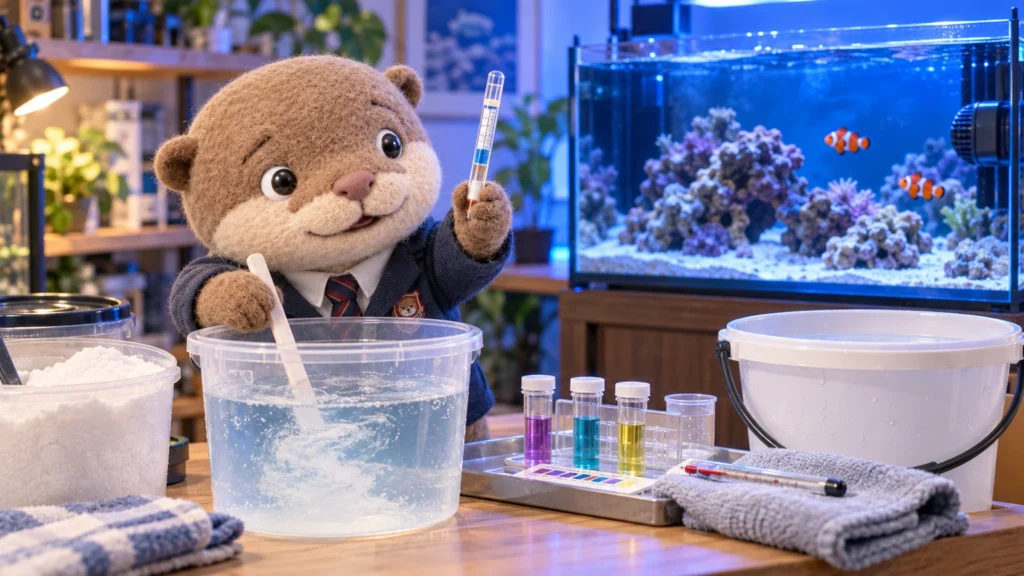 アイのアクアグッズ案内海水魚初心者の必需品|水槽・人工海水・比重計・水質検査道具の特徴や使い方、選ぶときのポイントをアイが紹介します。記事はコチラ →
 アイのアクアグッズ案内水換え・底砂掃除の道具の選び方|砂利・砂・ソイルに合うクリーナーとポンプ道具の特徴や使い方、選ぶときのポイントをアイが紹介します。記事はコチラ →
さまざまな飼育テーマをご紹介。リンク先の記事には広告・商品紹介が含まれます。
案内・紹介記事一覧へ →分布マップ
アカマツカサ(Myripristis berndti)は、東アフリカ沿岸からインド洋、ハワイを含む西・中央太平洋を経て、ガラパゴス諸島などの熱帯東太平洋まで広く分布します。日本では小笠原諸島や南西諸島などで記録されています。
地図は分布地域の位置関係を示す概略表示であり、分布域の境界や、表示範囲全体での生息を示すものではありません。マーカーは小笠原諸島付近(北緯27度・東経142度)に置いた代表点で、実際の採集地点ではありません。「Google Earthで開く」リンクも、この代表点を表示します。
参考文献
分類・分布・生息環境
- Froese, R. & Pauly, D. (Eds.). (2026). Myripristis berndti Jordan & Evermann, 1903. FishBase. World Register of Marine Speciesを通じて参照。
- Robertson, D. R. & Allen, G. R. (2024). Myripristis berndti. Shorefishes of the Tropical Eastern Pacific: online information system, Version 3.0. Smithsonian Tropical Research Institute.
- 鳥羽水族館. アカマツカサ. 生きもの図鑑.
- Jordan, D. S. & Evermann, B. W. (1903). Descriptions of new genera and species of fishes from the Hawaiian Islands. Bulletin of the United States Fish Commission, 22 (1902), 161–208. 本種の記載:170–171頁.
食性・繁殖・寿命
- Takeuchi, N., Saeki, T., Sakai, Y. & Hashimoto, H. (2007). Diets of 45 Fish Species from 17 Families at Kuchierabu-jima Island. Journal of the Graduate School of Biosphere Science, Hiroshima University, 46, 5–13.
- Allen, G. R. & Robertson, D. R. (1997). An annotated checklist of the fishes of Clipperton Atoll, tropical eastern Pacific. Revista de Biología Tropical, 45(2), 813–843. 本種の解説:822頁.
- Pardee, C., Ochavillo, D. & Taylor, B. M. (2025). Comparative Demography of Five Holocentridae Species from American Samoa. Fishes, 10(11), 596.
- Morat, F., et al. (2020). Individual back-calculated size-at-age based on otoliths from Pacific coral reef fish species. Scientific Data, 7, 370.
発音・分散・遺伝的なつながり
- Salmon, M. (1967). Acoustical Behavior of the Menpachi, Myripristis berndti, in Hawaii. Pacific Science, 21(3), 364–381.
- Craig, M. T., Eble, J. A., Bowen, B. W. & Robertson, D. R. (2007). High genetic connectivity across the Indian and Pacific Oceans in the reef fish Myripristis berndti (Holocentridae). Marine Ecology Progress Series, 334, 245–254.
観賞魚の飼育管理・病気
- Petty, B. D., Francis-Floyd, R. & Yanong, R. P. E.(2026年6月更新). Management of Aquarium Fish. Merck Veterinary Manual.
- Petty, B. D., Francis-Floyd, R. & Yanong, R. P. E.(2026年6月更新). Parasitic Diseases of Fish. Merck Veterinary Manual.
オンライン資料閲覧日:2026年10月19日



コメント