

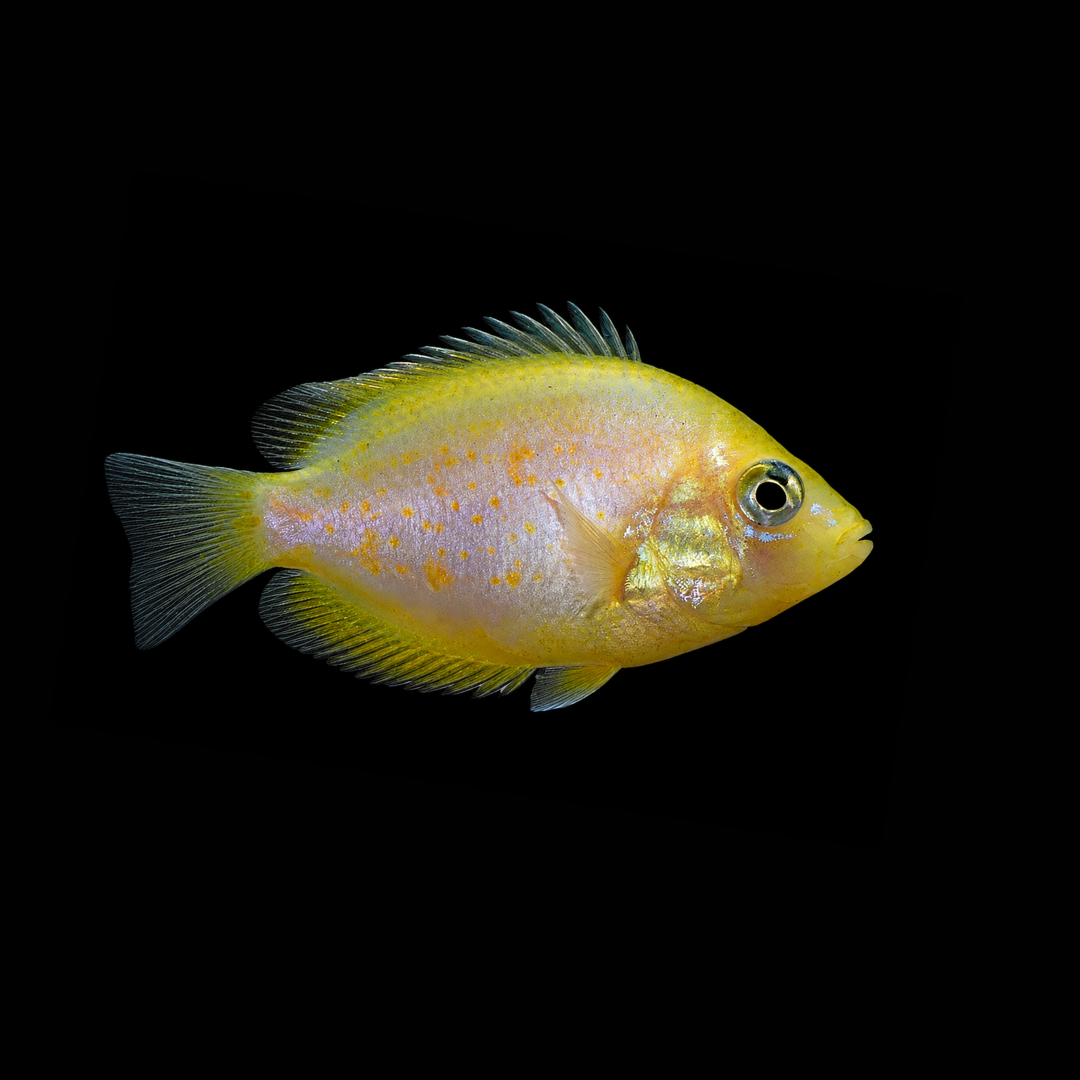
解説 / Description
オレンジクロマイドは、インド南部からスリランカにかけての淡水域や汽水域に分布する小型のシクリッドです。卵形に近い丸みのある体型と、黄橙色を基調とした明るい体色、体側上部に現れる黒い斑点が印象的で、古くから観賞魚として親しまれてきました。自然下では黄色味の強い個体だけでなく、灰色や暗緑色を帯びる個体も見られ、同じ種の中に豊かな色彩変異が存在します。塩分濃度の変化に幅広く適応できる広塩性を備え、純淡水でも生活できる一方、河口やラグーンのような汽水環境にも進出します。群れの中で順位関係を築く社会性、親魚による丁寧な子育て、近縁種に対するクリーニング行動など、小さな体に驚くほど多彩な生態を秘めた魚です。 The Orange Chromide is a small cichlid native to freshwater and brackish habitats of southern India and Sri Lanka. It is recognized by its rounded, almost oval body, bright yellow-orange coloration, and a conspicuous dark spot on the upper flank, and it has been kept as an ornamental fish for well over a century. Wild populations are not uniformly orange; yellow, gray, and dark greenish individuals can occur within the same species. It is highly euryhaline, meaning it can tolerate a broad range of salinities, living successfully in pure freshwater as well as estuaries and lagoons. Its social hierarchy, attentive parental care, and remarkable cleaning interactions with related cichlids make this modest-sized fish biologically exceptional.
基本情報 / Basic Information
| 学名 / Scientific Name | Pseudetroplus maculatus (Bloch, 1795) |
|---|---|
| 通称 / Common Name | オレンジクロマイド、ゴールデン・オレンジクロマイド(黄化系統)、パッラティ(インド南部の地域名)Orange Chromide, Golden Orange Chromide, Pallathi |
| 分類 / Family | シクリッド目・シクリッド科・エトロプルス亜科・Pseudetroplus属Order Cichliformes, Family Cichlidae, Subfamily Etroplinae, Genus Pseudetroplus |
| 英名 / English Name | Orange Chromide |
| 分布 / Distribution | インド南部を中心とするインド半島とスリランカ。ラグーン、小河川、河口域などの淡水・汽水環境に生息します。Peninsular India, especially the south, and Sri Lanka. It inhabits freshwater and brackish environments including lagoons, small streams, and estuaries. |
| 最大体長 / Max Size | 最大約9.5cm(全長)Up to about 9.5 cm total length |
| 寿命 / Lifespan | 飼育下での寿命について、広く一致した明確な年数の目安は定まっていません。安定した水質と適切な給餌を維持し、長期飼育を前提に管理します。A broadly agreed, well-documented lifespan in captivity is not clearly established. It should be maintained as a long-term aquarium fish with stable water quality and appropriate feeding. |
飼育環境 / Aquarium Environment
| 水槽サイズ / Tank Size | 60cm規格水槽(約60L)は成魚1ペアの隔離や繁殖管理には利用できますが、群れでの終生飼育には余裕がありません。本種は複数個体で社会関係を作るため、群れ飼育では90cm規格水槽(約180L)以上を出発点とし、8匹前後を維持するなら120cm規格・ワイド水槽(約240〜400L)クラスまで含めて、個体数に見合う床面積を確保すると安心です。繁殖ペアを他魚と同居させる場合も、より広い水槽と明確な区画分けが必要です。A standard 60 cm aquarium of about 60 L can be used for temporary isolation or breeding management of an established pair, but it is cramped for lifelong group maintenance. Because this species forms social relationships within a group, a 90 cm aquarium of roughly 180 L or larger is a more practical starting point. For a group of around eight fish, a 120 cm standard or wide aquarium in the roughly 240–400 L class provides substantially more suitable floor space. A breeding pair kept with other fish also requires generous space and clear visual separation. |
|---|---|
| 水温 / Temperature | 自然環境の資料では20〜25℃が目安です。28℃台で維持された飼育実験例もありますが、日常管理では20〜25℃を基準にし、個体が慣れている範囲から急変させないことを優先します。 Published ecological references give approximately 20–25°C as a natural range. Experimental fish have also been maintained at temperatures around 28°C, but for routine care it is reasonable to use 20–25°C as a baseline and avoid abrupt changes from the conditions to which the fish are acclimated. |
| 水質 / Water Quality | 自然環境の資料ではpH8.0〜9.0、硬度9〜19 dH程度のややアルカリ性でミネラル分の多い水質が示されています。いっぽう、淡水と汽水の双方に生息し、飼育実験では0・15・35 pptで生育が確認され、0 pptと35 pptでは繁殖も確認されています。そのため、飼育のために人工海水を必ず添加する必要はありません。pHや塩分を数値だけで追うより、急変を避けて安定させることが重要です。Published habitat data indicate mineral-rich, alkaline water around pH 8.0–9.0 and 9–19 dH. At the same time, the species occurs in both freshwater and brackish habitats, and experimental work has demonstrated growth at 0, 15, and 35 ppt, with breeding also confirmed at 0 and 35 ppt. Marine salt is therefore not automatically required in captivity. Avoiding abrupt changes in pH or salinity is more important than chasing a single target value. |
| レイアウト / Layout | 遊泳空間を確保しつつ、流木、石、水草などで視線を遮る場所を複数作ると、群れ内の追尾や繁殖期の防衛行動によるストレスを分散しやすくなります。底床は砂または細かめの砂利を使えます。ややアルカリ性の水質を維持したい場合は、飼育水の硬度やpHを確認しながら石灰質の素材を補助的に使います。繁殖を狙う場合は、親魚が清掃して産卵できる平らな石や硬い基質を用意します。Provide open swimming space together with several visual barriers made from driftwood, rocks, and plants. This helps diffuse chasing within the group and territorial pressure during breeding. Sand or fine gravel can be used as the substrate. If additional buffering is needed for alkaline conditions, calcareous material can be used cautiously while monitoring hardness and pH. For breeding, provide flat stones or another firm surface that the pair can clean and use for spawning. |
| 注意点 / Precautions | 少数飼育では弱い個体に攻撃が集中することがあるため、群れで飼う場合は尾数と水槽容量のバランスが重要です。繁殖期のペアは防衛性が強くなるため、混泳魚の逃げ場を確保します。また、輸入個体は長時間輸送や過密によるストレスを受けている可能性があるため、新規導入時には別水槽で状態を観察し、既存個体への病原体持ち込みを防ぐ管理が重要です。In very small groups, aggression can become concentrated on the weakest fish, so group size must be balanced with aquarium capacity. Breeding pairs can become strongly defensive, making escape routes for tank mates important. Newly imported fish may also be stressed by transport and crowding, so observation in a separate quarantine aquarium is recommended before introduction to an established community. |
餌と給餌 / Feeding
| 餌の種類 / Diet | 雑食性で、人工飼料のフレークや小粒ペレットを主食にできます。冷凍アカムシ、ブラインシュリンプなどの動物質に加え、スピルリナなど植物質を含む飼料を組み合わせると、自然下の幅広い食性に近づけやすくなります。It is omnivorous and readily accepts flakes and small pellets as staple foods. Frozen bloodworms and brine shrimp can be combined with foods containing plant ingredients such as spirulina to better reflect its broad natural diet. |
|---|---|
| 給餌のポイント / Feeding Tips | 人工飼料を軸に、植物質と動物質の両方を偏らせずに与えます。一度に大量に与えるより、食べ切れる量を少量ずつ与え、食べ残しによる水質悪化を避けます。群れで飼う場合は、順位の低い個体にも餌が行き渡っているか観察します。Use a prepared food as the staple while keeping both plant and animal components in the diet. Rather than offering a large amount at once, feed portions the fish can finish promptly so uneaten food does not degrade water quality. In groups, make sure subordinate individuals are also receiving food. |
性格と混泳 / Temperament and Tank Mates
| 性格 / Temperament | 基本的には比較的温和ですが、成熟すると同種間に順位関係が生じます。2〜3匹の少数飼育では弱い個体に追尾が集中しやすいため、群れで飼う場合は十分な水槽容量を確保したうえで8匹以上を一つの目安にします。繁殖期にはペアの縄張り防衛が強くなります。It is generally relatively peaceful, but a dominance hierarchy develops among mature fish. In groups of only two or three, chasing can become concentrated on the weakest individual. When maintaining a social group, aim for roughly eight or more fish only if the aquarium is large enough to provide adequate space. Territorial defense intensifies when a pair is breeding. |
|---|---|
| 混泳の相性 / Compatibility | 平常時は、同程度の大きさで過度に攻撃的ではないコイ科魚類やレインボーフィッシュなどと混泳しやすい魚です。ただし繁殖期は性格が変化し、産卵場所や稚魚の周囲から他魚を強く追い払います。繁殖を優先する場合はペアを別水槽に分けるか、大型水槽内で明確な縄張りを作れるレイアウトが必要です。Outside the breeding season, it can mix well with similarly sized, non-aggressive cyprinids, rainbowfishes, and comparable community species. During breeding, however, the pair may vigorously drive other fish away from the spawning site and fry. If reproduction is the priority, a separate breeding aquarium or a large, heavily structured community tank is preferable. |
病気と対策 / Diseases and Prevention
| かかりやすい病気 / Common Diseases | 本種だけに特有で、飼育下で特に多発すると断定できる病気は明確ではありません。1989年には養殖オレンジクロマイドの全身性ウイルス病が報告され、組織中にイリドウイルス科に一致する大型のウイルス粒子が観察されました。後年のレビューでは、この報告は観賞魚におけるメガロサイトウイルス研究史の初期例として扱われています。ただし、現在流通するオレンジクロマイドが特にこの感染症にかかりやすいと断定する根拠ではありません。No single disease is known to be uniquely and consistently common in this species under aquarium conditions. In 1989, a systemic viral disease was reported in cultured Orange Chromides, with large viral particles consistent with the family Iridoviridae observed in affected tissues. Later reviews have treated that report as an early event in the history of megalocytivirus detection in ornamental fish. This does not, however, demonstrate that Orange Chromides in the present-day trade are uniquely prone to the infection. |
|---|---|
| 対策と予防 / Prevention | 新規個体はすぐに本水槽へ入れず、隔離水槽で食欲、泳ぎ方、体表、排泄物などを観察します。過密を避け、安定した水温と水質を維持し、栄養の偏りや過給餌を防ぐことが基本です。異常が見られた場合は原因を見極め、必要に応じて適切な治療を行います。Quarantine new arrivals rather than placing them directly into the main aquarium, and observe appetite, swimming behavior, body surface, and feces. Avoid overcrowding, keep temperature and water chemistry stable, and prevent nutritional imbalance or overfeeding. If abnormalities appear, identify the likely cause and apply appropriate treatment as needed. |
増やし方(繁殖) / Breeding
| 雌雄の判別 / Sexing | 外見だけで確実に雌雄を判別できる明瞭な特徴は乏しく、成熟後の行動や自然なペア形成を観察して判断する方法が現実的です。複数匹を若魚から育て、相性の良いペアが形成されるのを待つ方法が適しています。Reliable external sexual dimorphism is limited, so observing mature behavior and natural pair formation is generally more practical than judging sex from appearance alone. Raising a group of juveniles and allowing compatible pairs to form naturally is a useful approach. |
|---|---|
| 繁殖形態 / Reproduction | 石、流木、植物の根などの開けた硬い基質に産卵するオープンスポウナーです。雌雄が協力して産卵面を清掃し、卵と稚魚を守ります。卵は短い柄を介して基質に付着し、親魚はヒレで水を送ります。孵化後には、自由遊泳を始めた稚魚が親魚の体表粘液を摂食するという、ディスカス類を思わせる特徴的な子育てが見られます。It is an open-substrate spawner. A pair cleans a hard surface such as stone, wood, or plant roots and jointly guards the eggs and fry. The eggs attach to the substrate by short stalks, while the parents fan them with their fins. After hatching and free swimming, the fry feed on mucus secreted from the parents’ body surface, a form of parental provisioning reminiscent of discus. |
| 繁殖のポイント / Breeding Tips | 安定したペアに平らな石などの産卵基質を与え、周囲に十分な隠れ場所を設けます。繁殖中の親は縄張り意識が強くなるため、他魚との接触を減らせる環境が適しています。稚魚は親魚の体表粘液を利用することが知られているため、親による保護行動を観察したい場合は、親子が落ち着いて過ごせる環境を整えます。卵数や孵化時間は条件で変動し、2022年の飼育実験では淡水で150〜250個・約48時間、35 pptで350〜400個・約68〜72時間という結果でした。固定値ではなく、塩分や水温などの条件によって変わる一例として捉えるのが適切です。Provide an established pair with a flat spawning surface and sufficient cover nearby. Because parental territoriality becomes strong during reproduction, the breeding area should minimize interference from other fish. Fry are known to utilize parental skin mucus, so if natural parental care is to be observed, provide a calm environment in which the family can remain together. Egg number and incubation time vary with conditions. In a 2022 captive study, freshwater spawns contained about 150–250 eggs and hatched in roughly 48 hours, while fish at 35 ppt produced about 350–400 eggs with hatching after approximately 68–72 hours. These figures are best treated as condition-dependent examples rather than fixed values. |
雑学と豆知識 / Trivia and Fun Facts
| 1. 200年以上続く名前の旅 / 1. A Name with More Than Two Centuries of History | オレンジクロマイドが学術上初めて記載されたのは1795年で、当時の学名はChaetodon maculatusでした。種小名maculatusはラテン語で「斑点のある」という意味で、体側に見える黒い斑点を表しています。その後は長くEtroplus maculatusの名で親しまれましたが、2014年の形態学的再評価によって、1862年にブリーカーが提唱していたPseudetroplus属へ再び位置づけられました。観賞魚店で見慣れた一匹の背後に、18世紀から現代まで続く分類学の歴史が折り重なっています。The Orange Chromide was first described scientifically in 1795 as Chaetodon maculatus. The specific name maculatus is Latin for “spotted,” referring to the dark mark on the flank. For many years the fish was widely known as Etroplus maculatus, but a morphological reassessment published in 2014 returned it to the genus Pseudetroplus, originally proposed by Bleeker in 1862. Behind this familiar aquarium fish lies a taxonomic story stretching from the eighteenth century to the present. |
|---|---|
| 2. インドとマダガスカルをつなぐ進化の物語 / 2. An Evolutionary Story Linking India and Madagascar | オレンジクロマイドを含む南アジアのエトロプルス亜科と、マダガスカルのParetroplus属は近縁な系統です。この隔離分布は、インドとマダガスカルがゴンドワナ超大陸の一部としてつながっていた時代の地史とよく一致し、大陸分断による隔離を考える重要な材料として研究されてきました。一方、シクリッド全体の生物地理史には議論が残っています。そのため、本種を大陸分裂そのものの「生きた証拠」と断定するより、古い地史と魚類の系統関係を結びつけて考える手がかりの一つと捉えるのが適切です。The South Asian etropline lineage that includes the Orange Chromide is closely related to the Madagascan genus Paretroplus. This striking disjunction is congruent with the geological history of India and Madagascar when both were part of Gondwana, and it has long been studied as evidence relevant to vicariance. The broader biogeographic history of cichlids is still discussed, however, so the Orange Chromide is better regarded as an important clue linking fish phylogeny with ancient geology rather than literal “living proof” of continental breakup. |
| 3. 浮き袋が「耳」を助ける独特の構造 / 3. A Swim Bladder That Helps the Ear | オレンジクロマイドでは、浮き袋の前方が左右に伸び、その延長部が内耳のすぐ近くまで達します。高解像度のマイクロCTと組織観察では、延長部がガスを含む部分と組織パッド状の部分からなり、内耳の複数の部位へ接近する独特の構造が確認されています。聴覚実験でも、このような延長部を持たないシクリッドより低周波域で高い感度が示されています。つまり、浮き袋は浮力を調整するだけでなく、音圧による振動を内耳へ伝えやすくする補助構造としても働いていると考えられます。In the Orange Chromide, the front of the swim bladder extends forward on both sides until it lies very close to the inner ear. High-resolution microCT and histological studies have shown that each extension has a gas-filled component and a pad-like tissue component approaching several parts of the inner ear. Hearing tests also found greater sensitivity at lower frequencies than in cichlids lacking such extensions. In practical terms, the swim bladder is not only involved in buoyancy; it also appears to help transmit sound-pressure-induced vibrations toward the inner ear. |
| 4. 掃除屋であり、ときには卵泥棒 / 4. Cleaner and Occasional Egg Thief | 幼魚は大型の近縁種グリーンクロマイドの体表や鰭をついばむクリーニング行動を示します。1972年の報告では、幼魚がクリーニング用の縄張りを作り、活動に日周リズムがあり、鰭や尾部の真菌を除くことがこの関係の重要な働きの一つと考えられました。一方、別の生態観察ではオレンジクロマイドがグリーンクロマイドの卵や仔魚を捕食することも報告されています。同じ二種の間に、掃除による利益と捕食という異なる関係が重なっている点が、この魚の生態を興味深いものにしています。Juveniles show a cleaning behavior in which they pick at the body and fins of the larger Green Chromide. A 1972 study reported cleaning territories, a daily rhythm to the activity, and suggested that removing fungal growth from fins and the tail was an important function of the interaction. Other ecological observations have also reported Orange Chromides preying on Green Chromide eggs and larvae. The coexistence of cleaning benefits and predation between the same two species makes the relationship more complex than a simple case of cooperation. |
| 5. 稚魚が親の体表を食べる / 5. Fry Feed from Their Parents’ Skin | 孵化後の稚魚が親魚の体側へ接触し、体表粘液を摂食する行動は古くから報告されており、魚類行動学では「contacting」と呼ばれることがあります。粘液は稚魚の初期栄養の一部として利用され、両親が子を守る行動と組み合わさっています。南米のディスカスでよく知られる子育てと似ていますが、系統的に離れたシクリッドで同様の栄養供給が見られること自体が興味深い点です。Fry have long been reported to make close contact with the parents’ flanks and feed on skin mucus, a behavior sometimes termed “contacting” in the behavioral literature. The mucus is used as part of the fry’s early nutrition and occurs alongside strong biparental guarding. It resembles the well-known parental feeding of South American discus, making it notable that a similar provisioning strategy occurs in distantly related cichlids. |
| 6. 「汽水魚だから塩が必須」とは限らない / 6. Brackish-Water Origin Does Not Mean Salt Is Mandatory | 河口やラグーンでよく見られるため汽水魚として紹介されますが、オレンジクロマイドは塩分変化への適応幅が広い魚です。2022年の45日間の飼育実験では、0 pptの淡水、15 pptの汽水、35 pptの海水条件の間で成長と生存に有意な差が認められず、淡水と35 pptの双方で繁殖も確認されました。この結果は高い広塩性を示しますが、家庭水槽で塩分を頻繁に変えてよいという意味ではありません。塩の添加を必須と考えるより、個体が慣れた環境を安定して維持することが大切です。Because the species often occurs in estuaries and lagoons, it is frequently introduced as a brackish-water fish. Its salinity tolerance is genuinely broad. In a 45-day study published in 2022, fish kept at 0 ppt freshwater, 15 ppt brackish water, and 35 ppt seawater showed no significant differences in growth or survival, and breeding was also confirmed in freshwater and at 35 ppt. This demonstrates strong euryhalinity, but it does not mean salinity should be changed casually in a home aquarium. Stable conditions are more important than adding salt simply because the species can tolerate it. |
| 7. 水槽魚であり、地域の食文化を支える魚でもある / 7. An Aquarium Fish and a Fish of Local Food Culture | 日本では観賞魚として知られるオレンジクロマイドですが、インド南部、とりわけケララ州では「Pallathi」と呼ばれる身近な食用魚でもあります。ヴェンバナード湖周辺では重要な漁獲対象となり、香辛料を使ったフィッシュフライやカレーなど、地域の食卓にも登場します。同じ魚がある場所では水槽の主役となり、別の場所では漁業と家庭料理を支える存在になるという事実は、生き物と人間の関係が文化によって大きく姿を変えることを教えてくれます。In Japan the Orange Chromide is best known as an ornamental fish, but in southern India, especially Kerala, it is also a familiar food fish known locally as Pallathi. Around Vembanad Lake it is an important component of local fisheries and appears in regional dishes such as spiced fish fry and curry. The same species can be an aquarium centerpiece in one culture and part of everyday fishing and cuisine in another, revealing how human relationships with animals change across regions. |
まとめ / Conclusion
オレンジクロマイドは、黄橙色を基調とする体色と10cmに満たない体格に加え、淡水から高い塩分環境まで適応できる広塩性、群れの中で生じる順位関係、そして両親による繁殖行動を観察できるシクリッドです。ただし、小型だから小さな水槽でよい魚ではありません。複数飼育では十分な床面積と逃げ場を確保し、繁殖期の縄張り行動まで見越した環境づくりが大切です。 The Orange Chromide combines a compact body of under 10 cm with yellow-orange coloration, broad salinity tolerance, a recognizable social hierarchy, and elaborate biparental breeding behavior. Its small size does not mean it is suited to a cramped aquarium. Group maintenance requires adequate floor space, refuges, and enough room to accommodate the stronger territorial behavior that appears during breeding.
水質を安定させ、植物質と動物質を偏らせない給餌を続けると、普段の穏やかな群れの動きから、産卵面の清掃、卵の保護、稚魚への親密なケアまで、多彩な行動を見せます。古くから観賞魚として親しまれてきた一方、研究対象や原産地の食用魚としても異なる顔を持ち、その小さな体からは想像しにくいほど奥行きのある魚です。 With stable water conditions and a diet that does not lean too heavily toward either plant or animal foods, the species can show a wide range of behavior, from calm group movement to cleaning a spawning surface, guarding eggs, and closely tending fry. It has a long history as an ornamental fish, while also being studied scientifically and used as a food fish in parts of its native range, giving this small cichlid an unusually broad biological and cultural context.

気になる道具や飼い方を見つけてみませんか?
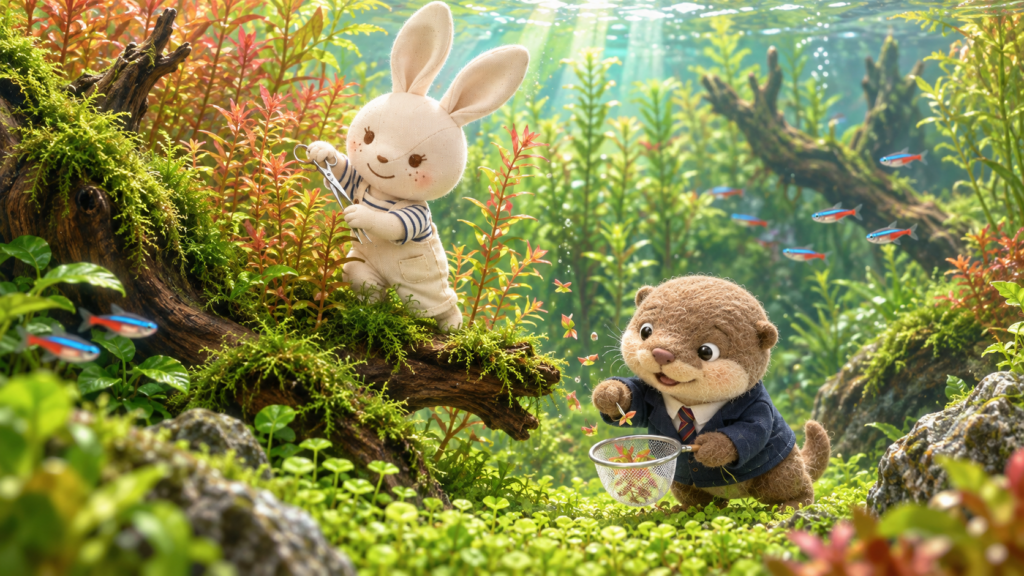 アイのアクアグッズ案内水草トリミングの道具とやり方|ハサミ・ピンセットを水草に合わせて選ぼう伸びすぎた水草は切っていい? 有茎草の差し戻し、前景草の絨毯、流木のモスを整える場面から、水草用ハサミ・ピンセット・ゴミ取りネットの選び方と片付けを紹介します。記事はコチラ →
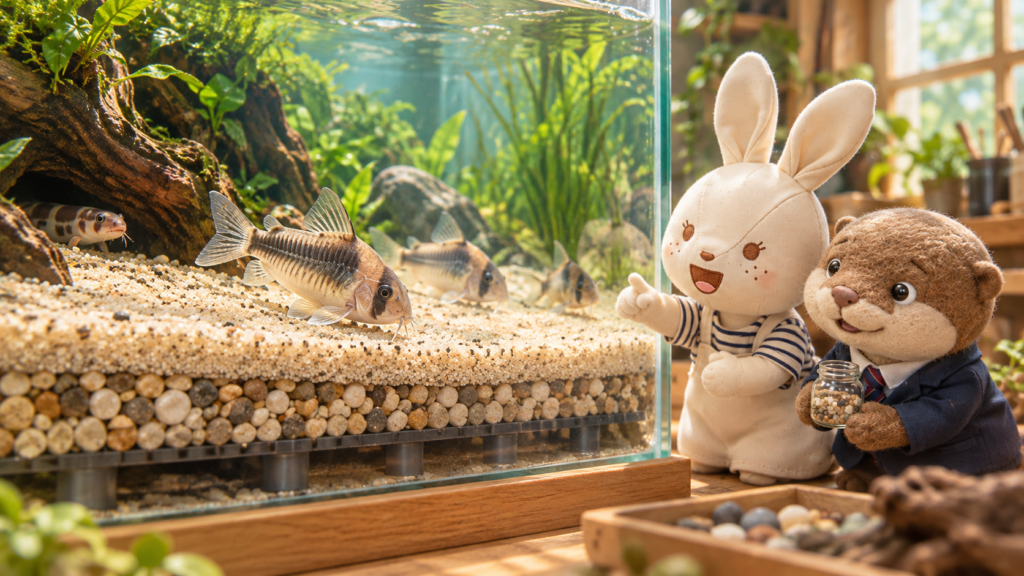 アイのアクアグッズ案内水槽の底砂の選び方|砂・砂利の違いとおすすめ商品道具の特徴や使い方、選ぶときのポイントをアイが紹介します。記事はコチラ →
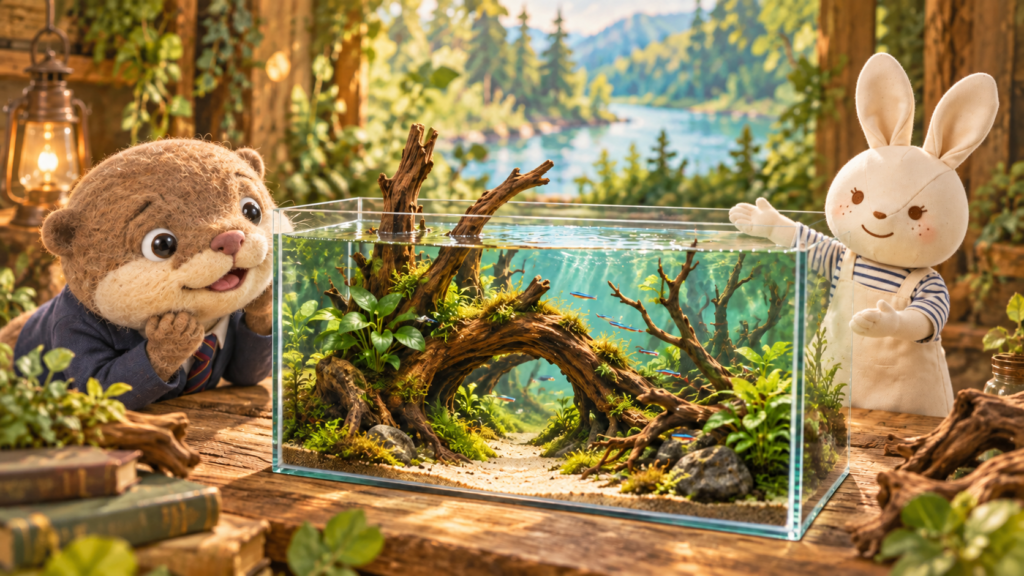 アイのアクアグッズ案内水槽の流木の選び方|枝・マングローブ・アク抜きとおすすめ商品水槽に小さな森を作る流木。枝流木やマングローブという名前の違いから、魚の隠れ家、水草の取り付け、浮く・水が茶色くなるときの準備まで、アイとコタロウが商品とともに案内します。記事はコチラ →
 アイのアクアグッズ案内マジックリーフ物語|一枚の葉がアクアリウム用品になるまで道具の特徴や使い方、選ぶときのポイントをアイが紹介します。記事はコチラ →
さまざまな飼育テーマをご紹介。リンク先の記事には広告・商品紹介が含まれます。
案内・紹介記事一覧へ →分布マップ
オレンジクロマイド(Pseudetroplus maculatus)は、インド南部を中心とするインド半島からスリランカにかけて分布し、ラグーン、小河川、河口域などの淡水・汽水環境に生息します。
※この地図は記事の分布情報をもとに、インド南部を中心とするインド半島とスリランカが見えるよう設定した概略表示です。マーカーは分布域を示すための代表地点であり、実際の採集地点・確認地点を示すものではありません。
参考文献
- Pethiyagoda, R., Maduwage, K. & Manamendra-Arachchi, K. (2014). Validation of the South Asian cichlid genus Pseudetroplus Bleeker (Pisces: Cichlidae). Zootaxa, 3838(5), 595–600. 分類・学名・属の扱い
- Froese, R. & Pauly, D. (eds.). FishBase: Pseudetroplus maculatus (Bloch, 1795). FishBase. 分布・淡水/汽水環境・生息場所・最大体長・水温・pH・硬度・食性
- Purayil, S. B. P., Thomas, S. M., Anirudhan, A., Sidhick, J. N., Kandiyil, A. P., Ebeneezar, S., Ignatius, B. & Achamveetil, G. (2022). Orange Chromide, Pseudetroplus maculatus (Bloch., 1795): A Potential Euryhaline Fish Model to Evaluate Climate Change Adaptations in Fishes. Frontiers in Marine Science, 9, 906491. 広塩性・0/15/35 pptでの飼育試験・給餌条件・繁殖・産卵数・孵化時間・親魚による保護
- Ward, J. A. & Barlow, G. W. (1967). The Maturation and Regulation of Glancing Off the Parents by Young Orange Chromides (Etroplus maculatus: Pisces–Cichlidae). Behaviour, 29, 1–56. 親子行動・稚魚の親魚への接触・体表粘液を利用する育児行動
- Armstrong, R. D. & Ferguson, H. W. (1989). Systemic viral disease of the chromid cichlid Etroplus maculatus. Diseases of Aquatic Organisms, 7, 155–157. 1989年に報告された全身性ウイルス病とイリドウイルス様粒子の記録
- Australian Government, Department of Agriculture, Fisheries and Forestry. Ornamental Finfish. 観賞魚の疾病リスク・メガロサイトウイルスを含むイリドウイルス類・輸入時の検疫とバイオセキュリティ




コメント