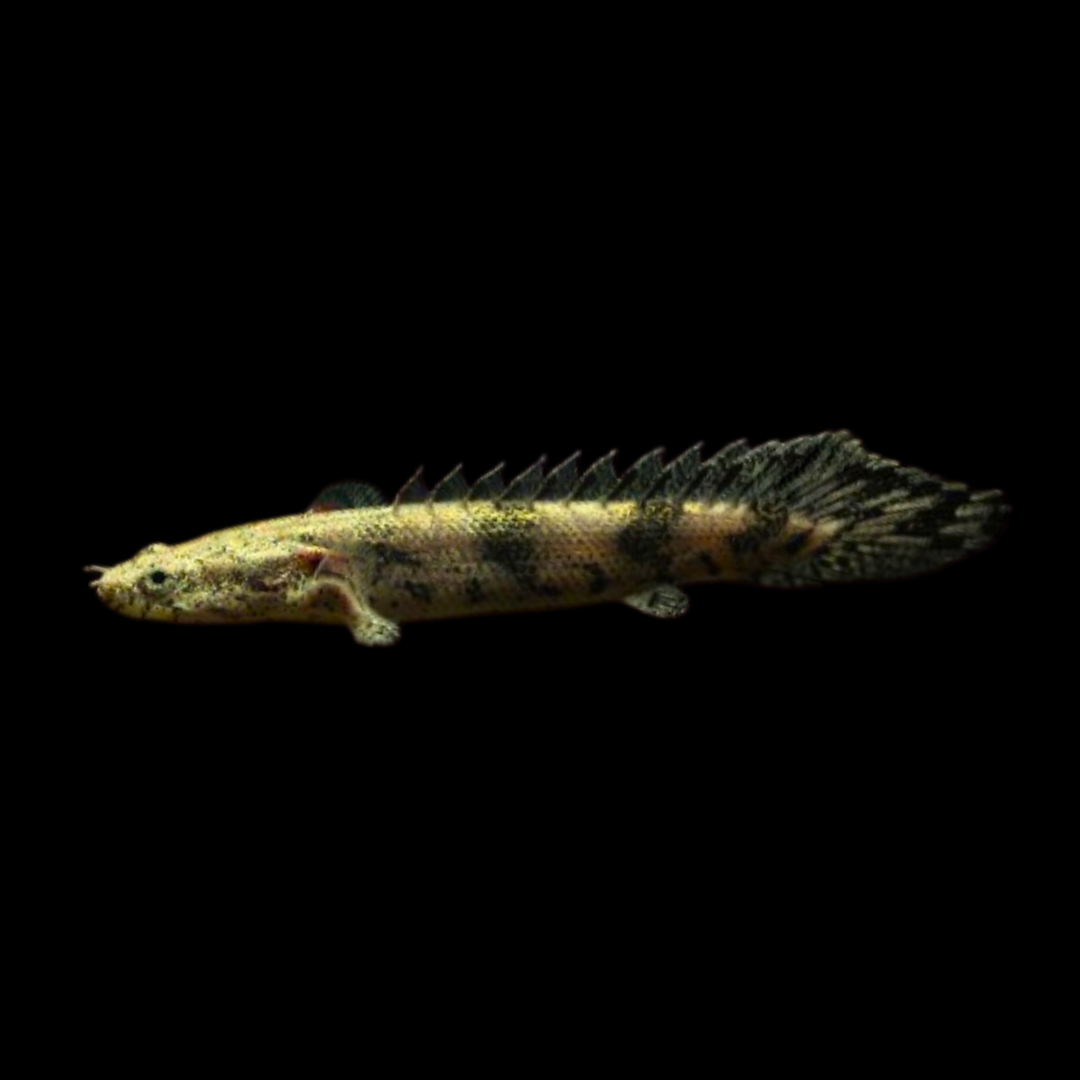
ポリプテルス・エンドリケリーは、アフリカの河川や湖沼に分布する大型の古代魚です。扁平な頭部、上顎より前へ出る下顎、背中に並ぶ複数の小離鰭、硬いガノイン鱗を持ち、ポリプテルスの中でも力強い雰囲気が際立ちます。日本のアクアリウムでは「エンドリ」の略称でも親しまれ、ワイルド個体、東南アジア産ブリード個体、国内血統個体などが流通します。丈夫な魚ではありますが、最終的にはかなり大きくなるため、飼育開始時から大型水槽と飛び出し防止を前提に考えることが大切です。Polypterus endlicherii is a large ancient fish native to African rivers and lakes. It is known for its flattened head, projecting lower jaw, multiple dorsal finlets, and hard ganoid scales. In the Japanese aquarium hobby, it is one of the most popular lower-jawed bichirs, with wild-caught, Southeast Asian captive-bred, and selected domestic bloodline specimens available. Although it is a hardy fish, it grows large and should be kept with a spacious aquarium and secure escape prevention from the beginning.
ポリプテルス目 ポリプテルス科Order Polypteriformes, Family Polypteridae
英名 / English Name
Saddled Bichir
分布 / Distribution
アフリカ大陸のナイル川水系、チャド湖盆地、ニジェール川、ボルタ川、バンダマ川、コモエ川、ウェメ川などの淡水域に分布します。西アフリカから中央アフリカにかけて広く記録される種類です。Distributed in freshwater systems of Africa, including the Nile River, Chad basin, Niger River, Volta River, Bandama River, Comoé River, and Ouémé River.
最大体長 / Max Size
最大で約65.5cm(標準体長)の記録があります。飼育下では50cm前後で落ち着く個体も多いものの、個体差や飼育環境によってさらに大きくなる可能性があるため、大型化を前提にした設備が必要です。The recorded maximum is about 65.5 cm standard length. In aquaria, many specimens remain around 50 cm, but individuals may grow larger depending on conditions, so they should be planned for as large fish.
寿命 / Lifespan
良好な環境では10年以上の長期飼育が十分に可能で、管理次第ではさらに長く付き合える魚です。大型魚として終生飼育できる環境を用意することが重要です。With proper care, it can live for more than 10 years, and sometimes longer. A long-term housing plan is essential.
飼育環境 / Aquarium Environment
水槽サイズ / Tank Size
幼魚期は60cm水槽や90cm規格水槽から始められる場合もありますが、終生飼育では最低でも120cm以上、できれば120×60×45cm以上の奥行きがある水槽を用意したい魚です。底を這うように移動するため、高さよりも幅と奥行きを重視すると管理しやすくなります。Juveniles may start in a 60 cm or standard 90 cm tank, but long-term care requires at least a 120 cm tank, preferably 120 × 60 × 45 cm or larger. Floor space is more important than height.
水温 / Temperature
25〜28℃前後が目安です。急な水温変化は負担になるため、大型水槽でもヒーター容量に余裕を持たせ、冬場の温度低下を避けることが大切です。Around 25–28°C is suitable. Sudden temperature changes should be avoided, and adequate heater capacity is important in large tanks.
水質 / Water Quality
pH6.0〜8.0前後の弱酸性〜弱アルカリ性まで比較的幅広く適応しますが、汚れた水を好むわけではありません。大型肉食魚のため排泄量が多く、強力なろ過と定期的な換水でアンモニアや亜硝酸をためない管理が必要です。It tolerates a relatively wide range of water, around pH 6.0–8.0, from slightly acidic to slightly alkaline, but clean and stable water is essential. Strong filtration and regular water changes are required.
レイアウト / Layout
底面を広く使えるシンプルなレイアウトが向いています。流木や角の丸い石で隠れ場所を作ると落ち着きやすく、底砂にはガーネットサンドなど暗めで比重のある砂がよく使われます。明るすぎる底面では体色が淡く見えることがあるため、見た目を重視する場合は底砂の色も意識するとよいでしょう。A simple layout with wide bottom space is suitable. Driftwood or smooth stones can be used as shelters. Dark, heavy sand such as garnet sand is often used to help maintain a stronger appearance of body color.
注意点 / Precautions
ポリプテルス類は空気呼吸のため水面に上がる一方、驚いた拍子に水槽外へ飛び出すことがあります。力も強いため、重みのあるフタや隙間をふさぐ加工を行い、配管まわりのわずかな開口部まで確認しておくことが重要です。Bichirs surface to breathe air and may jump out when startled. A heavy or tightly fitted lid is essential, and even small gaps around pipes should be closed.
餌と給餌 / Feeding
餌の種類 / Diet
肉食性が強く、沈下性の大型肉食魚用人工飼料、冷凍エビ、魚の切り身、メダカや小赤などを食べます。活餌は食いつきがよい反面、寄生虫や病原体を持ち込むことがあるため、常用する場合は餌用生体の管理にも注意が必要です。It is a carnivorous fish and accepts sinking pellets for large predatory fish, frozen shrimp, fish meat, and feeder fish. Live foods are effective but can introduce parasites or pathogens if not managed carefully.
給餌のポイント / Feeding Tips
幼魚期は成長が早いため、食べ残しに注意しながらしっかり与えます。成魚では肥満や水質悪化を避けるため、毎回満腹まで与えるよりも、体型と水の汚れを見ながら量と頻度を調整するほうが安定します。ワイルド個体は人工飼料に慣れるまで時間がかかることがあるため、焦らず餌付けを進めることが大切です。Juveniles grow quickly and should be fed well without leaving excess food. Adults should be fed more moderately to avoid obesity and water pollution. Wild-caught specimens may take time to accept prepared foods.
性格と混泳 / Temperament and Tank Mates
性格 / Temperament
見た目の迫力に反して、同じ程度の大きさの魚に対しては比較的おとなしい傾向があります。日中は底でじっとしていることが多く、夜間や給餌時に活発になります。ただし、口に入る大きさの生き物は餌として認識するため、温和というより「飲み込めない相手には無関心」と考えると扱いやすい魚です。Despite its powerful appearance, it is often relatively calm toward fish of similar size. It tends to rest on the bottom during the day and becomes more active at night or during feeding. However, anything small enough to swallow may be treated as food.
混泳の相性 / Compatibility
大型カラシン、ダトニオ、大型ナマズ、アロワナ、同程度のサイズのポリプテルスなどが候補になります。小型魚、細長い魚、体高の低い魚は捕食事故が起こりやすいため避けます。混泳では相手の大きさだけでなく、夜間に接触しても飲み込まれない体格差かどうかを基準にすることが重要です。Possible tank mates include large characins, datnoids, large catfish, arowanas, and similarly sized bichirs. Small, slender, or low-bodied fish should be avoided because they may be swallowed, especially at night.
病気と対策 / Diseases and Prevention
かかりやすい病気 / Common Diseases
ワイルド個体では外部寄生虫が持ち込まれることがあり、体をこすりつける、落ち着きなく泳ぐ、体表に白い糸状のものが見えるといった症状に注意します。また、吻部をぶつけた傷から水カビや細菌感染につながることもあります。Wild-caught specimens may carry external parasites. Scratching, restlessness, or visible whitish thread-like organisms on the body should be watched for. Injuries to the snout can also lead to fungal or bacterial infections.
対策と予防 / Prevention
導入時の観察、清潔な水質、鋭利なレイアウトを避けることが基本です。古代魚は薬品に敏感とされることが多いため、治療では薬剤の種類と濃度を慎重に選び、一般的な熱帯魚と同じ感覚で強い薬浴を行わないほうが安全です。まず水質改善、隔離、塩水浴の可否などを検討し、症状が重い場合は古代魚に詳しい販売店や獣医師に相談すると安心です。Careful observation during introduction, clean water, and safe decoration are basic preventive measures. Bichirs are often considered sensitive to some medications, so treatment should be approached cautiously rather than using strong medication as for ordinary tropical fish.
増やし方(繁殖) / Breeding
雌雄の判別 / Sexing
成熟した雄は臀鰭が大きく厚みを帯び、雌よりも幅広く見えます。幼魚では判別が難しいため、ある程度成長してから臀鰭の形状を比較する必要があります。Mature males have a larger, thicker, and broader anal fin than females. Juveniles are difficult to sex, so comparison becomes easier after they grow.
繁殖形態 / Reproduction
卵生で、雄が臀鰭を使って雌の産卵を受けるような独特の繁殖行動を行います。産み落とされた卵は水草や産卵床に付着し、親魚が保護するタイプではありません。It is an egg-laying species. The male uses the anal fin during spawning, and eggs adhere to plants or spawning media. The parents do not provide parental care.
繁殖のポイント / Breeding Tips
家庭水槽での繁殖は簡単ではありません。大型の親魚を複数維持できる広い水槽、良好な栄養状態、安定した水質、卵や稚魚を守るための隔離管理が必要です。稚魚は成長初期に外鰓を持つため、古代魚らしい発育過程を観察できる一方、初期餌と水質管理の難度は高めです。Breeding in home aquaria is not easy. It requires a spacious tank for mature adults, good nutrition, stable water, and separate management of eggs and fry. Fry have external gills at an early stage, but early feeding and water quality management are challenging.
雑学と豆知識 / Trivia and Fun Facts
1. 名前に込められた「多くの鰭」 / 1. The meaning of many fins
属名のPolypterusは、「多くの」という意味を持つ言葉と「翼・鰭」を意味する言葉に由来するとされます。背中に一枚の背鰭が続くのではなく、小さな鰭が連なる姿は、ポリプテルス類を一目で見分ける大きな特徴です。エンドリケリーではこの古代魚らしいシルエットに、太い横帯と下顎の迫力が加わり、観賞魚としての存在感を強くしています。The genus name Polypterus refers to “many fins,” describing the row of separate dorsal finlets. In P. endlicherii, this ancient-looking outline is enhanced by bold saddle-like bands and a projecting lower jaw.
2. 空気呼吸を行う古代魚 / 2. An ancient fish that breathes air
ポリプテルス類は鰓呼吸だけでなく、水面で空気を取り込む能力を持ちます。この性質は、低酸素になりやすい湿地や氾濫原で生きるうえで役立つ適応と考えられています。水槽ではこの行動が見られるため、水面まで上がれる空間を確保し、フタで密閉しすぎず、同時に飛び出しは防ぐというバランスが必要です。Bichirs can breathe atmospheric air in addition to using their gills. This adaptation is useful in low-oxygen habitats such as swamps and floodplains. In aquaria, they need access to the surface while also requiring a secure lid.
3. コンギクスとの関係と分類 / 3. Relationship with P. congicus
エンドリケリーの仲間では、コンギクスとの関係がしばしば話題になります。形態的に近いグループとして扱われてきた歴史がありますが、現在の分類ではPolypterus endlicheriiは有効な種として扱われています。観賞魚の流通名には古い表記や亜種名が残ることもあるため、図鑑記事では現在広く使われる学名と、流通上の呼び方を分けて理解しておくと混乱を避けやすくなります。P. endlicherii has often been discussed together with P. congicus because of their similar lower-jawed form. Current taxonomy treats Polypterus endlicherii as a valid species. Aquarium trade names may retain older or informal usage, so scientific names and trade names should be understood separately.
4. 流通個体の違い / 4. Differences among traded specimens
日本では、ワイルド個体、東南アジア産ブリード個体、国内で選別された血統個体が見られます。ワイルド個体は産地ごとの顔つきや体色、バンド模様が注目され、ブリード個体は入手しやすさと飼育へのなじみやすさが魅力です。どちらが優れているというより、迫力のある見た目を重視するのか、導入しやすさを重視するのかで選び方が変わります。In Japan, wild-caught, Southeast Asian captive-bred, and selected domestic bloodline specimens are available. Wild fish are valued for regional appearance, while captive-bred fish are easier to obtain and often easier to acclimate.
5. 放流してはいけない大型肉食魚 / 5. A large predator that must never be released
エンドリケリーは魅力的な魚ですが、成長すると大きくなり、肉食性も強い魚です。飼えなくなったからといって河川や池へ放すことは絶対にしてはいけません。法律上の指定の有無にかかわらず、観賞魚を野外へ放す行為は生態系に悪影響を与えるおそれがあります。購入前に最終サイズ、設備、引っ越し時の対応まで考え、終生飼育を前提に迎えることが重要です。P. endlicherii is an attractive fish, but it becomes large and is strongly predatory. It must never be released into rivers or ponds. Regardless of legal status, releasing aquarium fish can harm local ecosystems. Long-term care must be planned before purchase.
まとめ / Conclusion
ポリプテルス・エンドリケリーは、古代魚らしい体のつくりと大型肉食魚としての迫力をあわせ持つ、非常に魅力的なポリプテルスです。丈夫で飼育しやすい面もありますが、その評価は十分な水槽サイズ、強力なろ過、飛び出し対策を用意できてこそ成り立ちます。幼魚のかわいらしさだけで選ぶのではなく、成魚になった姿を想像して設備を整えることが大切です。Polypterus endlicherii is a highly attractive bichir with ancient anatomical features and the presence of a large predatory fish. It can be hardy and manageable, but only when provided with a large tank, strong filtration, and secure escape prevention. It should be chosen with its adult size in mind.
ワイルド個体の産地差、ブリード個体の飼いやすさ、ガーネットサンドを使った体色管理など、楽しみ方の幅が広いことも本種の魅力です。一方で、長寿で大型化する魚を最後まで飼う責任も伴います。十分な準備と覚悟を持って迎えれば、エンドリケリーは水槽の中で太古のアフリカを感じさせてくれる存在になるでしょう。Its appeal includes regional variation in wild specimens, the accessibility of captive-bred fish, and color management using dark substrate such as garnet sand. At the same time, it requires responsibility as a long-lived, large fish. With proper preparation, it can become a remarkable centerpiece that evokes ancient African waters.
Graham, J. B., Wegner, N. C., Miller, L. A., Jew, C. J., Lai, N. C., Berquist, R. M., Frank, L. R. and Long, J. A. 2014. Spiracular air breathing in polypterid fishes and its implications for aerial respiration in stem tetrapods. Nature Communications. ポリプテルス類の空気呼吸と進化的背景を確認するために参照。 https://pubmed.ncbi.nlm.nih.gov/24451680/


 ポチップ
ポチップ




コメント