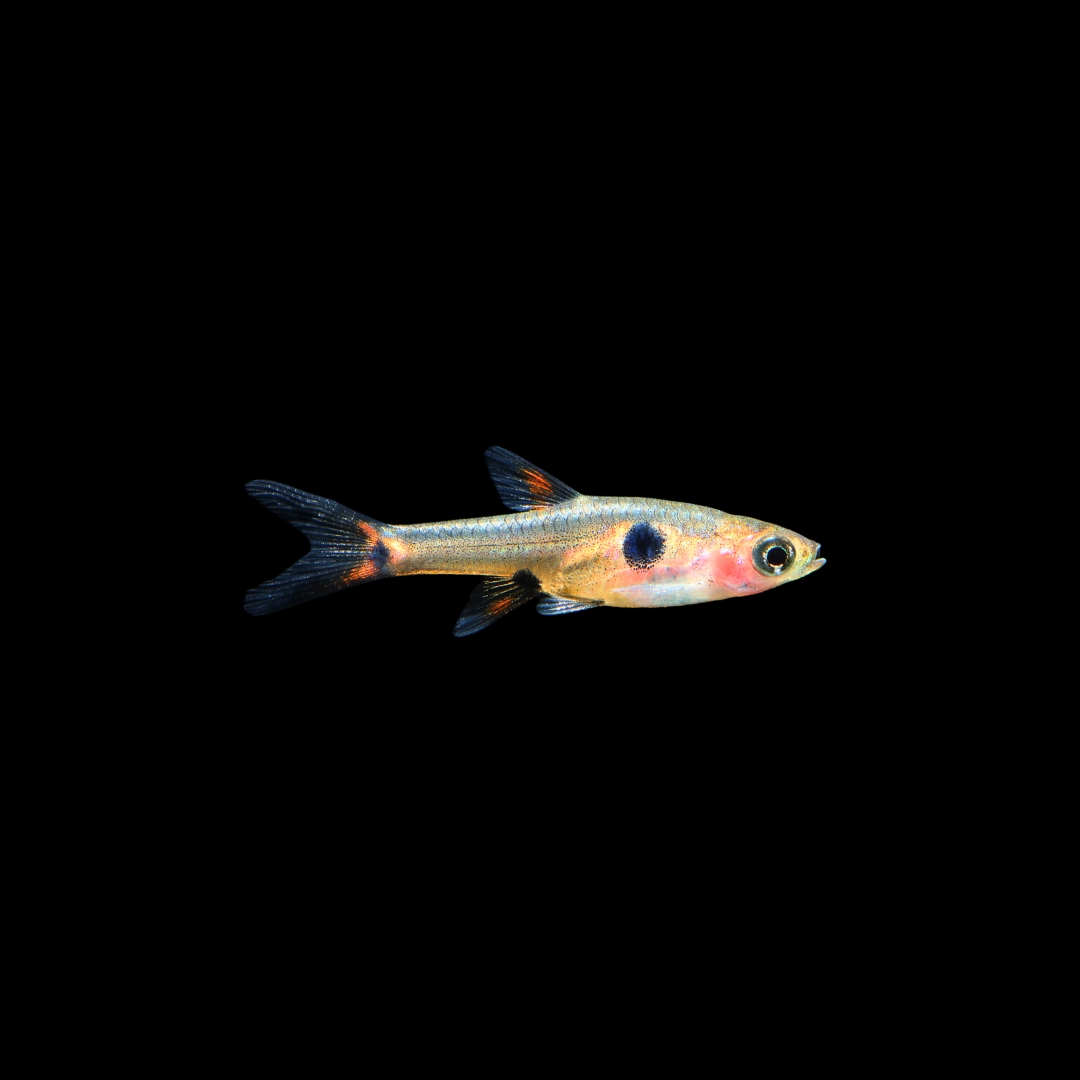
ボララス・マキュラータは、東南アジアの泥炭湿地や流れの緩やかな酸性水域にすむ、成魚でも約2.5cmほどの超小型熱帯魚です。透明感のある赤い体に丸い黒斑が入る姿は、水草水槽やブラックウォーター水槽でよく映えます。見た目は小さく繊細ですが、落ち着いた環境で群れを作らせると、雄同士が色を競うように発色し、控えめながらも見応えのある行動を見せてくれます。飼育では、強い水流や急な水質変化を避け、弱酸性寄りの軟水、細かな餌、安心できる隠れ場所を用意することが大切です。Boraras maculatus is a miniature freshwater fish from peat swamps and slow-flowing acidic waters in Southeast Asia, reaching only about 2.5 cm as an adult. Its translucent red body and rounded dark spots stand out beautifully in planted and blackwater-style aquariums. Although it is tiny and delicate-looking, a settled group can show attractive social behavior, with males displaying richer color to one another. Successful care depends on avoiding strong current and sudden water changes, while providing soft slightly acidic water, tiny foods, and plenty of secure cover.
コイ目 ダニオ科(Danionidae)ラスボラ亜科 ボララス属。古い資料や広い扱いではコイ科として記載されることがあります。Order Cypriniformes, family Danionidae, subfamily Rasborinae, genus Boraras. Older or broader treatments may list it within Cyprinidae.
英名 / English Name
Dwarf Rasbora / Spotted Rasbora
分布 / Distribution
マレー半島、シンガポール、インドネシアのスマトラ島周辺。資料により範囲の表現には差がありますが、主に泥炭湿地や森林内の酸性で流れの穏やかな淡水域に関連して記録されています。Malay Peninsula, Singapore, and around Sumatra in Indonesia. The exact wording of the range varies among references, but the species is mainly associated with acidic, slow-moving freshwater habitats in or near peat swamp and forest environments.
最大体長 / Max Size
最大標準体長は約2.5cm。飼育下では2cm前後で落ち着く個体も多いです。Up to about 2.5 cm standard length. Many aquarium individuals remain around 2 cm.
寿命 / Lifespan
飼育上の目安はおよそ2〜4年です。急な水質変化を避け、少数ではなく群れで落ち着かせることが長期飼育につながります。A practical aquarium estimate is around 2 to 4 years. Avoiding sudden water changes and keeping them in a proper group help support long-term health.
飼育環境 / Aquarium Environment
水槽サイズ / Tank Size
小型水槽でも飼育できますが、水質の安定を考えると30cmキューブ水槽(約25L)以上がおすすめです。10匹以上の群れで自然な行動や発色を楽しむなら、45cm規格水槽(約35L)から60cm規格水槽(約57L)が扱いやすいサイズです。It can be kept in small aquariums, but a 30 cm cube tank of about 25 L or larger is recommended for water stability. To enjoy natural group behavior and better coloration in a group of 10 or more, a standard 45 cm tank of about 35 L to a standard 60 cm tank of about 57 L is easier to manage.
水温 / Temperature
日常管理では24〜26℃前後が特に扱いやすい範囲です。状態や繁殖を見ながら24〜27℃程度で管理し、急な温度変化を避けます。Around 24 to 26°C is an especially practical daily range. It can be maintained around 24 to 27°C depending on condition and breeding goals, while sudden temperature changes should be avoided.
水質 / Water Quality
弱酸性の軟水を好みます。目安はpH5.0〜6.5、硬度は1〜8°dH程度です。原産地ではさらに酸性に傾く水域もありますが、家庭飼育では極端な数値を追うより、アンモニアや亜硝酸が検出されない安定した水を保つことが重要です。It prefers soft, slightly acidic water. A practical target is pH 5.0 to 6.5 and about 1 to 8 dH. Some natural habitats may be more acidic, but in aquariums it is more important to keep ammonia and nitrite at zero and maintain stable water rather than chasing extreme values.
レイアウト / Layout
暗めの底床、流木、落ち葉、ヤシャブシの実、マジックリーフ、陰性水草や浮き草を組み合わせると落ち着きます。タンニンを含むブラックウォーター風の環境は、照明をやわらげ、魚が前面に出やすい雰囲気を作ります。強い水流は苦手なので、スポンジフィルターなど穏やかなろ過が向いています。A dark substrate, driftwood, leaf litter, alder cones, Indian almond leaves, shade-tolerant plants, and floating plants help them feel secure. A tannin-rich blackwater-style setup softens the lighting and encourages the fish to come forward. Strong current should be avoided, so gentle filtration such as a sponge filter is suitable.
注意点 / Precautions
体が小さいため、導入直後のpHショック、アンモニアの急変、ろ過の未成熟による水質悪化に弱い魚です。新規立ち上げ直後の水槽は避け、十分にこなれた水槽へ入れます。輸送後は点滴式の水合わせを丁寧に行い、状態が落ち着くまで強い照明や混泳魚からの圧を抑えます。Because of its tiny body, this species is vulnerable to pH shock, sudden ammonia changes, and water deterioration in immature filtration. Avoid newly set-up tanks and introduce it into a mature aquarium. After transport, use careful drip acclimation and keep bright lighting and pressure from tank mates low until the fish settle.
餌と給餌 / Feeding
餌の種類 / Diet
極小粒の人工飼料、細かく砕いたフレーク、微粒の顆粒フードを基本に、ブラインシュリンプの幼生、ミジンコ、冷凍コペポーダ、サイクロプスなど小さな動物性の餌を組み合わせます。自然下では小さな甲殻類や虫状の小動物を食べるため、細かな動物性餌を混ぜるとコンディションと発色を保ちやすくなります。Use micro pellets, finely crushed flakes, and tiny granules as staple foods, supplemented with baby brine shrimp, daphnia, frozen copepods, and cyclops. In nature it feeds on small crustaceans and worm-like prey, so including fine animal-based foods helps maintain condition and coloration.
給餌のポイント / Feeding Tips
口が非常に小さいため、餌は必ず細かくします。一度に多く与えるより、少量を1日1〜2回、短時間で食べ切れる量だけ与えるのが安全です。臆病な個体は餌を取り負けやすいため、水面と中層に分散させ、群れ全体に行き渡るようにします。Because the mouth is extremely small, all foods must be finely sized. It is safer to feed small amounts once or twice daily rather than offering a large portion. Timid individuals may be outcompeted, so spread food across the surface and midwater to reach the whole group.
性格と混泳 / Temperament and Tank Mates
性格 / Temperament
非常に温和で、同種同士では群れを作る性質があります。少数飼育では物陰に隠れやすく、色も出にくくなります。10匹以上で迎えると安心しやすく、雄の発色や小さなディスプレイ行動も観察しやすくなります。It is very peaceful and naturally forms groups with its own kind. When kept in very small numbers, it often hides and shows weaker color. A group of 10 or more helps it feel secure and makes male coloration and subtle display behavior easier to observe.
混泳の相性 / Compatibility
相性がよいのは、ピグミーコリドラス、オトシンクルス、小型のボララス類、ミクロデバリオ、スンダダニオ、エンバーテトラ、ビーシュリンプなど、穏やかで口の小さい生体です。エンゼルフィッシュのように捕食の恐れがある魚、動きが激しく餌を独占する魚、中型以上の魚との混泳は避けます。Good tank mates include pygmy Corydoras, Otocinclus, small Boraras species, Microdevario, Sundadanio, ember tetras, and bee shrimp, provided the tank mates are gentle and small-mouthed. Avoid predatory fish such as angelfish, very active fish that monopolize food, and medium-sized or larger fish.
病気と対策 / Diseases and Prevention
かかりやすい病気 / Common Diseases
白点病、尾ぐされ、ヒレ溶け、輸送後の衰弱、ストレスによる色抜けや拒食に注意します。特定の病気だけに極端に弱いというより、体が小さいため水質悪化、温度変化、薬浴濃度のぶれが短時間で負担になりやすい点が重要です。Watch for ich, fin rot, fin erosion, post-transport weakness, stress-related fading, and loss of appetite. Rather than being unusually prone to one specific disease, its tiny body makes water deterioration, temperature swings, and medication errors stressful in a short time.
対策と予防 / Prevention
予防の基本は、成熟したろ過、安定した弱酸性軟水、低めの硝酸塩、穏やかな水流、十分な隠れ家です。新規導入魚は可能であれば隔離水槽で数日から1〜2週間観察します。薬を使う場合は小型魚であることを考慮し、製品の指示を守りながら過量投与を避けます。Prevention is based on mature filtration, stable soft slightly acidic water, low nitrate, gentle flow, and plenty of cover. New arrivals should be observed in a quarantine tank for several days to one or two weeks when possible. When medication is necessary, remember that this is a tiny fish and avoid overdosing while following product instructions.
増やし方(繁殖) / Breeding
雌雄の判別 / Sexing
成熟した雄は赤みが強く、体つきがややスリムです。雌は腹部に丸みがあり、産卵前はふっくらします。近縁のボララス・ナエウスのように雄の前方斑が極端に大きくなる特徴は目立ちにくいため、発色、体型、腹部の丸みを総合して見分けます。Mature males are usually redder and slimmer. Females have a rounder belly, especially before spawning. Unlike Boraras naevus, males of this species do not typically show an extremely enlarged anterior body blotch, so color, body shape, and belly fullness should be considered together.
繁殖形態 / Reproduction
親が卵や稚魚を守らない、ばらまき型の産卵を行います。調子のよいペアや小群は、ウィローモスなどの細かな茂みの中に少数の卵を継続的に産み落とすことがあります。親魚は食卵するため、卵を残したい場合は隔離やメッシュによる保護が必要です。It is an egg-scattering species with no parental care. Well-conditioned pairs or small groups may lay small numbers of eggs repeatedly among fine plants such as Java moss. Adults may eat the eggs, so separation or protective mesh is needed if you want to raise the fry reliably.
繁殖のポイント / Breeding Tips
10〜15L程度の小型繁殖水槽に、弱酸性の軟水、26℃前後からやや高めの水温、大量のウィローモスや細かなメッシュを用意します。親魚には事前にブラインシュリンプの幼生やミジンコなどを与えて仕上げます。卵と稚魚は非常に小さいため、初期飼料はインフゾリアやゾウリムシが中心です。ブラインシュリンプの幼生を食べられるサイズになるまでの最初の1〜2週間が最大の山場です。Prepare a small 10 to 15 L breeding tank with soft acidic water, a temperature around 26°C or slightly higher, and plenty of Java moss or fine mesh. Condition the adults with baby brine shrimp, daphnia, and other small live or frozen foods. The eggs and fry are extremely small, so first foods should be infusoria or paramecia. The first one to two weeks, before the fry can take newly hatched brine shrimp, are the most difficult stage.
雑学と豆知識 / Trivia and Fun Facts
1. ラスボラ・マキュラータから現在の学名へ / 1. From Rasbora maculata to the Current Name
本種は1904年にRasbora maculataとして記載され、現在はBoraras maculatusとして扱われています。小さなラスボラ類は一見よく似ていますが、骨格や鰭条、斑紋の違いが整理されることで、現在のボララス属というまとまりが見えてきました。属名Borarasについては、Rasboraの文字を並べ替えた名前で、腹椎と尾椎の比率の違いを示すという説明が広く知られています。学名の変遷をたどると、この魚が単なる小型版ラスボラではなく、独自の進化をたどったグループであることが分かります。This species was described in 1904 as Rasbora maculata and is now treated as Boraras maculatus. Tiny rasboras can look similar at first glance, but differences in skeleton, fin rays, and markings helped clarify the genus Boraras. The name Boraras is widely explained as an anagram of Rasbora, referring to differences in the ratio of abdominal and caudal vertebrae. Its naming history shows that this fish is not simply a miniature Rasbora, but part of a distinctive evolutionary group.
2. ブラックウォーターに映える理由 / 2. Why It Looks So Good in Blackwater
原産地の泥炭湿地では、落ち葉や倒木から溶け出したタンニンや腐植質によって、水が紅茶のように染まります。このような水はミネラルが少なく、酸性に傾きやすく、林冠や浮き草の影響で光もやわらぎます。水槽でマジックリーフやヤシャブシの実を使うのは雰囲気作りだけではありません。明るすぎる環境を落ち着かせ、魚の警戒心を和らげ、本来の赤みを観察しやすくする実用的な意味があります。In peat swamp habitats, tannins and humic substances from fallen leaves and wood stain the water like tea. Such water is low in minerals, often acidic, and dimly lit by forest canopy or floating vegetation. Using Indian almond leaves or alder cones in aquariums is not only decorative. It softens overly bright conditions, reduces stress, and makes it easier to observe the fish’s natural red coloration.
3. 似たボララス類との見分け方 / 3. Telling It Apart from Similar Boraras
国内流通では、ボララス・ブリジッタエ、ボララス・メラー、ボララス・ナエウスなどと混同されることがあります。マキュラータは体側に独立した丸い黒斑が目立つのに対し、ブリジッタエは体の中央を走る黒いラインが強く出ます。ナエウスは雄の前方斑が雌より大きく発達するため、雌雄で斑紋の印象が変わりやすい種類です。店頭では、斑点が線状につながっていないか、雄だけ斑点が極端に大きくないかを観察すると判断しやすくなります。In the aquarium trade, it can be confused with Boraras brigittae, Boraras merah, and Boraras naevus. Boraras maculatus shows separate rounded dark spots, while B. brigittae has a strong dark stripe along the body. In B. naevus, the anterior blotch of males becomes larger than that of females, so the pattern can look different between the sexes. When checking fish in a shop, look at whether the markings form a line and whether only the males show a markedly enlarged blotch.
4. 遺伝的には分かれていても姿は変わりにくい / 4. Genetic Separation with a Similar Appearance
近年の研究では、マレー半島のBoraras maculatus個体群に、地理的に分かれた複数の系統があることが示されています。興味深いのは、遺伝的には長い時間をかけて分かれていても、外見上の違いが非常に小さい点です。泥炭湿地という特殊な環境に強く適応した結果、大きく姿を変えるよりも、同じような体型を保つ方向に選択が働いた可能性があります。観賞魚としては同じ名前で扱われていても、自然界では地域ごとに守るべき進化の歴史を持っているかもしれません。Recent research has shown that Boraras maculatus populations in Peninsular Malaysia include several geographically separated lineages. What makes this especially interesting is that the genetic separation is substantial, while outward differences remain very small. Strong adaptation to peat swamp habitats may have favored retaining a similar body form rather than changing dramatically. Although sold under a single aquarium name, wild populations may carry distinct evolutionary histories worth conserving.
5. 購入後・導入時の注意 / 5. Notes After Purchase and Introduction
ボララス・マキュラータは小型で繊細なため、購入直後の急な水質変化には注意が必要です。入荷直後の個体は輸送ストレスで体色が薄く、餌食いも不安定なことがあります。導入時は時間をかけて水合わせを行い、強い照明や激しい水流を避け、落ち着いた環境で数日かけて状態を戻していくと安心です。水槽に慣れると、本来の赤みと黒い斑紋のコントラストがはっきり現れ、群れで泳ぐ姿を楽しめるようになります。Because Boraras maculatus is tiny and delicate, sudden changes in water conditions just after purchase should be avoided. Newly arrived individuals may show pale coloration and unstable feeding because of transport stress. Introduce them with slow acclimation, avoid strong lighting and heavy current, and let them recover for several days in a calm environment. Once settled, their natural red coloration and contrasting dark spots become clearer, and their schooling behavior can be enjoyed at its best.
まとめ / Conclusion
ボララス・マキュラータは、赤い体色と丸い黒斑の美しさだけでなく、泥炭湿地の酸性水域に適応してきた背景まで含めて楽しみたい小型美魚です。飼育の難しさは、特別な設備が必要というよりも、小さな体に見合った丁寧さを求められる点にあります。成熟した水槽、穏やかな水流、弱酸性寄りの軟水、細かな餌、そして安心できる群れを整えることで、本種は小さな水景の中でしっかりと存在感を放ってくれます。Boraras maculatus is a miniature jewel to appreciate not only for its red body and rounded black spots, but also for its connection to acidic peat swamp habitats. Its care is not about requiring special equipment so much as requiring attention suited to its tiny body. With a mature aquarium, gentle flow, soft slightly acidic water, fine foods, and a secure group, this species can have a strong presence even in a small aquascape.
図鑑として本種を締めくくるなら、「小さな赤い群泳魚」という一言では足りません。分類史、ブラックウォーターへの適応、近縁種との繊細な違い、そして地域個体群の保全まで、ボララス・マキュラータには小さな体からは想像しにくい奥行きがあります。迎えるときは数をそろえて群れで落ち着かせ、日々の観察を通して、東南アジアの静かな森の水辺を水槽の中に少しだけ再現してあげたい魚です。To close its profile, calling it simply a small red schooling fish would not be enough. Its taxonomic history, blackwater adaptation, subtle differences from related species, and even the conservation value of regional populations give Boraras maculatus a depth that is hard to imagine from its tiny size. Keep it in a proper group, observe it patiently, and let the aquarium become a small reflection of the quiet forest waters of Southeast Asia.






コメント