

解説 / Description
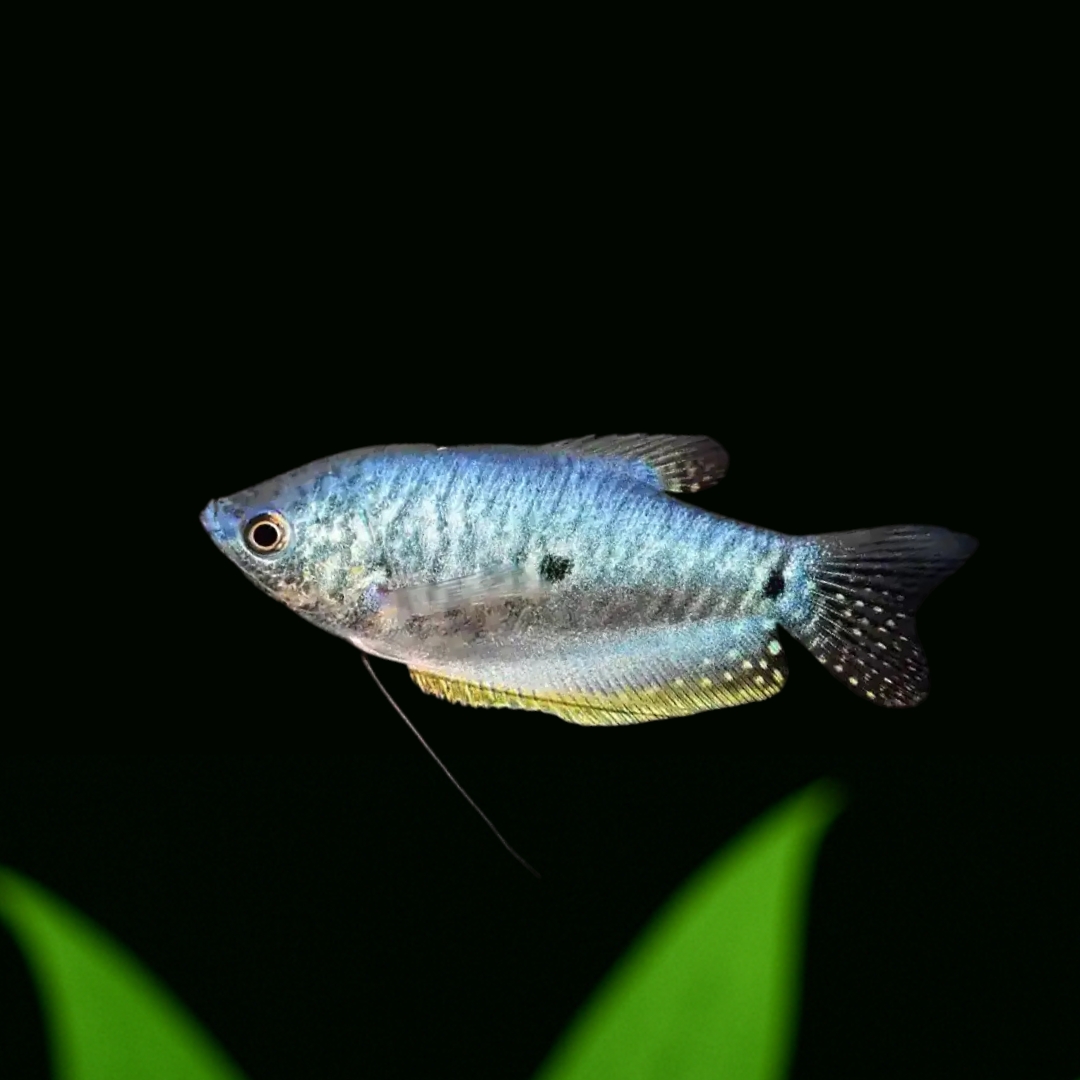
ブルーグラミーは、東南アジア原産のスリースポットグラミーをもとに流通している青色系の観賞魚です。金属光沢を帯びた青い体色、糸のように長く伸びた腹鰭、水面で空気を吸うラビリンス器官が大きな特徴で、水草の多い水槽ではゆったりとした泳ぎと探索行動を楽しめます。 The Blue Gourami is a blue ornamental form associated with the Three-spot Gourami of Southeast Asia. Its metallic blue coloration, long thread-like pelvic fins, and air-breathing labyrinth organ are its main features, and in a planted aquarium it shows calm swimming and exploratory behavior.
丈夫で飼いやすい魚として知られますが、成魚になると10cmを超えることが多く、オスを中心に同種間で縄張り意識を示すことがあります。小型水槽に無理に詰め込むより、十分な遊泳スペース、弱めの水流、水草や流木による視線の分断を用意することで、落ち着いた姿を長く楽しみやすくなります。 It is known as a hardy aquarium fish, but adults often exceed 10 cm and may become territorial, especially males. Rather than crowding it into a small tank, provide swimming space, gentle flow, and visual breaks with plants or driftwood to maintain a calmer aquarium.
基本情報 / Basic Information
| 学名 / Scientific Name | Trichopodus trichopterus |
|---|---|
| 通称 / Common Name | ブルーグラミー、スリースポットグラミー、コスビー・グラミー系、オパライン・グラミー系Blue Gourami, Three-spot Gourami, Cosby-type Gourami, Opaline-type Gourami |
| 分類 / Family | アナバス目 オスフロネムス科 トリコポドゥス属Order Anabantiformes, family Osphronemidae, genus Trichopodus |
| 英名 / English Name | Blue Gourami, Three-spot Gourami, Opaline Gourami |
| 分布 / Distribution | 原種はメコン水系を含む東南アジアの低地淡水域に広く分布し、ラオス、タイ、カンボジア、ベトナム、中国雲南周辺などが知られます。観賞魚や食用魚として人為的に移入された地域もあります。The wild form is broadly distributed in Southeast Asian lowland freshwaters, including the Mekong basin, with records from Laos, Thailand, Cambodia, Vietnam, and around Yunnan, China. It has also been introduced to some regions through human activity as an aquarium or food fish. |
| 最大体長 / Max Size | 最大で標準体長15cm前後。水槽内では10cm前後から12cmほどで扱われることが多いです。Up to around 15 cm standard length. In aquaria, it is commonly encountered at around 10 to 12 cm. |
| 寿命 / Lifespan | 一般的には3〜5年ほどが目安です。水質、餌、混泳ストレスを適切に管理できれば、さらに長く維持できることもあります。A typical guideline is about 3 to 5 years. With good water quality, balanced feeding, and low social stress, individuals may live longer. |
飼育環境 / Aquarium Environment
| 水槽サイズ / Tank Size | 単独飼育でも60cm規格水槽、約57〜60Lを下限の目安とし、ゆとりを持たせるなら90cm規格水槽、約150〜160L以上が安心です。複数飼育や混泳を前提にする場合は、90cm規格水槽以上、または100cm級の水槽を推奨します。繁殖確認用に30〜45cm水槽を使う場合は、一時的なペアリングと産卵後の隔離を前提にしてください。For a single fish, a standard 60 cm tank of about 57 to 60 L should be regarded as a lower guideline, while a standard 90 cm tank of about 150 to 160 L or larger is safer. For groups or community aquaria, a standard 90 cm tank or a tank around 100 cm is recommended. A 30 to 45 cm tank may be used temporarily for breeding observation only, with separation after spawning. |
|---|---|
| 水温 / Temperature | 24〜28℃前後が扱いやすい範囲です。原種は22〜28℃前後の熱帯域に適応しますが、家庭水槽では急な低温や日内変動を避けることが重要です。日本の冬季はオートヒーターを使用してください。 A practical range is around 24 to 28°C. The wild form is adapted to tropical waters around 22 to 28°C, but in home aquaria it is important to avoid sudden chilling or daily fluctuations. In Japan, use an automatic heater during winter. |
| 水質 / Water Quality | pH 6.0〜8.0前後、弱酸性から弱アルカリ性まで幅広く適応します。硬度にも比較的幅がありますが、極端な調整よりも安定を優先します。アンモニアや亜硝酸の蓄積には弱いため、立ち上がった濾過環境と定期的な換水を維持します。It adapts to a broad range of about pH 6.0 to 8.0, from slightly acidic to slightly alkaline water. It also tolerates a moderate range of hardness, but stability is more important than aggressive adjustment. Maintain mature filtration and regular water changes to prevent ammonia and nitrite accumulation. |
| レイアウト / Layout | 湿地、沼、用水路、水草の多い緩やかな水域にすむ魚なので、水流は弱めに設定します。ミクロソリウム、アヌビアス、有茎草、浮き草などで隠れ家と視線を遮る場所を作ると、追い回しが起きた際にも逃げ場を確保できます。ラビリンス器官で空気を吸うため、水面に出られる空間は必ず残してください。Because it inhabits marshes, swamps, canals, and slow vegetated waters, gentle flow is preferable. Java fern, Anubias, stem plants, and floating plants can create hiding places and visual barriers, giving subordinate fish a retreat if chasing occurs. Always leave access to the surface because it breathes air with its labyrinth organ. |
| 注意点 / Precautions | フタや浮き草で水面を完全に塞がないこと、強すぎる水流を避けること、狭い水槽でオス同士を無理に同居させないことが大切です。導入直後は輸送ストレスや潜伏感染の影響が出る場合があるため、可能であれば別水槽で2〜4週間ほど観察してから本水槽へ合流させると安全性が高まります。Do not completely block the surface with a lid or dense floating plants, avoid excessive current, and do not force rival males into a cramped tank. After purchase, stress from shipping or latent infections may appear, so a 2 to 4 week observation period in a separate tank is safer when possible. |
餌と給餌 / Feeding
| 餌の種類 / Diet | 雑食性で、フレークフード、顆粒フード、冷凍赤虫、ブラインシュリンプ、イトミミズ系の餌、植物質を含むタブレット飼料などを食べます。野生では動物プランクトン、甲殻類、昆虫の幼虫などを食べるため、動物質の餌は有効ですが、長期飼育では植物質も含めて偏りを避けます。It is omnivorous and accepts flakes, granules, frozen bloodworms, brine shrimp, tubifex-type foods, and plant-based tablets. In the wild it feeds on zooplankton, crustaceans, and insect larvae, so animal-based foods are useful, but long-term feeding should also include vegetable matter to avoid imbalance. |
|---|---|
| 給餌のポイント / Feeding Tips | 食欲が強く、混泳水槽では先に餌を食べてしまうことがあります。1〜2分で食べ切る量を基本にし、底物や動きの遅い魚がいる場合は沈下性の餌を別の場所に落として分配します。過食は肥満や腹部膨満の原因になるため、少量を規則的に与える方が安定します。It has a strong appetite and may take food before slower tank mates can feed. Offer only what it can finish in 1 to 2 minutes, and distribute sinking foods in separate areas for bottom dwellers or slower fish. Overfeeding can lead to obesity and abdominal swelling, so small, regular meals are best. |
性格と混泳 / Temperament and Tank Mates
| 性格 / Temperament | 幼魚期は比較的おとなしく見えますが、成熟するとやや気が強くなる個体がいます。特にオスは繁殖期に泡巣周辺を守り、メスや同種を追い払うことがあります。複数飼育では広さと隠れ家を増やし、攻撃が一匹に集中しないようにします。Juveniles may appear fairly peaceful, but some adults become moderately assertive. Males in particular may guard the bubble nest area during breeding and drive away females or other gouramis. In groups, provide space and hiding places so aggression does not focus on a single fish. |
|---|---|
| 混泳の相性 / Compatibility | 口に入らないサイズで、性格が極端に弱すぎない魚と合わせるのが基本です。中型カラシン、落ち着いたコイ科魚、丈夫なコリドラスやローチ類などが候補になります。小型テトラの稚魚や極端に小さい魚は捕食されるおそれがあります。スマトラのようにヒレをかじる癖のある魚、過度に攻撃的なシクリッド類、同じ水面付近で強く縄張りを張る魚との混泳は避けた方が無難です。Choose tank mates too large to be swallowed and not overly timid. Medium characins, calm cyprinids, hardy Corydoras, and loaches can be candidates. Fry or very small tetras may be eaten. Avoid fin-nipping fish such as tiger barbs, overly aggressive cichlids, and species that strongly defend the same surface area. |
病気と対策 / Diseases and Prevention
| かかりやすい病気 / Common Diseases | 水温変化や水質悪化に伴う白点病、肌荒れ、水カビ病、エラ病、過食や消化不良に伴う腹部膨満に注意します。また、グラミー類ではイリドウイルスを含むウイルス性疾患が問題視されることがあり、発症後の治療が難しいケースがあります。ただし、すべてのブルーグラミーが高率で感染していると断定できるものではないため、導入時の観察と隔離を重視する表現に留めます。Watch for white spot disease, skin irritation, fungal infections, gill disease, and abdominal swelling associated with overfeeding or poor digestion. Viral diseases, including iridovirus-related problems, have been a concern in gouramis, and treatment after clinical signs appear can be difficult. This does not mean every Blue Gourami is highly likely to be infected, so careful observation and quarantine are emphasized. |
|---|---|
| 対策と予防 / Prevention | 予防の基本は、急な水温変化を避けること、濾過を安定させること、餌を与えすぎないこと、定期的に換水することです。新規導入魚は別水槽で食欲、呼吸、体色、泳ぎ方を確認します。白点病や水カビ病など一般的な病気は早期なら市販薬で対応できる場合がありますが、ウイルス性疾患が疑われる場合は隔離と器具の使い分けを優先し、むやみに同居魚を増やさないようにします。Prevention is based on avoiding sudden temperature changes, maintaining stable filtration, preventing overfeeding, and performing regular water changes. New fish should be observed separately for appetite, breathing, coloration, and swimming behavior. Common diseases such as white spot or fungal infections may respond to aquarium medications if caught early, but when viral disease is suspected, isolation and separate equipment are more important than adding more fish. |
増やし方(繁殖) / Breeding
| 雌雄の判別 / Sexing | 成熟したオスは体がややスリムで、背鰭と尻鰭の先端が長く尖りやすくなります。メスは腹部に丸みがあり、抱卵時はふっくら見えます。繁殖状態のオスは体色が濃くなり、喉から腹部にかけて赤みを帯びることがあります。Mature males tend to be slimmer, with longer and more pointed dorsal and anal fins. Females are rounder in the belly, especially when carrying eggs. Breeding males may become more intensely colored and can show reddish tones around the throat and abdomen. |
|---|---|
| 繁殖形態 / Reproduction | 泡巣を作るバブルネストビルダーです。オスが水面に泡巣を作り、巣の下でメスを抱きかかえるようにして産卵と放精を行います。卵は水面へ浮かび、オスが集めて巣に戻し、稚魚が泳ぎ出す頃まで守ります。It is a bubble-nest builder. The male creates a bubble nest at the surface and embraces the female beneath it as eggs and sperm are released. The buoyant eggs rise to the surface, and the male gathers them into the nest and guards them until the fry become free-swimming. |
| 繁殖のポイント / Breeding Tips | 繁殖を狙う場合は、弱い水流、浮き草や水面の落ち着いた場所、やや高めで安定した水温を用意します。親魚にはブラインシュリンプや赤虫などを与えて状態を整えます。産卵後のオスは巣を守るため攻撃的になるので、メスは速やかに隔離します。稚魚が水平に泳ぎ始めたら、オスも取り出します。初期飼料はインフゾリアや微細な液状フードから始め、成長に合わせてブラインシュリンプ幼生へ移行します。For breeding, provide gentle flow, floating plants or a calm surface area, and slightly warmer stable water. Condition the adults with foods such as brine shrimp and bloodworms. After spawning, the male becomes aggressive while guarding the nest, so remove the female promptly. Once fry begin swimming horizontally, remove the male as well. Start fry on infusoria or fine liquid foods, then move to newly hatched brine shrimp as they grow. |
雑学と豆知識 / Trivia and Fun Facts
| 1. 名前に刻まれた糸状の腹鰭 / 1. Thread-like pelvic fins in the name | 学名のTrichopodus trichopterusには、この魚の姿を印象づける糸状の腹鰭が反映されています。属名は「毛」や「糸」を思わせる語と「足」を意味する語に由来するとされ、種小名も毛のような鰭を連想させます。水槽内でブルーグラミーが細い腹鰭を前へ伸ばし、流木や水草、時には同居魚にそっと触れる様子は、単なる飾りではありません。視界の悪い水草帯で周囲を探るための感覚器官として発達したものと考えられています。The scientific name Trichopodus trichopterus reflects the fish’s striking thread-like pelvic fins. The genus name is generally interpreted as referring to “hair” or “thread” and “foot,” while the species name also evokes hair-like fins. When a Blue Gourami extends those fine fins toward driftwood, plants, or tank mates, they are not merely decorative. They are thought to function as sensory organs for exploring dense or turbid habitats. |
|---|---|
| 2. 「三つの点」の数え方 / 2. Counting the “three spots” | スリースポットグラミーの三つの点は、体に黒斑が三つ並ぶという意味ではありません。一般には、体側中央の黒斑、尾鰭の付け根にある黒斑、そして眼そのものを合わせて三つと数えます。尾柄部の黒斑は、捕食者の注意を頭部からそらす眼状紋のように働く可能性があります。青く改良されたブルーグラミーでも、この原種由来の模様の考え方を知ると、体色の奥に野生魚としての歴史が見えてきます。The “three spots” do not mean three dark marks lined up on the body. The usual count includes the central body spot, the spot at the base of the tail, and the eye itself. The caudal spot may function like an eyespot, potentially diverting a predator’s attention away from the head. Even in the blue cultivated form, understanding this pattern reveals the wild history behind the aquarium color. |
| 3. 空気を吸えることの意味 / 3. What air breathing means | ブルーグラミーの仲間はラビリンス器官を持ち、水面で空気を取り込むことができます。原産地の湿地、沼、用水路のような場所では、暑さや有機物の分解によって水中の酸素が少なくなることがあります。こうした環境で空気呼吸は大きな利点になります。ただし、水槽飼育では「空気を吸えるから水質が悪くても平気」という意味にはなりません。水面に出られること、濾過が働いていること、アンモニアや亜硝酸が蓄積しないことの三つがそろって、はじめて本種の強さが健やかに生かされます。Blue Gouramis possess a labyrinth organ and can gulp air at the surface. In their native marshes, swamps, and canals, heat and decomposing organic matter can reduce dissolved oxygen, making air breathing a major advantage. In aquaria, however, this does not mean poor water quality is acceptable. Surface access, functioning filtration, and prevention of ammonia and nitrite buildup are all necessary for the fish to remain healthy. |
| 4. 青い品種としての歴史 / 4. History as a blue cultivated form | ブルーグラミーの青い輝きは、野生型の代表的な姿そのものではなく、観賞魚として選別されてきた色彩です。流通名としてはコスビー・グラミー、オパライン・グラミー、マーブルグラミーなどの名が関わることがあり、地域や店舗によって呼び分けが曖昧な場合もあります。そのため本記事では、特定の作出史を断定しすぎず、スリースポットグラミー由来の青色系改良品種として整理しています。水槽の中の一匹には、自然の適応力と観賞魚文化の選抜の両方が重なっています。The blue sheen of the Blue Gourami is not the typical wild appearance itself, but a coloration maintained through aquarium selection. Trade names such as Cosby Gourami, Opaline Gourami, and Marbled Gourami may be related, and usage can vary by region or shop. For that reason, this article treats it carefully as a blue cultivated form derived from the Three-spot Gourami, rather than making overly specific claims about a single breeding origin. One aquarium fish carries both natural adaptation and the history of ornamental selection. |
| 5. 泡巣に表れる父親の役割 / 5. Fatherhood in a bubble nest | 繁殖期のオスは、水面に泡巣を作ります。泡を積み重ねるようなこの行動は、静かな水面を必要とするため、強すぎる水流の水槽ではうまく見られません。産卵後、オスは卵を集めて巣に戻し、落ちた卵も拾い上げながら守ります。しかし、その保護行動は同時に強い攻撃性を伴います。自然界の広い水域ならメスは距離を取れますが、水槽では逃げ場が限られます。産卵後にメスを隔離するのは、繁殖行動を最後まで観察するためにも、親魚を守るためにも重要です。During breeding, the male builds a bubble nest at the surface. This behavior requires calm water and is difficult to observe in tanks with strong current. After spawning, the male gathers the eggs into the nest and guards them, even retrieving fallen eggs. At the same time, this care comes with strong aggression. In wide natural waters the female can move away, but in an aquarium her escape options are limited. Removing the female after spawning protects the parents and allows the breeding process to proceed more safely. |
| 6. 日本の飼育者が意識したい導入直後 / 6. The first weeks after purchase in Japan | ブルーグラミーは丈夫な魚として売られることが多いものの、店頭に並ぶまでには養殖、輸送、問屋や小売店での管理という複数の段階を通ります。日本の制度上、動物検疫の対象となる水生動物のリストにはコイやフナ類、サケ科魚類、甲殻類などが明示されますが、一般的な熱帯魚すべてが同じ枠組みで検査されるわけではありません。そのため家庭では、購入直後の水合わせ、静かな環境、隔離観察が実用的な予防策になります。強健種だからこそ、最初の数週間を丁寧に扱うことで、その後の長期飼育が安定しやすくなります。Blue Gouramis are often sold as hardy fish, but before reaching the shop they pass through farming, shipping, importer or wholesaler handling, and retail care. Under Japan’s system, the listed aquatic animals subject to animal quarantine include groups such as carp, goldfish-related Carassius, salmonids, and crustaceans, but not every common tropical fish is handled under the same framework. For home aquarists, careful acclimation, a quiet environment, and quarantine observation after purchase are practical preventive steps. Because this is a hardy fish, careful handling in the first few weeks can make long-term keeping more stable. |
まとめ / Conclusion
ブルーグラミーは、青く輝く体色、空気呼吸を可能にするラビリンス器官、糸状の腹鰭、泡巣を作る繁殖行動など、多くの見どころを持つ熱帯魚です。丈夫で餌付きも良く、幅広い水質に適応しますが、成長後のサイズと縄張り意識を考えると、十分な水槽サイズと落ち着けるレイアウトが欠かせません。 The Blue Gourami is a tropical fish with many attractions, including its blue sheen, air-breathing labyrinth organ, thread-like pelvic fins, and bubble-nest breeding. It is hardy, feeds readily, and adapts to a broad range of water conditions, but its adult size and territorial behavior mean that adequate tank space and a calm layout are essential.
長期飼育の鍵は、60cm規格水槽を下限として、可能なら90cm規格水槽以上の余裕を用意し、弱い水流、水草の隠れ家、安定した濾過、控えめでバランスの良い給餌を続けることです。入門種としてだけでなく、分類、生態、品種改良、流通まで含めて眺めると、ブルーグラミーは水槽の中でより奥行きのある存在になります。 The key to long-term care is to regard a standard 60 cm tank as the lower limit, provide a standard 90 cm tank or larger when possible, maintain gentle flow, planted hiding places, stable filtration, and modest balanced feeding. When appreciated not only as a beginner-friendly fish but also through its taxonomy, ecology, cultivated history, and trade background, the Blue Gourami becomes a richer presence in the aquarium.

 ポチップ
ポチップ


参考文献
本記事では、店舗・通販サイトではなく、魚類データベース、公的機関、学術論文、専門機関の公開資料を中心に参照しました。
-
1. Froese, R. and Pauly, D. (eds.). FishBase: Trichopodus trichopterus, Three spot gourami.
分類、分布、最大体長、水温・pH、食性、泡巣繁殖、IUCN評価など、本記事の基本情報の中核参照。
-
学名、命名者、分類学的整理、旧属名を含む魚類名の確認に使用。
-
3. CABI Digital Library. Trichopodus trichopterus (three spot gourami). CABI Compendium.
原産地、導入地域、外来化リスク、生息環境の確認に使用。店舗系情報を避けるための補助資料。
-
Trichopodus属の分布、シンガポールにおける在来・定着状況、野外観察情報の確認に使用。
-
ラビリンス器官と低酸素環境への適応、呼吸生理に関する背景情報の確認に使用。
-
餌の味覚認識、アミノ酸に対する摂餌反応など、感覚行動に関する記述の補強に使用。
-
グラミー類におけるメガロシチウイルス関連リスク、輸入観賞魚における疾病管理上の注意点の確認に使用。
-
日本の水生動物輸入検疫制度の対象範囲を確認し、記事内の検疫表現を過度に断定しないために使用。
-
メコン流域における分布・生態の基礎文献として、FishBaseの主要参照文献から逆算して採用。


コメント