


解説 / Description
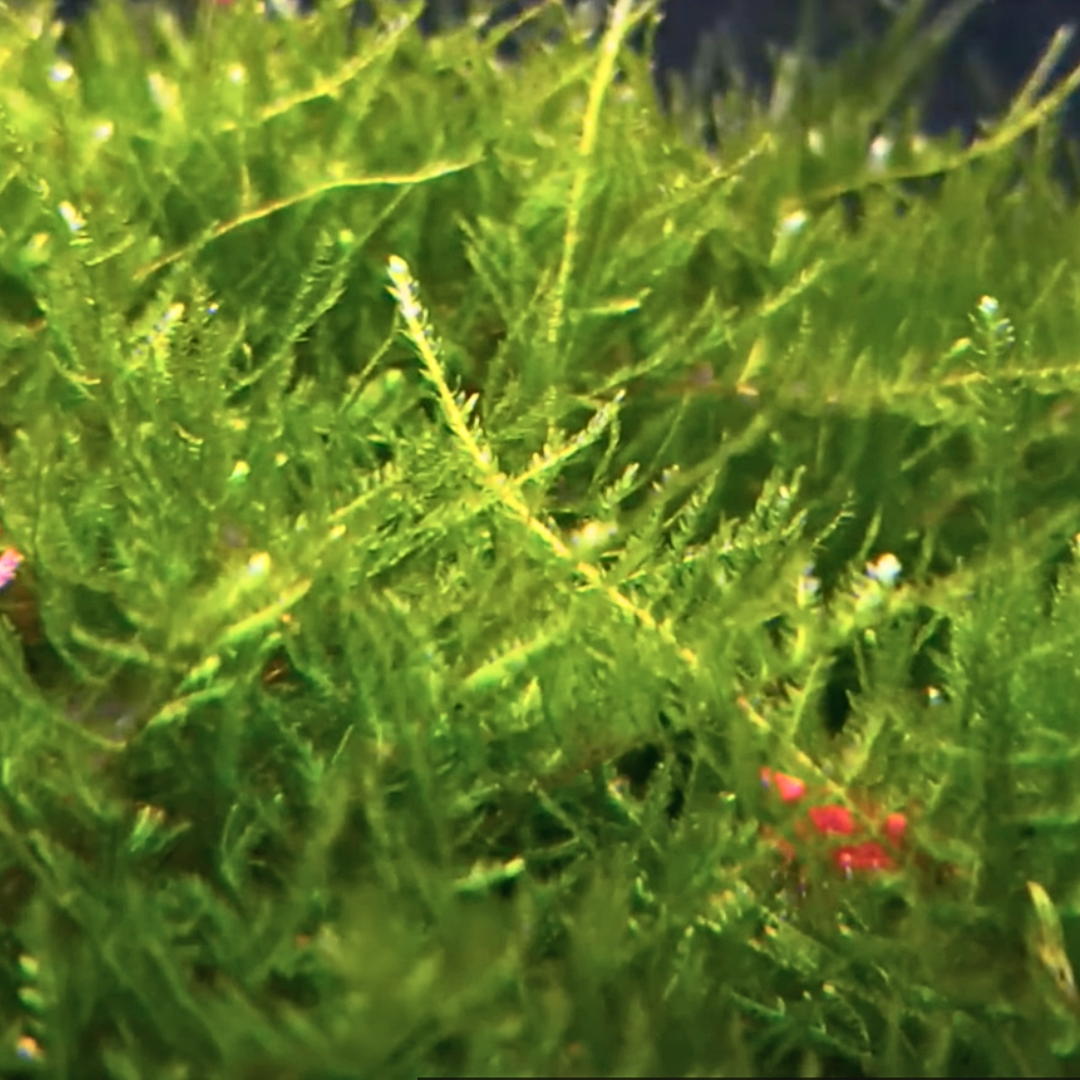
スパイキーモスは、深い緑の枝を力強く広げ、流木や石に立体感のある茂みをつくる水生モスです。細かな葉が並ぶ枝は、小さな針葉樹の枝を思わせます。繊細な印象のモスとはひと味違う、輪郭のはっきりした存在感が魅力。岩肌や古木を覆うように育てると、景色に年月を感じさせる落ち着きが生まれます。 Spiky Moss produces substantial, deep-green branching shoots that form textured growth on wood and rocks. Its tiny leaves give each shoot the appearance of a miniature conifer branch. Its pronounced outline brings a distinctive presence to an aquascape, while growth over rocky surfaces and weathered wood creates a quiet sense of age.
少ない光でも育ち、CO2添加も必須ではありません。ただし、丈夫だからと茂らせたままにすると、内側に汚れがたまり、土台に近い部分から傷むことがあります。薄く固定して育て始め、枝ぶりを楽しみながら厚みを整えることが、美しい姿を長く保つコツです。水中だけでなく、乾燥を防げるパルダリウムでも緑の景観づくりに役立ちます。 It grows under low light and does not require injected CO2. Even a hardy moss needs attention: dense growth can trap debris and deteriorate near the attachment surface. Start with a thin layer and trim as it develops, preserving its branching character while controlling its thickness. It can also provide greenery in a paludarium where it is protected from drying out.
基本情報 / Basic Information
| 学名 / Scientific Name | Taxiphyllum sp. ‘Spiky Moss’ 種が特定されていないキャラハゴケ属のモスとして流通しています。「sp.」は種が未特定であることを示し、「Spiky Moss」は流通上の名称です。ピーコックモスと同じ種とする見解もありますが、流通名だけでは個々の商品が同じ種かどうかは判断できません。Traded as an unidentified species of Taxiphyllum. The abbreviation “sp.” indicates an unspecified species, while “Spiky Moss” is a trade name. It has been considered identical to Peacock Moss, but trade names alone cannot establish whether individual products contain the same species. |
|---|---|
| 通称 / Common Name | スパイキーモス。スパイキーモースと表記されることもあります。Spiky Moss. |
| 分類 / Family | 蘚類・キャラハゴケ属。従来はハイゴケ科に含められてきましたが、分類体系によってはTaxiphyllaceaeとして分けられます。アクアリウムでは「水草」として扱われる、花を咲かせないコケ植物の仲間です。A true moss in the genus Taxiphyllum. Traditionally included in Hypnaceae, the genus is placed in Taxiphyllaceae in some classifications. In the aquarium hobby it is grouped with aquatic plants, but it is a non-flowering bryophyte. |
| 分布 / Distribution | アジア由来として流通しています。種が特定されていないため、詳細な自然分布や採集地には不明な点があります。Traded as a moss of Asian origin. Its precise natural range and collection localities remain uncertain because its species identity has not been established. |
| 育成難易度 / Difficulty | 比較的容易。強い照明やCO2添加がなくても育成できます。高水温の長期化、茂みへの汚れの蓄積、厚くなりすぎることに注意すると維持しやすくなります。Relatively easy. Strong lighting and injected CO2 are not essential. Avoid prolonged high temperatures, debris accumulation, and excessively thick growth to keep maintenance straightforward. |
育成環境 / Cultivation Environment
| 光量 / Light | 弱めから中程度の光が目安で、強い照明を必要としません。新芽の伸び方やコケの発生を見ながら調整しましょう。点灯時間はまず1日6〜8時間程度から始め、コケが増える場合は光量や点灯時間を見直します。流木の陰でも育てられますが、ほとんど光が届かない場所は避けてください。Low to moderate light is a useful starting point; strong lighting is unnecessary. Adjust according to new growth and algae development. Begin with roughly six to eight hours of light daily, reviewing intensity and duration if algae increases. Shaded wood is suitable provided enough light reaches the moss. |
|---|---|
| CO2添加 / CO2 Injection | 必須ではありません。添加は成長を助けますが、光量や栄養とのバランスが大切です。早く茂らせようと添加量を増やすより、魚やエビに負担をかけない範囲で安定して供給することを優先します。無添加でも、新芽の伸び方を見ながら育てられます。Not essential. Injection can support growth, but it should be balanced with lighting and nutrients. Prioritize a stable supply that is appropriate for the fish and shrimp rather than increasing CO2 simply to accelerate growth. Without injection, monitor the new shoots and adjust care as needed. |
| 水質 / Water Quality | 育成の目安は、水温20〜26℃、pH6.0〜7.5程度の淡水です。この範囲から外れると直ちに育たなくなるわけではありません。軟水から中程度の硬度の水で扱いやすく、多くの場合はカルキを抜いた水道水で育てられます。夏場は高水温が長く続かないようにし、水質の急変も避けましょう。茂みに穏やかな水流を通すと、汚れの停滞を防ぎやすくなります。A practical starting range is freshwater at 20–26°C and approximately pH 6.0–7.5. These are cultivation guidelines rather than strict survival limits. Soft to moderately hard water is generally suitable, and dechlorinated tap water is often sufficient. Avoid prolonged summer heat and abrupt changes in water chemistry. Gentle circulation through the growth helps prevent debris from settling. |
| 底床 / Substrate | ソイルなどの栄養系底床は必須ではありません。流木や石、モスマットに固定して育てる方法が扱いやすく、底床に配置する場合も、葉の付いた部分を深く埋め込まないようにします。養分は体の表面から取り込むため、肥料を使うなら液肥を少量ずつ。給餌などによって十分な栄養が供給されている水槽では、追加の肥料が不要なこともあります。A nutrient-rich substrate is not required. Attaching the moss to wood, rocks, or a moss mat is a convenient approach. If placing it on the substrate, avoid deeply burying the leafy growth. It absorbs nutrients through its surfaces, so use small amounts of liquid fertilizer if supplementation is needed. Feeding may already supply sufficient nutrients in some aquariums. |
レイアウト / Layout
| 配置 / Positioning | 中景の流木や石の側面に向いています。枝が周囲へ伸びる余地のある場所に付けると、立体的な姿がよく見えます。後景の枝流木に部分的に使えば、奥行きのある緑の景色に。前景でも使えますが、厚みが出やすいので低く保つ手入れが必要です。パルダリウムでは、十分な湿り気を保てる流木や壁面に配置できます。Well suited to midground wood and the sides of rocks. Place it where the shoots have room to extend, revealing their three-dimensional form. Small patches on background branches can add depth. It also works in the foreground, although trimming is needed to keep it low. In a paludarium, use wood or wall surfaces that remain adequately moist. |
|---|---|
| 注意点 / Precautions | 重ねすぎず、土台がところどころ見える程度に薄く広げ、木綿糸やテグスで固定します。水草用接着剤を使う場合は、ごく少量を点状に付けてください。活着の速さは環境や土台によって異なるため、木綿糸がほどけたり分解したりする前に、モスが付いているか確認しましょう。水上では高い湿度と穏やかな換気を両立させ、直接風を当てて乾燥させないようにします。Spread a thin layer with parts of the attachment surface still visible, securing it with cotton thread or fishing line. If using aquarium plant glue, apply only tiny spots. Attachment speed varies with conditions and surface texture, so check that the moss has attached before cotton thread loosens or breaks down. Above water, combine high humidity with gentle ventilation and avoid direct airflow that dries the moss. |
増やし方(トリミング) / Propagation & Trimming
| 増やし方 / Propagation | 健康な茂みを分け、別の流木や石に薄く固定して増やします。トリミングで得た緑色の枝も利用できます。家庭で増やすなら、細かく刻みすぎず、葉の付いた枝をある程度の長さで残すと扱いやすくなります。固定直後は強い水流を避け、新芽が伸びるまで安定した環境を保ちましょう。Divide healthy growth and attach thin portions to another piece of wood or rock. Green shoots collected during trimming can also be reused. For home propagation, pieces retaining a reasonable length of leafy shoot are easier to handle than finely chopped material. Avoid strong currents immediately after attachment and keep conditions stable while new growth develops. |
|---|---|
| トリミング / Trimming | 枝が重なり、茂みの内側に光が届きにくくなる前に、表面を軽く刈り込みます。伸びた枝を選んで切ると、スパイキーモスらしい枝ぶりを残せます。緑の部分を一度にすべて取り除くような深い刈り込みは避け、茶色く傷んだ部分は取り除いてください。切れ端は細いホースなどで回収します。換水時には茂みに軽く水を送って汚れを浮かせ、その汚れを吸い出すと清潔に保ちやすくなります。Trim lightly before overlapping shoots prevent light from reaching the interior. Selective cutting of longer shoots preserves the characteristic branching outline. Avoid removing all green growth in one deep cut, and discard brown, deteriorated material. Collect loose clippings with a narrow hose. During water changes, gently waft water through the moss and siphon away the debris released. |
病気と対策(コケなど) / Pests & Algae
| かかりやすい病気 / Common Issues | よく見られるのは、糸状のコケが絡むことや、茂みの内側が茶色く傷むことです。厚く育った部分は光と水流が届きにくく、汚れもたまりがちになります。導入後の環境変化や高水温で古い部分が傷むこともあり、褐変が必ずしも感染症を意味するわけではありません。土台に近い部分の傷みが進むと、茂みがまとまってはがれる場合があります。Common problems include entangled filamentous algae and browning inside dense growth. Thick patches receive less light and circulation and tend to collect debris. Older growth may also deteriorate after a change of environment or during high temperatures; browning does not necessarily indicate an infection. If growth near the attachment surface deteriorates, an entire patch may detach. |
|---|---|
| 対策と予防 / Prevention | まずはコケや傷んだ部分を取り除き、照明時間、給餌量、水流、茂みの厚さを見直します。糸状のコケが深く絡んだ部分は、無理にほどくより枝ごと除いた方が整えやすいこともあります。オキシドールや木酢液などはモスや生体にも影響するため、安易な直接散布は避けてください。導入時は異物や巻貝を確認し、組織培養品は培地を丁寧に洗い落とします。エビのいる水槽では、購入品の農薬使用の有無や、使用する薬剤がエビに対応しているかも確認しましょう。切れ端は回収し、野外に捨てたり排水口へ流したりせず、自治体の分別方法に従って処分します。Remove algae and damaged growth first, then review lighting duration, feeding, circulation, and moss thickness. Shoots heavily entangled with filamentous algae may be easier to remove altogether than to untangle. Hydrogen peroxide and wood vinegar can also harm moss and livestock, so avoid casual spot dosing. Inspect new portions for unwanted material and snails, and carefully rinse the medium from tissue-cultured plants. For shrimp aquariums, check whether pesticides were used and whether any treatment is suitable for shrimp. Collect clippings and dispose of them according to local waste rules rather than releasing them outdoors or flushing them down a drain. |
雑学と豆知識 / Trivia and Fun Facts
| 1. 「スパイキー」は枝ぶりを楽しむ名前 / 1. A Name That Celebrates Its Shape | 英語の「spiky」は、とがったものが突き出すような様子を表します。スパイキーモスでは、枝先がいくつもの方向へ伸びる輪郭を思い浮かべると、その名がしっくりきます。近くで見ると一本ずつの枝には小さな葉が並んでいますが、少し離れると針葉樹の枝や森の樹冠のようにも見えるもの。細かな葉と力強い全体像、その見え方の違いがレイアウトに豊かな表情を与えてくれます。“Spiky” describes a shape with pointed projections, an apt image for shoots extending in different directions. Up close, tiny leaves line each shoot; from farther away, the growth can resemble conifer branches or a miniature forest canopy. The contrast between delicate individual leaves and a substantial overall outline gives an aquascape visual depth. |
|---|---|
| 2. モスの流通名と種の名前 / 2. Trade Names and Species Names | 水生モスの世界では、見た目をもとに付けられた流通名が先に広まり、学術的な同定が追いついていないことがあります。スパイキーモスの学名表記にある「sp.」も、その事情を伝える小さな記号です。似たモスを見分けるには、茂みの輪郭だけでなく、顕微鏡で葉の形や細胞などを調べる必要があります。枝ぶりは光の条件や、水中と水上の違いによっても変わるため、三角形に見えるかどうかだけで種類を決めるのは難しいところです。購入元と流通名を記録しておくと、育てているモス同士の特徴を比較しやすくなります。In the aquarium moss trade, appearance-based names sometimes become established before scientific identification is complete. The “sp.” in the name of Spiky Moss reflects that uncertainty. Identification may require microscopic examination of leaf shape and cells rather than simply comparing clump outlines. Branching also changes with lighting and submerged or emersed conditions, so a triangular appearance alone is not decisive. Recording the supplier and trade name makes it easier to compare the mosses you grow. |
| 3. 土に植えなくても育つ理由 / 3. Why It Can Grow Without Soil | モスには、多くの水草が持つような本当の根がありません。土台につかまるために伸ばす「仮根」は、主に体を固定する役割を担い、水分や養分は体の表面から取り込めます。流木や石の上でも育てられるのは、この仕組みのおかげです。そのため、根を張る水草と同じように底床の肥料だけで育成を考えるのではなく、モスの周りの水の状態に目を向けることが大切になります。穏やかな水流は、汚れをためにくくするとともに、茂みの内側の水を入れ替える助けにもなります。Mosses lack the true roots found in many other aquarium plants. Their rhizoids primarily anchor them, while water and nutrients can enter through their surfaces. This allows them to grow on wood and rock without soil. Rather than focusing only on substrate fertilizer, pay attention to the water surrounding the moss. Gentle circulation helps prevent debris accumulation and replaces water within the growth. |
| 4. 茂みの中には小さな暮らしがある / 4. A Small Habitat Within the Shoots | 細かく枝分かれしたモスは、水槽の中に小さな隙間をたくさんつくります。そこは稚エビや小さな稚魚の隠れ場所になり、表面には微生物や有機物からなる薄い膜も形成されます。エビが枝をたどりながらついばむのは、こうした表面にあるものを食べている姿です。ただし、隠れ場所として役立つ茂みも、汚れをためすぎれば環境が悪くなります。全体を一度に刈り込まず、場所を分けて少しずつ手入れすると、緑の景観と小さな生き物の居場所を保ちやすくなります。Finely branched moss creates many small spaces within an aquarium. These can shelter young shrimp and small fish fry, while the surfaces develop a thin film of microorganisms and organic matter. Shrimp picking their way along the shoots are feeding on material on those surfaces. A useful refuge can still deteriorate if it traps too much waste. Maintaining different patches in stages helps preserve both the green landscape and shelter for small animals. |
| 5. 水中と水上、同じモスの違う表情 / 5. Different Forms Above and Below Water | スパイキーモスは、水中でも湿った水上環境でも育てられます。ただし、水上に出すだけで育つわけではなく、乾燥を防ぐ管理が欠かせません。水を張る前に高湿度の水槽内で育て、活着を促す「ドライスタート」も、名前とは違ってモスを乾かす方法ではありません。注水後は周囲の環境が変わるため、水中での成長が落ち着くまで様子を見ながら管理します。水中で広がる枝と、湿った流木を覆う姿を見比べると、同じモスが環境に応じて見せる表情の違いを楽しめます。Spiky Moss can be grown submerged or on moist surfaces above water, but emersed cultivation requires protection from drying. A “dry start,” in which moss grows and attaches inside a humid aquarium before flooding, does not mean growing it dry. Flooding changes its surroundings, so monitor it while submerged growth becomes established. Comparing underwater shoots with growth covering damp wood reveals the different appearances one moss can take on. |
まとめ / Conclusion
スパイキーモスの魅力は、細かな葉がつくる力強い枝ぶりと、深い緑の立体感にあります。流木の側面や石のすき間に添えると、硬い素材の輪郭がやわらぎ、水槽の景色に自然な奥行きが加わります。少ない光やCO2無添加の環境でも育てられ、成長に合わせて景観を整える楽しみがあります。 Spiky Moss combines tiny leaves with substantial branching and deep-green texture. Growth on the side of wood or between rocks softens the hardscape and adds natural depth. It can be cultivated under low light and without injected CO2, offering the pleasure of shaping a landscape as it develops.
薄く固定し、茂りすぎる前に厚みを整えることが、長く美しく育てるための基本です。穏やかな水流で汚れをためず、緑の枝先を残しながら手入れすると、特徴のある姿を保ちやすくなります。枝の間を歩くエビや、流木に沿って伸びる新芽も、小さな森のような茂みに豊かな表情を添えてくれます。 A thin starting layer and trimming before growth becomes too dense are the foundations of lasting healthy growth. Gentle circulation and maintenance that retains green shoot tips help preserve its distinctive form. Shrimp exploring the branches and new shoots extending across the wood bring life to this miniature forest.

気になる道具や飼い方を見つけてみませんか?
 アイのアクアグッズ案内そのごはん、泳いでる! 卵から始めるブラインシュリンプの孵化と道具選び道具の特徴や使い方、選ぶときのポイントをアイが紹介します。記事はコチラ →
 アイのアクアグッズ案内アカヒレの仲間に合わせる飼育用品|無加温・混泳・繁殖の水槽とろ過道具の特徴や使い方、選ぶときのポイントをアイが紹介します。記事はコチラ →
さまざまな飼育テーマをご紹介。リンク先の記事には広告・商品紹介が含まれます。
案内・紹介記事一覧へ →分布マップ
スパイキーモス(Taxiphyllum sp. ‘Spiky Moss’)は、アジア由来として流通しています。種が特定されておらず、詳細な自然分布や採集地は不明なため、地図ではアジア全体を概略表示しています。
※地図は由来地域の位置関係を示す概略表示です。表示範囲全域に分布することを意味しません。マーカーは地図表示用の代表地点であり、実際の採集地点や確認された自生地ではありません。
参考文献
-
Integrated Taxonomic Information System(ITIS).
Taxiphyllum M. Fleisch.(TSN: 16335)
キャラハゴケ属の分類と、Taxiphyllaceaeに位置づける分類体系。 -
Tropica Aquarium Plants.
Taxiphyllum sp. ‘Spiky Moss’
スパイキーモスの学名表記、アジア由来という情報、枝ぶり、光とCO2の要求度、配置方法。 -
Australian National Botanic Gardens.
What is a bryophyte?
コケ植物全般の体の仕組み、仮根の役割、水分と養分の取り込み。 -
Australian National Botanic Gardens.
Vegetative Reproduction
コケ植物全般における栄養繁殖と、体の断片から新しい個体が育つ仕組み。 -
Aqua Design Amano.
HOW TO ENJOY TERRA BASE “Maintenance of TERRA BASE”
水上で育てるモスの湿度管理、乾燥への注意、トリミングと日常の手入れ。 -
Tropica Aquarium Plants.
1-2-Grow!
同社の組織培養品の特徴と、導入前に培地を洗い落とす手順。 -
Tropica Aquarium Plants.
Preventing algae /
Types of algae
水草水槽全般のコケ予防、照明・給餌・換水の管理、糸状のコケへの対処と薬剤使用上の注意。
閲覧日:2026年10月8日




コメント