

解説 / Description
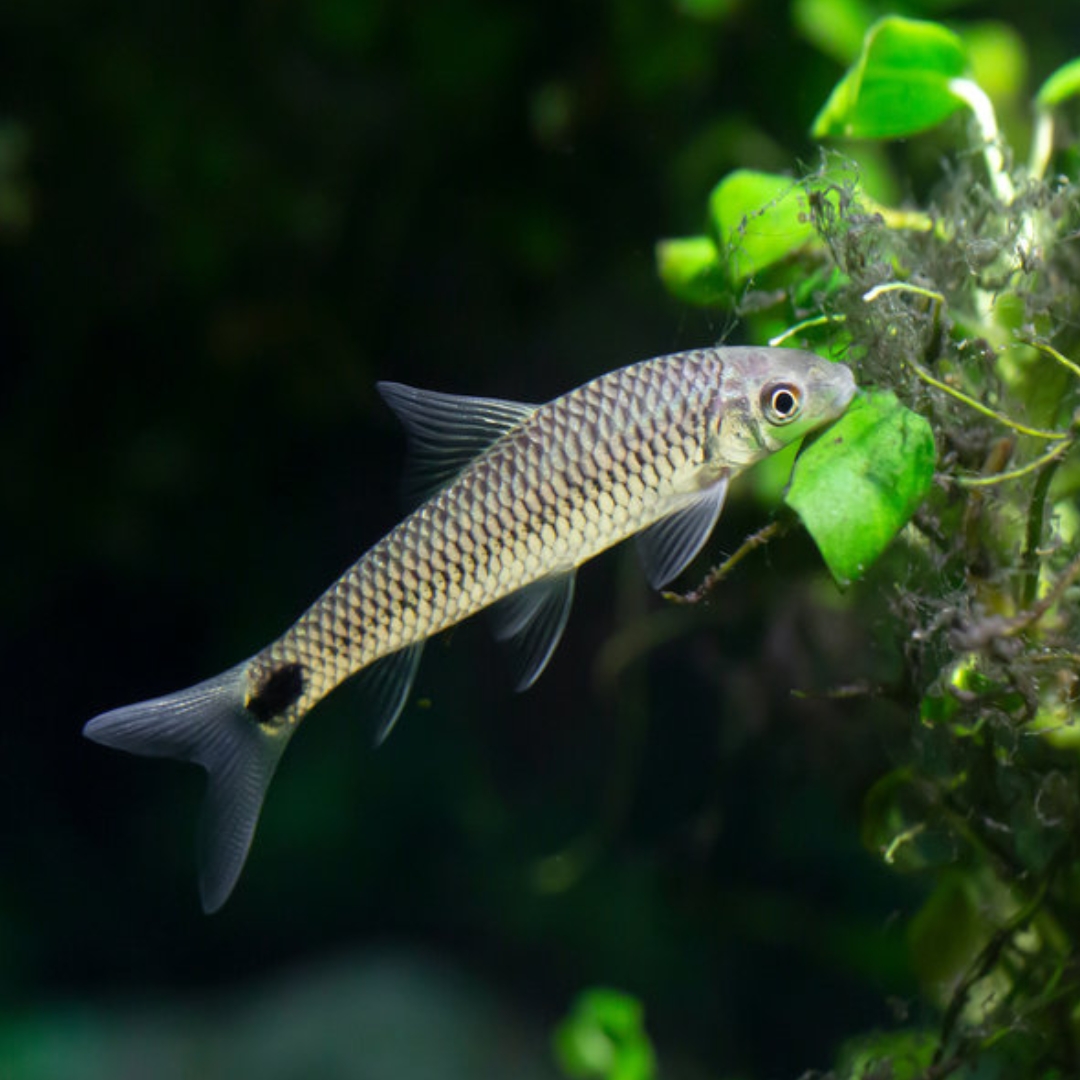
シルバー・フライングフォックスは、東南アジアの河川に分布するコイ科の淡水魚です。銀色から淡いオリーブ色を帯びた体に、鱗の縁が暗く浮かぶ網目模様が入り、尾びれの付け根にははっきりとした黒いスポットが見られます。日本のアクアリウムでは、見た目の渋い美しさに加えて、水草水槽で発生しやすい糸状のコケや黒ひげゴケへの対策候補として注目されています。ただし、成長すると10cmを超える中型魚になり、遊泳力も強いため、小型水槽で気軽に終生飼育する魚ではありません。広めの水槽、強めのろ過、十分な酸素、飛び出し防止を整えることで、本種らしい活発な採餌行動と野性味のある姿を楽しめます。 The Silver Flying Fox is a freshwater cyprinid from river systems in mainland Southeast Asia. It has a silvery to slightly olive body with dark-edged scales that create a reticulated pattern, and a distinct black spot at the base of the caudal fin. In Japanese aquariums, it is valued not only for its subdued beauty but also as a useful candidate for controlling filamentous algae and black beard algae in planted tanks. However, it is a strong-swimming, medium-sized fish that can exceed 10 cm in captivity, so it should not be treated as a casual choice for very small tanks. With a spacious aquarium, good filtration, oxygen-rich water, and secure covers to prevent jumping, this species can show its active grazing behavior and wild, elegant appearance.
基本情報 / Basic Information
| 学名 / Scientific Name | Crossocheilus reticulatus |
|---|---|
| 通称 / Common Name | シルバー・フライングフォックス、シルバーフライングフォックス、フィッシュネット・フライングフォックス、レティキュレーテッド・アルジーイーター、アイスポットアルジイーターSilver Flying Fox, Fishnet Flying Fox, Reticulated Flying Fox, Reticulated Algae Eater, Spot Tail Algae Eater |
| 分類 / Family | コイ目 コイ科 ラベオ亜科 クロッソケイルス属Order Cypriniformes, family Cyprinidae, subfamily Labeoninae, genus Crossocheilus |
| 英名 / English Name | Silver Flying Fox, Fishnet Flying Fox, Reticulated Siamese Algae Eater |
| 分布 / Distribution | 東南アジア大陸部。メコン川流域、チャオプラヤ川流域、メークロン川流域などに分布し、タイ、ラオス、カンボジア、ベトナム、中国南部の雲南省周辺で記録されています。Mainland Southeast Asia. It is recorded from the Mekong, Chao Phraya, and Mae Klong river systems, including Thailand, Laos, Cambodia, Vietnam, and parts of southern China such as Yunnan. |
| 最大体長 / Max Size | 野生下では標準体長約17cm。水槽内では一般に12〜15cm前後を目安に考えるとよいでしょう。Up to about 17 cm standard length in the wild. In aquariums, around 12 to 15 cm is a realistic size to plan for. |
| 寿命 / Lifespan | 飼育環境が安定していれば5年前後が目安です。大型で清浄な水槽を維持できれば、それ以上生きる可能性もあります。Around 5 years is a reasonable guideline under stable aquarium conditions. It may live longer when kept in a large, clean, well-maintained aquarium. |
飼育環境 / Aquarium Environment
| 水槽サイズ / Tank Size | 導入直後の幼魚でも60cm規格水槽以上を推奨します。終生飼育を考える場合は、90cm規格水槽以上、できれば90cmワイド水槽以上の余裕があると安心です。非常によく泳ぐため、30cm以下の小型水槽での長期飼育には向きません。A standard 60 cm aquarium or larger is recommended even for juveniles. For long-term care, a standard 90 cm tank or, ideally, a larger 90 cm wide-style aquarium provides more suitable space. Because it is a very active swimmer, it is not suitable for long-term care in tanks of 30 cm or less. |
|---|---|
| 水温 / Temperature | 22〜27℃を目安にします。高水温にもある程度は耐えますが、夏場は28℃前後を超え続けないように、冷却ファンや水槽用クーラーの使用を検討してください。 Aim for 22 to 27°C. It can tolerate somewhat warmer water, but in summer it is best to prevent the temperature from remaining above around 28°C by using a cooling fan or aquarium chiller when needed. |
| 水質 / Water Quality | 弱酸性から弱アルカリ性まで適応します。目安はpH6.0〜7.5、ややミネラルを含む清浄な水です。硝酸塩や有機物の蓄積には強く依存させず、定期的な換水と十分なろ過で水をきれいに保つことが重要です。It adapts to slightly acidic to slightly alkaline water. A useful range is pH 6.0 to 7.5, with clean water that contains some minerals. Do not rely on its hardiness alone; regular water changes and strong filtration are important to keep nitrate and organic waste low. |
| レイアウト / Layout | 丸みのある石、流木、砂利や砂を使い、東南アジアの流れのある河川を意識したレイアウトが向いています。石や流木の表面は本種がついばむ採餌面になるため、隠れ家と採餌場所を兼ねて複雑に配置するとよいでしょう。水流とエアレーションを確保すると、活発な行動を引き出しやすくなります。A layout inspired by flowing Southeast Asian rivers is suitable, using rounded stones, driftwood, gravel, and sand. Rock and wood surfaces become grazing areas, so arranging them to provide both cover and feeding surfaces is beneficial. Water movement and aeration help bring out its active behavior. |
| 注意点 / Precautions | 最も重要なのは飛び出し防止です。驚いたときや移動直後、照明の急な点灯時に勢いよく跳ねることがあるため、ガラスフタやフランジで隙間をふさぎます。また、成長に伴って同種や近縁種、動きの遅い魚を追い回すことがあるため、将来のサイズと性格の変化を見越して飼育計画を立てる必要があります。The most important precaution is preventing jumping. It may leap when startled, after being moved, or when lights turn on suddenly, so gaps should be covered with glass lids or flanges. It may also chase its own kind, related species, or slow-moving fish as it matures, so its future size and changing temperament must be considered from the start. |
餌と給餌 / Feeding
| 餌の種類 / Diet | 自然下では付着藻類、バイオフィルム、小型の無脊椎動物などをついばむ雑食性です。水槽内では糸状コケや短い黒ひげゴケを食べることがありますが、人工飼料にもよく慣れます。補助的には植物質を含む沈下性タブレット、スピルリナ配合フード、ゆでたホウレンソウやズッキーニなどを与えられます。In nature, it grazes on algae, biofilm, and small invertebrates. In aquariums, it may eat filamentous algae and short black beard algae, but it also readily accepts prepared foods. As supplements, sinking tablets with vegetable matter, spirulina-based foods, blanched spinach, and zucchini can be offered. |
|---|---|
| 給餌のポイント / Feeding Tips | コケ取り能力を期待する場合は、人工飼料を与えすぎないことが大切です。高タンパクな餌を十分に食べると、コケをついばむ意欲が弱まることがあります。水槽内のコケ量、体型、混泳魚の餌の残り具合を見ながら、少量を控えめに与える管理が向いています。If you want it to work as an algae grazer, avoid overfeeding prepared foods. Once it becomes full on rich, protein-heavy foods, it may lose interest in grazing algae. Feed modestly while watching the amount of algae in the tank, the fish’s body condition, and leftover food from tank mates. |
性格と混泳 / Temperament and Tank Mates
| 性格 / Temperament | 幼魚期は比較的温和で、同種同士で緩やかにまとまって行動することがあります。しかし、成長すると行動範囲が広がり、同種間の優劣や縄張り意識が出ることがあります。特に少数だけで飼うと、強い個体が弱い個体を追い続ける場合があるため注意が必要です。Juveniles are relatively peaceful and may move in loose groups. As they grow, their activity range expands and dominance or territorial behavior may appear. When kept in very small numbers, a stronger individual may continuously chase weaker ones, so observation is important. |
|---|---|
| 混泳の相性 / Compatibility | ラスボラ、ダニオ、中型テトラ、レインボーフィッシュなど、遊泳力があり素早く動ける魚とは比較的合わせやすいです。一方で、ベタ、グッピー、ヒレの長い魚、小型で動きの遅い魚との混泳は慎重に判断してください。底ものとの混泳は可能な場合もありますが、隠れ家を多く作り、追い回しがないか観察することが大切です。It is generally easier to combine with active, fast-swimming fishes such as rasboras, danios, medium-sized tetras, and rainbowfish. Caution is needed with bettas, guppies, long-finned fishes, and small slow-moving species. Bottom-dwelling fishes may be possible tank mates, but plenty of cover should be provided and chasing should be monitored. |
病気と対策 / Diseases and Prevention
| かかりやすい病気 / Common Diseases | 本種だけに特有の病気が知られているわけではありませんが、輸入直後や移動直後は白点病、尾ぐされ、スレ傷からの細菌感染、痩せなどに注意します。ワイルド個体が流通することが多いため、導入初期は体表、呼吸、餌食いをよく観察してください。No disease is uniquely associated with this species, but newly imported or recently moved individuals should be watched for white spot disease, fin rot, bacterial infection from abrasions, and weight loss. Because many individuals in the trade are wild-collected, close observation of the skin, breathing, and feeding response is important after introduction. |
|---|---|
| 対策と予防 / Prevention | 購入後は可能であればトリートメント水槽で様子を見てから本水槽へ導入します。急な水温差や水質差を避け、水合わせを丁寧に行うことが大切です。強いろ過、十分な酸素、定期的な換水を維持し、過密飼育や餌の与えすぎによる水質悪化を防ぎます。If possible, observe new fish in a quarantine or treatment tank before adding them to the main aquarium. Avoid sudden differences in temperature and water chemistry, and acclimate carefully. Strong filtration, sufficient oxygen, and regular water changes help prevent problems caused by overcrowding or overfeeding. |
増やし方(繁殖) / Breeding
| 雌雄の判別 / Sexing | 外見での雌雄判別は非常に困難です。成熟したメスは抱卵時に腹部がやや丸く見えることがありますが、幼魚や未成熟個体では判別できないと考えたほうがよいでしょう。Sexing by appearance is very difficult. Mature females may look slightly fuller in the abdomen when gravid, but juveniles and immature individuals should be considered impossible to sex reliably. |
|---|---|
| 繁殖形態 / Reproduction | 卵生です。野生下では季節的な水位変化や雨季の環境変化が産卵のきっかけになると考えられます。家庭用水槽での安定した繁殖例はほとんど知られていません。It is an egg-laying species. In the wild, seasonal changes in water level and rainy-season conditions are thought to act as spawning triggers. Reliable breeding in home aquariums is rarely, if ever, reported. |
| 繁殖のポイント / Breeding Tips | 家庭用水槽で繁殖を狙う魚ではありません。自然下では広い河川環境、増水、流速や水質の変化といった複数の条件が関わると考えられるため、通常の水槽内で再現するのは非常に難しいです。飼育上は「勝手に増えすぎない魚」として捉え、健康維持を優先するのが現実的です。This is not a species normally bred in home aquariums. In nature, broad riverine environments, rising water levels, changes in flow, and shifts in water chemistry may all be involved, making reproduction very difficult to recreate in ordinary tanks. In practice, it is best regarded as a fish that will not overpopulate the aquarium, with health maintenance as the priority. |
雑学と豆知識 / Trivia and Fun Facts
| 1. 網目模様を意味する種小名 / 1. A Species Name That Means Reticulated | 種小名のreticulatusは、ラテン語で「網目状の」「網で覆われたような」という意味を持ちます。本種の体を見ると、銀色の地色の上に鱗の縁が細く暗く浮かび、まるで魚全体に繊細な網をかけたように見えます。派手な赤や青で目を引く魚ではありませんが、この落ち着いた模様こそが、シルバー・フライングフォックスを近縁種と見分ける大きな手がかりになっています。The specific name reticulatus means net-like or reticulated in Latin. When viewed closely, the dark edges of the scales form a fine pattern over the silvery body, as if a delicate net had been laid across the fish. It is not a fish that attracts attention with bright reds or blues, but this subdued pattern is one of the most important clues for distinguishing the Silver Flying Fox from related species. |
|---|---|
| 2. 尾びれの付け根にある黒いスポット / 2. The Black Spot at the Caudal Base | 本種を見分けるうえで特にわかりやすいのが、尾びれの付け根にある黒いスポットです。サイアミーズ・フライングフォックスのように体側を走る黒いラインが目立つ種類とは異なり、シルバー・フライングフォックスでは全身の網目模様と尾筒の黒斑が印象的です。販売水槽で似たコケ取り魚が並んでいるときは、まず体側のラインの有無と尾筒のスポットを確認すると、混同を避けやすくなります。One of the easiest identification points is the black spot at the base of the caudal fin. Unlike the Siamese Algae Eater, which has a bold dark stripe along the side of the body, the Silver Flying Fox is characterized by its reticulated body pattern and the distinct caudal-base blotch. When similar algae-eating fishes are displayed together in shops, checking the side stripe and the tail-base spot is a practical way to avoid confusion. |
| 3. 「フライングフォックス」という不思議な名前 / 3. The Curious Name Flying Fox | フライングフォックスという名前は、本来はオオコウモリを指す英名としても知られています。魚である本種になぜその名が使われるのかについては、尖った吻端や黒い瞳がキツネの顔つきを思わせるため、あるいは流線型の体で水中を勢いよく進む姿が飛ぶように見えたためなど、いくつかの解釈があります。実際に空を飛ぶわけではありませんが、アクアリウムの世界では、この少し物語性のある名前が本種の印象を強めています。The name Flying Fox is also known as a common name for large fruit bats. Why this name was applied to a fish is not completely clear, but possible explanations include its pointed snout and dark eyes, which may suggest a fox-like face, or its streamlined body and fast movement through the water, which can look almost like flight. It does not fly, of course, but the slightly story-like name gives the fish a memorable presence in the aquarium hobby. |
| 4. コケ取り魚としての強みと限界 / 4. Strengths and Limits as an Algae Eater | シルバー・フライングフォックスは、糸状コケや短い黒ひげゴケをついばむ魚として知られています。ただし、すべてのコケを均等に処理する万能の掃除屋ではありません。ガラス面に固く付くスポット状のコケや、藍藻のように魚が好みにくいものには大きな効果を期待しにくいです。本種を導入する場合も、照明時間、栄養塩、水流、換水といった水槽全体の管理を整えることが、コケ対策の土台になります。The Silver Flying Fox is known for grazing on filamentous algae and short black beard algae. However, it is not a universal cleaner that handles every type of algae equally. Hard green spot algae on glass and cyanobacteria-like growths are not usually problems that can be solved by this fish alone. Even when this species is introduced, the foundation of algae control remains balanced lighting, nutrients, water movement, and regular maintenance. |
| 5. 原産地では生活に近い魚 / 5. A Fish Connected to Local Life | 日本では水草水槽のコケ取り魚として語られることが多い本種ですが、原産地の東南アジアでは、河川で漁獲される小型から中型のコイ科魚の一つとして、人々の生活に近い存在でもあります。メコン川流域の魚たちは、観賞魚としてだけでなく、地域の食文化や栄養を支える資源としても重要です。水槽の中で流木をついばむ姿の背景には、広い河川と季節の水位変化のなかで暮らしてきた野生魚としての歴史があります。In Japan, this species is often discussed as an algae eater for planted aquariums, but in its native Southeast Asia it is also one of the small to medium-sized cyprinids caught from rivers and connected to local daily life. Fishes of the Mekong basin are important not only as aquarium fishes but also as resources that support food culture and nutrition. Behind the sight of this fish grazing on driftwood in an aquarium is a history shaped by broad rivers and seasonal changes in water level. |
まとめ / Conclusion
シルバー・フライングフォックスは、銀色の網目模様と尾筒の黒斑が美しい、東南アジア産のコイ科魚です。水草水槽では糸状コケや黒ひげゴケへの対策候補として頼りになる場面があり、見た目の派手さよりも実用性と野性味を楽しむ魚といえます。 The Silver Flying Fox is a Southeast Asian cyprinid with a beautiful silvery reticulated pattern and a black caudal-base spot. In planted aquariums, it can be a useful candidate for controlling filamentous algae and black beard algae, and it is best appreciated for its practical value and wild character rather than flashy coloration.
一方で、成長すると中型魚になり、遊泳力や飛び出しの力も強くなります。小型水槽の一時的な掃除役としてではなく、60cm規格水槽以上、将来的には90cm規格水槽以上も視野に入れた計画的な飼育が大切です。十分な水量、清浄な水、強めの水流、適切な混泳相手を用意できれば、シルバー・フライングフォックスは水槽の景観を支えながら、長く観察して楽しい存在になってくれます。 At the same time, it becomes a medium-sized fish as it matures, with strong swimming ability and a real risk of jumping. It should not be treated merely as a temporary cleaner for a small tank; planned care in at least a standard 60 cm aquarium, and eventually a 90 cm aquarium or larger, is recommended. With sufficient water volume, clean water, strong flow, and suitable tank mates, the Silver Flying Fox can support the appearance of the aquarium while remaining a fascinating fish to observe over the long term.

気になる道具や飼い方を見つけてみませんか?
 アイのアクアグッズ案内海水魚初心者の必需品|水槽・人工海水・比重計・水質検査道具の特徴や使い方、選ぶときのポイントをアイが紹介します。記事はコチラ →
 アイのアクアグッズ案内アフリカンシクリッドの飼育用品|水槽・ろ過・底砂・岩組み・餌の選び方道具の特徴や使い方、選ぶときのポイントをアイが紹介します。記事はコチラ →
さまざまな飼育テーマをご紹介。リンク先の記事には広告・商品紹介が含まれます。
案内・紹介記事一覧へ →▶ 記事の生体をAMAZONで買う ▶ 記事の生体をYahooで買う
参考文献・参照資料
この記事では、シルバー・フライングフォックスの分類、分布、生態、最大体長、飼育環境に関する記述を確認するため、以下の資料を参照しました。
-
Froese, R. and D. Pauly. Editors. FishBase. Crossocheilus reticulatus summary page. 分布、生息環境、食性、最大体長、IUCN評価の確認に参照。
https://www.fishbase.se/summary/SpeciesSummary.php?id=27162 -
Fricke, R., Eschmeyer, W. N. and van der Laan, R. Eschmeyer’s Catalog of Fishes. Holotylognathus reticulatus / Crossocheilus reticulatus. 原記載、タイプ産地、現在有効な学名の確認に参照。
https://researcharchive.calacademy.org/research/ichthyology/catalog/fishcatget.asp?spid=3488 -
Seriously Fish. Crossocheilus reticulatus species profile. 飼育環境、レイアウト、水流、混泳傾向、近縁種との識別に関する補助資料として参照。
https://www.seriouslyfish.com/species/crossocheilus-reticulatus/ -
Rainboth, W. J. 1996. Fishes of the Cambodian Mekong. FAO Species Identification Field Guide for Fishery Purposes. カンボジア・メコン流域における分布、識別、生態的背景の確認に参照。
https://www.fao.org/4/v8731e/v8731e.htm -
Mekong River Commission. Photos of Common Fishes in the Lower Mekong Basin. Lower Mekong Basinにおける掲載種、現地名、最大体長の確認に参照。
https://www.mrcmekong.org/wp-content/uploads/2024/08/Photos-of-Common-Fishes-in-the-Lower-Mekong-River-Basin.pdf -
Ciccotto, P. J. and Page, L. M. 2017. Revision of the Cyprinid Genus Crossocheilus with Description of a New Species. Copeia. 属レベルの分類、形態的特徴、付着藻類を利用する食性の背景確認に参照。
https://bioone.org/journals/copeia/volume-105/issue-2/CI-16-538/Revision-of-the-Cyprinid-Genus-Crossocheilus-Tribe-Labeonini-with-Description/10.1643/CI-16-538.short -
IUCN Red List / GBIF taxon record. Crossocheilus reticulatus. 保全状況と分類情報の補助確認に参照。
https://www.gbif.org/species/176716540
店舗、通販、販売ページは参考文献から除外しています。




コメント