

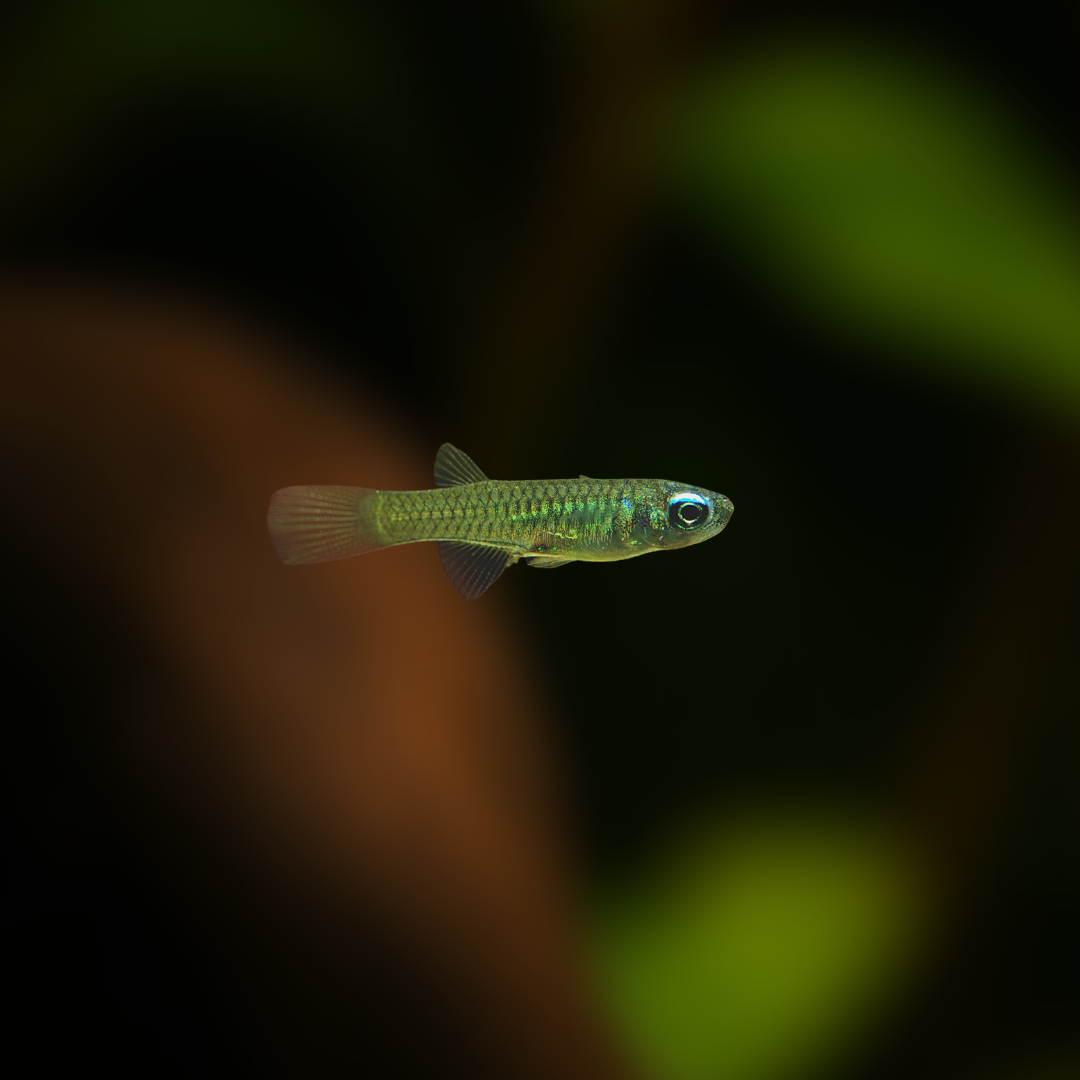
解説 / Description
アフリカンランプアイは、西アフリカから中央アフリカにかけて広く分布する小型の淡水魚です。成魚でも数cmほどに収まる控えめな体つきながら、群れで泳いだときに眼の上部が青白くきらめく姿は、水草水槽の中で小さな灯りが揺れるような美しさがあります。性格は温和で混泳にも向きますが、導入直後の水質変化や輸送疲れにはやや繊細です。状態のよい個体を選び、点滴法でゆっくり水合わせを行い、清浄で安定した環境を整えることで、本種らしい群泳と輝きを長く楽しめます。 The African lampeye is a small freshwater fish widely distributed from West Africa to Central Africa. Although its body remains only a few centimeters long, a school of these fish creates a beautiful scene in a planted aquarium, as the upper part of each eye flashes with a cool blue-white sheen like tiny moving lamps. It is peaceful and suitable for community aquariums, but it can be somewhat delicate immediately after transport or when exposed to sudden changes in water conditions. Choosing healthy individuals, acclimating them slowly by the drip method, and maintaining clean, stable water allow this species to show its natural schooling behavior and eye shine for a long time.
基本情報 / Basic Information
| 学名 / Scientific Name | Poropanchax normani (Ahl, 1928) |
|---|---|
| 通称 / Common Name | アフリカンランプアイ、ノーマンズ・ランプアイ、ランプアイAfrican lampeye, Norman’s lampeye, lampeye |
| 分類 / Family | カダヤシ目・プロカトパス科・プロカトパス亜科・ポロパンチャックス属Order Cyprinodontiformes, family Procatopodidae, subfamily Procatopodinae, genus Poropanchax |
| 英名 / English Name | Norman’s lampeye, African lampeye |
| 分布 / Distribution | アフリカ大陸の広い範囲に分布し、セネガル、ガンビア、ギニア、シエラレオネ、リベリア、マリ、ブルキナファソ、コートジボワール、ガーナ、ニジェール、ナイジェリア、カメルーン、チャド、ベナン、トーゴ、中央アフリカ共和国、スーダンの白ナイル川流域などから記録されています。主に水草や岸辺の植生がある小河川、小川、湿地周辺で見られます。It is widely distributed across Africa and has been recorded from Senegal, Gambia, Guinea, Sierra Leone, Liberia, Mali, Burkina Faso, Côte d’Ivoire, Ghana, Niger, Nigeria, Cameroon, Chad, Benin, Togo, the Central African Republic, and the White Nile basin in Sudan. It is mainly found in or near vegetated small rivers, brooks, and swamps. |
| 最大体長 / Max Size | オスまたは性別不明個体で最大約4.5cm、メスで約4.0cmとされます。水槽内や一般流通個体では2.5〜3.8cm程度で見られることが多いです。The maximum recorded size is about 4.5 cm total length for male or unsexed individuals and about 4.0 cm for females. In aquariums and commercial stock, individuals are often seen at around 2.5–3.8 cm. |
| 寿命 / Lifespan | 飼育下ではおおむね2〜4年ほどが目安で、状態のよい環境ではそれ以上を期待できることもあります。導入初期のストレスを避け、安定した水質を維持することが長期飼育の要点です。In aquariums, a general guideline is about 2–4 years, and longer life may be possible under excellent conditions. Avoiding stress during introduction and maintaining stable water quality are key points for long-term care. |
飼育環境 / Aquarium Environment
| 水槽サイズ / Tank Size | 少数を一時的に管理するだけなら30cm規格水槽でも可能ですが、群泳行動と水質の安定を考えると45cm規格水槽以上を推奨します。15〜20匹以上で本来の群泳を楽しむなら60cm規格水槽が扱いやすいです。少数では怯えやすいため、最低でも6匹前後、できれば10匹以上での飼育が向いています。A 30 cm standard aquarium can be used for temporary or very small groups, but a 45 cm standard aquarium or larger is recommended for schooling behavior and stable water quality. For a group of 15–20 or more, a 60 cm standard aquarium is easier to manage. Very small groups may become shy, so around six fish is a practical minimum, and ten or more is preferable. |
|---|---|
| 水温 / Temperature | 22〜26℃前後を中心に管理すると安定しやすく、広めに見れば20〜28℃程度で飼育されます。高水温では酸欠と体力消耗が起こりやすく、急な低温や温度変化は白点病などの引き金になることがあります。 Management is usually most stable around 22–26°C, with a broader practical range of about 20–28°C. High temperatures increase the risk of oxygen deficiency and exhaustion, while sudden drops or fluctuations may trigger diseases such as white spot disease. |
| 水質 / Water Quality | 弱酸性から中性付近、pH6.5〜7.5前後を目安にします。極端な高硬度や急激なpH変化は避け、ろ過が安定した水槽で飼育してください。硝酸塩が蓄積した古い水は苦手なため、週1回を目安に1/4〜1/3程度の換水を行うと安定します。Slightly acidic to neutral water, roughly pH 6.5–7.5, is a good guideline. Avoid extreme hardness and sudden pH shifts, and keep them in an aquarium with mature filtration. They do not do well in old water with accumulated nitrate, so weekly water changes of about one-quarter to one-third are helpful. |
| レイアウト / Layout | 暗色のソイルや細かい底砂を敷き、後景には有茎草やミクロソリウムなどの隠れ場所、前面には遊泳スペースを確保するとよく映えます。浮草で照明を少し和らげると落ち着きやすく、青い眼の反射も見やすくなります。ヤシャブシの実やマジックリーフでごく薄いブラックウォーター寄りにする方法もありますが、急な水質変化を避けながら少量から試すのが安全です。水流は穏やかにし、スポンジフィルターや吐出口を調整した外部式フィルターが向いています。A dark substrate, dense background plants such as stem plants or Java fern, and open swimming space in the front show this fish well. Floating plants can soften the light, help the fish feel secure, and make the blue eye reflection easier to see. Alder cones or Indian almond leaves can be used to create a very mild blackwater tone, but they should be introduced gradually to avoid sudden water changes. Gentle water movement is best, and sponge filters or adjusted canister filter outlets are suitable. |
| 注意点 / Precautions | 跳ね出しを防ぐため、フタや隙間対策を行ってください。導入時は輸送疲れと水質差に弱いため、購入後は点滴法で1〜2時間ほどかけて慎重に水合わせをします。入荷直後の個体は不安定なことがあるため、可能であれば入荷から少し時間が経ち、群れで元気に泳ぎ、痩せやヒレ閉じがない個体を選ぶと安心です。本水槽に入れる前に別容器でトリートメント期間を設けると、病原体の持ち込みリスクを下げられます。Use a lid or cover gaps to prevent jumping. At introduction, they are sensitive to transport stress and water differences, so drip acclimation over about 1–2 hours is recommended. Newly arrived fish can be unstable, so if possible choose individuals that have settled for a while at the shop, are schooling actively, and show no emaciation or clamped fins. A quarantine period before adding them to the main aquarium reduces the risk of introducing pathogens. |
餌と給餌 / Feeding
| 餌の種類 / Diet | 自然下では水面付近の小さな昆虫、ボウフラ、動物プランクトンなどを食べるマイクロプレデター的な雑食性です。飼育下では極小粒の浮上性フード、細かく砕いたフレーク、ゆっくり沈むマイクロペレットが適します。冷凍ベビーブラインシュリンプ、ミジンコ、細かく刻んだ冷凍アカムシなどを補助的に与えると、体格維持や繁殖コンディションの向上に役立ちます。In nature, it is a micro-predatory omnivore that feeds on tiny insects near the water surface, mosquito larvae, and zooplankton. In aquariums, very fine floating foods, crushed flakes, and slowly sinking micro-pellets are suitable. Frozen baby brine shrimp, daphnia, and finely chopped frozen bloodworms can be offered as supplementary foods to support body condition and breeding readiness. |
|---|---|
| 給餌のポイント / Feeding Tips | 口が小さく上向きについているため、水面付近で食べやすい細かな餌を選びます。食べ残しによる水質悪化に弱い一方、餌が不足すると痩せやすい魚でもあります。1日1〜2回、数分で食べ切れる量を与え、群れ全体に餌が行き渡っているか確認してください。動きの速い魚と混泳している場合は、アフリカンランプアイが餌を取れているか特に観察します。Because the mouth is small and upturned, use tiny foods that remain near the surface. The species is vulnerable to water deterioration from leftovers, but it can also become thin if underfed. Feed once or twice daily only what can be eaten within a few minutes, and check that the whole school is feeding. If kept with faster fish, pay particular attention to whether the lampeyes are getting enough food. |
性格と混泳 / Temperament and Tank Mates
| 性格 / Temperament | 非常に温和で、他魚を攻撃することはほとんどありません。単独や少数では臆病になり、物陰に隠れやすくなりますが、十分な数で群れを作ると落ち着いて水面から中層を泳ぎます。オス同士がヒレを広げて見せ合うことはありますが、激しい争いに発展することは少ないです。It is very peaceful and rarely attacks other fish. When kept singly or in very small numbers, it may become shy and hide, but in a proper group it swims calmly from the surface to the midwater. Males may display by spreading their fins, but serious fighting is uncommon. |
|---|---|
| 混泳の相性 / Compatibility | ネオンテトラなどの小型カラシン、ラスボラ類、ピグミー系コリドラス、オトシンクルス、ヤマトヌマエビ、ミナミヌマエビやチェリーシュリンプなどと相性が良いです。ただし、稚エビは捕食される可能性があります。エンゼルフィッシュや大型シクリッドなど、口に入るサイズの魚にとっては捕食対象になりやすいため避けます。また、ゼブラダニオのように水面付近で餌を素早く奪う魚とは、給餌競争で不利になる場合があります。Good companions include small characins such as neon tetras, rasboras, pygmy Corydoras, Otocinclus, Amano shrimp, Neocaridina shrimp, and cherry shrimp, though very young shrimp may be eaten. Avoid angelfish, larger cichlids, and any fish large enough to swallow them. Very fast surface feeders such as zebra danios may outcompete them at feeding time. |
病気と対策 / Diseases and Prevention
| かかりやすい病気 / Common Diseases | 導入直後はコショウ病、白点病、カラムナリス症による尾腐れ病や口腐れ病に注意が必要です。体表に細かな黄白色の粉をまぶしたように見える、体をこすりつける、呼吸が荒い、ヒレをたたむ、群れから離れてふらつく、体色が黒ずむといった症状は早期対応のサインです。また、過去には日本へ輸入されたアフリカンランプアイとドワーフグラミーでイリドウイルス感染が報告されており、ウイルス性疾患は一般的な観賞魚薬では治療が難しいため、予防と検疫が重要です。After introduction, watch for velvet disease, white spot disease, and columnaris infections such as fin rot or mouth rot. Warning signs include a fine yellowish-white dusting on the body, rubbing against objects, rapid breathing, clamped fins, leaving the school, unsteady swimming, or darkened body color. Iridovirus infection has also been reported in African lampeyes and dwarf gouramis imported into Japan, and viral diseases are difficult to treat with ordinary aquarium medications, making prevention and quarantine important. |
|---|---|
| 対策と予防 / Prevention | 最も大切なのは、購入時に痩せた個体やヒレをたたんだ個体を避け、導入前にトリートメント期間を設けることです。コショウ病や白点病では、急激ではなく段階的に水温をやや高め、魚の状態を見ながらメチレンブルー系やマラカイトグリーン系の薬浴を検討します。小型魚で薬に敏感な場合があるため、薬剤は説明書を確認しつつ慎重に使用します。カラムナリス症が疑われる場合は進行が速いため隔離し、抗菌剤による薬浴を行います。日常的には過密を避け、食べ残しを出さず、定期換水でアンモニア、亜硝酸、硝酸塩の蓄積を抑えることが最大の予防になります。The most important prevention is to avoid thin or clamped individuals at purchase and quarantine them before introduction. For velvet or white spot disease, gradually raise the temperature moderately rather than abruptly, and consider treatment with methylene-blue- or malachite-green-based medications while observing the fish closely. Because small fish may be sensitive to medication, use products carefully and follow their instructions. If columnaris is suspected, isolate affected fish promptly and treat with an antibacterial medication. In daily care, avoiding overcrowding, preventing leftovers, and controlling ammonia, nitrite, and nitrate through regular water changes are the strongest preventive measures. |
増やし方(繁殖) / Breeding
| 雌雄の判別 / Sexing | オスはメスよりヒレが大きく伸び、背ビレ、尻ビレ、腹ビレに淡い黄色や赤み、オレンジ、紫がかった色味が出ることがあります。メスは全体的に丸みがあり、ヒレは短く透明感が強く、抱卵すると腹部がふっくらします。若魚では判別が難しいため、成熟してから体型とヒレの伸びを見比べると分かりやすくなります。Males have larger, more extended fins, and the dorsal, anal, and pelvic fins may show pale yellow, reddish, orange, or violet tones. Females are rounder, with shorter, clearer fins, and the abdomen becomes fuller when carrying eggs. Sexing juveniles can be difficult, so comparing body shape and fin extension after maturity is easier. |
|---|---|
| 繁殖形態 / Reproduction | 卵生で、乾季に卵を休眠させる年魚ではなく、年間を通じて水のある環境に適応した非年魚タイプです。水草の茂みや産卵モップに、粘着糸を持つ卵を少しずつ産みつけます。一度に大量産卵するよりも、成熟したメスが数個から十数個程度の卵を継続的に産むタイプです。水温にもよりますが、卵はおおむね10〜14日ほどで孵化するとされます。It is an egg-laying, non-seasonal killifish adapted to permanent waters rather than a species whose eggs undergo dry-season dormancy. Females deposit small numbers of adhesive eggs among fine plants or spawning mops. Rather than laying a large batch at once, mature females continue producing a few to a dozen or so eggs at a time. Depending on temperature, the eggs generally hatch in about 10–14 days. |
| 繁殖のポイント / Breeding Tips | ウィローモスや細かな水草、または毛糸の産卵モップを用意すると採卵しやすくなります。親魚による食卵は比較的強くないとされますが、孵化直後の稚魚は食べられる可能性があるため、産卵床ごと隔離容器へ移すと歩留まりが上がります。白濁した卵は水カビの原因になるためスポイトで取り除きます。稚魚は非常に小さく、孵化直後はブラインシュリンプ幼生でも大きすぎる場合があるため、最初はゾウリムシなどのインフゾリアを与え、成長に合わせてブラインシュリンプ幼生や微粉末飼料へ移行します。Java moss, fine-leaved plants, or yarn spawning mops make egg collection easier. Although egg eating is not considered especially severe, newly hatched fry may be eaten, so moving the spawning medium to a separate container improves survival. Remove white, infertile, or dead eggs with a pipette to prevent fungus. The fry are extremely small, and newly hatched brine shrimp may be too large at first, so start with infusoria such as paramecia, then move to brine shrimp nauplii and powdered fry food as the fry grow. |
雑学と豆知識 / Trivia and Fun Facts
| 1. 名前に残された魚類学者への敬意 / 1. A name honoring an ichthyologist | 種小名のnormaniは、魚類学者ジョン・ロクスボロ・ノーマンにちなむ献名として扱われます。本種は1928年にアールによって記載され、かつてはAplocheilichthys normaniの名で広く知られていました。現在はPoropanchax normaniが有効な学名として扱われています。水槽の中で何気なく泳いでいる数cmの魚にも、分類学の歴史と研究者たちの積み重ねが静かに刻まれているのです。The specific name normani is treated as an honorific name for the ichthyologist John Roxborough Norman. The species was described by Ahl in 1928 and was once widely known as Aplocheilichthys normani. Today, Poropanchax normani is treated as the valid scientific name. Even a fish only a few centimeters long carries a quiet record of taxonomic history and the accumulated work of researchers. |
|---|---|
| 2. 青い眼は発光ではなく反射の魅力 / 2. The blue eyes are reflection, not true light emission | アフリカンランプアイの眼は、自ら光を出している生物発光ではありません。眼の上部が照明や自然光を受けて青白く反射することで、私たちには光っているように見えます。魚類ではグアニン結晶を含む反射性の細胞が金属光沢や青い構造色に関わることが知られており、本種の輝きもそのような反射構造によるものと考えられます。水槽で見える青い輝きは、自ら発する光ではなく、周囲の光の反射によるものです。暗色の底床や少し落ち着いた照明で本種がよく映えるのも、この反射のコントラストが強くなるためです。The eyes of the African lampeye do not emit light through true bioluminescence. The upper part of the eye reflects aquarium lighting or natural light, making it appear to glow blue-white. In fishes, reflective cells containing guanine crystals are known to contribute to metallic sheen and blue structural colors, and this species’ eye shine is considered to be based on such reflective structures. The blue shine visible in the aquarium comes from reflected light, not from light produced by the fish. A dark substrate and subdued lighting enhance this contrast and make the fish look especially attractive. |
| 3. 目立たない体色だからこそ群れが美しい / 3. A subtle body makes the school more beautiful | 本種はネオンテトラのように体全体が鮮烈に発色する魚ではありません。半透明から淡いオリーブ色、銀灰色を帯びる控えめな体色だからこそ、群れ全体が水草の間を流れると、水景の奥行きや空気感を壊さずに引き立てます。日本の水草水槽で長く愛されてきた理由も、主役を奪う派手さではなく、景色の中に自然に溶け込みながら青い点光を散らすような美しさにあります。多数で泳がせるほど、この魚の魅力は個体の色ではなく群れのリズムとして現れます。This species does not display vivid body color over the whole body like a neon tetra. Precisely because its body is translucent to pale olive or silvery gray, a school moving among plants enhances the depth and atmosphere of an aquascape without overwhelming it. This is one reason it has long been loved in Japanese planted aquariums: it blends naturally into the scenery while scattering tiny blue points of light. The more individuals are kept together, the more its charm appears not as the color of a single fish, but as the rhythm of a school. |
| 4. 非年魚という暮らし方 / 4. Life as a non-seasonal killifish | キリフィッシュの仲間には、乾季に水たまりが干上がる環境へ適応し、卵だけが休眠して次の雨季を待つ年魚がいます。一方、アフリカンランプアイはそのような年魚ではなく、小川や湿地のように水が比較的保たれる場所で世代をつなぐ魚です。そのため繁殖も、一度に大量の卵を残すというより、状態が整うと水草や産卵床へ少しずつ産み続ける形になります。この生活史を理解すると、繁殖水槽にモスや産卵モップを入れて継続的に採卵する方法が理にかなっていることが分かります。Among killifishes, some annual species are adapted to temporary pools that dry during the dry season, with only their dormant eggs surviving until the next rains. The African lampeye is not such an annual species; it lives in habitats such as brooks and swamps where water is relatively persistent. Its breeding style therefore tends to involve laying small numbers of eggs repeatedly among plants or spawning media when conditions are favorable. Understanding this life history makes it clear why using moss or spawning mops for continuous egg collection works well. |
| 5. 流通のしやすさと検疫の大切さ / 5. Availability and the importance of quarantine | アフリカンランプアイは日本でも入手しやすい定番種ですが、入手しやすさは「どんな個体でもすぐに安全」という意味ではありません。過去には、東南アジアで養殖されシンガポール経由で日本に輸入された個体からイリドウイルス感染が確認された報告があります。これは過度に恐れるための話ではなく、輸入魚には長距離輸送、集積、問屋や小売店でのストックという複数のストレス段階があることを思い出させてくれます。元気に群れ、痩せがなく、呼吸が落ち着いた個体を選び、可能なら検疫してから本水槽へ入れる。この地味な手順こそ、青い灯りのような群泳を長く楽しむための最も確実な近道です。The African lampeye is a readily available staple species in Japan, but availability does not mean that every individual is immediately safe to introduce. Past reports confirmed iridovirus infection in individuals cultured in Southeast Asia and imported into Japan via Singapore. This is not a reason for excessive fear, but it reminds us that imported fish may experience several stress stages, including long-distance transport, consolidation, wholesale holding, and retail holding. Choosing fish that school actively, are not thin, and breathe calmly, then quarantining them when possible, is the most reliable path to enjoying their blue-lamp-like schooling for a long time. |
まとめ / Conclusion
アフリカンランプアイは、温和で小型、そして水草水槽によく似合う美しい群泳魚です。青く輝く眼は生物発光ではなく、外部の光を反射して見える特徴として理解すると、照明、底床、背景の作り方で見え方が大きく変わる理由も分かりやすくなります。飼育そのものは極端に難しい魚ではありませんが、導入時の急な水質変化、輸送疲れ、過密、水質悪化には弱いため、購入時の個体選びと丁寧な水合わせがとても重要です。 The African lampeye is a peaceful, small, and beautiful schooling fish that suits planted aquariums exceptionally well. Its blue eyes are best understood not as true light emission, but as a reflective feature, which explains why lighting, substrate, and background strongly affect how it appears. It is not an extremely difficult species to keep, but it is vulnerable to sudden water changes, transport stress, overcrowding, and deteriorating water quality, so careful selection and gentle acclimation are very important.
暗色の底床、やや落ち着いた照明、浮草や水草の茂み、穏やかな水流を用意すれば、この魚の魅力はぐっと引き立ちます。6匹前後から飼育できますが、できれば10匹以上、60cm規格水槽では15匹以上の群れにすると、青い点光が水景の中を流れるような姿を楽しめます。繁殖に挑戦する場合は、産卵モップやウィローモスを使い、孵化後のインフゾリア給餌まで準備すると成功率が高まります。小さな体に分類、進化、生態、流通、飼育技術の物語を秘めた、長く付き合うほど味わい深い熱帯魚です。 A dark substrate, subdued lighting, floating plants, dense vegetation, and gentle water movement bring out its best qualities. It can be kept from around six individuals, but ten or more is better, and a group of fifteen or more in a 60 cm standard aquarium shows the most natural effect, as tiny blue points seem to flow through the aquascape. For breeding, spawning mops or Java moss are useful, and success improves greatly when infusoria feeding for newly hatched fry is prepared. Within its small body, this fish carries stories of taxonomy, evolution, ecology, distribution, and aquarium technique, making it more rewarding the longer you keep it.

気になる道具や飼い方を見つけてみませんか?
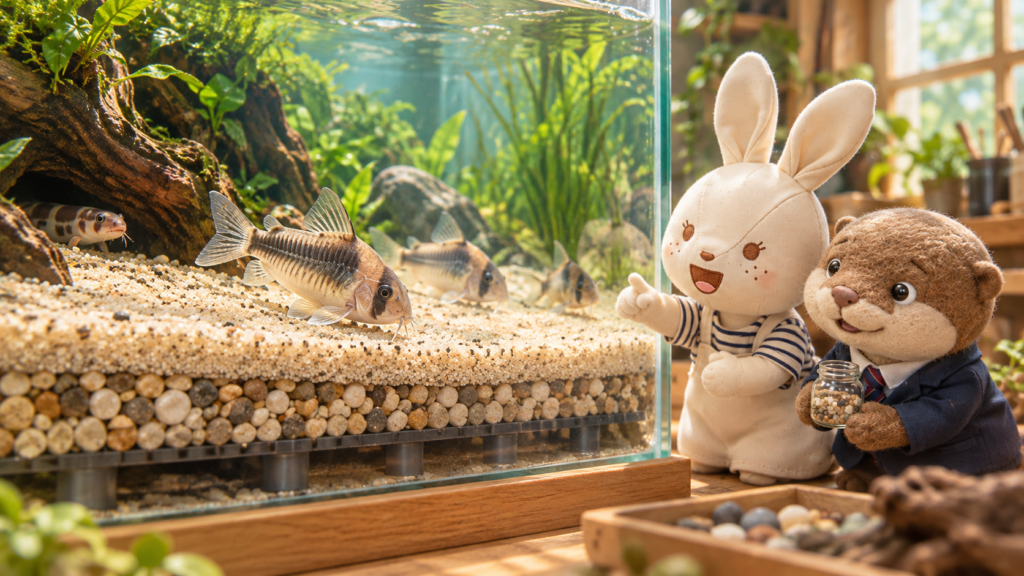 アイのアクアグッズ案内水槽の底砂の選び方|砂・砂利の違いとおすすめ商品道具の特徴や使い方、選ぶときのポイントをアイが紹介します。記事はコチラ →
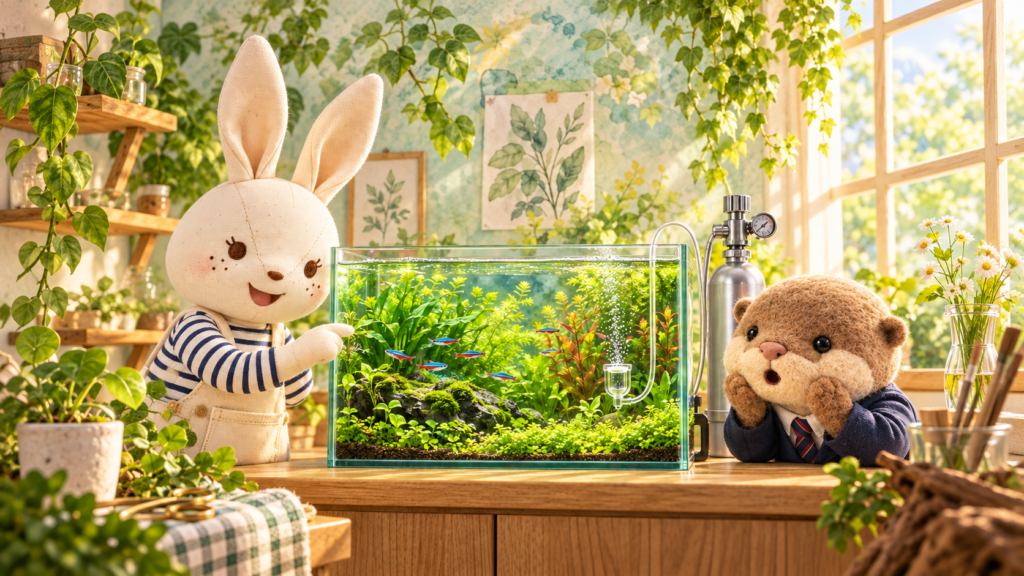 アイのアクアグッズ案内水草水槽のCO₂添加|3つの方式の選び方とおすすめ用品道具の特徴や使い方、選ぶときのポイントをアイが紹介します。記事はコチラ →
さまざまな飼育テーマをご紹介。リンク先の記事には広告・商品紹介が含まれます。
案内・紹介記事一覧へ →参考文献・参照データ
本記事では、店舗・販売ページを除外し、分類、分布、形態、繁殖、疾病、進化背景の確認に有用な学術データベース、論文、非店舗系の魚類情報を参照しました。
1. Froese, R. and Pauly, D. Editors. FishBase. Poropanchax normani, Norman’s lampeye.
https://www.fishbase.se/summary/Poropanchax-normani
分類、分布、生息環境、最大体長、非年魚であること、水質範囲など、記事全体の基礎情報確認に使用。
2. Eschmeyer’s Catalog of Fishes. Poropanchax normani (Ahl, 1928).
https://researcharchive.calacademy.org/research/ichthyology/catalog/fishcatget.asp?spid=13621
現在の有効学名、原記載者、分類上の位置づけ、シノニム整理の確認に使用。
3. Scharpf, C. and Lazara, K. J. The ETYFish Project. Order Cyprinodontiformes: Families Poeciliidae, Anablepidae, Valenciidae, Aphaniidae and Procatopodidae.
https://etyfish.org/cyprinodontiformes4/
種小名normaniの由来、ジョン・ロクスボロ・ノーマンへの献名に関する確認に使用。
4. Kim, D. H. 2022. Light and electron microscopic morphology of the fertilized egg and fertilized egg envelope of Poropanchax normani, Poeciliidae, Teleostei. Applied Microscopy 52, Article 31.
https://link.springer.com/article/10.1186/s42649-022-00075-0
卵が球形の沈性卵であること、粘着糸を持つことなど、繁殖・卵の形態に関する記述の確認に使用。
5. Sudthongkong, C., Miyata, M., and Miyazaki, T. 2002. Iridovirus disease in two ornamental tropical freshwater fishes: African lampeye and dwarf gourami. Diseases of Aquatic Organisms 48: 163-173.
https://pubmed.ncbi.nlm.nih.gov/12033703/
輸入観賞魚におけるイリドウイルス感染、アフリカンランプアイとドワーフグラミーの疾病リスクに関する記述の確認に使用。
6. Bragança, P. H. N. and Costa, W. J. E. M. 2019. Multigene fossil-calibrated analysis of the African lampeyes (Cyprinodontoidei: Procatopodidae) reveals an early Oligocene origin and Neogene diversification driven by palaeogeographic and palaeoclimatic events. Organisms Diversity & Evolution 19: 1-18.
https://www.gfbs-home.de/fileadmin/user_upload/ode2mods/ode/ode19/ode19_0396/article.pdf
アフリカ産ランプアイ類、プロカトパス科の進化的背景、古地理・古気候イベントとの関連を述べる際の補助資料として使用。
7. Van der Zee, J. R., Bernotas, K., Bragança, P. H. N., and Stiassny, M. L. J. 2019. An Unexpected New Poropanchax (Cyprinodontiformes, Procatopodidae) from the Kongo Central Province, Democratic Republic of Congo. American Museum Novitates 3941: 1-14.
https://bioone.org/journals/american-museum-novitates/volume-2019/issue-3941/3941.1/An-Unexpected-New-Poropanchax-Cyprinodontiformes-Procatopodidae-from-the-Kongo-Central/10.1206/3941.1.full
Poropanchax属の分類学的文脈、コンゴ地域を含むアフリカ産プロカトパス科魚類の理解を補強する資料として使用。
8. Fishipedia. Poropanchax normani (ex. Aplocheilichthys).
https://www.fishi-pedia.com/fishes/poropanchax-normani
群泳性、水面から中層を利用する行動、温和な性質、食性など、飼育解説部分の補助確認に使用。




コメント