

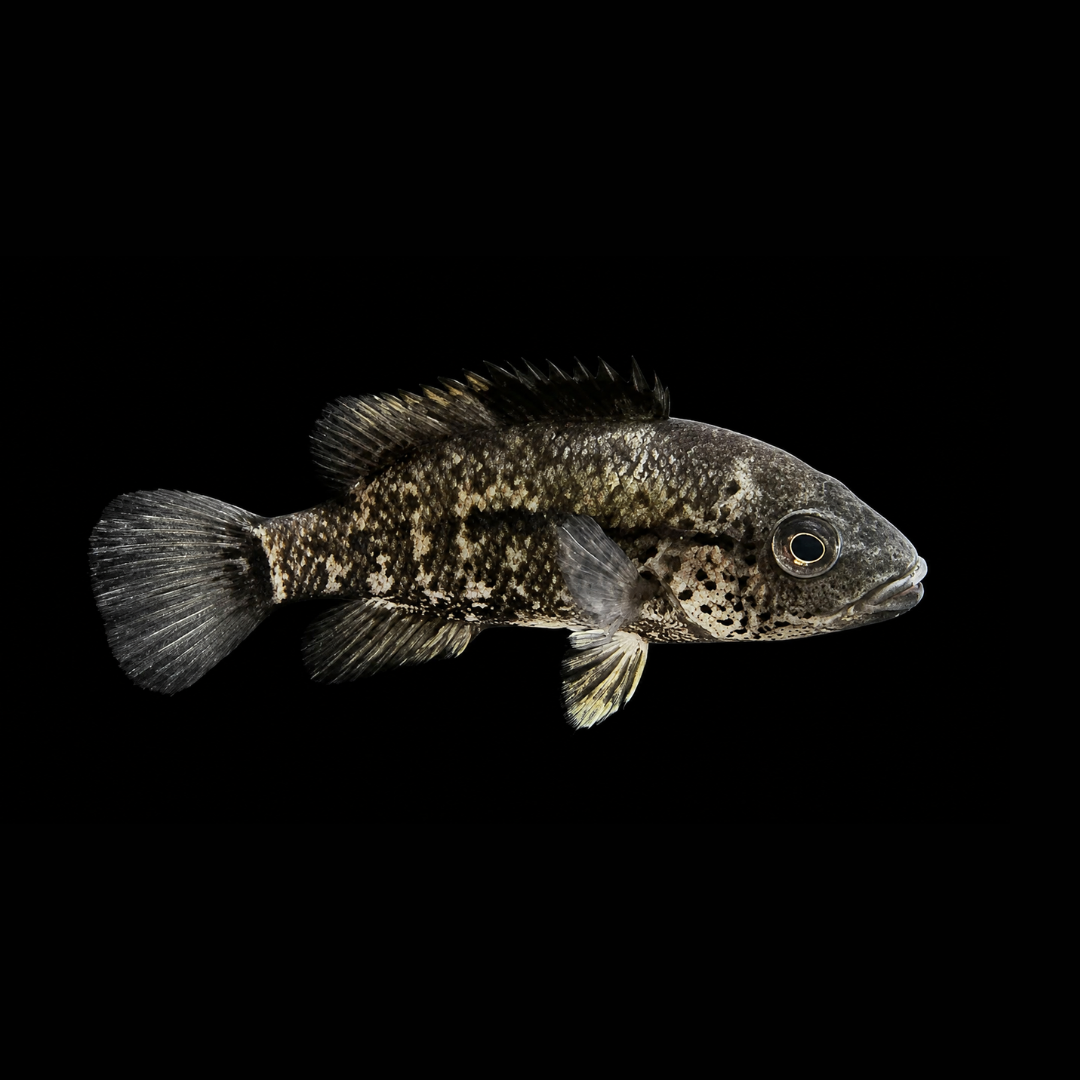
解説 / Description
ナンドプシス・ハイチエンシスは、カリブ海のイスパニョーラ島に自然分布するシクリッドです。通常時は白からグレー、オリーブ褐色を基調に黒い斑点やバンドが入り、成長するとエラ蓋やヒレに青緑色や金色の光沢が見られます。特に印象的なのは繁殖に伴う雌の体色変化で、飼育記録では全身がほぼ漆黒になった例が知られています。海外のアクアリウム界では「ブラック・ナスティー」の名でも知られ、強い縄張り性を示すため、終生飼育には十分な広さの水槽、余裕のある濾過能力、設備を安全に保つ工夫が必要です。 Nandopsis haitiensis is a cichlid naturally distributed on Hispaniola in the Caribbean. Its usual coloration ranges from white and gray to olive brown with dark spots or bars, and mature fish may show blue-green and golden iridescence on the gill covers and fins. One of its most striking features is the female’s breeding coloration; aquarium records describe females becoming almost entirely jet black. Known in the aquarium hobby as the “Black Nasty,” it can be strongly territorial and requires a spacious aquarium, ample filtration capacity, and secure equipment for long-term care.
基本情報 / Basic Information
| 学名 / Scientific Name | Nandopsis haitiensis |
|---|---|
| 通称 / Common Name | ブラック・ナスティー、オドBlack Nasty, Odo |
| 分類 / Family | シクリッド科・ヘロイン族・ナンドプシス属Cichlidae, tribe Heroini, genus Nandopsis |
| 英名 / English Name | Black Nasty / Odo |
| 分布 / Distribution | イスパニョーラ島固有。ハイチ共和国およびドミニカ共和国の湖沼、河川、小川、沿岸部の汽水環境などに分布し、エンリキージョ湖周辺の淡水の湧水域からも記録されています。Endemic to Hispaniola, occurring in Haiti and the Dominican Republic. It inhabits lakes, rivers, streams, and some coastal brackish environments, and has also been recorded from freshwater springs around Lake Enriquillo. |
| 最大体長 / Max Size | 記録されている最大標準体長は21.5cmです。標準体長は尾びれを含まない長さなので、実際の全長はこれより長くなります。The recorded maximum standard length is 21.5 cm. Standard length excludes the caudal fin, so total length is greater than this measurement. |
| 寿命 / Lifespan | 信頼できる寿命データは十分に確認されていません。Reliable lifespan data are not sufficiently established. |
飼育環境 / Aquarium Environment
| 水槽サイズ / Tank Size | 単独飼育では120cmクラス以上を飼育上の目安とします。120×45×45cm水槽は水槽本体で約243L、120cmワイド水槽(120×60×60cm)は約432Lで、後者のほうが奥行きと水量に余裕があります。ペア管理では150×60×60cmクラス(約540L)以上を目安とし、丈夫なセパレーターを安全に設置できる空間を確保します。For a single specimen, a tank in the 120 cm class or larger is a practical husbandry guideline. A 120 × 45 × 45 cm aquarium holds about 243 L before displacement, while a 120 × 60 × 60 cm wide aquarium holds about 432 L and provides more depth and water volume. For pair management, a 150 × 60 × 60 cm class aquarium, about 540 L before displacement, is a useful guideline and should leave enough room for a strong divider. |
|---|---|
| 水温 / Temperature | 23〜28℃を目安に、急な変化を避けて安定させます。特定の水温を病気予防や代謝抑制と直接結び付けて固定するより、個体の状態と水質の安定を優先します。 A range of 23–28°C can be used as a husbandry guideline, with stability more important than abrupt adjustments. A specific temperature should not be presented as directly preventing disease or deliberately suppressing metabolism without stronger evidence. |
| 水質 / Water Quality | pH7.0〜8.0、GH6〜16dGHは飼育時の目安として扱い、数値そのものより急変を避けて安定させることを優先します。原水の緩衝力が低くpHが下がりやすい場合は、必要に応じてサンゴ砂などを少量用いて調整します。換水量は汚れ方や濾過能力に合わせ、硝酸塩や残餌をためないよう定期的に管理します。A pH of 7.0–8.0 and a general hardness of 6–16 dGH can be treated as husbandry guidelines, with stability taking priority over chasing exact numbers. If the source water has low buffering capacity and pH tends to fall, a small amount of coral sand may be used as needed. Water-change volume should be adjusted to the waste load and filtration capacity so that nitrate and uneaten food do not accumulate. |
| レイアウト / Layout | 穴掘りや底床を動かす行動があるため、植栽を維持するレイアウトには向きません。視線を遮る岩や大型流木を使う場合は、掘り返されても崩れないよう安定させます。ヒーターなど破損すると危険な機器はガードで保護するか、可能であればサンプ内に隔離します。This species digs and moves substrate, so it is poorly suited to layouts that depend on keeping plants rooted in place. Rocks and large driftwood used as visual barriers should remain stable even if the substrate is excavated. Heaters and other equipment that could become hazardous if damaged should be protected with guards or isolated in a sump when possible. |
| 注意点 / Precautions | 縄張り性が強く、レイアウトや機器へ接触することもあるため、設備は確実に固定します。排泄量に余裕を持って対応できる濾過容量を確保し、フンや食べ残しは早めに除去します。水槽の材質や板厚は水槽サイズと設置条件に応じてメーカーや製作者の仕様に従い、蓋や配管、ヒーターなども含めて安全性を優先します。Its strong territoriality means that hardscape and equipment should be secured. Filtration should have enough reserve capacity for the waste load, and feces and uneaten food should be removed promptly. Aquarium material and panel thickness should follow the specifications appropriate to the tank size and installation, with safety also considered for lids, plumbing, and heaters. |
餌と給餌 / Feeding
| 餌の種類 / Diet | 主食には、シクリッド向けの栄養バランスの良い人工飼料を使います。自然下では動物質だけでなく、藻類や水生植物、巻貝などを利用する記録もあるため、飼育下でも特定の餌だけに偏らせず、植物質を含む配合飼料などを組み合わせて栄養の偏りを避けます。A nutritionally balanced prepared cichlid food is suitable as the staple diet. Records from the wild include not only animal matter but also algae, aquatic plants, and snails, so captive feeding should avoid relying on a single food and can include formulated diets containing plant material to reduce nutritional imbalance. |
|---|---|
| 給餌のポイント / Feeding Tips | 一度に多量を与えず、食べ残しが出ない量を基準にします。食性を「肉食魚」と決めつけて動物質だけに偏らせず、主食となる人工飼料を中心にバランスを取ります。体型や食欲、排泄の状態を見ながら量を調整し、過食を避けます。Avoid large meals and use an amount that does not leave uneaten food. The species should not be treated as a strict carnivore and fed only animal matter; a balanced prepared food should remain the basis of the diet. Adjust the amount according to body condition, appetite, and waste production, and avoid overfeeding. |
性格と混泳 / Temperament and Tank Mates
| 性格 / Temperament | 縄張り性と同種間の攻撃が強く、追尾や噛み付きが激しくなることがあります。自然下なら相手が離れられる場面でも、水槽内では逃げ切れず、重傷につながるおそれがあります。特にペア形成や繁殖の前後は関係が急に崩れることがあるため、継続した観察が必要です。It is strongly territorial and can show intense aggression toward conspecifics, including prolonged chasing and biting. In an aquarium, the subordinate fish may be unable to retreat far enough, increasing the risk of serious injury. Pair relationships can also deteriorate abruptly around courtship and breeding, so continued observation is essential. |
|---|---|
| 混泳の相性 / Compatibility | 基本的には単独飼育を前提に考えるのが安全です。他魚との混泳は個体差や水槽条件に左右されるうえ、強い縄張り性から負傷のリスクがあります。同種ペアでも関係が崩れることがあるため、繁殖を狙う場合は丈夫なセパレーターをすぐ使える状態にしておきます。Planning for single-specimen housing is the safer approach. Compatibility with other fish depends on the individual and tank conditions, but strong territoriality creates a real risk of injury. Even a male-female pair can become incompatible, so a strong divider should be ready for immediate use when breeding is attempted. |
病気と対策 / Diseases and Prevention
| かかりやすい病気 / Common Diseases | 本種で特に多い病気として確立された情報は十分ではありません。腹部膨満、食欲低下、異常便、鱗の逆立ちなどは複数の原因で起こり得るため、症状だけで「マラウィ・ブロート」や特定の鞭毛虫感染と断定しないことが重要です。普段と違う症状が続く場合は、原因を切り分けて対応します。There is not enough evidence to identify a particular disease as especially common in this species. Abdominal swelling, appetite loss, abnormal feces, and raised scales can have multiple causes, so these signs should not automatically be labeled “Malawi bloat” or attributed to a particular flagellate infection. Persistent abnormal signs require the underlying cause to be assessed. |
|---|---|
| 対策と予防 / Prevention | 予防の基本は、水質を安定させ、食べ残しや排泄物をためず、過食を避けて栄養の偏りを抑えることです。メトロニダゾールはスピロヌクレウスなど一部の鞭毛虫感染で用いられることがありますが、診断、投与経路、濃度、期間によって条件が異なるため、本種に一律の薬餌量や薬浴濃度を当てはめるのは避けます。治療が必要な場合は、魚病に詳しい獣医師や専門機関へ相談してください。Prevention centers on stable water quality, prompt removal of uneaten food and waste, avoidance of overfeeding, and a balanced diet. Metronidazole is used in some confirmed flagellate infections such as Spironucleus, but the appropriate route, concentration, and duration depend on the diagnosis and treatment context. A single medicated-food or bath dosage should therefore not be applied universally to this species. When treatment is needed, consult a veterinarian or specialist experienced in fish health. |
増やし方(繁殖) / Breeding
| 雌雄の判別 / Sexing | 成熟した雄は雌より大きくなる傾向があり、背ビレの先端がより尖って見えることがあります。頭部の隆起が発達する個体もいます。雌は比較的小型で、繁殖や仔魚保護に伴って全身がほぼ漆黒になった飼育記録があります。産卵前には腹部のふくらみや産卵管も判別材料になります。Mature males tend to become larger than females, and the tip of the dorsal fin may appear more pointed; some males also develop a more pronounced forehead. Females are generally smaller, and aquarium records describe females becoming almost entirely jet black during breeding and fry care. Abdominal fullness and the ovipositor can also help identify a female approaching spawning. |
|---|---|
| 繁殖形態 / Reproduction | 平らな石や鉢などの基質に産卵し、親が卵や仔魚を保護するタイプです。飼育記録では一度に数百の卵や仔魚が確認された例があります。産卵数や孵化までの日数は雌の状態や水温などで変わるため、固定した数値よりも、卵の発生と親の行動を観察しながら管理します。This species lays eggs on substrates such as flat stones or flowerpots, and the parents guard eggs and fry. Aquarium records describe broods numbering in the hundreds. Egg number and development time vary with factors such as the female’s condition and water temperature, so observation of the eggs and parental behavior is more useful than treating a single numerical schedule as fixed. |
| 繁殖のポイント / Breeding Tips | 最大の課題は、繁殖を狙う雌雄の争いを防ぐことです。飼育記録では、丈夫な仕切りで雌雄を分けたまま、仕切りの近くに産卵場所を設けて受精に成功した例があります。雌の黒化や産卵管の突出は繁殖状態を判断する手掛かりになりますが、仕切りを外す合図と決めつけず、安全を優先します。稚魚には孵化したてのブラインシュリンプや細かい人工飼料を与え、残餌やフンをこまめに除去して水質を維持します。The greatest challenge is preventing conflict between the breeding pair. Aquarium records document successful fertilization while the male and female remained separated by a strong divider, with a spawning site positioned near the barrier. Female darkening and a visible ovipositor can indicate breeding condition, but they should not be treated as an automatic signal that the divider is safe to remove. Newly hatched brine shrimp or finely powdered prepared food can be offered to fry, while uneaten food and waste should be removed frequently to maintain water quality. |
雑学と豆知識 / Trivia and Fun Facts
| 1. 大アンティル諸島に残った独自のシクリッド / 1. A distinctive cichlid lineage of the Greater Antilles | ナンドプシス属は、キューバとイスパニョーラ島に現存種を持つ大アンティル諸島のシクリッド系統です。分子系統解析では、中央アメリカのヘロイン族と近縁でありながら、ナンドプシス属としてまとまった系統を形成します。ハイチの中新世の地層からは化石種 Nandopsis woodringi も知られており、この属の歴史を考えるうえで重要な手掛かりになっています。Nandopsis is a Greater Antillean cichlid lineage with living species on Cuba and Hispaniola. Molecular phylogenetic work places the genus among the heroine cichlids while recovering Nandopsis as its own lineage. The fossil species Nandopsis woodringi is known from Miocene deposits in Haiti and provides an important reference point for the evolutionary history of the genus. |
|---|---|
| 2. かつて別種とされた「分厚い唇」 / 2. Thick lips that were once treated as a separate species | 1938年には、分厚い唇を持つ標本をもとに Cichlasoma vombergi が別種として記載されました。その後の分類学的再検討では、独立種として区別するのに十分な診断形質が認められないと判断され、現在は Nandopsis haitiensis の同物異名として扱われています。唇の厚さを特定の環境による表現型可塑性と断定する根拠は、本種については十分に確認されていません。In 1938, a thick-lipped specimen was described as a separate species, Cichlasoma vombergi. A later taxonomic revision concluded that it lacked sufficient diagnostic features to distinguish it as a separate species, and it is now treated as a synonym of Nandopsis haitiensis. For this species, there is not enough evidence to state that the thick lips are specifically a case of environmentally induced phenotypic plasticity. |
| 3. 「肉食魚」だけでは表せない食性 / 3. A diet broader than the label “carnivore” suggests | 力強い外見から肉食性の強い魚として紹介されがちですが、野生では動物質だけでなく、藻類、水生植物、巻貝などを利用する記録があります。つまり、単純な魚食性の捕食者として捉えるより、利用できる餌を幅広く取り込む雑食性のシクリッドとして理解したほうが、飼育下の給餌方針とも整合します。Its powerful appearance can lead to it being described mainly as a carnivorous fish, but wild records also include algae, aquatic plants, and snails in addition to animal foods. It is therefore more coherent to understand it as an omnivorous cichlid that exploits a broad range of foods rather than as a narrowly piscivorous predator. |
| 4. 仕切り越しでも繁殖した飼育記録 / 4. Breeding recorded through a divider | 本種の繁殖では、雌雄を直接接触させること自体が大きなリスクになります。1980年代の飼育記録には、丈夫な仕切りで分けた雌雄が仕切りの近くで産卵し、直接同居させないまま受精に成功した例があります。セパレーターは単なる緊急避難用ではなく、本種では繁殖そのものを成立させるための方法としても使えることを示す記録です。Direct contact between a breeding pair can itself be a major risk in this species. A published aquarium account from the 1980s records successful spawning and fertilization while the male and female remained separated by a strong divider. This shows that a divider can serve not only as an emergency safety measure but also as part of the breeding method itself. |
| 5. 幼魚の小ささだけで飼育難度を判断しない / 5. Juvenile size can hide the husbandry challenge | 幼魚の段階では小さくても、成長後は強い縄張り性を安全に管理できる水槽の広さと濾過能力が必要になります。とくに同種や他魚と距離を取れない環境では負傷のリスクが高まるため、購入時の体長だけで必要設備を判断しないことが大切です。将来の単独飼育やセパレーター使用まで含めて設置スペースを考えておく必要があります。A small juvenile can conceal the scale of the husbandry challenge that develops with growth. Long-term care requires enough aquarium space and filtration capacity to manage strong territorial behavior safely, and injury risk rises when fish cannot maintain distance from one another. Tank planning should therefore account for future single-specimen housing and the possible use of a divider rather than being based only on juvenile size. |
まとめ / Conclusion
ナンドプシス・ハイチエンシスは、イスパニョーラ島に固有の、力強い体つきと印象的な体色を持つシクリッドです。不規則な黒い模様や成熟個体の光沢に加え、繁殖に伴って雌がほぼ漆黒になる姿は、この魚ならではの大きな特徴です。野生では動物質だけでなく藻類や水生植物、巻貝なども利用し、見た目の印象だけでは捉えきれない食性の幅も持っています。 Nandopsis haitiensis is an endemic cichlid of Hispaniola with a powerful build and distinctive coloration. Its irregular dark markings, iridescent highlights in mature fish, and the near-black breeding coloration recorded in females are among its most recognizable features. Wild feeding records also include algae, aquatic plants, and snails as well as animal foods, giving the species a broader diet than its predatory appearance might suggest.
一方で、強い縄張り性があり、同種ペアであっても安全な距離を取れないと争いが深刻化することがあります。余裕のある水槽と濾過、安全に固定したレイアウト、偏りを抑えた給餌、必要に応じてすぐ隔離できる設備を整えることが、安定した長期飼育につながります。魚の行動を観察しながら環境を調整できる飼育者にとって、個性的な姿と繁殖行動をじっくり向き合って楽しめるシクリッドです。 At the same time, strong territoriality means that conflict can become serious even between a male and female if they cannot maintain a safe distance. A spacious aquarium, adequate filtration, securely arranged hardscape, a balanced diet, and equipment that allows immediate separation when necessary all support stable long-term care. For keepers who can adjust the environment in response to the fish’s behavior, it is a distinctive cichlid whose appearance and breeding behavior reward careful observation.

気になる道具や飼い方を見つけてみませんか?
 アイのアクアグッズ案内水合わせの道具とやり方|魚を迎える前にそろえたい容器・点滴キット・ネット買ってきた魚はすぐ水槽に入れていい? 水温合わせと水合わせの違いから、透明ケース・点滴キット・ネットの選び方、時間をかけすぎない注意点まで、アイとコタロウが紹介します。記事はコチラ →
 アイのアクアグッズ案内ローチの仲間に合わせる飼育用品|クーリー・流水性・ボーシャの水槽と底砂道具の特徴や使い方、選ぶときのポイントをアイが紹介します。記事はコチラ →
 アイのアクアグッズ案内水槽のエアーポンプの選び方|水深・音・泡で選ぶおすすめ用品道具の特徴や使い方、選ぶときのポイントをアイが紹介します。記事はコチラ →
 アイのアクアグッズ案内コケを食べるコイの仲間に合わせる飼育用品|フライングフォックス・アルジイーター・ガラ道具の特徴や使い方、選ぶときのポイントをアイが紹介します。記事はコチラ →
さまざまな飼育テーマをご紹介。リンク先の記事には広告・商品紹介が含まれます。
案内・紹介記事一覧へ →分布マップ
ナンドプシス・ハイチエンシス(Nandopsis haitiensis)はイスパニョーラ島の固有種で、ハイチ共和国およびドミニカ共和国の湖沼、河川、小川、沿岸部の汽水環境などに分布します。
※この地図は記事の分布記述をもとにイスパニョーラ島全体が見えるよう設定した概略表示です。マーカーは分布地域を把握しやすくするための代表地点であり、実際の採集地点・観察地点を示すものではありません。
参考文献
-
分類・同物異名Chakrabarty, P. (2006). Taxonomic status of the Hispaniolan Cichlidae. Occasional Papers of the Museum of Zoology, University of Michigan, No. 737, 1–17.
-
系統・分類Concheiro Pérez, G. A., Říčan, O., Ortí, G., Bermingham, E., Doadrio, I. & Zardoya, R. (2007). Phylogeny and biogeography of 91 species of heroine cichlids (Teleostei: Cichlidae) based on sequences of the cytochrome b gene. Molecular Phylogenetics and Evolution, 43(1), 91–110.
-
分布・体長・生態・食性・繁殖Froese, R. & Pauly, D. (eds.). FishBase: Nandopsis haitiensis (Tee-Van, 1935). FishBase.
-
生息環境・塩分環境・食性Smithsonian Tropical Research Institute. Shorefishes of the Greater Caribbean: Nandopsis haitiensis — Species Data Report.
-
自然史・野外観察Loiselle, P. V. (1989). Some observations on the natural history of the Odo in Haiti. Buntbarsche Bulletin, No. 133, 2–11. American Cichlid Association.
-
繁殖・セパレーター管理Ferdenzi, J. (1989). A spawning of Heros haitiensis. Buntbarsche Bulletin, No. 133, 12–17. American Cichlid Association.
-
飼育条件・攻撃性・繁殖Stark, R. (2026). How to keep and breed Nandopsis haitiensis in the aquarium. Cichlid News Magazine, 35(1), 27–30.
-
疾病・寄生虫・投薬上の注意Petty, B. D., Francis-Floyd, R. & Yanong, R. P. E. (2022; updated 2024). Parasitic Diseases of Fish. Merck Veterinary Manual.




コメント