

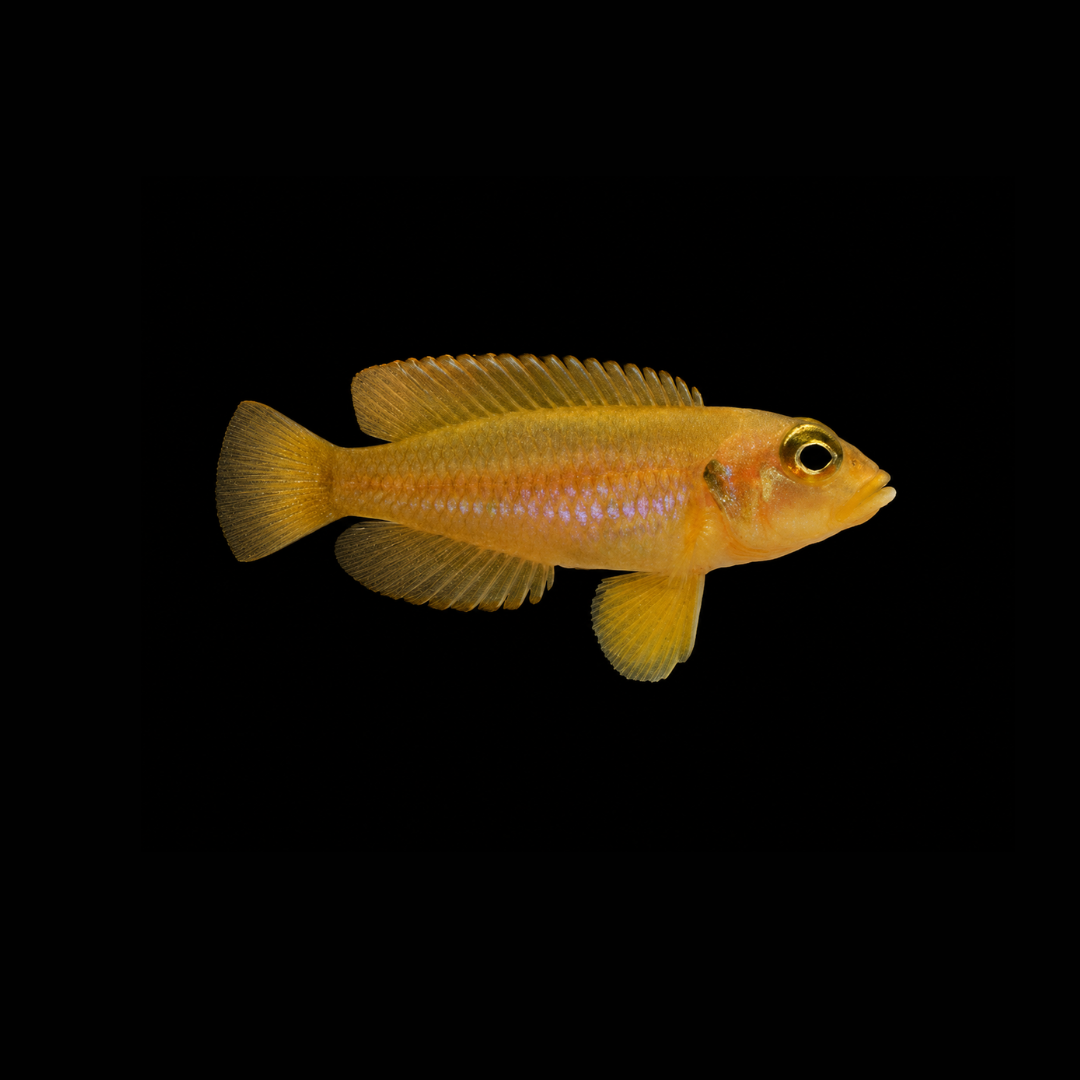
解説 / Description
ネオランプロローグス・オセラータスは、アフリカのタンガニーカ湖だけに分布する小型のシクリッドです。湖底にある巻貝の空き殻を隠れ家や産卵場所として利用するため、シェル・ドゥエラーと呼ばれます。本種は尾ビレで砂を動かし、貝殻を開口部だけが見える状態まで垂直に埋める独特の行動を見せます。小柄な体に反して縄張り意識は強く、貝殻の周囲へ近づく相手を積極的に追い払います。細かな砂、利用できる巻貝、安定した硬水・アルカリ性の水を整えると、住居づくり、縄張り防衛、求愛、子育てという本来の行動を観察できます。 Neolamprologus ocellatus is a small cichlid found only in Lake Tanganyika, Africa. It is known as a shell-dweller because it uses empty snail shells as shelter and spawning sites. By moving sand with its tail, the fish can bury a shell vertically until little more than the opening remains visible. Despite its small size, it strongly defends the area around its shell. Fine sand, usable shells, and stable hard alkaline water allow the fish to display its natural shell construction, territorial defense, courtship, and brood-care behavior.
基本情報 / Basic Information
| 学名 / Scientific Name | Neolamprologus ocellatus (Steindachner, 1909) Lamprologus ocellatusの名称も研究文献や流通で広く使われています。The name Lamprologus ocellatus also remains widely used in research and the aquarium trade. |
|---|---|
| 通称 / Common Name | オセラータス、オケラータス、ゴールド・オセラータスOcellatus, Gold Ocellatus |
| 分類 / Family | シクリッド科・プセウドクレニラブルス亜科・ランプロローグス族Family Cichlidae, subfamily Pseudocrenilabrinae, tribe Lamprologini |
| 英名 / English Name | Ocellated Shell-dweller, Ocellatus Shell-dweller |
| 分布 / Distribution | アフリカのタンガニーカ湖固有種です。主に、巻貝の空き殻が少数ずつ点在する開けた砂底を利用します。Endemic to Lake Tanganyika in Africa. It mainly occupies open sandy areas where usable snail shells occur at relatively low density. |
| 最大体長 / Max Size | 最大で全長約5.8cmになります。成熟したオスはメスより大きくなる傾向があります。Up to about 5.8 cm in total length. Mature males generally grow larger than females. |
| 寿命 / Lifespan | 本種に限った信頼性の高い寿命資料は多くありません。適切な環境では複数年にわたる飼育が可能ですが、実際の寿命は水質、食事、同種間の争いなどに左右されます。Reliable species-specific lifespan data are limited. The fish can be maintained for several years under suitable conditions, but actual longevity varies with water quality, diet, and social stress. |
飼育環境 / Aquarium Environment
| 水槽サイズ / Tank Size | 底面積を確保しやすい60cm規格水槽(約60L)を基本の目安にします。単独飼育や相性が確認できたペアであれば45cm水槽を使える場合もありますが、逃げ場が少ないため、隔離用水槽をすぐに用意できることが前提です。複数のオスや複数種を飼う場合は、90cm以上の水槽でも十分な縄張り分けが必要です。A 60 cm standard aquarium of roughly 60 L is the recommended starting point because it provides a useful bottom area. A 45 cm tank may work for a single fish or a proven compatible pair, but only when a backup tank is immediately available. Multiple males or mixed-species setups require a tank of 90 cm or longer and clearly separated territories. |
|---|---|
| 水温 / Temperature | 23〜26℃を目安にし、短時間で大きく変化させないようにします。冬はヒーターを使用し、夏は必要に応じて冷却ファンや水槽用クーラーで高水温を防ぎます。 Maintain approximately 23–26°C and avoid rapid changes. Use a heater in winter and, when necessary, a cooling fan or aquarium chiller to prevent excessive summer temperatures. |
| 水質 / Water Quality | pH 8.0〜9.0、総硬度9〜19°dH程度の硬水を目安にします。日本の軟水を使う場合は、サンゴ砂、カキガラ、タンガニーカ湖産シクリッド用の調整剤などを利用し、pHと硬度を安定させます。数値を急に上げるのではなく、換水前後の差を小さく保つことが重要です。アンモニアと亜硝酸塩は検出されない状態を維持し、定期的に部分換水を行います。Aim for hard water around pH 8.0–9.0 and a total hardness of approximately 9–19°dH. When using soft tap water, coral sand, oyster shell media, or a Lake Tanganyika cichlid buffer can help stabilize pH and hardness. Stability is more important than raising the values abruptly, so keep differences between the aquarium and replacement water small. Maintain undetectable ammonia and nitrite and perform regular partial water changes. |
| レイアウト / Layout | 角のない細かな砂を4〜5cm以上敷き、魚が体ごと入れる巻貝を個体数より多めに用意します。殻は内部まで洗浄し、洗剤や調味料が残っていないものを使います。食用エスカルゴの空殻も、口径と内部の広さが適切であれば代用できます。貝殻を離して置き、岩などで視線を遮ると、隣り合う個体が常に見張り合う状態を減らせます。Provide at least 4–5 cm of smooth fine sand and more usable shells than fish. Clean the shells thoroughly and use only those free of detergent, seasoning, or other residues. Empty escargot shells can be suitable when the opening and internal space are large enough. Space the shells apart and add visual barriers such as rocks to reduce constant line-of-sight conflict. |
| 注意点 / Precautions | 同種間の攻撃は体の大きさから想像する以上に激しくなることがあります。水面付近や水槽の隅から動けない個体、ヒレが傷んだ個体、餌を食べられない個体が見つかった場合は、相性の改善を待たずに隔離します。レイアウトを変更すると縄張り関係が崩れることがあるため、作業後は個体同士の動きを注意深く観察してください。Aggression between conspecifics can be much more severe than the fish’s size suggests. Immediately separate any fish that remains trapped near the surface or in a corner, develops damaged fins, or cannot feed. Because rearranging the aquarium can disrupt established territories, observe all fish closely after maintenance or layout changes. |
餌と給餌 / Feeding
| 餌の種類 / Diet | 自然下では小さな無脊椎動物を食べる微小捕食者です。飼育下では、小型シクリッド向けの沈下性または緩やかに沈む小粒人工飼料を主食にできます。冷凍ミジンコ、ブラインシュリンプ、コペポーダ、品質が確認できる冷凍アカムシなどを補助的に与えると、食事に変化をつけられます。In the wild, this species is a micro-predator that feeds on small invertebrates. In aquariums, small sinking or slowly sinking pellets for small cichlids make a suitable staple. Frozen daphnia, brine shrimp, copepods, and properly handled frozen bloodworms can be offered as supplementary foods. |
|---|---|
| 給餌のポイント / Feeding Tips | 成魚には1日1〜2回、短時間で食べ切れる量を与えます。稚魚や成長期の若魚には、1回量を減らして回数を増やします。貝殻の近くまで餌が届くようにし、劣位個体も食べられているか確認してください。由来が不明な活きイトミミズなどは病原体を持ち込む可能性があるため、避けた方が安全です。Feed adults once or twice daily in portions they can finish quickly. Juveniles and growing fry benefit from smaller portions offered more frequently. Make sure food reaches the shell zone and confirm that subordinate fish are also eating. Live tubifex or other foods of uncertain origin are best avoided because they may introduce pathogens. |
性格と混泳 / Temperament and Tank Mates
| 性格 / Temperament | 貝殻を中心に明確な縄張りを持ち、侵入者には積極的に向かっていきます。オスは複数の貝殻を含む範囲を巡回することがあり、繁殖中のメスは自分の貝殻と稚魚を特に強く守ります。臆病で隠れ続ける魚ではなく、周囲をよく観察しながら行動するタイプです。The fish establishes a distinct territory around its shell and actively confronts intruders. A male may patrol an area containing several shells, while a breeding female strongly defends her own shell and offspring. It is not a fish that simply hides; it remains alert and responds quickly to activity around its territory. |
|---|---|
| 混泳の相性 / Compatibility | 最も管理しやすいのは本種だけの種専用水槽です。コリドラス、プレコ、他のシェル・ドゥエラーなど、底層や貝殻周辺を利用する魚とは生活圏が重なるため、混泳を避けます。上層を泳ぐタンガニーカ湖産魚との組み合わせは可能な場合がありますが、群泳性と遊泳量を考慮し、90cm以上の広い水槽を用意してください。混泳では、魚種名だけでなく、各個体が安全な場所で継続して餌を食べられるかを基準に判断します。A species-only aquarium is the easiest arrangement to manage. Avoid Corydoras, plecos, other shell-dwellers, and any fish that shares the bottom or shell zone. Upper-water Lake Tanganyika species may be compatible in some setups, but their schooling and swimming requirements usually call for an aquarium of at least 90 cm. Judge compatibility by whether every individual can occupy a safe area and continue feeding, not by species names alone. |
病気と対策 / Diseases and Prevention
| かかりやすい病気 / Common Diseases | 本種だけに特有の病気が多いと断定できる資料はありません。ただし、ほかの淡水魚と同様に、白点病、細菌感染、消化不良などは起こり得ます。食欲低下、呼吸が速い、ヒレを閉じる、腹部が不自然に膨らむ、白く細い便が続くといった変化は、病気だけでなく、水質悪化や同種間のストレスでも現れます。There is little evidence that this species is uniquely prone to a particular disease. Like other freshwater fishes, however, it can develop ich, bacterial infections, and digestive problems. Loss of appetite, rapid breathing, clamped fins, abnormal abdominal swelling, or persistent pale stringy feces may result from disease, poor water quality, or social stress. |
|---|---|
| 対策と予防 / Prevention | 十分に立ち上がったろ過環境、定期的な部分換水、安定したpHと硬度、適量の給餌を基本にします。換水用の水は、水温だけでなくpHと硬度も水槽に近づけてから使用します。新しい魚は可能であれば別容器で経過を観察し、異常が見られた場合は、まず水質と攻撃の有無を確認したうえで治療を検討してください。Prevention begins with mature biological filtration, regular partial water changes, stable pH and hardness, and appropriate feeding. Match replacement water to the aquarium not only in temperature but also in pH and hardness. When possible, observe new fish separately before introduction. If symptoms appear, first check water quality and aggression before deciding on treatment. |
増やし方(繁殖) / Breeding
| 雌雄の判別 / Sexing | 成熟個体では、オスの方が大きくなる傾向があり、体格差が最も分かりやすい手掛かりです。メスでは背ビレや尻ビレの白い縁取りが目立ち、オスでは黄から橙色の縁取りが見られることがあります。ただし、色彩は地域系統、成長段階、体調によって変わるため、ヒレの色だけで断定はできません。幼魚の雌雄判別は特に難しく、複数匹を導入する場合は、成長後に分けられる水槽をあらかじめ用意します。Mature males generally grow larger than females, making body size the most useful clue. Females may show conspicuous white edging on the dorsal and anal fins, whereas males may show yellow to orange edging. Fin coloration varies with geographic strain, age, and condition, so it should not be used alone. Juveniles are especially difficult to sex, and a group should be purchased only when extra tanks are available for later separation. |
|---|---|
| 繁殖形態 / Reproduction | 巻貝の内部に卵を産み付ける基質産卵型です。オスが複数のメスと繁殖する一夫多妻型が知られていますが、飼育環境や個体数によってはペアとして生活します。メスは貝殻の奥に10〜20個前後の卵を産み、卵と初期の稚魚を主に世話します。オスは周囲の縄張りを守り、メス同士の争いに介入することもあります。This species is a substrate spawner that lays eggs inside a snail shell. Polygynous groups, in which one male breeds with several females, are well documented, although pairs may form depending on the aquarium and group size. A female commonly lays around 10–20 eggs and performs most care of the eggs and early fry. The male defends the surrounding territory and may also intervene in aggression between females. |
| 繁殖のポイント / Breeding Tips | 安定した硬水・アルカリ性の水、細かな砂、複数の巻貝を用意します。産卵後9日前後になると、稚魚が貝殻の外へ出始めます。稚魚には孵化直後のブラインシュリンプや細かな稚魚用飼料を、貝殻の入口付近へ少量ずつ届けます。成長した稚魚が親や次の稚魚に追われることがあるため、攻撃が始まった段階で育成水槽へ移してください。繁殖中は貝殻を動かすと親が育児を中断する可能性があるため、必要のないレイアウト変更は避けます。Provide stable hard alkaline water, fine sand, and several shells. Fry begin emerging from the shell at about nine days after egg laying. Offer newly hatched brine shrimp or finely powdered fry food in small amounts near the shell entrance. Growing juveniles may later be chased by the parents or interfere with a new brood, so move them to a grow-out tank when aggression begins. Avoid unnecessary shell movement during breeding because disturbance may interrupt brood care. |
雑学と豆知識 / Trivia and Fun Facts
| 1. 学名が二通り見られる理由 / 1. Why two scientific names are often seen | 本種は1909年にJulidochromis ocellatusとして記載され、その後の分類変更を経てきました。現在の魚類目録ではNeolamprologus ocellatusが有効名として扱われていますが、研究論文やアクアリウムの世界ではLamprologus ocellatusも広く使われています。二つの名称が並ぶのは別種だからではなく、ランプロローグス族の属分類に異なる見解が残っているためです。The species was described in 1909 as Julidochromis ocellatus and has since passed through several taxonomic arrangements. Current fish catalogs recognize Neolamprologus ocellatus as valid, while Lamprologus ocellatus remains common in research and aquarium literature. The two names do not indicate different species; they reflect continuing differences in how genera within Lamprologini are classified. |
|---|---|
| 2. 貝殻を垂直に埋める住居づくり / 2. Building a vertically buried shell home | オセラータスは、利用する貝殻の周囲から砂を運び出し、殻頂を下にして垂直に埋めます。入口だけを露出させた貝殻は、素早く逃げ込める隠れ家であり、産卵と育児の場にもなります。また、縄張り内の余分な貝殻を砂で覆う行動も観察されており、限られた住居資源をめぐる競争の激しさがうかがえます。Ocellatus removes sand from around a selected shell and buries it vertically with the apex pointing downward. A shell with only its opening exposed becomes both a rapid refuge and a site for spawning and brood care. Fish have also been observed covering unused shells within their territories, illustrating the intense competition over limited housing resources. |
| 3. メス同士の争いをオスが止める / 3. Males intervene in conflicts between females | 一夫多妻の群れでは、同じオスの縄張りにいるメス同士も互いを強く警戒します。行動研究では、オスがメス同士の争いに繰り返し介入し、攻撃したメスをその個体の貝殻へ追い戻す様子が確認されました。オスを群れから外すとメス同士の攻撃が増え、群れが崩れやすくなったことから、オスは縄張りを守るだけでなく、群れの関係を保つ役割も担っていると考えられます。In polygynous groups, females sharing one male’s territory remain strongly wary of one another. Behavioral research found that males repeatedly intervened in female conflicts and chased the aggressor back toward her own shell. When the male was removed, female aggression increased and the group was more likely to break apart, suggesting that the male helps maintain social stability as well as defend the territory. |
| 4. 稚魚は産卵後9日前後に外へ出る / 4. Fry emerge at about nine days | 人工貝殻の内部を撮影した研究では、母親が子を産卵後9日ごろまで貝殻の中にとどめ、その時期に稚魚の光への反応が暗所を好む状態から明るい方向へ向かう状態へ切り替わることが示されました。母親と稚魚は単一の合図だけで同期しているのではなく、それぞれが育児と発育の進行を調整する仕組みを持ち、通常は両者のタイミングがそろっていると考えられています。Research using observable artificial shells found that mothers kept the brood inside until about nine days after egg laying. At the same time, the larvae shifted from preferring darkness to moving toward light. Rather than relying on a single shared signal, mothers and offspring appear to possess partly independent timing mechanisms that normally remain synchronized. |
| 5. 自分の貝殻へ戻る空間認知 / 5. Spatial memory guides the fish back home | 野外で複数の巻貝棲息種を比較した研究では、オセラータスは移動させられた場所から最寄りの貝殻へ逃げ込むだけでなく、自分の住居へ戻ろうとする種の一つでした。戻れる割合は距離が長くなるほど低下しましたが、貝殻が少ない開けた砂地で暮らす本種にとって、周囲の地形や住居の位置を覚える能力は重要だと考えられます。A field comparison of several shell-dwelling species found that ocellatus was among the fishes that attempted to return to its own home shell after displacement rather than simply entering the nearest shelter. Success declined as distance increased, but the result suggests that remembering the surrounding terrain and shell location is important for a species living on open sand where shelters are sparse. |
| 6. 同じ巻貝棲息種でも社会は異なる / 6. Shell-dwellers have very different societies | 巻貝棲息種は、すべてが同じ暮らし方をするわけではありません。オセラータスは少数の貝殻が離れて存在する場所で比較的広い縄張りを持ちます。一方、マルチファスキアータスやブレビスなどには、貝殻が密集する場所で小さな行動圏を持つ種がいます。住居の数と配置は、縄張りの広さ、社会構造、移動の仕方と関連しており、貝殻は単なる隠れ家以上の役割を果たしています。Shell-dwelling cichlids do not all live in the same way. Ocellatus occupies relatively broad territories where only a few shells are scattered apart. Species such as multifasciatus and brevis can maintain much smaller ranges in dense shell beds. The number and arrangement of shells are associated with territory size, social structure, and movement patterns, making shells far more than simple hiding places. |
| 7. 「ゴールド」は流通名として確認する / 7. “Gold” should be treated as a trade designation | 日本では黄色みの強い個体が「ゴールド・オセラータス」などの名称で流通しています。ただし、販売名だけでは野生の採集地、選別系統、養殖過程まで判断できません。地域個体群の特徴を重視する場合は、色名だけでなく、産地情報やブリード履歴が明記されているかを確認するとよいでしょう。Yellow forms are sold in Japan under names such as “Gold Ocellatus.” A trade name alone, however, does not identify the wild locality, selected strain, or breeding history. Aquarists interested in geographic populations should look for documented locality and breeding information rather than relying on the color name alone. |
まとめ / Conclusion
ネオランプロローグス・オセラータスは、巻貝一つを生活の中心に据え、砂を動かしながら自分の住居と縄張りを整える小型シクリッドです。貝殻の入口で周囲を見張る姿や、侵入者へ迷いなく向かっていく行動からは、体の大きさだけでは測れない力強さが伝わってきます。 Neolamprologus ocellatus is a small cichlid that builds its life around a single shell, reshaping the sand as it establishes a home and territory. Its watchful posture at the shell entrance and its immediate response to intruders reveal a strength of character far greater than its size suggests.
安定した硬水・アルカリ性の水、掘るための細かな砂、選べる数の巻貝、争いから退避できる空間を用意することが、健やかな飼育につながります。環境が整った水槽では、住居づくりから求愛、子育てまでが小さな貝殻の周囲で繰り広げられ、日々の観察を重ねるほど本種ならではの社会性と知性が見えてきます。 Healthy long-term care depends on stable hard alkaline water, fine sand for digging, a choice of suitable shells, and space where fish can escape social conflict. In a well-prepared aquarium, shell construction, courtship, and brood care unfold around a remarkably small home, revealing more of the species’ social complexity and awareness with every day of observation.

気になる道具や飼い方を見つけてみませんか?
 アイのアクアグッズ案内水草トリミングの道具とやり方|ハサミ・ピンセットを水草に合わせて選ぼう伸びすぎた水草は切っていい? 有茎草の差し戻し、前景草の絨毯、流木のモスを整える場面から、水草用ハサミ・ピンセット・ゴミ取りネットの選び方と片付けを紹介します。記事はコチラ →
 アイのアクアグッズ案内水槽の流木の選び方|枝・マングローブ・アク抜きとおすすめ商品水槽に小さな森を作る流木。枝流木やマングローブという名前の違いから、魚の隠れ家、水草の取り付け、浮く・水が茶色くなるときの準備まで、アイとコタロウが商品とともに案内します。記事はコチラ →
 アイのアクアグッズ案内水槽のエアーポンプの選び方|水深・音・泡で選ぶおすすめ用品道具の特徴や使い方、選ぶときのポイントをアイが紹介します。記事はコチラ →
 アイのアクアグッズ案内アカヒレの仲間に合わせる飼育用品|無加温・混泳・繁殖の水槽とろ過道具の特徴や使い方、選ぶときのポイントをアイが紹介します。記事はコチラ →
さまざまな飼育テーマをご紹介。リンク先の記事には広告・商品紹介が含まれます。
案内・紹介記事一覧へ →分布マップ
ネオランプロローグス・オセラータスは、アフリカ東部のタンガニーカ湖にのみ分布する固有種です。地図では、個別の採集地点ではなく、タンガニーカ湖全体を本種の分布地域を示す概略範囲として表示しています。
この地図の範囲と代表地点は、記事の分布情報を地理的に把握するための概略表示です。実際の採集地点、個体群ごとの分布、厳密な生息範囲を示すものではありません。
参考文献
-
Fricke, R., Eschmeyer, W. N. & Van der Laan, R. (eds.). Eschmeyer’s Catalog of Fishes: Neolamprologus ocellatus.分類・学名の変遷・原記載・分布California Academy of Sciences, Eschmeyer’s Catalog of Fishes
-
Froese, R. & Pauly, D. (eds.). Lamprologus ocellatus. FishBase.分布・最大体長・水温・pH・硬度・食性・巻貝利用・水槽サイズFishBase species summary
-
Coulter, G. W. (ed.) (1991). Lake Tanganyika and Its Life. Oxford University Press.タンガニーカ湖の水質・地形・底生環境・魚類群集https://doi.org/10.1093/oso/9780198585251.001.0001
-
Bills, I. R. (1996). Eco-ethology of shell-dwelling cichlids in Lake Tanganyika. MSc thesis, Rhodes University.自然下の生息環境・巻貝の選択・移動・垂直埋没・縄張り資源としての巻貝Rhodes University institutional repository
-
Walter, B. & Trillmich, F. (1994). Female aggression and male peace-keeping in a cichlid fish harem: conflict between and within the sexes in Lamprologus ocellatus. Behavioral Ecology and Sociobiology, 34, 105–112.一夫多妻型の社会構造・雌間攻撃・雄の介入・繁殖資源としての巻貝https://doi.org/10.1007/BF00164181
-
Parker, A. V., Stemmer, M., Grätsch, S., Dorigo, A., Rodriguez Ramirez, O., Adel, A., Jordan, A. & Baier, H. (2025). Intrinsic timing of brood care in shell-dwelling cichlids. Current Biology, 35(3), 672–680.e4.母魚による育児・産卵後9日前後の稚魚の出巣・走光性の変化https://doi.org/10.1016/j.cub.2024.12.020
-
Grätsch, S., Dorigo, A., Agarwal, V., Parker, A. V., Hernández Murcia, I., Stemmer, M., Adel, A., Jordan, A. & Baier, H. (2026). Cognitive ethology of nest building in a shell-dwelling cichlid. Current Biology, 36(9), 2179–2191.e5.巻貝を用いた巣づくり・砂の操作・巻貝形状の選択・経験による行動調整https://doi.org/10.1016/j.cub.2026.03.035
-
Goverts, Z., Tomasek, M. & Jordan, A. (2026). Comparative spatial cognition in wild Tanganyikan cichlids: navigation performance varies with home range and shelter availability. Animal Cognition, 29, 38.疎らな巻貝環境・行動圏・帰巣行動・巻貝の位置記憶https://doi.org/10.1007/s10071-026-02064-2
-
Noga, E. J. (2010). Fish Disease: Diagnosis and Treatment. 2nd ed. Wiley-Blackwell.淡水魚の白点病・細菌感染・非感染性障害・症状の評価・水質確認を含む健康管理https://doi.org/10.1002/9781118786758
-
Livengood, E. J. & Chapman, F. A. The Ornamental Fish Trade: An Introduction with Perspectives for Responsible Aquarium Fish Ownership. UF/IFAS Extension, University of Florida.生物ろ過・アンモニア管理・適量給餌・新規導入魚の隔離観察・衛生管理UF/IFAS Extension publication FA124




コメント