

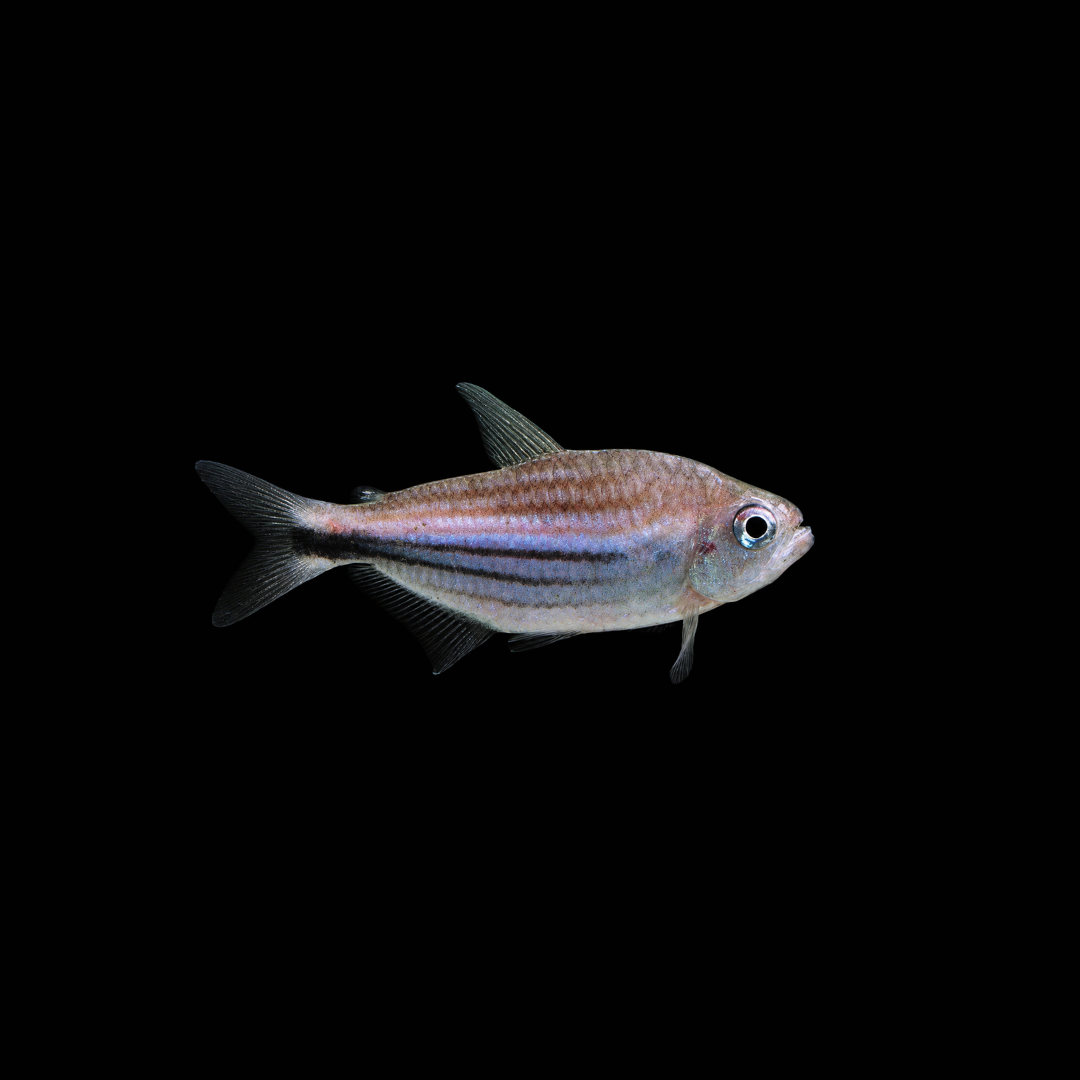
解説 / Description
タイガーアグネステトラは、南米の上部アマゾン川流域に分布するモンクホーシャ属の中型テトラです。体側を横切る濃いストライプと、状態が上がったときに背中側から尾柄部へにじむ赤みが大きな魅力で、流木や暗めの底床を使った南米風水槽によく映えます。小型テトラのように繊細でおとなしい魚として扱うより、やや気の強い中型カラシンとして、広めの水槽で群れと遊泳スペースを確保して楽しむと、本来の美しさを引き出しやすい種類です。 The Tiger Agnes Tetra is a medium-sized Moenkhausia tetra from the upper Amazon River basin in South America. Its dark horizontal stripe and the reddish tones that may develop along the upper body and caudal peduncle make it especially attractive in South American-style aquariums with driftwood and a darker substrate. Rather than treating it like a delicate, very peaceful small tetra, it is best approached as a somewhat assertive medium characin that shows its best form in a spacious aquarium with a group and enough swimming room.
基本情報 / Basic Information
| 学名 / Scientific Name | Moenkhausia agnesae Géry, 1965 |
|---|---|
| 通称 / Common Name | タイガーアグネステトラ、アグネステトラ、レッドライン系モンクホーシャTiger Agnes Tetra, Agnes Tetra, Redline-type Moenkhausia |
| 分類 / Family | カラシン目・Acestrorhamphidae・モンクホーシャ属。古い文献や流通上の説明ではカラシン科 Characidae と表記されることもあります。Order Characiformes, family Acestrorhamphidae, genus Moenkhausia. Older literature and some aquarium-trade descriptions may still place it under Characidae. |
| 英名 / English Name | Redline Tetra, Tiger Agnes Tetra |
| 分布 / Distribution | 南米の上部アマゾン川流域。ブラジル、コロンビア、ペルーが近接するトレス・フロンテラス周辺や、ペルー側の水域に関連して紹介されることがあります。Upper Amazon River basin in South America. It is often associated with the Tres Fronteras region where Brazil, Colombia, and Peru meet, as well as Peruvian waters in aquarium-trade context. |
| 最大体長 / Max Size | 標準体長で最大約6.9cm。観賞魚としては全長7〜8cm前後になる中型テトラとして、余裕のある水槽で扱うと安心です。Up to about 6.9 cm standard length. In aquariums, it is safest to treat it as a medium-sized tetra reaching around 7 to 8 cm total length and to provide extra space. |
| 寿命 / Lifespan | 飼育下ではおおむね3〜5年程度が目安です。輸入直後の立ち上げ、水温の安定、混泳ストレスの少ない環境づくりが長期飼育につながります。Approximately 3 to 5 years in captivity. Careful acclimation after import, stable temperature, and low-stress tank mate selection help support long-term keeping. |
飼育環境 / Aquarium Environment
| 水槽サイズ / Tank Size | 少数飼育でも60cm規格水槽以上、群れや混泳を楽しむなら90cm規格水槽以上がおすすめです。活発に泳ぐうえ、同種間で小競り合いが出ることもあるため、横方向の遊泳スペースをしっかり確保すると落ち着きやすくなります。A standard 60 cm aquarium is the practical minimum for a small group, while a 90 cm aquarium or larger is recommended for shoaling displays or community setups. Because it is active and may spar with conspecifics, generous horizontal swimming space helps keep the group settled. |
|---|---|
| 水温 / Temperature | 24〜28℃。現地環境はより高めの水温で紹介されることもありますが、飼育下では25〜27℃前後で安定させると管理しやすいです。 24 to 28°C. Field-related information may indicate warmer waters, but in aquariums a stable range around 25 to 27°C is practical and easy to manage. |
| 水質 / Water Quality | 弱酸性〜中性、pH 6.0〜7.5程度を目安にします。原産地の水はかなり酸性で軟水とされますが、飼育下では急変を避けることが最優先です。硬度は低めから中程度までに抑え、硝酸塩や有機物をためすぎない清潔な水を維持しましょう。Aim for slightly acidic to neutral water, around pH 6.0 to 7.5. Its native waters are described as acidic and soft, but in aquariums avoiding sudden changes is the highest priority. Keep hardness low to moderate and maintain clean water without excessive nitrate or organic buildup. |
| レイアウト / Layout | 暗めの底床、流木、落ち葉、ヤシャブシの実などを使った南米風レイアウトと相性が良いです。自然下では岸辺の植物の陰や倒木まわりと関連して紹介されるため、泳ぐ空間を残しつつ、視線を切れる構造物を入れると安心感が出ます。水草を使う場合は、アヌビアスやミクロソリウムのような葉の硬い種類を流木や石に活着させると維持しやすくなります。A South American-style layout with dark substrate, driftwood, leaf litter, and alder cones suits this species well. Since it is associated with shaded river margins and submerged wood, provide open swimming areas along with structures that break lines of sight. If plants are used, tough-leaved species such as Anubias and Microsorum attached to wood or rocks are easier to maintain. |
| 注意点 / Precautions | 柔らかい有茎草や新芽はかじられることがありますが、すべての個体が強く水草を食害するわけではありません。輸入直後の個体はヒレ裂けやスレが見られる場合があるため、購入後は静かな環境でよく観察し、強い照明や急な水質変化を避けてください。Soft stem plants and tender new growth may be nipped, although not every individual damages plants strongly. Newly imported fish may show split fins or minor abrasions, so observe them carefully in a quiet tank and avoid harsh lighting or sudden water-quality changes. |
餌と給餌 / Feeding
| 餌の種類 / Diet | 肉食性寄りの雑食魚として扱うと管理しやすいです。人工飼料への餌付きは比較的良く、フレークフードや小〜中型魚用の顆粒飼料を主食にできます。補助的に冷凍アカムシ、ブラインシュリンプ、ミジンコ、イトメなどを与えると、肉付きや発色の維持に役立ちます。It is practical to treat this fish as an omnivore with a carnivorous tendency. It usually accepts prepared foods well, including flakes and small to medium granules. Frozen bloodworms, brine shrimp, daphnia, and tubifex-style foods can be offered as supplements to support body condition and coloration. |
|---|---|
| 給餌のポイント / Feeding Tips | 一度に多く与えるより、短時間で食べ切れる量を1日1〜2回に分けて与えると水を汚しにくくなります。空腹が続くと水草や他魚のヒレに関心を向けやすくなることがあるため、栄養バランスの良い給餌と、食べ残しの管理を両立させましょう。Feed small portions once or twice daily, only as much as the fish can finish quickly. Prolonged hunger may increase interest in soft plants or the fins of tank mates, so balance regular feeding with careful removal of leftovers. |
性格と混泳 / Temperament and Tank Mates
| 性格 / Temperament | 活発で、やや気の強い中型テトラです。明確な縄張り魚と断定するより、群れで行動しながらも混泳相手や同種に対して強く出ることがある魚と考えると扱いやすいです。十分な広さの水槽で複数匹を飼い、流木や陰を用意すると攻撃が一点に集中しにくくなります。An active and somewhat assertive medium-sized tetra. It is better understood not as a strictly territorial fish, but as a shoaling species that may still behave boldly toward conspecifics or tank mates. Keeping a group in a spacious aquarium with driftwood and shaded areas helps prevent aggression from focusing on one individual. |
|---|---|
| 混泳の相性 / Compatibility | ネオンテトラのような小型魚や、グッピーなどヒレの長い魚との混泳は慎重に考える必要があります。エンゼルフィッシュ、ゲオファーガス類、温和な中型シクリッド、コンゴテトラ、コリドラス、小型〜中型プレコなど、体格や遊泳層が合う相手の方が安全です。小型魚水槽の脇役ではなく、中型魚水槽の遊泳魚として考えると魅力を引き出しやすいです。It should be kept cautiously with very small fish such as neon tetras or long-finned fish such as guppies. Safer companions include angelfish, Geophagus-type cichlids, mild medium cichlids, Congo tetras, Corydoras, and small to medium plecos. It is best viewed not as a small-fish community species, but as a midwater companion for medium-sized aquariums. |
病気と対策 / Diseases and Prevention
| かかりやすい病気 / Common Diseases | 特定の病気に極端に弱い魚ではありませんが、輸入直後や低水温時には白点病、スレ傷からの細菌性トラブル、ヒレ裂け後の尾ぐされに注意が必要です。It is not especially delicate, but newly imported fish or fish kept too cool may be prone to ich, bacterial problems following abrasions, and fin rot after fin damage. |
|---|---|
| 対策と予防 / Prevention | 導入時は水合わせを丁寧に行い、できればトリートメント期間を設けます。水温を安定させ、強すぎる混泳相手や狭すぎる環境による小競り合いを避け、定期換水で有機物をためないことが基本です。ヤシャブシの実やマジックリーフを使った穏やかなブラックウォーター環境も、ストレス軽減に役立つことがあります。Acclimate carefully and, if possible, provide a quarantine or conditioning period. Stable temperature, avoidance of stress from overly aggressive tank mates or cramped conditions, and regular water changes are the foundation of prevention. A mild blackwater-style setup using alder cones or Indian almond leaves may also help reduce stress. |
増やし方(繁殖) / Breeding
| 雌雄の判別 / Sexing | 雌雄差は明瞭ではありませんが、成熟したオスはやや細身で色が強く出やすく、メスは腹部に丸みが出やすいと考えられます。確実な判別は難しいため、複数匹を育てて自然にペアや産卵行動を待つ方法が現実的です。Sexual differences are not very obvious. Mature males may be slimmer and more strongly colored, while females may develop a fuller belly. Reliable sexing is difficult, so raising a group and allowing pairs or spawning behavior to emerge naturally is the most practical approach. |
|---|---|
| 繁殖形態 / Reproduction | ばらまき型の産卵を行う卵生魚と考えられます。親魚は卵や稚魚を保護しないため、繁殖を狙う場合は産卵後に親を取り出すか、卵が落ち込む産卵床を使います。It is considered an egg-scattering species. The parents do not guard eggs or fry, so breeding attempts should use a spawning setup that protects the eggs or remove the adults after spawning. |
| 繁殖のポイント / Breeding Tips | 軟水・弱酸性、薄暗い環境、細かな産卵床を用意し、親魚を冷凍餌などでよく仕上げると産卵のきっかけを作りやすくなります。稚魚は非常に小さい可能性があるため、初期飼料にはインフゾリアや微細な稚魚用フードを用意し、成長に合わせてブラインシュリンプ幼生へ切り替えます。Soft, slightly acidic water, subdued lighting, and fine spawning media are useful. Conditioning adults with varied frozen foods can help trigger spawning. The fry may be very small, so prepare infusoria or very fine fry food at first, then switch to newly hatched brine shrimp as they grow. |
雑学と豆知識 / Trivia and Fun Facts
| 1. 学名に残る採集者の記録 / 1. A name preserving a collector’s trace | 種小名 agnesae は、ホロタイプを採集したハラルド・シュルツの要請により、アグネス・フロベニウスに献名されたものとされています。ただし、アグネス・フロベニウス本人の詳しい経歴や、家系・研究機関との関係には不明な点が残ります。名前の奥に残っているのは、アマゾンの現地採集者、博物館標本、魚類学者の記載がつながっていた時代の確かな足跡です。The specific name agnesae is said to honor Agnes Frobenius at the request of Harald Schultz, who collected the holotype. However, her detailed biography and any family or institutional connections remain unclear. What the name clearly preserves is the link between Amazonian collecting, museum specimens, and ichthyological description. |
|---|---|
| 2. モンクホーシャ属の分類は更新が続いている / 2. The classification of Moenkhausia keeps changing | モンクホーシャ属は、2列の前上顎骨歯、完全な側線、尾鰭基部の鱗などの形態でまとめられてきたグループです。しかし近年の研究では、従来のモンクホーシャ属がひとつの自然な系統だけで構成されているわけではないことが示されており、分類体系の整理が続いています。古い飼育書と新しいデータベースで科名が異なる場合があるのは、この更新の流れを反映しています。The genus Moenkhausia has traditionally been defined by features such as two rows of premaxillary teeth, a complete lateral line, and scales at the base of the caudal fin. Recent studies, however, indicate that the traditional genus does not represent a single natural lineage, and its classification continues to be revised. Differences between older aquarium books and newer databases reflect this ongoing taxonomic update. |
| 3. よく似たモンクホーシャ・シムラータとの違い / 3. How it differs from the similar Moenkhausia simulata | タイガーアグネステトラは、長くモンクホーシャ・シムラータと混同されることがあった魚です。見分ける手がかりとして重要なのは、体側の水平ストライプの色合いです。モンクホーシャ・シムラータではストライプが全体的に黒いのに対し、タイガーアグネステトラでは背中側のストライプに赤みが出るとされます。店頭では、模様だけでなく、産地情報、体型、入荷名を合わせて確認すると判断しやすくなります。The Tiger Agnes Tetra has historically been confused with Moenkhausia simulata. A key clue is the color of the horizontal stripe. In M. simulata the stripes are described as entirely black, while in M. agnesae the upper portions of the body show reddish tones. In shops, origin, body shape, and import name should be checked together rather than relying on the stripe alone. |
| 4. 「珍カラ」らしい市場での楽しみ方 / 4. A characin for hobbyists who enjoy the uncommon | 本種は、ペルー便のワイルド個体として紹介されることがある中型テトラです。小型テトラのように大量に群泳させるだけでなく、流木、硬葉系水草、温和な中型シクリッドやナマズ類と組み合わせることで、南米水槽の中層に野性味のある動きを加えてくれます。手軽さよりも、魚の性格や背景を理解して水槽を組み立てる楽しさが光る種類です。This species is sometimes introduced to the trade as a wild-caught Peruvian import. Rather than simply keeping it as a mass of small schooling fish, it can add a wild midwater presence to South American aquariums with driftwood, tough-leaved plants, mild medium cichlids, and catfish. Its appeal lies less in simplicity and more in the pleasure of building an aquarium around the fish’s character and background. |
まとめ / Conclusion
タイガーアグネステトラは、赤みを帯びるストライプと引き締まった体つきで、南米産カラシンの野性味を静かに主張する一種です。派手さだけで目を引く魚ではありませんが、暗めの底床や流木の陰を泳ぐ姿には、上部アマゾンの川辺を思わせる奥行きがあります。 The Tiger Agnes Tetra quietly expresses the wild character of South American characins through its reddish stripe and taut body shape. It is not a fish that relies only on flashiness, yet its movement among dark substrate and driftwood shadows gives the aquarium a sense of depth reminiscent of the upper Amazon river margins.
水草や混泳相手には少し配慮が必要ですが、広さ、群れ、餌、隠れ場所のバランスが整うと、その気の強さは水槽に躍動感を与える個性へと変わります。飼育者が環境を読み取りながら向き合うほど、渋く美しい存在感を育てていける中型テトラです。 It requires some care with plant choice and tank mates, but when space, group size, food, and shelter are well balanced, its assertiveness becomes a lively part of the aquarium rather than a problem. The more thoughtfully it is kept, the more this medium-sized tetra develops a subtle and memorable presence.

気になる道具や飼い方を見つけてみませんか?
 アイのアクアグッズ案内コリドラスのもふもふ時間を楽しむ|餌・底砂・お掃除用品の選び方コリドラスのもふもふする食事風景を楽しむために。沈む餌2種類の違い、口元に配慮した底砂、食べ残しを回収する道具を、アクアグッズナビゲーターのアイが紹介します。記事はコチラ →
 アイのアクアグッズ案内水草用ソイルの選び方|土・砂の違いとおすすめ商品道具の特徴や使い方、選ぶときのポイントをアイが紹介します。記事はコチラ →
 アイのアクアグッズ案内ローチの仲間に合わせる飼育用品|クーリー・流水性・ボーシャの水槽と底砂道具の特徴や使い方、選ぶときのポイントをアイが紹介します。記事はコチラ →
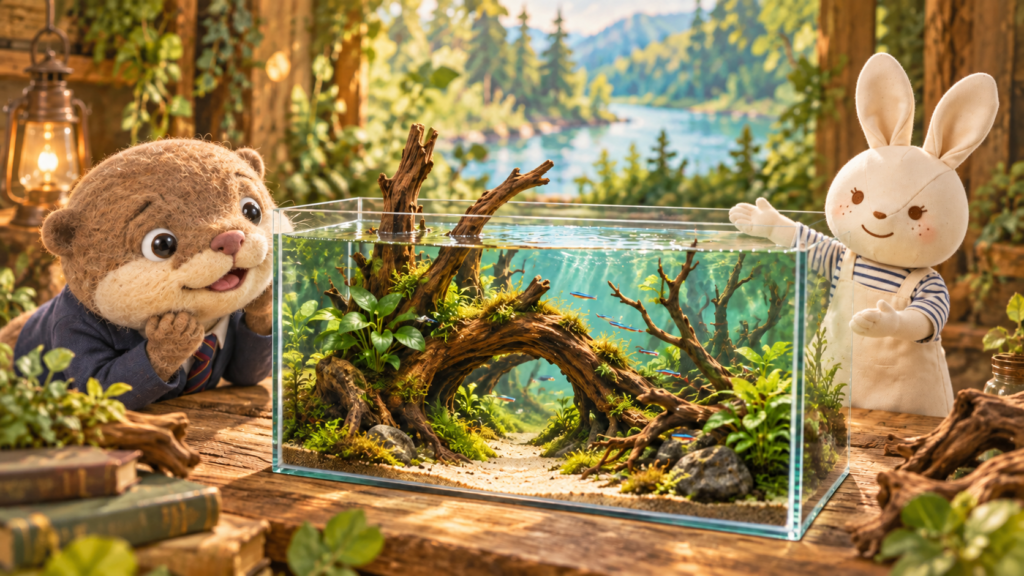 アイのアクアグッズ案内水槽の流木の選び方|枝・マングローブ・アク抜きとおすすめ商品水槽に小さな森を作る流木。枝流木やマングローブという名前の違いから、魚の隠れ家、水草の取り付け、浮く・水が茶色くなるときの準備まで、アイとコタロウが商品とともに案内します。記事はコチラ →
さまざまな飼育テーマをご紹介。リンク先の記事には広告・商品紹介が含まれます。
案内・紹介記事一覧へ →分布マップ
タイガーアグネステトラは、南米の上部アマゾン川流域に分布し、ブラジル・コロンビア・ペルーが近接するトレス・フロンテラス周辺やペルー側の水域に関連して紹介されることがあります。
この地図は分布イメージを示すため、上部アマゾン川流域のトレス・フロンテラス周辺を概略代表地点としてプロットしたものです。実際の採集地点や厳密な生息範囲を示すものではありません。
参考文献・根拠資料
この一覧は、タイガーアグネステトラの記事内に含まれる分類、分布、生息環境、飼育条件、繁殖、病気や注意点を支えるために選定した資料です。店舗、通販、個人ブログ、まとめサイトは除外し、学術データベース、査読論文、獣医学・水産系の専門機関資料に絞っています。
1. Fricke, R., Eschmeyer, W. N. & Van der Laan, R. Eschmeyer’s Catalog of Fishes: Moenkhausia agnesae Géry, 1965.
支える内容:学名、記載者・記載年、模式産地、ホロタイプ、有効名、現在の科・亜科、上部アマゾン川流域に分布する淡水魚であること。
2. Froese, R. & Pauly, D. eds. FishBase: Moenkhausia agnesae.
支える内容:分類体系、淡水・底中層遊泳性、熱帯性、上部アマゾン川流域の分布、最大標準体長6.9cm、IUCN評価の確認。
3. GBIF Secretariat. GBIF Backbone Taxonomy: Moenkhausia agnesae Géry, 1965.
支える内容:受容名としての扱い、Catalogue of Life 由来の分類情報、原記載文献への書誌的な照合。
4. Melo, B. F. et al. 2024. Phylogenomics of Characidae, a hyper-diverse Neotropical freshwater fish lineage, with a phylogenetic classification including four families. Zoological Journal of the Linnean Society, 202(1), zlae101.
支える内容:旧来 Characidae とされてきたネオトロピカル・テトラ類の再分類、Acestrorhamphidae を含む近年の科レベル分類、Moenkhausia 周辺の分類整理の背景。
5. Merck Veterinary Manual. Disorders and Diseases of Fish.
支える内容:観賞魚の病気や不調が、ストレス、悪い水質、過密飼育、検疫不足と結びつきやすいという病気予防の基本。
6. MSD Veterinary Manual. Breeding and Reproduction of Fish.
支える内容:卵散布型の魚では卵や稚魚が親魚に食べられる場合があるため、繁殖時には親魚との分離が必要になるという一般的な繁殖管理。
7. Francis-Floyd, R., Watson, C., Petty, D. & Pouder, D. B. Ammonia in Aquatic Systems. UF/IFAS Extension.
支える内容:アンモニア管理、窒素循環、水質測定の重要性など、飼育環境を安定させるための水質管理の基本。
補足:水槽サイズ、混泳の細かな相性、日本国内での流通価格や梱包事情などは、学術資料だけで直接裏づけにくい領域です。本文では「飼育上の目安」「流通上の傾向」として扱い、販売ページや個人ブログを参考文献欄に含めない構成にしています。




コメント