

解説 / Description
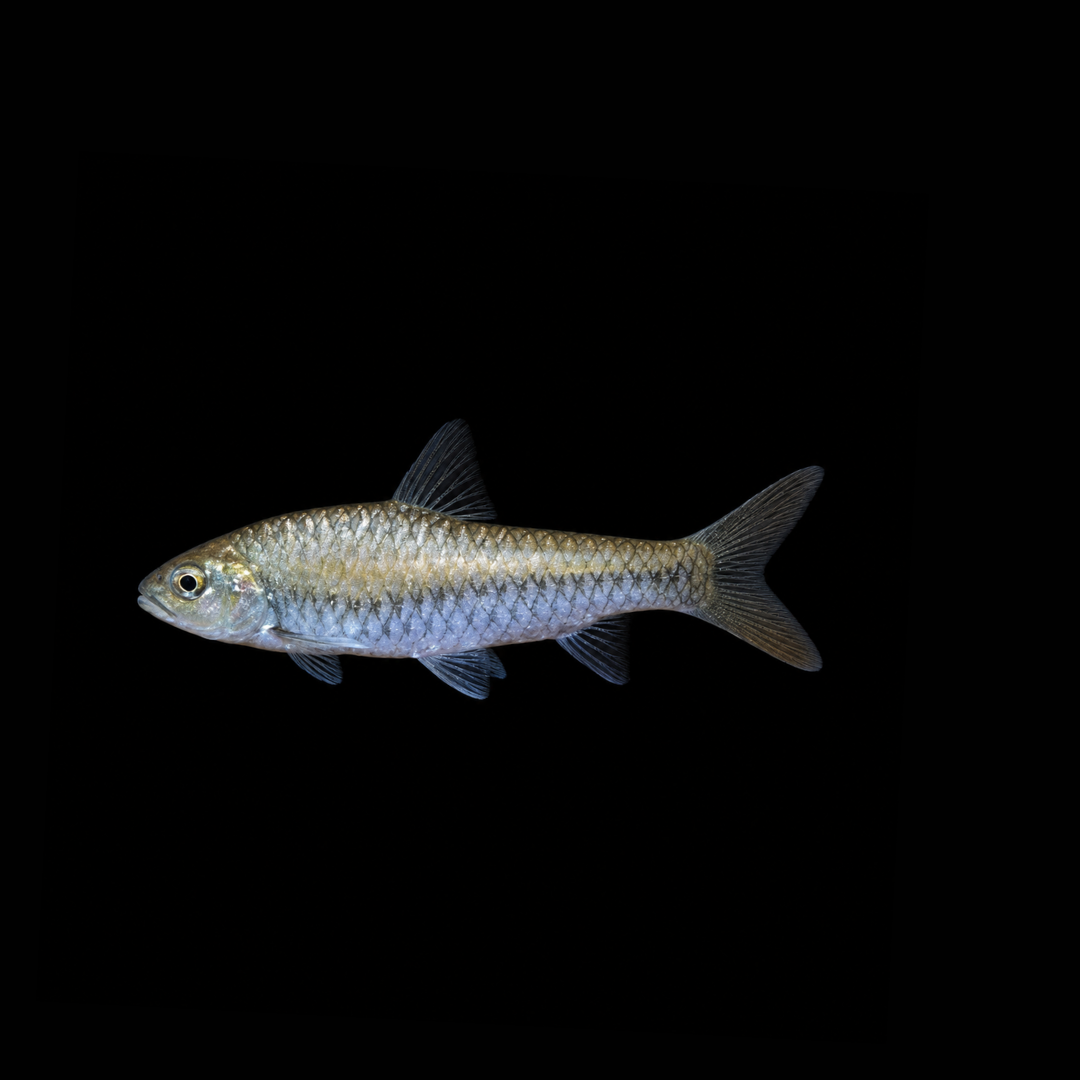
ネオリソチルス・ストラケイは、東南アジア大陸部の清流に生息する大型のコイ科魚類です。マハシールと呼ばれる渓流性の魚たちに近い仲間で、流線型の体、よく発達した遊泳力、体側に走る暗色のライン、そして光の角度によって現れる青みを帯びた金属光沢が魅力です。幼魚期は銀色からブロンズ色の印象が強く、成長や環境、照明条件によって背部やヒレの青い輝きが目立つようになります。 Neolissochilus stracheyi is a large cyprinid fish from clear streams and rivers of mainland Southeast Asia. It is closely associated with mahseer-like upland river fishes and is valued for its streamlined body, strong swimming ability, dark lateral stripe, and bluish metallic sheen that appears depending on the angle of light. Juveniles often look silvery to bronze, while the blue reflection on the back and fins becomes more noticeable with growth, condition, and lighting.
観賞魚としては餌付きやすく活発な一方で、終生飼育には大きな水槽、強い濾過、高い溶存酸素、十分な水流が必要です。水を汚しやすい大型遊泳魚として考え、清浄な水を安定して維持できる設備を用意することが大切です。小型水槽で一時的に楽しむ魚ではなく、渓流性大型魚としての運動量と水質要求を受け止められる環境でこそ、本来の美しさと迫力を見せてくれます。 As an aquarium fish, it is active and usually accepts food readily, but long-term care requires a large aquarium, strong filtration, high dissolved oxygen, and steady current. It should be treated as a large, active swimmer that can pollute the water quickly, so stable clean-water management is essential. Rather than a casual small-tank species, it shows its real beauty and presence when kept in an environment that respects its riverine swimming needs and water-quality demands.
基本情報 / Basic Information
| 学名 / Scientific Name | Neolissochilus stracheyi (Day, 1871) |
|---|---|
| 通称 / Common Name | ネオリソチルス・ストラケイ、ブルーマハシール、ストラケイ・マハシール、プラ・プアンBlue Mahseer, Stracheyi Mahseer, Pla Puang |
| 分類 / Family | コイ目コイ科トール亜科ネオリソチルス属Order Cypriniformes, family Cyprinidae, subfamily Torinae, genus Neolissochilus |
| 英名 / English Name | Blue Mahseer, Stracheyi Mahseer |
| 分布 / Distribution | ミャンマーからタイ、カンボジア周辺、ベトナム、雲南省にかけての東南アジア大陸部の河川系に記録があります。サルウィン川、メークロン川、チャオプラヤ川、メコン水系、タイ半島部やタイ南東部、ベトナムのダクロン川などの記録が知られます。地域や文献によって扱いに差があるため、販売個体の産地は入荷ごとに確認すると安心です。Records are known from mainland Southeast Asian drainages from Myanmar through Thailand and nearby Cambodia to Vietnam, with additional records from Yunnan, China. Reported river systems include the Salween, Mae Klong, Chao Phraya, Mekong, Peninsular and southeastern Thailand systems, and the Dakrong River in Vietnam. Because the exact treatment can vary among sources and regions, checking the origin of imported specimens is recommended. |
| 最大体長 / Max Size | 確認しやすい公的データでは最大60cm SL、つまり標準体長60cmが目安です。尾ビレを含む全長や活発な遊泳力を考えると、水槽内では60cm級の大型魚として扱う必要があります。90cm以上という表現は近縁のマハシール類との混同を招きやすいため、本種単独の飼育目安としては採用しません。A reliable published reference gives a maximum size of 60 cm SL, meaning 60 cm standard length. Including the tail and considering its strong swimming ability, it should be treated as a large fish in the 60 cm class. Claims of sizes above 90 cm can easily be confused with other mahseer relatives, so they are not used here as the practical care estimate for this species. |
| 寿命 / Lifespan | 本種単独の飼育下寿命について、確実な公開情報は多くありません。大型のコイ科魚類として、適切な水槽サイズ、水流、餌、水質管理が整えば長期飼育を前提にできる魚です。Reliable public information on the aquarium lifespan of this exact species is limited. As a large cyprinid, it should be considered a long-term commitment when suitable tank size, current, diet, and water quality can be provided. |
飼育環境 / Aquarium Environment
| 水槽サイズ / Tank Size | 幼魚期は90cm規格水槽でも一時的に管理できますが、成長後は最低でも180cm×60cm×60cm前後、できれば180cmワイド水槽以上を用意したい大型遊泳魚です。150cm×60cm×60cm水槽は約540L、180cm×60cm×60cm水槽は約648Lで、単なる水量だけでなく直線的に泳げる距離と奥行きを重視します。Juveniles can be managed temporarily in a standard 90 cm tank, but adults should be planned for at least around 180 × 60 × 60 cm, with a wider 180 cm aquarium or larger preferred. A 150 × 60 × 60 cm tank holds about 540 L, while a 180 × 60 × 60 cm tank holds about 648 L. Straight swimming distance and depth are just as important as volume. |
|---|---|
| 水温 / Temperature | 22〜26℃前後が扱いやすい範囲です。清流性の魚として高水温による酸欠には注意が必要で、28℃を超える状態が続く環境は避けます。夏場は水温上昇よりも、溶存酸素の低下と水質悪化が重なりやすい点に注意します。 A practical range is around 22–26°C. As a clear-stream fish, it should be protected from oxygen depletion at high temperatures, and prolonged conditions above 28°C should be avoided. In summer, the combined risk of reduced dissolved oxygen and faster water deterioration is especially important. |
| 水質 / Water Quality | pHは6.8〜7.8程度の中性付近を目安にし、アンモニアと亜硝酸は0ppm、硝酸塩はできるだけ低く保ちます。大型の外部式フィルターやオーバーフロー濾過槽を使い、給餌量と水量に応じて週1回以上の換水を行える体制が理想的です。水流ポンプや強いエアレーションで、水が常に動く環境を作ります。Aim for near-neutral water, roughly pH 6.8–7.8, with ammonia and nitrite at 0 ppm and nitrate kept as low as practical. A large canister filter or sump filtration system is recommended, with water changes at least weekly depending on feeding load and volume. Wavemakers and strong aeration should keep the water constantly moving. |
| レイアウト / Layout | 中央部には広い遊泳空間を確保し、流木や石は端に寄せて、突進時にぶつかりにくい配置にします。底面はベアタンクでも管理できますが、角のない細かい砂を薄く敷くと底をついばむ行動に合います。青い金属光沢を楽しむなら、暗色のバックスクリーンや底面、斜め上からの照明が効果的です。Keep the central area open for swimming and place wood or stones near the edges so the fish is less likely to collide with them during sudden dashes. A bare-bottom setup is manageable, but a thin layer of smooth fine sand suits its natural grazing behavior. To appreciate the bluish metallic sheen, a dark background or base and angled overhead lighting are effective. |
| 注意点 / Precautions | 驚いたときや餌を追うときに勢いよく飛び出すことがあるため、フタは隙間なく固定します。鋭利な石や複雑すぎる流木は外傷の原因になるため避けます。強い水流を好む魚ですが、常に全域が激流になる必要はなく、休める緩流部も残すと状態を見やすくなります。It may jump forcefully when startled or during feeding, so the lid must be secure and gap-free. Avoid sharp stones and overly complex driftwood that could cause injuries. Although it appreciates current, the entire tank does not need to be a torrent; leaving calmer resting zones helps the fish maintain condition. |
餌と給餌 / Feeding
| 餌の種類 / Diet | 自然下では底生生物や流下昆虫などの動物質を利用しつつ、果実などの植物質も食べる雑食傾向のある魚です。飼育下では大型魚用ペレット、沈下性ペレット、冷凍エビ、冷凍アカムシ、昆虫系フードに加え、スピルリナ配合飼料や植物質を含む餌を組み合わせるとよいでしょう。In nature, it uses animal foods such as benthic organisms and drifting insects, while also taking plant matter such as fruits. In aquaria, offer a varied diet of large-fish pellets, sinking pellets, frozen shrimp, frozen bloodworms, insect-based foods, and foods containing spirulina or other plant material. |
|---|---|
| 給餌のポイント / Feeding Tips | 一度に大量に与えるより、食べ切れる量を少量ずつ与えるほうが向いています。食欲が強く、餌を独占しやすいため、混泳水槽では他魚にも餌が回っているか確認します。水を汚しやすい魚なので、給餌量は成長と体型、水質の変化を見ながら調整します。Small, manageable meals are preferable to a single heavy feeding. Because it feeds eagerly and may dominate food, check that tank mates are also eating in a community aquarium. As it can pollute the water quickly, adjust feeding according to growth, body condition, and water-quality trends. |
性格と混泳 / Temperament and Tank Mates
| 性格 / Temperament | 基本的にはよく泳ぐ活発な魚で、同程度以上のサイズの魚に対して強い攻撃性を見せることは多くありません。ただし、餌への反応は非常に速く、遊泳力も高いため、落ち着いた魚や動きの遅い魚にはプレッシャーになることがあります。It is generally an active swimmer and is not usually highly aggressive toward similarly sized or larger fish. However, its feeding response is fast and its swimming power is considerable, so it can pressure calmer or slower tank mates. |
|---|---|
| 混泳の相性 / Compatibility | 相性がよい候補は、同じく遊泳力のある中〜大型バルブ類、シルバーダラー、大型レインボーフィッシュ、大型の温和なシクリッド、ポリプテルス、アロワナなどです。口に入る小型魚は捕食される可能性が高く、ディスカスのように強い水流や激しい給餌競争を苦手とする魚との混泳は避けます。Possible tank mates include medium to large active barbs, silver dollars, large rainbowfish, large peaceful cichlids, bichirs, and arowanas. Small fish that fit in its mouth may be eaten, and species such as discus that dislike strong current or intense feeding competition should be avoided. |
病気と対策 / Diseases and Prevention
| かかりやすい病気 / Common Diseases | 本種だけに特有の観賞魚病について、一般向けに確実な情報は多くありません。実際の飼育では、水質悪化、酸欠、高水温、輸送直後のストレス、突進による外傷をきっかけに、白点病、体表やヒレの細菌感染、充血、ヒレの傷みなどが起こりやすくなります。Reliable hobby-level information on diseases specific to this species is limited. In practice, poor water quality, low oxygen, high temperature, shipping stress, and impact injuries can lead to ich, bacterial infections of the skin or fins, redness, and fin damage. |
|---|---|
| 対策と予防 / Prevention | 予防の中心は、強力な濾過、十分な水流とエアレーション、安定した水温、定期的な換水です。導入時は水合わせを丁寧に行い、可能であれば隔離水槽で状態を観察してから本水槽へ移します。新規導入魚に薬浴を行う場合も、本種の状態と水温、酸素量を確認し、過度な薬剤使用を避けます。Prevention depends on powerful filtration, strong current and aeration, stable temperature, and regular water changes. Acclimate new fish carefully and, when possible, observe them in a quarantine tank before introduction. If medication is used for new arrivals, monitor condition, temperature, and oxygen carefully and avoid unnecessary heavy treatment. |
増やし方(繁殖) / Breeding
| 雌雄の判別 / Sexing | 飼育下での明確な雌雄判別情報は限られます。成熟した個体では、繁殖期にオスの吻部や目の下の隆起が目立つ可能性があり、抱卵したメスは腹部がふくらむと考えられますが、幼魚や若魚では外見だけでの判別は困難です。Reliable aquarium sexing information is limited. Mature males may show more noticeable tubercles around the snout and below the eyes during the breeding season, while ripe females may become fuller in the abdomen. Juveniles and subadults are difficult to sex visually. |
|---|---|
| 繁殖形態 / Reproduction | マハシール類の生態から、増水や季節変化をきっかけに上流側の砂利底や岩場で産卵する散乱型の魚と考えられます。水流と酸素がある環境で卵が発生するタイプとみられ、一般的な小型熱帯魚のように水槽内で容易に産卵させる魚ではありません。Based on the biology of mahseer-like fishes, it is considered an egg-scattering species that uses seasonal water changes and spawns over gravel or rocky upstream areas. The eggs are expected to develop in flowing, oxygen-rich water, making it very different from small aquarium species that breed readily in tanks. |
| 繁殖のポイント / Breeding Tips | 一般家庭の水槽での繁殖は現実的に難しい魚です。大型の親魚、強い水流、清浄で酸素の多い産卵環境、季節的な水位変化などが必要になると考えられます。近縁のネオリソチルス類では人工繁殖研究が行われているため、将来的には保全や養殖技術の知見が本種にも応用される可能性があります。Breeding in a typical home aquarium is realistically very difficult. It would likely require large mature fish, strong current, exceptionally clean and oxygen-rich spawning conditions, and seasonal water-level cues. Artificial breeding research in related Neolissochilus species may eventually provide knowledge applicable to conservation or aquaculture of this species. |
雑学と豆知識 / Trivia and Fun Facts
| 1. 古い名前から現在の名前へ / 1. From an old name to the current name | 本種は1871年にフランシス・デイによってBarbus stracheyiとして記載され、その後の分類整理によって現在はNeolissochilus stracheyiとして扱われます。古い文献や流通名では表記が揺れることがありますが、現在の有効名を確認しておくと、近縁種との混同を避けやすくなります。This species was described by Francis Day in 1871 as Barbus stracheyi and is now treated as Neolissochilus stracheyi after later taxonomic revision. Older literature and trade names may vary, so checking the current valid name helps avoid confusion with related species. |
|---|---|
| 2. 滑らかな唇に込められた属名 / 2. A genus name inspired by smooth lips | ネオリソチルスという属名は、「新しい」「滑らかな」「唇」を意味する語根に由来します。近縁のトール属では下唇の形が重要な特徴として扱われますが、ネオリソチルス属ではより滑らかで連続的な唇が分類上の手がかりになります。大型のマハシール類はひとまとめに語られがちですが、口元の形には系統を読み解くヒントがあります。The genus name Neolissochilus derives from roots meaning “new,” “smooth,” and “lip.” In related Tor species, the form of the lower lip is an important character, while Neolissochilus is recognized by its smoother, more continuous lip. Mahseer-like fishes are often discussed as a group, but the mouth shape contains useful taxonomic clues. |
| 3. 青は光で引き出す色 / 3. Blue brought out by light | 本種の青い輝きは、単純な体色だけでなく、鱗が光を反射する角度によって印象が大きく変わります。正面から強い光を当てると銀色やブロンズ色に見えやすく、暗い背景と斜めからの照明を組み合わせると青みが深く浮かび上がります。写真で地味に見えた個体が、水槽内では思いがけず美しく見えることがあるのも、この光の性質によるものです。The blue sheen of this species depends greatly on the angle at which the scales reflect light, not just on body color itself. Strong frontal light can make it look silver or bronze, while a dark background and angled lighting bring out a deeper blue. This is why a fish that looks plain in a photo may appear unexpectedly beautiful in a well-lit aquarium. |
| 4. 清流が似合う魚 / 4. A fish of clear streams | 本種は澄んだ森林河川や流れのある水域に生息する魚として知られます。水槽内で強い水流や高い酸素量を求めるのは、単に「よく泳ぐから」ではなく、もともとの生活場所と深く関係しています。水流に向かって体を保ち、広い空間を巡る姿は、山間河川の魚らしい魅力をそのまま伝えてくれます。This species is known from clear forest streams and flowing waters. Its need for current and high oxygen in the aquarium is not simply because it is active, but because it reflects the habitat it comes from. Watching it hold position in the current and cruise through open water reveals the character of an upland river fish. |
| 5. 日本で見かけにくい理由は、希少性だけではない / 5. Why it is uncommon in Japan is not just rarity | 本種は現地で常に絶滅寸前の魚として扱われているわけではありませんが、日本の観賞魚市場では入荷が不定期です。輸入の可否や手続きは、対象魚種、用途、輸出国、最新の衛生条件によって変わります。コイ科全般が一律に同じ検疫対象になると決めつけるのではなく、輸入業者や販売店が最新の制度を確認して取り扱う魚と考えると、国内で出会う機会の少なさも理解しやすくなります。This species is not always treated as being on the brink of extinction in its native range, yet it appears irregularly in the Japanese aquarium trade. Import eligibility and procedures depend on the species, purpose, exporting country, and current health requirements. Rather than assuming that every cyprinid is regulated in exactly the same way, it is better to understand this fish as one that importers and retailers must handle while checking the latest rules. |
まとめ / Conclusion
ネオリソチルス・ストラケイは、渓流の流れに鍛えられた体と、光を受けて青くきらめく鱗をあわせ持つ、存在感の大きな淡水魚です。水槽の中では派手な色だけを楽しむ魚ではなく、水流に向かって泳ぐ姿、餌を探して底をついばむ動き、群れの中で落ち着いて巡る姿まで含めて魅力になります。 Neolissochilus stracheyi is a freshwater fish with a strong body shaped by river currents and scales that shimmer blue when they catch the light. In the aquarium, its appeal is not limited to color; it is also found in the way it swims into the current, grazes along the bottom, and cruises calmly through open water.
大きな水槽、澄んだ水、豊かな酸素、よく考えられた水流を用意できたとき、この魚は単なる珍しい大型魚ではなく、東南アジアの清流を思わせる主役になります。飼育者の手で整えられた流れの中で、静かに青を宿しながら泳ぐ姿は、大型魚飼育ならではの深い満足感を与えてくれます。 When provided with a large aquarium, clear water, abundant oxygen, and carefully designed current, this fish becomes more than a rare large species; it becomes a living reminder of the clear rivers of Southeast Asia. Swimming through a current created by its keeper, carrying a quiet blue glow, it offers the deep satisfaction that only thoughtful large-fish keeping can provide.

気になる道具や飼い方を見つけてみませんか?
 アイのアクアグッズ案内水草水槽のCO₂添加|3つの方式の選び方とおすすめ用品道具の特徴や使い方、選ぶときのポイントをアイが紹介します。記事はコチラ →
 アイのアクアグッズ案内水草用ソイルの選び方|土・砂の違いとおすすめ商品道具の特徴や使い方、選ぶときのポイントをアイが紹介します。記事はコチラ →
 アイのアクアグッズ案内アフリカンシクリッドの飼育用品|水槽・ろ過・底砂・岩組み・餌の選び方道具の特徴や使い方、選ぶときのポイントをアイが紹介します。記事はコチラ →
 アイのアクアグッズ案内ラスボラ・ボララスの群泳を楽しむ飼育用品|水槽・ろ過・ヒーター・餌・水草道具の特徴や使い方、選ぶときのポイントをアイが紹介します。記事はコチラ →
さまざまな飼育テーマをご紹介。リンク先の記事には広告・商品紹介が含まれます。
案内・紹介記事一覧へ →分布マップ
ネオリソチルス・ストラケイは、ミャンマーからタイ、カンボジア周辺、ベトナム、雲南省にかけての東南アジア大陸部の河川系に記録があります。サルウィン川、メークロン川、チャオプラヤ川、メコン水系、タイ半島部、タイ南東部、ベトナムのダクロン川などが分布情報として知られます。
この地図は、記事内の分布欄をもとにした分布イメージ用の概略表示です。マーカーおよび範囲表示は実際の採集地点や厳密な生息範囲を示すものではありません。
参考文献・参照資料
本リストは、ネオリソチルス・ストラケイの分類、分布、生息環境、飼育条件、食性、繁殖、病気や輸入時の注意点を支えるために選定した資料です。店舗、通販ページ、個人ブログ、まとめサイトは除外し、分類データベース、査読論文、学会要旨、国際機関および政府機関の情報に絞っています。
-
Fricke, R., Eschmeyer, W. N. & van der Laan, R. (eds.). 2026. Eschmeyer’s Catalog of Fishes: Neolissochilus stracheyi.
California Academy of Sciences. 参照日: 2026年6月22日。
主な対応箇所: 学名、原記載名、命名者、現在の有効名、分類階級、分布の大枠。
https://researcharchive.calacademy.org/research/ichthyology/catalog/fishcatget.asp?spid=3653 -
Froese, R. & Pauly, D. (eds.). 2026. FishBase: Neolissochilus stracheyi.
FishBase. 参照日: 2026年6月22日。
主な対応箇所: 最大体長、分布水系、淡水・底中層性、清流・森林河川・急流域の生息、食性、保全状況の確認。
https://www.fishbase.se/summary/Neolissochilus-stracheyi.html -
Hoàng, H. Đức, Phạm, H. M., Durand, J.-D., Trần, N. T. & Phan, P. Đình. 2015. Mahseers genera Tor and Neolissochilus (Teleostei: Cyprinidae) from southern Vietnam.
Zootaxa, 4006(3), 551–568. DOI: 10.11646/zootaxa.4006.3.8。
主な対応箇所: ベトナム南部における分布記録、山地河川・森林河川という生息環境、標高帯、形態・分子情報。
https://mapress.com/zt/article/view/zootaxa.4006.3.8 -
Wei, Z., Zhao, B., Lin, X., Yin, C., Xu, S. & Dai, X. 2022. The complete mitochondrial genome of Neolissochilus stracheyi (Osteichthyes: Cyprinidae).
Mitochondrial DNA Part B: Resources, 7(8), 1492–1493. DOI: 10.1080/23802359.2022.2107460。
主な対応箇所: ミトコンドリアゲノム、系統関係、分類学的背景に関する補強情報。
https://pubmed.ncbi.nlm.nih.gov/35989879/ -
Poldee, P. & Suvarnaraksha, A. 2014. Natural food in digestive tract of Neolissochilus stracheyi (Day, 1871) in Wa River, Nan Province.
Faculty of Fisheries Technology and Aquatic Resources, Maejo University / ResearchGate掲載情報。
主な対応箇所: 自然下での食性、植物質・藻類・昆虫などの摂取傾向、給餌内容を植物質寄りに組み立てる根拠。
https://www.researchgate.net/publication/274721743_Natural_food_in_digestive_tract_of_Neolissochilus_stracheyi_Day_1871_in_Wa_River_Nan_Province -
Pholdee, T. & Suvarnaraksha, A. 2017. Aspects of the reproductive biology of brook trout Neolissochilus stracheyi (Day, 1871) in Northern Thailand.
The JSFS 85th Anniversary-Commemorative International Symposium “Fisheries Science for Future Generations”, Abstract SO02-40。
主な対応箇所: 繁殖期、GSI、抱卵数、雌雄サイズ、繁殖情報が限定的であることの補足。
https://www.jsfs.jp/office/annual_meeting/meeting-program/85th/program-abstract/data/html/S02-05.html -
World Organisation for Animal Health (WOAH). Koi herpesvirus disease.
WOAH disease information, Aquatic Code Chapter 10.7 / Aquatic Manual Chapter 2.3.6。
主な対応箇所: コイヘルペスウイルス病に関する病気・防疫上の注意点。記事内では、本種固有の発症リスクとしてではなく、コイ科魚類を扱う際の防疫文脈を補強する資料として参照。
https://www.woah.org/en/disease/koi-herpesvirus-disease/ -
World Organisation for Animal Health (WOAH). Spring viraemia of carp.
WOAH disease information, Aquatic Code Chapter 10.9 / Aquatic Manual Chapter 2.3.9。
主な対応箇所: コイ春ウイルス血症に関する病気・防疫上の注意点。輸入・隔離・検疫に関する記述を慎重に扱うための基礎資料。
https://www.woah.org/en/disease/spring-viraemia-of-carp/ -
Animal Quarantine Service, Ministry of Agriculture, Forestry and Fisheries, Japan. Entry into Japan – Aquatic animals.
農林水産省 動物検疫所。参照日: 2026年6月22日。
主な対応箇所: 日本へ水産動物を持ち込む際の対象魚種、対象疾病、国別衛生条件を確認するための政府機関資料。なお、記事内では「コイ科全種が一律に同じ検疫対象」と断定しないための確認資料として扱う。
https://www.maff.go.jp/aqs/english/animal/im_aquatic_animal.html
注記: 飼育条件のうち水槽サイズ、強い水流、高い溶存酸素、清浄な水質、多回数少量給餌といった推奨は、自然下の生息環境・食性・体サイズに関する上記資料から導いた実践上の解釈を含みます。家庭水槽での飼育例そのものを根拠にした店舗・通販・個人ブログ由来の資料は採用していません。




コメント