

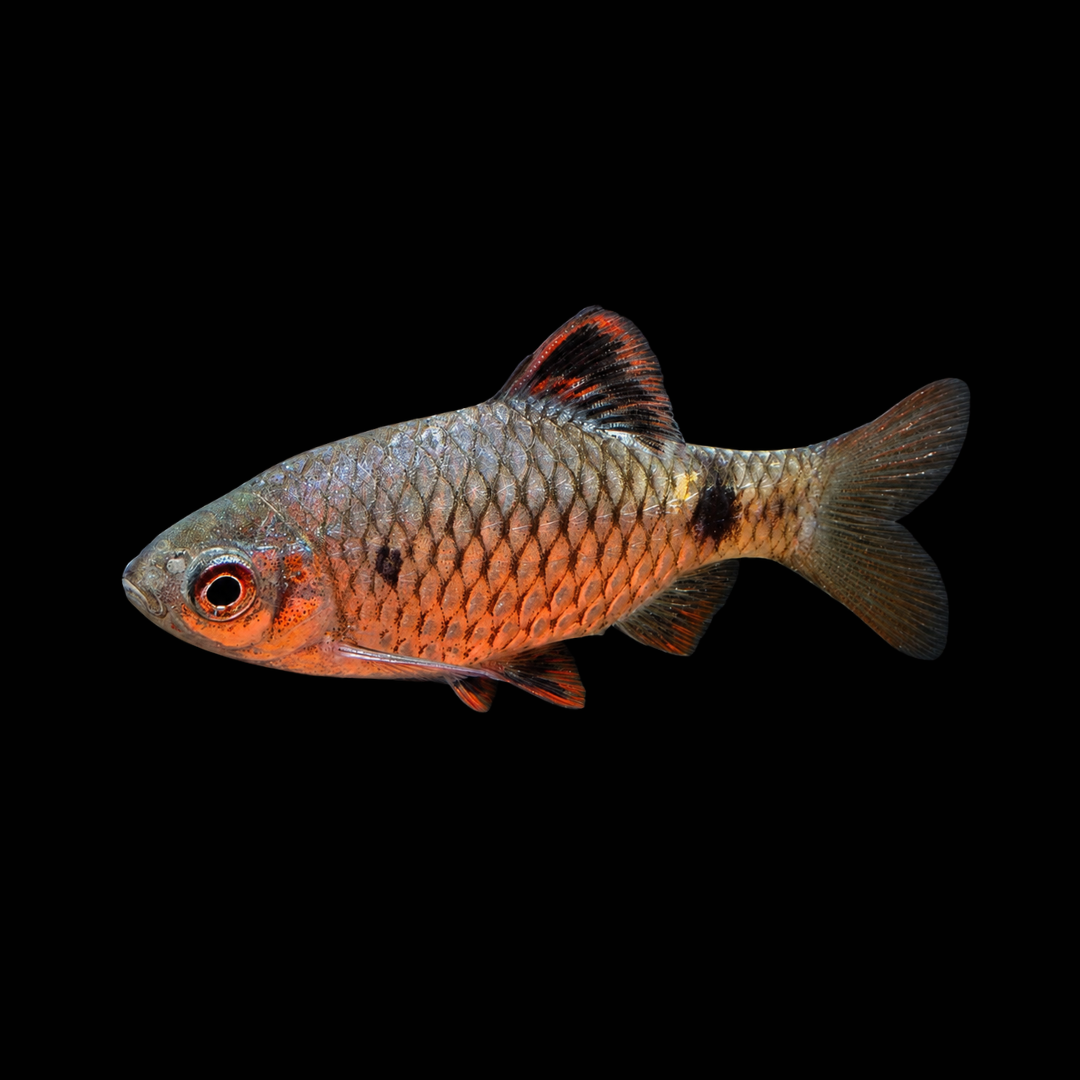
解説 / Description
ストリッカーバルブは、銀緑色の体に2つの黒い斑紋が入る小型のコイ科熱帯魚です。成熟したオスは背びれや腹びれ、尻びれに赤みを帯び、ディスプレイ時には黒と赤のコントラストが引き立ちます。丈夫で飼いやすい一方、よく泳ぐ群泳魚なので、単独や少数ではなく、ある程度まとまった数で飼うことで本来の魅力が見えやすくなります。 The Stoliczka’s barb is a small cyprinid fish with a silvery green body and two dark markings. Mature males develop red tones on the dorsal, pelvic, and anal fins, and their red and black contrast becomes especially attractive during display. It is hardy and adaptable, but it is also an active schooling fish, so it shows its best character when kept in a proper group.
基本情報 / Basic Information
| 学名 / Scientific Name | Pethia stoliczkana |
|---|---|
| 通称 / Common Name | ストリッカーバルブ、ストリチカバルブ、ストリチカズバーブStoliczka’s barb, Stoliczka barb |
| 分類 / Family | コイ目 コイ科 ペティア属Order Cypriniformes, family Cyprinidae, genus Pethia |
| 英名 / English Name | Stoliczka’s Barb |
| 分布 / Distribution | ミャンマー、タイ、ラオスを中心に、イラワジ川、チンドウィン川、サルウィン川、メークロン川、メコン川上流、チャオプラヤ川上流などの水系で知られます。インド北東部マニプル州周辺からの記録もあります。Known mainly from Myanmar, Thailand, and Laos, including the Ayeyarwady, Chindwin, Salween, Mae Klong, upper Mekong, and upper Chao Phraya drainages. It has also been recorded from the Manipur region of northeastern India. |
| 最大体長 / Max Size | 約4.5〜5cm。水槽内では3〜4cm前後で落ち着く個体も多いです。About 4.5 to 5 cm. In aquaria, many individuals remain around 3 to 4 cm. |
| 寿命 / Lifespan | おおむね3〜5年程度。安定した水質、過密を避けた群泳環境、与えすぎない給餌で長く楽しめます。Generally around 3 to 5 years. Stable water quality, a spacious group setup, and careful feeding help maintain long-term health. |
飼育環境 / Aquarium Environment
| 水槽サイズ / Tank Size | 長期飼育では60cm規格水槽以上が扱いやすく、余裕を持たせるなら幅75cm級、または60cmワイド水槽以上が理想的です。活発に泳ぐため、前面には遊泳スペースを残し、群れで動ける空間を確保します。For long-term care, a standard 60 cm aquarium or larger is recommended, with a 75 cm-class tank or a 60 cm wide tank being even better. Leave open swimming space at the front and provide enough room for group movement. |
|---|---|
| 水温 / Temperature | 18〜26℃が目安です。日本の家庭水槽では22〜26℃前後で安定させると管理しやすく、急な水温変化を避けることが大切です。 Aim for 18 to 26°C. In home aquaria, keeping the temperature stable around 22 to 26°C is practical, and sudden changes should be avoided. |
| 水質 / Water Quality | 弱酸性〜中性付近、pH6.0〜7.5を目安にします。硬度への適応幅は比較的広いものの、清潔で酸素量のある水を好むため、ろ過を安定させ、定期的な換水を行います。Slightly acidic to neutral water, roughly pH 6.0 to 7.5, is suitable. It has a fairly broad tolerance for hardness, but it does best in clean, well-oxygenated water with stable filtration and regular water changes. |
| レイアウト / Layout | 砂や細かい砂利、丸石、流木、落ち葉風の隠れ場を組み合わせると、渓流や支流の雰囲気を再現しやすくなります。水草はアヌビアス、ミクロソリウム、クリプトコリネ類など比較的丈夫な種類が向きます。浮き草や流木で光を少し和らげると、体色が落ち着いて見えます。A layout with sand or fine gravel, rounded stones, driftwood, and leaf-litter-style shelters helps recreate the feel of streams and tributaries. Hardy plants such as Anubias, Microsorum, and Cryptocoryne are suitable. Floating plants and driftwood can soften the light. |
| 注意点 / Precautions | 少数飼育ではオス同士の追い合いや、他魚へのちょっかいが目立つことがあります。できれば8匹前後以上の群れで迎え、視線を切れる水草や流木を配置して、競り合いが一部の個体に集中しないようにします。In very small groups, male chasing or attention toward tank mates can become more noticeable. Keeping around eight or more individuals and adding plants or driftwood that break lines of sight helps prevent social pressure from focusing on a single fish. |
餌と給餌 / Feeding
| 餌の種類 / Diet | 人工飼料への餌付きは良好で、フレーク、顆粒、沈下性フードをよく食べます。自然下では藻類、珪藻、デトリタス、小型の昆虫、ミジンコ類、甲殻類などをついばむ雑食性と考えられるため、植物質を含むフードを基本に、ブラインシュリンプ、冷凍アカムシ、ミジンコ類などを補助的に与えるとよいでしょう。It readily accepts prepared foods such as flakes, granules, and sinking diets. In nature it is considered a foraging omnivore, feeding on algae, diatoms, detritus, small insects, daphnia-type foods, and crustaceans. Use a quality prepared food with some plant matter as the staple, supplemented with brine shrimp, frozen bloodworms, or small live and frozen foods. |
|---|---|
| 給餌のポイント / Feeding Tips | 食欲が強く、混泳水槽では他魚の分まで食べてしまうことがあります。肥満や水質悪化を避けるため、1回量は数分で食べきる程度に抑え、赤虫など高タンパクな餌だけに偏らせないようにします。It has a strong appetite and may eat more than its share in a community aquarium. To prevent obesity and water deterioration, feed only what can be consumed within a few minutes and avoid relying too heavily on rich, high-protein foods such as bloodworms. |
性格と混泳 / Temperament and Tank Mates
| 性格 / Temperament | 基本的には温和で、日中によく泳ぐ活発な群泳魚です。オスはメスへのアピールや順位争いの際にひれを広げてディスプレイし、体色を濃く見せることがあります。群れの数と水槽の広さが十分なら、こうした行動は観察の楽しみになります。It is generally peaceful, active by day, and best kept as a schooling fish. Males may flare their fins and darken during courtship or hierarchy displays. With enough space and a proper group size, this behavior becomes one of the pleasures of keeping the species. |
|---|---|
| 混泳の相性 / Compatibility | 同程度の大きさで、やや活発に泳ぐラスボラ類、小型コイ科魚、ローチ類、丈夫な小型ナマズ類などと相性がよいです。長いひれを持つ魚、極端に臆病な魚、餌取りの遅い魚とは、追いかけや餌の取り合いが起こる場合があります。It mixes well with similarly sized rasboras, small cyprinids, loaches, and hardy small catfish that can handle a moderately active community. Fish with very long fins, very timid species, or slow feeders may experience chasing or food competition. |
病気と対策 / Diseases and Prevention
| かかりやすい病気 / Common Diseases | 白点病、尾ぐされ病、カラムナリス症、エロモナス感染症など、一般的な熱帯魚の病気に注意します。特定の病気だけに弱い魚というより、水質悪化、過密、急な水温変化、過食が重なると体調を崩しやすくなるタイプです。Watch for common aquarium diseases such as ich, fin rot, columnaris, and Aeromonas infections. It is not best understood as a fish especially vulnerable to one specific disease; rather, poor water quality, overcrowding, sudden temperature changes, and overfeeding can make health problems more likely. |
|---|---|
| 対策と予防 / Prevention | ろ過を安定させ、週1回を目安に水量の3分の1程度を換水し、餌を与えすぎないことが基本です。新しく迎えた個体は、可能であれば短期間のトリートメント水槽で様子を見てから本水槽へ移すと安心です。異常が見られた場合は早めに隔離し、症状に合った薬浴を検討します。Stable filtration, weekly water changes of about one-third, and controlled feeding are the foundations of prevention. New arrivals are safer when observed in a short-term quarantine or treatment tank before introduction. If symptoms appear, isolate the fish early and consider medication appropriate to the signs. |
増やし方(繁殖) / Breeding
| 雌雄の判別 / Sexing | オスは成長すると体型がやや細身で、背びれや腹びれ、尻びれを中心に赤みが増します。メスは腹部がふっくらしやすく、全体に銀緑色の落ち着いた色合いを保つことが多いです。若魚では差が出にくいため、成熟後の体型とひれの色を合わせて判断します。Males are usually slimmer and develop stronger red tones, especially on the dorsal, pelvic, and anal fins. Females tend to be fuller-bodied and usually retain a more subdued silvery green coloration. Juveniles can be difficult to sex, so body shape and fin color should be assessed after maturity. |
|---|---|
| 繁殖形態 / Reproduction | 水草や底面付近に卵をばらまくエッグスキャッターです。親魚は卵や仔魚を守らず、食べてしまうことがあるため、繁殖を狙う場合は別水槽で管理します。It is an egg-scattering species that releases eggs among plants or near the substrate. The parents do not guard the eggs or fry and may eat them, so a separate breeding tank is recommended. |
| 繁殖のポイント / Breeding Tips | 産卵用水槽には成熟した飼育水を使い、照明はやや暗めにします。底面にはビー玉、防護ネット、人工産卵藻、ウィローモスなどを入れ、卵が親魚に食べられにくい構造にします。状態のよいペア、または小さな繁殖グループを夕方に入れると、翌朝に産卵することがあります。産卵後は親魚を戻し、卵は24〜48時間ほどで孵化、仔魚が泳ぎ出したらインフゾリアを初期飼料とし、成長に合わせてブラインシュリンプ幼生やマイクロワームへ移行します。Use mature aquarium water in a dimly lit breeding tank. Add marbles, mesh, spawning mops, or Java moss so eggs fall out of reach of the adults. A well-conditioned pair or small breeding group can be introduced in the evening, and spawning may occur the next morning. Remove the adults after spawning. Eggs usually hatch in about 24 to 48 hours, and once the fry become free-swimming, start with infusoria before moving to newly hatched brine shrimp or microworms as they grow. |
雑学と豆知識 / Trivia and Fun Facts
| 1. プンティウス属からペティア属へ / 1. From Puntius to Pethia | ストリッカーバルブは、かつて多くの小型アジア産コイ科魚類と同じくプンティウス属として扱われていました。その後、南アジア産小型バルブ類の分類見直しにより、現在はペティア属に置かれています。ヒゲを持たないこと、背びれの最後の不分岐軟条に鋸歯があること、尾柄部に黒斑を持つことなどは、この仲間を理解するうえで大切な手がかりになります。The Stoliczka’s barb was once placed in the broad genus Puntius, like many small Asian cyprinids. After revision of South Asian small barbs, it is now placed in the genus Pethia. Features such as the absence of barbels, a serrated last unbranched dorsal-fin ray, and a dark mark on the caudal peduncle are useful clues for understanding this group. |
|---|---|
| 2. 名前に残る博物学者ストリチカ / 2. Stoliczka’s Name in Natural History | 種小名の stoliczkana は、19世紀にインド周辺で研究活動を行った博物学者フェルディナント・ストリチカに由来します。彼は地質学や動物学に足跡を残し、その名は魚だけでなく、さまざまな生き物の学名にも残されています。水槽で泳ぐ小さなバルブの名前にも、探検と標本研究の時代の記憶が静かに刻まれています。The specific name stoliczkana honors Ferdinand Stoliczka, a 19th-century naturalist who worked in and around India. He contributed to geology and zoology, and his name remains attached to various organisms, not only fish. The name of this small aquarium barb quietly preserves the memory of an era of exploration and specimen-based natural history. |
| 3. チクトバルブとの見分け方 / 3. Distinguishing It from the Ticto Barb | ストリッカーバルブは、外見が似たチクトバルブと混同されることがあります。見分ける際の重要なポイントは、ストリッカーバルブでは側線が尾柄部付近までよく続くこと、胸びれ上方と尾柄部に黒い斑紋を持つことです。ただし地域差や流通個体のばらつきもあるため、色だけでなく斑紋、側線、体型を合わせて見ることが大切です。It can be confused with the similar ticto barb. Important clues are the more complete lateral line extending toward the caudal peduncle and the dark markings above the pectoral fin and on the caudal peduncle. Because regional variation and trade variation can complicate identification, it is best to consider markings, lateral line, and body shape together rather than relying only on color. |
| 4. 広い分布と低懸念の評価 / 4. Wide Distribution and Least Concern Status | 本種は東南アジア大陸部の複数の河川水系に記録があり、IUCNでは低懸念とされています。とはいえ、低懸念は「どの産地でも環境変化の影響を受けない」という意味ではありません。渓流や支流、木陰のある流れ、砂利や落ち葉が混じる底床といった環境を背景に生きてきた魚であり、水槽でも清潔で酸素のある水を保つことが、自然な姿を引き出す近道になります。This species is recorded from several river systems in mainland Southeast Asia and is listed as Least Concern by the IUCN. However, Least Concern does not mean every local population is free from environmental pressure. It is a fish associated with streams and tributaries, shaded flow, gravel, and leaf-littered substrates; in the aquarium, clean and well-oxygenated water helps bring out its natural behavior. |
| 5. 輸入規制の説明は慎重に / 5. A Careful Note on Import Rules | 日本には水産動物の輸入検疫制度があり、対象となる魚種や用途では輸入許可、衛生証明、管理飼育などが関係します。ただし、対象は法令や省令で定められた水産動物に限られるため、ストリッカーバルブを「すべてのコイ科観賞魚と同じく一律にSVCやKHV検疫対象」と断定するのは避けるべきです。販売や輸入の実務では、最新の対象リストと用途区分を確認することが欠かせません。Japan has an import quarantine system for aquatic animals, and for listed species and uses, import permission, health certification, and controlled holding may be involved. However, the system applies to aquatic animals specified by law and ministerial ordinance, so it is better not to state that Stoliczka’s barb is automatically subject to SVC or KHV quarantine simply because it is a cyprinid ornamental fish. In import or sales practice, the current target list and use category must always be checked. |
まとめ / Conclusion
ストリッカーバルブは、丈夫で親しみやすい小型魚でありながら、群れのまとまり、オスの発色、近縁種との違い、分類の変遷まで味わえる奥行きのあるバルブです。清潔な水、ゆとりのある遊泳スペース、十分な数の仲間がそろうと、銀緑色の体が水草や流木の陰を行き来し、時おり赤いひれを広げて水槽に小さな躍動感を添えてくれます。 The Stoliczka’s barb is a hardy and approachable small fish, yet it offers depth through its schooling behavior, male coloration, differences from related species, and taxonomic history. With clean water, generous swimming space, and a proper group, its silvery green body moves through the shade of plants and driftwood, while flashes of red fins bring a quiet sense of motion to the aquarium.
派手さだけで主役になる魚ではありませんが、日々の管理に応えるように少しずつ色を増し、群れの中で自然なディスプレイを見せる姿には、小型コイ科魚らしい魅力があります。落ち着いた水景の中で、観察するほどに表情が深まっていく、長く付き合いたい一種です。 It is not a fish that relies only on bold showiness, but it responds to steady care with gradually improving color and natural displays within the group. In a calm aquascape, it becomes more expressive the longer it is observed, making it a species well worth keeping over time.

気になる道具や飼い方を見つけてみませんか?
 アイのアクアグッズ案内水草トリミングの道具とやり方|ハサミ・ピンセットを水草に合わせて選ぼう伸びすぎた水草は切っていい? 有茎草の差し戻し、前景草の絨毯、流木のモスを整える場面から、水草用ハサミ・ピンセット・ゴミ取りネットの選び方と片付けを紹介します。記事はコチラ →
 アイのアクアグッズ案内水槽のろ材の選び方|ウール・リング・活性炭の違いとおすすめ商品フィルターの中の綿や石は何をしている? アイとコタロウが、ウール・スポンジ・セラミック・焼結ガラス・活性炭・ゼオライトを比較。機種との相性、入れ方、洗い方と交換まで商品とともに紹介します。記事はコチラ →
 アイのアクアグッズ案内水槽フィルターの選び方|外掛け・外部・上部から小型オーバーフローまで道具の特徴や使い方、選ぶときのポイントをアイが紹介します。記事はコチラ →
 アイのアクアグッズ案内ラスボラ・ボララスの群泳を楽しむ飼育用品|水槽・ろ過・ヒーター・餌・水草道具の特徴や使い方、選ぶときのポイントをアイが紹介します。記事はコチラ →
さまざまな飼育テーマをご紹介。リンク先の記事には広告・商品紹介が含まれます。
案内・紹介記事一覧へ →分布マップ
ストリッカーバルブは、ミャンマー、タイ、ラオスを中心に、イラワジ川、チンドウィン川、サルウィン川、メークロン川、メコン川上流、チャオプラヤ川上流などの水系で知られ、インド北東部マニプル州周辺からの記録もあります。
この地図は、分布欄の内容から作成した分布イメージ用の概略代表地点です。実際の採集地点や厳密な生息範囲を示すものではありません。
参考文献・根拠資料
この記事内容のうち、分類、分布、生息環境、飼育条件、繁殖、病気や注意点を支えるための資料です。店舗・通販ページ、個人ブログ、一般的なまとめサイトは除外し、学術データベース、公的機関、専門的な魚類情報・獣医学資料を中心に選定しています。
-
Eschmeyer’s Catalog of Fishes, California Academy of Sciences
Pethia stoliczkana / Barbus stoliczkanus の分類・原記載情報
有効学名、原記載名、記載者、タイプ産地、シノニムの整理を確認するための分類学的な基礎資料です。 -
GBIF Backbone Taxonomy / Catalogue of Life
Pethia stoliczkana (Day, 1871)
現在受け入れられている分類、旧学名、シノニム、発生記録データへの入口として参照しました。 -
Pethiyagoda, R., Meegaskumbura, M. & Maduwage, K. 2012
A synopsis of the South Asian fishes referred to Puntius (Pisces: Cyprinidae). Ichthyological Exploration of Freshwaters 23(1):69-95.
旧プンティウス属の見直しと、ペティア属の分類学的な位置づけを支える主要論文です。 -
FishBase
Pethia stoliczkana (Day, 1871)
分類、最大体長、淡水性、分布、体側斑・雄の背びれなどの形態的特徴、IUCN評価の確認に使用しました。 -
Dahanukar, N. 2015. The IUCN Red List of Threatened Species
Pethia stoliczkana
保全状況、分布域、野生個体群に関する評価を確認するための公的な保全評価資料です。 -
Lim, K. K. P. & Chua, M. A. H. 2017. Southeast Asia Vertebrate Records
Stoliczka’s Barb Pethia stoliczkana at Kuang Si waterfalls, Luang Prabang, Laos
ラオス・クアンシーの滝周辺での浅い流水環境、底質、落ち葉、水温、求愛行動の観察記録を支える現地記録です。 -
Seriously Fish
Pethia stoliczkana species profile
飼育水槽の目安、水温・pH・硬度、レイアウト、食性、混泳、雌雄差、エッグスキャッター型の繁殖手順を補強する専門的な種別解説です。 -
Department of Fisheries, Thailand
รูปแบบของลายและรูปทรงตัวของปลามะไฟ Pethia stoliczkana (Day, 1871) ที่พบในประเทศไทย
タイ国内個体群の斑紋・体形差など、流域差や地域個体群の話題を扱う際の補助資料として選定しました。 -
MSD Veterinary Manual
Bacterial Diseases of Fish
エロモナス、カラムナリスなどの細菌性疾病、水質悪化・過密・輸送・急な水温変化・低酸素などのストレス要因と疾病予防の説明を支える獣医学資料です。 -
農林水産省
水産輸入防疫制度について
日本国内の水産動物輸入防疫制度、輸入許可の対象、輸入防疫対象疾病を確認するための公的資料です。ストリッカーバルブ個別に一律の検疫対象と断定せず、実際の輸入時は最新の対象表と動物検疫所への確認が必要です。




コメント