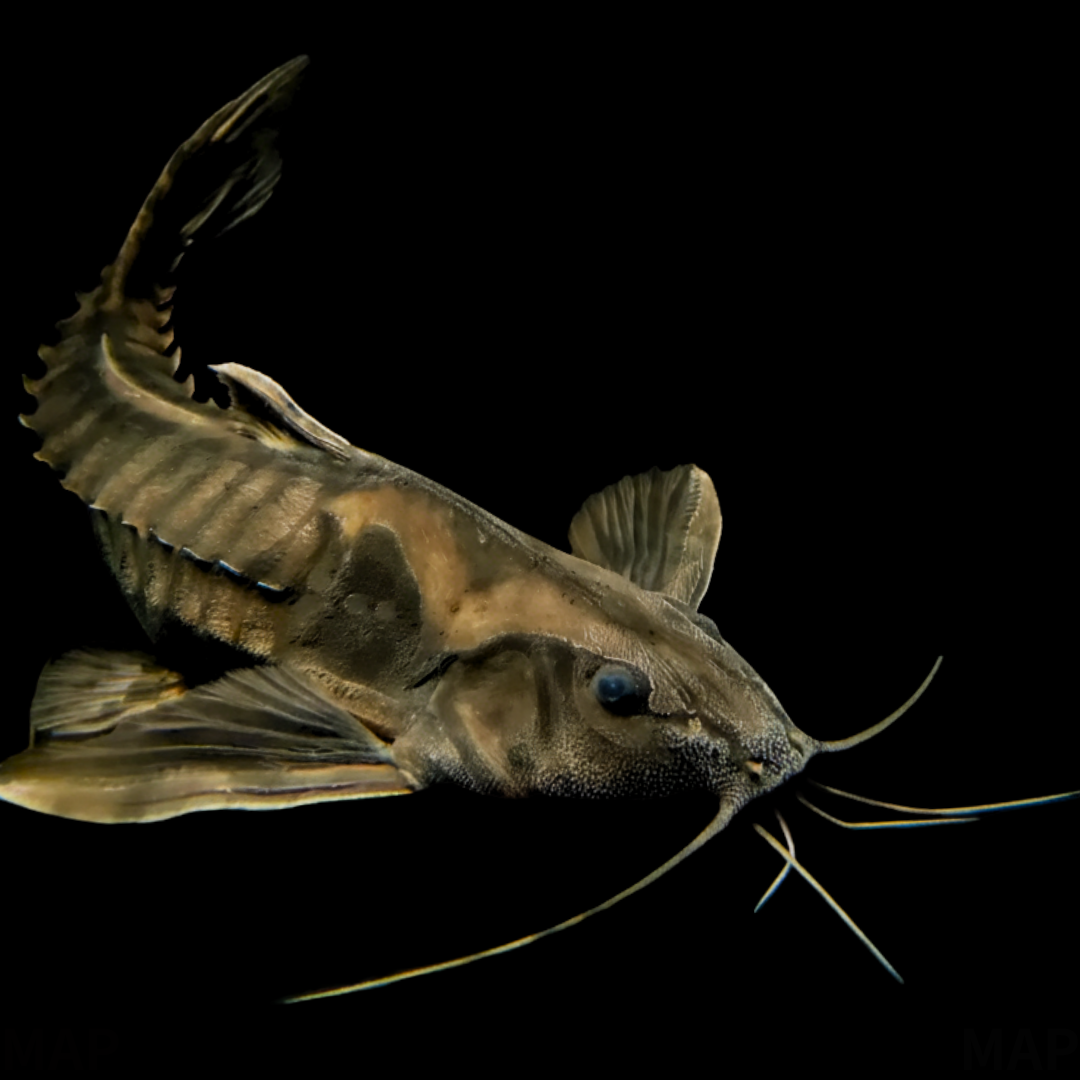
メガロドラスは、南米アマゾン川流域に生息するドラス科最大級のナマズです。その最大の特徴は、体側を覆う強固な骨質板と、そこから生える鋭い棘にあります。見た目はまさに「水中の重戦車」と呼ぶにふさわしい厳つさを持っていますが、その性格は非常に温和で、自分より遥かに小さな魚を襲うこともほとんどありません。また、水中や空気中で大きな音を発してコミュニケーションをとるという非常に珍しい生態を持っており、アクアリストの間では古くから神秘的な存在として愛されてきました。Megalodoras is one of the largest catfish in the Doradidae family, native to the Amazon River basin in South America. Its most prominent feature is the robust bony scutes covering its sides, equipped with sharp spines. While it looks like an “underwater tank,” its temperament is exceptionally peaceful, and it rarely attacks fish much smaller than itself. Furthermore, it possesses the rare ecological trait of producing loud sounds underwater and in the air for communication, making it a mystical and beloved species among aquarists for a long time.
ブラジル、ペルー、ボリビア、コロンビアなどアマゾン川全域、オリノコ川、エセキボ川水系Throughout the Amazon, Orinoco, and Essequibo River basins in Brazil, Peru, Bolivia, Colombia, and more.
最大体長 / Max Size
約60センチメートルから70センチメートル前後(野生下では70センチメートルを超える記録もあり)Approximately 60 to 70 cm (records exceeding 70 cm exist in the wild).
寿命 / Lifespan
15年から20年以上15 to 20 years or more.
飼育環境 / Aquarium Environment
水槽サイズ / Tank Size
最低でも1500リットル以上。240cm規格水槽(幅240cm × 奥行き120cm × 高さ60cm程度)以上の底面積が推奨されます。Minimum 1500 liters. A tank with a footprint of 240cm x 120cm x 60cm or larger is recommended.
水温 / Temperature
21.0℃ 〜 26.0℃(熱帯魚としてはやや低めの水温を好む傾向があります)21.0°C – 26.0°C (they tend to prefer slightly cooler temperatures for tropical fish).
水質 / Water Quality
pH 5.5 〜 7.5(弱酸性から中性)。総硬度は1 〜 25 NK度。pH 5.5 – 7.5 (slightly acidic to neutral). General hardness 1 – 25 NK°.
レイアウト / Layout
大型の流木や土管、PVCパイプなどで全身が隠れる隠れ家を複数用意してください。底砂は角のない細かな砂が最適です。Provide multiple hiding spots like large driftwood, pipes, or PVC tubes where the entire body can fit. Fine, smooth sand is best for the substrate.
注意点 / Precautions
体側の棘が網(ネット)に非常に絡まりやすく、外す際に魚も人間も怪我をする恐れがあります。移動時はプラケース等の使用を推奨します。The spines on the body easily get tangled in nets, risking injury to both the fish and the keeper. Using a plastic container for moving is recommended.
底生のため沈下性の餌を与えてください。野生では貝類や落下した果実を好むため、バラエティ豊かな献立が健康維持のコツです。Provide sinking food as they are bottom dwellers. In the wild, they prefer mollusks and fallen fruits, so a varied diet is key to health.
性格と混泳 / Temperament and Tank Mates
性格 / Temperament
極めて温和で平和的です。巨体の割に臆病な面があり、隠れ家を好みます。Extremely peaceful and docile. Despite their size, they can be shy and prefer hiding spots.
混泳の相性 / Compatibility
口に入らないサイズの中・大型魚(アロワナ、シクリッド、大型カラシンなど)と非常に相性が良いです。Excellent compatibility with medium to large fish that do not fit in its mouth, such as Arowanas, Cichlids, and large Characins.
病気と対策 / Diseases and Prevention
かかりやすい病気 / Common Diseases
水質悪化による皮膚やヒゲの細菌感染症、白点病など。Bacterial infections of the skin and barbels due to poor water quality, or Ich.
対策と予防 / Prevention
代謝が激しいため、強力な生物濾過と定期的な大規模換水が必要です。アンモニアや亜硝酸の蓄積に注意してください。High metabolism requires robust biological filtration and regular large water changes. Watch for ammonia and nitrite buildup.
増やし方(繁殖) / Breeding
雌雄の判別 / Sexing
成魚では雌の方が腹部がふっくらと厚みを持つ傾向にあります。Adult females tend to have a rounder and thicker abdomen.
繁殖形態 / Reproduction
卵生。Oviparous.
繁殖のポイント / Breeding Tips
家庭用アクアリウムでの繁殖例は未報告です。野生下では雨季の増水や環境変化が産卵のきっかけとなります。No recorded cases in home aquaria. In the wild, spawning is triggered by water level rises and environmental changes during the rainy season.
雑学と豆知識 / Trivia and Fun Facts
1. 「カタツムリの母」という神秘的な伝承 / 1. The Mythical “Mother of Snails”
アマゾンの現地漁師たちの間では、メガロドラスは「カタツムリの母」と呼ばれ親しまれています。これは捕獲した個体の胃から大量の巻貝が出てくることから名付けられました。実際、彼らは強力な顎で貝を殻ごと噛み砕いて食べる「軟体動物食性」を持っており、生態系において寄生虫の宿主となる貝の数を調整する重要な役割を担っていると考えられています。Local Amazonian fishermen call Megalodoras “Madre de los caracoles” (Mother of Snails). This name comes from the observation that captured specimens often have stomachs full of snails. In fact, they possess a molluscivorous diet, crushing snails with their strong jaws. This role is crucial in controlling snail populations, which act as intermediate hosts for various parasites in the ecosystem.
2. 鳴き声の秘密:弾性スプリング装置(ESA) / 2. The Secret of the Sound: Elastic Spring Apparatus
メガロドラスは「喋るナマズ」の異名を持ちますが、その音は単なる摩擦音だけではありません。第4椎骨の横突起と浮き袋を特殊な筋肉で高速振動させる「弾性スプリング装置(ESA)」という高度な器官を備えています。この装置により、低いドラミング音を発生させ、視界の悪い濁った水中で仲間とコミュニケーションをとっているのです。Known as “Talking Catfish,” their sound isn’t just friction. They possess an “Elastic Spring Apparatus (ESA),” a sophisticated organ where specialized muscles vibrate the vertebrae and swim bladder at high speeds. This allows them to produce low drumming sounds to communicate with peers in murky waters where visibility is poor.
3. アマゾンの森を支える「種子散布者」 / 3. Seed Dispersers of the Amazon Rainforest
意外なことに、この強面なナマズはアマゾンの植物相を支える「ガーデナー」でもあります。雨季になり森が冠水すると、彼らは冠水林へ入り込み、水面に落下したヤシなどの果実を好んで食べます。消化されずに排泄された種子は別の場所で芽吹き、新たな木を育てます。メガロドラスはアマゾンの豊かな森を維持する循環システムの一翼を担っているのです。Surprisingly, this fierce-looking catfish is a “gardener” of the Amazon. During the rainy season, they enter flooded forests to eat fallen palm fruits. The seeds excreted undigested sprout in new locations, growing new trees. Megalodoras plays a vital role in the circulatory system that maintains the lush Amazonian forests.
4. 学名の由来と「空を見る者」 / 4. Etymology and “The Star-Gazer”
種小名の「uranoscopus」は、ギリシャ語で「空(ouranos)を見る者(skopos)」を意味します。これはメガロドラスの目が頭部のやや上方に位置し、まるで空を監視しているかのような形態をしていることに由来しています。属名の「Megalodoras」も「巨大な装甲」を意味しており、まさにその特徴を端的に表した名前と言えるでしょう。The specific name “uranoscopus” means “sky-gazer” in Greek, derived from “ouranos” (sky) and “skopos” (watcher). This refers to their eyes being positioned slightly upward on the head, as if watching the sky. The genus name “Megalodoras” translates to “large armor,” perfectly describing its physical appearance.
まとめ / Conclusion
メガロドラスは、その厳つい外見からは想像もつかないほど温和で知的な魚です。アマゾンの過酷な環境を生き抜くために進化した鉄壁の装甲と発音能力、そして植物との共生関係は、私たちが水槽という小さな空間を通じて地球の裏側にある大自然の神秘に触れる機会を与えてくれます。Megalodoras is an unexpectedly gentle and intelligent fish, despite its rugged appearance. The iron-clad armor and sonic abilities evolved for survival in the harsh Amazon, combined with its symbiotic relationship with plants, provide us an opportunity to touch the mysteries of distant nature through the small space of an aquarium.
飼育には相応の設備と覚悟が必要ですが、15年、20年と時を共にする中で見せてくれる彼らの愛らしい仕草や安定感のある姿は、飼育者に何物にも代えがたい満足感を与えてくれることでしょう。まさに大型魚飼育の醍醐味が凝縮された、南米の至宝と言える存在です。While keeping them requires appropriate facilities and commitment, the adorable behaviors and steady presence they show over 15 or 20 years will provide the keeper with irreplaceable satisfaction. They are truly a treasure of South America, embodying the true thrill of keeping large fish.
・Eigenmann, C. H. (1925). A review of the Doradidae, a family of South American Nematognathi, or catfishes. Memoirs of the Carnegie Museum, Vol. X, No. 1.
・Steindachner, F. (1911). Über vier neue Fischarten aus dem Amazonasgebiet. Anzeiger der Kaiserlichen Akademie der Wissenschaften, Wien.



 アイのアクアグッズ案内バルブの仲間に合わせる飼育用品|チェリーバルブ・スマトラ・中型種の水槽とろ過道具の特徴や使い方、選ぶときのポイントをアイが紹介します。記事はコチラ →
 アイのアクアグッズ案内水槽の中に陸地がある!? コタロウと探るアクアテラリウムのメカニズム滝の水はどこから来るの? 白い霧の正体は? アイとコタロウが、水の循環、隠れたポンプ、霧の装置、陸上の植物と水草の葉の変化から、アクアテラリウムのメカニズムを探ります。記事はコチラ →



コメント