
▶ 記事の生体をYahooで買う
解説 / Description
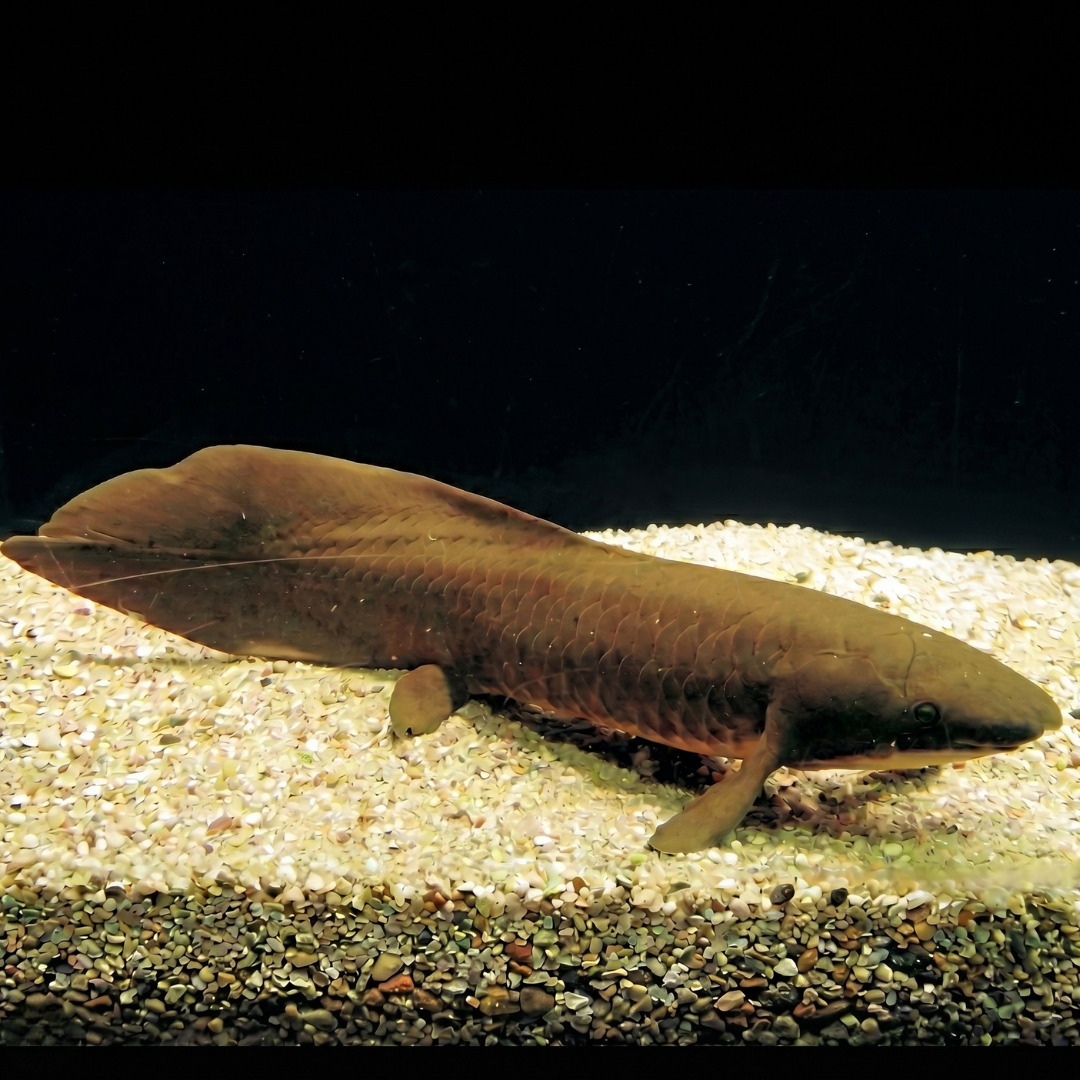
ネオケラトドゥス・フォルステリーは、オーストラリアハイギョの名で知られる大型の淡水魚です。現生のハイギョ類の中でも特に古い形質を残す種として知られ、葉のように肉厚な胸ビレと腹ビレ、補助的な肺呼吸、ゆったりとした動きが独特の存在感を生み出します。観賞魚としては非常に魅力的ですが、最終的に1mを超える巨体になり、寿命も人間の一生を超える可能性があるため、一般的な大型魚以上に長期計画と設備が問われる魚です。 Neoceratodus forsteri, commonly known as the Australian lungfish, is a large freshwater species with an extraordinary evolutionary background. Its fleshy paired fins, supplemental air-breathing ability, and slow, deliberate movements give it a remarkable presence. Although highly fascinating as an aquarium fish, it can exceed 1 m in length and may live longer than a human lifetime, so keeping it requires planning far beyond ordinary large-fish care.
基本情報 / Basic Information
| 学名 / Scientific Name | Neoceratodus forsteri |
|---|---|
| 通称 / Common Name | オーストラリアハイギョ、ネオケラトドゥスAustralian lungfish, Queensland lungfish |
| 分類 / Family | 肉鰭綱 ケラトドゥス目 ネオケラトドゥス科Class Sarcopterygii, Order Ceratodontiformes, Family Neoceratodontidae |
| 英名 / English Name | Australian lungfish / Queensland lungfish / Burnett salmon |
| 分布 / Distribution | オーストラリア・クイーンズランド州南東部のバーネット川、メアリー川水系が本来の分布域です。保全や移植の経緯により、ブリスベン川など一部の水系にも定着個体群が知られています。Native to the Burnett and Mary River systems in southeastern Queensland, Australia. Established populations are also known from some introduced river systems such as the Brisbane River. |
| 最大体長 / Max Size | 通常でも1m前後に育ち、資料によっては最大で約1.5m以上に達するとされます。飼育下でも大型化を前提にした設備計画が必要です。Commonly grows to around 1 m, and some sources report maximum lengths of over 1.5 m. Aquarium planning must assume a very large adult size. |
| 寿命 / Lifespan | 非常に長寿で、適切な環境では100年以上生きる可能性があります。終生飼育というより、次世代へ引き継ぐことまで考えるべき魚です。Exceptionally long-lived, with the potential to live for more than 100 years under suitable conditions. Long-term succession planning is an important part of responsible care. |
飼育環境 / Aquarium Environment
| 水槽サイズ / Tank Size | 幼魚期は90cm規格水槽から始められる場合もありますが、あくまで一時的な育成環境です。終生飼育では幅200cm以上、奥行き100cm前後以上の特注アクリル水槽やFRP水槽が現実的な候補になります。体が硬く、奥行きが不足すると向きを変えにくいため、幅だけでなく奥行きの確保が重要です。Juveniles may temporarily be raised in a 90 cm standard aquarium, but this is not a lifetime setup. For long-term care, a custom acrylic or FRP tank of at least around 200 cm in length and roughly 100 cm in depth is a realistic starting point. Depth is especially important because the fish has a relatively stiff body and needs room to turn safely. |
|---|---|
| 水温 / Temperature | 22〜26℃前後を目安に安定させます。自然下では比較的幅広い水温に耐えるとされますが、飼育下では高温に寄せすぎず、急激な水温変化を避けることが重要です。 Keep the temperature stable at around 22–26°C. Although the species can tolerate a fairly broad range in nature, aquarium care should avoid excessive heat and sudden temperature changes. |
| 水質 / Water Quality | 中性付近の清浄な淡水を基本とし、強力な生物ろ過と定期的な換水でアンモニア、亜硝酸、硝酸塩の蓄積を抑えます。成魚は排泄量が非常に多いため、オーバーフロー式ろ過槽など大型魚向けの余裕ある設備が必要です。Clean freshwater around neutral pH is suitable. Strong biological filtration and regular water changes are required to control ammonia, nitrite, and nitrate. Adults produce a large waste load, so oversized filtration such as a sump system is strongly recommended. |
| レイアウト / Layout | 底面を広く使えるシンプルなレイアウトが基本です。大型の流木や石を使う場合は、突進時に体を傷つけない配置にし、転倒や挟まりを防ぎます。自然下では流れの緩やかな淵や水草のある場所を利用するため、強すぎる水流は避け、落ち着いて定位できる空間を確保すると安心です。A simple layout with a wide open bottom area is best. Large wood or stones must be arranged so the fish cannot injure itself, become trapped, or knock them over. Because the species naturally uses slow pools and vegetated margins, avoid excessive current and provide calm resting space. |
| 注意点 / Precautions | 肺呼吸を行うため、水面上には必ず空気を吸える空間を残します。一方で、驚いた際には大型個体でも強い力で飛び出す可能性があるため、厚手のアクリル板や金属製の蓋を確実に固定する必要があります。水槽本体だけでなく、床の耐荷重、停電対策、将来の譲渡先まで含めて計画することが大切です。Because it breathes air, an accessible air space must always be left above the water surface. At the same time, startled individuals can jump with great force, so a heavy, securely fixed cover is essential. Planning should include tank strength, floor load, power-outage precautions, and even future transfer arrangements. |
餌と給餌 / Feeding
| 餌の種類 / Diet | 沈下性の大型魚用人工飼料を主食にし、エビ、貝類、魚肉、ミミズなどを補助的に与えます。自然下では底生生物や小動物をゆっくり探して食べるため、動物質を中心にしつつ、栄養が偏らないよう人工飼料に慣らしておくと管理しやすい魚です。Use sinking pellets for large fish as the staple, supplemented with shrimp, mollusks, fish meat, earthworms, and similar foods. In nature it feeds slowly on benthic animals and small prey, so a varied animal-based diet with a reliable prepared staple is ideal. |
|---|---|
| 給餌のポイント / Feeding Tips | 動きは緩慢ですが、嗅覚を使って餌を探すため、沈む餌を落ち着いて食べられる環境が向いています。食べ残しは大型水槽でも水質悪化の原因になるため、給餌量は腹部の張りと排泄量を見ながら調整します。幼魚期にさまざまな餌へ慣らしておくことが、長期飼育では重要です。Although slow-moving, it uses smell to locate food, so sinking foods offered in a calm environment work well. Uneaten food can quickly degrade water quality, even in large tanks, so adjust the amount according to body condition and waste output. Training juveniles to accept a range of foods is important for long-term care. |
性格と混泳 / Temperament and Tank Mates
| 性格 / Temperament | 基本的には温和で、普段は底付近をゆっくり移動する落ち着いた魚です。ただし、力が非常に強く、驚いた時の突進や体当たりは水槽や同居魚に大きな影響を与えます。おとなしい魚というより、巨大で力のある古代魚として扱うことが必要です。Generally calm and slow-moving, usually resting or moving near the bottom. However, it is extremely powerful, and sudden lunges or impacts can damage the tank or injure tank mates. It should be treated as a large, powerful ancient fish rather than simply a peaceful species. |
|---|---|
| 混泳の相性 / Compatibility | 終生飼育では単独飼育が最も安全です。口に入る魚、細長い魚、底面で競合する魚は捕食や事故のリスクがあり、大型魚同士の混泳でも接触や驚きによる衝突が問題になります。展示水槽のように十分な水量と管理体制がある場合を除き、無理な混泳は避けるべきです。Single-specimen care is the safest long-term approach. Small fish, slender fish, and bottom-dwelling competitors may be eaten or injured, and even large tank mates can cause collision risks. Mixed displays should only be considered in very large, professionally managed systems. |
病気と対策 / Diseases and Prevention
| かかりやすい病気 / Common Diseases | 特定の病気に極端に弱い魚というより、水質悪化、外傷、輸送ストレス、急な水温変化による体調不良に注意が必要です。大型魚のため、一度傷や感染が進むと治療も大がかりになりやすく、日常管理で問題を起こさないことが重要です。It is not especially known for a single specific disease, but poor water quality, injuries, transport stress, and sudden temperature changes can lead to health problems. Because of its size, treatment becomes difficult once injuries or infections progress, so prevention is essential. |
|---|---|
| 対策と予防 / Prevention | 強力なろ過、定期換水、角の少ないレイアウト、確実な蓋、安定した水温が基本です。導入時は輸送疲れを考慮し、照明を落として静かな環境で休ませます。薬浴が必要な場合は、大型魚とハイギョ類の生理に詳しい専門店や獣医師に相談し、安易な薬剤投入を避けることが大切です。Strong filtration, regular water changes, a low-risk layout, a secure cover, and stable temperature form the basis of prevention. After transport, keep lighting subdued and allow the fish to settle quietly. If medication is needed, consult specialists familiar with large fish and lungfish physiology rather than dosing casually. |
増やし方(繁殖) / Breeding
| 雌雄の判別 / Sexing | 外見だけで確実に判別するのは難しい魚です。成熟には非常に長い年月がかかり、オスで15年以上、メスでは20年以上を要するとされるため、一般家庭で雌雄判別や繁殖を前提に飼育する魚ではありません。Reliable sexing by appearance is difficult. Sexual maturity takes many years, with males maturing after more than 15 years and females after more than 20 years, so home breeding should not be considered a realistic goal. |
|---|---|
| 繁殖形態 / Reproduction | 卵生で、水草などに卵を産み付ける繁殖形態です。野生下では繁殖期が季節に左右され、産卵場所へのこだわりが強いことでも知られます。環境が合わない場合は産卵せず、卵や精子を再吸収すると考えられています。An egg-laying species that deposits eggs among aquatic vegetation. In the wild, breeding is seasonal and closely tied to suitable spawning sites. If conditions are unsuitable, it may forgo spawning and reabsorb reproductive material. |
| 繁殖のポイント / Breeding Tips | 国内の個人飼育で繁殖を狙う対象ではありません。現在流通する合法個体は、厳格に管理されたオーストラリアの認定養殖プログラムに由来する個体が中心です。希少種であり、国際取引にも規制が関わるため、購入時は正規輸入個体であること、証明書類や販売経路が明確であることを確認する必要があります。This is not a species realistically bred by private aquarists. Legally traded individuals generally come from strictly managed Australian aquaculture programs. Because the species is rare and internationally regulated, buyers should confirm legal origin, documentation, and a transparent supply route. |
雑学と豆知識 / Trivia and Fun Facts
| 1. 「生きた化石」と呼ばれる理由 / 1. Why It Is Called a Living Fossil | オーストラリアハイギョは、現生のハイギョ類の中でも特に古い形質を色濃く残す存在として知られています。葉状の肉厚なヒレや単一の肺、エラ呼吸を主体としながら必要に応じて空気を吸う生理は、魚類と陸上脊椎動物の進化を考えるうえで非常に興味深い特徴です。ただし「まったく進化していない魚」という意味ではなく、長い時間の中で古い形質を残しながら独自の適応を重ねてきた魚と見るほうが正確です。The Australian lungfish is often described as a living fossil because it retains many ancient traits among living lungfish. Its fleshy paired fins, single lung, and primarily gill-based respiration with supplemental air breathing make it important for understanding the transition from fishes to land vertebrates. However, this does not mean it has not evolved; rather, it has retained ancient traits while developing its own long-term adaptations. |
|---|---|
| 2. ほかのハイギョとは異なる呼吸と乾燥耐性 / 2. Breathing and Drought Tolerance Differ from Other Lungfish | アフリカハイギョの仲間は、乾季に泥の中で繭を作り休眠する能力で知られます。一方、オーストラリアハイギョはそのような夏眠を行わず、乾ききった環境に耐える魚ではありません。肺を持つ魚でありながら、基本は水中で生活し、溶存酸素が少ない時に水面へ上がって空気を吸うという、安定した河川環境に寄り添った生き方をしてきたと考えられています。African lungfishes are famous for surviving dry seasons by forming a cocoon in mud and aestivating. The Australian lungfish does not do this and is not adapted to completely dry conditions. Although it has a lung, it normally lives underwater and uses air breathing mainly when dissolved oxygen becomes low, reflecting adaptation to relatively stable river habitats. |
| 3. グランドダッドが示した驚異的な長寿 / 3. The Remarkable Longevity Shown by Granddad | シカゴのシェッド水族館で長年飼育された「グランドダッド」という個体は、1933年に同館へ到着し、2017年まで飼育されました。後年の解析では100歳を超えていたと推定され、オーストラリアハイギョの長寿性を象徴する存在となっています。この事例は、本種を購入することが単なるペットの飼育ではなく、将来の管理者へ命を引き継ぐ責任を伴う行為であることを強く示しています。A famous individual named Granddad lived at Shedd Aquarium in Chicago after arriving in 1933 and remained there until 2017. Later analysis indicated that it was over 100 years old, making it a symbol of the species’ extraordinary longevity. This case shows that keeping this fish is not just pet ownership; it carries responsibility for future caretakers as well. |
| 4. 合法流通と保全の重み / 4. Legal Trade and Conservation Responsibility | オーストラリアハイギョはワシントン条約附属書IIに掲載され、オーストラリア国内でも保護されています。日本で見られる個体は、認定された養殖プログラムに由来する正規輸入個体であることが重要です。高価な魚として語られがちですが、その背景には希少種を違法採集から守り、管理された繁殖と流通によって保全につなげるという側面があります。The Australian lungfish is listed under CITES Appendix II and is protected within Australia. In Japan, legally imported individuals from approved aquaculture programs are the responsible choice. Although often discussed as an expensive fish, that cost reflects the importance of protecting the species from illegal collection and supporting controlled, traceable trade. |
まとめ / Conclusion
ネオケラトドゥス・フォルステリーは、古代魚としての迫力だけでなく、脊椎動物の進化を今に伝える学術的価値を持つ特別な魚です。ゆったりとした姿に惹かれる一方で、最終サイズ、寿命、肺呼吸、飛び出し対策、合法流通の確認など、飼育前に考えるべき条件は非常に多くあります。 Neoceratodus forsteri is not only an impressive ancient fish but also a species of exceptional scientific value, preserving clues to vertebrate evolution. Its calm presence is captivating, but adult size, longevity, air-breathing needs, jump prevention, and legal trade documentation must all be considered before purchase.
本種を健全に飼うには、大型水槽を用意するだけでは不十分です。設備、費用、住環境、将来の継承先まで含めて計画できる場合にのみ向き合うべき魚であり、興味本位ではなく、保全と動物福祉を意識して扱うことが大切です。 Keeping this species well requires far more than simply preparing a large aquarium. It should only be considered when equipment, cost, housing conditions, and future succession can be planned responsibly. Conservation awareness and animal welfare should guide every decision.
気になる道具や飼い方を見つけてみませんか?
 アイのアクアグッズ案内おとひめ物語|養殖生まれの餌を、わが家の魚に合う一粒へ道具の特徴や使い方、選ぶときのポイントをアイが紹介します。記事はコチラ →
 アイのアクアグッズ案内グッピー・プラティ・モーリーを親子で楽しむ飼育用品|水槽・稚魚保護・ろ過・餌・水草道具の特徴や使い方、選ぶときのポイントをアイが紹介します。記事はコチラ →
さまざまな飼育テーマをご紹介。リンク先の記事には広告・商品紹介が含まれます。
案内・紹介記事一覧へ →参考文献
この記事は、オーストラリアハイギョ(Neoceratodus forsteri)の分類、分布、形態、生態、飼育上の注意点、保全状況に関する情報を、以下の資料をもとに確認・整理しています。
-
FishBase: Neoceratodus forsteri, Australian lungfish
学名、分類、最大体長、IUCNレッドリスト上の扱い、CITES附属書II掲載など、基礎情報の確認に使用しました。 -
Australian Government, Department of Climate Change, Energy, the Environment and Water: Australian Lungfish (Neoceratodus forsteri)
自然分布、成魚サイズ、肺呼吸、繁殖環境、EPBC法およびCITESに関する保護・輸出規制の確認に使用しました。 -
Australian Museum: Australian Lungfish, Neoceratodus forsteri Krefft, 1870
食性、単一の肺、エラ呼吸主体の生活、産卵期、成長の遅さ、アフリカハイギョとの乾燥耐性の違いなど、生態面の確認に使用しました。 -
Mayne et al. (2022): Tell Us a Story Granddad: Age and Origin of an Iconic Australian Lungfish. Frontiers in Environmental Science
シェッド水族館で飼育された「Granddad」の推定年齢、長寿性、出生地推定に関する記述の確認に使用しました。 -
Meyer et al. (2021): Giant lungfish genome elucidates the conquest of land by vertebrates. Nature
ハイギョ類が四肢動物に近い系統的位置を占めること、オーストラリアハイギョが陸上脊椎動物の進化を考えるうえで重要な研究対象であることの確認に使用しました。 -
CITES Species+ / CITES Checklist: Neoceratodus forsteri
ワシントン条約における掲載状況と国際取引上の扱いを確認するために参照しました。
※飼育環境に関する数値は、公開資料に示された自然下の生態や成魚サイズをもとに、国内の大型魚飼育を想定して安全側に整理した目安です。実際の飼育では、個体サイズ、設備規模、ろ過能力、室温、水質の安定性を総合的に確認してください。

コメント